Orchestration Pipeline: 7 Steps to Publish‑Ready AI Articles

Back when I ran Steamfeed, we hit 120k monthly visitors with a scrappy system, not some magic prompt. We had breadth, depth, and a workflow that actually shipped. Later at PostBeyond, I could write 3–4 strong pieces a week, until I got pulled into exec meetings and the system broke. Output slipped. Quality did too. The draft wasn’t the problem. The handoffs were.
Here’s the thing. You don’t have a writing problem. You have a “things don’t run the same way twice” problem. Prompts spin up words. Systems ship finished work. If your pipeline still relies on one-off heroics, you’ll keep reliving the same publish-day fire drill, broken links, off-brand visuals, schema tweaks, and that final “who owns this?” scramble.
Key Takeaways:
- Stop chasing better prompts; implement a governed pipeline that runs the same way every time
- Encode differentiation, brand voice, and KB grounding before drafting starts to cut rework
- Make accuracy deterministic: links, schema, and publishing handled by code, not hope
- Quantify the cost of manual cleanup and block it with QA gates and idempotent connectors
- Treat visuals as first-class output with rules, brand assets, and automatic alt text
- Use cooldowns and information gain scoring to avoid repeats that dilute authority
Why Prompt Chains Keep Failing Under Real Deadlines
Prompt chains fail under deadlines because they can’t guarantee voice, structure, or accuracy across runs. Each “quick tweak” resets context and invites drift, which turns into rework downstream. A real publishing system needs a fixed sequence, explicit gates, and code handling the parts where precision matters.
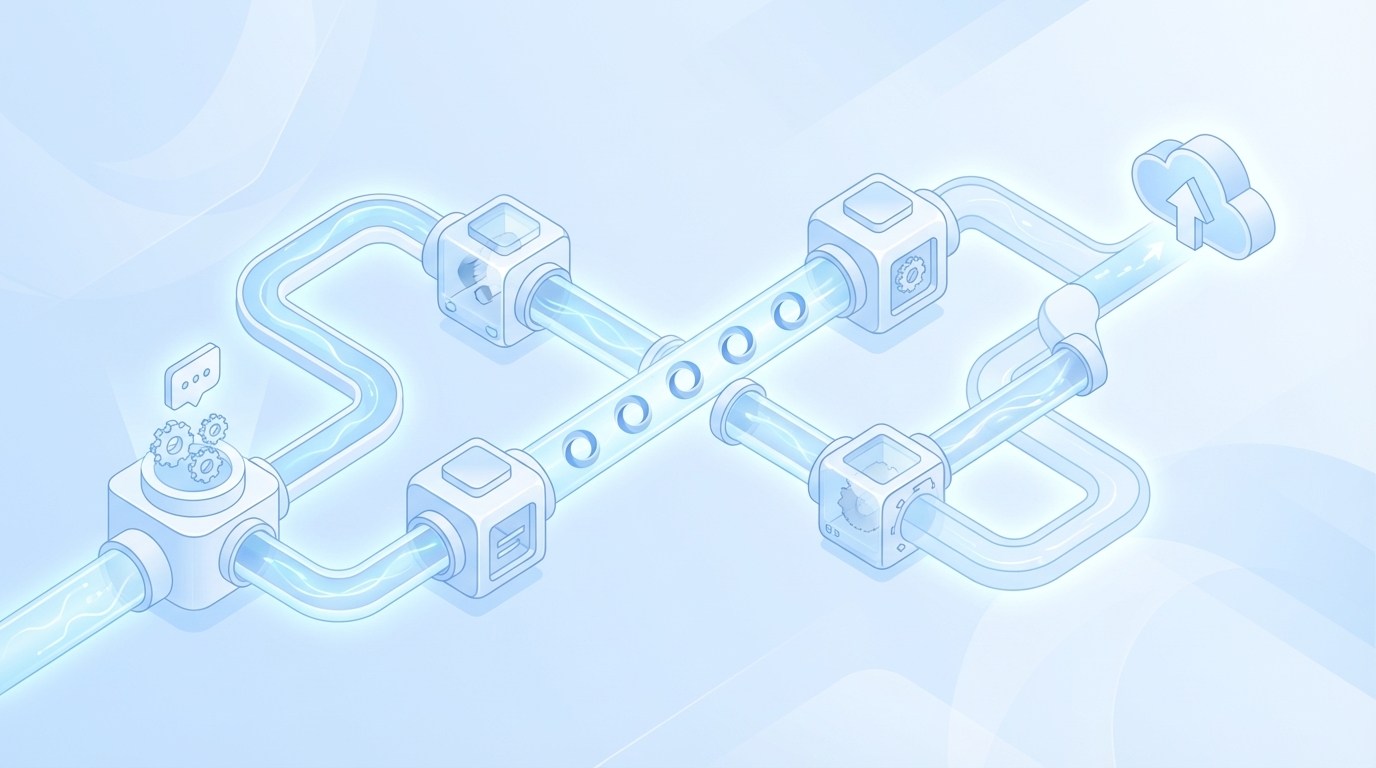
The hidden variability that burns hours
Prompt tweaks feel fast. Then the draft veers off voice, structure morphs, facts wobble, and your afternoon disappears into babysitting. Not because creativity is bad. Because repeatability isn’t there. You’re starting from zero context on every pass, so “just one more” prompt becomes three rounds and a rushed publish.
If you want outcomes, define the goal as a publishable artifact with gating, not “a draft that looks close.” Pipelines beat prompts here. A governed flow controls topic selection, differentiation checks, brand voice, and formatting standards before words hit the page. For grounding, orchestration is the adult in the room, see this 2025 AI orchestration overview for how structured stages reduce variability. Prompts write words. Pipelines ship finished work.
Ready to see a governed flow instead of one-off prompts? Generate 3 Free Test Articles.
The Real Bottleneck Is Disconnected Stages, Not Writing Speed
Disconnected stages create drift because strategy, differentiation, writing, visuals, and publishing don’t share rules. Every handoff introduces interpretation gaps. Replacing those handoffs with a single pipeline keeps voice, facts, and structure aligned, because the same rules follow the work from brief to publish.
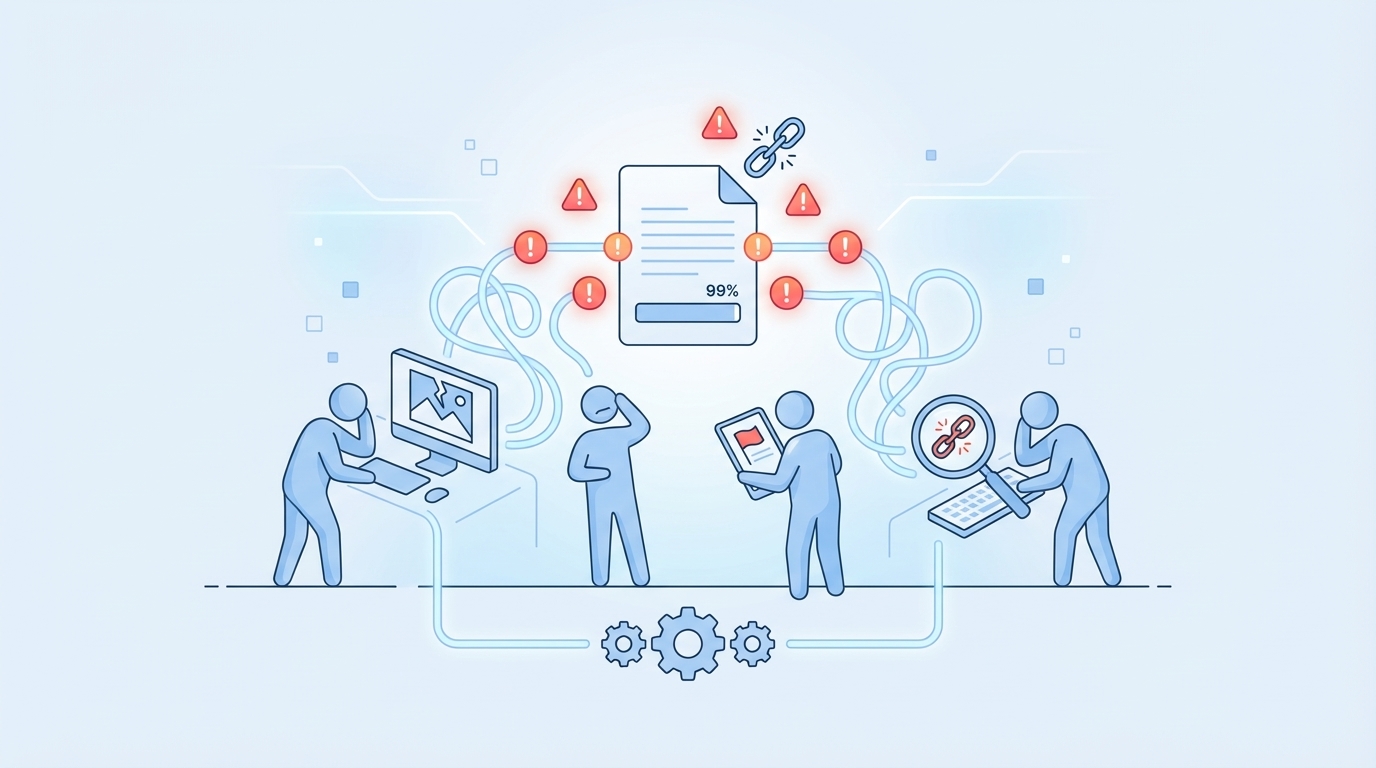
What traditional approaches miss between brief and publish?
Most teams run in silos. Keyword tool hands off to a writer. Writer hands off to design. Someone pastes into the CMS. Everyone does their job, and the output still drifts. Why? Because the brief didn’t enforce differentiation, the draft deviated from structure, and quality checks lived in people’s heads.
The fix is policy before prose. Encode brand voice and banned terms. Require information gain on every brief. Block low-differentiation outlines. Make visuals and internal links deterministic. Structured stages aren’t just abstraction; they’re how reliable systems work in adjacent fields too, as in this ML orchestration overview from IBM. Creativity remains in the narrative. Accuracy moves into code.
The Cost Of Manual Rework Adds Up Fast
Manual fixes consume 20–40 hours a month even in small programs. Rename images here, fix a broken link there, tweak schema, re-map a field. Multiply by posts per month and team members involved. Those “tiny edits” quietly become a sprint of their own, without any compounding value.
Engineering hours lost to publishing fixes
Let’s quantify the “two-minute” edits. Each rename, link correction, or schema tweak takes 10–20 minutes when you factor in context switching. Call it 15 minutes on average. Seven corrections per post across 20 posts a month? That’s 35 hours gone. No new articles. Just cleanup.
Now zoom in on the scary part. If 60 percent of those posts need duplicate prevention cleanups, retry mapping, or alt text edits, you’re losing another 3 hours weekly. And that assumes everything else goes right. This is why idempotency and retries matter in any pipeline. Data engineers have pushed on this for years; see this data pipeline orchestration guide on retries and idempotency. Put those rules upstream. Don’t fight them downstream.
If this is your weekly reality, it doesn’t have to be. Try An Autonomous Content Engine.
The Human Toll Of “Almost There” Drafts
“Almost there” drains morale. You thought it would ship today, then compliance flags phrasing, the hero image looks off-brand, or someone finds a fabricated link. Three people stop their day. Next time, folks hedge their timelines. Trust in the process slips, which slows everything.
The 3pm reshuffle that ruins your week
You’ve lived this. Final review at 3pm. Legal has notes. The image filenames aren’t consistent. Alt text is missing. Internal links look made up. Do you delay? Or ship something that bugs you? Neither feels great. And the team pays the tax, context switching, late calls, rushed fixes.
Bake those checks into the pipeline. Centralize brand assets so visuals aren’t freestyled. Auto-generate alt text and filenames. Place links algorithmically from a verified sitemap. This is what orchestration buys you. Fewer stop-start moments. If you want a quick overview of tooling patterns that prevent last-mile failures, this summary of AI orchestration tools and their workflows is a useful sanity check. Better pipeline. Fewer 3pm surprises.
Turn Prompts Into A Repeatable Content Pipeline In 7 Steps
A repeatable pipeline turns “smart drafts” into ship-ready articles by enforcing rules at each stage. You’ll define topic choices, measure originality, ground facts, structure for snippets, generate on-brand visuals, inject links and schema deterministically, and publish with idempotent connectors. The point isn’t more content. It’s reliable, compounding authority.
Step 1: Map a topic universe with cooldown and saturation rules
Start by configuring inputs from your knowledge base, sitemap, and focus areas. Cluster topics into pillars, label saturation (underserved, healthy, well-covered, saturated), and apply a 90-day cooldown to anything you’ve covered recently. This stops accidental repeats and guides the team toward neglected areas.
Acceptance looks like this: each approved topic shows cluster, last coverage date, and cooldown status. Fail if any new topic lacks a cooldown check. You’ll feel the difference within weeks, the calendar gets easier because the system picks better candidates automatically. You’re not guessing. You’re governing.
Step 2: Generate a brief with information gain scoring and required fields
Build briefs with angle, audience, outline, snippet goals, and competitive research. Analyze top results to score information gain from 0 to 100. Block briefs below your threshold (say 65). This is where you prevent “same-same but shorter” drafts from ever starting.
Acceptance: the brief includes an information gain score, 3–5 authoritative external sources, required sections, and notes on differentiation. Fail if any field is missing or score falls under threshold. Interjection. Reward high-gain briefs during QA to reinforce the behavior.
Step 3: Draft with KB-grounded retrieval and brand-voice constraints
Draft to the approved brief. Enforce voice rules and banned terms. Use your knowledge base to ground facts. Open every H2 with a 40–60 word direct answer that stands on its own. These snippet-ready paragraphs improve eligibility for featured snippets and give AI assistants clean sections to cite.
Acceptance: zero out-of-KB assertions, no banned phrasing, and all H2s open with snippet-ready paragraphs. Fail on any hallucination or voice drift. Put another way: creativity in the narrative, compliance in the constraints. This balance is what gets you speed without sloppy.
Step 4: Configure a QA gate with explicit pass thresholds
Evaluate structure, snippet readiness, brand alignment, and information gain. Set a minimum passing score, 85 tends to work, and require zero critical errors. Automate refinement loops when scores fall short so the system fixes itself before a human ever sees the draft.
Acceptance: the QA report covers 80+ checks and highlights failed items with fixes applied. Fail if the score is under threshold or any critical category fails. Your bar should be honest, not punishing. If quality dips, the loop runs again. That’s the point.
Step 5: Generate visuals and place them deterministically
Use a centralized brand asset library with colors, marks, style references, and tagged product screenshots. Generate a hero plus 2–3 inline visuals. Prioritize solution sections for product imagery. Auto-generate alt text and SEO-friendly filenames. Visuals aren’t decoration; they’re proof of brand.
Acceptance: visuals match brand, placements align to sections, filenames follow rules. Fail if any image violates style or placement standards. You’ll know this step is working when stakeholders stop asking, “Do we have a screenshot for this?” and start saying, “This looks like us.”
Step 6: Inject internal links programmatically after draft and visuals
Scan a verified sitemap, select 5–8 relevant pages, and insert links at natural sentence boundaries. Require exact-match anchor text to page titles. Disallow fabricated or unverified URLs by design. Links become code, not judgment calls, and structure gets sturdier.
Acceptance: 5–8 links inserted, all URLs verified, zero fabricated anchors. Fail on any unverified link or anchor mismatch. Keep this step deterministic. It will reduce broken links and lift discoverability across the site without manual sculpting.
Step 7: Publish via CMS connectors with idempotent retries and audit logs
Convert markdown to CMS-ready HTML, map fields automatically, and prevent duplicates with idempotency keys. On failure, retry with backoff. Record inputs, outputs, QA scores, publish attempts, and retries. Pipeline events: inputs, outputs, KB retrievals, QA scoring, publish attempts, versions are logged internally so the system can retry work and maintain consistency. The delivery path should be boring, predictable, and logged.
Acceptance: the post lands in draft or live as configured, with zero duplicates. Fail on mapping errors or missing logs. For deeper patterns, retries, backoffs, idempotency, this Azure pipeline orchestration reference is a helpful primer. Reliable publishing is engineered, not wished into existence.
How Oleno Automates The Pipeline End To End
Oleno automates this pipeline by running a fixed sequence, strategy through publishing, with rules at each stage. It uses your brand voice and knowledge base to ground drafting, enforces originality before writing, generates visuals that match your brand, injects links and schema deterministically, and publishes via connectors that prevent duplicates.
Topic Universe and differentiation checks before drafting
Oleno’s Topic Universe discovers and clusters topics from your knowledge base, sitemap, and focus areas. It labels saturation, enforces a 90-day cooldown, and prioritizes gaps so you stop re-covering the same ideas too soon. Every approved topic becomes a structured brief with competitive research and an Information Gain Score that flags low-differentiation outlines.
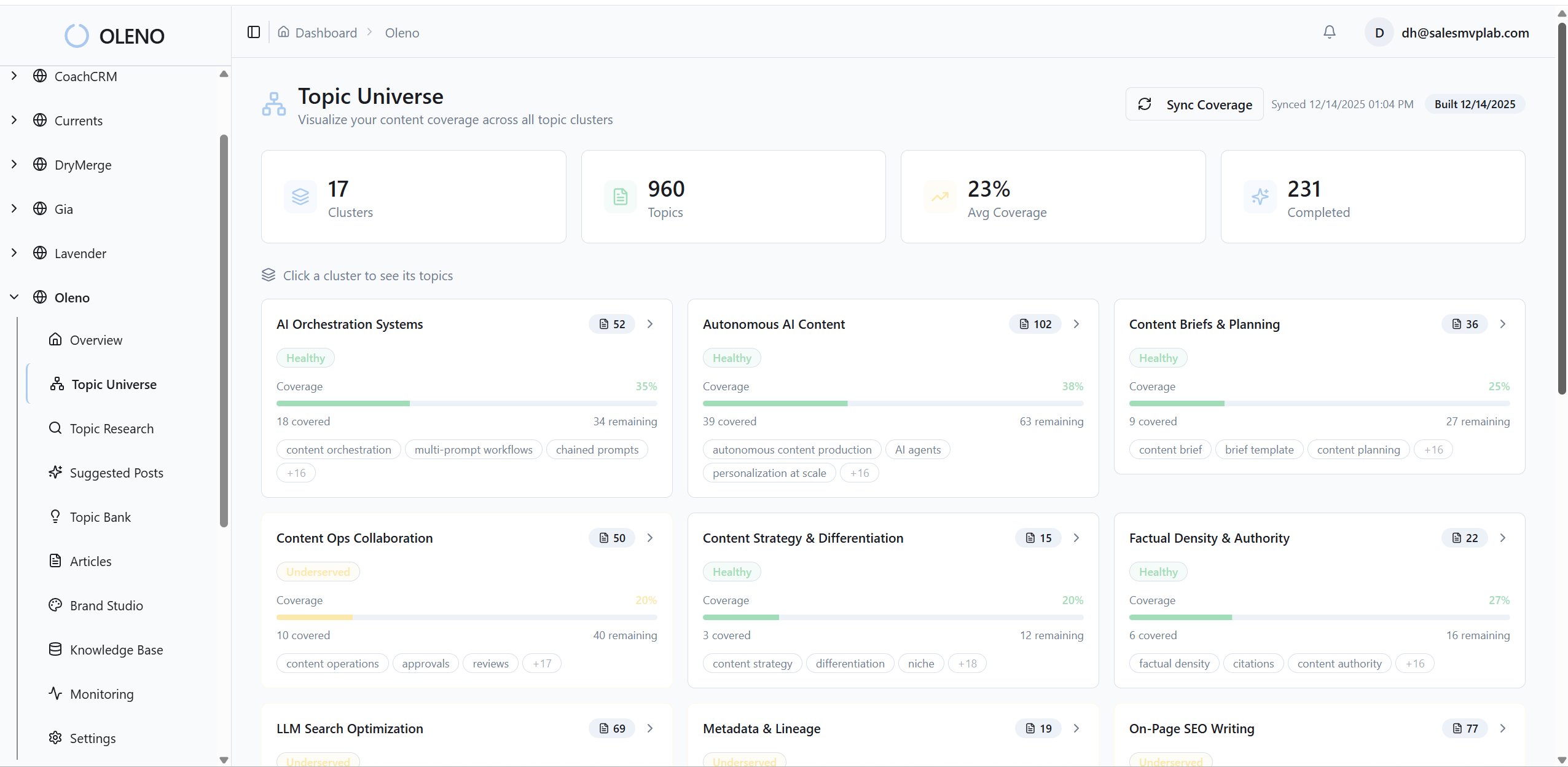
Low scores trigger warnings and rework before any writing time is spent. High-gain briefs get rewarded during QA. This is how Oleno keeps your pipeline focused on net-new value. It’s not guessing what to write. It’s enforcing the preconditions for authority.
KB‑grounded drafting with snippet‑ready structure
When Oleno drafts, it aligns to your brand voice, applies banned-term rules, and grounds facts in your knowledge base. Each H2 opens with a direct, 40–60 word answer paragraph so sections stand alone and are citable by both search engines and AI assistants. QA then evaluates 80+ criteria, structure, clarity, brand alignment, information gain, and snippet readiness, before anything moves forward.
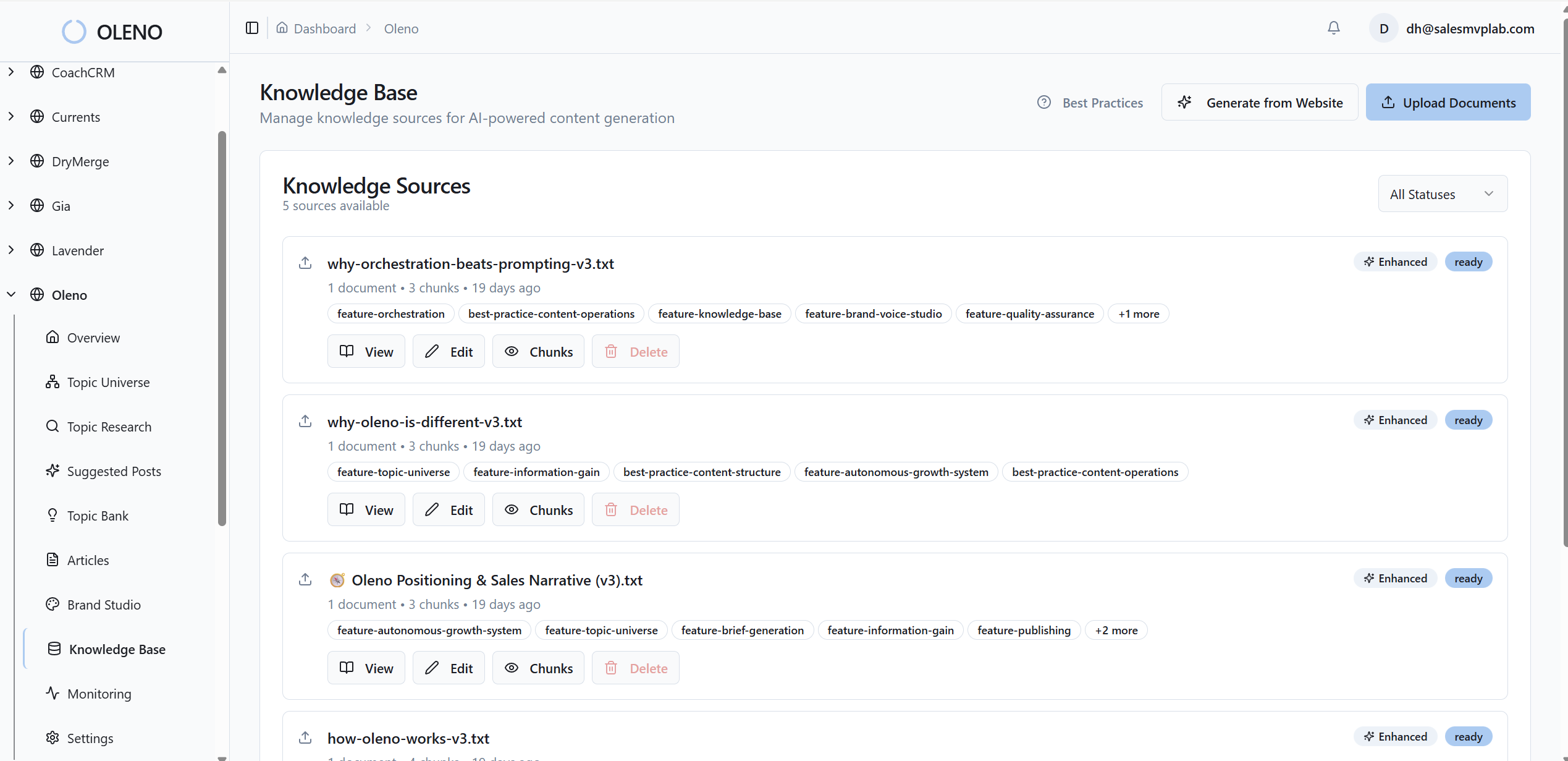
If a draft doesn’t meet the threshold, Oleno runs refinement loops automatically and re-tests. No chat-based nudging. No manual fixes. The goal isn’t a “good draft.” It’s a publishable article that matches your brand and passes the bar you set.
Visuals, links, schema, and publishing handled by code
Oleno’s Visual Studio generates a hero image and 2–3 inline visuals using your colors, logos, style references, and tagged product screenshots. Product visuals are prioritized in solution sections. Alt text and SEO-friendly filenames are generated automatically. Internal links are injected programmatically from a verified sitemap, using exact-match page titles as anchors, and schema (Article, FAQ, BreadcrumbList) is generated as valid JSON-LD.
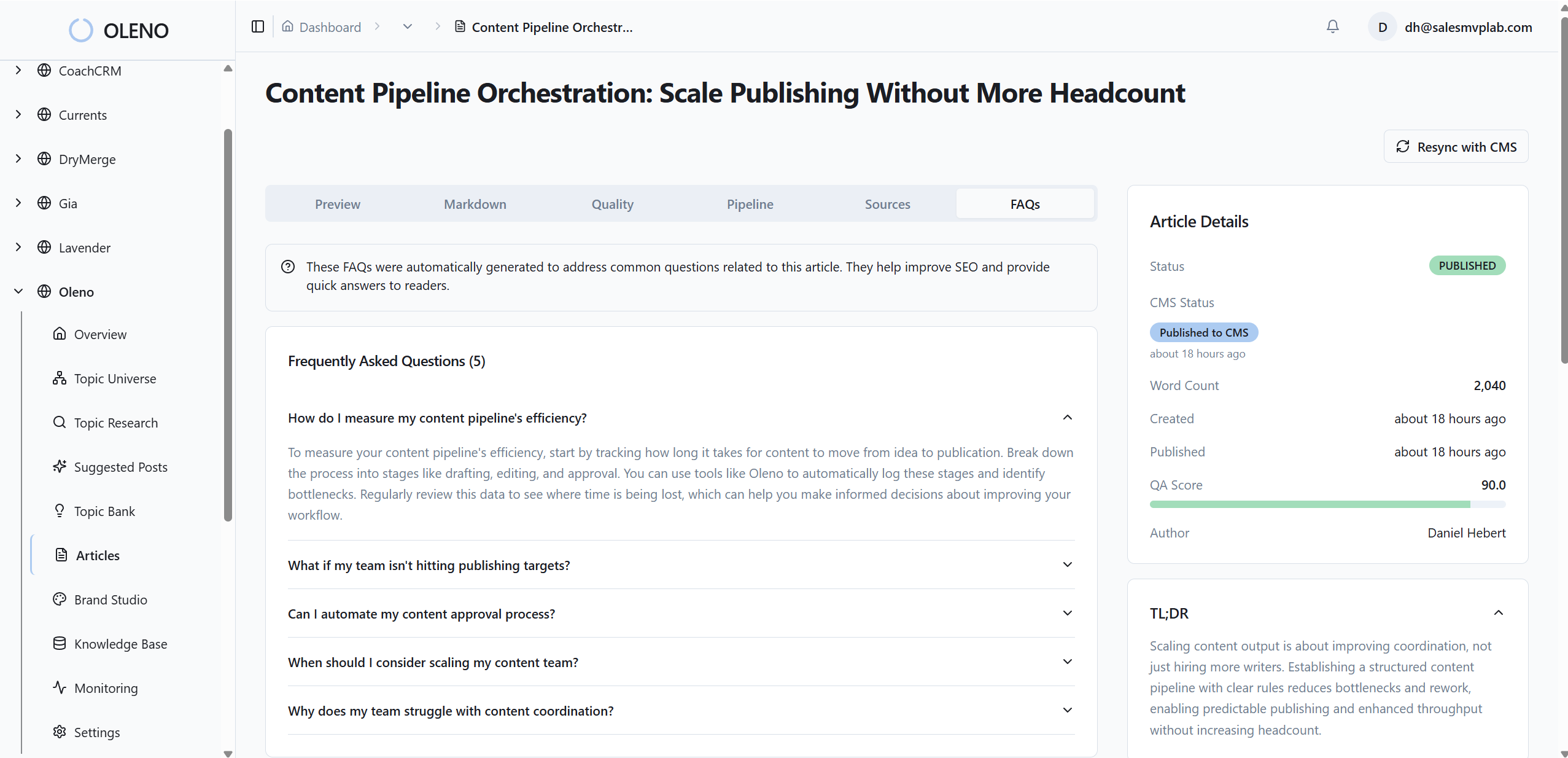
Publishing is handled through connectors to WordPress, Webflow, HubSpot, and more. Fields are mapped automatically, idempotency prevents duplicates, and failures trigger retries. Pipeline events: inputs, outputs, KB retrievals, QA scoring, publish attempts, versions are logged internally so the system can retry work and maintain consistency. If you’re ready to offload the last-mile headaches, Try Oleno For Free.
Conclusion
You don’t need another clever prompt. You need a pipeline that refuses to drift. When differentiation is enforced before drafting, when voice and facts are encoded as rules, when links, visuals, schema, and publishing are deterministic, the rework melts away. The team ships more, argues less, and trusts the system again.
That’s the shift. From writing faster to shipping reliably. From isolated wins to authority that compounds. If you want to feel that cadence, daily, not someday, let the system carry the weight and keep your people focused on story, not cleanup.
About Daniel Hebert
I'm the founder of Oleno, SalesMVP Lab, and yourLumira. Been working in B2B SaaS in both sales and marketing leadership for 13+ years. I specialize in building revenue engines from the ground up. Over the years, I've codified writing frameworks, which are now powering Oleno.
Frequently Asked Questions