Peer Editorial Rotation: 4‑Step Review System for Small Teams

Most small teams wait on budget to hire an editor. You do not need to. A peer editorial rotation gives you a fast, reliable quality lift with the team you already have. Set a simple schedule, codify what “good” looks like, then rotate the editor seat weekly. That peer editorial rotation builds shared judgment, cuts rework, and protects your voice without piling on meetings.
I learned the hard way that speed without structure creates waste. Writers crank. Reviews drift. Deadlines slip. When you add a light system around reviews, quality jumps fast. Not because your writers got better overnight, but because the process stopped being arbitrary. If you run a peer editorial rotation for 6 to 8 weeks, you will feel the difference.
Key Takeaways:
- Stand up a peer editorial rotation now, then refine as you go. Waiting to hire is the costly path.
- Use a 4-role loop with Editor-of-Week, Author, Approver, and an optional Subject Reviewer for high-risk pieces.
- Keep two one-page checklists, one for substance, one for style, so reviews stay consistent and fast.
- Set SLAs, limit WIP, and use simple tags for version control to avoid ping-pong edits.
- Track five metrics, cycle time, edit depth, first-pass approvals, quality score, and published-to-planned ratio.
- Move deep review only to Tier 1 assets, right-size everything else to avoid bottlenecks.
- Expect about 60% less substantive rework and about 40% faster review turnaround inside two months.
Why a Peer Editorial Rotation Is Your Fastest Quality Lift
A peer editorial rotation is a recurring schedule where teammates review each other’s work, with one person serving as Editor-of-Week. It spreads responsibility, removes single points of failure, and builds shared judgment through repetition. Small teams see fewer errors, faster approval, and a stronger voice because decisions stop being ad hoc.
What is a peer editorial rotation and why does it work?
A peer editorial rotation assigns one teammate as Editor-of-Week while others write, then the seat rotates. That cadence creates shared standards, not personal taste. Within a few cycles, common mistakes fade because they are caught early and documented. Think “PR reviews,” but for content.
Consistency comes from constraints. Compact checklists and a fixed path turn mushy feedback into clear decisions. I like to start tight for 2 to 3 weeks, then relax once the team shows steady first-pass approvals. The win is compounding judgment that stays inside your team.
You also de-risk vacations and busy weeks. No single person becomes the bottleneck. The rotation keeps shipping.
The costly mistake of waiting to hire an editor
Waiting for a full-time editor stalls learning and kills momentum. You lose weeks to rewrites, miss deadlines, and morale takes a hit. Plus, an outside editor often resets your voice because they do not have your context.
Launch the rotation now. Add a lightweight checklist. Then, if budget shows up later, your incoming editor inherits a team with shared judgment, not chaos. Ownership stays inside, which preserves institutional knowledge that outsourcing often erodes.
I have seen teams save dozens of hours a month by avoiding that delay. It is not even close.
Ownership, not outsourcing: how quality compounds
Quality compounds when fixes become habits. Peers catch repeated slips, write them into the checklist, and those issues disappear. Over time, your baseline rises, review time shrinks, and approvals become predictable.
That flywheel beats last-minute edits by a mile. You are not chasing perfection. You are raising the floor every week. The compounding effect is the quiet advantage most teams miss.
Stop Blaming Talent, Fix the Review System
Reviews fail under pressure because the path is unclear and the bar is fuzzy. A fixed path, draft to peer review to approval to publish, turns gut checks into a flow. When you add SLAs and right-size coverage, you remove avoidable delays and guesswork.
Why small teams fail at reviews under time pressure
Under deadline stress, feedback gets vague, approvals stall, and edits become personal. That is a system problem. Not a talent problem. A simple flow with statuses and time boxes changes the game.
Create one path. Draft moves to peer review, then approval, then publish. Cut cross-talk in Slack, and use a single comment stream tied to the piece. Add explicit SLAs so work does not idle. You will see the ping-pong vanish.
If you only change one thing, define the statuses and the owners. Everything gets easier from there.
Context and checklists beat subjective edits
One-page checklists beat taste debates. Pair them with examples and approved phrases so reviewers evaluate against rules, not vibes. Research backs this up. Checklists reduce errors and speed decisions in complex work, see Harvard Business Review on checklists, and Nielsen Norman Group on checklists and reliability.
Two lists are enough. Substance vetting for brief adherence, claims, structure, and sources. Style vetting for voice, banned terms, CTA placement, and headings. Keep them short so people use them.
New contributors get productive faster. Fewer risky improvisations. Fewer arguments. More shipping.
What review coverage should each piece get?
Match review depth to risk. Tier 1 assets, like product pages and pricing, get full checklist coverage and approver sign-off. Tier 2, like blogs and guides, get a single peer check against essentials. Tier 3, like social posts, get spot checks.
Right-sizing coverage protects cadence and avoids over-review. The rule is simple. Heavier review only when the stakes justify it. Publish the tiers once, then follow them.
If you need a reference ritual, pull language cues from the American Press Institute editing guidelines.
The Hidden Cost of Skipping Your Peer Editorial Rotation
Skipping a rotation looks efficient. It is not. You pay in hidden queues, slow cycles, and inconsistent voice that quietly hurts performance. Measure the costs, and you will never go back.
Time you lose to ad-hoc editing
Unstructured edits create invisible wait time. Authors sit on feedback. Then rewrite multiple rounds because the target keeps moving. Start tracking cycle time from draft to publish, edit depth per round, and wait time between steps. Waste shows up fast.
A peer editorial rotation plus SLAs removes idle time and cuts total review minutes per piece. That is how you protect cadence and deadlines, even when the week gets messy. It is operational health, not heroics.
I have watched teams reclaim whole days per month by tightening this up.
Inconsistent voice erodes trust and performance
Readers feel drift. Mixed tone, shifting claims, and fuzzy intros lower engagement and conversion. Map voice violations and message drift to bounce rate and demo requests. You will see the pattern.
Fix upstream. Codify voice rules, then run a single peer check every time. That catch in review prevents brand dilution at the source. Fewer public edits. More consistent results.
If you want process context, the Atlassian Team Playbook has solid team rituals you can adapt.
What metrics actually matter?
You do not need a dashboard zoo. Five signals are plenty. Cycle time, edit depth per piece, first-pass approval rate, quality score, and published-to-planned ratio. Add error categories so you can spot root causes quickly.
Without these, you risk fixing the wrong thing. With them, you tune the exact constraint that is costing you output. That is how a small team punches above its weight.
What Shipping Without a Safety Net Feels Like
When the system is broken, you feel it in your bones. Late nights. Slack spirals. Public fixes after publish. None of that is normal. It is the cost of missing structure.

The 11 pm rewrite that kills confidence
You know the scene. Launch day is close, feedback lands late, and you are rewriting the intro at night because the tone feels off. That is not on your writer. That is a system failure.
A peer editorial rotation with earlier checkpoints pulls the stress forward when it is cheaper. People sleep better. Confidence returns. Quality still ships.
I have been there. It is brutal. It is also fixable.
The Slack ping-pong that burns hours
Back-and-forth messages feel fast. They are not. Context scatters, decisions drift, and nuance gets lost. Use a single comment stream in your doc or tool, tied to a checklist. Fewer messages. More decisions.
Engineering learned this years ago. Code review happens in the PR, not in side channels, see GitHub’s pull request review docs. Steal that discipline for content. You will cut coordination cost and avoid avoidable mistakes.
The hidden win is a clean audit trail. Future you will thank present you.
The morale hit when quality misses the mark
Public fixes after publish sting. People get defensive. Creativity stalls. A rotation shifts the emotional load from single authors to a shared system. Wins feel shared. Misses turn into documented improvements.
Psychological safety is not fluff. It is the fuel for faster learning. When the system carries the load, the team gets brave again.
The 4-Step Peer Editorial Rotation You Can Implement This Sprint
You do not need a big rollout. Set this up in a week. Then let it harden over the next 6 to 8 weeks. Expect about 60% less substantive rework and about 40% faster review turnaround once the habits click.
Step 1: Define roles and SLAs
Give the work clear owners. Editor-of-Week runs the checklist and calls the pass. Author owns the draft and fixes. Approver signs off on Tier 1 assets. For nuanced technical claims, bring in a Subject Reviewer as needed.
Publish SLAs so people know the clock. Common pattern, 24 hours for peer review, 24 hours for approvals. Limit WIP by capping pieces per week so piles do not form. Use simple tags, Draft, In Review, Approved, Scheduled, to make status obvious.
Then make it visible. Put the rotation and SLAs on a shared calendar.
After you set roles and SLAs, codify turnaround rules like:
- Reviews respond within 24 hours, then authors have 24 hours to address edits.
- Tier 1 assets require approver sign-off within 24 hours after peer pass.
- Overflow goes to the backup reviewer if the Editor-of-Week hits capacity.
Step 2: Build two compact checklists
Create two one-pagers. Substance checklist covers brief adherence, claim accuracy, structure, and sources. Style checklist covers voice, banned terms, CTA placement, and headings. Keep them tight so they do not gather dust.
Reviewers run both top to bottom, then log pass or fix with short comments. Patterns emerge within two weeks. Fold frequent fixes into the checklist so issues vanish by design, not by heroics.
If you need inspiration, skim Nielsen Norman Group on checklists and reliability. Strong checklists reduce misses.
A simple style checklist might include:
- Voice match to brand rules and examples
- Preferred terms used, banned terms avoided
- Clear intro with POV and promise in first 60 words
- CTA present, specific, and placed per template
- Headings are descriptive, not generic
Step 3: Schedule the rotation and set capacity rules
Post a visible rotation calendar. Rotate weekly. When someone is on PTO, slide the seat to a backup. Cap the Editor-of-Week to a realistic number of pieces. Too many, and you create a new bottleneck.
Use a shared intake form so authors never guess next steps. Tie that intake to statuses so everyone can see where a piece lives. Context switching drops. Hidden queues disappear. The pipeline keeps moving even when priorities shift.
Light rituals beat heavy meetings. Keep the commit small. Keep the visibility high.
Capacity rules to publish once and use forever:
- Editor-of-Week max pieces, set a cap that fits your team size.
- No silent holds, if a review will miss SLA, reassign within the day.
- Daily five-minute standup for blockers only, no status theater.
Step 4: Light tooling, templates, and measurement
Pick one workspace for briefs, drafts, and reviews. Add templates for briefs and checklists. Automate reminders and SLA timers inside your task tool. You do not need fancy. You need clarity.
Track cycle time, edit depth, and first-pass approvals in a simple sheet or dashboard. If a metric slips, tune the checklist or capacity, not the whole process. Tighten the rule that failed. Small, fast fixes compound.
If you like deeper ops ideas, Basecamp’s Shape Up has strong takes on reducing coordination drag. Worth a skim.
A starter measurement loop can look like:
- Log dates for draft start, peer review start, approval, and publish.
- Record edit depth, number of substantive changes per piece.
- Sample five pieces weekly for a quick quality score, voice and accuracy.
Stop chasing approvals. Start publishing faster with Oleno. Request a Demo
How Oleno Operationalizes Your Peer Editorial Rotation
Oleno turns your rotation rules into guardrails that run in the background. Governance codifies voice and claims. Briefs and QA catch issues before peer review. Workflows respect SLAs. Measurement spotlights bottlenecks so you fix the right thing.

Governance studios that codify voice and claims
Oleno’s Brand Studio, Marketing Studio, and Product Studio centralize voice rules, key messages, and allowed claims so writers and reviewers start from the same truth. Those rules show up in briefs and drafts as constraints and examples, then Quality Control enforces them before anything can publish.
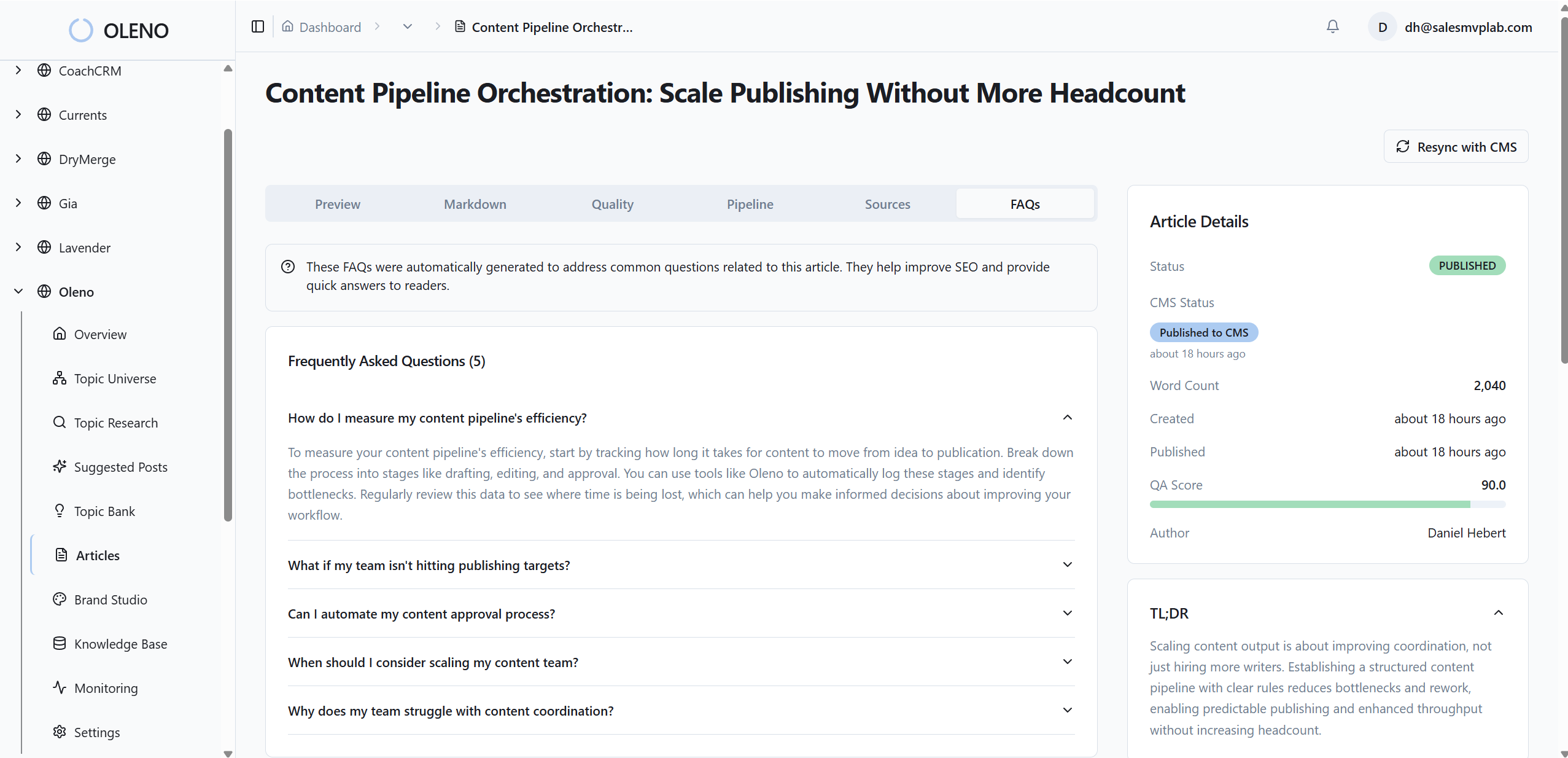
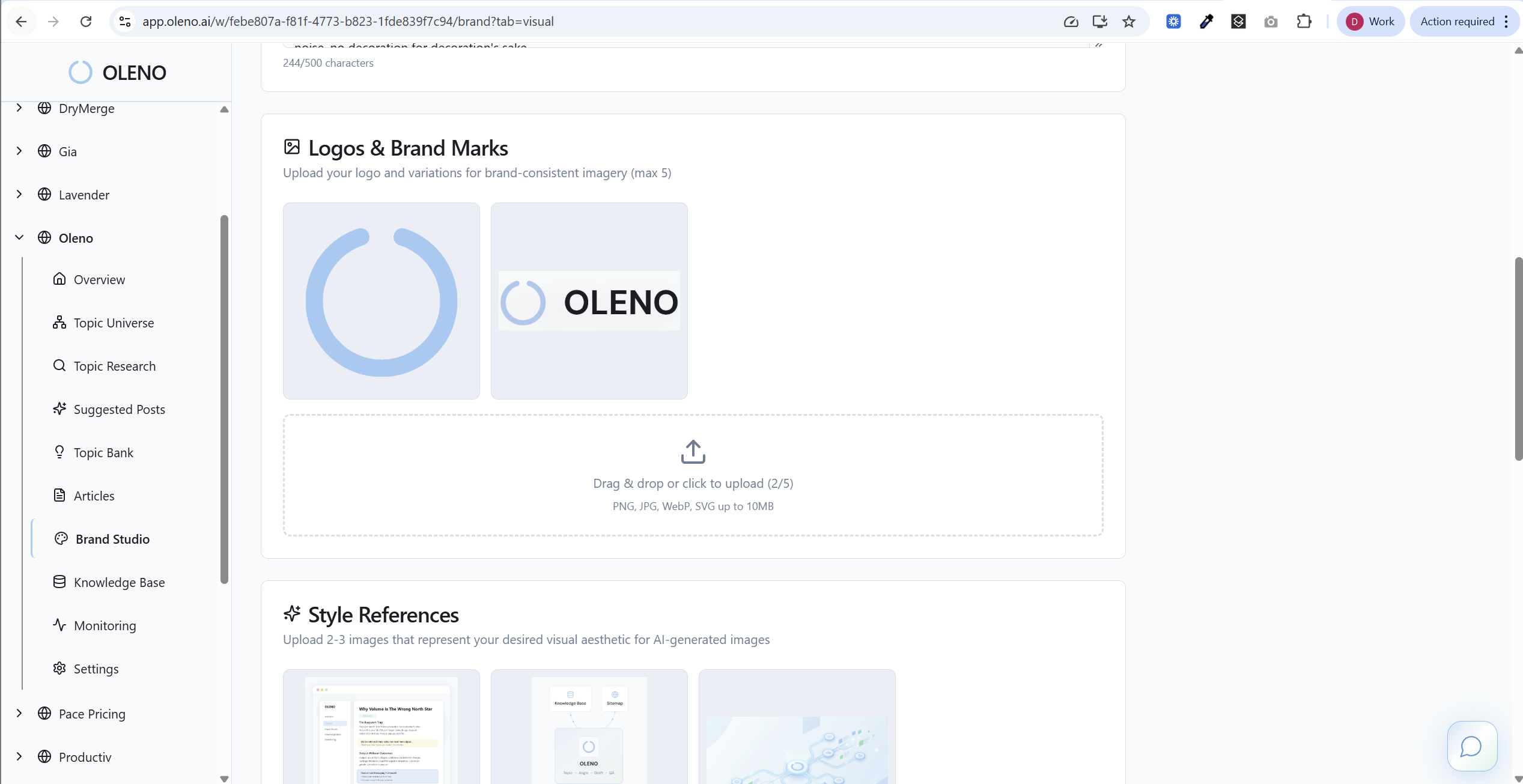
That directly addresses the voice drift and accuracy costs we called out earlier. Reviewers spend less time debating tone and more time improving substance. New contributors ramp faster because the rules are in the system, not only in someone’s head. Brand consistency stops being a hope and becomes a check.
Teams tell me the biggest relief is fewer subjective edits. The system keeps everyone honest.
Automated briefs, QA scoring, and SLA-aware workflows
Oleno generates structured briefs with headings, talking points, and citations pulled from your Knowledge Archive, then runs automated QA that flags tone, structure, and claim issues before a human reads it. Workflows assign Editor-of-Week automatically, send reminders, and respect your SLAs so pieces do not idle.
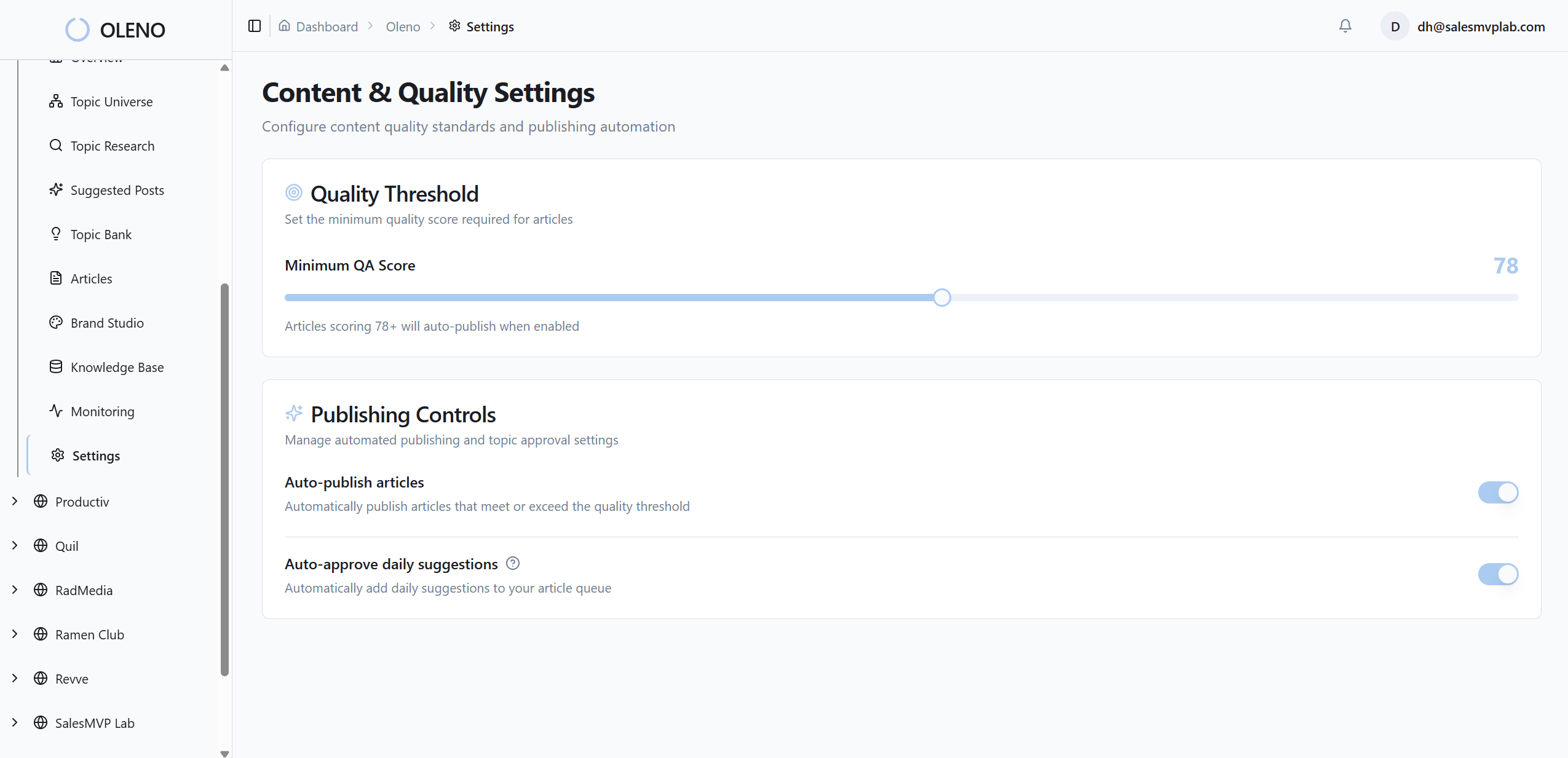
That removes hours of manual review minutes and idle wait time, the exact waste we quantified in rational drowning. You get more first-pass approvals, fewer rounds, and a steadier cadence without adding headcount. Measurement and System Health then tracks cycle time, edit depth, first-pass approvals, and quality trends so you keep raising the bar.
40% faster reviews in 6 to 8 weeks. That is what Oleno aims to deliver when your rotation rules live inside the system. Request a Demo
Conclusion
Hiring a dedicated editor can be great later, but for small teams it is often the wrong first step. A peer editorial rotation gets you moving now. Define roles and SLAs, ship two tight checklists, set a simple schedule, and track five signals. In 6 to 8 weeks, expect about 60% less substantive rework and about 40% faster review turnaround.
Oleno makes that new habit easier to run by encoding voice, claims, and workflows, then blocking low-quality drafts before they hit a human. If you are ready to turn your peer editorial rotation into a reliable system, Book a Demo.
About Daniel Hebert
I'm the founder of Oleno, SalesMVP Lab, and yourLumira. Been working in B2B SaaS in both sales and marketing leadership for 13+ years. I specialize in building revenue engines from the ground up. Over the years, I've codified writing frameworks, which are now powering Oleno.
Frequently Asked Questions