Performance-driven Social Recycling: Evergreen Repost System to 3x Reach

Ad-hoc reposting wastes budget. Algorithms don’t reward randomness, they reward patterns. If you want reach from old content, you need performance-driven social recycling, which means rules, timing, and quality gates that run on autopilot. Not a 3 pm “anyone have a post for LinkedIn?” scramble. I learned that lesson the hard way. You probably did too.
Most teams already have great evergreen content sitting idle. Or they blast the same link four times in a week and teach the feed to ignore them. The result is predictable, and expensive. Reach tanks, engagement dries up, and the team starts writing net-new posts again, which piles on more work without fixing the underlying system.
Key Takeaways:
- Classify evergreen assets with clear eligibility rules before you repost anything
- Use a decay model to decide when to recycle, refresh, or retire
- Generate platform-optimized variants and test them, stop copy-pasting the same caption
- Space repeats with a scheduling algorithm that prevents feed fatigue
- Monitor leading signals weekly and add rollback controls to protect brand safety
- Expect 2–3x reach on recycled assets in 8–12 weeks, with fewer net-new posts
Stop Random Reposts: Performance-Driven Social Recycling Or Lose Reach
Random reposts teach algorithms your content is noise, while performance-driven social recycling compounds reach by following eligibility, decay, and spacing rules. The feed cares about predicted engagement and freshness, not your calendar. If you treat recycling like a system, evergreen assets pull weight again without burning your audience.
Random replays train the algorithm against you
Repeating the same post, at the same time, with the same caption is a mistake. You’re signaling low novelty, which ranking systems down-rank quickly. LinkedIn’s engineering team has been clear that dwell time and relevance drive the feed, not rote repetition, and it shows when you watch impressions drop week over week. I’ve seen teams chase “consistency” and end up consistent at underperforming.
What works is a set of guardrails, not vibes. Pick the assets that actually moved numbers, then vary hooks, formats, and timing. When you rotate strong pieces with fresh angles, you earn another shot at distribution without spamming people who already saw it. It feels counterintuitive at first. Then the numbers make the case.
Recycling is a system, not a social intern task
When recycling lives in someone’s to-do list, it fails. People forget spacing rules, miss decay windows, or post into dead zones. You get feed fatigue, then finger pointing. A system beats willpower. You define the rules once, then run them. The calendar adapts to performance, not the other way around.
I like simple, enforceable constraints. Eligibility requires proof. Scheduling respects buffers. Variants follow voice rules. If a post flops twice in a row, it exits the pool. Simple. You can explain it in five minutes, and it stops debate in your next standup.
The Real Bottleneck Isn’t Ideas, It’s Governed Rules For Recycling
The bottleneck is the absence of clear rules, not a shortage of evergreen content. Without governance, teams guess which posts to recycle, guess when to run them, and guess how to reframe them. Guessing creates drift, rework, and wasted distribution that algorithms quietly punish over time.
Your constraint isn’t ideas, it’s rules
Everyone has a graveyard of solid posts. The problem is you don’t have a consistent way to say yes or no. Is it evergreen or dated? Does it still match your positioning? Has it cleared a quality bar recently? Without codified answers, you end up recycling the wrong pieces and skipping the right ones. That’s how you lose momentum.
Codify the basics. Evergreen means the claim, offer, and links still hold up. Eligibility means it hit a target on its first run. Variant-ready means you can produce three hooks that still sound like you. Once those checks exist, energy shifts from arguing to operating.
Eligibility beats creativity for second runs
Creativity is great for net-new. For recycling, eligibility wins. If the asset didn’t earn a baseline the first time, it’s unlikely to shine on a second run without a refresh. You can spend hours rewriting captions to save a weak link, or you can move on and queue proven winners. Most teams pick the wrong fight.
When you flip this, output changes. The best 20 percent of your library carries the next quarter. You stop throwing mediocre content at the feed and start compounding the stuff that already resonates. People notice. So do the platforms.
The Cost Of Ad Hoc Reposting
Ad hoc reposting wastes time, burns audiences, and buries good content under noise. Each manual decision taxes your team, and each sloppy repeat teaches ranking systems to ignore you. The hidden cost is the opportunity you lose when great assets sit idle while mediocre posts clog the queue.
Time and budget you can never get back
Every sloppy repost has three costs: production time, distribution waste, and brand trust erosion. You feel the time slip first, since someone rebuilt a caption in a rush. You notice the distribution waste next, since the post sinks. Trust erosion takes longer, then shows up in replies and unsubscribes.
If you mapped it honestly, the math would sting:
- Manual recycling setup: 2–4 hours per week you’ll never recover
- Waste from poor timing: 20–40 percent lost reach on otherwise strong assets
- Fixing mistakes: 1–2 hours per incident cleaning up bad links and off-brand hooks
Those are conservative. They add up every month. I’ve watched small teams lose an entire day per week without realizing it, especially when evaluating performance-driven social recycling.
Reach decay and the hidden cost of feed fatigue
Platforms reward novelty, relevance, and quality signals. LinkedIn’s feed models weigh dwell time and author relevance heavily, so repeated text with low engagement gets buried fast, and that pattern sticks longer than you think. Meta also outlines ranking based on predicted value and integrity signals, which you erode when you repeat tired hooks or bait people. X even open-sourced parts of its ranking system that show scoring and decay play major roles.
If you keep hammering the same angle, your audience tunes out. That’s feed fatigue. You pay for it with lower baselines on future posts, even the good ones. Recovering from that slide takes weeks of disciplined resets, not one “banger” post.
- See LinkedIn’s notes on relevancy and dwell time in their engineering blog: Keeping the Feed Relevant
- Meta’s transparency center explains how ranking predicts value and enforces integrity: How Ranking Works
- X shared details on its recommendation system and decay: Twitter Recommendation Algorithm
What It Feels Like When The Feed Turns On You for Performance-driven social recycling
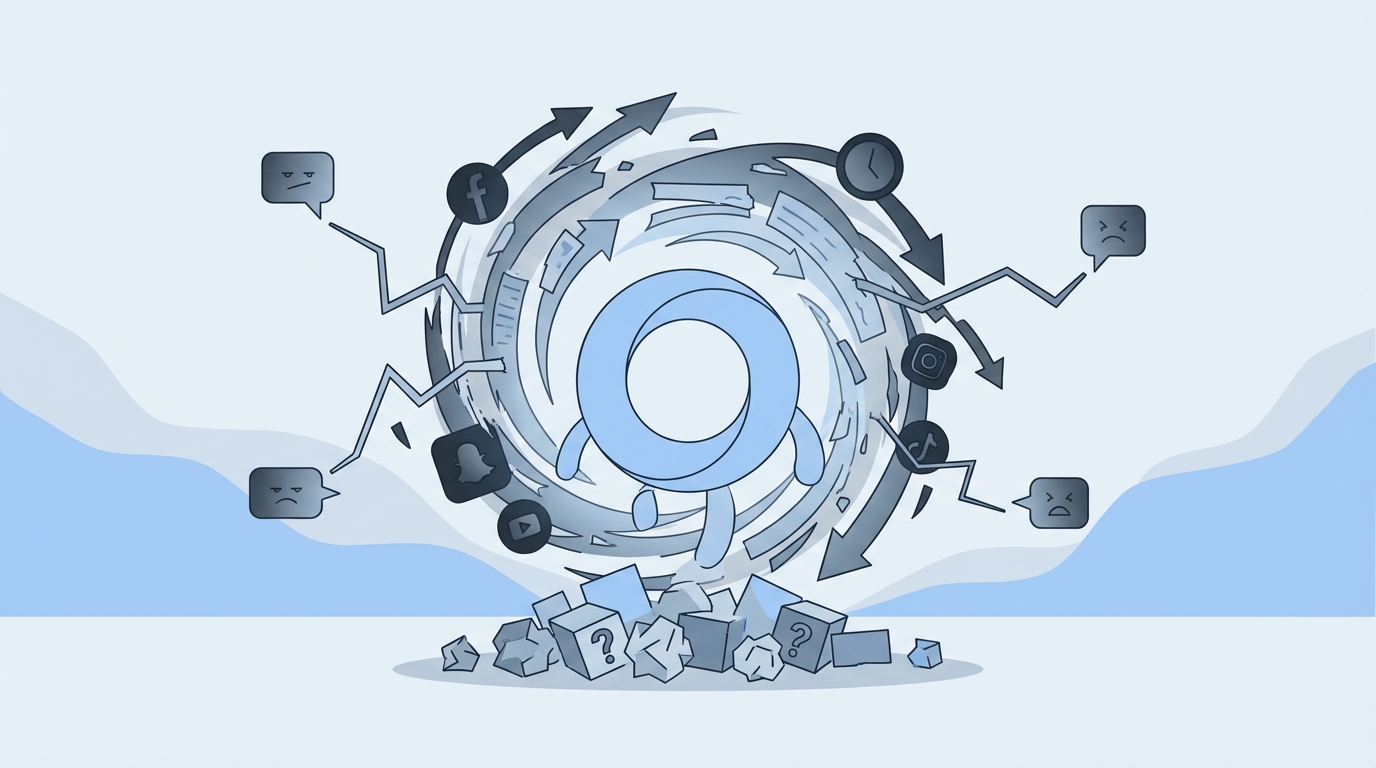
When your recycling is guesswork, the feed feels hostile. You post, it flops, and now you’re rewriting at 9 pm to “save” the week. You’re not crazy. You trained the system to ignore you by repeating stale patterns, and now everything costs extra effort.
The sinking feeling when posts flop
You hit publish and watch impressions crawl. Comments are from your coworkers. The link is fine, the asset is solid, yet the caption feels tired. You know you already used that hook last month. You can almost hear the algorithm yawn. It’s frustrating. You start second-guessing the content, not the system.
I’ve had weeks like that. You try five small fixes that don’t matter, then convince yourself you need a brand new campaign. You don’t. You need rules, and the discipline to stick to them.
The politics spiral
Low performance breeds hot takes. Someone wants to post three times a day. Someone else wants to pause everything. Neither is the fix. The fix is a governed process with clear eligibility, tested variants, and spacing baked in. You defang the politics by making the system the boss.
Once people see the rules work, the arguments fade. You stop building consensus and start building reach.
Build A Performance-Driven Social Recycling System
A working recycling system classifies evergreen assets, applies a decay model, generates platform-native variants, and spaces repeats to avoid fatigue. You monitor leading signals weekly, promote winners, and retire losers. Do this for 8–12 weeks and you can double or triple reach on recycled assets with less net-new work.
Classify evergreen inventory with clear eligibility rules
Start by tagging what’s actually evergreen. Facts still accurate, offer still live, link still healthy, voice still on-brand. Then apply an eligibility threshold, like a median-plus performance on the first run. That earns a second shot. Anything below that line needs a refresh before it re-enters.
I like to add a “variant-ready” flag. If you can write three distinct hooks that still sound like you, you have room to test without going off-brand. If you can’t, the post probably needs a content refresh, not a caption rewrite. Eligibility beats optimism here.
After you set the rules, write them down so they are hard to ignore:
- Evergreen truth check: claim, proof, and offer still correct
- Eligibility threshold: first-run performance at or above median for the channel
- Variant-ready: three distinct hooks that pass brand voice constraints
Run a decay model, variant tests, and spacing algorithm
Reposts should fire when reach and engagement decay past your set thresholds, not when the calendar looks empty. Pick a decay window per channel, then test fresh hooks and formats inside that window. Respect spacing so repeats never crowd a follower’s feed.
Here’s a simple operating loop you can adopt today: This is particularly relevant for performance-driven social recycling.
- Score each evergreen asset weekly against a decay threshold that you define
- Queue only those that qualify, then assign three tested hook variants by channel
- Enforce spacing buffers per asset and per audience so repeats do not stack
- Promote winners to a higher cadence, and retire losers after two weak runs
Want to cut the manual busywork and still keep guardrails tight? Request a Demo
How Oleno Runs Your Recycling Rules At Scale
Oleno turns the recycling rules into an operating system. You encode voice, narrative, and product truths once, then Distribution repurposes approved content, enforces cadence, and manages evergreen pools. Quality gates protect brand standards, and Measurement & System Health shows if your system is actually working.

Encode the rules in Oleno, not your calendar
With Brand Studio, you lock tone, terms, and CTA style so every variant still sounds like you. Marketing Studio encodes your POV and message pillars, so recycled angles reinforce your narrative, not drift from it. Audience & Persona Targeting adapts hooks for each channel’s style without going off-brand, which lifts dwell time and click intent where it matters.
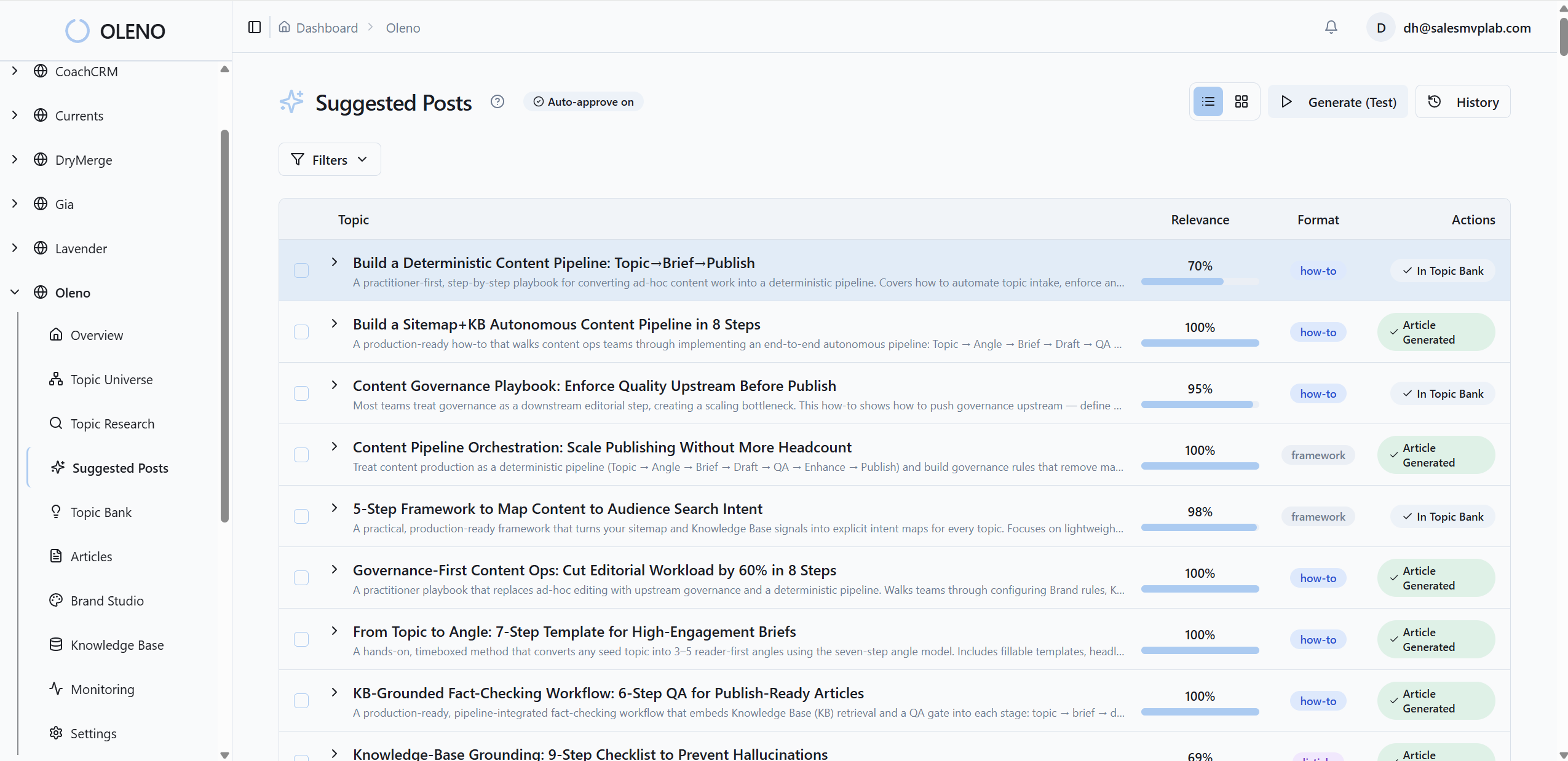
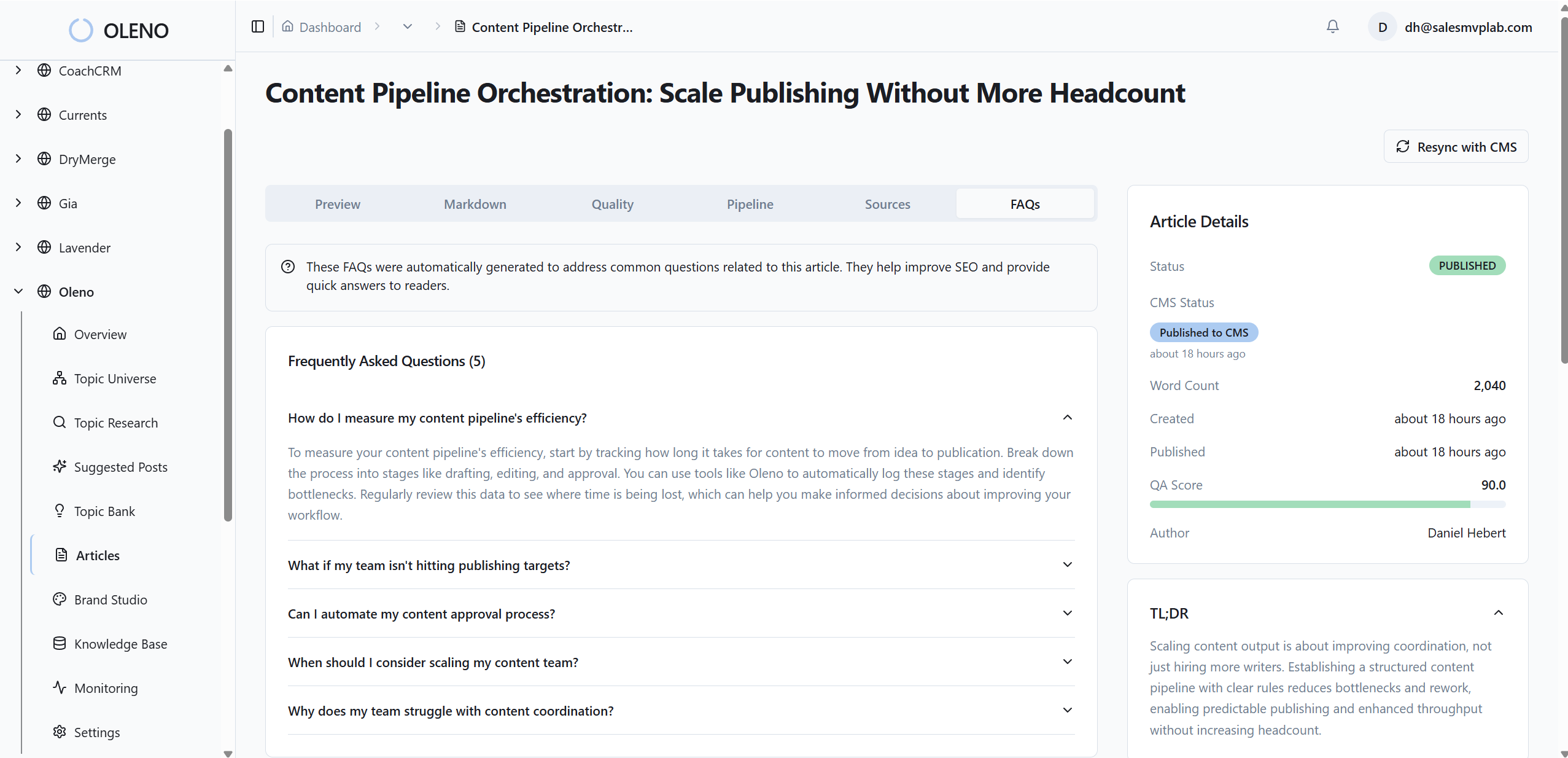
Distribution ingests approved long-form pieces, generates platform-formatted variants with multiple hook styles, and routes them to a review workbench. You approve, they move to a scheduling queue with spacing buffers that prevent feed fatigue. Quality Control blocks anything that fails voice, structure, or grounding checks, so mistakes do not leak into the feed. CMS Publishing handles site posts, while social variants stay governed inside Distribution so cadence is steady and safe.
2–3x more reach on recycled assets in 8–12 weeks is realistic when the rules actually run. Want to see it mapped to your library? Book a Demo
Operate with guardrails, measure weekly, roll back fast
Oleno’s Measurement & System Health tracks output volume, cadence, and quality trends, so you can see if recycling is compounding or slipping. You get early warnings when failure patterns emerge, like repeated weak variants or spacing violations. That lets you fix the rule, not guess at symptoms.
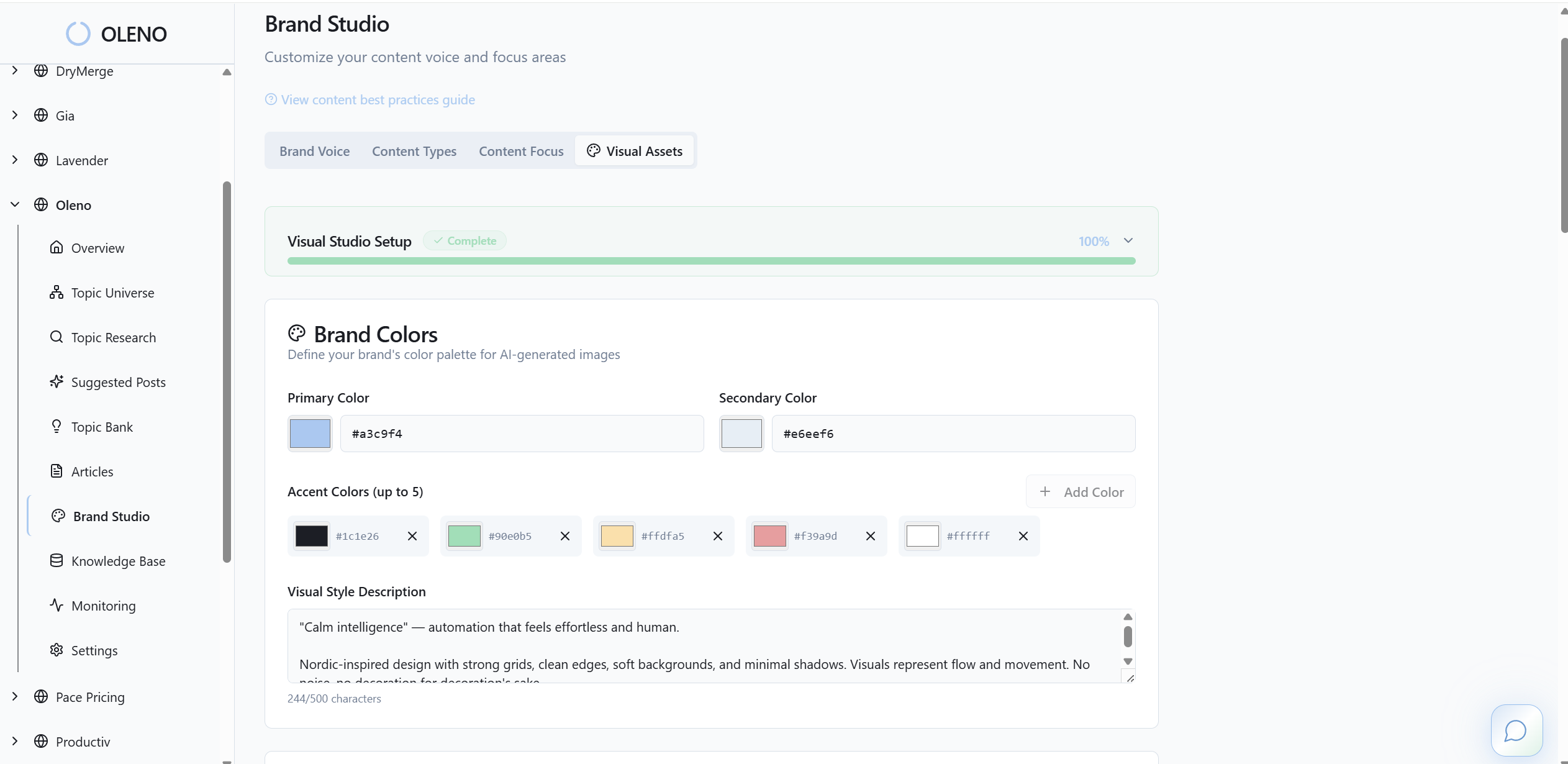
The Knowledge Archive keeps claims grounded in approved truth, which matters when you recycle product-led posts months later. If a claim changes, Product Studio closes the loop so outdated content does not sneak back in. When a post underperforms twice, you pull it from the evergreen pool and move on. No debates. Just rules doing their job.
Conclusion
Ad-hoc reposting is a tax on small teams. You waste hours, teach the feed to ignore you, and still feel pressure to write net-new posts. A performance-driven social recycling system flips that. Classify, test, space, and monitor. Then let the rules run.
Do it for a quarter and you should see reach climb on recycled assets while your new-content load drops. That is the goal. Fewer heroics. More compounding output that actually moves numbers. If you want the rules encoded, enforced, and measured without extra headcount, Oleno is built for that. Ready to retire guesswork and run recycling like a system? Request a Demo
About Daniel Hebert
I'm the founder of Oleno, SalesMVP Lab, and yourLumira. Been working in B2B SaaS in both sales and marketing leadership for 13+ years. I specialize in building revenue engines from the ground up. Over the years, I've codified writing frameworks, which are now powering Oleno.
Frequently Asked Questions