Persona-to-Intent Topic Map: Prioritize Content by Buying Stage
Most teams treat personas like finished artifacts, not working inputs. That is why so much content looks right on paper and still misses pipeline. A persona-to-intent topic map fixes that. It ties each buyer to real search behavior and revenue proximity. Build one, and you stop guessing. You start shipping work that moves deals.
I have seen the same mistake over and over. You pour weeks into a persona page, add a tidy set of pains and goals, then wonder why leads do not budge. The problem is not the persona. It is the missing intent. A persona-to-intent topic map turns that persona into a plan you can execute. I will show you how, and yes, we will keep it simple. The phrase you want to remember is persona-to-intent topic map.
Key Takeaways:
- Convert personas into intent-classified keywords that match buying behavior, not opinions
- Score topics by revenue proximity, persona fit, and stage weight to kill vanity picks
- Draft a 90-day backlog with owners, SLAs, and gates so it ships without chaos
- Stop publishing low-value pages, shift effort to persona-intent pairs that create MQLs
- Validate with live SERPs and sales calls before you commit, then protect cadence
- Use a consistent grid, stage mapping, and brief template to prevent drift
Why a Persona-to-Intent Topic Map Beats Generic Persona Pages
A persona-to-intent topic map wins because it connects who you target to how they search and when they are ready. It replaces vague persona pages with prioritized topics that sit closer to revenue. Teams get a clear queue, better conversion paths, and fewer wasted cycles on thin, top-of-funnel fluff.
The overlooked truth about personas versus intent
Personas are constraints. Intent is motion. When you separate them, you publish for a buyer who is not actually buying. Put them together and patterns jump out fast. You see problem-aware queries, solution exploration, product comparisons, and transactional language. You also see where your narrative should interrupt the default path.
Most teams overbuild persona docs, then hand them to writers as if they are briefs. That is the wrong handoff. Writers need intents, example queries, stage, and desired action. I like to ask one simple question in the kickoff: how does this buyer reveal urgency in a query? If you cannot answer, you are not ready to brief.
The mess shows up in performance. Bounce rises, assisted conversions drop, and sellers ignore the content. It is not because the article is bad. It is because the article answered a question the buyer did not have yet. There is a fix. It starts with intent patterns that you can verify in the wild.
- Strong persona constraints, weak intent evidence equals risk
- Specific intent, no stage mapping equals drift
- Stage clarity, no desired action equals weak attribution
What buying intent signals actually look like
Buying intent lives inside query language. Problem framing shows up as “why X fails” or “how to fix Y.” Solution exploration looks like “ways to do X” or “framework for Y.” Decision-stage intent is clear: “X vs Y,” “best X for [role],” “alternatives to Y,” “pricing,” “implementation.”
Map those to each persona. A Head of Content will not search like a CMO. The CMO might look for “content operations ROI,” while the Head of Content might type “content operations workflow template.” That difference matters. It changes the stage, the hook, the proof, and the conversion event you choose.
You can validate this in minutes. Pull a live SERP, scan the titles, note paid placements, and read two articles. Patterns appear. The Messy Middle research from Google is worth a look here, because it explains the loop buyers run between exploration and evaluation.
- Decision intent words: vs, alternatives, compare, pricing, implementation
- Consideration intent words: framework, approach, method, checklist
- Awareness intent words: why, problem, symptoms, fix, mistakes
The hidden cost of misaligned persona content
Misalignment burns time, money, and trust. You will see thin traffic that never returns, sales calls where prospects say “I read your post, but it did not help,” and a calendar clogged with rewrites. That hurts morale too. Writers feel like they are failing when the real issue is targeting.
Quantify the damage so the team takes the fix seriously. Count hours spent on pieces with fewer than five visits a month. Add ad spend used to prop up dead pages. Tally the opportunities your sellers missed while you were busy chasing the wrong topics. When people see the cost, they stop defending pet ideas.
The win is simple. Align persona and intent, and you earn permission to be opinionated. You can challenge assumptions without losing the reader. You can also anchor content to a conversion event that sales actually wants. The map becomes a guardrail against shiny objects.
- Count time lost on rewrites for misaligned pieces
- Track assisted conversions drop when intent is wrong
- Flag any page with weak dwell time and high bounce for review
The Real Bottleneck: Personas Without Revenue Proximity
Revenue proximity is the tie-breaker that keeps content honest. It asks how close a topic sits to a commercial decision. You can spot proximity in budget signals, timeframes, and explicit comparisons. When two ideas look equal on traffic, pick the one with higher proximity. That is how you stop vanity bloat.
Define revenue proximity and why it matters
Revenue proximity is a simple scale. High proximity means the buyer signals budget, timeline, or vendor language. Medium proximity means the buyer is comparing approaches. Low proximity means the buyer is still naming the problem. The trick is to rate proximity per persona, not in the abstract.
Why does it matter? Because you have finite cycles. Most teams are under-resourced and pulled in ten directions. If you ignore proximity, you fill your calendar with safe awareness posts and miss the work that creates MQLs now. I have made that mistake. Everyone has. You feel busy. Pipeline stays flat.
A quick sanity check helps. Would a seller link this piece in an active deal? If not, ask why. Maybe it belongs in consideration, not decision. Maybe the CTA is wrong. Maybe the persona is a recommender, not a buyer. The clarity is worth it. The Gartner view of the B2B buying journey also reinforces how many loops exist. Proximity cuts through the loops.
How to connect topics to pipeline stages
Stage mapping prevents drift. Problem framing belongs to awareness. Solution approaches to consideration. Comparison and alternatives to decision. Under each, attach one primary conversion event. Newsletter sign-up is fine in awareness. Demo or trial works in decision. Keep it clean.
Tie the handoff to sales behavior. What does a seller need at each stage, for each persona, to move the deal forward? If the answer is unclear, pause. Do a quick ride-along call or listen to a recording. The language there will make the map better, and your formats will be less generic.
Then pick the format that wins the click and the action. Do not force whitepapers where a 900-word teardown would outperform. Do not force a long-form article where a feature comparison table would beat it. You are designing moments, not content for content’s sake.
Scoring Framework for a Persona-to-Intent Topic Map
A scoring model turns opinion into a decision. Use three factors you can defend: intent weight, persona fit, and revenue proximity. Multiply them. Sort. Publish the rules. When everyone can see how a topic won, debates end faster and the backlog ships, especially when evaluating persona-to-intent topic map.
Define the three factors and weightings
Intent weight captures stage value. Decision-stage gets a 3, consideration a 2, awareness a 1. Persona fit reflects ICP strength and win rate. High-fit accounts and roles score higher. Revenue proximity is your closeness scale, from 1 to 3. Keep the ranges small. You want clarity, not spreadsheet theater.
I like to calibrate with history. Pull five pieces that drove real pipeline. Score them. Pull five that flopped. Score them. The separation should be obvious. If it is not, your weights are off. Adjust, then lock the rules for a quarter so people stop gaming the model. Publish a one-page explainer so new folks can follow it.
A confidence column helps. Low-confidence picks are fine when the upside is high, but mark them. That way, if results miss, you already know why. You can also limit how many risky bets you allow per sprint so you do not overload the team.
- Intent Weight: Decision 3, Consideration 2, Awareness 1
- Persona Fit: High-fit 3, Mid-fit 2, Edge-fit 1
- Revenue Proximity: High 3, Medium 2, Low 1
Build a simple scoring model your team can trust
Operationalize in a shared sheet that anyone can read without training. For each topic, add a short evidence note next to each score. Example SERP. Sample query. Why the persona fit is strong. Require reviewer sign-off for any score above a threshold. Approval keeps quality high without heavy meetings.
Borrow from lightweight methods that already work in product. The RICE framework from Intercom is a good reminder to add confidence and impact, not just reach. You are not shipping features, but the same discipline applies. Keep friction low, clarity high.
Guard the model from bloat. Every new column is a future argument. Stick to the three factors, the evidence note, and the confidence rating. That is enough to make good calls, fast.
From Messy Lists to a 90-Day Backlog: The Workshop Flow for Persona-to-intent topic map
You can turn a pile of ideas into a 90-day plan in 90 minutes. Keep the room small, the agenda tight, and decisions visible. The feeling at the end should be relief, not more follow-ups. I have walked out of too many workshops with zero real traction. You will not do that here.

Who should be in the room and what prep is required?
Invite one owner per persona, one seller, one SEO, and one product marketer. That is it. Share prep two days before: top queries by persona, recent win-loss notes, and top attribution gaps. Assign roles. Facilitator, timekeeper, decider. State the goal up front. A prioritized backlog. No roadmapping, no scope creep.
People often bring pet topics. That is fine. The scoring model and the proximity rule strip the emotion out. If an idea is good, it will win on the math. If it does not win, it goes to the parking lot without bruised egos. The structure keeps it healthy.
Post the rules on the wall or in the doc so no one forgets. Short rules, in view, prevent stalls. The vibe changes when everyone can see how the sausage gets made. Arguments end faster.
Run the workshop in 90 minutes, agenda and exercises
Timebox three blocks. First, align on revenue proximity with two quick examples. Second, fill the grid, persona by intent, calling out risky cells. Third, score the top candidates and draft the first two sprints. Use visible timers and dot voting to speed choices.
Do not chase perfect. You are building a pipeline, not a museum piece. Two sprints planned, six topics detailed, owners named, due dates set. That is the definition of done. The details inside each brief can follow the template right after the session.
A quick readout to leadership helps. Five minutes, one slide. What you chose, why it wins, and what ships first. Leaders sign off when the logic is tight and the plan is real.
Build Your Persona-to-Intent Topic Map the Right Way
The right map starts with the right inputs, a simple grid, and fast validation. Get personas with jobs-to-be-done and objections, pull live query evidence, and add real pipeline data. Design a grid that captures stage, desired action, and your point of view. Pressure test cells with live SERPs and sales calls.
What inputs do you need before mapping?
You need three things, and you need them clean. First, validated personas with jobs-to-be-done and common objections. Second, query evidence per persona, including SERP snapshots and competitor angles. Third, current pipeline data by segment. If any of those are missing, pause mapping until they exist.
Without these, you are back to guessing. Guessing creates rework, which kills speed and trust. I get why teams rush. A calendar is staring at you. Resist the urge. An extra day on inputs saves a month of patching later, especially when evaluating persona-to-intent topic map.
When the inputs are ready, make them visible in one doc. Everyone should look at the same evidence. If the data is messy, call it messy. Clarity beats fake certainty every time.
- Personas: jobs-to-be-done, objections, decision role
- Queries: examples, SERP notes, competitor angles
- Pipeline: by segment, by stage, last quarter outcomes
The mapping grid: persona x intent x stage
Design a two-axis grid. Personas down the left. Intent categories across the top. Under each cell, capture three items. Example queries, stage, and the desired action. Keep it lean. Three to five rows per persona is enough to start. The aim is a system, not a spreadsheet monument.
Give each cell a short point of view, one sentence. That sentence keeps your narrative present. If your POV does not fit, the topic probably does not belong on your site. That is a feature, not a bug. It prevents drift as new people join the work.
Consistency matters more than detail. Use the same fields in every cell. Use the same verbs in desired actions. You want this to be legible to anyone on your team, even a new hire on day three.
How do you validate the map quickly?
Pressure test each cell. Sample five live queries. Confirm the stage and note gaps your competitors cover. Bring a seller or CSM to sanity-check language and urgency. If a cell cannot pass this test in ten minutes, mark it risky and deprioritize.
Use external references to keep standards high. The Ahrefs guide on search intent offers clear patterns for classifying queries. That keeps debates from turning into opinions. You want repeatable calls, not vibes.
Record the validation outcome in the grid. Pass, risky, or cut. Then move on. Do not fall into a research hole. You are building a plan you can ship next week.
Want a working persona-to-intent topic map in two weeks without herding cats? Request a Demo
How Oleno Operationalizes Your Persona-to-Intent Topic Map
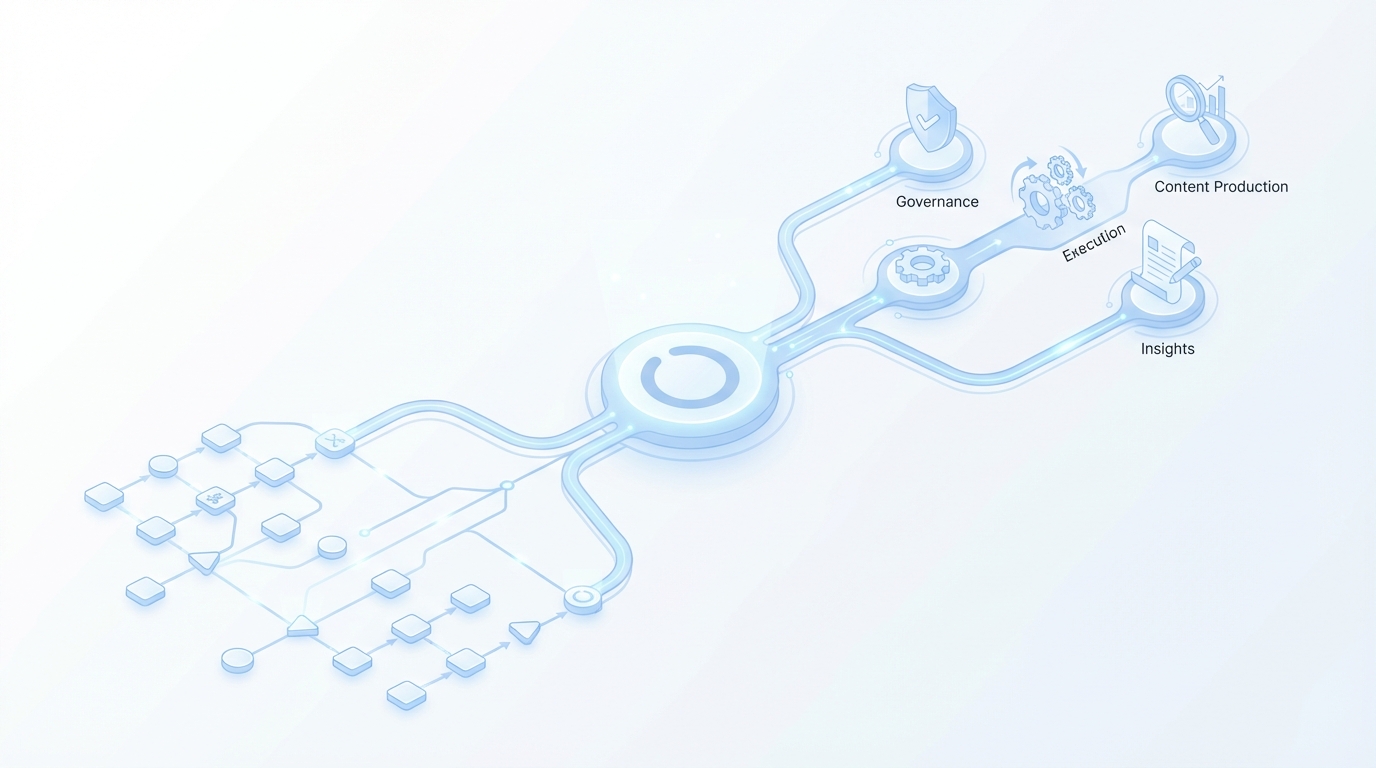
Oleno turns the map into execution. Governance locks voice, POV, and product truth. Audience and Persona Targeting injects segment context into briefs and drafts. The Topic Universe fills a bank with mapped ideas, and the QA gate blocks drift. CMS publishing keeps cadence steady while your team focuses on strategy.
Audience and persona governance that prevents drift
Oleno’s Brand Studio captures how you sound, from tone and terms to CTA style and structure. Marketing Studio encodes your key messages and category framing so the narrative stays consistent. Product Studio keeps claims accurate inside approved boundaries. Together, these studios eliminate voice drift and stop invented features from slipping through.
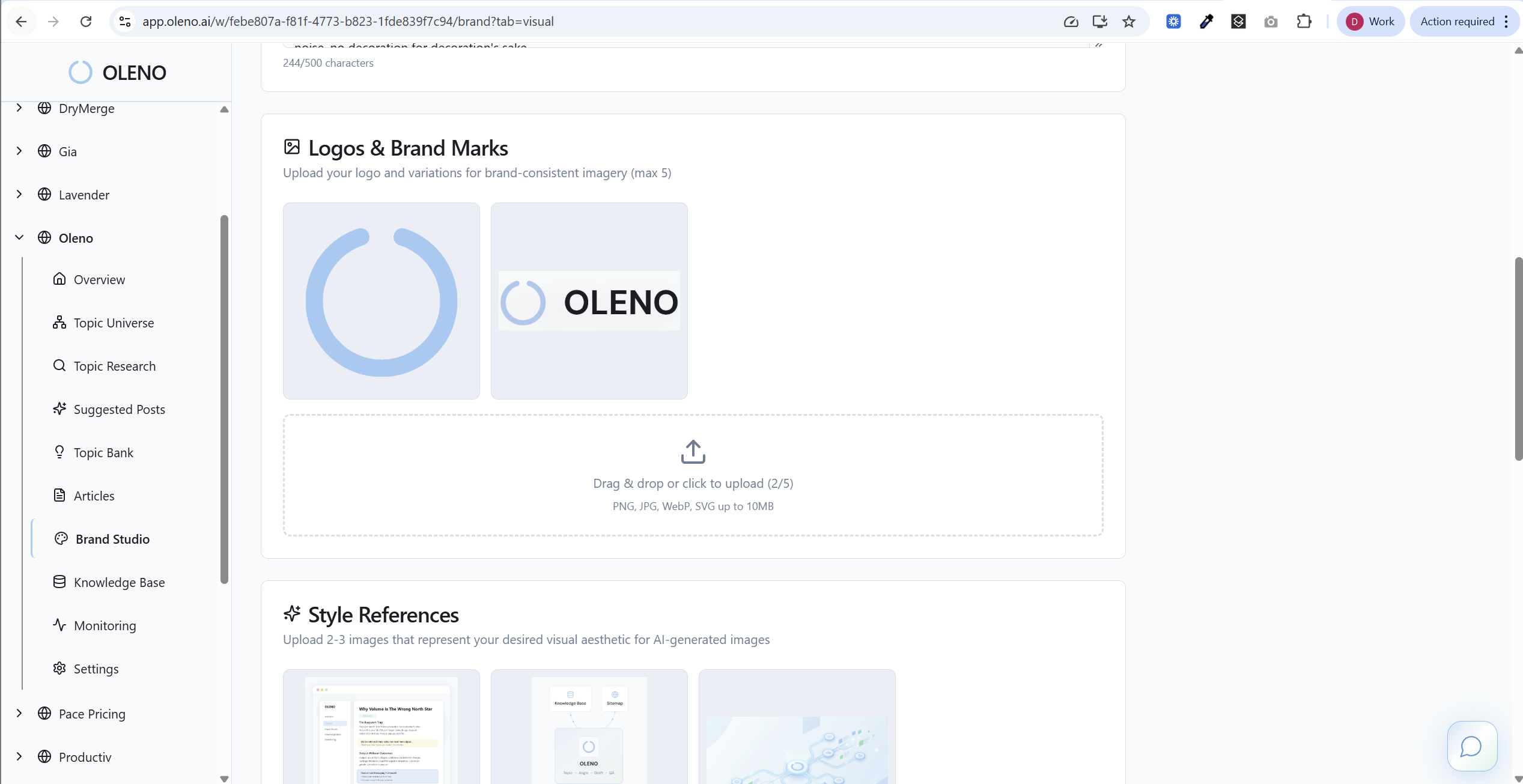
Audience and Persona Targeting does the practical work. It merges pains, goals, objections, and language preferences for each segment. That context travels with the brief and the draft. Writers and AI are now working from the same playbook, without you re-explaining voice or positioning every time.
The effect is felt in review cycles. Fewer rewrites. Lower coordination cost. Sellers trust the output because it reflects what they actually say to buyers. That is the point. Reliable execution, not hero edits at 11 pm.
- Brand Studio: tone, terms, CTAs, structure, exemplars
- Marketing Studio: key messages, POV, narrative frameworks
- Product Studio: allowed claims, supported use cases, pricing notes
Topic bank, briefs, and automated scoring tied to intent
The SEO Studio’s Topic Universe discovers and scores opportunities, then creates governed briefs with locked H2 and H3 structures. The Topic Bank holds mapped ideas with persona, intent, stage, and desired action. Briefs pull from your Knowledge Archive so sources are pre-approved and grounded.
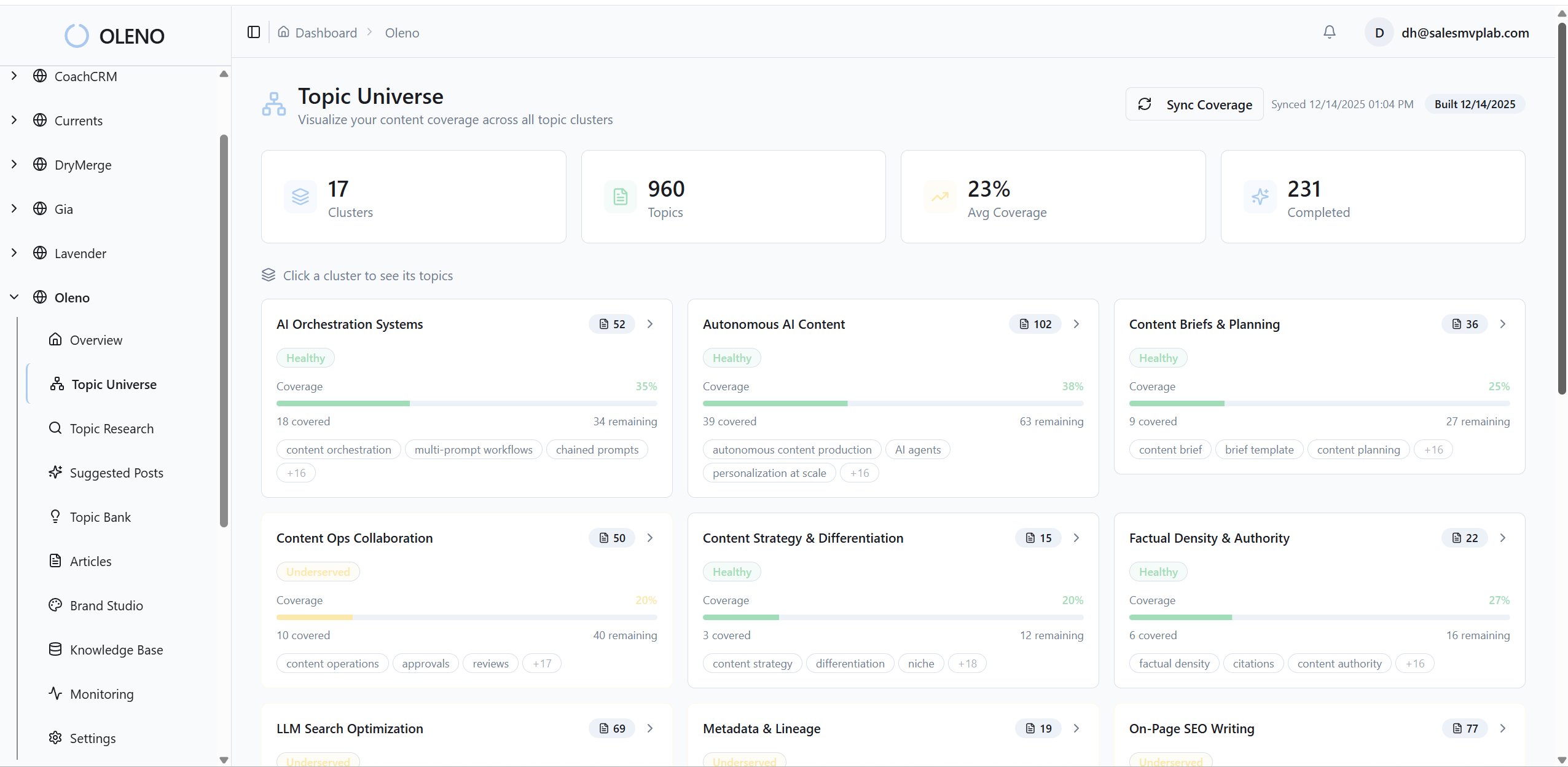
You can mirror your scoring model inside the process. Intent weight, persona fit, and proximity travel as metadata. That means the piece that hits the queue already reflects your rules. Research time drops because outlines come pre-filled with angles that match the persona and stage.
Grounding matters. The Knowledge Archive keeps drafts anchored to real product truths and customer stories. The QA gate cross-checks assertions against the archive. If something is off, it flags the section and forces revision before publishing. Accuracy rises without adding more meetings.
Cut the guesswork from briefs and reduce manual research overhead with governed outlines ready in minutes. Request a Demo
Execution engine, cadence planning, and quality control
The pipeline runs end to end. Discover to Angle to Brief to Draft to QA to Visuals to Publish. Direct CMS publishing pushes approved content as drafts or live posts without copy-paste. The cadence stays steady even when priorities shift, because the system owns the handoffs.
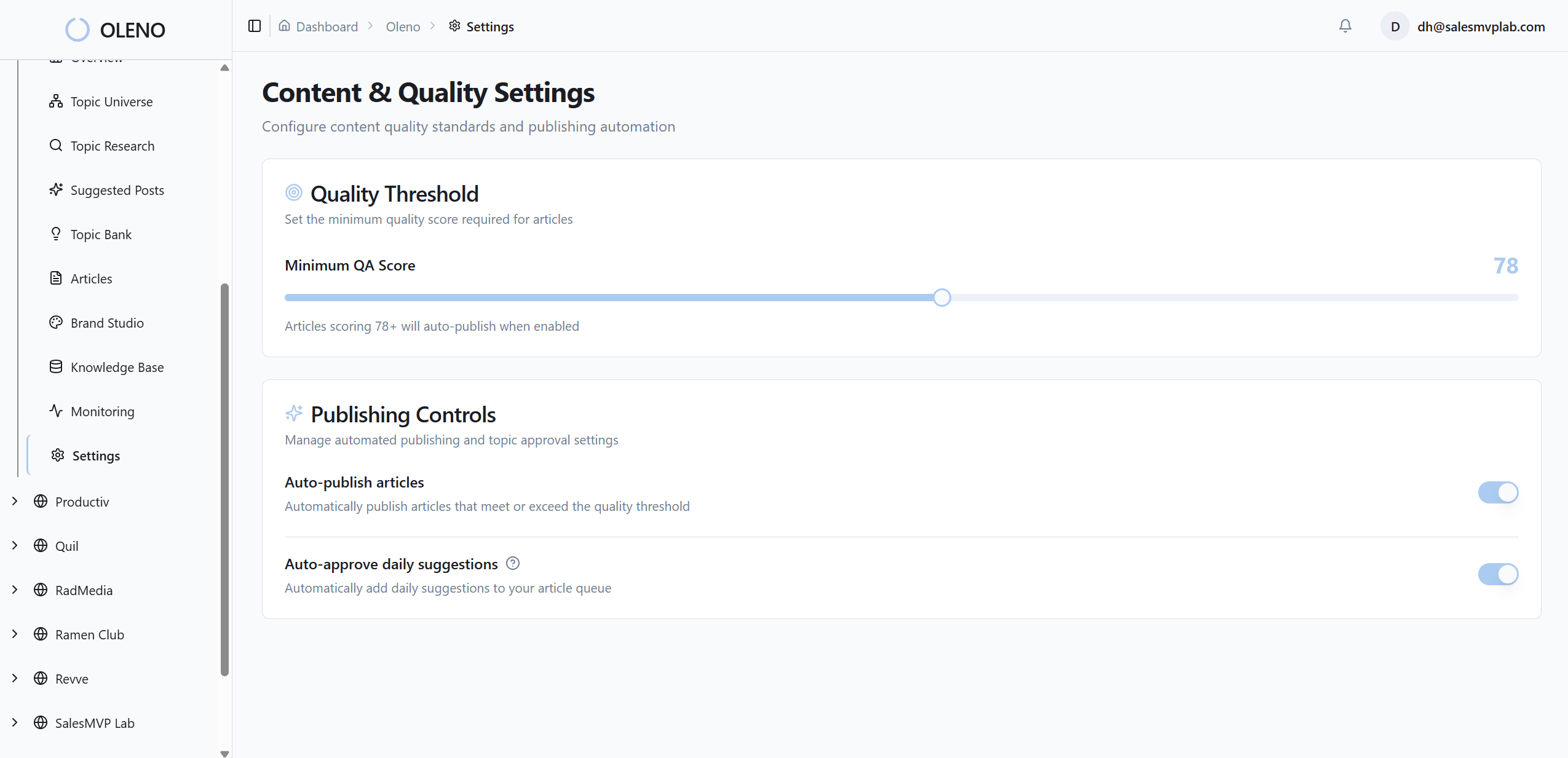
Quality Control is non-negotiable. Nothing ships unless it passes checks for voice, narrative structure, grounding accuracy, and SEO or LLM readability. That is how you keep speed and quality from fighting each other. As output grows, the system still enforces the same floor.
Leadership cares about reliability. Measurement and System Health tracks output volume, cadence, and common failure patterns so you can spot bottlenecks before they stall the engine. It is not web analytics. It tells you whether execution is compounding or slipping.
- Topic Universe and Topic Bank keep the runway full
- QA Gate enforces voice, accuracy, and structure before publish
- CMS Publishing removes handoffs that slow your team
Want to see your governed briefs, QA gate, and CMS publishing in one flow, end to end? Book a Demo
Conclusion
Most teams do not fail because they lack ideas. They fail because they publish persona content at the wrong intent. A persona-to-intent topic map fixes that in a week or two. Then the scoring model and the backlog protect it. You end up shipping what buyers actually need, when they need it.
Make one clear change. Reduce low-value creation by roughly forty percent, and push fifty to seventy percent of effort toward persona-intent pairs with real revenue proximity. Do it for ninety days. Watch MQLs that matter show up. It is not magic. It is the discipline of pairing who with why, then letting the system run.
About Daniel Hebert
I'm the founder of Oleno, SalesMVP Lab, and yourLumira. Been working in B2B SaaS in both sales and marketing leadership for 13+ years. I specialize in building revenue engines from the ground up. Over the years, I've codified writing frameworks, which are now powering Oleno.
Frequently Asked Questions