Personalize Content at Scale: Generate 10 Segment Variants from One Article
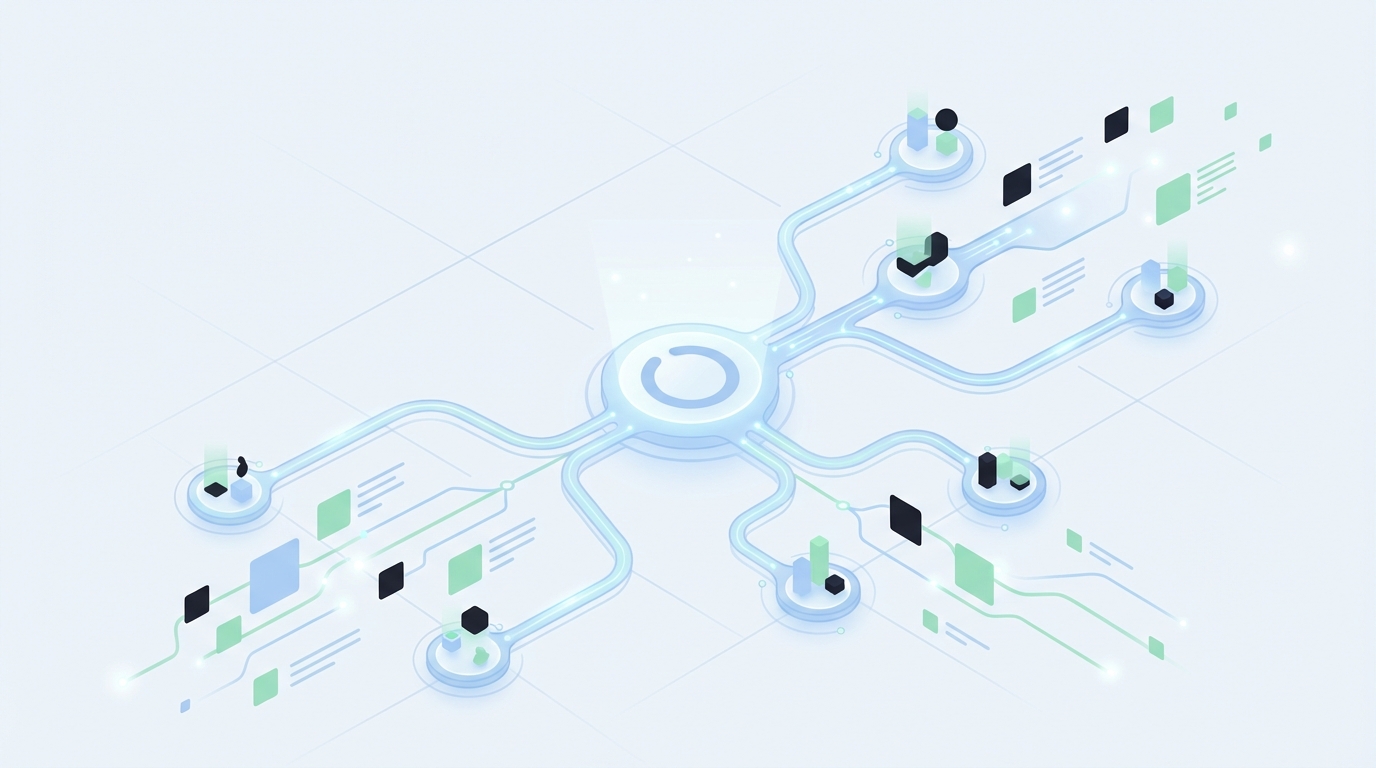
Personalization breaks when teams rewrite everything. It feels right in the moment, “talk directly to RevOps, then Sales Ops, then Finance,” and then the math hits. You’re suddenly maintaining ten near-identical articles, with ten sets of edits, ten SEO headaches, and a voice that starts to sound like three different companies.
There’s a better path. One canonical article that stays true to your narrative, plus controlled variation where it actually matters: headline, proof, examples, and CTA. Keep the spine stable. Personalize the moments that change behavior. That’s how you scale relevance without creating a maintenance tail you can’t carry.
Key Takeaways:
- Build one canonical article with variable fields and conditional sections, not ten separate rewrites
- Personalize what changes behavior (headline, proof, examples, CTA), not core claims or structure
- Encode governance (voice, product truth, allowed claims) so variants can’t drift
- Use templating plus a grounded knowledge base for accurate, segment-specific examples
- Canonicalize and route internal links intentionally to avoid cannibalization and wasted crawl
Why Writing 10 Separate Articles Is The Wrong Kind Of Personalization
Writing ten separate articles for ten segments isn’t personalization at scale, it’s duplication with a nicer name. The scalable move is a single canonical narrative with controlled variables for role, industry, and stage. For example, keep core claims stable, but swap a RevOps proof point and a product-led CTA for finance.

The editorial math that does not scale
You don’t need ten full rewrites to feel specific. You need one story that flexes responsibly. The moment you fork articles, you create parallel universes, each hungry for new edits, updates, screenshots, and SEO cleanup. It’s not strategic. It’s overhead disguised as empathy.
I’ve been on both sides. At one company, we moved fast and cloned posts for every persona. It worked for a month, then backlogs exploded and approvals lagged. At another, we held a tight narrative and just swapped examples and CTA framing by role. Same perceived personalization on the page, a fraction of the upkeep behind the scenes.
The principle is simple: separate message from rendering. Lock the spine. Swap the parts an actual human notices, headline they recognize, example from their stack, CTA that maps to their stage. Stop rewriting everything. Start controlling variation.
What do you actually need to personalize?
Roles care about different pains, not different definitions. A VP of RevOps wants integration speed and data trust. A CMO wants message consistency and velocity. That means your personalization list is short: headline language, example selection, proof points, and CTA angle. Not the whole body.
Keep the claims, structure, and messaging sequence intact. Why? Consistency compounds. When your core argument changes by persona, sales can’t repeat it, product can’t reinforce it, and SEO can’t understand it. You end up with a chorus that never sings the same song twice.
Give each segment something that feels hand-written without actually rewriting. Lead with their pain, cite their stack, show their outcome, and point to their next step. The rest should read like it came from one mind. Because it did.
Ready to move past rewrites and see a canonical approach in action? Try a small experiment: one master, three variants. If you want help building it, you can Try Generating 3 Free Test Articles Now.
The Layer You Are Missing Is A Canonical Template With Real Governance
Most teams think personalization is writing. It’s actually system design with rules. You need a canonical article, variables for segment specifics, conditional blocks for optional content, and governance for voice and claims. Without that, every variant becomes a one-off edit waiting to drift.

Where duplication and drift creep in
Duplication starts innocently. A product marketer tweaks a paragraph for an industry. Someone else adjusts an intro for enterprise. A week later, you’re maintaining three forks and no one remembers which one is “official.” That’s where drift creeps in, facts diverge, tone shifts, structure loosens.
The root cause isn’t bad intent. It’s missing constraints. No canonical structure. No variable fields. No “allowed claims” list. So people do what they must to move work forward. Perfectly reasonable. Painful at scale. This is why orchestration beats prompting, decisions made once turn into predictable, repeatable outputs, instead of ad-hoc edits that accumulate debt.
Create a place for change to live. If the example needs to be healthcare-specific, that’s a variable. If an objection only matters to finance, that’s a conditional block. Lock the rest. Your future self will thank you during the next positioning update.
What is a canonical article and how does it work?
Think of the canonical as the source of truth. It contains the shared narrative and variable hooks like {{role}}, {{industry}}, and {{cta_variant}}. Conditional sections turn on for segments that need them, off for segments that don’t. The canonical dictates order, pacing, and claims. Variants render from it, not the other way around.
This lets you manage at two levels. The macro (shared narrative) rarely changes. The micro (examples, proof, headline) changes often. You can update a claim once in the canonical and know it propagates everywhere the next time variants render. That’s governance doing its job.
If you want more operating detail, enterprise teams often pair this approach with a CMS that supports structured fields and permissions. Adobe’s playbooks on process and roles are a useful complement to this model, clear owners, clear guardrails, less chaos. See Adobe’s personalization at scale playbook.
The Hidden Costs Of Manual Persona Rewrites
Manual rewrites look like craftsmanship. They behave like debt. Time, headcount, SEO risk, brand trust, each takes a hit when you clone bodies with light edits. You don’t see it on day one. You feel it in quarter two.
The time and headcount math you are not seeing
Let’s pretend an 1,800-word article takes roughly six hours to brief, write, and edit. Ten personas turns that into sixty hours before review. Add design, approvals, publishing, and updates when product shifts. Two people lose a week to one asset. That crowds out discovery, refresh, and distribution.
The compounding is sneaky. Each fork needs fresh proof, screenshots, and links. Each gets feedback from different stakeholders. Each asks for a “quick tweak” next month. If you’re a small team, this is where pipeline slips. Not because strategy is wrong. Because execution is buried in rework.
Here’s the uncomfortable truth: it’s easier to start than to maintain. A canonical approach flips that. Setup takes thought; operations get lighter. You trade one heavy lift for hundreds of lighter ones downstream.
SEO and crawl budget risks that show up later
Duplicate bodies with thin changes can compete with each other. Crawl gets wasted. Signals split. Internal links scatter. You’ll see weird ranking behavior, and then spend weeks consolidating. This is where having a canonical architecture matters.
Google is fairly explicit about how to consolidate duplicates and use rel=canonical correctly. If variants exist for practical reasons, they should reference the master or be directed appropriately. The cost of ignoring this is invisible energy loss in search. Start with Google’s guidance on canonicalization and bake those rules into your template.
I’ve had to unwind this. It’s not fun. You end up writing canonicals after the fact, merging content, and re-routing links. All of it avoidable with a stricter template and publishing policy up front.
What happens to brand trust when voice drifts?
Inconsistent tone reads like different companies talking. Sales notices first. They stop sharing links because they’re not sure which one is “safe.” Support sees off-target leads. Product wonders why an article promised something they didn’t. Small drift compounds at scale.
Voice isn’t just word choice. It’s pacing, sentence variety, where you place your confidence versus your caveats. If that shifts by persona, your brand feels unreliable. Governance should block this. Not after publish, before.
I learned this the hard way at a previous company. Our best writer left, a new one came in without the same context, and the voice slowly changed. Edits ballooned. Reviews lagged. A documented voice and a rule set would’ve kept us steady during the swap.
Still counting hours and edits across forks? There’s an easier way to test the controlled-variation model with real content. If you’re curious, you can Try Using An Autonomous Content Engine For Always-On Publishing.
The Human Cost When Content Feels Generic
Generic content isn’t neutral; it’s alienating. The reader knows you don’t get their job. Sales knows the page isn’t for their account. And your team knows they’ll spend Friday night fixing indexing. This is the emotional tax behind weak personalization.
When sales hears this is not for me
Picture a director of RevOps landing on a page that opens with “Marketers love…” They bounce. Worse, they tell your AE. You can win back a click; it’s harder to win back trust. Over time, that feedback loop erodes confidence in marketing assets.
Real personalization is respect. Use their language, reflect their stack, speak to their tradeoffs. You don’t need ten new arguments, just the one they recognize. When a page leads with “RevOps leaders cut rework by 30% when…” you’ve bought yourself fifteen seconds. Use them wisely.
And yes, you’ll get it wrong sometimes. That’s fine. What matters is a system that lets you fix and propagate the right nuance quickly, not a heroic rewrite sprint every quarter.
The 3am incident no one wants
If you’ve ever rolled out a batch of near-duplicates, you know the feeling. Indexing goes sideways. Rankings wobble. Someone has to unwind the mess, write canonicals, consolidate links, and explain the dip at standup. Not catastrophic. Just avoidable.
This is the part teams underestimate: stress. The emotional load of “Did we break something?” adds up. A stricter template, a better QA gate, and a simple publishing policy are cheaper than another sleepless night. Ask your SEO lead which one they’d choose.
We’ve all carried that pager. The goal isn’t to eliminate risk. It’s to remove the predictable ones from your 3am list.
A Template-Driven Pipeline That Ships 10 Variants From One Canonical Article
A template-driven pipeline personalizes where it counts and standardizes everything else. Start with segments that truly change triggers, design a canonical with variables and conditionals, assemble variants from grounded knowledge, and enforce SEO governance at publish. You end up with relevant pages that are inexpensive to maintain.
Who are your 5 to 10 segments and what does success look like?
Pick segments that actually alter buying behavior: role, industry, lifecycle stage. Don’t guess, align with sales on where conversations differ and why. Define intent and conversion targets per segment so you can measure whether personalization is doing work, not just looking the part.
Write simple acceptance criteria. “Headline names the role. Example references their stack. Proof cites an adjacent company. CTA maps to stage.” If a variant fails, it’s a rule miss, not a rewrite. This keeps time spent on what matters, relevance that moves someone forward.
To sanity-check the business case, look at macro data. Teams that personalize with discipline tend to see higher engagement and conversion lift, but only when it’s targeted and operationalized. See McKinsey’s research on personalization impact for the upside and the pitfalls.
Design the canonical core with variables and conditionals
Draft one master article with locked H2s and a consistent narrative arc. Add variables for role, industry, proof, example, and CTA. Create conditional sections for segment-only objections or proof. The rest, the thesis, the logic, the flow, stays fixed.
Build a small library of micro-templates for headlines, intros, and CTAs. Keep them opinionated, not generic. This is where your voice lives. When you encode it once, you stop debating it in every draft review. The copy doesn’t just read better. It ships faster.
And remember, a template is not a prison. It’s scaffolding. When you need to change the story, change it once in the canonical and let the system do the rest.
Assemble variants automatically with templating and knowledge grounding
Use a templating engine to substitute variables and toggle conditionals. Pull examples, claims, and quotes from an approved knowledge base so everything stays accurate. Deterministic inputs, deterministic outputs. This is how you scale without losing truth.
Keep a change log of which fields vary by segment and why. Over time, you’ll see patterns, certain proofs overperform, some examples never land, one CTA resonates earlier than expected. That’s usable insight, not just content operations trivia.
If your CMS supports structured models for content types and entries, set this up once and reuse it. Many teams use a content model that mirrors the template fields so governance lives in the CMS too. For implementation ideas, see Contentful’s guide to modeling personalization in a CMS.
How Oleno Runs A KB-Grounded Variant Pipeline End To End
Oleno runs the variant pipeline as a system, not a set of prompts. Governance defines voice, product truth, and allowed claims. The execution engine renders the canonical and variants through a deterministic flow. A QA gate blocks drift. Publishing happens directly to your CMS with idempotent controls.
Brand voice rules keep every variant on message
Start by encoding how you want to sound: tone, sentence rhythm, preferred terms, phrases to avoid, CTA style. Oleno applies those rules across the canonical and every variant so pacing, word choice, and structure stay consistent. That reduces frustrating rework and prevents voice drift the moment volume increases.
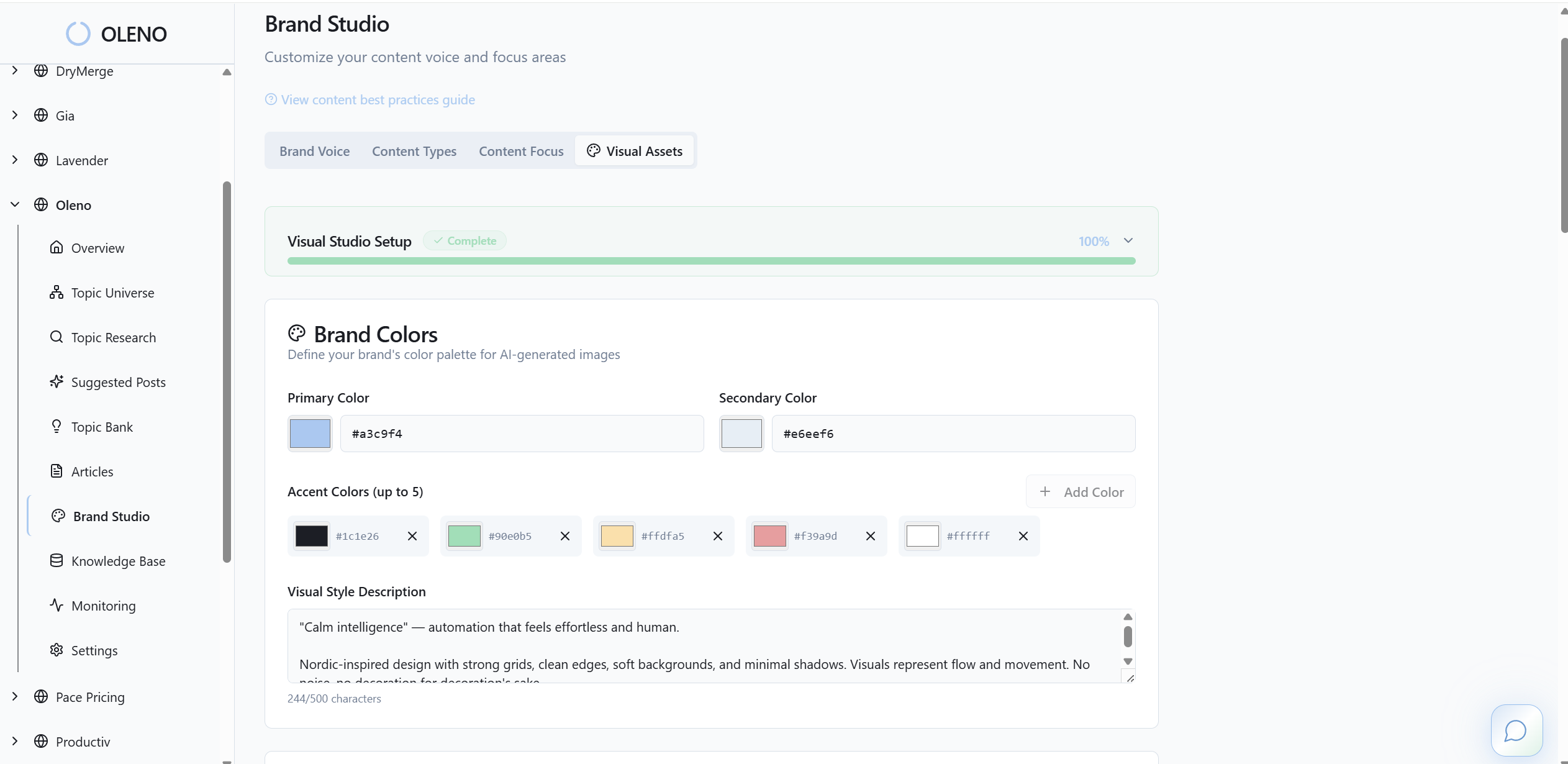
In practice, this looks like a rule set that travels with the work. A new writer joins? The voice holds. A variant needs a finance headline? The voice still holds. You don’t debate style in every review because it’s already defined and enforced upstream.
I’ve seen the opposite play out. No rule set, lots of “this feels off” comments, and endless edits that never converge. Encode the rules once. Spend the rest of your time on substance.
Knowledge base grounding keeps claims accurate
Upload product docs, help articles, playbooks, and internal notes. Oleno grounds examples and proof to your sources so segment-specific stories stay true. No invented features. No loose claims. What sales and success say on calls matches what the page says on the site.
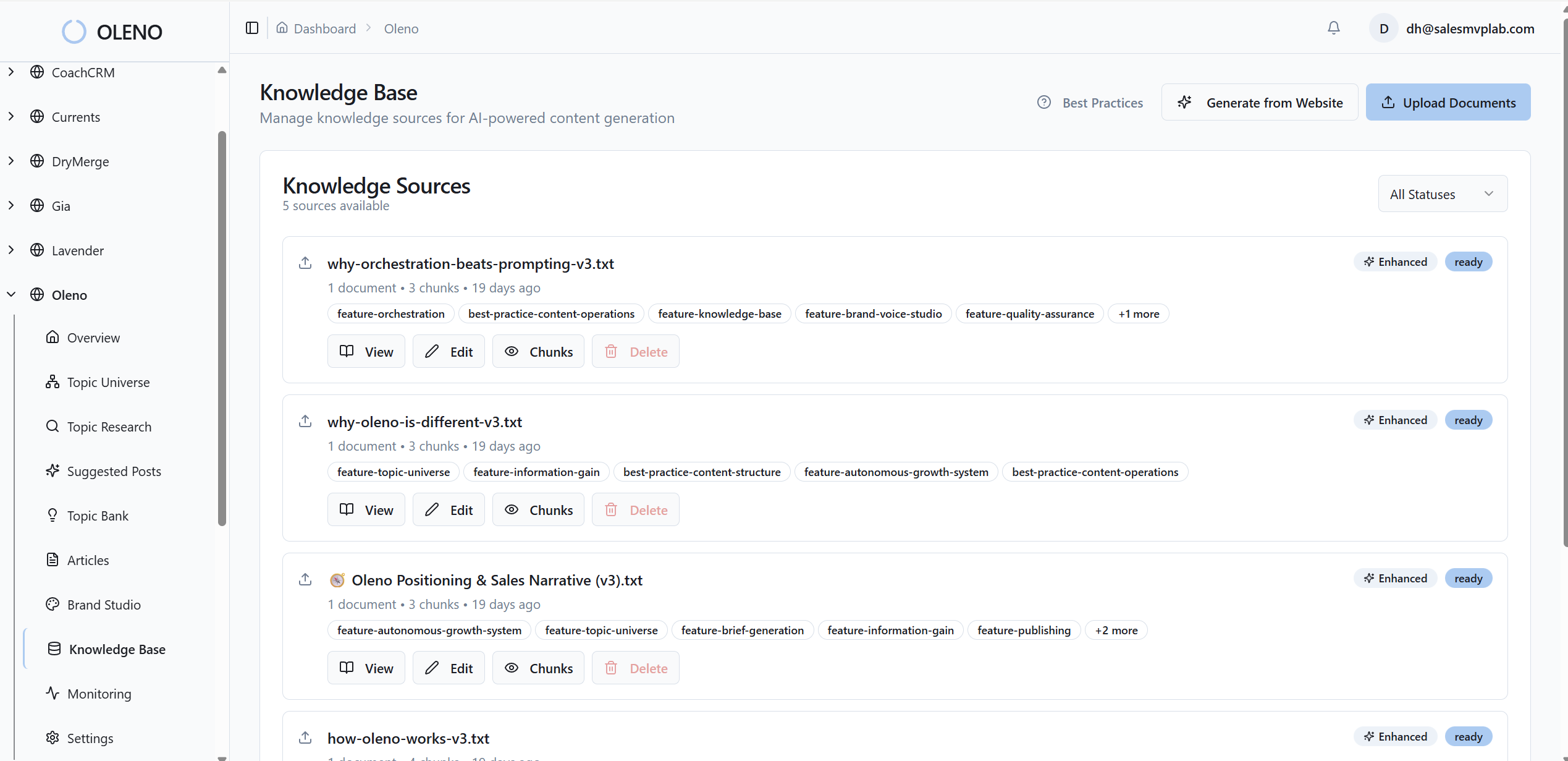
Grounding is also how you move fast without anxiety. When an industry example needs to reference a capability, it pulls from approved language. When a claim needs a limit, the limit is enforced. You can scale variants without worrying about someone promising the wrong thing to the wrong audience.
This is where orchestration beats prompting. Prompts produce text. Grounding produces trustworthy content you can publish without a legal scavenger hunt.
Automated QA gate blocks low-quality variants
Nothing ships unless it passes checks for voice alignment, narrative structure, clarity, repetition, and grounding. If a variant fails, it is revised automatically against your rules until it passes. That’s how you scale without late-night triage and “Did anyone approve this?” moments.
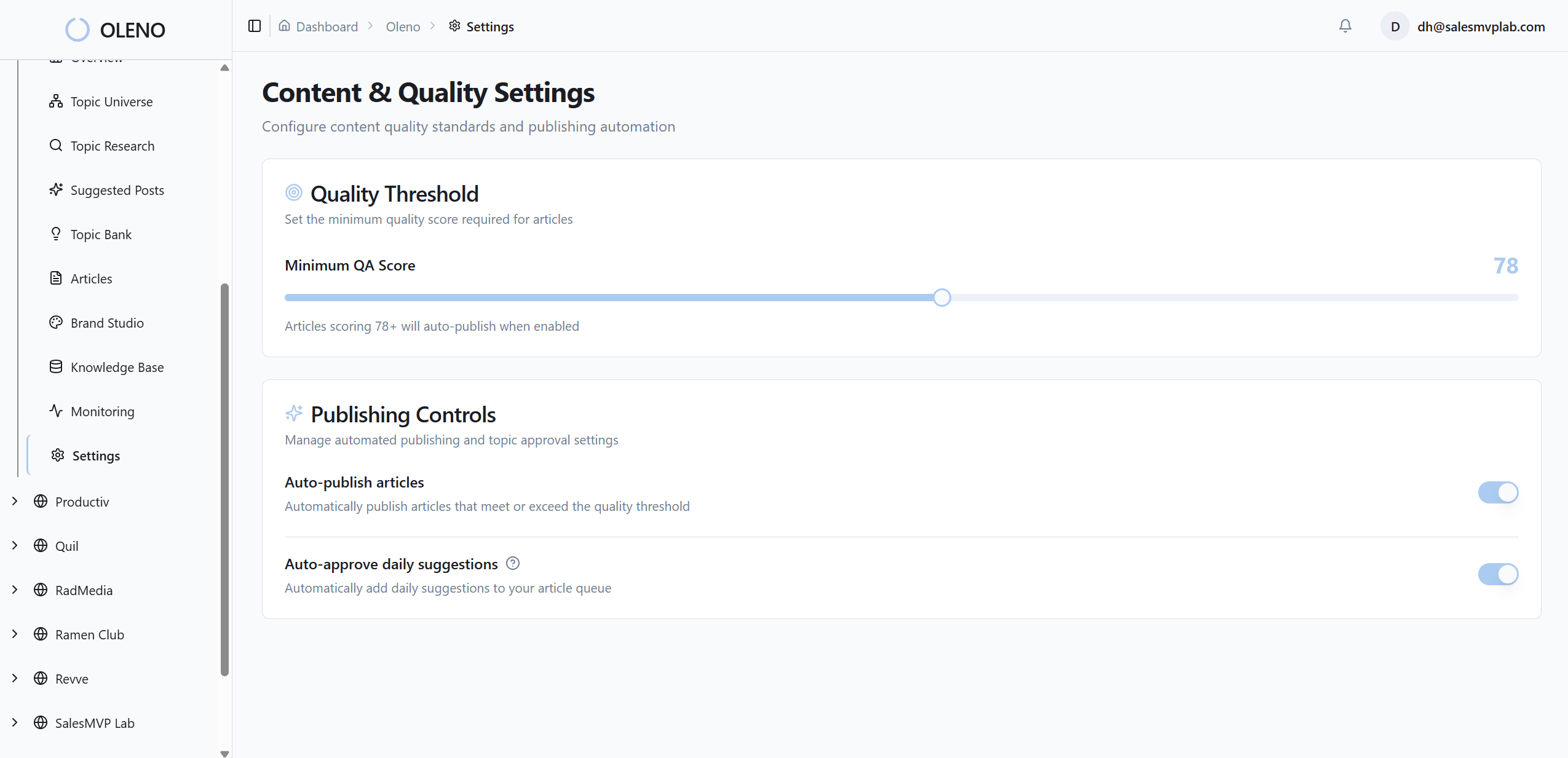
The QA gate isn’t a nice-to-have when you increase volume; it’s the wall that keeps noise out. Think of it as your last defense before brand and SEO risk. Oleno’s flow is simple and repeatable: Discover → Angle → Brief → Draft → QA → Enhance → Visuals → Publish. Quality checks block publishing until standards are met.
Publishing then respects your CMS patterns, draft or live, no duplicates (idempotent controls), and metadata you actually want (including canonical tags) applied consistently. You keep the discipline that protects crawl budget and consolidates equity, without extra checklists taped to someone’s monitor.
Want to ship a canonical plus three segment variants on your own content to see where the QA gate helps most? You can Try Oleno For Free and pressure-test your rules before you scale.
Conclusion
You don’t need ten articles to feel personal. You need one canonical narrative with controlled variation, real governance, and a system that enforces both. That’s the shift, from heroic rewrites to encoded rules, from prompting to orchestration, from debt to compounding execution.
The payoff isn’t just cleaner ops. It’s trust. Sales trusts the link. The reader trusts the message. You trust that publishing won’t create a 3am surprise. Keep the spine stable. Personalize what changes behavior. Let the system do the heavy lifting.
About Daniel Hebert
I'm the founder of Oleno, SalesMVP Lab, and yourLumira. Been working in B2B SaaS in both sales and marketing leadership for 13+ years. I specialize in building revenue engines from the ground up. Over the years, I've codified writing frameworks, which are now powering Oleno.
Frequently Asked Questions