Pipeline Playbook: Enforce Narrative Consistency in AI Content at Scale

Narrative consistency isn’t a nice-to-have at scale. It’s the only way your content operation stops feeling like triage. The reality: great ideas die in cleanup when drafts wander off the sales story, misname the product, or bury the lead. You don’t fix that with better prompts. You fix it with a pipeline that treats your story as policy, not preference.
I learned this the hard way. At one company, we shipped volume but bled trust—beautiful posts, wrong thread. At another, we had the tone but no structure, so every publish ended in surgery. Once we moved the rules into the system—story order, KB grounding, snippet-ready openers—the rework dropped and approvals got boring. That’s the goal. Boring ops. Strong narrative.
Key Takeaways:
- Define narrative consistency as scoreable rules, not vibes or taste
- Move from guidance to gates: enforce story order, lexicon, and snippet-ready openers
- Ground every claim in your KB with auditable retrieval and provenance
- Quantify rework: it’s a hidden full-time headcount you can reclaim
- Treat visuals, links, and schema as deterministic, code-based steps
- Use QA thresholds and targeted fix loops to remediate without humans
Cleanup After Generation Breaks Narrative Consistency
Most teams think inconsistency is a writing problem. It’s an enforcement gap. Narrative consistency comes from scoreable rules: structure, voice, and KB-grounded claims that pass a threshold. When those rules aren’t codified, drafts drift. Think “solution buried under fluff” or “features renamed.” It’s preventable with gates, not copyedits.

The Metrics That Actually Matter For Consistency
Consistency isn’t a vibe—it’s whether a draft conforms to a known set of rules you can measure every time. Start with structural checks: correct H2 order, 40–60 word snippet-ready openers, and section-level compliance. Add lexicon rules to catch banned terms and normalize phrasing. Then verify every claim is grounded in an approved KB chunk and flagged if freshness is stale.
The magic isn’t the metric itself. It’s publishing only when the score clears a threshold. If you can’t score it, you can’t ship it repeatedly. A QA-Gate makes that reality obvious: pass at 85 or higher, or the system fixes what failed and re-tests. Teams that operate this way move from “opinion-based edits” to predictable operations, because the policy is enforced by code first.
If you want a broader framing, principles from MLOps pipeline best practices apply here: define the checks, automate the path, and block on quality gates. Different domain, same discipline. And yes, your content pipeline is a production system.
Why Prompts Alone Will Not Enforce Your Story Order
Prompts are single-use advice. They don’t remember your canonical story or your exact phrasing norms. They’ll generate a draft. They won’t enforce the order you need: polarizing insight → reframe → rational cost → emotion → new way → solution. Without persistent memory and checks, you’ll keep fixing the same mistakes.
Move from guidance to gates. Put a rules engine between “draft” and “publish” that verifies structure, lexicon, and KB grounding. When a draft breaks a rule, the pipeline should flag the section, route a targeted fix loop, and re-check. Humans set the rules. The system polices them. That simple move frees your editors to make narrative calls, not patch commas and headings.
What Is Narrative Consistency And Why Should Teams Care?
Narrative consistency means your content reads like it came from one brain across dozens of authors and tools. Structure, tone, and claims align to a single source of truth. When that happens, approvals shrink, brand trust grows, and publishing becomes logistics—not rescue missions. When it doesn’t, you get drift, delays, and frustrating rework that quietly taxes your entire org.
It matters because erratic stories don’t get referenced. Sales won’t share them. Support won’t link them. And your best ideas never compound. Small teams feel this most—the same leaders creating strategy are also stuck in cleanup at 8pm. Consistency pulls you out of that cycle.
Ready to skip the theory and see system-enforced consistency? Try Generating 3 Free Test Articles Now.
Your Real Bottleneck Is Rules Not Captured As Data
The problem isn’t writers; it’s rules trapped in docs and brains. You need policy-as-code for content: machine-readable story order, lexicon, voice fingerprints, and claim provenance. When those artifacts live in the pipeline, fixes are automatic. When they don’t, drift is inevitable and repetitive.
What Traditional Approaches Miss About Provenance And Grounding?
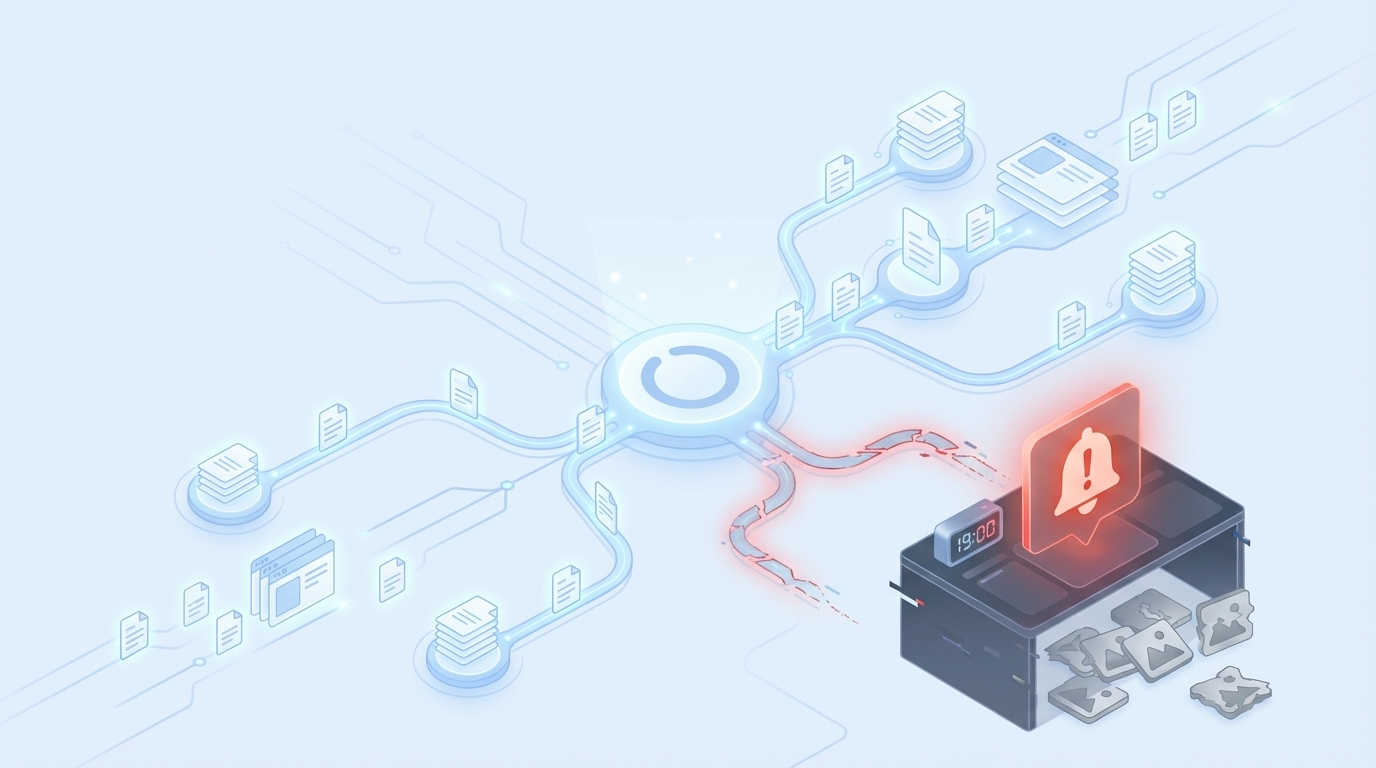
Most teams can’t tell you where a claim came from once it hits a draft. There’s no provenance, no lineage of edits, and no way to auto-remediate. Fix it by linking assertions to KB chunks with IDs and metadata—product area, claim type, freshness window. Store retrieval events with the draft so they can be audited and, more importantly, acted on automatically.
When a claim lacks a source, the gate should fail the section and trigger a targeted rewrite with stricter retrieval settings. The point isn’t academic footnotes. It’s repeatable grounding that reduces human fact checks. If you want a tactical primer on treating rules like code, the mindset behind Docs-as-Code practices maps well to content pipelines.
How Do You Turn Editorial Instincts Into Artifacts?
Start with your sales narrative and map the canonical arc you want every article to follow. Capture voice fingerprints using example phrases, sentence rhythms, and banned phrases with replacements and exceptions. Then write checks, not tips. The pipeline should test for structure, lexicon, and snippet-ready openers, not “try to sound more like us.”
Teach the system what to enforce. For modularity and reuse, it helps to think in components—inputs, transforms, validations, outputs—much like Kubeflow’s pipelines overview describes for ML tasks. Different domain, same pattern: encode the rules, test them, and let machines handle the repeatable parts while humans hold the narrative line.
The Compounded Cost Of Manual Fixes
Manual fixes feel faster in the moment. They’re not. They’re a quiet tax on your entire operation—time, morale, credibility—paid every week until you move the rules upstream.
The Rework Math That Quietly Kills Velocity
Let’s pretend you ship 50 drafts per week. Each needs 20 minutes of tone fixes, 15 minutes of fact checks, and 10 minutes of link cleanup. That’s 45 minutes per draft—37.5 hours weekly. A full-time person. And we haven’t touched visual rewrites or schema.
That time compounds. When rules are codified as gates, those edits approach zero. You reclaim a week of work—every week—and shift it to coverage, differentiation, and editorial planning. If you’ve ever been the person doing those passes, you can feel the lift. It isn’t theory. It’s fewer edits on Tuesday.
Where Drift Starts In The Pipeline
Drift usually starts at handoff. Briefs outline the story; drafts ignore it. Or product names get “creatively” rewritten. Without KB-backed retrieval, claims wander. Without deterministic linking, anchors point to the wrong pages or use made-up text. And if visuals are random, the whole thing looks off-brand before anyone reads a word.
Map each failure mode to a gate. Structure, voice, KB grounding, deterministic links, and visual placement. Set a minimum score—say 85—and route only failing sections through remediation loops. You’ll lower total cycle time while raising the floor on what ships. Governance at scale isn’t heavy when it’s automated. For a data-side parallel, see Google’s best practices for data pipelines—quality upstream, fewer surprises downstream.
Still handling this cleanup by hand? You don’t need more reviewers. Try Using An Autonomous Content Engine For Always-On Publishing.
When Brand Drift Lands On Your Desk At 7pm
Brand drift shows up late and loud. The fix isn’t heroic editing. It’s upstream enforcement that makes “off-brand” a rare exception rather than a weekly habit.
The 3pm Draft That Looks Nothing Like Your Brand
You’ve seen it. Generic visuals, stock metaphors, product naming slightly off. By 7pm you’re still fixing the fifth one this week. The root cause isn’t the writer—it’s a process that lets drafts invent visuals and phrasing. Visuals should come from a brand asset library. Product screenshots should be matched semantically to the sections they support. Placement should be intentional, not random.
When visuals are generated and placed by rules—brand colors, logos, style references, prioritized solution sections—the piece reads as your brand before anyone reads a line. It also removes arguments about taste. The system knows what “on-brand” looks like and enforces it consistently.
Who Feels The Pain Across The Team?
Editors burn out on repetitive fixes. PMMs get anxious about credibility. Sales won’t share the link. Leadership sees volume with shaky authority. Everyone pays the brand tax for a missing gate. You don’t fix that with more rounds of edits. You fix it by blocking off-brand drafts and auto-remediating common failures.
Humans stay in the loop for narrative judgment calls—the story thread, the big idea, the strategic angle. The system handles structure, tone normalization, KB grounding, links, schema, and visuals. It’s a division of labor that respects everyone’s time.
For the operating model angle, the combination of human plus system loops aligns with Lean AI’s approach to disciplined operations. Don’t chase velocity alone. Enforce quality where it’s machine-enforceable.
A Production Way To Enforce Narrative Consistency In Your Pipeline
You don’t need a new calendar. You need a system. Treat your story as code, your checks as tests, and your publish step as a gated release. That’s how consistency scales.
Design A Canonical Narrative Model
Write down the story order you want every article to follow, then make it machine-readable. Define pillars, acceptable archetypes, and banned terms with replacements and exemptions. Include example paragraphs that capture voice fingerprints—short punchy lines next to longer, flowing explanation—so the system has patterns to mimic.
Your model should dictate H2 layout and a snippet-ready opener pattern for each section (three sentences: direct answer, context, example). Include visual rules: where a hero appears, when to show product screenshots, how to treat solution sections. This becomes your source of truth. Everything downstream references it.
Operationalize KB Retrieval And Claim Linking
Index your KB with metadata: claim types, product areas, and freshness windows. Require each factual assertion to link to a KB chunk ID. Log retrieval events with the draft so you can audit what was pulled and why. If a claim lacks provenance or fails a freshness rule, the gate should fail that section and trigger a targeted rewrite with stricter retrieval.
No footnotes in the published piece. Just reliable grounding behind the scenes. The benefit shows up in two places: fewer manual fact checks and easier remediation when something drifts. You’ll spend less time arguing sources and more time improving the story.
Implement QA-Gate Checks With Thresholds And Loops
Create checks for structure compliance, narrative order, KB grounding, snippet-ready openers, lexicon normalization, and visual placement. Set a minimum score—85 is a practical line—and block publishes that don’t clear it. When something fails, route only the failing sections through fix loops instead of re-writing the whole article.
Treat the pipeline like CI for content. Stage drafts, run unit tests on schema and link validity, and keep audit logs of inputs, outputs, and QA events. If delivery fails, retry idempotently or roll back to the last good version. You get safety nets without piling humans into every checkpoint.
Inject Links, Schema, And Visuals Deterministically
Do the “precision work” after text stabilizes. Inject internal links from a verified sitemap only, match anchor text exactly to page titles, and place links at natural sentence boundaries. Generate JSON-LD for Article, FAQ, and BreadcrumbList and validate before delivery. Place images from your brand library and prioritize the solution section for product screenshots.
This step should be code-based, not LLM-driven. Determinism is the point—no fabricated URLs, no missing schema, no random image placement. When the machine handles the brittle parts, your content team stops firefighting fragile details and focuses on narrative quality.
If you’re designing modular checks and steps, the “components” mindset used in engineering pipelines carries over here, too. Different outputs, same need for isolate-test-repeat.
How Oleno Makes This Deterministic From Draft To Publish
Narrative consistency improves when enforcement lives in the system, not in someone’s calendar. Oleno exists to do exactly that—apply your rules end to end and only ship what clears the gate. It doesn’t track rankings or traffic. It ensures what ships is grounded, differentiated, and on-brand.
Brand Studio Enforces Voice And Lexicon Programmatically
Brand Studio applies tone fingerprints, banned phrases, and replacements during drafting and again during QA. It uses your example phrases and sentence rhythms to normalize language without turning prose into template speak. Configure once. Reuse everywhere. The net effect: your team stops making the same tone edits across dozens of drafts.
I’ve watched this remove entire categories of repetitive fixes—capitalization, product naming, overused metaphors—so editors can focus on the story, not style policing. It’s not perfection. It’s consistent enough to free human attention for higher-value calls.
KB-Grounded Drafting And QA-Gate Catch Narrative Violations
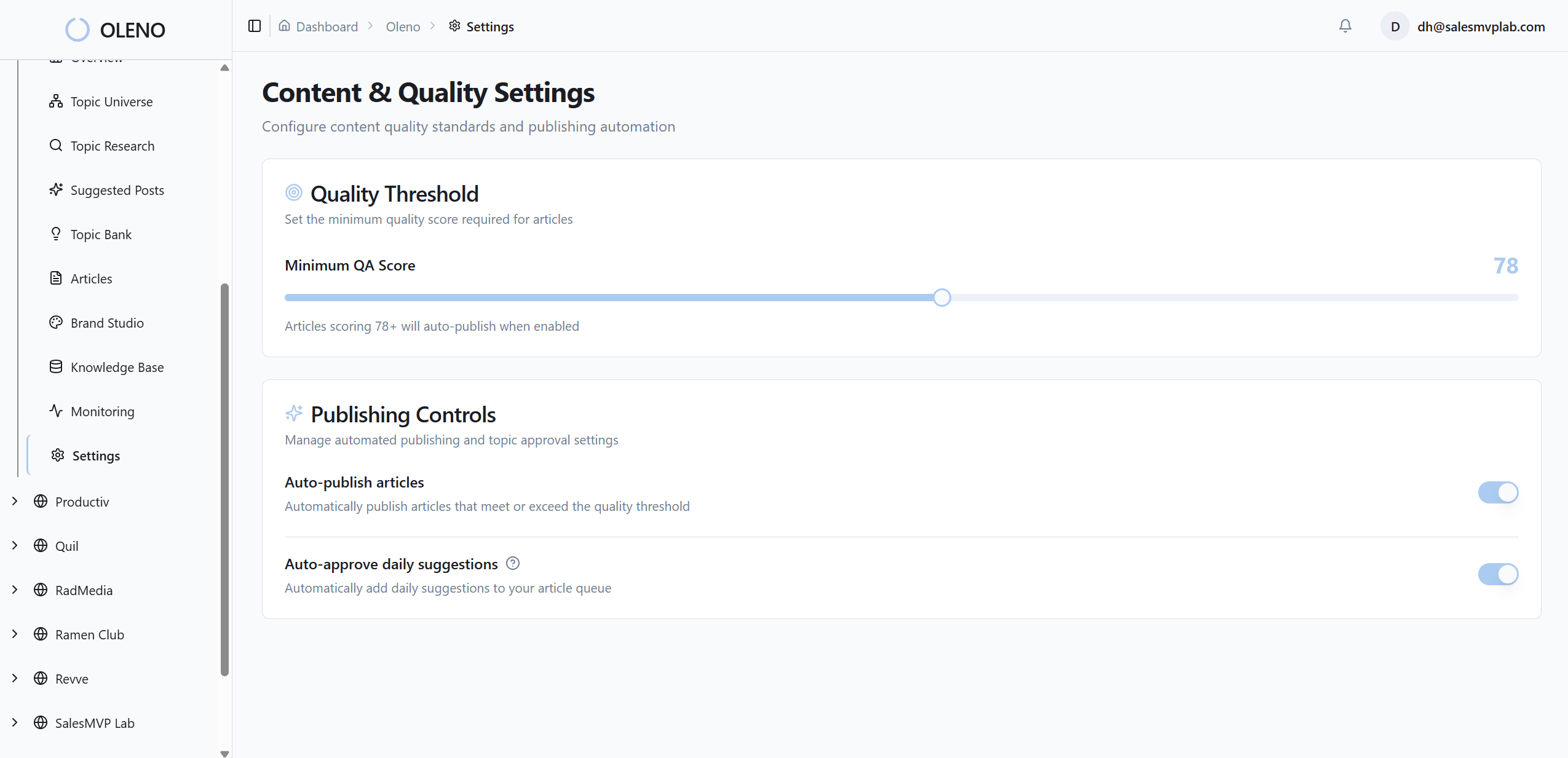
Oleno writes against your embedded Knowledge Base, so claims are grounded and traceable. Every H2 opens with the snippet-ready three-sentence pattern. QA-Gate scores structure, voice alignment, KB accuracy, and LLM clarity, with a minimum passing score enforced—85 or higher. If a draft fails, Oleno runs targeted fix loops and re-tests automatically.
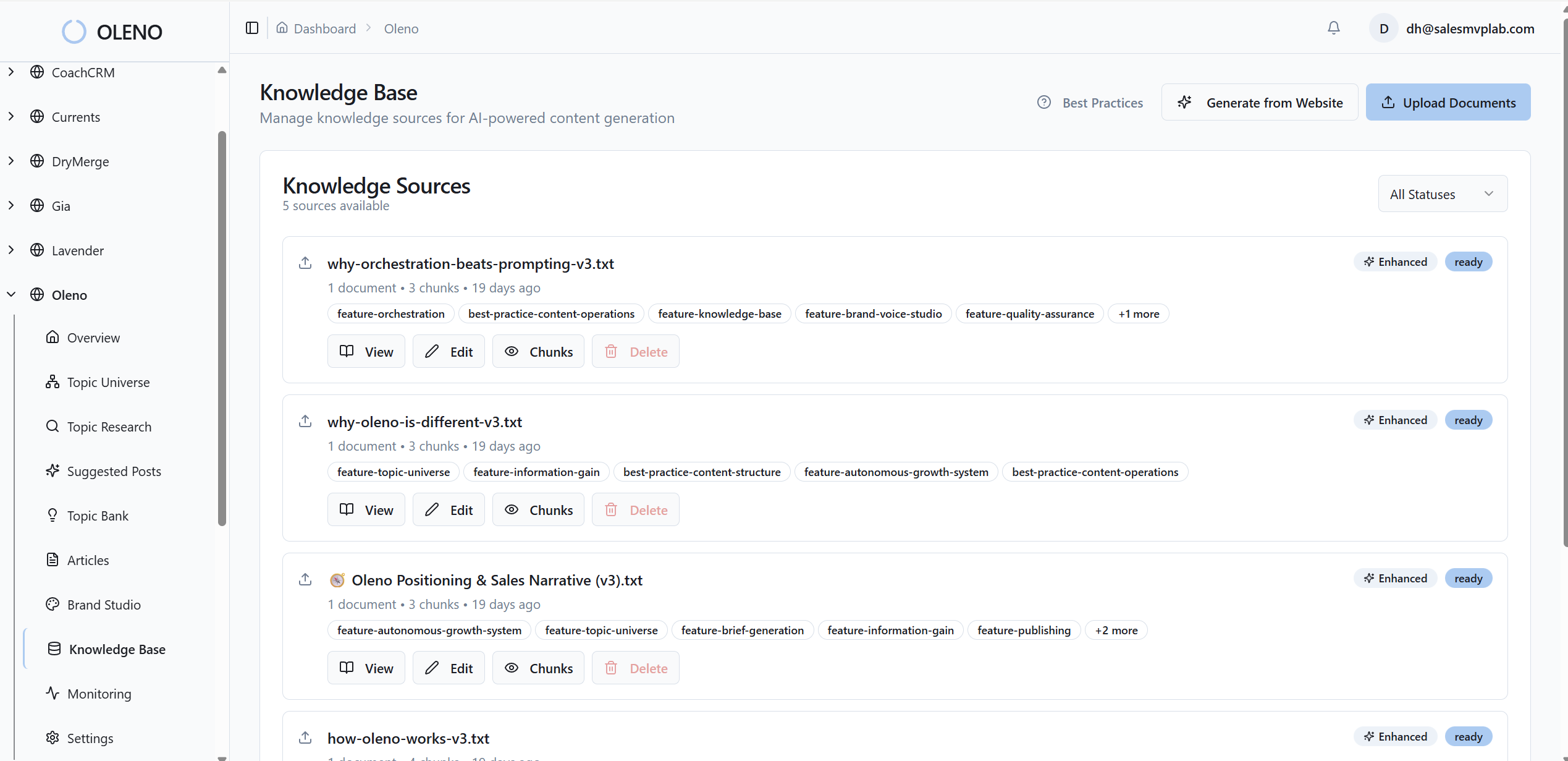
You see the scorecard, the failed checks, and what changed between versions. No dashboards, no performance analytics—just system logs and version history so operations remain predictable. Teams report fewer late-stage surprises because the narrative order is validated before anything publishes.
Deterministic Links And Schema Remove Publishing Headaches
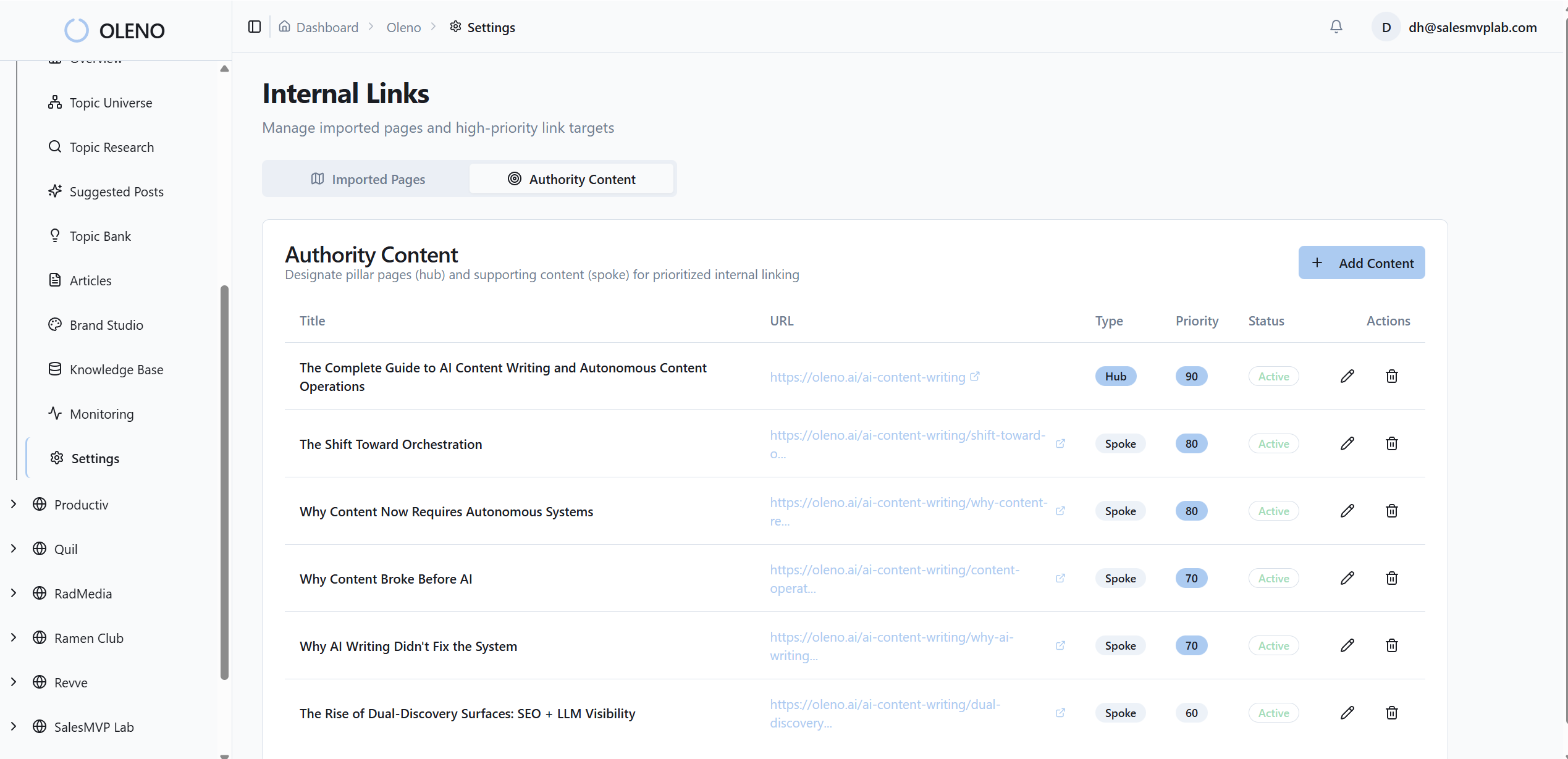
Internal links are injected from verified sitemaps only, with anchor text matching page titles exactly. JSON-LD is generated for Article, FAQ, and BreadcrumbList and validated before delivery. No fabricated URLs. No missing fields. These are code paths, not guesses, which means fewer fragile post-publish cleanups and less time spent on link audits and schema tickets.
Visual Studio And Connectors Handle Assets And Delivery
Visual Studio generates brand-consistent hero and inline images using your brand asset library—colors, logos, style references—and matches product screenshots to the relevant sections. Alt text and filenames are created automatically. Publishing connectors map fields and ship to WordPress, Webflow, or HubSpot, with duplicate publishing prevented and retries handled idempotently.
It’s the difference between “hope the visuals fit” and “the visuals are enforced.” Combined with deterministic links and schema, Oleno takes the brittle edges off publishing so your team can focus on coverage and differentiation—the work that compounds.
Want to see the full pipeline run end to end with your rules applied? Try Oleno For Free.
Conclusion
Here’s the thing. You can’t edit your way to narrative consistency at scale. You need rules your system enforces—story order, voice, KB grounding, visuals, links, and schema—scored and gated before publish. When you turn instincts into artifacts and guidance into gates, cleanup stops being your bottleneck. Publishing gets predictable. And your story compounds week after week.
About Daniel Hebert
I'm the founder of Oleno, SalesMVP Lab, and yourLumira. Been working in B2B SaaS in both sales and marketing leadership for 13+ years. I specialize in building revenue engines from the ground up. Over the years, I've codified writing frameworks, which are now powering Oleno.
Frequently Asked Questions