Pre-Publish Information-Gain Checklist to Avoid Redundant Content

You can publish faster. You can even make it look clean. But if every piece echoes page one of Google, including the rise of dual-discovery surfaces:, you’re not building authority. You’re filling a calendar. I’ve lived this on bootstrapped teams and at venture-backed startups. Speed without difference looked productive in the moment, then quietly taxed our pipeline for quarters.
Back at Steamfeed, we grew by pairing volume with unique angles, not just more posts. Later, as the only marketer at PostBeyond, I could write fast using a framework, but the moment I lost time and context, quality slipped and rewrites grew. The pattern was simple: when we didn’t enforce originality before drafting, rework and redundancy multiplied.
Key Takeaways:
- Treat information gain like a gate, not a vibe or an edit
- Make briefs prove the delta against the SERP before anyone writes
- Use a 0–100 scoring formula with thresholds and rejects
- Quantify waste from low-gain drafts to build urgency for change
- Bake snippet-ready structure and QA checks into the process
- Automate deterministic elements like links and schema to cut errors
Why Speed Without Differentiation Publishes Redundant Content
Publishing quickly without differentiation produces lookalike articles that dilute trust and bury your real signal. Information gain describes the net-new insight your piece adds beyond what’s indexed and what you already shipped. When you skip that check, you repeat the SERP and teach machines that your site adds little.

What is information gain and why does it matter?
Information gain is the delta your article contributes versus what already exists, including the shift toward orchestration, and versus your own library. It is not tone or formatting. It is net-new claims, data, or perspectives. Ask, “What will a reader know after this that they couldn’t get from page one?” If that answer is fuzzy, you’re not ready to draft.
Treat low gain as a trust problem. Redundant articles train search engines and LLMs to skip you. Editors feel it first as frustrating rework. Pipelines slow because interesting topics get crowded out by safe, samey ones. Even academic standards emphasize novelty and non-duplication, which mirrors what content teams need. See the principles in Nature’s editorial policies and Wiley’s ethics guidelines.
The duplication loop teams fall into
Here’s the loop. Pick a keyword. Skim the top results. Copy their H2s with minor edits. Polish the language in review. Ship. Editing can’t recover missing insights. Once the brief copies the SERP, you have already lost.
Break the loop by moving uniqueness checks upstream. Replace subjective “seems different” with a scoring formula, plus gating rules that block low-gain briefs. If a brief can’t prove the delta, it does not go to draft. Coordination beats draft speed. For context on why systems outperform one-off prompting, read about content orchestration and the role of autonomous systems.
Curious what a gate-first flow looks like day to day? You can try using an autonomous content engine for always-on publishing.
Treat Originality As A Pre-Write Gate, Not An Edit
You enforce originality by flipping the order. Audit coverage first, define the delta, then write. Make briefs prove the difference with research snippets and a quantifiable score. Editing later is damage control. Scoring before draft is prevention, which protects calendars and trust.

How do you enforce uniqueness before writing?
Build a mini-brief template that demands 3–5 research snippets, including why ai writing didn't fix, a proposed delta versus the SERP, and at least one first-party element. Require a plain statement of angle, for example, “We will contribute a comparative teardown of X and Y plus one customer-derived failure mode.” Set a minimum score and block anything under it.
Make the angle explicit. Two fields should be mandatory, not nice-to-haves. First, “We will contribute X new data or Y contrarian perspective.” Second, include one internal POV from product usage, customer insights, or operational nuance. If these fields are empty, the topic is not ready. For a practical template, study content briefs. If you want the broader system context, see autonomous content operations.
Build angle discipline with first‑party proof
Favor primary inputs. Product telemetry. Aggregated support tickets. Cohort analyses from your CRM. Even a detailed failure analysis from a customer story. If you lack proprietary data, use structured comparisons or nuanced tradeoffs rooted in your workflow. Angle discipline turns opinions into evidence.
Gate angles with exclusion rules. If two existing pieces already cover a sub-claim, defer or update one instead of adding a duplicate. Use a 90‑day cooldown before revisiting similar topics unless you have net-new data or a changed market condition. These practices echo originality standards seen in Wiley’s guidelines and academic discussions of redundancy like this analysis on duplicate publication harms.
Ready to pilot a gate-first approach on one cluster? You can Request a demo now.
The Hidden Costs Draining Your Content Budget
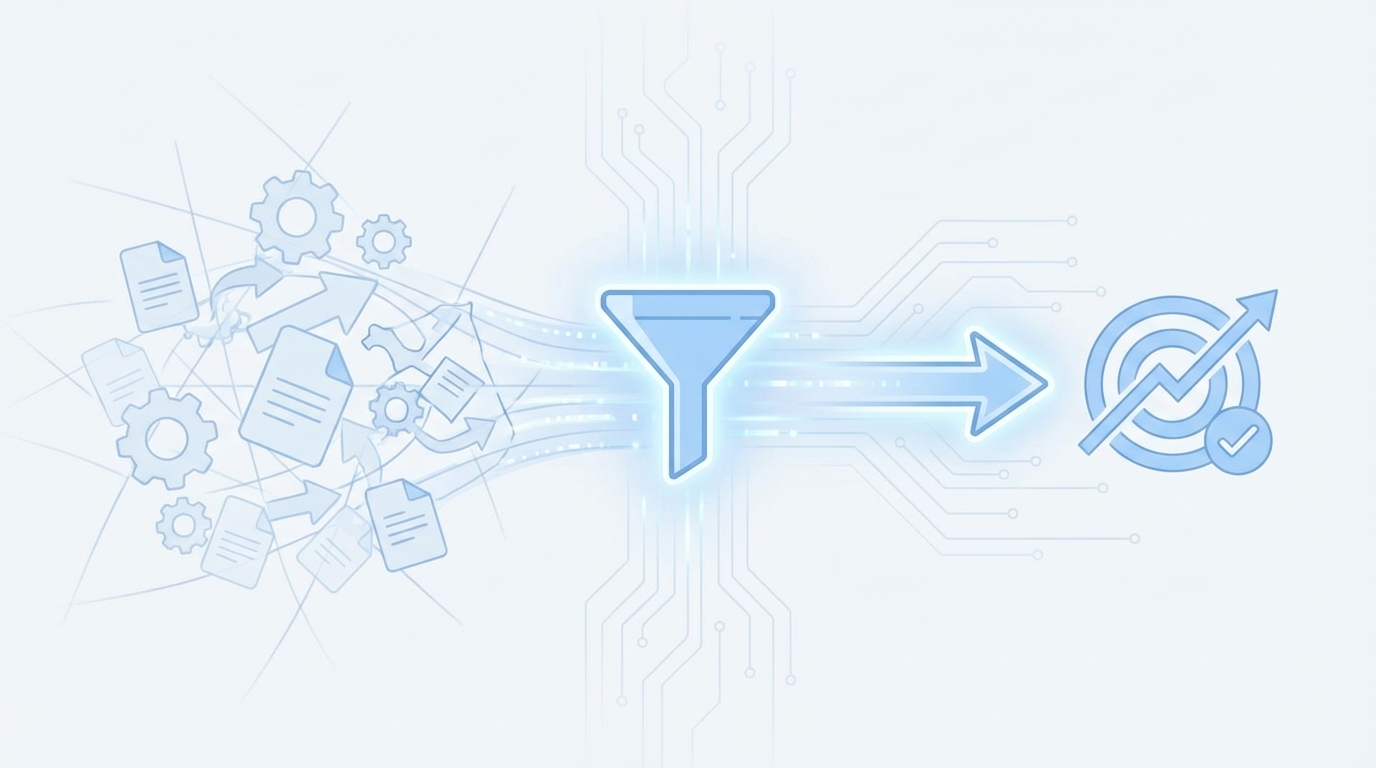
Redundant content wastes time in research, drafting, and editing, then charges interest via refreshes and cannibalization. The individual cycles feel small. In aggregate, they crowd out higher-gain topics and drag authority growth. The worst part is sunk-cost bias that pushes low-gain work to publish anyway.
The real cost of redundant content
Redundancy burns time where it should create leverage. Researchers collect sources that don’t change the outline. Writers draft claims everyone already made. Editors try to “sound different” without new material. It looks like progress, then lands on page three and silently eats future cycles.
Sunk-cost bias does the rest. Because hours were spent, teams ship. Clusters get saturated with near-duplicates. Sometimes those pages even cannibalize your own rankings. Over a quarter, the dull pieces crowd out legitimately differentiated work. The result is a calendar full of output that did little for demand.
Let’s pretend the numbers for a sprint
Let’s pretend you ship five briefs per week. Two are low-gain, scored under 60. Each consumes 6 hours end-to-end. That is 12 hours weekly, 144 hours in a 12-week quarter. At a $100 blended rate, $14,400 spent on articles that likely won’t rank or be cited.
Add the rework headache. If half of those underperform and you rewrite later, the original waste doubles. That time could have supported exploratory research for higher-gain angles or a refresh that consolidates cannibalizing pages. You can prevent most of this with a pre-brief gate. For operational framing, see content pipeline orchestration.
Will LLMs and search reward repetition?
Probably not. Machines and humans reward distinct, citable sections with clear claims. If your H2s mirror the SERP, you lower your chance of being quoted or ranking. Academic publishing’s stance is similar, with strong emphasis on novelty and transparency, for example in Nature’s policies and discussions like this overview of redundancy harms.
The Practitioner Checklist To Measure Information Gain Before Drafting
A fast, disciplined pre-brief checklist makes originality measurable. It compresses research to what matters, including why content broke before ai, proves the delta, then either greenlights or blocks. The outcome is simple. Fewer drafts. More citable claims. Less rework.
Step 1–2: Run a rapid coverage snapshot and define your delta
In 15 minutes, grab the top five SERP pages’ subheads and key claims, then pull your own internal coverage. Create a two-column diff: “common coverage” and “missing or weak.” Define the delta you plan to add, for example, a comparative teardown, a failure mode, plus a first-party data point.
Record three research snippets to justify that delta. Aim for credible, authoritative sources and quotes you could cite. If you cannot find support quickly, change the angle or defer the topic. For a concrete discovery method, use this gap analysis workflow.
Step 3: Build the information‑gain scoring formula (0–100)
Score inputs by weight so the math reflects your values. One example:
- Unique data: 30
- Novel framework or model: 20
- Contrarian evidence stacked against common claims: 15
- Step-level specificity or teardown depth: 15
- Expert quote with real authority: 10
- New use case or under-covered audience: 10
Add deducts for SERP-regurgitated subheads, generic tips, or vague claims. Calibrate once as a team, then apply consistently. Set thresholds that map to action. 75 or higher ships to draft. 60–74 iterates once. Below 60 is defer or reject.
Step 4: Set gating rules and exclusion criteria
Write rules in plain language and enforce them. Require one first-party element. Ban outlines that replicate competitor H2 sets. Exclude topics inside a 90‑day cooldown unless you have net-new data. Add “must include” statements for product relevance or a customer POV where it matters.
Require angle proofs. Paste the three strongest snippets under each material claim in the brief. If proofs do not exist, the claim does not make the cut. This mirrors repeatability and transparency standards common in research, such as those discussed in methodological transparency literature.
Step 5–7: Automate flags, QA checks, and operational KPIs
Automate flags for briefs that miss the threshold, lack required snippets, or recycle internal subheads. Route to a redo playbook with clear choices: adjust the angle, add primary data, or move the topic to the bank. Bake the same signals into post-draft QA.
Check that every H2 opens with a direct answer, sections stand alone for citation, and the promised angle shows up. Track three KPIs: percent of briefs rejected pre-draft, average information-gain score by month, and reduction in redundant publishes. Connect pre-brief scoring to a post-draft automated QA gate.
If you want to watch this run end to end without building it from scratch, you can Request a demo now.
How Oleno Enforces Pre‑Publish Information Gain At Scale
Scaling this approach consistently requires a system that starts before writing and ends at publish. Oleno turns approved topics into structured briefs, scores for information gain, enforces snippet-ready structure, then publishes with deterministic accuracy. The goal is simple. More distinct content, fewer errors, less rework.
Brief generation with competitive research baked in
Oleno converts approved topics into structured briefs that analyze top-ranking content for common coverage and shallow areas, then calculates an Information Gain Score. Each brief includes 3–5 external source candidates, with suggested anchors and context. Low-differentiation briefs trigger warnings before a word is written.
Drafts follow the approved brief precisely, aligned to brand voice and your knowledge base facts. That means no prompt juggling to “sound different” in editing. It also means angle discipline is embedded upstream, where it prevents waste rather than trying to fix it later.
Information‑gain scoring and QA gates
The QA gate evaluates drafts against 80+ criteria, including information gain, structure clarity, and snippet readiness. Every H2 opens with a 40–60 word, three-sentence direct answer. Sections stand alone cleanly so they can be referenced by search and assistants. Low-scoring areas trigger refinement loops, or the draft is returned for rework.
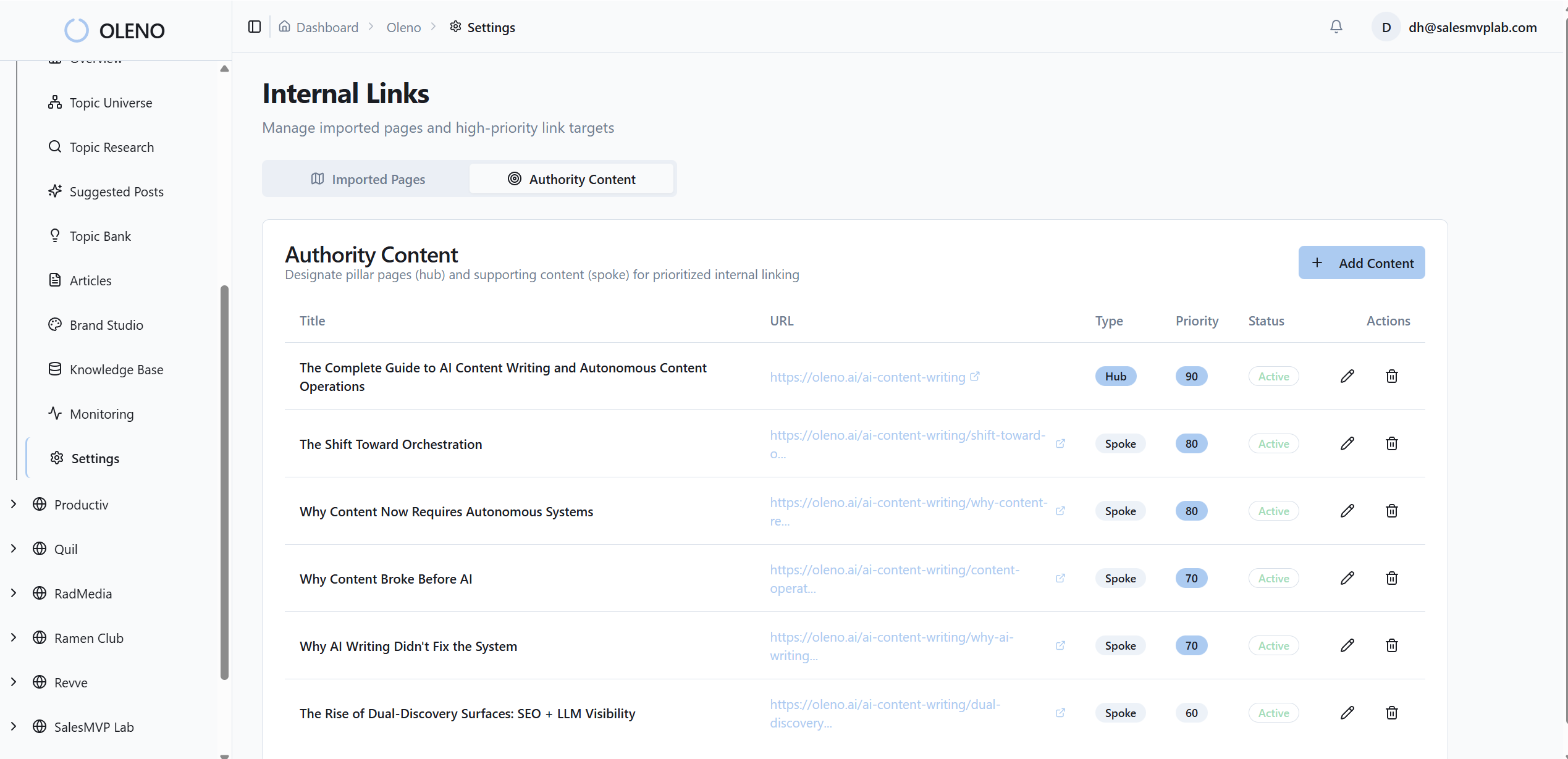
Oleno injects deterministic internal linking from your verified sitemap and generates valid JSON‑LD schema for articles, FAQs, and breadcrumbs. Because links and schema are code-driven, not LLM-driven, fabricated URLs and formatting drift are eliminated. The output is consistent and citable.
Operational reliability and publishing
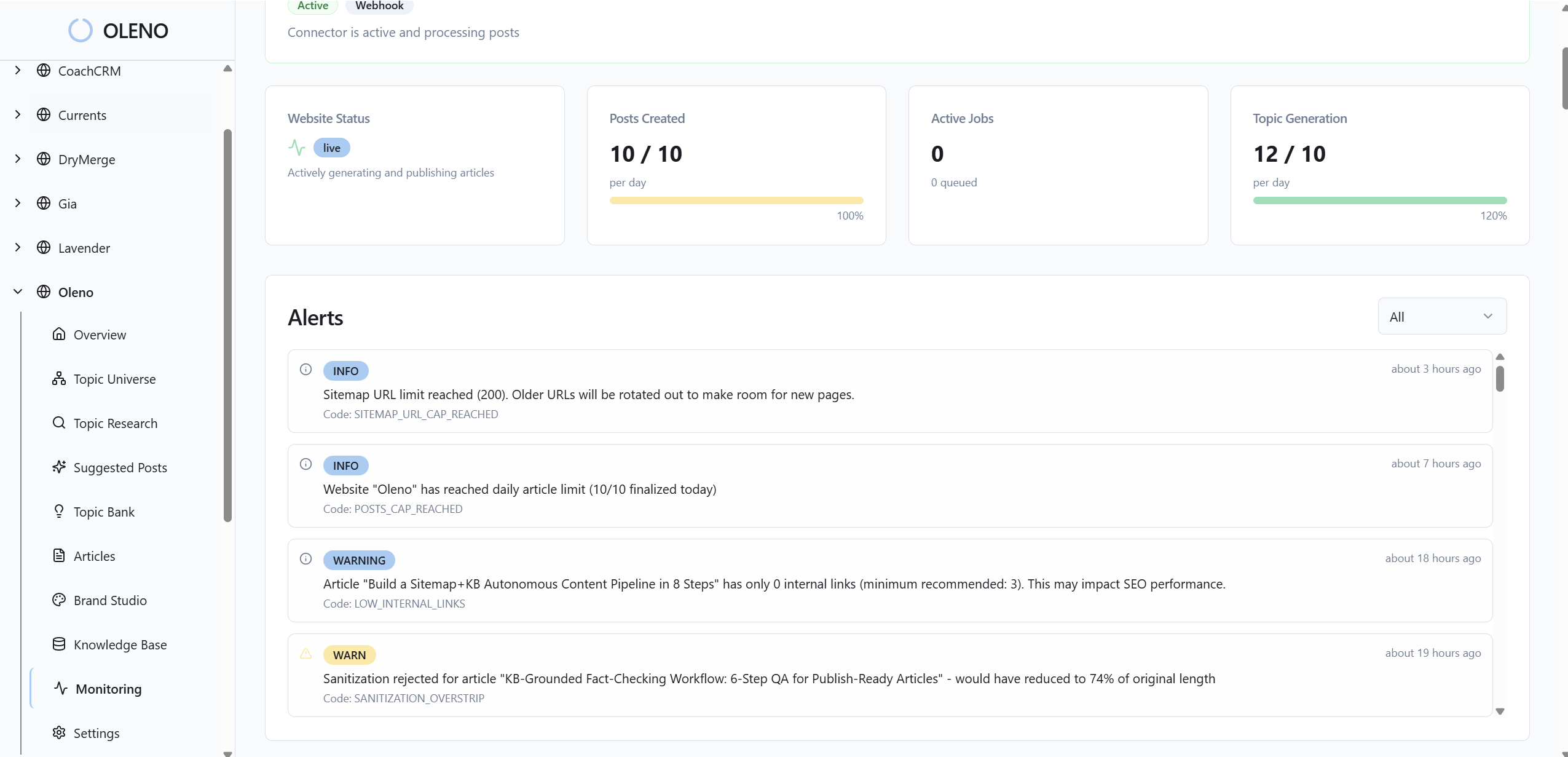
Once QA passes, Oleno locks text, visuals, links, and schema, then publishes to your CMS connectors like WordPress, Webflow, HubSpot, or Google Sheets based flows. Fields map automatically, duplicate posts are prevented, and delivery failures trigger notifications. Visual Studio prioritizes solution sections for brand-consistent hero and inline images with SEO-friendly alt text.
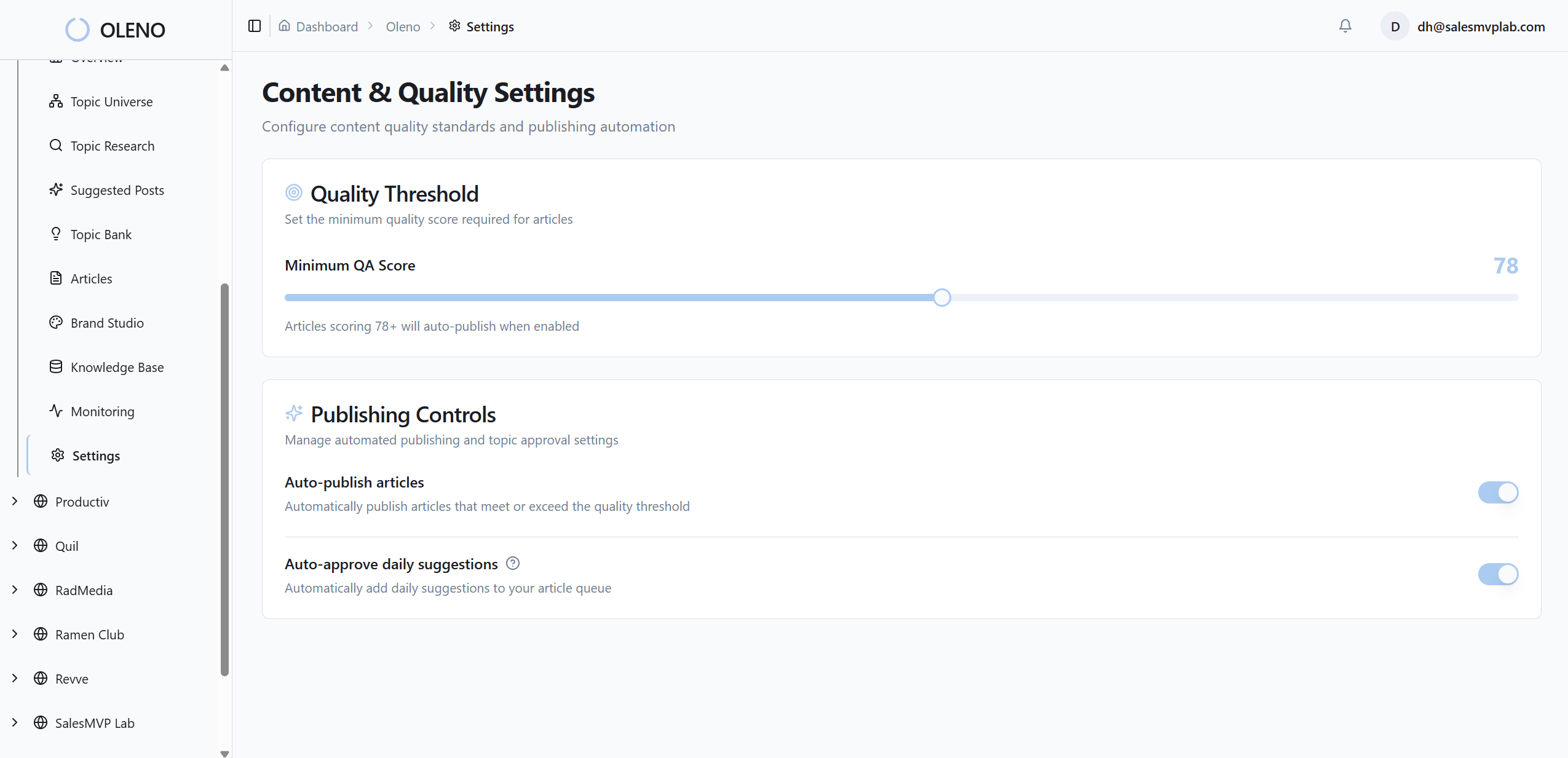
Remember the low-gain rework cycles we costed earlier. Oleno removes many of those handoffs by making originality a gate and accuracy deterministic. If you want to validate this in your stack, you can Request a demo.
What This Means For Teams Right Now
If your calendar looks busy but outcomes feel flat, including ai content writing, shift to a gate-first workflow in one cluster. Add scoring and angle proofs to briefs, set a threshold, and measure what happens. You’ll likely reject more upfront, then watch rework hours drop.
When should you consider shifting the workflow?
Start when you notice familiar H2s repeating, or when editors spend hours trying to make drafts “feel different.” Pilot the gate in a single cluster for 30 days. Track pre-draft rejection rate and the hours saved in editing. If the signal is strong, extend to adjacent clusters and formalize the score.
Worried about throughput? Rejecting a low-gain brief is not lost output. It is capacity preserved for topics with real upside. That trade creates a compounding effect that shows up in quality and credibility first, then in citations and rankings later.
Who benefits most from this approach?
Lean teams that cannot afford rework. Multi-brand teams where drift and repetition multiply quickly. Product-led companies that need content to align with solution narratives, not just audience interest. This model replaces heroic edits with rules that are easier on people and kinder to budgets.
Interjection. You do not have to overhaul everything. Pilot the checklist in one lane, then expand. For measurement ideas that show scale signals without building dashboards, use these content KPIs.
A simple operating plan for next sprint
Pick one topic cluster. Run the coverage snapshot. Define the delta. Apply the scoring formula. Enforce thresholds with explicit reject and redo paths. Mirror those rules in QA, checking for snippet-ready openings and proof-backed claims. Track three KPIs weekly: pre-brief rejection rate, average information-gain score, and redundant-publish reduction.
Curious how this looks inside an always-on pipeline without adding headcount? Instead of recreating the system from scratch, you can try using an autonomous content engine for always-on publishing.
Conclusion
Speed is only helpful when it ships something different from what already exists. The fix is not heroic editing. It is a gate-first workflow that scores information gain before a draft starts, then enforces structure and accuracy at publish. Move uniqueness upstream, automate the deterministic parts, and your calendar stops filling with lookalikes. Your authority compounds. Your team gets its hours back.
About Daniel Hebert
I'm the founder of Oleno, SalesMVP Lab, and yourLumira. Been working in B2B SaaS in both sales and marketing leadership for 13+ years. I specialize in building revenue engines from the ground up. Over the years, I've codified writing frameworks, which are now powering Oleno.
Frequently Asked Questions