Prevent Keyword Cannibalization in Programmatic SEO with Intent-Based Slotting
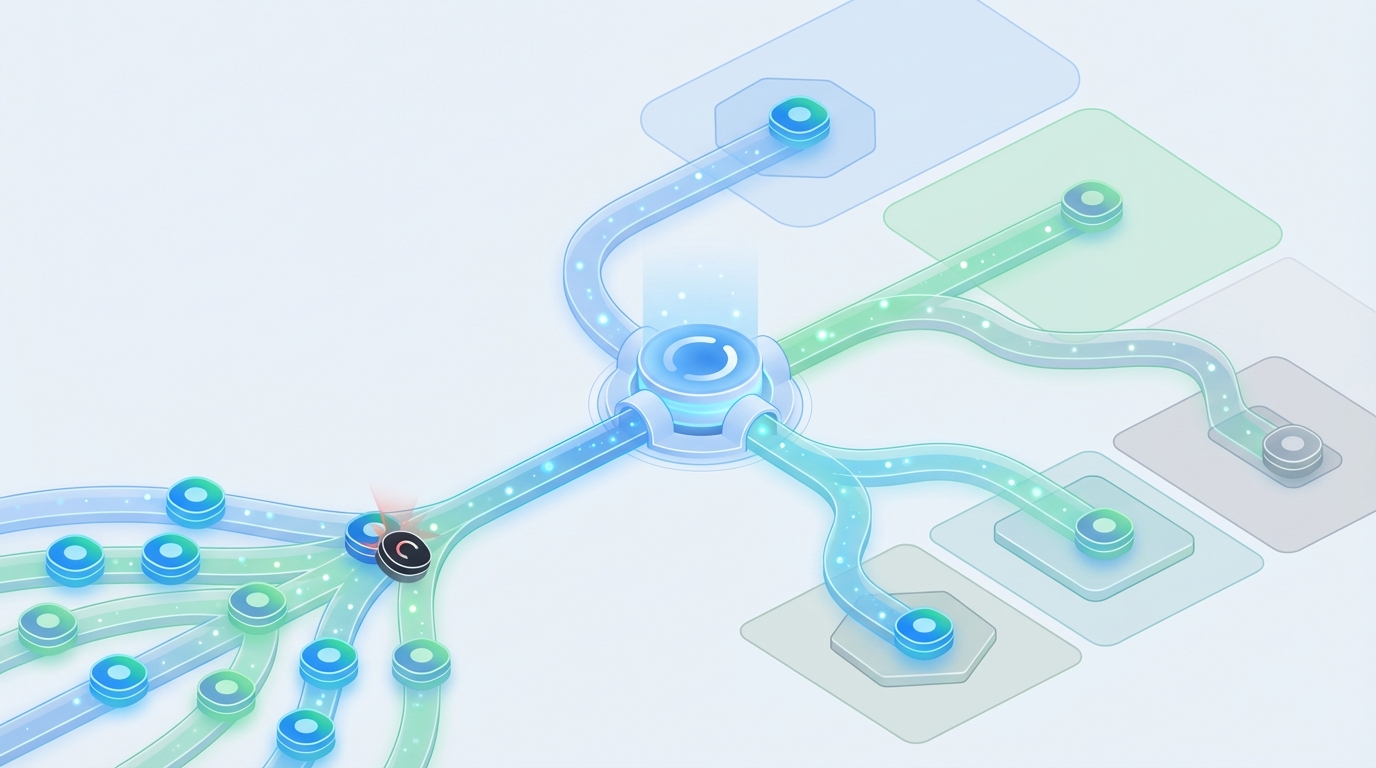
Most teams ask how to prevent keyword cannibalization in programmatic SEO after the traffic drops. It is already too late by then. The internal competition already stole clicks from your best pages, split links across clones, and confused Google about which URL matters.
I learned this the hard way. Volume looks good on a dashboard. It also hides the mess. When clusters grow without intent control, you get pages that look different to you, but not to a crawler or an LLM. Feels productive. It is not.
Key Takeaways:
- Page count is a vanity metric when clusters fight for the same intent, so measure consolidation wins, not new URLs
- A compact intent taxonomy prevents most cannibalization before a single draft is written
- Deterministic slotting rules beat ad‑hoc human calls, especially at scale
- Simple tie‑breakers, authority and conversions and freshness, make consolidation safe and fast
- Monitor with thresholds and a rollback plan, so changes are reversible within days, not months
- Expect a 25–50% lift in priority page traffic and conversions within 6–10 weeks when you consolidate correctly
Why Page Count Backfires: You Must Prevent Keyword Cannibalization in Programmatic SEO
Programmatic SEO fails when clusters compete internally, not because you lack content. The fix is controlling intent at the template level so each page answers a unique query clearly. Without that control, you publish more pages that steal from each other and stall growth.
Internal Competition Beats You Before Google Does
Internal competition starts when two templates map to the same query with slightly different angles. You think both deserve to exist. Google sees two answers to one question and picks inconsistently. Some days it picks A, other days it picks B. Your click curve turns noisy.
The deeper problem is not ranking volatility. It is that authority spreads thin across clones. Each page gets a few links, a few internal references, and a bit of engagement. None of them becomes the clear winner. You lose to a competitor that shows one strong answer.
I have watched teams chase links to both pages to “win the tie.” That move rarely works. Links split. Signals split. Review cycles multiply. Editorial time vanishes into small edits that never move the needle. You feel busy. You are stuck.
Coverage Without Intent Control Creates Clones
Coverage goals push teams to fill every minor variant: plural vs singular, “best” vs “top,” “platform” vs “tool.” On paper, that looks like smart coverage. In search and LLM contexts, those are the same intent more often than not. So you end up with pages that collide.
A quick self‑check helps. If two titles would make sense as H2s on one page, they should not be two pages. If the same CTA and the same “why” apply, you likely have a clone. Keep one page and make the other a section, a comparison table, or a FAQ on the primary.
That move makes people nervous. They fear losing the traffic that the second page brings. In practice, the primary page usually absorbs the clicks and converts better because signals consolidate. It is counterintuitive, but it is real.
Why “More Pages” Feels Productive But Isn’t
More pages create the illusion of momentum. Calendars fill. Backlogs shrink. Stakeholders see work shipping. Search engines see noise. LLMs extract mixed claims. Your best pages lose clarity in a pile of near‑duplicates. You pay a tax for that every week.
You also pay a coordination tax. Two pages for one intent means two briefs, two drafts, two reviews, two promotion plans, and two analytics queries to track performance. If you do this across twenty intents, you create a maintenance job you never hired for.
The fix is not to slow down. The fix is to ship with a unique slot for each intent, and consolidate any page that tries to sneak into that slot later. One job per intent. No debate.
The Root Cause Is Slotting, Not Writing: Intent Collisions Start Upstream
Keyword cannibalization is not a writer problem. It is a slotting problem created before briefs exist. You prevent collisions by assigning each intent to a single slot at the template level. If a topic cannot claim a new slot, it lives under the primary page.
Symptom vs Cause in Cannibalization
Writers get blamed for similar intros or overlapping sections. That is a symptom. The cause is giving two jobs the same target. If both briefs promised “best CRM integrations for startups,” the drafts will echo. You cannot edit your way out of a slotting mistake.
So move slotting earlier. Assign intent at topic approval, not at draft review. If the topic collides, merge it on paper first. Writers then work from one canonical brief with optional sub‑sections. Output improves because the goal is clearer.
It also removes the weird tension between “cover everything” and “say something new.” When the slot is unique, writers focus on depth and examples that matter, not synonyms.
Slotting Fails When Templates Outrun Intent
Teams often create multiple templates that look different to them, like “What Is X,” “Benefits of X,” “X vs Y,” and “Best X Tools.” That can work. It fails when all four chase the same head term. Only one template truly matches the dominant intent.
You need a guardrail here. Define which template claims which intent class. “What Is” claims definitions, “Benefits” claims business outcomes, “X vs Y” claims comparisons, “Best X Tools” claims lists. If a topic falls between classes, it joins the primary.
That rule feels strict. It is. Strict rules reduce meetings and rewrites. You trade a little creative freedom for a lot of reliable growth.
Tie the Topic to a Single Commercial Job
Behind every query is a job: learn, compare, evaluate, buy. Tie the topic to one job. If a query straddles two, pick the higher‑value job and reshape the outline. Do not try to be all things. Split focus is the fastest path to cannibalization.
You will notice something once you do this. CTAs get sharper. Measurement gets simpler. Roadmaps calm down. And your best pages stop losing ground to your own content.
It sounds basic. It is basic. Basics win in GEO.
The Cost of Cannibalization: Lost Rankings, Split Links, and Lower Conversion
Cannibalization costs you traffic, links, and conversions. The traffic loss looks small on each page, but it adds up across a cluster. Links split across duplicates, and authority never piles up. Conversion rates slide because the best CTA is scattered across pages, especially when evaluating prevent keyword cannibalization in.
Traffic Loss You Don’t See in GA
Traffic does not fall off a cliff. It drifts sideways. A few clicks move from your primary to the clone. A few more bounce because the wrong page won. Over a quarter, that looks like flat growth even while you published more. It feels like a content problem.
Data helps. Watch share of clicks by query across URLs, not just per URL. If two pages share more than 40% of their ranking queries, you have a problem. Consolidating those pages often restores stability within a few weeks. Google even recommends consolidating similar URLs to strengthen signals, especially when content overlaps significantly, as outlined in the Search Central guidance on consolidating duplicate URLs.
You do not need a fancy tool for the first pass. Export queries by URL, sort, and eyeball overlaps. Patterns jump out.
Conversion Rate Collapse on Duplicates
When two pages fight, the primary CTA loses consistency. Some visitors land on a listicle with weak intent. Some land on a definition page with a sales CTA. Neither converts well. Your “by page” conversion report hides the waste because it spreads across URLs.
I have seen teams recover 25 to 50 percent of lost conversions in 6 to 10 weeks after consolidation. The reason is simple. One strong page with the right CTA always beats three okay pages with mixed signals.
If you are skeptical, run a test on one cluster. Merge the clones. Track conversions on the surviving page and segment by query. The lift will pay for the time spent.
Coordination Cost and Rework Tax
Cannibalization creates meetings. Editorial argues for both pages. SEO argues to keep the one with more links. Demand gen wants the one with better conversions. Leadership wants both hedged. You spend hours debating a problem that your system created.
Rework is the hidden cost. Two briefs. Two outlines. Two rounds of edits. Two promotions. Two refresh cycles next quarter. Multiply that by ten clusters and you have a second job. Consolidation reduces total maintenance by a lot. It also lowers anxiety.
And yes, anxiety is a cost. People burn out from repetitive fixes that never stick.
What It Feels Like When Pages Compete for Prevent keyword cannibalization in
Cannibalization feels like déjà vu. You see the same topic pop up in Asana with a slightly new angle. You nod. You approve it. Three weeks later you are rewriting a third intro on the same idea and begging SEO for clarity. Your team is tired. You are tired.
The Weekly Fire Drill No One Wants
Every week a graph dips, so someone pings the writer to “tweak the intro” or “add FAQs.” You push small edits that do not move rankings because the slot is wrong, not the paragraph. People start whispering about “quality issues.” Morale dips.
What you are really feeling is drift. The system is not holding intent boundaries. Each fire drill pushes you further from a clean cluster. You start to believe that programmatic does not work for your niche. That belief is wrong. Your slotting is wrong.
Once you see it, you cannot unsee it. The same fixes surface over and over because the cause never gets addressed.
Stakeholder Whiplash and Brand Drift
Stakeholders see two pages and adopt the one that flatters their view. Product likes the feature‑heavy page. Sales likes the competitor angle. Brand hates both. You pick compromise copy that satisfies none. Your voice wobbles. Buyers notice.
Then the quarterly refresh arrives. Everyone wants a turn at “improving” the page they fought against last quarter. You lose another month to edits that do not fix the structure. Friction grows. So does churn risk on your team.
I have sat in those calls. No one is wrong. The system is wrong.
How to Prevent Keyword Cannibalization in Programmatic Clusters: Slotting Rules That Scale
You prevent cannibalization by encoding intent once, slotting topics deterministically, and consolidating with tie‑breakers. Write less, consolidate more, and let one page own the job. The process is boring in the best way: repeatable and safe at volume.

Build a Compact Intent Taxonomy
Start small. Define 6 to 10 intent classes that match your funnel: definitions, use cases, comparisons, tools, templates, pricing, and so on. Each class must map to a distinct user job. If two classes blur, merge them. Clarity reduces collisions.
Once defined, assign each approved topic to one class and a single URL slot. Treat that slot as a reserved seat. If a new topic tries to sit there, it becomes a section on the primary page, not a new page. This alone removes most duplicates.
Want a gut check? If two topics would sit in the same drawer on your site map, they are probably the same intent. Keep one.
Deterministic Slotting Beats Gut Calls
Gut calls creep in when there are no rules. So write the rules. For each class, define title patterns, H2s, and required elements. Also define what the page explicitly will not do. That negative space prevents writers from straying into another class, especially when evaluating prevent keyword cannibalization in.
Deterministic rules are not creative killers. They free writers to go deeper where it matters: examples, data, voice. And they help LLMs and crawlers recognize consistent patterns, which improves extraction and ranking reliability. For a practical overview of how search engines interpret similar content and duplicates, study the Google documentation on handling similar content and match your structure to it.
As your library grows, you can refine classes based on real performance. Start strict, then relax where data proves it safe.
Safe Consolidation Rules You Can Automate
Consolidation feels scary until you set tie‑breakers. Use these in order:
- Authority: keep the URL with more unique referring domains
- Conversions: keep the URL with higher last‑click conversion for the target CTA
- Freshness: keep the URL updated more recently if other signals are close
- Coverage: keep the URL that already ranks for more unique target queries
- Canonicals and redirects: merge losers into the winner with 301s, fold key sections intact
One more safeguard helps. Set a rollback metric, for example, if combined clicks for the target queries drop more than 20 percent in 14 days, revert and reassess. You will rarely need it if your tie‑breakers are solid.
Stop chasing duplicates. Start shipping a clean cluster with one page per job. Request a Demo
How Oleno Automates Consolidation and Slotting to Prevent Cannibalization
Oleno turns those rules into a system your team does not have to babysit. Governance defines the truth. Pipelines enforce it. The result is fewer collisions, faster consolidation, and stable growth without headcount increases or weekly fire drills.

Programmatic SEO Studio Locks Structure to Intent
Programmatic SEO Studio discovers topics, enriches them, and produces locked‑outline briefs tied to your intent taxonomy. Each job gets a reserved slot before a draft exists, which stops duplicates at the source. Drafts follow the same structure every time, so crawlers and LLMs see consistent, extractable patterns.
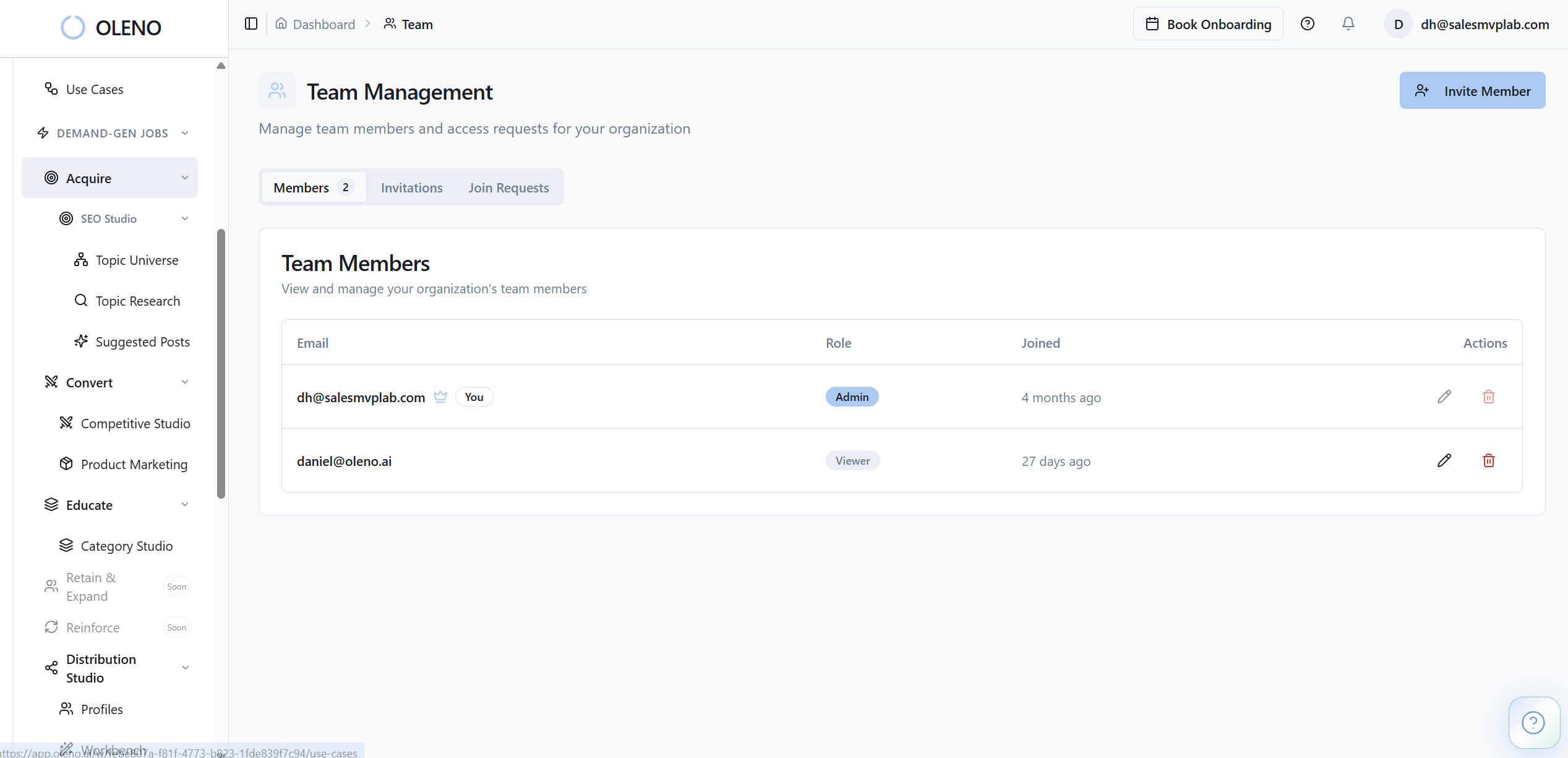
Because topics are deduplicated in the Topic Universe, near‑clones do not slip into the queue. The studio runs a deterministic pipeline from brief to draft to QA to publish. You get reliable output that respects the slotting rules you set earlier.
When you consolidate, you do it once and move on. The system stops the regression from reappearing next quarter.
Quality Gate Catches Drift Before Publishing
Quality Gate scores every draft on voice alignment, structure, and grounding. If a draft blurs into another intent class or repeats an existing page, it gets blocked and auto‑revised. Nothing reaches review unless it meets your bar for clarity and GEO‑ready structure.
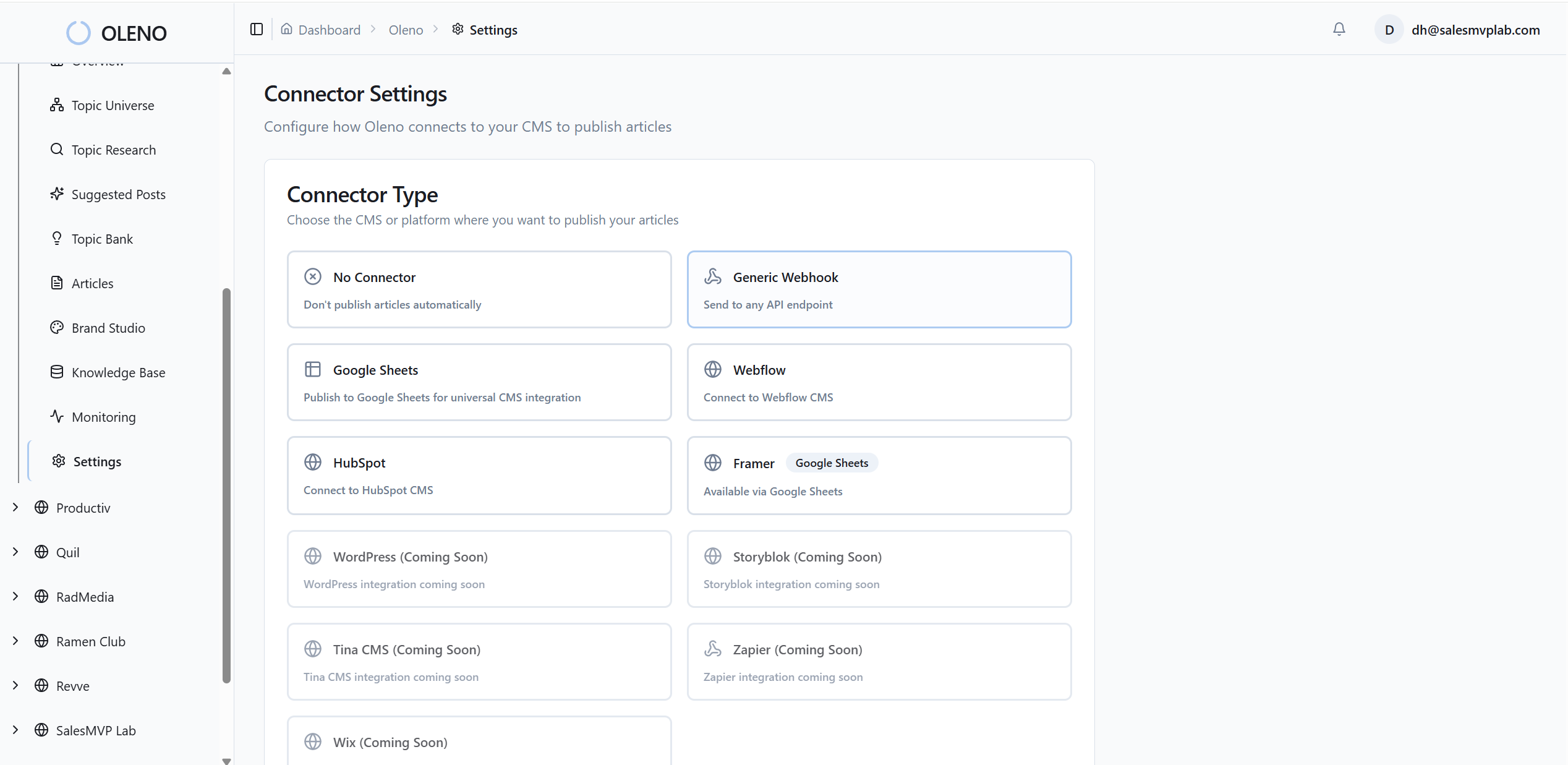
That single gate reduces the rework tax you saw earlier. It also protects the commercial job of the page. CTAs stay consistent. Definitions read the same across clusters. Signals consolidate. The 25 to 50 percent lift you expect after consolidation shows up faster because drift is not reintroduced.
25 to 50 percent traffic and conversion lift on priority pages within 6 to 10 weeks. That is what Oleno delivers. Request a Demo
Orchestrator and Brand Studio Keep It Rolling
The Orchestrator keeps your cadence steady. It schedules approved topics, respects per‑type quotas, and moves jobs through the pipeline without manual prompting. You stop playing traffic cop. You start playing strategist again.
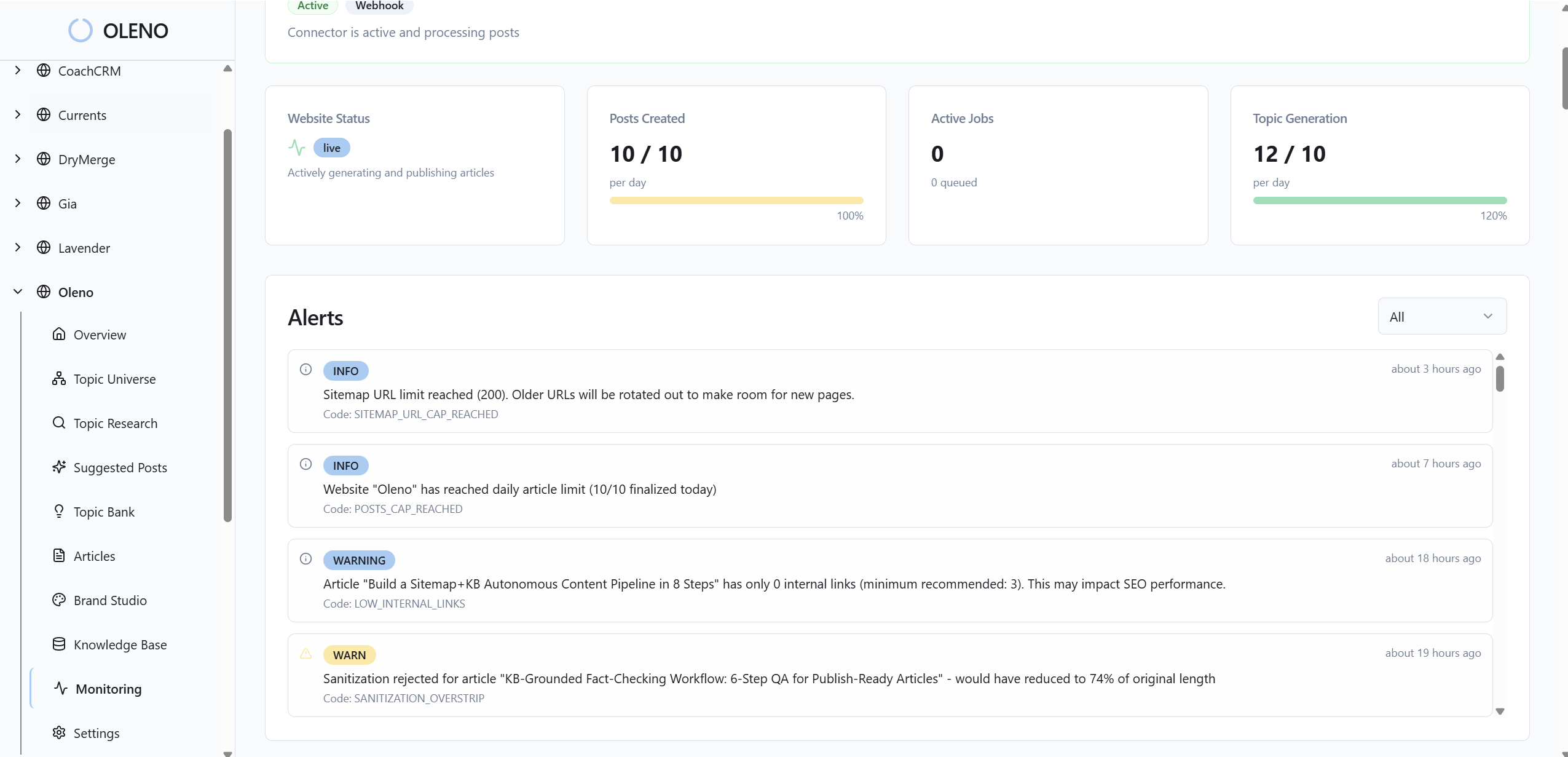
Brand Studio encodes tone, vocabulary, and CTA rules so every piece sounds like you. No more subjective voice edits that slow the queue. Together, these guardrails mean the consolidation wins you earned in quarter one do not erode in quarter two.
If product‑led content is part of the cluster, Product Studio keeps claims accurate across pages, so you do not introduce new contradictions while you clean up the old ones.
Oleno’s Programmatic SEO Studio applies slotting, the Quality Gate catches drift, and the Orchestrator maintains your cadence. Book a Demo
Conclusion
Programmatic scale does not break growth. Invisible collisions do. When you prevent keyword cannibalization in your clusters, you stop competing with yourself and start compounding. The playbook is simple: encode intent, slot deterministically, consolidate with tie‑breakers, monitor with thresholds.
Do this well and you will consolidate competing pages, cut the cannibalization tax by a quarter to a half, and restore conversion lift on priority pages in 6 to 10 weeks. Then keep shipping. Consistency beats volume when the system holds.
About Daniel Hebert
I'm the founder of Oleno, SalesMVP Lab, and yourLumira. Been working in B2B SaaS in both sales and marketing leadership for 13+ years. I specialize in building revenue engines from the ground up. Over the years, I've codified writing frameworks, which are now powering Oleno.
Frequently Asked Questions