Product‑Launch Content Ops: 8‑Step Cross‑Functional Playbook
Most launch delays aren’t caused by writers. They’re caused by messy knowledge transfer and fuzzy priorities. You feel it every quarter. Teams sprint, approvals stall, the window closes. Productlaunch content ops turns launches into a repeatable, cross‑functional system, not a one‑off creative push. The result is simple: faster briefs, fewer rewrites, and assets that actually hit pipeline.
I’ve run launches as a team of one and with tiny teams under pressure. Treat every launch like a fresh art project and you burn time in meetings, repeat mistakes, and your message drifts. Treat it like an operating loop and things click. Intake gets routine. Draft quality jumps. QA gets lighter. Distribution’s mapped before anyone asks for a banner.
Key Takeaways:
- Treat launches as a governed system, not one‑offs, or you’ll waste hours and miss windows
- Lock persona, problem, positioning, approved claims, and one CTA before creative work starts
- Run a 30‑minute structured intake with pre‑filled context so drafting doesn’t stall later
- Use a QA fast lane with hard gates for voice, facts, links, visuals, and compliance
- Map channels up front and schedule a 2‑, 6‑, and 12‑week refresh cadence
- Measure approval cycles, revision counts, and publish service‑level agreements (SLAs) so you can improve each quarter
- Aim to cut high‑priority launch asset time from 4–6 weeks to 1 week or less
Why productlaunch content ops beats ad hoc launches
Productlaunch content ops is a repeatable workflow that turns launch strategy into governed artifacts, fast briefs, QA checkpoints, channel plans, and refresh schedules. Launches fail when teams reset every time. Run the loop, don’t wing it, and launches start feeding demand reliably.
Define the launch ops discipline in plain language
Launch ops is the boring, necessary scaffolding that keeps creative work on track. Capture the truth once, reuse it across assets, and set publish SLAs that everyone understands. Fewer 11 pm heroics. More predictable delivery. Leaders stop guessing and start planning.
Define it well and you avoid the biggest mistake: reinventing the core story every time. A single source of truth replaces Slack archaeology. No more chasing last week’s claim or a lost deck. You’re shipping.
Reliability beats heroics every single time
The team that wins builds a steady cadence, not a perfect deck. Ad hoc feels exciting, but it leaks time at every handoff. Reliability compounds because assets stack, distribution is ready, and refreshes take minutes, not hours. You spend energy on outcomes, not wrangling.
If you’ve seen a clean launch machine run, you know the vibe. Calm. Clear owners. Few surprises. That doesn’t happen by accident.
The real bottleneck is broken knowledge transfer, not slow writers
Launches slow down because knowledge lives in heads and never makes it into briefs cleanly. Writers aren’t the problem. Inputs are. Fix intake and the draft shows up fast, on‑voice, and accurate—which cuts two or three review cycles immediately.
Last‑minute intake guarantees missing facts
PMs are juggling roadmap decisions. Engineering is sprinting. If you wait until “almost done,” you’ll miss critical details that shape claims, messaging, and examples. Then you rewrite later, which costs more. The fix is earlier, structured capture—not louder reminders.
Use a short form with pre‑filled context so PMs aren’t staring at a blank box. Pull links to PRD and release notes. Offer approved claims they can check. Set a deadline and a reminder cadence. You’ll get cleaner inputs, faster.
You’re not alone here. Poor requirements and late clarity are a known rework driver in projects, which PMI has flagged for years in its Pulse of the Profession research.
A 30‑minute structured capture fixes the root problem
Block the calendar with PM and a marketer. Walk the form live. Confirm persona, problem statement, positioning angle, claim boundaries, and what’s non‑negotiable. Capture examples and objections. Close with the one CTA that matters most for this launch. Thirty minutes beats three weeks of back‑and‑forth.
You’ll feel the difference the next morning. Drafts won’t stall, reviewers argue less, and the team trusts the message because the inputs are real. That’s the lift you were missing.
The hard costs of skipping productlaunch content ops
Skipping launch ops doesn’t just feel bad—it’s expensive. You pay in reviewer time, rewrite cycles, missed market moments, and content that never turns into pipeline. When you quantify it, the cost is obvious. The old way loses.
Add up the approval tax with real numbers
Start with one asset. If four reviewers take 15 minutes each per pass, and you run three passes, that’s three hours gone before edits. Add writer time to rework. Add PM time to re‑approve claims. Multiply across web, email, social, and enablement. Now do that for two weeks. The math stings.
Track it simply: count reviewers, passes, and minutes per pass. Use fully loaded hourly rates. Show the cost by asset type. Leadership will see why a QA fast lane matters more than another brainstorm.
The pipeline you miss while you wait
Delays push you past the market moment, which costs awareness and qualified traffic. Claims drift across channels, which hurts trust. Sales gets partial assets that don’t align, so they ignore them. That’s lost pipeline you can’t get back. It’s not a talent problem; it’s a system problem.
Want a broader view on why launches miss? HBR outlined common failure patterns years ago, and they still show up when teams treat launches as one‑offs, not systems. See Harvard Business Review on product launch failures.
What it feels like to launch without productlaunch content ops
If your nights before launch look like Slack ping storms and doc comment wars, you don’t have a system. You have effort. People are doing their best, but they’re filling gaps with meetings and rewrites. Morale drops, confidence erodes, and no one wants to own the next one.
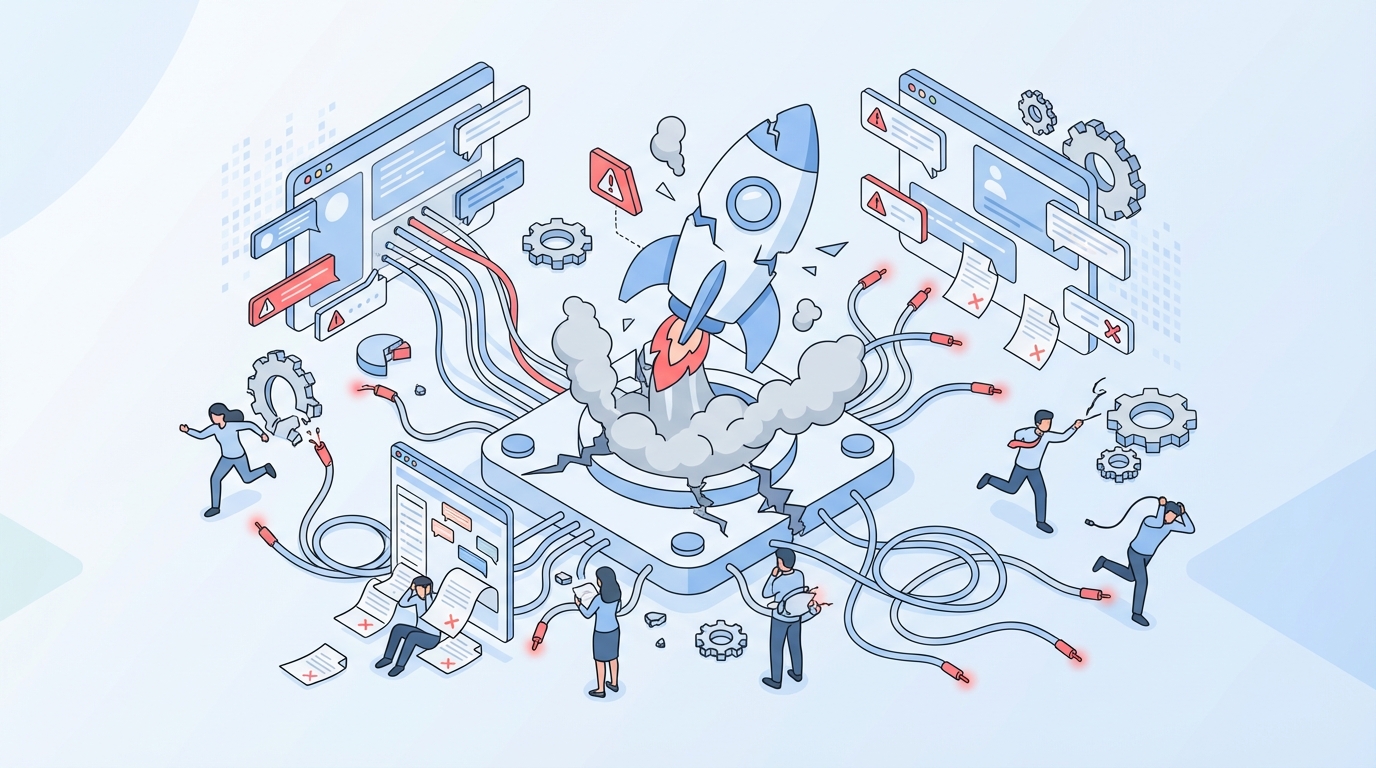
Ping storms, vague owners, 11 pm rewrites
You know the drill. “Quick copy tweak?” “Legal needs one more line.” “Who approves enablement?” Ownership blurs, so everything becomes everyone’s job. Work expands to fill the time you have, and the team limps across the line. It’s exhausting.
I’ve been there. It’s not a skill issue. It’s missing scaffolding. Give smart people a clear loop and they’ll sprint inside it.
The silent confidence tax on your team
Every messy launch makes the next one harder. People flinch at deadlines. PMs hold back on details because approvals felt painful last time. Writers play safe and go generic. That’s how brand drift creeps in. The good news: it’s fixable once the loop is defined and enforced.
Confidence returns fast when publish gates are clear and the path is known. The right system makes “yes” safer than “maybe.”
The 8‑step productlaunch content ops playbook you can run every quarter
A simple playbook keeps everyone aligned and moving. Group intake, capture, brief, draft, and QA up front. Then map distribution, schedule work, plan refreshes, and measure for the next round. Do it the same way every quarter and momentum compounds.
Steps 1 to 4: intake to QA fast lane
Front‑load truth and priorities, then draft and validate quickly. Intake names owners and dates, capture locks facts, the brief frames the angle, and the QA gate stops drift before reviewers see it. Simple beats clever.
After those foundations are in place, list the steps clearly so no one guesses where to start tomorrow.
- Intake request: scope, dates, priority, asset list, reviewers, and SLA
- Rapid knowledge capture: 30‑minute live session with PM and engineering; links to PRD and release notes; approved claims checked
- Brief to draft: governed voice and positioning rules applied; draft in hours, not days
- QA gate: facts, voice, links, visuals, compliance—then human review
You’ll notice revision counts drop once QA catches voice and facts early. That saves hours per asset, every time.
Steps 5 to 8: distribute, calendarize, refresh, measure
The back half protects momentum and ensures the work spreads. Map channels before you write headlines so story and assets match the plan. Calendarize owners and dependencies. Refresh on a schedule. Measure the machine, not just clicks.
Then put the sequence in writing and reuse it every launch.
- Distribution map: channels, messages, assets, owners, timing
- Launch calendar: production, approvals, publish dates, dependencies
- Refresh cadence: 2‑, 6‑, and 12‑week updates for claims, proof, and CTAs
- Measurement: approval cycle time, revision counts, publish SLA, and pipeline influence
Readers often ask about flow efficiency. Smaller batches and clear gates consistently improve lead time—a pattern also seen in the Accelerate State of DevOps Report.
Guardrails, SLAs, and who owns what
Write three things down: what “ready” means, who owns each gate, and the target SLA per asset. Do only that and chaos drops. Reviewers can’t expand scope mid‑stream without resetting the SLA. That’s the point. Guardrails protect the deadline and the message.
Need a starter SLA? Try this for high‑priority assets: 24 hours to brief, 24 hours to draft, 24 hours to pass QA and human review. Then tighten as you learn.
Ready to run a governed launch loop without adding headcount? request a demo
How Oleno operationalizes productlaunch content ops across your stack
Oleno turns the playbook above into a system you can actually run. Governance lives in Studios, so intake turns into grounded truth automatically. Briefs and drafts apply your voice and claims. A QA gate blocks drift. Distribution and CMS publishing keep cadence. You get reliability without babysitting AI.
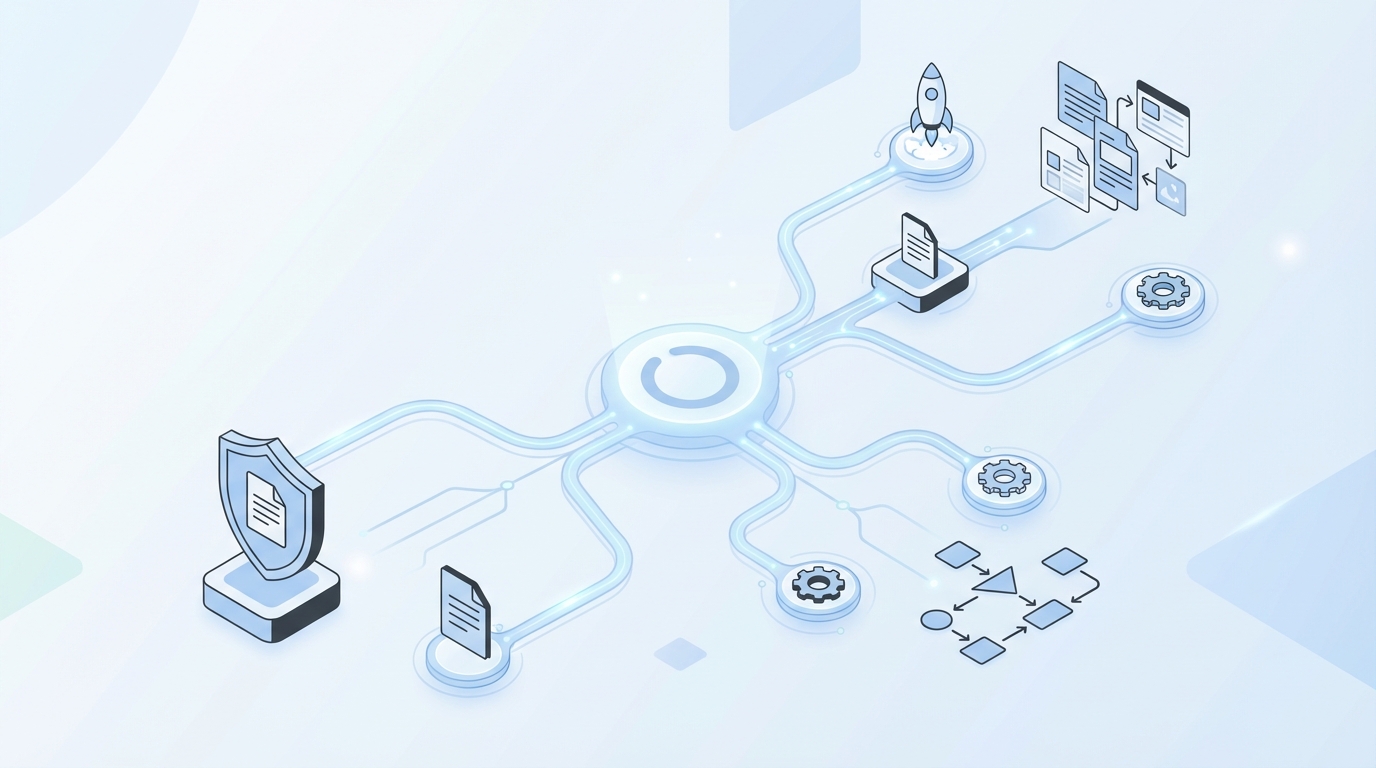
Studios turn intake into governed truth
Brand Studio encodes how your company sounds—tone, preferred terms, and CTA style—so every draft reads like you. Marketing Studio stores your point of view (POV), message pillars, and narrative frameworks so content stays opinionated, not generic. Product Studio grounds claims in approved descriptions and boundaries so no one invents features.
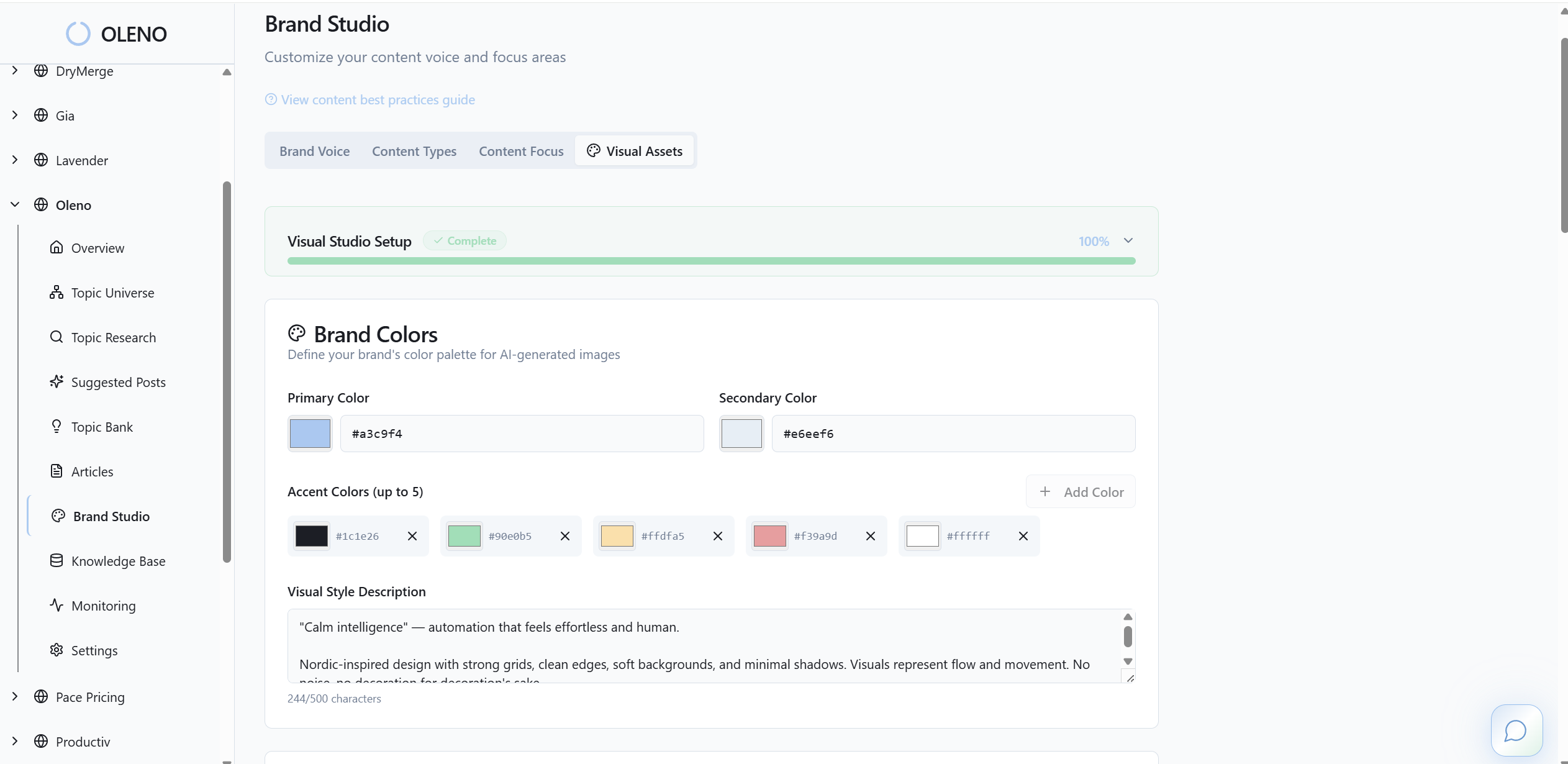
When PMs share release notes and PRD links, Oleno pulls from that governed truth. Writers and AI work from the same source, which is why rework falls and accuracy holds under speed.
Brief to publish: the fast lane in practice
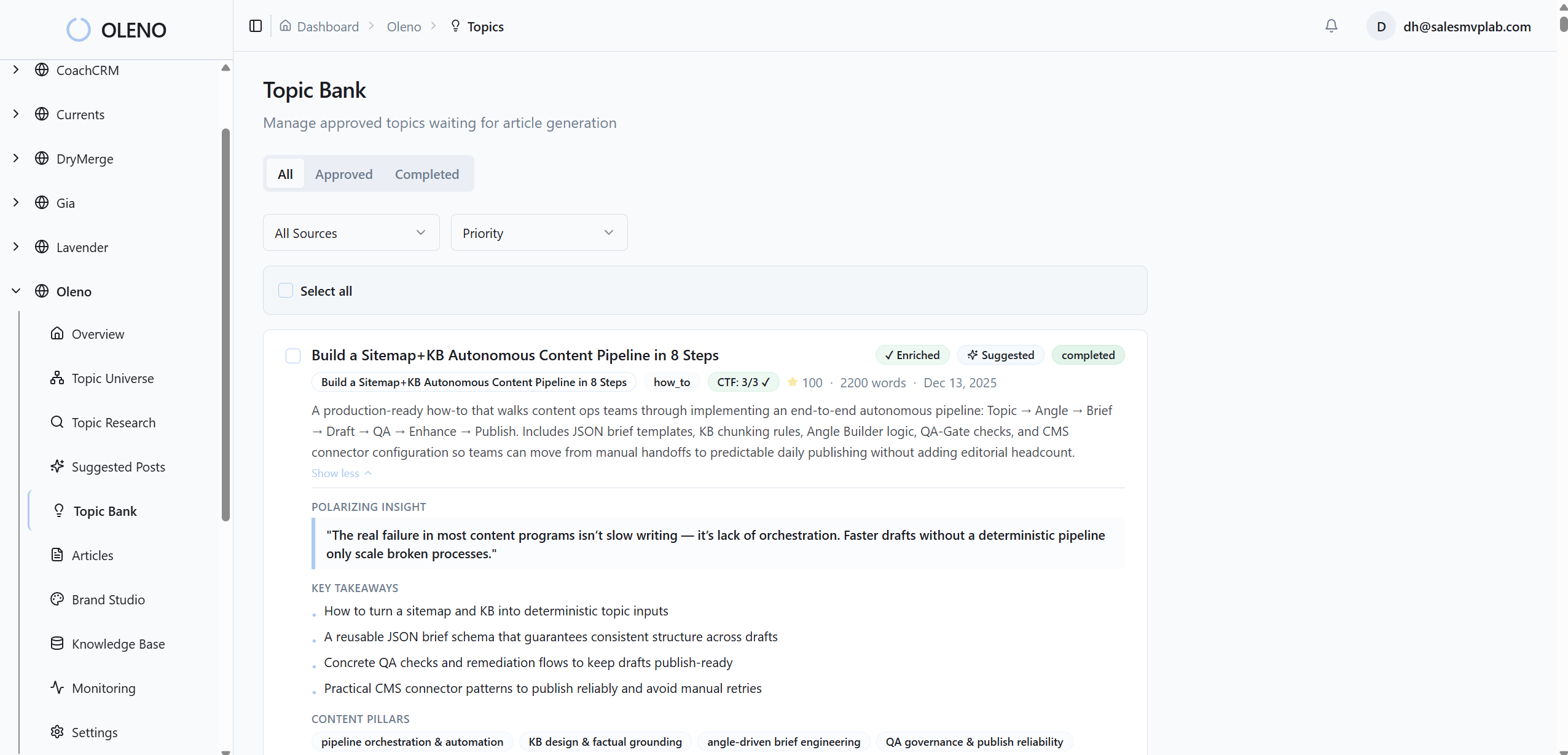
Here’s how the fast lane looks when it’s running well. Discover angles that fit your narrative. Generate briefs with voice rules and approved claims. Draft long‑form content that follows locked structures built for search and large language model (LLM) readability. Run the QA gate for voice, structure, grounding accuracy, links, and visuals. Push to your CMS as a draft or live post, then hand off channel‑ready variants for distribution.
Key capabilities that make this reliable:
- Brand Studio and Marketing Studio apply voice and POV to briefs and drafts, so tone and message don’t drift
- Product Studio grounds product facts and allowed claims, which prevents costly accuracy mistakes
- Quality Control (QA Gate) enforces non‑negotiable checks before publishing, reducing review cycles and rework
- CMS Publishing pushes approved content directly to WordPress, Webflow, HubSpot, and more, which protects cadence
Want to see the fast lane on real assets and timelines? book a demo
Visibility, not vibes, with system health
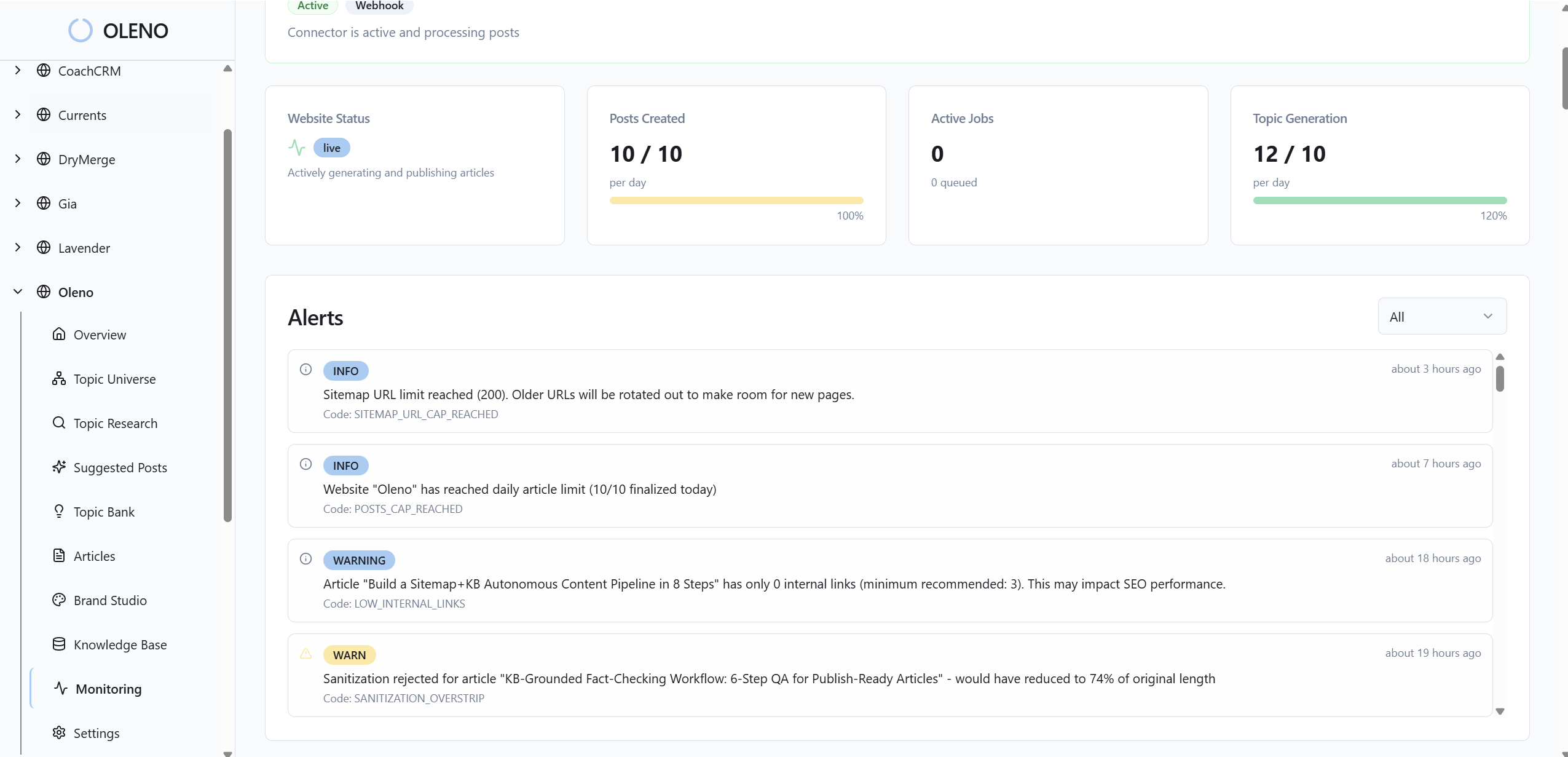
Measurement & System Health shows whether your engine is running—not just if a single post performed. You’ll see cadence and quality trendlines, failure patterns by source, and where governance or knowledge needs an update. Distribution repurposes approved long‑form into channel variants without inventing new positioning, which keeps social consistent.
The callback to cost matters here. When QA and Studios do their job, review time drops from hours to minutes, claims don’t drift, and you stop missing windows. That’s the budget you win back.
Tired of rewrites, missed windows, and guess‑work approvals? Stop the waste and run the system. request a demo
Conclusion
Most launch pain isn’t writing speed. It’s broken knowledge transfer and fuzzy priorities. Productlaunch content ops fixes the root cause by turning launches into a governed loop with intake, capture, brief, draft, QA, distribution, refresh, and measurement. Do that and you can cut time for high‑priority assets from 4–6 weeks to a week or less—while brand and product accuracy stay intact. That’s the game. Consistency beats chaos, and the pipeline follows.
About Daniel Hebert
I'm the founder of Oleno, SalesMVP Lab, and yourLumira. Been working in B2B SaaS in both sales and marketing leadership for 13+ years. I specialize in building revenue engines from the ground up. Over the years, I've codified writing frameworks, which are now powering Oleno.
Frequently Asked Questions