Programmatic JSON-LD: Inject Article & FAQ Schema into CMS Safely

You don’t get clean schema by flipping a toggle. You get it by deciding that structured data is part of how you ship content, not an afterthought. I learned this the hard way after a rollout where a “quick” plugin collided with a hardcoded template. Search Console went red. Engineering burned a day reverting, then another day cleaning up. None of it should’ve happened.
Here’s the thing. JSON-LD is boring when it’s handled upstream, and a headache when it’s not. Treat it like build output, not a marketing job to “check off.” When you do, you stop arguing about formats and start agreeing on rules: what injects, where it injects, and who owns which fields.
Key Takeaways:
- Move JSON-LD decisions upstream and make injection deterministic in your pipeline
- Start with Article, FAQ, and BreadcrumbList; build templates and field maps once
- Prefer server-side injection; document exceptions for client-side cases
- Gate merges with validation and duplicate detection to avoid regressions
- Assign clear ownership across content ops, SEO, and engineering
- Automate schema delivery through connectors so themes and plugins don’t drift
Schema Is Not A Checkbox, It Is A System Decision
Schema becomes reliable when you treat it like code, not content. Put JSON-LD generation inside your publishing pipeline, validate it in CI, and attach it at publish. That approach reduces drift, avoids collisions with plugins, and gives you one place to verify correctness before anything goes live. A small rule set saves big cleanups.

The Hidden Fragility Of Last‑Minute Schema
When schema is bolted on at the end, it inherits every inconsistency already baked into drafts, templates, and plugins. One dev hardcodes a date format. Another drops a second FAQ block via GTM “just for launch.” Now you’ve got duplicate JSON-LD and broken dates. You can guess what happens next.
I’ve watched teams treat schema like a quick swipe of polish. It’s not. It’s part of the artifact. Move those decisions upstream. Define the types you’ll support, codify field mappings, and generate JSON-LD as a build step. Then validate it before you even think about hitting publish. The guidance from Google Search Central on structured data is clear about eligibility: correctness and clarity matter.
What Is The Minimum Viable Schema Strategy?
Start small and stable. Article and FAQ first, BreadcrumbList next. That’s enough surface area to improve discoverability without creating fragility. One template per type. One field map per template. Owners defined for each field so questions route to the right person quickly.
You don’t need every possible property on day one. You need a reliable system. Decide your injection points, agree on server-side as the default, and put validation into CI. If a property is missing downstream, you’ll catch it in code, not in production. You can layer in extra properties once the basics are boring.
Why Should Content Ops Care, Not Just Engineering?
Because schema reflects what you publish every day. Titles, authors, publish dates, FAQs, even how you nest headings. If content ops doesn’t own the source fields, templates gradually drift from the content model. That’s how “small” mismatches become breakage weeks later.
Pair content ops with engineering early. Document the field map. Align on how FAQs are created, edited, and pruned. Then let CI keep both sides honest. The result is cleaner markup that mirrors the actual content model, not a guess encoded in a template six months ago. It’s governance without meetings.
Ready to skip duct tape and see a pipeline handle this end to end? Try the system approach. Try Oleno For Free.
Broken Or Duplicate Markup Comes From Process Debt, Not Format Choice
Bad schema rarely comes from JSON-LD vs. microdata debates. It comes from unclear ownership, including why content broke before ai, multiple injection sources, and no single source of truth. If templates, plugins, and GTM all have a say, you’ll collide eventually. Decide where JSON-LD lives, and enforce that with code reviews and CI. One source, one pattern, fewer surprises.

What Traditional Approaches Miss
Teams love a quick plugin or a theme toggle. Then someone pastes another block in a module “just this once.” Both paths run. Parsers get confused. Rich results quietly disappear. The problem wasn’t the format. It was the lack of a rule like “Article schema is injected server-side by the template, never in GTM.”
There’s a second trap. Rushing client-side injection for speed. If server markup already contains JSON-LD and a script adds another copy on load, you’ve created a duplicate without realizing it. You can’t wish your way out of race conditions. You need a rulebook and a gate. The Schema.org developer documentation gives the structure, your process decides consistency.
Where Should JSON‑LD Live In Your Stack?
Prefer server-side injection. It’s deterministic, plays nicely with caching, and avoids client-side races. Keep client-side injection for narrow cases, when data is only available post-render or certain headless patterns force it. But document the exception. Don’t let “temporary” scripts turn permanent and collide with templates later.
Once you pick the default, encode it in reviews and tests. If a template already injects Article schema, any attempt to add the same type via scripts should fail CI. The point isn’t to be strict for its own sake. It’s to be predictably boring so release day stays sane.
The Cost Of After‑The‑Fact Schema Is Real, Even If You Do Not Track It
The bill for broken schema shows up as rework, missed coverage, and lost time. You might not track it, but you feel it, in hotfixes, CTR dips, and frustrated teams. A few simple gates in CI are cheaper than every rollback you’ve done this year. One time investment, recurring savings. Let’s put numbers to it.
Engineering Hours Lost To Rework
Let’s pretend you ship 10 posts a week. A malformed date or duplicate FAQ slips through twice. Each fix touches engineering, SEO, and a reviewer. Even if that’s only 30 minutes per incident, you’re at roughly five hours a week. At an internal blended rate of $150/hour, that’s $750 weekly cleaning up avoidable schema debt.
And that’s the optimistic version. The moment a fix requires a rollback, you’re not just “fixing schema.” You’re juggling merge queues, migration scripts, and release notes. This is the most expensive way to learn a lesson you could’ve automated. It’s also the most demoralizing.
How Much Traffic Can One Malformed Field Cost?
If Article pages throw invalid markup for two weeks, including the shift toward orchestration, rich results can drop off. Even a modest 5 percent CTR lift from rich elements disappears. On 10,000 impressions, that’s 500 fewer clicks you’ll never notice directly. Multiply that across a month and the opportunity cost stacks quickly.
No, you won’t always see an alarm bell. Rich result eligibility is fickle. But removing yourself from consideration because of a typo or duplicate block? That’s on the process, not the algorithm. A little discipline upstream keeps you in the game.
The Duplicate Markup Trap Across Plugins
Two sources injecting similar JSON-LD confuse parsers and can suppress eligibility. You don’t need a committee to fix this. Run a duplicate scan in CI and enforce one injection source per template. Gate deploys if a second Article or FAQ block appears where it shouldn’t.
Tools and how-tos exist for teams of any size. A practical primer like this beginner’s structured data guide can help educate the broader team while you wire the gates. Education plus enforcement beats whack‑a‑mole.
Still spending Fridays on schema patchwork? There’s an easier path. Generate 3 Free Test Articles and see a pipeline handle the heavy lifting.
Release Day Pain Comes From Missing Guardrails
Rollbacks, hotfixes, and Slack war rooms aren’t destiny. They’re a sign you shipped without feature flags, pre-merge checks, or clear ownership. Add light guardrails, flags per template, CI validation, and a simple alert for invalid spikes, and release day gets calmer. Not perfect. Predictable enough to sleep.
The Rollback You Did Not Plan For
Rolling back a theme or plugin to stop bad markup sounds simple until it isn’t. You revert unrelated fixes. You reopen old bugs. Now you’ve got two problems, broken schema and a backout that touched other parts of the site. It’s a costly safety valve.
Feature flag schema injection by template. If something’s off, toggle only the schema path. Keep everything else live. Pair that with a pre-merge validation step so you’re flipping the flag only when you must, not as first line defense. You’ll recover faster, with less collateral damage.
When Search Console Lights Up After A Deploy
If Search Console is the first time you see invalid items, you’re late. That doesn’t mean ignore it. It means you need an earlier tripwire. Validate schema in CI on every PR. After deploy, confirm expected coverage moved as planned. Then set a light alert for sudden spikes in invalid items so you can react without panic.
Who owns the fix? Decide before it breaks. Engineering owns generation and injection patterns. Content ops owns field accuracy and FAQ hygiene. SEO owns policy and validation rules. Write that policy in code and reviews so “who’s on point?” never becomes the first question.
A Safer Way To Generate, Validate, And Ship Schema
The safest path isn’t more plugins. It’s a small, documented system: reusable templates, server-side injection by default, and CI gates for structure and duplicates. Start with Article and FAQ. Layer BreadcrumbList. Make changes intentional. When the process gets boring, you’ve won. Examples help. So do rules you’ll actually follow.
Design Reusable Templates And Data Maps
Create one JSON file per schema type with placeholders for headline, datePublished, author, and FAQ items. Back it with a typed mapper that converts CMS fields into the required shapes. That mapper becomes your contract with content ops. If the content model changes, you update one place.
Lock it down with unit tests. Dates must be ISO 8601. Authors must have names. FAQs must include both question and acceptedAnswer. Changes to templates should break tests if they drift. That’s how you prevent “small” divergences from piling up into a broken release later.
Choose Server‑Side Vs Client‑Side Injection Wisely
Default to server-side injection in templates or modules. It’s predictable, cache-friendly, and avoids race conditions. Use client-side only when the data is genuinely post-render or you’re working around a CMS limitation you can’t control. Document the exception so it doesn’t spread.
In practice, that looks like a WordPress theme or plugin rendering a single application/ld+json block from post fields, a Webflow custom code block bound to CMS fields, or a HubSpot module that reads page properties. Pick one approach per template and stick to it. Don’t mix patterns.
Automate Validation In CI And Prevent Duplicates
Validation shouldn’t be a person’s job. Add unit tests for field presence and types. Integrate a pre-merge check that exercises the structure against sample posts. If you want a north star for patterns, the JSON-LD best practices are a solid reference as you set your rules.
On duplicates, be blunt. Fail the build if more than one schema block of the same type appears for a template. That single rule kills the most common production mistake. Interjection. The best rule is the one your team will actually maintain.
How Oleno Automates JSON‑LD From Draft To Publish
Oleno generates valid JSON-LD for Article, FAQ, and BreadcrumbList as part of its pipeline, then attaches it to the article at publish. Templates don’t drift. Plugins don’t collide. The schema mirrors the content model because both are produced from the same source of truth, and both get validated before anything ships. That’s the difference a system makes.
Programmatic Generation For Article, FAQ, And BreadcrumbList
Oleno’s schema generation sits inside the writing-to-publish loop, not bolted on after. The system maps fields like headline, authors, dates, and FAQs directly from the article and converts them into compliant JSON-LD. Because it’s programmatic, you avoid silent mismatches between templates and content.
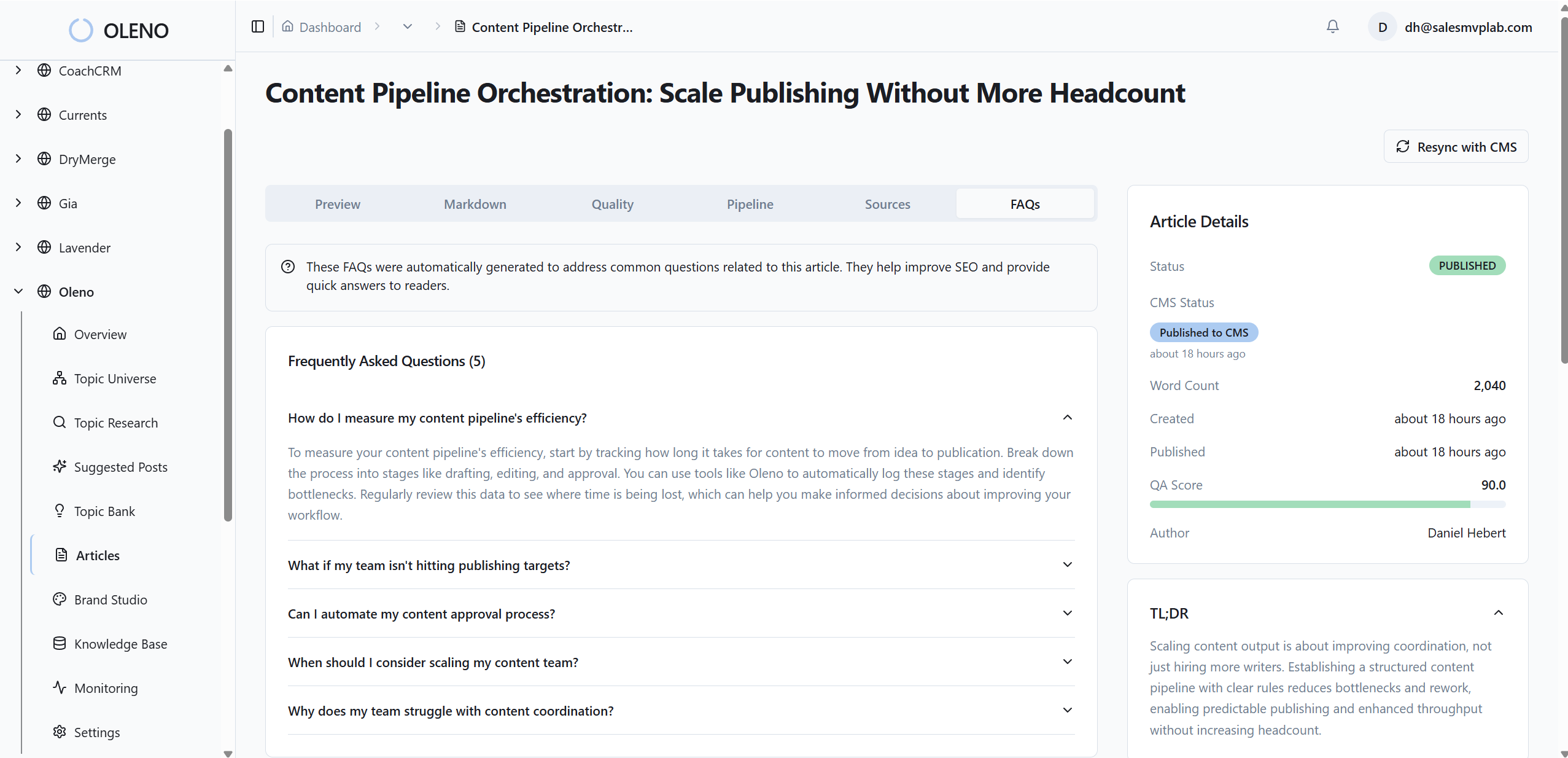
Quality enforcement is part of the path. If schema fails structural checks, missing dates, including ai content writing, malformed FAQ items, the draft doesn’t advance. It’s refined until it passes. You don’t get perfect outcomes every time, and that’s fine. You get a predictable bar that prevents the avoidable failures we quantified earlier.
Connectors And Deterministic Publishing
Publishing connectors deliver the final article, text, visuals, metadata, and schema, to WordPress, Webflow, and HubSpot. Fields map automatically to each CMS, which means you’re not juggling per-theme overrides or copy‑pasting blocks on launch day. Deterministic injection removes the “is this template injecting too?” guesswork.
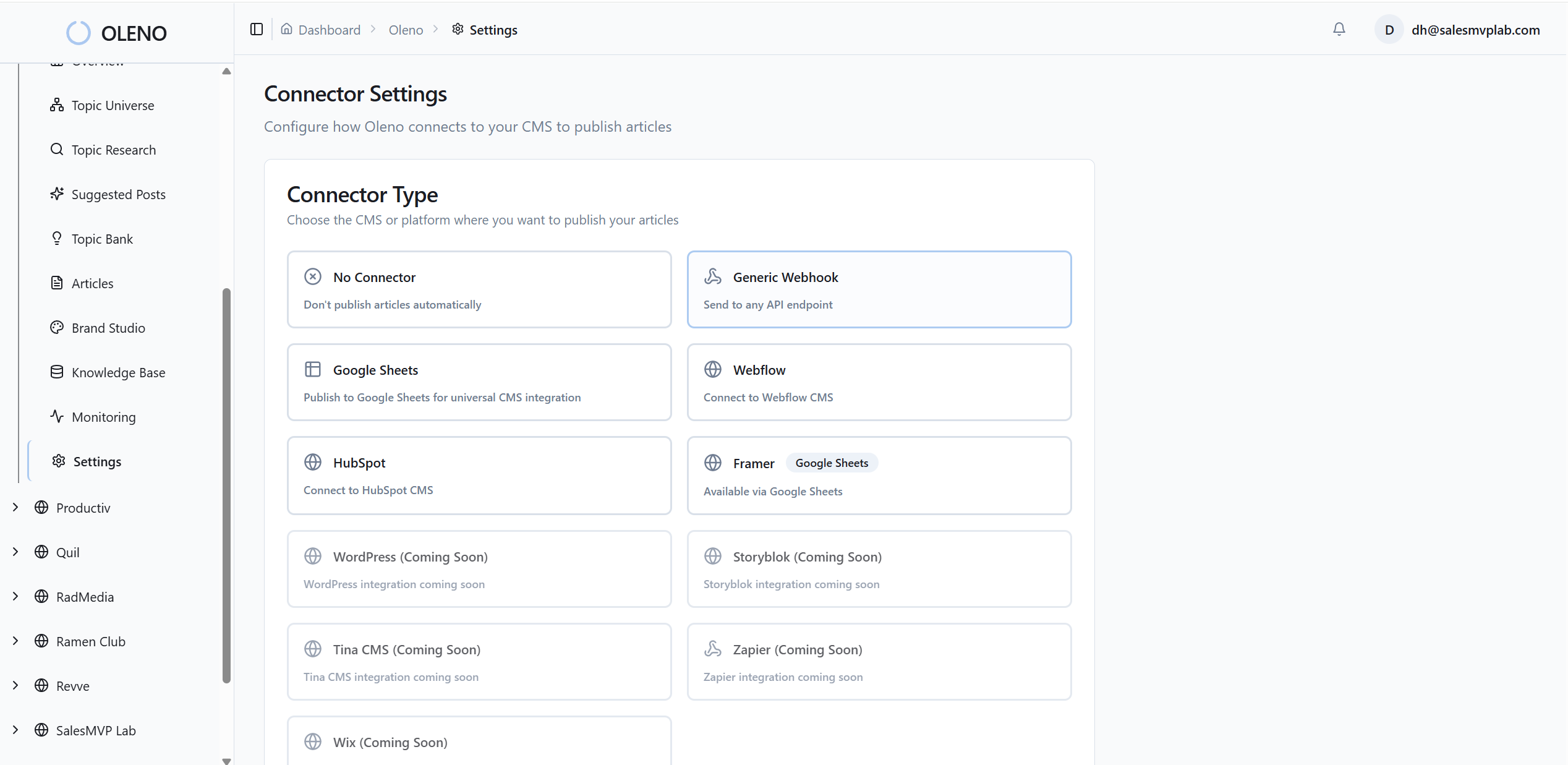
This is where Oleno’s stance on determinism helps. Internal links and schema are generated by rules, not vibes. Duplicate publishing is prevented. You still decide strategy and voice, the system handles the boring parts correctly. If you’re tired of babysitting schema, this is the relief valve.
Quality Gates That Stop Bad Markup
Oleno enforces schema presence and structure within its QA process before publishing. Drafts are evaluated against dozens of criteria, including snippet-ready sections and metadata completeness. If a draft doesn’t meet thresholds, it’s refined and re‑checked automatically.
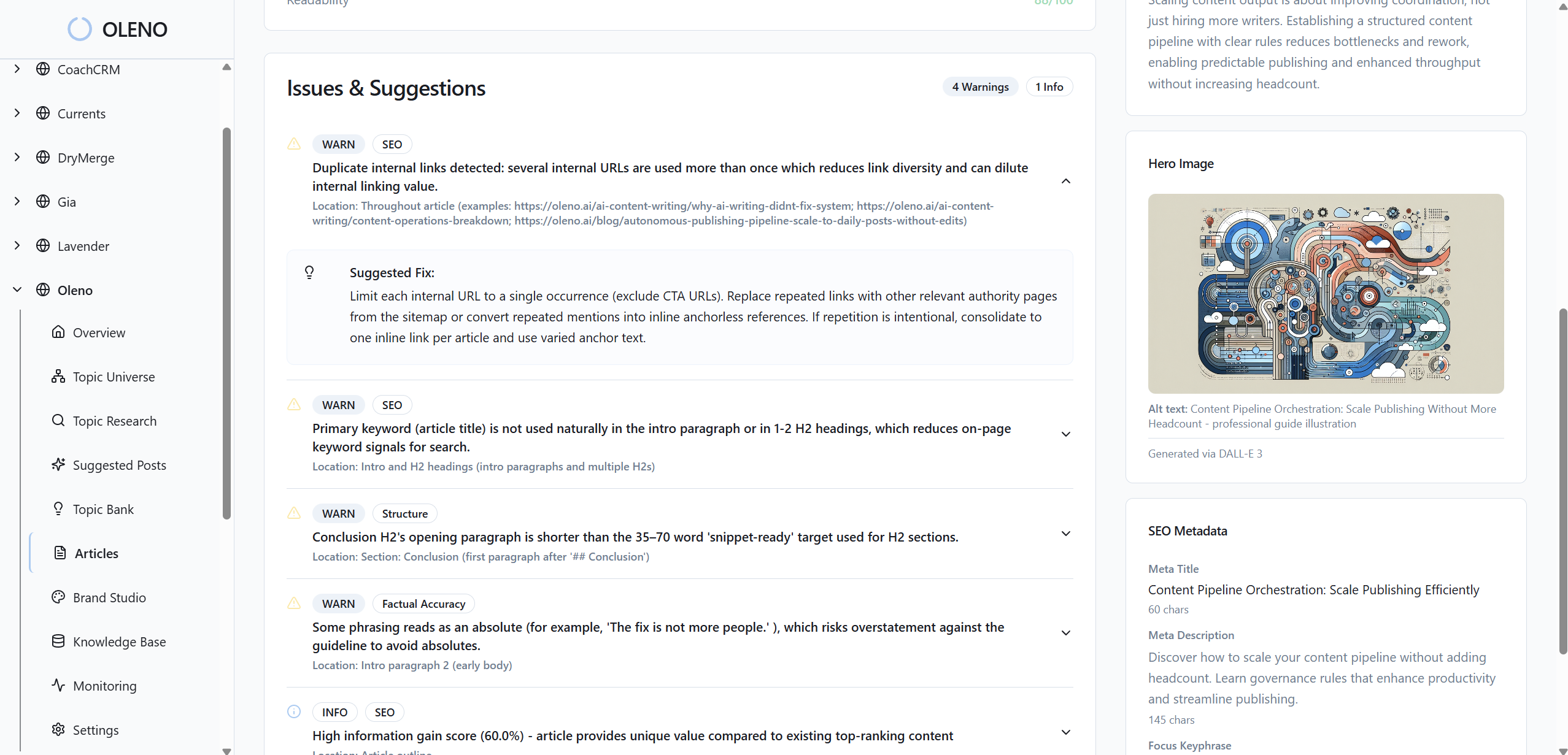
That doesn’t promise rich results or CTR lifts. It does reduce the rework and rollback costs you’re living with now. Which, frankly, is the first win worth chasing.
Want to see schema generated, validated, and shipped without plugins colliding? Use An Autonomous Content Engine For Always‑On Publishing.
Conclusion
Schema breaks when it’s treated like a checkbox. It stabilizes when it becomes part of your system: small set of types, server‑side injection by default, and CI gates that catch structure and duplicates. Whether you wire this yourself or let Oleno handle it, the outcome is the same. Fewer fire drills. More predictable shipping. And content that’s easier to trust, for people and machines.
About Daniel Hebert
I'm the founder of Oleno, SalesMVP Lab, and yourLumira. Been working in B2B SaaS in both sales and marketing leadership for 13+ years. I specialize in building revenue engines from the ground up. Over the years, I've codified writing frameworks, which are now powering Oleno.
Frequently Asked Questions