Programmatic SEO for Demand Gen: Scale Topic Coverage Without Losing Voice

I’ve seen programmatic SEO do two very different things. At Steamfeed, volume plus quality drove us to 120k monthly uniques. We hit spikes at 500, 1,000, 2,500, 5,000, and 10,000 pages because breadth and depth compounded. Most posts got under 100 views each, but the long tail stacked up. It worked because the content actually helped the reader do something.
At Proposify, we ranked like crazy, but a chunk of traffic didn’t convert because it didn’t connect back to the product story. Great content. Misaligned narrative. Sales didn’t feel it. Marketing felt the pressure. So when folks tell me they want to scale programmatic, I ask a simple question first. Will those pages help a buyer evaluate you, or just look busy in GA?
Key Takeaways:
- Anchor programmatic pages to product truth or you’ll scale noise that buyers ignore
- Governance beats prompts: encode voice, claims, and structure once, then apply everywhere
- Quantify the hidden costs: duplication, rework, cannibalization, and crawl waste
- Guardrails prevent drift: rules for tone, claims, headings, and information gain
- Coverage-first planning compounds results; keyword-first inflation depresses pipeline
- Treat this like an operating system rollout, not a one-off campaign
Volume Without Product Truth Creates Noise Buyers Ignore
Programmatic SEO only works when pages are grounded in what your product actually does. Without that grounding, you create a parallel content universe that might rank, but rarely converts. Effective programs tie clusters to real evaluation moments, like integrations or pricing, that map to how buyers decide.

Why most programmatic pages miss demand
Most teams start with keyword lists and templates, then generate at scale. It feels productive. You see a lot of URLs and a steady publishing cadence. But the pages drift into generic advice and vague benefits because there’s no constraint system that forces product truth into the copy. Without those constraints, copywriters and models guess, which is where the mess begins.
The fix is simple to say and harder to do. Lock product claims, use cases, proof points, and boundaries into the template. Require a section that explains how your product addresses the query, with specific constraints on phrasing and what you won’t claim. Tie each cluster to a conversion moment you can support, like “Salesforce onboarding tracking” or “[Tool] vs [Tool] for proposal approvals.” If the page can’t credibly bridge discovery to evaluation, don’t publish it.
And to keep yourself honest, spot check five pages a week against real customer scenarios. If a sales rep can’t use that page during an evaluation call, it’s likely fluff. Good programmatic pages do double duty. They bring visitors in, and they make the sales conversation easier.
What does product truth look like in content?
Product truth is everything you can say confidently under review. Approved descriptions, capabilities, constraints, and non-claims. It’s also which use cases you support well, which ones you don’t, and how customers actually implement the product. When you codify this, you keep the copy from inventing features or stretching value props to fit a keyword.
Put the guardrails in your templates. For example, “H2: How [Product] Solves [Use Case]” with three required elements: an approved capability statement, a short example grounded in help doc steps, and a constraint line that says what the product doesn’t do. Add a reference note linking to the internal KB or help doc so writers or systems can verify phrasing. Build a small set of canonical CTAs that match how buyers move next, not a generic “Learn More.”
Repeatable phrasing matters. Create two or three approved ways to describe each capability. You don’t want robotic repetition, but you also don’t want drift. The goal is consistent, accurate language that still feels human. It’s the difference between an editorial process and a word factory.
The risky trap of keyword first thinking
Keyword lists feel scientific. Nice columns. Search volume. Difficulty scores. But if those terms don’t map to your features and fit, you’ll inflate traffic while depressing pipeline. Head terms and broad modifiers invite generic content and generic readers. It’s a fast path to vanity metrics and slow deals.
Start with intent patterns that mirror buying behavior. Integrations with named platforms, comparison routes, pricing in specific markets, and compliance needs by industry. If you must use keyword tools, let them validate and cluster long-tail patterns, not dictate what exists. If a term can’t be tied to a capability, a fit-criteria, or an evaluation step, it belongs on a different roadmap. Want a grounding refresher on the core mechanics of programmatic SEO? The overview from Search Engine Land on programmatic SEO is a solid baseline, but don’t stop there.
Ready to see a governed programmatic setup without the guesswork? You can Request a Demo.
The Real Bottleneck Is System Execution, Not Ideas
The real blocker isn’t ideas or even drafts, it’s running the whole thing reliably. Strategy, voice, product truth, templates, QA, and publishing live in different places with different owners. Without a system that applies rules automatically, volume amplifies drift and mistakes.

What traditional approaches miss about governance
Most teams optimize prompts and briefs, not the rules of the system. They build clever templates, run workshops on tone, and do handoffs to editors who become human guardrails. It works for 10 pages. It cracks at 100. When pressure hits, judgment goes manual. Meetings multiply. The pipeline slows. The team burns out.
Governance changes the economic model. Define voice, narrative stance, product truth, legal boundaries, and quality bars one time, then apply them across every page automatically. Every output inherits the rules by default. You shift judgment from ad-hoc reviews to a repeatable pipeline that enforces structure and claims. The result, fewer edits, fewer meetings, and pages that hold together as volume grows.
We learned this the hard way. At PostBeyond, I could personally crank out four strong posts a week, because the framework lived in my head. When the team grew, that knowledge didn’t scale. Governance is how you get that judgment out of one person’s brain and into the system that runs daily.
Product led topic patterns that convert
The topic patterns that convert are boring on purpose. They match how people buy. Think [Tool] vs [Tool] for [Use Case], [Software] pricing in [Country], [Integration] with [Platform], or [Compliance] for [Industry]. These aren’t vanity plays, they’re decision accelerators. The better the constraints, the better the outcomes.
Build simple data definitions for each variable, then bind content to those definitions. For example, a comparison must include who each tool is for, feature gaps, supported integrations, and an evaluation checklist. A pricing-in-country page must call out currency, billing rules, tax considerations, and plan fit. If a required variable isn’t available, the page fails pre-publish. For more on patterns and pitfalls, the piece from Siege Media on programmatic SEO strategy is worth a read.
Fairness matters too. Comparison pages that distort facts lose trust fast. Bake fairness into the rules. Require a “when competitor is a better fit” line. Your best deals come from prospects who felt educated, not pressured.
Where dynamic content and real time claims go wrong
Live blocks sound exciting, until they say the wrong thing. “Lowest price in city” looks great until a competitor runs a promo and Legal gets a call. If you add dynamic elements, bind them to a controlled data source and route through claim rules. If data freshness or provenance is shaky, don’t ship it.
Prefer extractable, verifiable blocks. Tables with source notes. FAQs with clear, scoped answers. Screenshots with version labels. If it can’t be validated, it shouldn’t be in a template. Want to stress-test ideas and formats before you lock them in? The guidance from iPullRank on growth with programmatic SEO offers useful lenses, but your guardrails still decide what makes the cut.
The Hidden Costs of Generic Programmatic Pages
Thin and duplicative pages don’t just fail to rank, they create maintenance debt. You’ll spend hours cleaning, consolidating, and explaining why metrics look odd. Crawl waste, diluted signals, and cannibalized queries compound silently until performance flatlines.
Let’s pretend you publish 1,000 pages
Let’s run the math. You publish 1,000 city pages in 60 days. If 20 percent are thin or near-duplicates, you now have 200 liabilities. A conservative 30 minutes per page to diagnose, rewrite, or consolidate is 100 hours. Add review loops and publishing steps, it’s closer to 150. That’s a month of someone’s time evaporated.
That doesn’t include opportunity cost. While the team fixes problems, they’re not shipping net-new coverage that could compound. It also doesn’t include the brand edits Legal or Product might request after you’ve already pushed live. Better to encode information gain rules at the source so duplication never clears the gate. Want a long-tail lens on why this matters for durable traffic? See the write-up on consistent long-tail gains.
Cities are just an example. The same math applies to integration pages, industry pages, and pricing variations. Once you see the hourly cost, you stop tolerating “we’ll fix it later.” Later is very expensive.
The QA and rework tax you did not plan for
Manual review doesn’t scale. If editors must check voice, factual grounding, schema, headings, internal links, and compliance on every page, velocity collapses. You end up with your strongest writer acting like a human linting tool, catching drift and tone instead of creating leverage. Morale drops, and the backlog grows.
Define pre-publish checks as rules, then enforce them consistently. Voice alignment, claim boundaries, structure compliance, and information gain should be automated gates. Fail conditions block publishing. Pass conditions fast-track it. This is how you maintain pace without trading away quality. The goal isn’t perfect. It’s predictable pass rates that keep momentum intact.
Also, track where failures come from. If 40 percent of blocks fail for the same reason, fix the template or the data source, not the page. System-level fixes beat page-level heroics every time.
Cannibalization, crawl budget, and diluted signals
Similar templates compete. They split impressions, slow indexation, and confuse intent. A city page that largely repeats another city’s copy will underperform both. Two comparison pages that cover the same core angle will split authority. The signals get muddy, and search engines struggle to decide what to rank.
Use canonical logic and deterministic linking to parent hubs. Require unique data blocks that go beyond swapping a city name or a logo. Consolidate redundant URLs, then refresh the survivor with stronger sections that answer “how,” “who,” and “when” for the query. It’s not just good hygiene. It’s reclaiming wasted crawl and concentrating authority where it matters.
If you’re seeing flat impressions with rising page counts, you’ve likely hit this wall. Fixing it sooner saves weeks of cleanup later.
The Human Pain When Output Scales Without Guardrails
When execution scales without rules, humans pay the price. Late-night rollbacks, leadership pressure, and review loops that never end. The cost isn’t only hours. It’s trust, morale, and momentum.
The 3am rollback no one wanted
You finally scale publishing, then a risky claim slips through and Legal calls. Now you roll back 300 pages, scramble for fixes, and lose a week. I’ve been on those calls. No one enjoys explaining how a single sentence made it past review. It’s avoidable if claim boundaries and KB grounding exist before you ramp.
Set the rules first, then ship. If rules are unclear, slow down and codify. It’s cheaper than a public correction and the follow-up meetings that come with it. The right move is boring. It’s also the one that keeps you out of trouble. Volume without safety isn’t a win. It’s a time bomb.
When you treat claims like data fields, not free text, you reduce risk dramatically. Fewer surprises. Fewer escalations. Fewer rollbacks.
Why leadership loses trust fast
Executives can support an experiment that ships 50 pages. They run out of patience when broken structure and off-brand copy keep showing up. No one wants to be the team that creates extra work for Legal, Product, or Sales. That’s when budgets freeze and publishing pauses.
Publish fewer pages until you can show consistent pass rates. Then scale. Stakeholders are fine with deliberate pace. They’re not fine with unreliable output that creates a headache for other teams. Your job is to prove the engine is controllable before you turn it up. Once trust is there, the rest comes quickly.
A steady cadence that doesn’t need firefighting is how you earn the room to expand.
A Coverage First Way to Scale Without Losing Voice
Start with a topic universe mapped to product capabilities, not a spreadsheet of head terms. Enforce voice, claims, and structure through rules that every page must follow. Scale once pass rates are stable and duplication stays near zero.
Coverage first discovery tied to product truth
Begin with what you can back up. List capabilities, integrations, industries, and evaluation steps that your product supports well. Map clusters around those anchors. Prioritize long-tail patterns that match real decisions, not vague educational terms that anyone could rank for. The intent should point directly at how you help, with evidence ready to go.
Encode variables and allowed angles in the brief. Each page must add new data, examples, or comparisons that didn’t exist elsewhere. If a variable can’t be populated with unique detail, the page fails. This is how coverage grows without repeats. If you want a deeper primer to cross-check your plan, the Complete Guide to Programmatic SEO breaks down the moving parts, though your constraints still need to reflect your product reality.
As coverage expands, tighten the rules. Early wins come from obvious gaps. Later wins come from disciplined structure and relentless information gain.
Templates that force information gain, not fluff
Design templates that demand specificity. Require a summary-first section that answers the query in plain language. Add a comparison table with extractable cells. Include an FAQ with short, precise answers. Localized data blocks where relevant. A “how it works” segment that mirrors product steps or help docs. These aren’t nice-to-haves. They’re the backbone of pages that rank and convert.
Tie every claim to a provable source in your KB. If the source doesn’t exist, pause and create it first. This approach slows initial output a bit, then accelerates without rework. It’s easier to publish consistently when you trust the blocks are accurate by design. You’ll spend time up front on rules and references. You’ll save triple that time on the back end.
Systems that force information gain build authority over time. Systems that allow fluff create cleanup projects.
How Oleno Runs Programmatic SEO With Voice and Safety Built In
Oleno runs programmatic SEO as a governed job, not a series of prompts. You define voice, product truth, and claim boundaries once, then Oleno applies those rules across topic discovery, briefs, drafts, QA, and publishing. The output is steady coverage that supports evaluation, not just rankings.
Programmatic SEO studio with topic discovery and coverage protection
Oleno’s Programmatic SEO studio discovers topics from your site and knowledge, then generates briefs with locked H2 and H3 structures. Coverage protection prevents duplication, and cadence controls keep publishing reliable. You’re not wrangling keywords by hand. You’re expanding coverage intentionally, tied to product capabilities and evaluation steps.
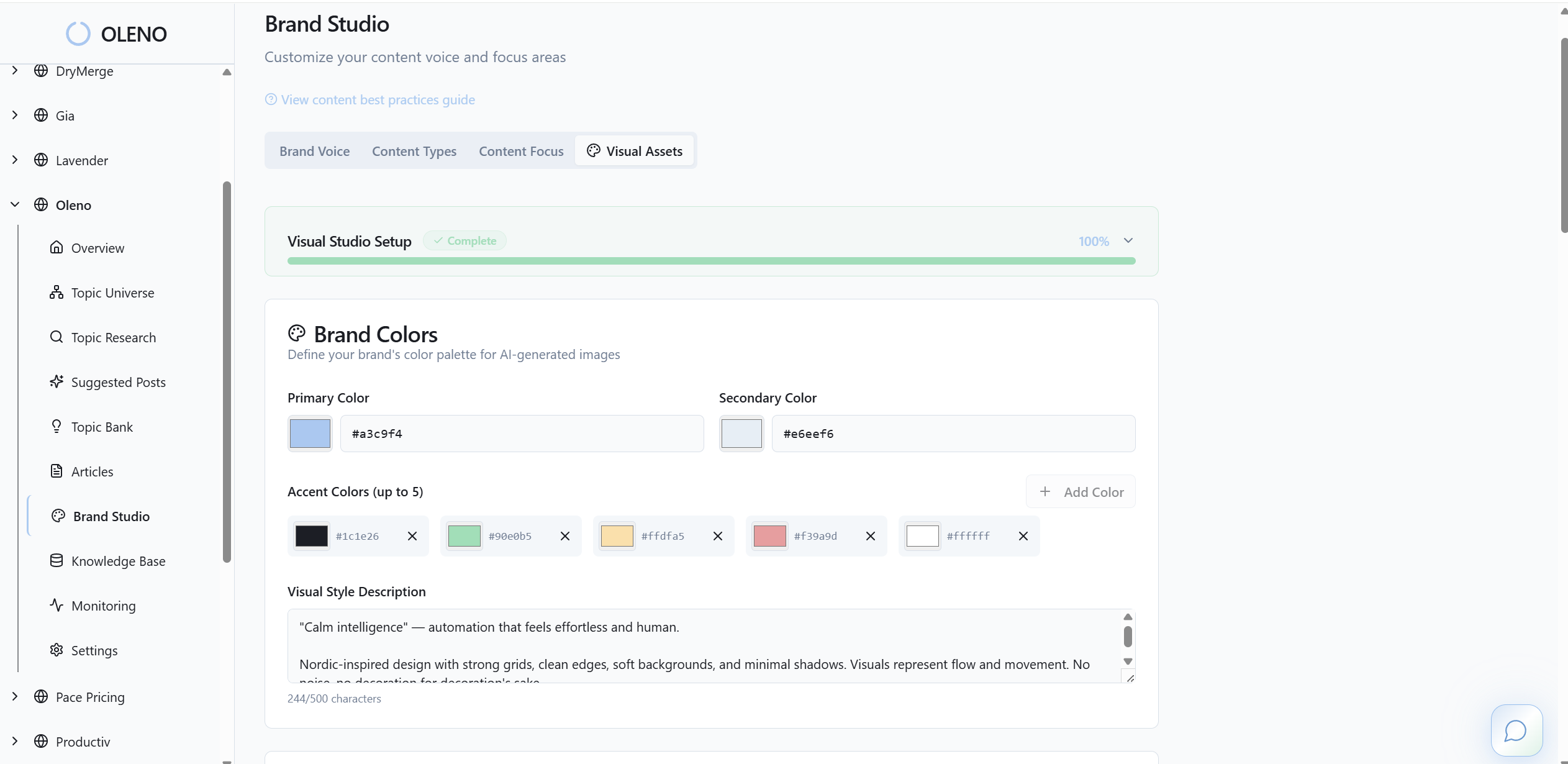
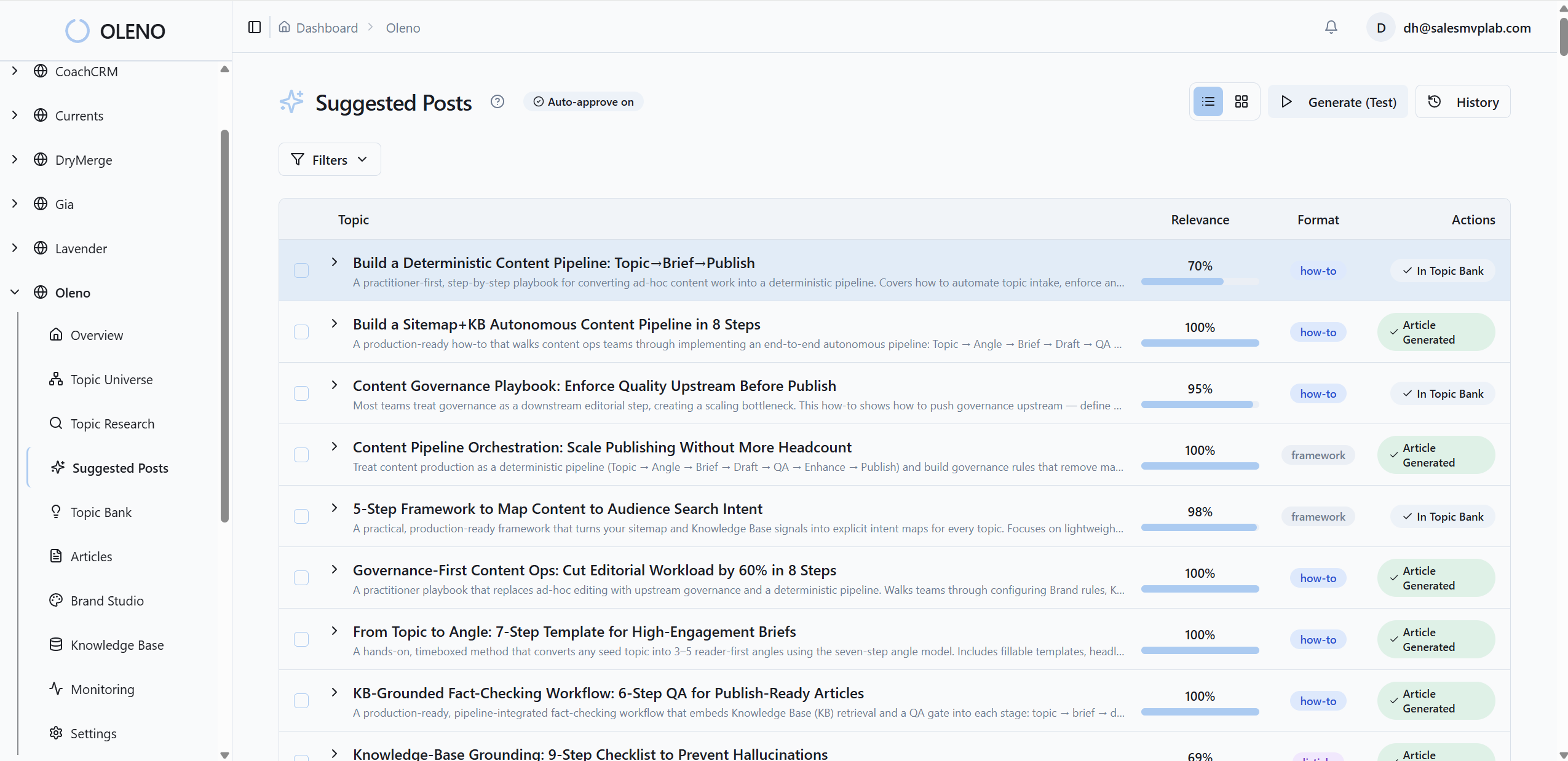
Inside each brief, Oleno bakes in your approved claims and phrasing, so drafts don’t drift into generic territory. Information gain requirements block thin pages. If a required data field is missing or a section repeats existing content, the page doesn’t advance. This shifts QA from manual heroics to predictable pass/fail signals. It also reduces the frustrating rework that wrecks cadence and burns trust.
When it’s time to publish, Oleno pushes directly to WordPress, Webflow, HubSpot, and others with idempotent controls to avoid duplicates. Output becomes a schedule you can depend on, not a set of ad-hoc tasks that need constant chaperoning from your best writer.
Voice rules and narrative compliance that prevent drift
With Oleno, you define tone, preferred terms, banned phrases, and CTA structure once. Oleno enforces those voice rules automatically, so every page sounds like you. Narrative compliance checks ensure sections follow the intended flow, for example problem, reframe, teach. Product truth is grounded through your uploaded docs and approved claims, which keeps features accurate and safely scoped.
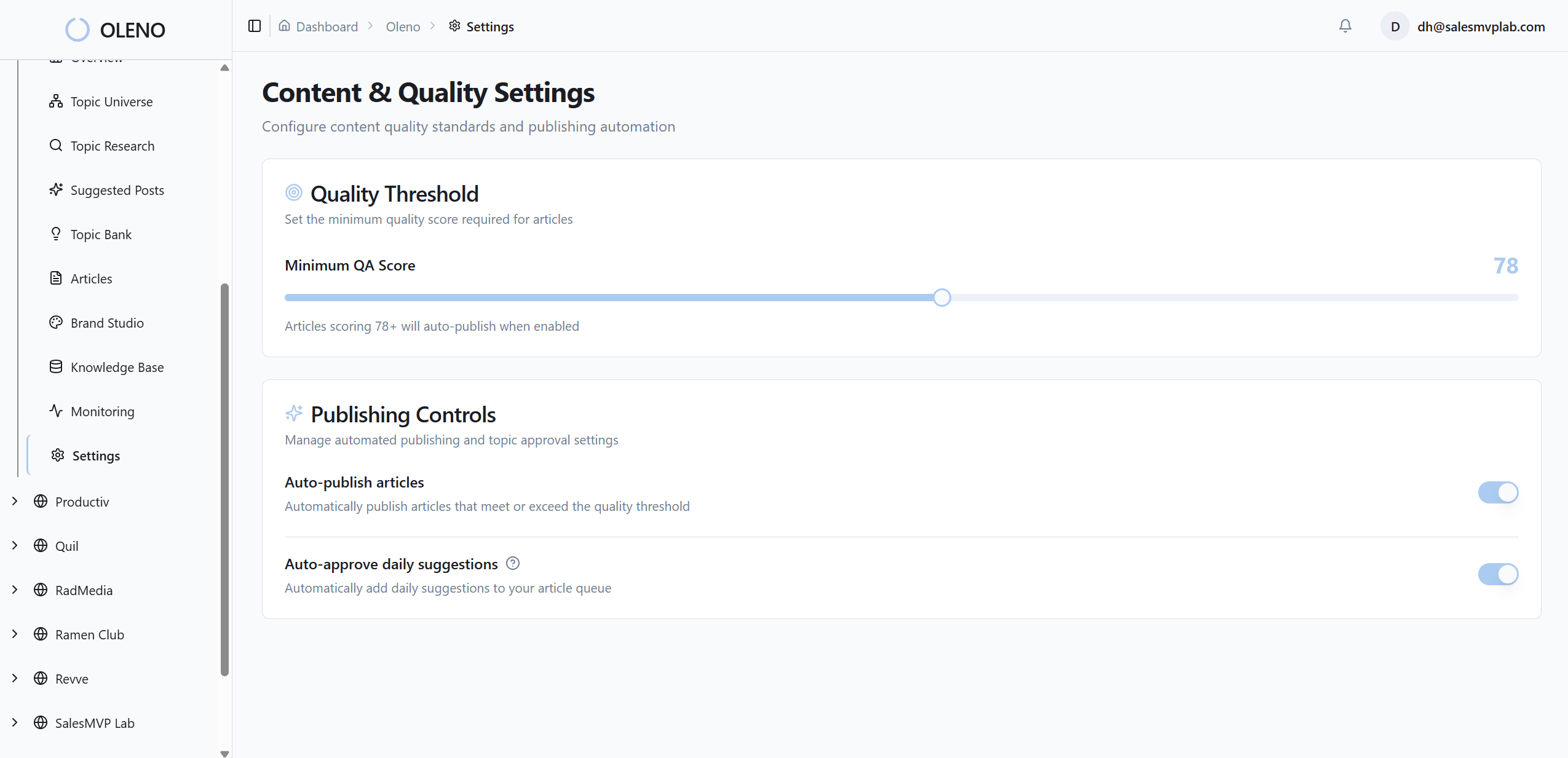
Nothing ships until it passes voice, structure, accuracy, and readability checks. If something fails, Oleno revises against the rules instead of asking you to start over. Optional operational visibility can show output volume, cadence, and common failure patterns, so you can tune the system at the source. The goal isn’t perfect. It’s reliable, on-brand pages that support evaluation week after week.
If you want to see how this works end to end, from governance to publishing, you can Request a Demo. We’ll walk the pipeline and look at how rules change the economics of programmatic SEO for a small team.
Conclusion
Programmatic SEO isn’t about pumping out more pages. It’s about building a system that publishes accurate, on-brand content tied to how buyers actually evaluate you. When you anchor to product truth, enforce voice and claims in the template, and block duplication at the source, you replace cleanup projects with compounding coverage.
Small teams win here. Not by writing faster, but by shifting judgment into rules the system applies every time. That’s how you scale volume without losing your voice, create pages sales can actually use, and keep publishing steady even when priorities shift.
About Daniel Hebert
I'm the founder of Oleno, SalesMVP Lab, and yourLumira. Been working in B2B SaaS in both sales and marketing leadership for 13+ years. I specialize in building revenue engines from the ground up. Over the years, I've codified writing frameworks, which are now powering Oleno.
Frequently Asked Questions