Programmatic SEO implementation guide for marketers

I wrote this for the CMO who keeps getting told “we need more content” while the review queue eats half the week. If you want a Programmatic SEO implementation guide for marketers, here’s the plain truth, told by someone who’s done both the manual grind and the system build. More posts won’t fix drift, rewrites, or the lose-lose handoffs. A working system will.
Back when I scaled content with dozens of contributors, velocity wasn’t the hard part. Consistency was. Most teams don’t fail because they lack ideas. They fail because every new piece has to be taught the same voice, the same POV, the same structure. That re-teaching is the real tax. Programmatic SEO only works when you remove that tax.
Key Takeaways:
- Treat programmatic SEO like operations, not a writing sprint, or you’ll burn time and trust
- Audit your real process first, then lock structure and inputs before scaling output
- Quantify the rework tax, then design rules that stop drift at the source
- Pilot one cluster to prove velocity, quality, and GEO structure before scaling
- Measure cadence, voice alignment, and accuracy, not just traffic and rankings
- Encode truth once, then enforce it in briefs, drafts, QA, and publishing
- Scale with a deterministic pipeline so quality doesn’t collapse under volume
Programmatic SEO Works When You Treat It Like Operations, Not Articles
Programmatic SEO succeeds when it runs like an operating system, not a string of posts. The work is defining inputs, locking structure, and enforcing quality with every run. When those pieces hold, velocity compounds without drift. You stop firefighting and start shipping on a steady cadence.
Volume Without Drift Is The Real Win
Sustainable growth doesn’t come from blasting 50 thin posts, it comes from publishing repeatable, on-voice articles that stack into clusters. You can only do that if every piece pulls from the same source of truth. I’ve seen teams push volume fast, then spend weeks rewiring tone and claims. That’s waste, not leverage.
Writers aren’t the problem. Unclear inputs are. If voice, product truth, and audience nuance aren’t encoded up front, reviewers try to backfill it at the end. That’s the most expensive place to fix anything. Lock the rules early, then let the machine run. Your calendar finally becomes predictable.
Why Tactics Alone Plateau
Keyword lists, templates, and link targets help. They don’t keep voice or claims consistent across 200 pieces. Tactics also don’t decide what should exist next or how it ladders to your narrative. Without an operating model, each article competes with the last one, and the story fractures.
Programmatic SEO isn’t a hack. It’s a discipline. You define the shape of a great piece, the sections, the examples, the non-negotiables, and how it rolls into the next one. Then you repeat it until it feels boring, which is usually the moment the market finally recognizes you.
Stop Blaming Keywords: Fragmented Execution Is The Real Problem
Slow growth isn’t from “not enough keywords,” it’s from fragmented execution that forces rework. The root cause is missing governance and a pipeline that resets every week. Fix the system and the output improves, even with the same headcount.
The Symptom vs The Root Cause
The symptom looks like slow drafts, endless rewrites, angry reviewers, and missed publish dates. The root cause is simple, and a bit painful, no single source of truth for voice, product facts, or structure. Every contributor is guessing, so quality swings and the review tax explodes.
You can hire more writers and still stall. If your process pushes judgment to the end, reviewers spend their time fixing preventable mistakes. Lock what “good” means, teach it once, and pull that guidance into the brief and draft. You’ll cut cycles before a single headline gets written.
Where Drift Sneaks In
Drift creeps in through vague briefs, shifting claims, and style rules that live in someone’s head. It also shows up when different personas read the same piece and don’t hear themselves. Without governance, you’ll always be “close, but off,” which is the costliest place to land.
Most drift is silent. No one flags it because it doesn’t look broken, yet performance slides. That’s the risk. You don’t lose on a single post. You lose across quarters as narrative coherence fades and trust erodes. Programmatic SEO is your insurance against that slow leak.
The Cost of Manual SEO Production At Scale
Manual SEO production burns time, budget, and morale. The hidden cost is the rework tax on every piece, the lost compounding when cadence slips, and the risk of publishing errors that damage trust. Once you quantify it, a system pays for itself.
Time Loss You Can Measure
Every review round adds minutes that stack into hours per article. Teams routinely spend more time coordinating than creating. McKinsey’s 2023 analysis of generative AI found material productivity gains when repetitive work is systematized, not just sped up with single-use tools, a point most teams overlook. See the pattern and you’ll see the cost. McKinsey’s 2023 analysis of generative AI
If you ship 20 pieces a month and waste 60 minutes per piece in preventable edits, that’s 20 hours gone. Add context-switching and approvals, and you’re easily north of a workweek. That’s one person-month per quarter just to fix avoidable drift.
Quality Gaps That Risk Trust
Accuracy mistakes and off-brand tone don’t just miss rankings, they erode credibility. Google’s guidance is blunt, create helpful, reliable, people-first content. That means matching intent, citing real facts, and sounding like a single brand every time. You can’t wing that at scale. Google’s guidance on helpful, reliable content
Thin content also kills internal confidence. Sales stops sharing posts. Product stops reading them. Leadership stops believing the calendar. You don’t lose because a paragraph was weak. You lose because the system looks unreliable, which stalls investment and momentum.
What It Feels Like When Content Ops Breaks
You feel busy, but nothing ships on time. Reviews drag. Slack pings pile up. People do the same work twice and still worry the tone is off. It’s not laziness. It’s a broken system that asks humans to catch what the process should prevent.

The Late-Night Rewrite Spiral
You’ve been there. It’s 10 PM, an article is “almost there,” and you’re fixing voice and product claims by hand. You’re not improving ideas, you’re cleaning up preventable mistakes. That’s the wrong kind of hard work, and it never compounds.
The worst part is the next article has the same issues. New writer, same drift. New topic, same gaps. Without governance and a repeatable pipeline, the late-night rewrite becomes culture, and no one has energy left for the work that actually moves numbers.
Death By Review Cycle
More reviewers feels safer. It often creates chaos. Everyone has a note, no one owns the rules, and the piece pinballs for a week. By the time it’s “approved,” the hook is stale and the internal goodwill is gone.
I’m not against review. I’m against review as the only defense. Put your rules up front, let the system enforce them, and leave review for judgment calls that deserve a human. You’ll cut cycles and keep your team sane.
Your Programmatic SEO Implementation Guide for Marketers, Step by Step
Implement programmatic SEO by locking inputs, structure, and QA before you scale volume. Start with a small cluster, prove voice and accuracy hold, then expand. The goal isn’t speed alone, it’s reliable throughput that compounds quarter after quarter.
Audit Your Current Reality First
You can’t fix what you don’t measure. Map your actual workflow, not the idealized version from your playbook. Track handoffs, time spent, and where rework happens. Most teams are shocked at how much coordination cost sits between “brief” and “publish.”
Get honest about voice and product claim drift. Pull a sample of recent posts, highlight tone misses and factual edits, and calculate the minutes. That’s your baseline. Without it, you’ll chase surface problems and miss the root cause.
To run a clean audit:
- Inventory your last 20 articles, note publish dates, and review counts
- Document where reviewers changed voice or corrected product facts
- Record time from brief to draft, draft to publish, per piece
- Tag each fix as input failure or process failure
- Quantify total rework hours and the biggest repeat offenders
Design A Locked Structure That Scales
Great structure saves you from edge cases. Define a standard outline per content type that includes claim-based headings, sentence-first answers, definition blocks, and governance notes. When structure is locked, you prevent the most common mistakes before drafting starts.
Move your voice and product truth into the brief itself. Don’t assume writers will find it. Specify tone rules, prohibited terms, and non-negotiable claims with examples. Google’s core SEO guidance still applies, but structure is how you make those rules stick at scale. Google Search Essentials
Include these structure elements:
- Snippet-ready opening paragraph with direct answer
- Clear definition blocks where relevant
- Persona framing that shapes examples and objections
- Evidence callouts for claims that need support
- CTA rules that fit your funnel stage
Run A Controlled Pilot Before You Scale
Prove the system on one topic cluster. Keep scope tight, then judge it on cadence, quality, and accuracy, not just traffic. If drift disappears and review time drops, you’re ready to scale. If not, adjust the inputs, not the people.
Treat the pilot like a product test:
- Choose a cluster with 6 to 10 articles and clear intent
- Generate locked briefs with voice and product truth embedded
- Draft and QA with the same rules across the set
- Track minutes per stage and number of review cycles
- Publish on a fixed cadence and review outcomes biweekly
Ready to stop juggling prompts and reviews and start running a real system? Stop chasing ad hoc fixes. Start operating with a governed pipeline. Request a Demo
How Oleno Operationalizes Programmatic SEO Without Adding Headcount
Oleno turns your rules into execution by encoding voice and product truth once, then running a deterministic pipeline that produces, scores, and publishes on a steady cadence. The result is more output with less rework and no drift. You get velocity and control at the same time.

Governed Inputs Keep Voice And Facts Tight
Oleno’s Brand Studio centralizes tone, vocabulary, sentence rhythm, and CTA rules so every brief and draft sounds like you. No more subjective “can we make it punchier” edits. Reviewers stop policing style and start improving ideas.
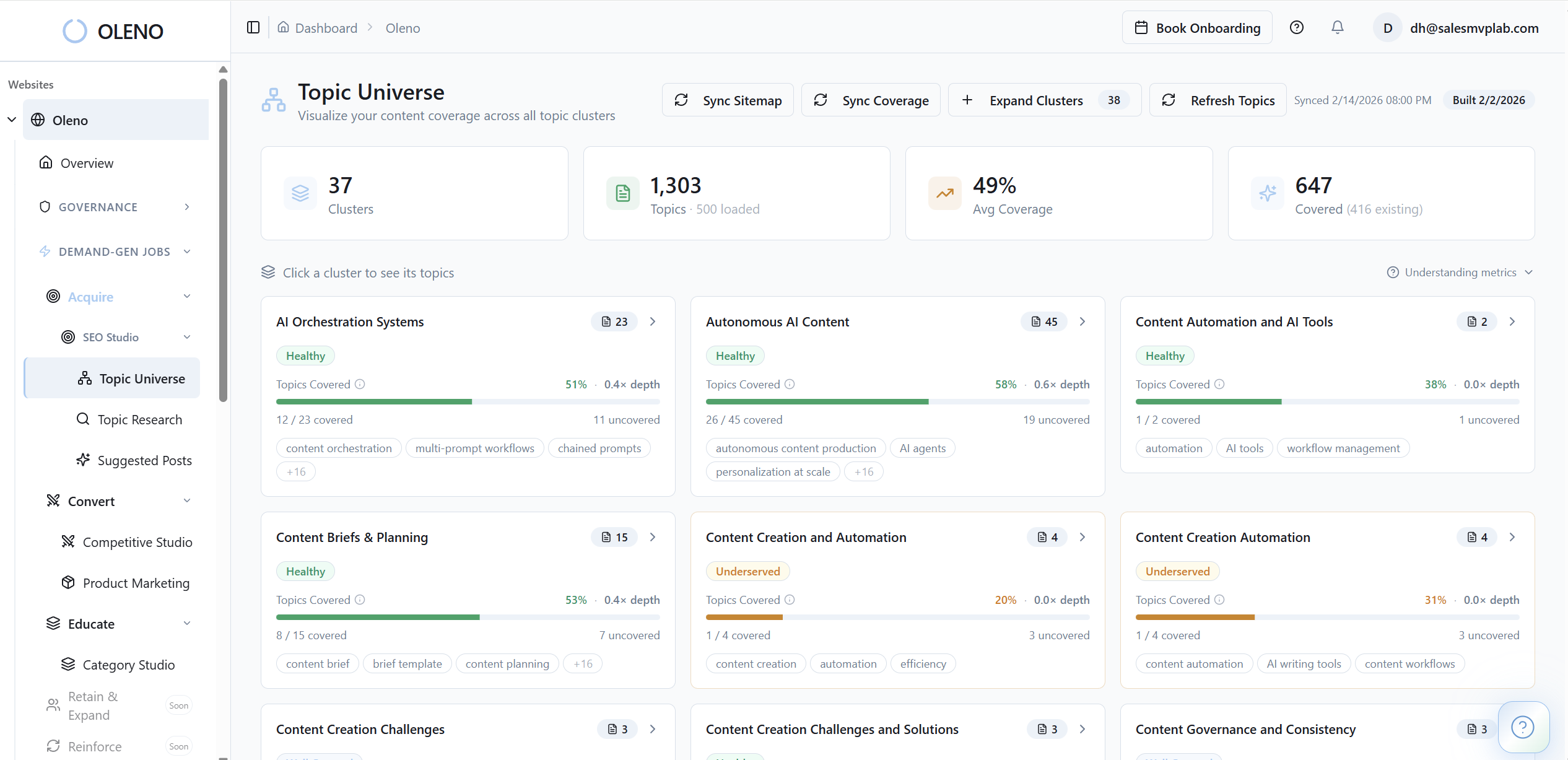
Product Studio keeps claims accurate. You document feature definitions and boundaries once, and drafts are grounded against that source of truth. QA checks for factual alignment before anything reaches the queue. That alone cuts a huge chunk of the rework tax you’ve been paying.
Deterministic Pipeline Yields Predictable Output
Programmatic SEO Studio discovers topics from your site, knowledge base, and competitive landscape, then runs a locked-outline pipeline that produces, scores, enhances, and publishes search-optimized articles on a steady cadence. The Orchestrator schedules against your quotas and keeps cadence steady, even when the team is busy. Quality Gate blocks thin or off-voice pieces before they hit review.
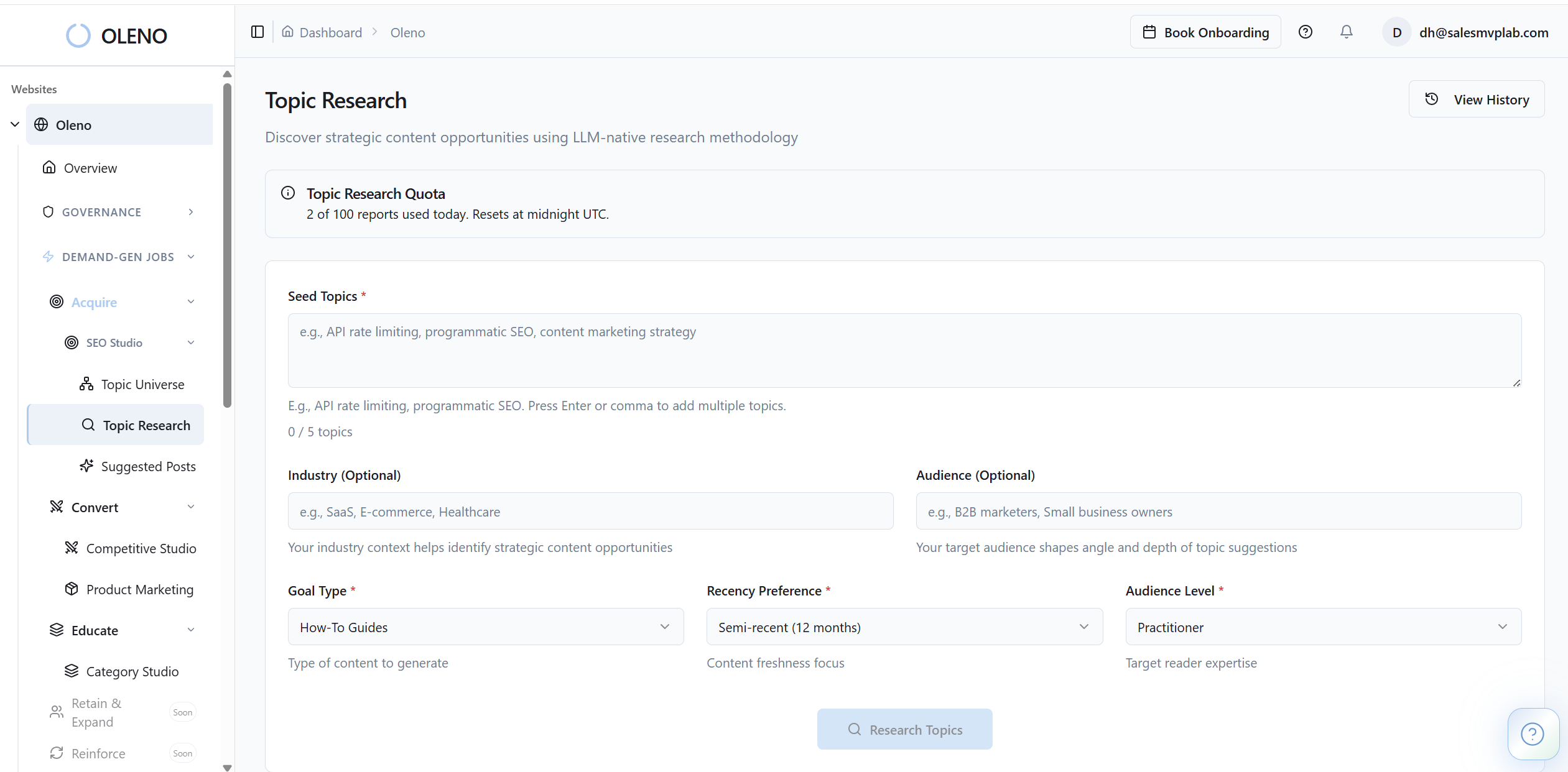
This is the part most teams miss. Speed without guardrails creates noise. Oleno gives you speed with guardrails, so volume doesn’t break voice, accuracy, or structure. You get the benefits of programmatic scale without the usual risk.
Key capabilities that matter:
- Programmatic SEO Studio, discovers and de-duplicates topics, then runs a locked-outline brief → draft → QA → publish pipeline
- Orchestrator, keeps a steady cadence by scheduling and running jobs to quota
- Quality Gate, enforces voice, structure, and quality thresholds before review
20 to 40 publish-ready articles per month without adding headcount is a normal outcome for teams that commit to the system. That’s what Oleno delivers. Book a Demo
Visibility And Distribution You Can Trust
Leaders want to see the machine running. The Executive Dashboard shows output cadence, quality trends, and coverage across segments so you can steer without micromanaging. When pieces publish, Distribution & Social Planning turns them into platform-ready posts and queues them for review and scheduling.
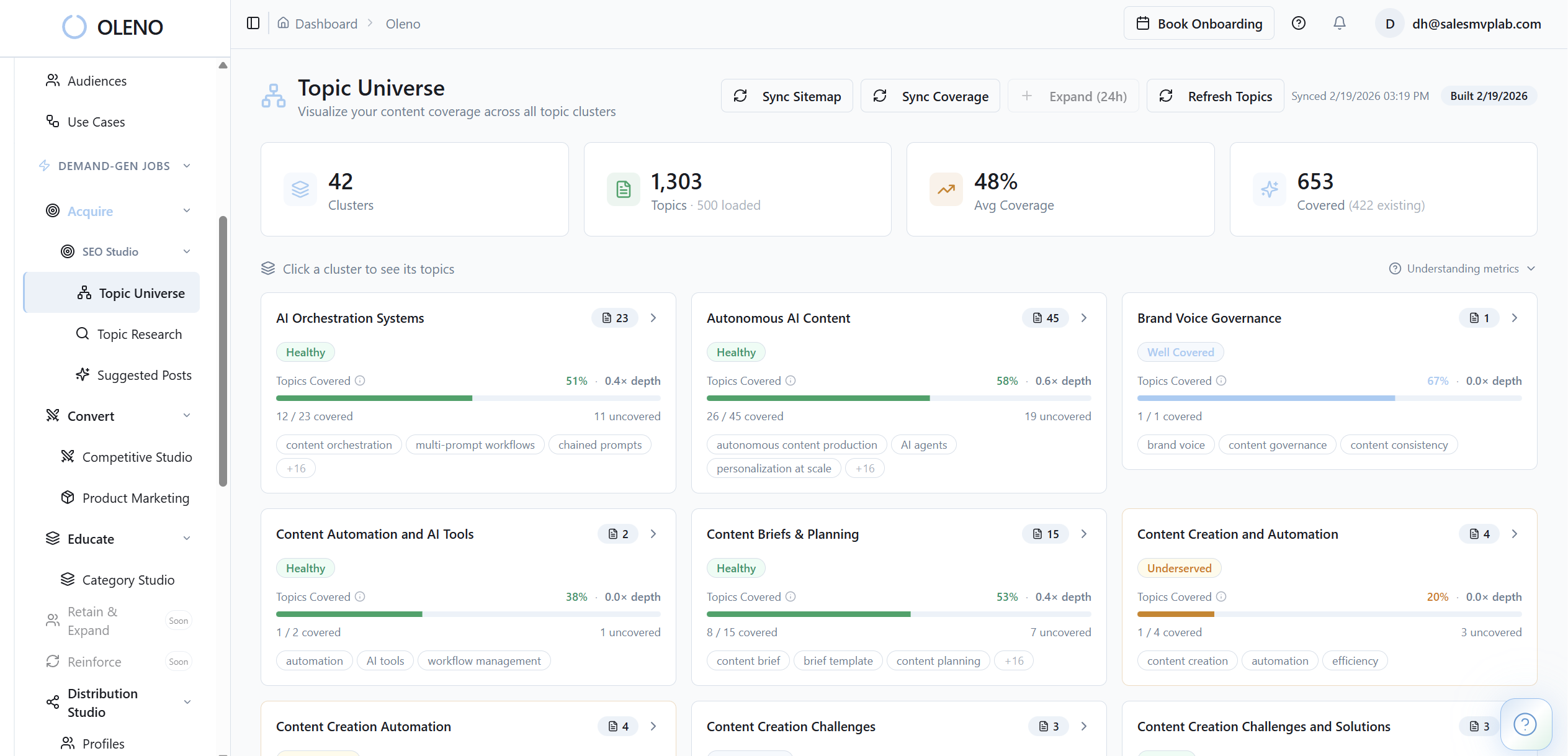
You keep the story tight across channels because the same governance applies downstream. One voice. One narrative. Many assets. That’s how you scale without losing yourself in the process.
Want to see the pipeline in action and how Programmatic SEO Studio enforces structure end to end? Try the system on your next cluster. Request a Demo
Conclusion
Programmatic SEO isn’t a trick. It’s an operating model. Lock voice and product truth once, enforce structure at the brief and draft, and let a deterministic pipeline carry the weight. When you do, rework drops, cadence holds, and your story compounds. That’s how you win GEO, and how you stop paying for the same mistake twice.
About Daniel Hebert
I'm the founder of Oleno, SalesMVP Lab, and yourLumira. Been working in B2B SaaS in both sales and marketing leadership for 13+ years. I specialize in building revenue engines from the ground up. Over the years, I've codified writing frameworks, which are now powering Oleno.
Frequently Asked Questions