Publishing Reliability SLOs: Build Fail‑Safe Content Publish Workflows

Publishing looks simple when nobody’s paged. You hit a button, content appears, everyone moves on. But if you’ve ever watched a “publish” stumble at 4 p.m. on a Thursday, you know it’s not a button. It’s a service. And it deserves the same reliability guardrails you put around anything customer-facing.
The problem isn’t just outages. It’s ghost duplicates, slug changes that break your biggest email of the quarter, and partial writes that look “green” in your CMS but aren’t live anywhere that matters. You don’t fix that with vibes and Slack threads. You fix it by treating publish like a proper service with SLOs, error budgets, and an audit trail you can actually trust.
Key Takeaways:
- Treat publishing as a service with explicit SLOs, not a CMS button
- Measure success rate, time-to-published, duplicates, and integrity pass rate
- Build idempotency, retries, and post-write verification into the last mile
- Define error budgets and playbooks to control blast radius and MTTR
- Instrument a publish event schema and keep immutable logs for replays
- Use staged publishing and automated rollback to turn chaos into process
Ready to skip theory and test it? Try Oleno For Free
Publishing Is A Service, Not A Button
Publishing reliability is about user impact, not green checkmarks. Define a service boundary, measure success rate and time-to-published, and budget failures like you would for any production system. For example, aim for 99.5% success within 90 seconds and under 0.5% duplicates on a weekly window.

The overlooked service boundary is the publish event
Most teams tuck publishing under “CMS operations,” which blurs accountability and hides failure modes. Draw a hard line: the publish event starts when the request is made and ends when the correct content is live once, in the right place, with integrity checks passed. Anything short of that isn’t “done,” it’s a partial.
Once you define the boundary, you can assign ownership, pick SLIs, and set SLOs that reflect reality. That means separating upstream metrics (draft quality, approval throughput) from last-mile health (success, latency, duplicates, integrity). Keep both. But don’t let upstream “green” reports mask downstream red incidents. Make the publish event visible, measurable, and accountable.
What is a publishing SLO and why does it matter?
An SLO is a reliability target tied to user experience. For publish, pick SLIs like success rate, time-to-published, duplicate rate, and integrity pass rate. Targets could look like: 99.5% success within 90 seconds, <0.5% duplicates, and 99.9% integrity pass. You get clarity and fewer arguments when incidents hit.
Here’s the catch. Vanity pipeline metrics can mislead. A 98% QA pass rate doesn’t mean your CMS wrote the right payload, or that canonical tags are clean. Publishing SLOs must focus on the moment content goes live. The right content, in the right place, exactly once. Hold yourself to that. Everything else is helpful context, not proof of reliability.
The Mechanics Behind Breakage You Keep Blaming On CMS
Publish failures usually come from last-mile details: slugs, assets, schemas, timeouts, and partial writes. Fix them with a clear contract, idempotent operations, bounded retries, and verification. For example, verify the published page’s canonical, JSON-LD, and locale before calling it done.

What traditional approaches miss in the last mile
Most teams optimize drafting and approvals, then treat publish as a push. That’s where errors hide. Slug collisions pop duplicates. Race conditions with images leave broken pages. API timeouts cause ghost posts. Schema mismatches pass silently until search or feeds break. A green button doesn’t prove the last mile worked.
The fix is boring and effective: define your publish acceptance criteria in code. Enforce idempotency so retries don’t create duplicates. Verify writes post-publish by checking the live surface, not just API responses. Keep a correlation ID from request to result. Success means “it’s live and correct,” not “the API didn’t error.”
Data integrity failures that corrupt trust
Technical success can still be functional failure. Missing canonical tags, wrong locales, mangled JSON-LD, or misapplied categories erode search posture and confuse users. You won’t always notice immediately, which makes this expensive. These are not editorial problems. They’re integrity problems at the publish boundary.
Treat integrity checks as part of publish acceptance. Validate schema, metadata, internal links, and canonical URL before you mark the event complete. Store an immutable record of what was intended (brief, structure, metadata) and what shipped (URL, version, checksum). If they diverge, fail fast and roll back. Slow pain beats silent damage.
The Hidden Cost Of Unmeasured Publishing
Publishing incidents aren’t just annoying. They drain pipeline, waste engineering time, and create compliance risk. Quantify it with error budgets and MTTR so you can make tradeoffs. A duplicate rate of 0.7% may sound small until you connect it to lost conversions and a week of cleanup.
Let’s pretend a duplicate storm hits your blog
Let’s pretend twenty posts duplicate across three URLs each. Organic traffic fragments, internal links split, and sitemap bloat confuses crawlers. If each post drives 200 monthly visits at a 1% conversion, you’ve just diluted a meaningful chunk of pipeline. And your team loses a week to dedupe and redirects.
The real cost isn’t just traffic. It’s trust. Sales stops sharing links. Leadership questions the team. Meanwhile, engineering is writing ad-hoc scripts, hoping they won’t make it worse. If you had idempotency, dedupe guards, and a rollback playbook, this becomes a one-hour incident, not a week-long slog.
What does good MTTR look like for publishing?
Aim for hours, not days. Define MTTR from detection to corrected state: the right content live, duplicates tombstoned or redirected, integrity re-verified. Tie automated playbooks to common failures and escalate cleanly when a human must approve. Track each handoff; it’s often where time disappears.
Then pressure-test MTTR with error budgets. If you burn budget faster than planned, slow releases or shift to canary-only until stability improves. Don’t just page louder. Improve the automation. If MTTR spikes, assume a missing playbook or a flaky dependency. Fix that, not just the symptom.
Still firefighting duplicates and rollbacks? Try Generating 3 Free Test Articles Now
When A Bad Publish Becomes A Brand Problem
Publishing incidents escalate fast because they’re public. A false live push, a broken slug, or a missing redirect can put the exec channel in motion. The antidote is less drama and more determinism: audit logs, clear reverts, and pre-agreed rules.
The 3 a.m. false publish that wakes the exec channel
You scheduled a draft. A webhook misfires and posts it live anyway. Screenshots circulate before anyone’s awake. The incident isn’t about copy. It’s about control. If you can’t trace the event or roll back cleanly, you’re operating on hope, not a system.
You need three things: audit logs with event IDs and actors, a protected revert flow, and a tombstone pattern that preserves history while removing exposure. With that in place, your 3 a.m. problem becomes a short on-call task. Without it, you’re apologizing in Slack while the internet collects receipts.
When your biggest customer shares the broken link
Sales sends a newsletter. A customer clicks and lands on a 404 because a slug changed post-publish. Now you’ve got a thread across marketing, sales, and engineering, and nobody knows the canonical state. A simple redirect playbook and immutable history would have prevented the scramble.
Make redirects a first-class remediation, not an ad-hoc fix. Require canonical stability or auto-generate redirects on slug changes. Keep versioned records so anyone can confirm the source of truth. You don’t need heroics. You need rules you agreed on before it broke.
A Practical Reliability Framework For Publishing
A practical publishing reliability framework uses four pillars: meaningful SLIs/SLOs, a failure-mode matrix with error budgets, an event schema with immutable logs, and automation for canaries and rollback. Start small, calibrate monthly, and expand as patterns emerge.
Define SLIs and SLOs that matter for the publish service
Pick 3–5 SLIs that reflect user-visible outcomes: publish success rate, time-to-published, duplicate rate, integrity pass rate, and rollback success. Set initial SLOs conservatively (e.g., 99.5% success in 90 seconds, <0.5% duplicates, 99.9% integrity pass) and review monthly. Calibrate as data hardens.
Keep upstream metrics, but don’t confuse them with publish health. A high QA pass rate doesn’t guarantee live correctness. Put your dashboards where pain lives: the page, the feed, the sitemap. Definitions matter. So do windows and burn rates. Borrow patterns from Google’s SRE book on SLOs and then localize them to your stack.
Map failure modes and set an error budget policy
Build a failure-mode matrix: API timeouts, slug collisions, schema errors, duplicate writes, wrong locales, and asset mismatches. For each, define detection signals, auto-remediation, and when to page. Tie each class to error budget burn to make tradeoffs explicit when stability dips.
When burn accelerates, slow the blast radius. Shift to canary-only or pause scheduled publishes until the indicators cool. This isn’t punishment. It’s how you protect the user experience while you fix the specific failure mode. Accountability with air cover works better than blame.
Design an event schema and immutable audit log
Instrument a publish event with correlation ID, content ID, slug, canonical URL, version, checksum, actor, timestamps, environment, status, and integrity results. Persist retry counts and backoff intervals. Require idempotency keys on writes. Think “black box recorder,” not “pretty dashboard.”
This log exists for forensics and replays. It’s how you answer, “What actually happened?” without guesswork. When you can reconstruct the exact sequence, you can fix quickly, tune thresholds, and prevent recurrence. Vague stories lengthen incidents. Specific data shortens them.
Automate rollback and remediation playbooks
Pre-wire the common fixes: idempotent retries with exponential backoff, duplicate detection with tombstones and redirects, schema fix queues, and a protected manual revert that records who did what. Keep actions reversible. Document the expected end state, not just the command.
Your goal is MTTR in hours. Every undefined manual step today becomes tomorrow’s outage extension. Put the runbook link in the alert. Include the correlation ID and last event state. Then review the playbook monthly. Incident reviews without updates are theater.
For implementation patterns and dependency attribution ideas, lean on resources like Nobl9’s SLO patterns guide.
How Oleno Implements SLO‑Driven Publishing You Can Trust
Treat this as the “how,” not hype. Oleno runs content creation as a system and treats publishing like a governed service. You define the targets. We handle the mechanics that reduce incidents and shrink recovery time. No dashboards. No performance claims. Just deterministic execution you can plug into your SLO model.
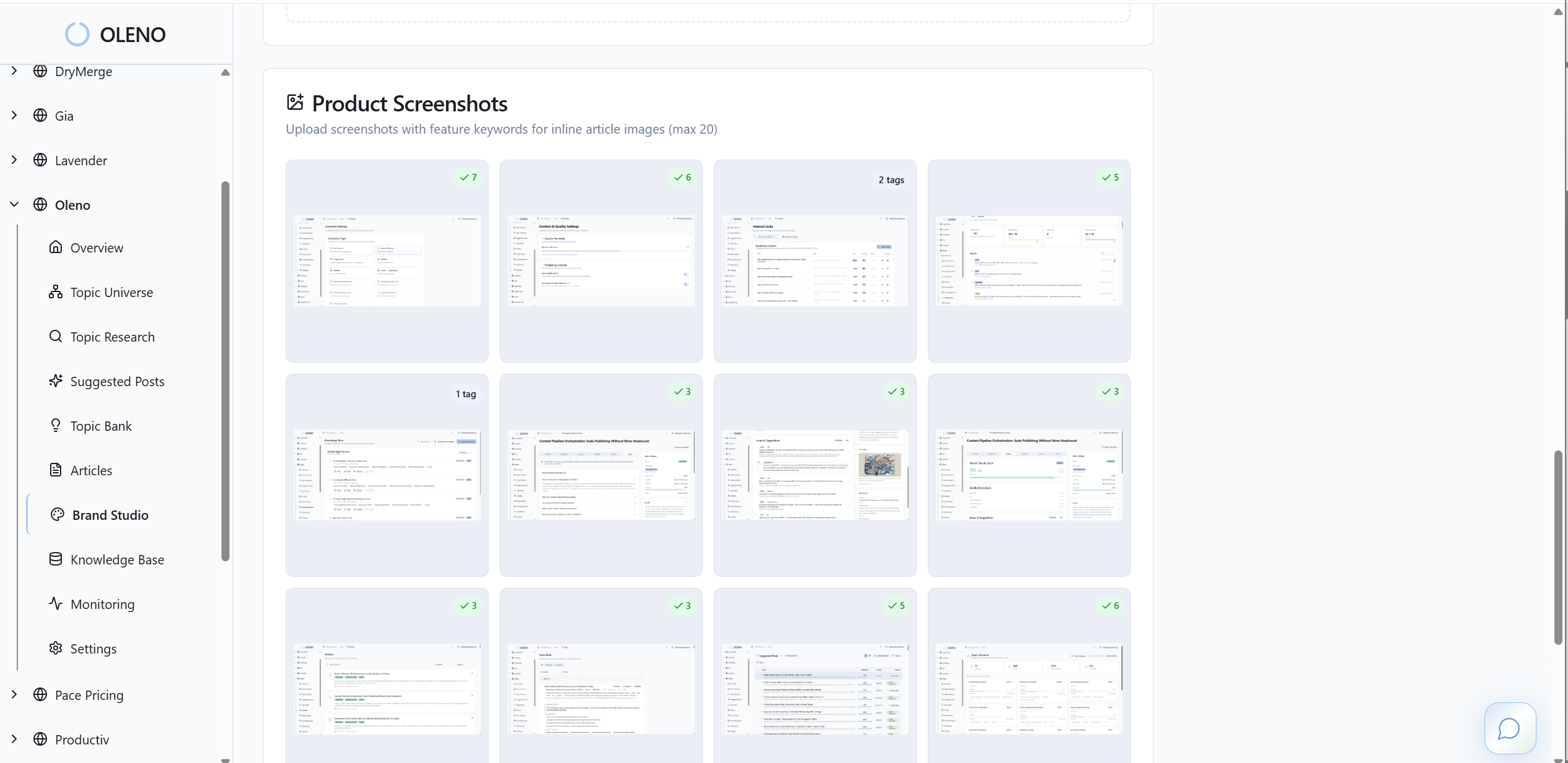
Oleno enforces idempotent CMS publishing so a retry won’t create a duplicate. If a network or API hiccup happens, retries are bounded with backoff, and slug/canonical enforcement reduces collisions. Post-write verification checks that the right content appears once, in the right place, with required integrity, so “success” means what you think it means.
Before anything reaches your CMS, every article passes a QA gate. Structure, voice, KB grounding, and SEO formatting are validated in the pipeline. Drafts below threshold are revised automatically until they pass. That upstream enforcement doesn’t replace your policies; it lowers the chance a bad payload ever hits the publish service, which keeps error budgets intact.
When you need to investigate, Oleno keeps internal pipeline logs: publish attempts, retries, KB retrieval events, and version history. These aren’t analytics. They exist so you can trace an event, reconcile the intended state with the published state, and replay safely. It’s the black box for your content pipeline, so MTTR skews toward hours instead of days.
Oleno fits into your on-call model without pretending to monitor your estate. You own SLOs and alerts. We provide the deterministic pipeline, QA enforcement, idempotent publishing, and internal logs that make your SLOs more attainable. Fewer duplicate storms. Cleaner rollbacks. Less guesswork when something goes sideways.
Want to validate this in your environment? Try Using An Autonomous Content Engine For Always‑On Publishing. Prefer a lighter touch first? Try Generating 3 Free Test Articles Now.
Conclusion
Publishing reliability isn’t a CMS feature. It’s a service discipline. Draw the boundary. Measure what users feel. Budget your failures and automate the fixes. When you treat publish like a production service, incidents shrink and trust grows. That’s the job, consistent outcomes, fewer surprises, and a system your team can rely on.
About Daniel Hebert
I'm the founder of Oleno, SalesMVP Lab, and yourLumira. Been working in B2B SaaS in both sales and marketing leadership for 13+ years. I specialize in building revenue engines from the ground up. Over the years, I've codified writing frameworks, which are now powering Oleno.
Frequently Asked Questions