QA-Gated Content Pipeline: Orchestrate Ideas to Publish

I’ve run content the scrappy way and the “please don’t break in front of the board” way. Back at Steamfeed, volume won. Hundreds of contributors, thousands of pages, and compounding long-tail traffic. At PostBeyond and LevelJump, I learned the hard part isn’t writing faster. It’s keeping quality, structure, and brand intact as more people touch the work.
Here’s the pattern. When strategy, drafting, visuals, links, and publishing live in different tools, you get drift. Rework. Headaches. You push a Friday publish to Monday, then to the next sprint. Not because the ideas are weak. Because the pipeline isn’t governed. Quality is optional when gates are optional.
Key Takeaways:
- Treat content as a governed pipeline, not disconnected tasks
- Enforce information gain before drafting to avoid copycat outlines
- Make links and schema code-based; humans focus on narrative
- Use snippet-ready structure so sections can be cited cleanly
- QA-gate with objective thresholds and automatic retries
- Publish with mapped fields and duplicate prevention to avoid fire drills
Prefer to see how this looks in practice? Try the zero-touch path and Try Oleno For Free.
Why Your Content Breaks When Hand-offs Run The Show
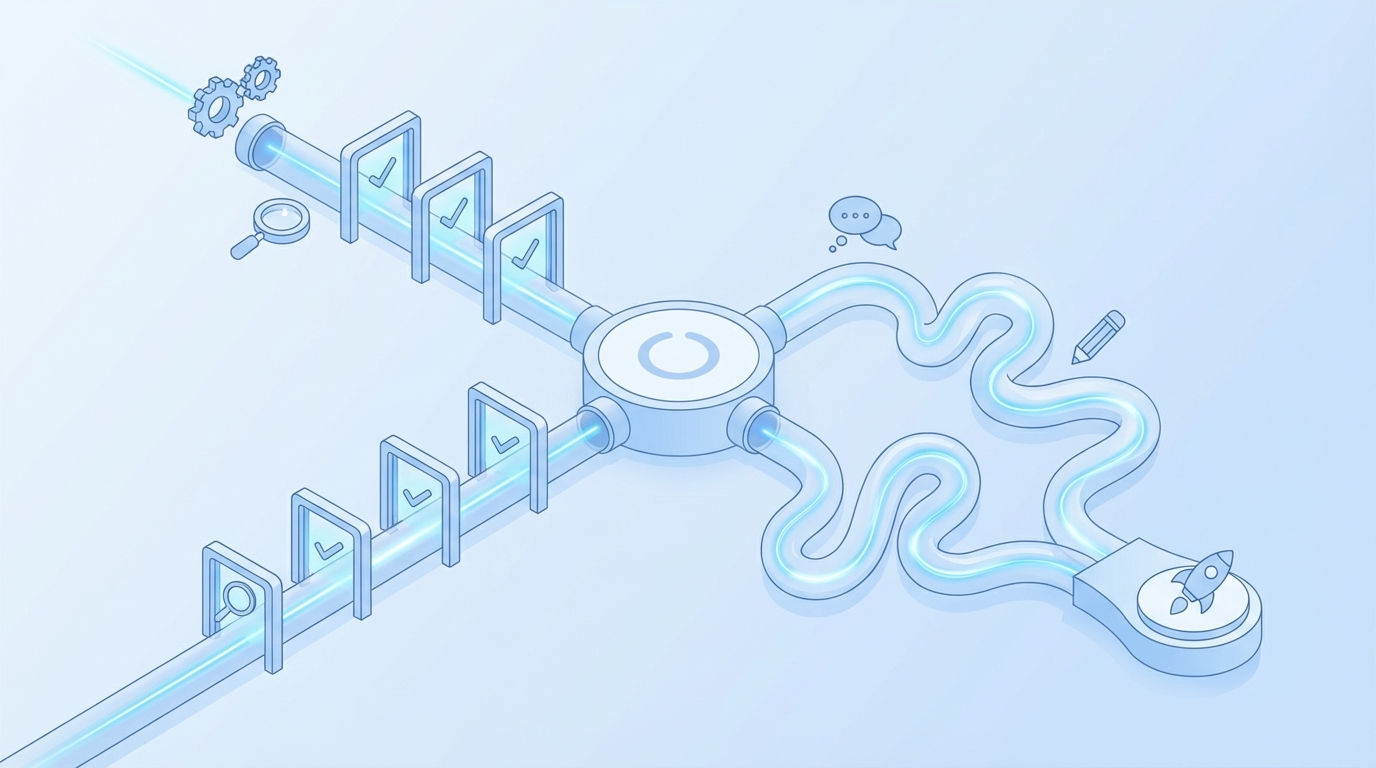
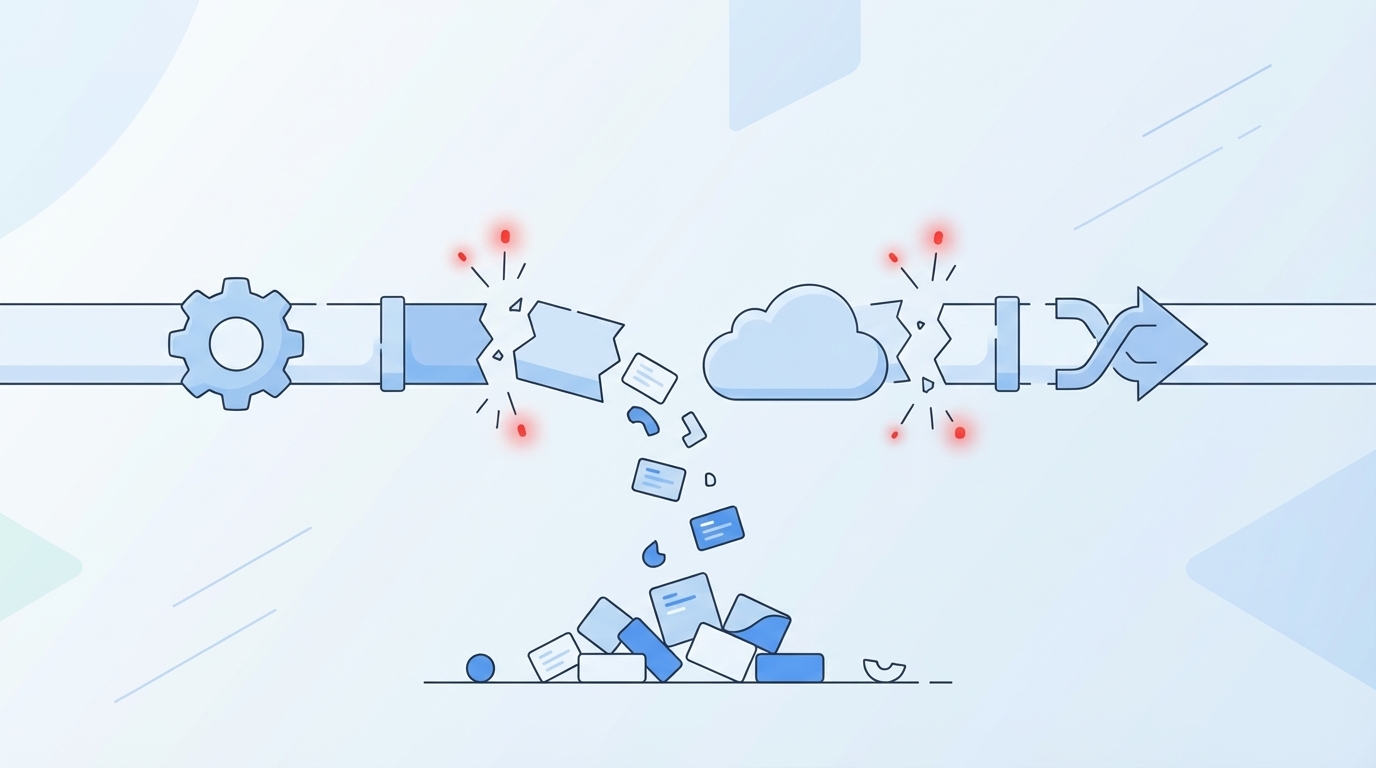
Most content breaks because every stage uses a different tool, owner, and set of rules. That creates friction, drift, and errors that surface late, when changes are costly. A typical example: clean draft, missing schema, off-brand image, and fabricated links, now your “publish” turns into a cleanup shift.
The hidden cost of disconnected tools
When strategy sits in a spreadsheet, drafts in a doc, visuals in a drive, and publishing in your CMS, you pay a coordination tax. Every hand-off introduces interpretation. Interpretation becomes inconsistency. Inconsistency becomes rework. None of this is malicious; it’s just entropy. Without gates, standards drift fast.
I’ve seen teams spend more time aligning than writing. “Can someone check links?” “Do we have the right screenshot?” “Who owns schema?” Each question sounds small; together they sink a week. Software teams solved this years ago with quality gates in CI/CD, objective checks that stop bad releases. Content deserves the same discipline. If you need the mental model, study SonarSource’s Quality Gates documentation. The pattern transfers.
Where volume without structure quietly burns budget
Let’s pretend you ship five posts a week. Two require heavy rewrites. One goes live with broken internal links. One misses schema. One lands off-brand. You shipped. But at what cost? Those “almost done” items pull senior people back into the weeds. And it compounds as you ramp output.
The fix isn’t more writers. It’s moving precision to the pipeline. Put structure, brand, and correctness into rules that run every time. Then writers write. Editors shape narrative, not commas. Designers focus on product visuals, not hunting for logos. Quality stops being a hero move and becomes the default.
Content Works When The System Does The Work
A reliable content system moves accuracy and consistency to code, leaving humans to handle judgment and story. Deterministic steps, internal linking, schema, visual placement, field mapping, follow rules. The benefits show up immediately: fewer surprises, smaller review cycles, and predictable ship-ready output.
What does deterministic mean for content?
Deterministic means certain parts of your process always run the same way and yield the same type of output. Links pull only from a verified sitemap with exact-title anchors. Schema is generated programmatically and validated. Visuals follow placement rules. Publishing maps fields and blocks duplicates. Creativity stays in the prose. Accuracy moves to machines.
People worry this sounds rigid. It isn’t. It’s selective. You don’t put the story in a box; you put the plumbing in one. In practice, this frees the team to chase the angle, not chase the alt text. It’s the same reason software teams adopt gated merges. Thresholds catch breakage before it affects customers.
How do KB and brand memory change the output?
A Knowledge Base removes guessing. Claims get grounded in your own truth: product, positioning, competitive nuance, and customer language. A brand memory layer removes drift. Tone, phrasing, and banned terms get enforced as constraints, not suggestions. Both apply from brief to draft to QA. You don’t need a style cop on Slack.
The impact is subtle but real. Fewer “this doesn’t sound like us” comments. Fewer “we can’t say that” edits. New writers come in hot because the system carries the context for them. Standards don’t live in someone’s head or a dusty doc; they live in the pipeline and show up automatically where needed.
Why internal links and schema should be code based
LLMs hallucinate URLs. Humans forget microdata. Neither should own deterministic tasks. Scan your verified sitemap and inject 5–8 internal links with exact-title anchors at natural sentence boundaries. Generate JSON-LD for Article, FAQ, and BreadcrumbList, then validate. Google’s own guidance on Article structured data makes the case clear.
Do this in code and you remove two common failure modes: fabricated links and missing schema. You also remove the late scramble that eats afternoons. Writers keep momentum. Reviewers focus on meaning. Publishing stops feeling like a mini release train that derails on small details.
The Hidden Costs You Keep Paying In Manual Work
Manual checks look cheap until you multiply them by velocity. Edits balloon. Image wrangling steals evenings. Link and schema errors hurt trust quietly. The solution is boring by design: objective gates, retries, and rules that prevent known failure modes from surfacing downstream.
Hours lost to edits and image wrangling
I’ve been the only marketer who could write fast. Then we grew. New writers lacked product context. Designers came in late with mismatched visuals. I’d spend nights rewriting intros and hunting for screenshots. Not fun. And more importantly, not scalable. The “fix” was never “work harder.” It was enforcing structure and visuals upstream.
When brand visuals and placement are rules, hero image, 2–3 inline visuals, prioritized product sections, semantic screenshot matches, you cut rework. Alt text isn’t a debate; filenames aren’t an afterthought. The time you used to spend on fixes converts into net-new reach. That’s the point.
When link errors and missing schema kill credibility
Broken internal links hurt crawl and trust. Missing schema reduces snippet eligibility and clarity for assistants. These failures hide because reviews are human and rushed. Make them binary. If links aren’t from the sitemap, fail the draft. If JSON-LD isn’t valid, fail it. Automatically rerun until fixed. Think of it as PR checks for content.
If you need a tangible model for how this feels, look at Datadog CI Quality Gates. Same pattern, different domain: set thresholds, block merges (or in our case, publishing) when standards aren’t met. You won’t catch everything. You’ll catch enough to move outcomes.
Let’s pretend you publish daily, what breaks first?
Run a thought experiment. Seven drafts a week. Without gates, two go out off-brand, two miss alt text, one repeats last month’s topic. You’re worried about regressions. Put a passing score at 85 or higher. Require retries until it passes. Enforce a 90-day cooldown per topic to avoid cannibalization. You stabilize output before scale.
The psychology matters. When standards are clear and enforced by the system, people stop trying to “sneak one through.” They work with the pipeline, not around it. The review meetings get shorter. The drafts get better. And publish day starts to feel routine, not heroic.
Still stuck in manual checks and cleanup? Skip the pain and Try Generating 3 Free Test Articles Now.
The Publish-Day Fire Drill You Keep Reliving
Publish day goes sideways when details drift to the end: off-brand visuals, ad-hoc link audits, schema forgotten. A governed pipeline pulls these forward, validates early, and ships with confidence. The difference shows up as fewer last-minute slacks and a calendar that doesn’t slide.
The 3pm draft that derails your evening
You know the one. Everyone’s “almost done” until someone notices the visuals feel generic. Then the link audit starts. CMS slug is wrong. Now you’re pushing dinner. A pipeline with mapped fields, deterministic visuals, and link guarantees eliminates this pattern. You review the story, not the scaffolding.
This isn’t about control for control’s sake. It’s about saving your sharpest thinking for the parts only humans can do. When visuals render consistently and links are correct-by-design, those 3pm fire drills turn into a 3:10 “looks good, ship it.”
When a big customer sees an off-brand image
It’s not fatal, but it stings. Credibility suffers when a post looks generic or mismatched. Screenshots dropped in the wrong section do the same. Automate generation with a brand asset library, prioritize solution sections, and place screenshots by semantic match. Consistency rises. Embarrassing misses fade without extra meetings.
And yes, someone will still spot something occasionally. That’s fine. The goal isn’t perfection. It’s removing the obvious misses so the rare edge case gets the attention it deserves. That’s a better way to spend senior cycles.
A Practical Way To Build A QA-Gated Pipeline From Strategy To Publish
A QA-gated pipeline starts with inputs and ends with publishing. Map your knowledge and site, enforce differentiation in briefs, draft to a snippet-ready pattern, then let code handle visuals, links, and schema. You’ll move faster without trading away trust.
Map inputs with KB and sitemap ingest for topic discovery
Start by loading your Knowledge Base and sitemap. Generate a Topic Universe that groups ideas into clusters, tracks saturation, and enforces cooldowns. This solves two problems at once: relevance and redundancy. You’ll know what to write next based on gaps, not guesses or vanity keywords.
In practice, this step changes conversations. Instead of “What should we cover this month?” you hear “Which cluster is underserved?” That’s strategy moving from opinion to evidence, and it reduces whiplash downstream.
Generate briefs with competitive research and information gain scoring
Every approved topic becomes a structured brief that includes angle, coverage analysis, and an Information Gain Score. Low scores trigger revisions before writing begins. Include 3–5 authoritative external link candidates with context and suggested anchors. Differentiation moves from “we’ll try” to “we’ll enforce.”
Briefs like this save hours later. The outline doesn’t copy the market by accident. The writer knows where to add depth. Reviews don’t devolve into “this feels generic” because you addressed it upstream. That’s the quiet win you feel two weeks later.
Automate visuals and deterministic link plus schema injection
Use a brand asset library and semantic placement rules to generate a hero image and 2–3 inline visuals. Then inject internal links from a verified sitemap with exact-title anchors. Generate JSON-LD for Article, FAQ, and BreadcrumbList. Validate and attach as metadata. These are code tasks. Treat them that way so they never slip.
One interjection. Humans still decide which product moments to highlight. The system makes those moments look and read on-brand by default. That’s the division of labor you want.
How Oleno Runs A QA-Gated Pipeline End To End
A governed pipeline is hard to build from scratch. Oleno runs it for you, end to end, with deterministic steps where accuracy matters and flexibility where judgment matters. Strategy feeds briefs, briefs feed drafts, QA enforces quality, and publishing ships clean, on-brand articles.
Topic Universe and information gain briefs enforce what gets written
Oleno ingests your Knowledge Base and sitemap, maps clusters, tracks saturation, and suggests topics automatically. Each approved idea becomes a brief with competitive research and an Information Gain Score. Low-differentiation concepts get flagged before anyone writes, which reduces wasted drafts and focuses effort where authority compounds.
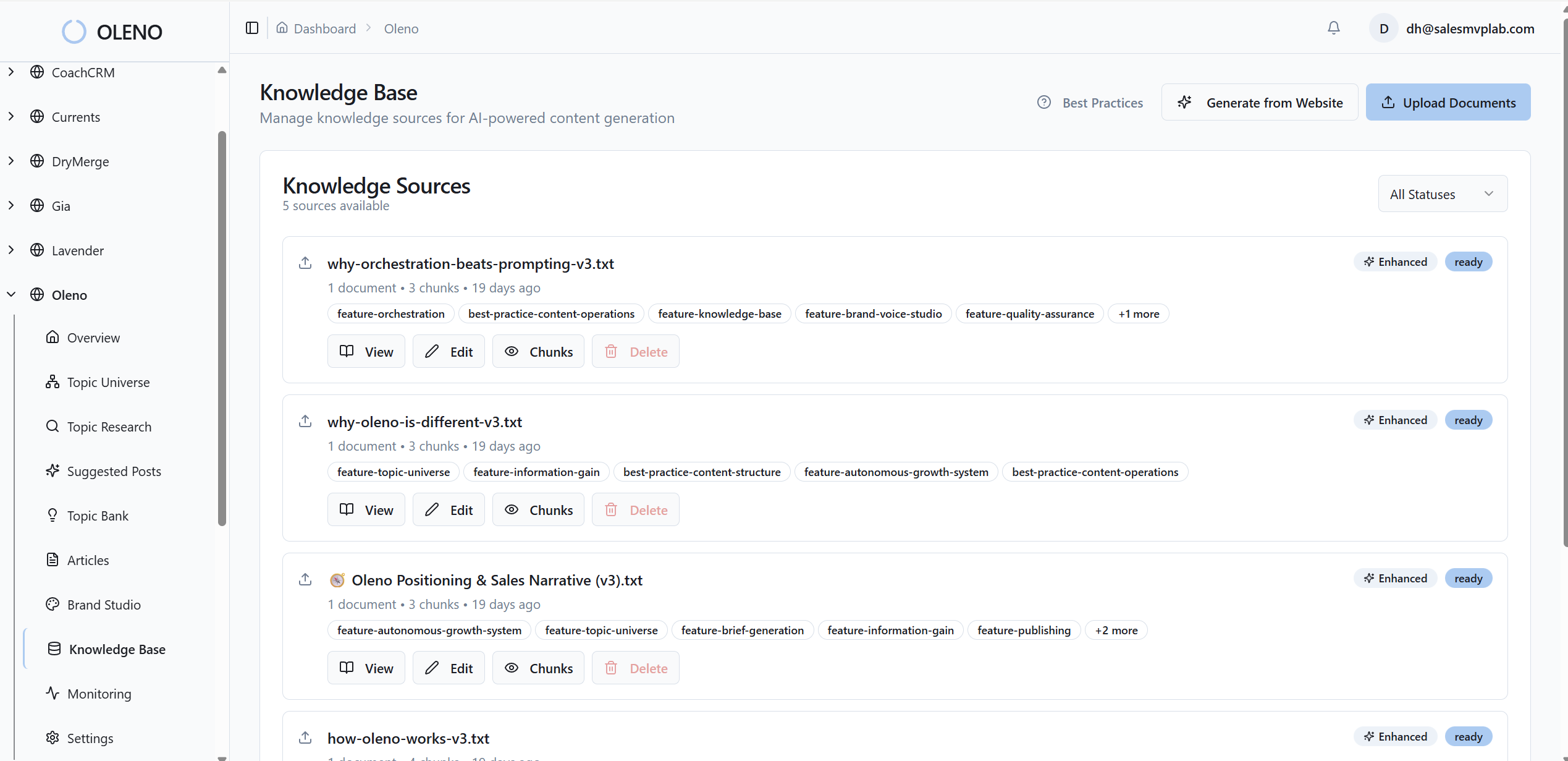
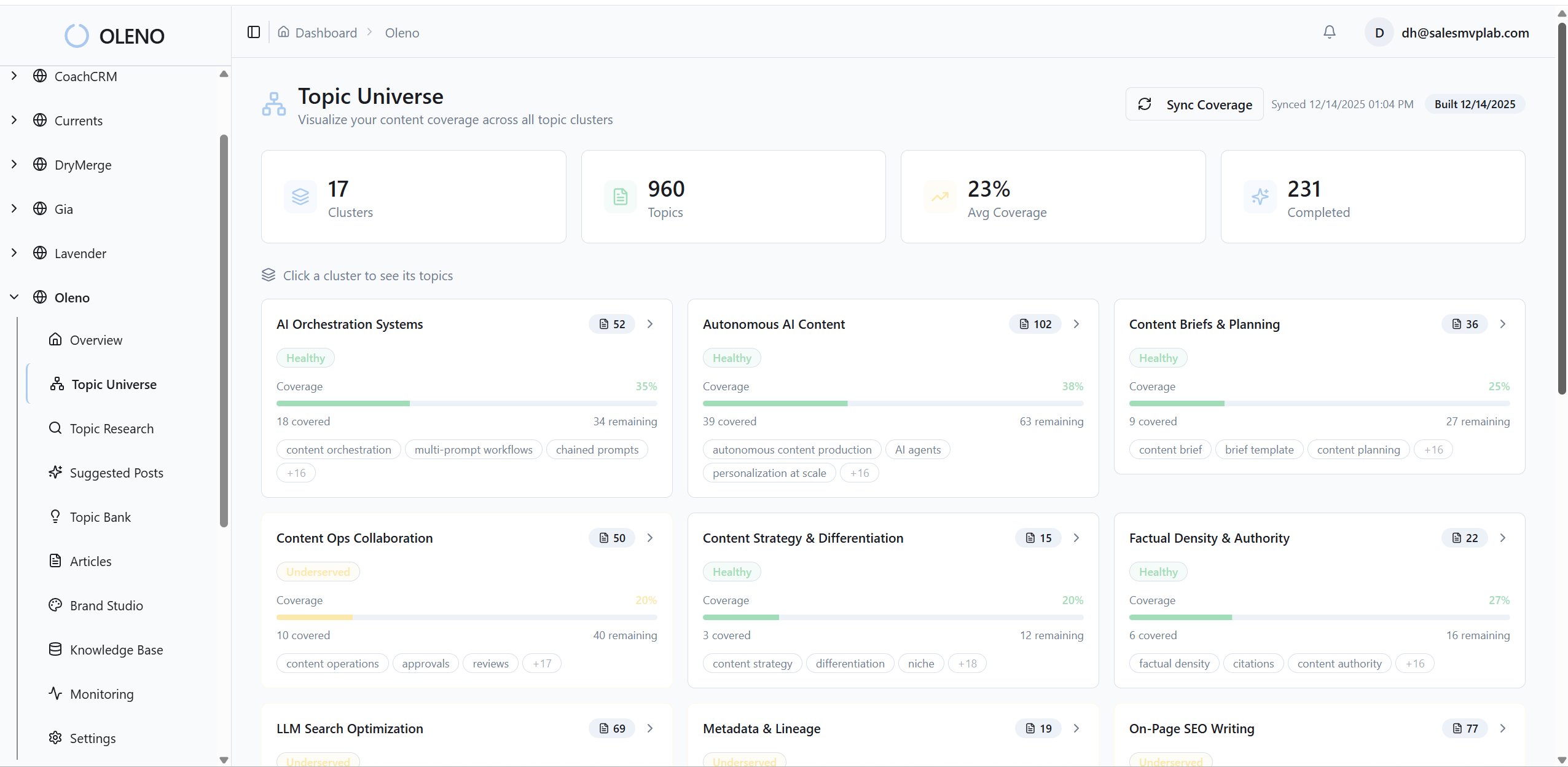
This is where scale stops being scary. You’re not guessing what to publish or rewriting copycat outlines. You’re filling gaps deliberately. Oleno keeps that loop running every day so coverage improves without a standing meeting.
QA gate and zero-touch publishing with CMS connectors
Oleno scores every draft against 80-plus criteria, structure, clarity, brand alignment, information gain, snippet readiness, visuals, links, and schema. Failing checks trigger refinement loops until thresholds are met. Once passed, Oleno finalizes metadata, generates CMS-ready HTML, maps fields, and publishes as draft or live. Duplicate publishing is prevented, and you get debounced notifications for key events.
The result isn’t hype. It’s fewer late surprises and a ship cadence you can plan around. Oleno handles the plumbing, internal links from your verified sitemap, programmatic JSON-LD, brand-consistent visuals, so your team can worry less about regressions and more about narrative.
Ready to remove the hand-offs and make quality a rule, not a wish? Try an engine built for this and Try Using an Autonomous Content Engine for Always-On Publishing.
Conclusion
If your week swings between writing and cleanup, the problem isn’t your team. It’s the pipeline. Move accuracy to machines, enforce differentiation before drafting, and let QA gates do their job. Whether you build it or let Oleno run it, the outcome is the same: predictable, on-brand content that ships without drama.
About Daniel Hebert
I'm the founder of Oleno, SalesMVP Lab, and yourLumira. Been working in B2B SaaS in both sales and marketing leadership for 13+ years. I specialize in building revenue engines from the ground up. Over the years, I've codified writing frameworks, which are now powering Oleno.
Frequently Asked Questions