Quarterly Narrative Sprints: A 6-Step Playbook to Prevent Brand Drift
You don’t prevent brand drift with another deck. You prevent it with a drumbeat. A simple, boring ritual that locks the narrative for 90 days, then lets the system run. Do that and your team stops rewriting the story mid-launch. You get cleaner tests, fewer edits, and real compounding.
I learned this the hard way. At PostBeyond, I could personally crank out 3–4 strong posts a week. Then the team grew. Context got diluted. Quality slipped. We weren’t out of ideas—we were out of rhythm. Once we introduced a quarterly lock, the rework dropped and the voice tightened. Not perfect. Better. Predictable.
Key Takeaways:
- Lock your narrative quarterly so execution doesn’t reinvent the story mid-campaign
- Treat brand drift as a governance failure, not a creativity problem
- Quantify rework costs—unbudgeted edits stack fast and quietly kill velocity
- Run a light, strict sprint: six artifacts, two working sessions, one sign off
- Use QA gates to block drift before publish and keep experiments clean
- Separate narrative refresh (strategy shifts) from campaign refresh (tactics rotate)
- Let a system enforce rules; your team should focus on story, not approvals
Ready to skip theory and see it in output? Try Generating 3 Free Test Articles Now.
Why Teams Reset The Story Every Quarter And How That Breaks Growth
Teams reset the story because campaigns drive planning, not the narrative. When the quarter starts, priorities shift and the message drifts, forcing edits and late approvals. Lock the narrative first, then plan campaigns inside it—like setting the key before the band starts playing.

The Cadence Problem You Cannot Fix With Templates
Templates don’t create cadence. A quarterly lock does. When teams plan by campaigns, the narrative morphs to fit every new priority. That’s how you end up with three subtly different value statements and four CTAs that don’t match. The issue isn’t creativity. It’s the absence of a stable center.
A quarterly lock becomes that center. It gives PMM, product, and sales a shared reference so you’re not debating copy at 3 pm on launch day. Think of it as your operating rhythm. Strategy sets direction, the lock translates it, and execution follows without improvising the story. You’ll still refine copy, sure. But you won’t rewrite the premise.
If you need a cadence model, borrow from agile. A time-boxed sprint with defined outputs reduces fragmentation and decision churn. The principle is simple: pre-approve the message, then iterate the channels. That’s how you scale speed without sacrificing consistency. For a lightweight cadence reference, see the Agile Alliance’s playbook.
What Is Brand Drift And Why Does It Happen?
Brand drift is the slow accumulation of small, well-intentioned changes that bend your message out of shape. A softened claim here, a new line there, a “quick” CTA tweak. No single edit breaks you. The pile does. Governance as a document invites drift. Governance as a gate contains it.
The point isn’t to freeze language for a year. Markets move. Your product evolves. The goal is controlled updates inside a quarterly window. That’s how you protect narrative integrity and still adapt. When teams see the lock as permission to move faster, not a reason to ask forgiveness, drift falls off a cliff.
You’ll know you’ve got drift when feedback sounds familiar: “This doesn’t feel like us,” “Legal’s nervous,” “Sales is confused.” Those are governance failures, not creative misses. Tighten the gate. Set the rules. Approve the lock. Execute inside it. A simple discipline, repeated.
For a quick primer on scaling narratives without losing the thread, skim this overview on brand scaling patterns.
Why More Content Increases Inconsistency Without A Lock
Volume multiplies risk. Every new asset is a chance to bend phrasing, reinterpret a claim, or invent a fresh angle that doesn’t ladder up. Teams feel this once they hit a steady cadence: output rises, edits explode. Speed without a narrative lock creates noise.
Before you scale, freeze inputs. Lock the truths, proof points, and voice rules for the quarter. Then pour volume through that mold. I’ve seen this at both ends—hundreds of contributors at scale and tiny teams under pressure. The winners don’t ship more words. They ship fewer decisions.
This isn’t restrictive. It’s liberating. Once your lock exists, creative and channel teams can move faster with fewer approvals. They’re not asking “what are we saying?” every week. They’re asking “what’s the sharpest way to say it here?” That’s a better problem.
The Real Root Cause Is Missing Rhythm And Governance Working Together
The real problem isn’t weak copy or lack of ideas. It’s a missing bridge between strategy and execution. Most teams have positioning and calendars. They rarely have a quarterly lock with signed artifacts and enforcement. Create that middle layer, and drift slows without adding headcount.
What Traditional Planning Misses Between Strategy And Execution
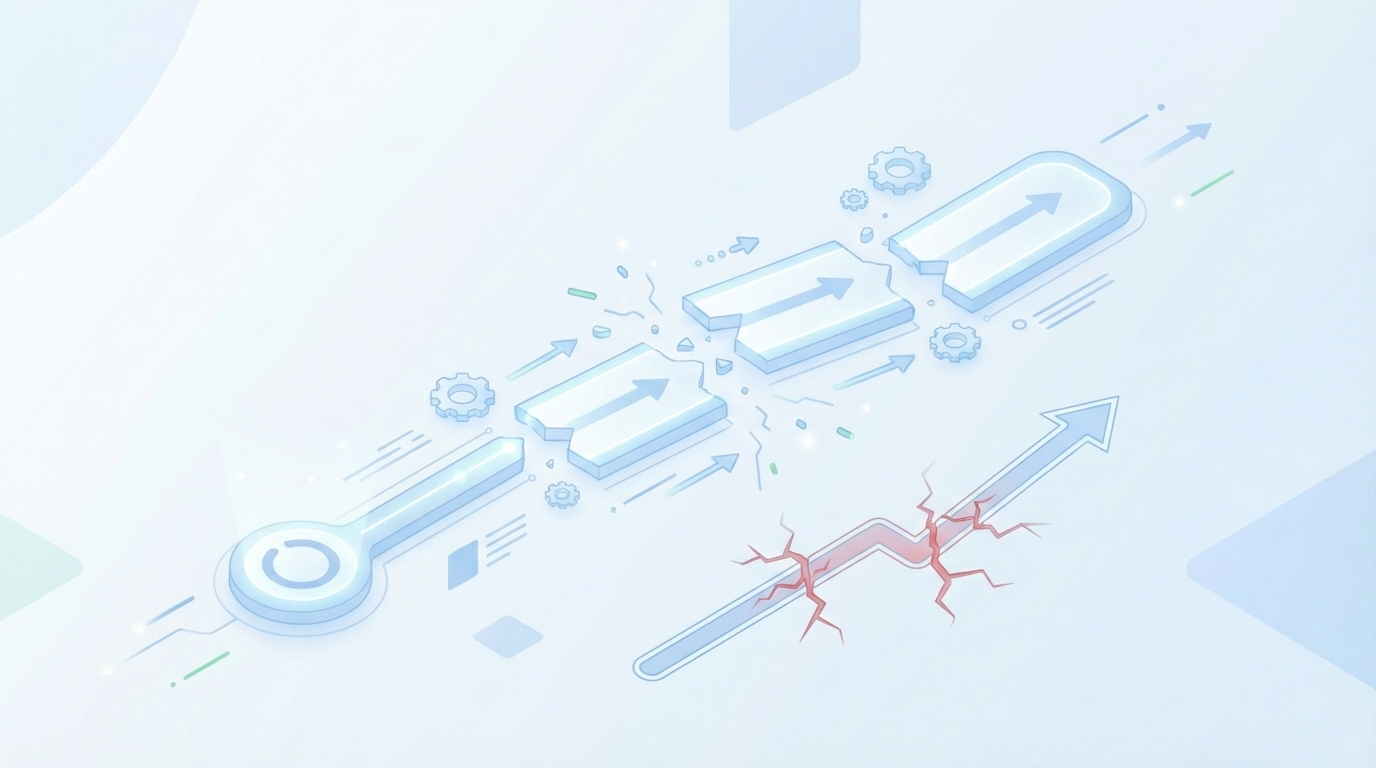
Decks set direction. Calendars schedule work. Neither enforces the rules of the story. That gap is where drift starts. Without a lock, every campaign brief becomes a micro-strategy exercise, and each writer recreates the narrative from memory. It feels collaborative. It’s expensive.
The fix is boring on purpose: sign the narrative once per quarter, then hold publishing to it. That means a messaging lock with approved claims, channel rules that don’t require guesswork, and QA gates that block non-compliant drafts before they hit review. It’s not flashy. It works.
You can still be creative. But creativity moves downstream of the lock. In my experience, that’s where quality improves fastest—when teams spend energy on angles and examples instead of renegotiating claims.
How Small Teams Can Run A Light But Strict Quarterly Ritual
Small teams don’t need a three-week offsite. They need two 90-minute working sessions, one review, one sign off. That’s it. Produce six artifacts, not twenty: objectives, story pillars, messaging lock, handoff checklist, deployment map, and QA gates. Make it easy to run and hard to skip.
Keep it practical. Write example headlines. Note forbidden phrasing. Define objection handling by pillar. Confirm CTAs. Then route signatures. When the sprint ends, the lock becomes the only source for copy and claims that quarter. No exceptions. That’s how you earn back your calendar.
This can feel strict the first time. By the second quarter, people ask for it. Because launches stop wobbling. Fewer “quick fixes.” More confidence. The system starts to carry the load, not the loudest voice in the room.
When Should You Refresh Narrative Versus Campaign?
Refresh the narrative when the strategy changes—new ICP, new product truth, new market POV. Refresh campaigns when tactics need rotation—channel fatigue, creative fatigue, seasonal offers. If strategy moved, restart the sprint. If tactics moved, keep the lock and update the deployment map.
This distinction matters. If you treat every channel tweak as a narrative change, you’ll never build memory in the market. If you treat real strategy shifts as channel tweaks, you’ll talk past your buyers. The lock keeps you honest. It forces a decision: are we moving the story or the wrapper?
One more nuance. Sometimes, you’re in the gray. That’s fine. Document the change in the log, flag the dependency, and decide at the next sprint. The ritual prevents drift from creeping in through good intentions.
The Hidden Cost Of Drift Across A Quarter
drift costs more than time. It erodes trust, complicates approvals, and muddies experiments. Even small inconsistencies stall momentum. Quantify the cost once, and you’ll never let a quarter start without a lock again. The math is unglamorous. It’s also convincing.
The Rework Math No One Budgets
Let’s pretend three teams publish without a lock. Creative revises phrasing twice, PMM rewrites claims once, sales updates enablement mid quarter. If each change triggers two rounds of edits across five assets, that’s 30 edit cycles. At 20 minutes each, you just burned 10 hours. Per micro-change.
Those hours don’t show up on a line item. They show up as slipped dates and tired teams. And the kicker? They’re preventable. The messaging lock and QA gates pull those edits forward. You’ll still edit. You just won’t edit the same idea five times in five places.
Process discipline isn’t sexy, but it beats late nights. If you want a plain-English way to model this overhead, skim these process transformation playbooks. The patterns translate cleanly to content ops.
The Revenue Leak From Inconsistent Claims
Buyers can smell wobble. One page promises an outcome, another hedges it, a third uses different proof. No one is lying. Everyone’s shipping. The effect is doubt. Doubt lowers conversion. You don’t need perfect language. You need one message, repeated clearly.
This is where product truth and claim boundaries pay off. When the lock encodes what’s approved—and what’s not—your funnel stops fighting itself. Sales decks, landing pages, and ads echo the same promise. Repetition builds credibility. Credibility unlocks decisions.
I’ve watched teams gain back momentum by removing three “cute” lines and aligning on one straightforward claim. Not dramatic. Effective. And measurable in win rates and cycle time.
Drift Kills Learning Velocity
If your story shifts mid-test, you can’t trust the results. Was it the channel? The offer? Or did the message change on landing page three? A quarterly lock gives you clean experiments. You change one thing at a time, then read the signal with a straight face.
This compounds. Clean tests teach you faster. Faster learning makes better bets. Better bets make the next sprint stronger. The alternative is familiar: perpetual tinkering and conclusions you can’t defend. Lock the message. Let the data teach you something real.
And yes, this requires discipline in publishing. QA gates are cheaper than post-mortems. Much cheaper.
Still dealing with this manually across channels? Try Using An Autonomous Content Engine For Always-On Publishing.
The Human Side: Confusion, Fire Drills, And Missed Moments
The cost isn’t just edits and missed experiments. It’s the 3 pm Slack ping that derails a launch. It’s sellers hearing a new pitch on LinkedIn. It’s late approvals and frayed nerves. People aren’t the problem. The system is. Fix the system, and the noise drops.
The 3 PM Approver Ping That Derails A Launch
You’ve seen it. Legal is uneasy about a phrase. Product wants a different angle. Sales asks for a new CTA. No one is wrong. But the launch is now burning time on debates that should’ve been settled a month ago. That’s what the sprint is for. Pre-approve the message there.
When the lock is signed, approvals become logistical, not philosophical. You’re checking assets against the lock, not relitigating the story. Review gets faster because judgment moved upstream. People feel the difference immediately. Fewer pings. More shipping.
One note: give decision-makers time in the sprint. If leadership is skipping the review, they’ll rediscover their opinions the week you launch. Pull them forward.
When Sales Hears A New Story On Tuesday
If sellers discover a “new narrative” on social, they’ll improvise. Then marketing blames sales. Sales blames marketing. And prospects hear both versions. The fix is the handoff. Share the quarter’s pillars, objection handling, and CTAs in a one-pager. Confirm enablement before you ship.
This is simple. It’s also a habit. Include examples of opener lines and proof points by persona. Note forbidden phrasing so reps don’t accidentally stretch a claim. When everyone is working from the same sheet, improvisation turns into personalization. That’s healthier.
You don’t need a new tool for this. You need a ritual. Treat the handoff like an internal launch. Short, visual, and unmistakable.
Who Owns The Narrative During A Crunch?
Ownership must be boring and explicit. PMM writes the lock. Leadership signs it. RevOps logs the change. Publishing enforces it. When deadlines squeeze, the lock wins. Not the loudest voice. Not the latest idea.
If you haven’t named an owner, you’ve named a committee. Committees drift. Owners decide. Make the chain clear and document escalation paths. When something truly breaks, you’ll know who pulls the lever—and what gets paused while you fix it.
This isn’t bureaucracy. It’s clarity. Clarity is what lets small teams move fast without pinging five people for permission.
A 6-Step Quarterly Narrative Sprint You Can Run Next Week
A narrative sprint is a two-day sequence that converts strategy into signed artifacts and enforcement rules. It produces six assets: objectives, pillars, messaging lock, handoff checklist, deployment map, and QA gates. The sprint ends in approval, not more ideas. Example cadence below.
Step 1: Kickoff And Objectives
Get PMM, product, sales, and leadership in one room. Define the quarter’s narrative objectives, the must-win buyer problem, and three measurable signals. Agree on scope: what changes now, what stays put. Output a one-page brief with success criteria and a change log entry for traceability.
Keep it crisp. Write the “we believe” statement that anchors your POV. Name the ICP segment you’re prioritizing. List proof you already have versus proof you’ll need. When the meeting ends, decisions are written—not implied. This document drives everything else.
I like to add three “won’t do” lines. Not to be contrarian. To protect focus when the calendar heats up.
Step 2: Assemble Story Pillars Mapped To Buyer Stages
Choose three to five pillars that express value across awareness, education, and evaluation. For each pillar, list the claim, two objections, and the proof artifacts you can use. Map pillars to buyer stages so channels ladder up to the same core story.
Write example headlines. Draft two example CTAs. Note forbidden phrasing to avoid sliding back into old language. If you can’t explain a pillar in one sentence, it’s not a pillar yet. Keep tightening until you can. The goal isn’t poetry. It’s clarity under pressure.
This is where teams either simplify or drift. Choose simplify.
Step 3: Lock Messaging Artifacts And Sign Offs
Create a messaging lock: approved claims, preferred phrasing, CTA patterns, forbidden language, and product truth boundaries. Route for signatures from product, legal, and leadership. Store it as a governed artifact, not a floating deck. During the quarter, the lock is the only source of copy.
This is the hinge. When it’s signed, your editing burden drops dramatically. You’ll still debate headlines. You won’t debate whether you can claim a result without proof. That debate happened here, once, with the right people.
Make signature a blocking step. If you don’t, approvals will find you later, at the worst time.
Step 4: Cross-Functional Handoff Checklist And Templates
Package a one-page handoff for creative, comms, product, and sales. Include pillars, target segments, do-say/do-not-say, tone rules, example lines, and CTA guidelines. Attach a creative brief template with acceptance criteria tied directly to the lock.
Require a checklist check-in before work begins. Not to slow people down. To prevent rework by catching drift early. The template becomes muscle memory fast—especially when people notice reviews go quicker and launch day is quieter.
If it feels redundant the first time, you’re doing it right.
Step 5: Deployment Map With Channel Rules And Cadence Calendar
Translate pillars into channel-specific guidance. Define how a LinkedIn post differs from a blog intro, how a landing page handles objections, and when to reuse or refresh. Add a cadence calendar so distribution schedules pre-approved content without inventing messaging.
Flag dependencies on product updates and upcoming releases. Make the reuse rules explicit—what can be repackaged as-is, what needs revalidation. This is where distribution becomes a force multiplier instead of a source of drift. Clarity in, consistency out.
This map is a living artifact for the quarter. Update it only if strategy moves.
Step 6: QA Gates, Sampling, And Monitoring During The Quarter
Install pre-publish checks for voice, claim accuracy, narrative compliance, clarity, and structure. Define a sampling protocol by channel to catch edge cases. Create escalation paths and refresh triggers if drift crosses thresholds. The goal is early detection, not late surprises.
You don’t need heavy analytics for this. You need quality rules and a rhythm of spot checks. When teams see drafts bounce for clear reasons, they self-correct fast. And when something slips, sampling finds it before buyers do. For practical patterns, this drift playbook is a helpful reference.
Remember: QA isn’t a department. It’s a gate. Put it where it prevents pain, not after the pain happened.
How Oleno Locks Your Quarterly Narrative Into Execution
Oleno turns your quarterly lock into enforcement across creation, QA, and publishing. You define voice, claims, and boundaries once; Oleno applies them everywhere. That reduces rework, shrinks approval pings, and keeps experiments clean. It’s not about more content. It’s about fewer decisions per asset.
Governance Setup Encodes Claims, Voice, And Boundaries
With Oleno, you encode brand voice, preferred terms, banned language, approved claims, and product truth once. Those rules flow into every brief, draft, and revision so writers aren’t guessing. The quarterly lock becomes execution-ready instead of a slide buried in a folder.
Because governance lives in the system, you get consistency without repeating yourself. The benefit is practical: fewer “does this sound like us?” comments, fewer risk reviews, less copy drift. Your team spends time sharpening the angle, not re-litigating language.
And when strategy moves, you update governance and the lock—then the change propagates forward without a scavenger hunt.
QA Gate Blocks Drift Before Publish
Oleno’s QA gate checks voice, narrative structure, accuracy, clarity, and SEO/LLM-readable structure before anything ships. If a draft fails, Oleno revises against your rules until it passes. That pushes judgment upstream and prevents frustrating rework after assets hit review.
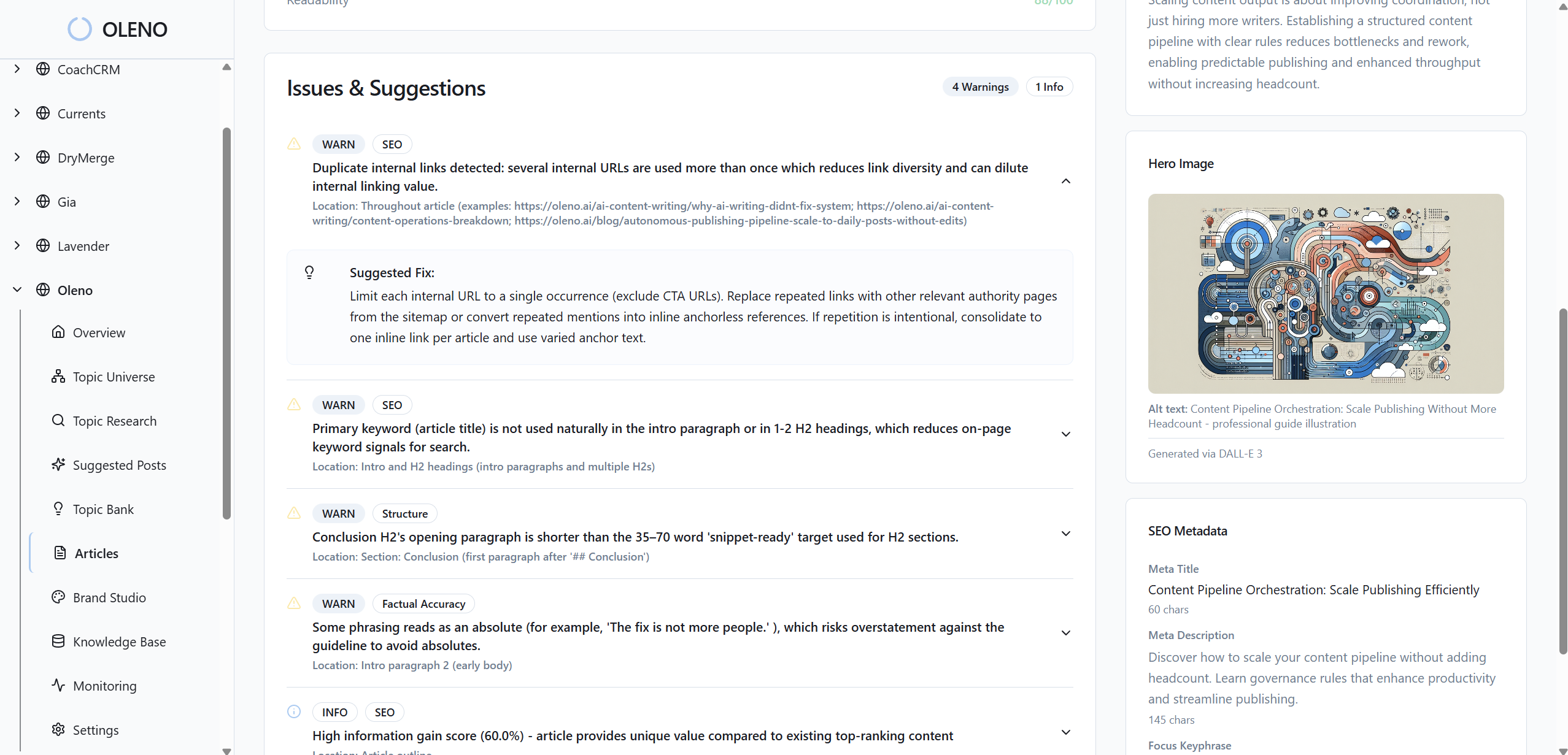
The gate ties directly to the costs we covered—those unbudgeted 30 edit cycles don’t materialize when drafts can’t bypass the bar. You’ll still review substance. You won’t babysit structure or argue approved claims. That’s leverage for small teams.
It also keeps experiments clean. When every asset aligns with the lock, your test results aren’t polluted by message changes.
CMS Publishing And Distribution Reuse Enforce Channel Rules
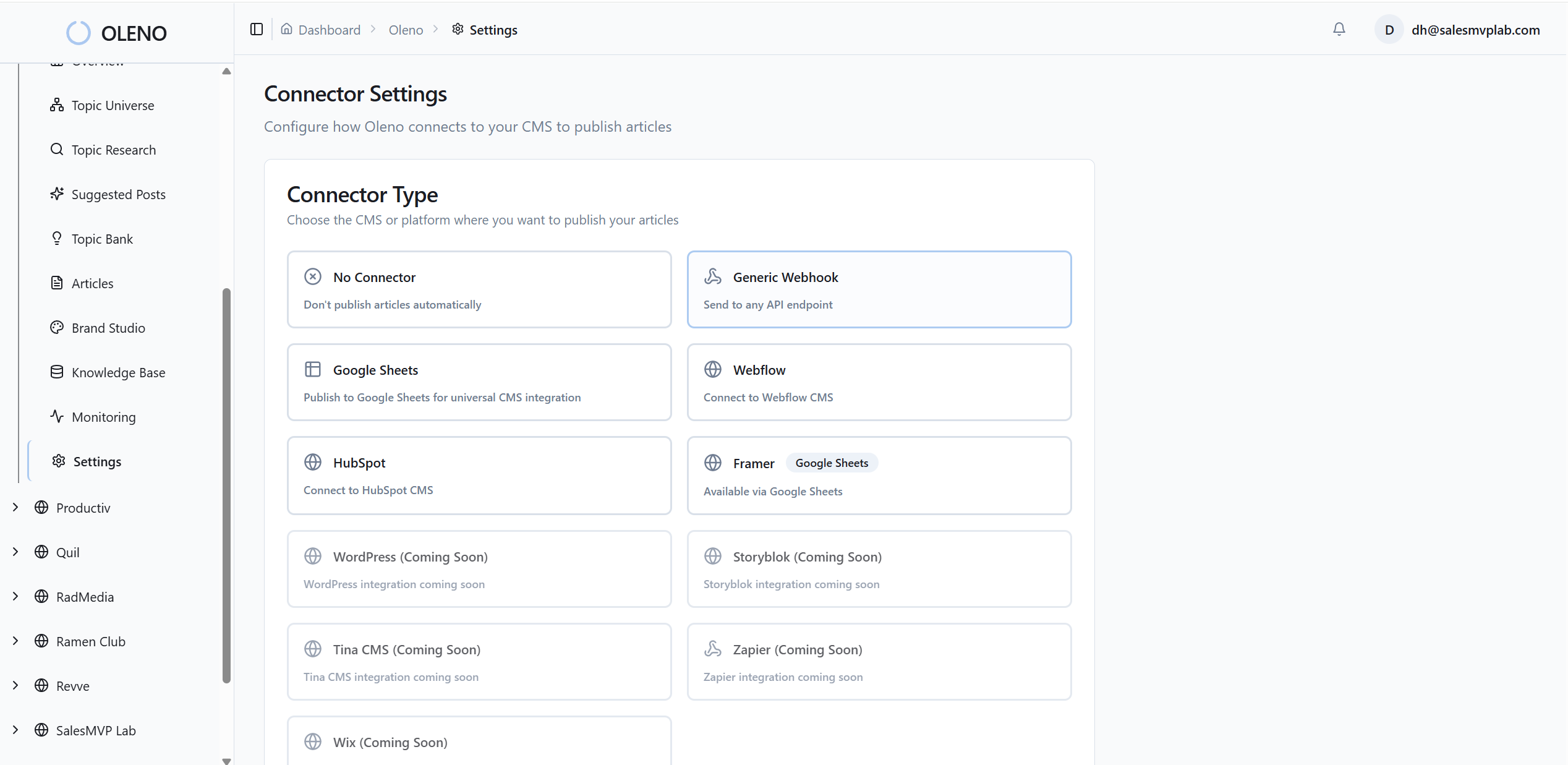
Oleno publishes directly to your CMS with idempotent controls, then reuses approved content across channels using your formatting and cadence rules. Distribution follows the lock; it doesn’t invent new messaging. The last mile becomes reliable—fewer copy-paste errors, fewer mismatched CTAs.
This is where teams usually wobble. The message is right in the doc and wrong on the site. Oleno closes that gap by enforcing the same rules at publish time and during reuse. Your cadence holds, your story stays intact, and approvals stop chasing assets around systems.
That’s how a lock turns into day-to-day reliability.
Operational Visibility And Sampling Find Issues Early
As output scales, manual review won’t cut it. Oleno supports sampling and surfaces quality trends and common failure patterns so you can intervene early. The point isn’t dashboards for their own sake. It’s noticing drift before it compounds into rework and missed opportunities.
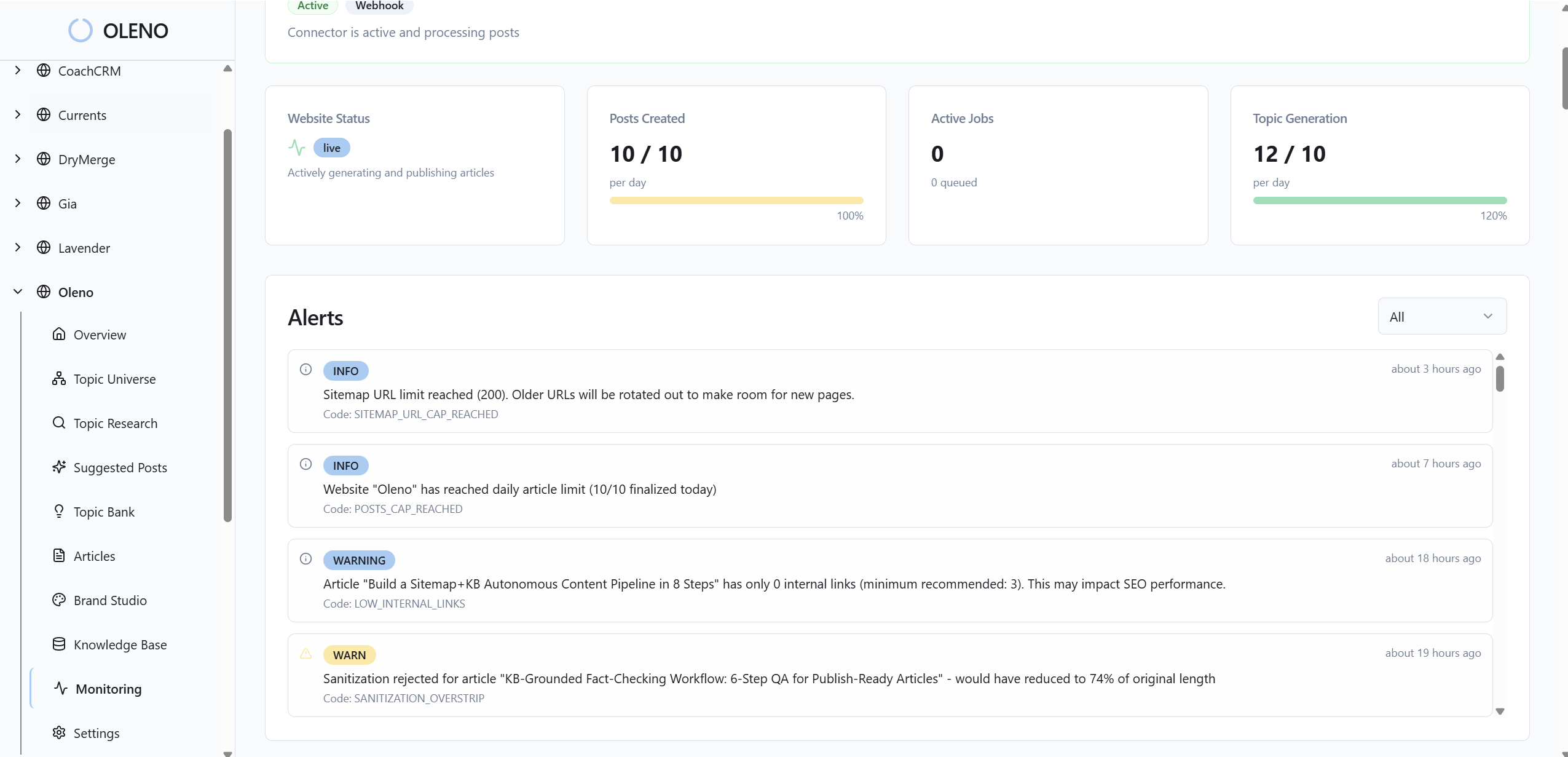
Set a simple weekly ritual: review samples, address patterns, adjust rules if needed. The system does the heavy lifting. Your team makes judgment calls where they matter.
Let Oleno carry the structure, so your people can focus on story. Ready to see it applied to your narrative lock? Try Oleno For Free.
Conclusion
Most teams don’t need more words. They need fewer decisions. Lock the narrative quarterly. Turn that lock into rules. Enforce those rules before publish. When rhythm and governance work together, drift fades, launches calm down, and learning compounds. Set the rules once. Let the system run the work. Then go have the strategic conversations only you can have.
About Daniel Hebert
I'm the founder of Oleno, SalesMVP Lab, and yourLumira. Been working in B2B SaaS in both sales and marketing leadership for 13+ years. I specialize in building revenue engines from the ground up. Over the years, I've codified writing frameworks, which are now powering Oleno.
Frequently Asked Questions