Repurpose Long‑Form Content into High‑Engagement Social Threads in 6 Steps
Most teams try to repurpose longform content into a few social snippets after they publish. That’s backwards. The half-life of an article is measured in months, but the average post lives for hours. If you don’t extract a full narrative upfront and map it to platform formats, you waste reach, burn time, and miss compounding visibility.
I’ve done the ad‑hoc dance. You post a quote here, a stat there, and hope it lands. It rarely does. What works is building a simple, repeatable system that turns one article into multiple native posts and threads, each with a sharp hook, a clear payoff, and visuals that travel. You can run it in 60 to 120 minutes if you prep right.
Key Takeaways:
- Audit any article’s social potential in under 10 minutes using a 3‑question scan
- Use three proven hook formulas per platform to lift first‑impression CTR
- Map H2s to a thread outline so writing time drops to minutes, not hours
- Add low‑effort visuals that boost shares without a designer
- Run a 2‑week experiment plan to find winners and scale variants
Why Repurposing Longform Content Into Narratives Beats One-Off Snippets
Narrative-driven repurposing outperforms one-off snippets because stories carry curiosity from hook to payoff while isolated quotes die in the feed. A good article already holds multiple angles, proofs, and turns that can be split into native posts. When you plan extraction, you extend the article’s half-life and compound reach.
Readers don’t consume disjointed lines the way we wish they did. They scan for structure, then decide if it’s worth a click or a comment. Eye-tracking studies show an F-shaped scan pattern on screens, which means hooks and first lines do the heavy lifting for attention, skimming, and recall. See the Nielsen Norman Group F-shaped pattern.
What Most Teams Miss About Article Half-Life
An article that ranks or gets shared can attract qualified attention for months. Social posts rarely do. The mistake is thinking those worlds are separate. They aren’t. A strong article contains 3 to 7 message units that can power weeks of distribution when extracted cleanly.
In my experience, the win isn’t more content. It’s squeezing more value from what you already published. You already paid the research and thinking tax. Without extraction, you lose that investment after one week of feed decay.
A simple fix is pre-marking each article’s angles before it goes live. Then turning those angles into platform-native posts within a single sitting after publish.
Snippets vs Narratives: The Visibility Gap
Snippets ask for attention without context. Narratives earn it by pacing curiosity and resolution. When you structure a thread that starts with a clear tension, adds a short proof, then lands on a practical tip, you get saves and replies. Those signals extend reach far beyond the first hour.
Short context beats a bare line. Readers need to know why a stat matters and where to go next. In threads and carousels, you can give that arc quickly.
You don’t need fancy writing. You need a repeatable arc and a clean lead.
Quick Litmus Test for Repurposing Potential
You can tell in under 10 minutes if an article will travel on social. Scan for these:
If you can’t find at least three, the piece may be too thin to repurpose well.
The Real Problem: Fragmented Workflows, Not A Lack of Ideas
The core issue isn’t ideation. It’s the lack of a system that consistently turns depth into distribution. Teams publish, then scramble to post something, then repeat. That creates drift, rework, and gaps where the article’s best angles never hit feeds.
Ideas are cheap. Execution at cadence is hard. When research, writing, and repurposing live in different tools and heads, momentum breaks. You see it in missed windows and rushed posts that feel generic.
Symptom: Low Engagement From “FYI” Posts
“FYI” posts often underperform because they don’t give readers a reason to care now. They lack a hook, a tension, or a clear payoff. You’re basically announcing a link.
If a reader can’t tell what they’ll learn by line one, they scroll. That’s the cost of being vague.
I’ve watched good articles die on social because the post didn’t earn the first second.
Root Cause: No System To Extract Angles
When no one owns extraction, angles stay buried inside the article. The result is late, scattered posts that feel like leftovers instead of fresh takes crafted for the feed.
A consistent process fixes that. Extract before publish, not after the fact. Treat repurposing as part of the article’s job, not an optional extra.
Why Prompting Alone Fails Here
Prompts can produce text fast. They don’t run your process. You still have to decide which angles matter, how to pace a thread, and what stays on-brand.
Without guardrails, outputs drift in tone, repeat themselves, or miss product truth. Then you’re back to manual rewrites and lost time. That’s not leverage, especially when evaluating repurpose longform content into.
The Cost of Ad‑Hoc Social: Time, Reach, And Compounding Loss
Ad‑hoc posting burns hours, sacrifices reach, and erodes brand consistency. Every rushed post creates review loops, approvals, and edits that add up. Over a quarter, that noise costs days you can’t get back.
Time is the obvious loss. The hidden loss is compounding reach. One strong thread often lands more saves and shares than five disconnected posts. Google’s featured snippet guidance also rewards clear, structured answers, which you can bring into social formats to prime discovery later. See Google’s featured snippet guidelines.
Time And Coordination You Lose Weekly
Most marketing leads I talk to lose 3 to 5 hours a week to repurposing chaos. Status checks. Copy rewrites. Image resizing. Missed windows because someone was in a meeting.
That’s a full afternoon gone with nothing reliable to show for it. Over a month, you lose a week. It’s the slow leak that keeps your calendar thin.
A simple weekly block can replace that: extract angles, write posts, queue everything.
Missed Reach And Share Decay
One-off posts don’t produce saves. Saves and replies are the currency that stretches reach in modern feeds. When you pack value into a short arc, readers feel like they got something useful now, not just a teaser.
Threads, carousels, and multi-image posts also get more surface area on first impression. That matters. More real estate, more chances to be read.
Without that, your article’s best points never leave your site.
Brand Drift And Rework Costs
When copy changes voice per post, you lose trust. It feels like a different team wrote each thing. You also create a review burden because someone has to harmonize tone after the fact.
Voice drift isn’t just a vibe problem. It’s a cost center. Rework piles up, and your queue thins out.
What It Feels Like When Social Is An Afterthought for Repurpose longform content into
It feels like chasing. You’re always late, always patching, always guessing. You post, then hope. If you’ve ever stared at a scheduler box at 4:45 PM with no hook and a deadline, you know the feeling.
The stress compounds because you don’t trust the output. You can’t predict results, and leadership wants numbers. That pressure pushes you to safer, blander posts that fade instantly.
The 11 PM Rewrite You Keep Doing
You finally get a post up, leadership pings you, and you’re rewriting at 11 PM to soften a line or add a caveat. That’s a signal your system is broken. Repurposing shouldn’t require late-night heroics.
When hooks are pre-approved and voice rules are enforced, last-minute edits go away.
Leadership Pressure Without Proof
Leaders want consistent engagement trends, not sporadic spikes. Ad‑hoc posts produce erratic charts. It’s hard to make a case for more budget when the line wiggles with no story.
A simple cadence with clear hooks and a weekly queue turns that into a slope, not noise.
The "Blank Box" Problem In Schedulers
The worst part is the empty field. No idea what to write. No angle to pull. That blank box is a symptom, not the problem. You didn’t extract angles earlier, so you’re trying to invent them at the last second.
Extraction first. Scheduling second. Problem solved.
The New Way To Repurpose Longform Content Into Platform-Ready Threads
The fix is a deterministic repurposing workflow: identify angles, map them to platform-native structures, apply tested hooks, add lightweight visuals, then queue. You do it in one sitting per article, at a consistent weekly time. The outcome is predictable lift without more headcount, especially when evaluating repurpose longform content into.
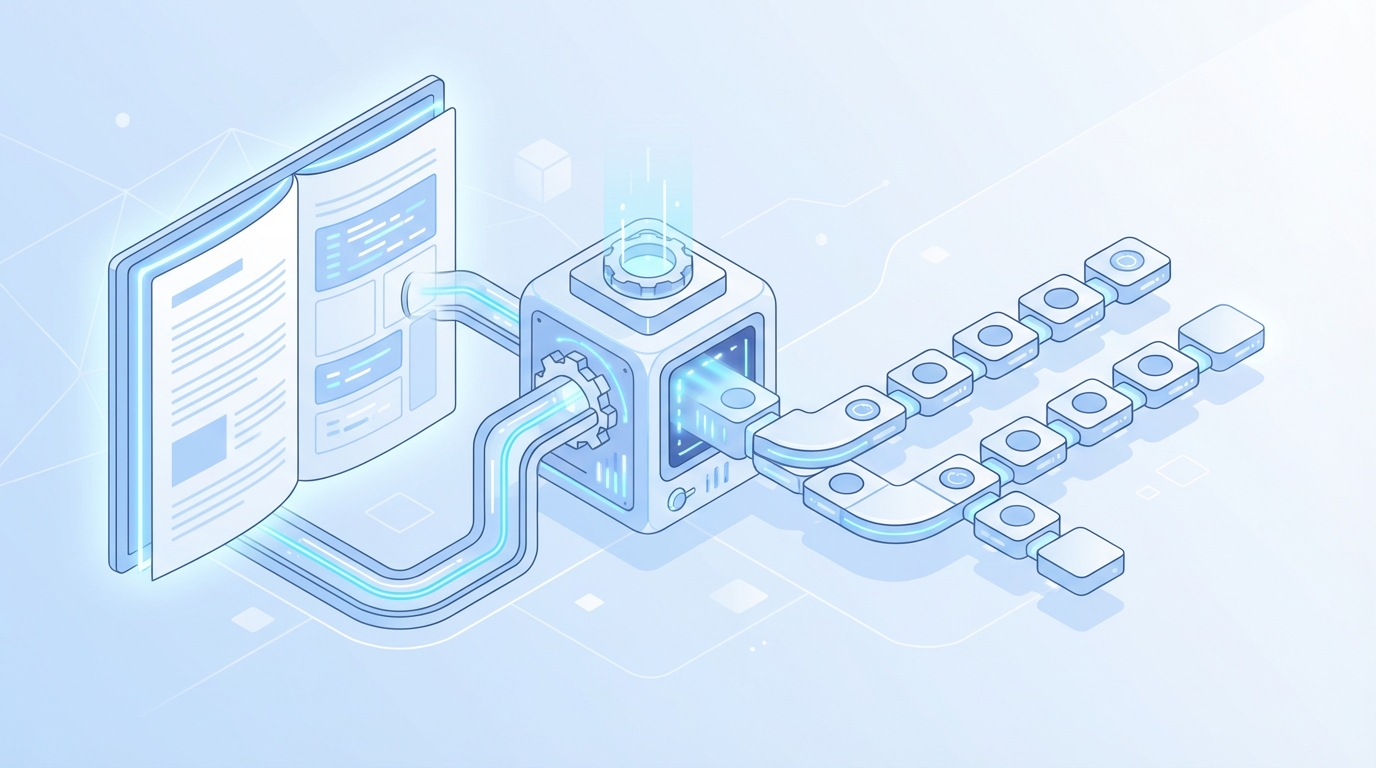
You’re not guessing. You’re running a small machine that turns depth into distribution. It’s boring in the best way, because boring wins.
A Deterministic H2-To-Thread Template
Take an article’s H2s and turn them into a thread outline. Each H2 becomes a post section with a hook, a line of context, and a concrete takeaway. Simple, fast, and reliable.
Here’s the mapping pattern:
- Hook from the section’s core tension
- One-sentence proof or stat
- One-sentence action or example
- Repeat across 3 to 7 sections, then close with a recap or resource
You can write this in minutes once the angles are marked.
Three Hook Formulas Per Platform
Hooks earn the first second. Use formulas that reduce guesswork and raise first-impression CTR.
- Tension + Outcome: “Most teams miss X. Fix it in 10 minutes with Y.”
- Number + Proof: “7 angles from one article that doubled saves.”
- Contrarian Lead: “Stop posting quotes. Start posting arcs.”
- X/Twitter
- Direct Claim: “Threads beat quotes. Here’s the 5-part outline I use.”
- Curiosity Gap: “We 2x’d engagement by removing one thing.”
- Metric First: “23% more saves from this opening line.”
- Carousel/Slides
- Problem Slide: “Your posts die in 3 hours”
- Process Slide: “Map H2s to a 5-step thread”
- Payoff Slide: “Turn one article into 7 posts”
Low-Effort Visuals That Travel
You don’t need a designer to improve share rates. Clean visuals carry ideas further. Templates save time and raise perceived quality.
Two simple options work well:
- Quote cards with a short payoff line, not just a pull quote
- Diagram of the thread or workflow, with 3 to 5 labeled steps
Keep brand colors, readable fonts, and generous spacing. Avoid dense text on images.
Stop wasting articles. Start consistent distribution with a light, repeatable system. If you want the machine without the manual setup, request a demo.
How Oleno Turns Repurposed Longform Into A Repeatable Distribution System
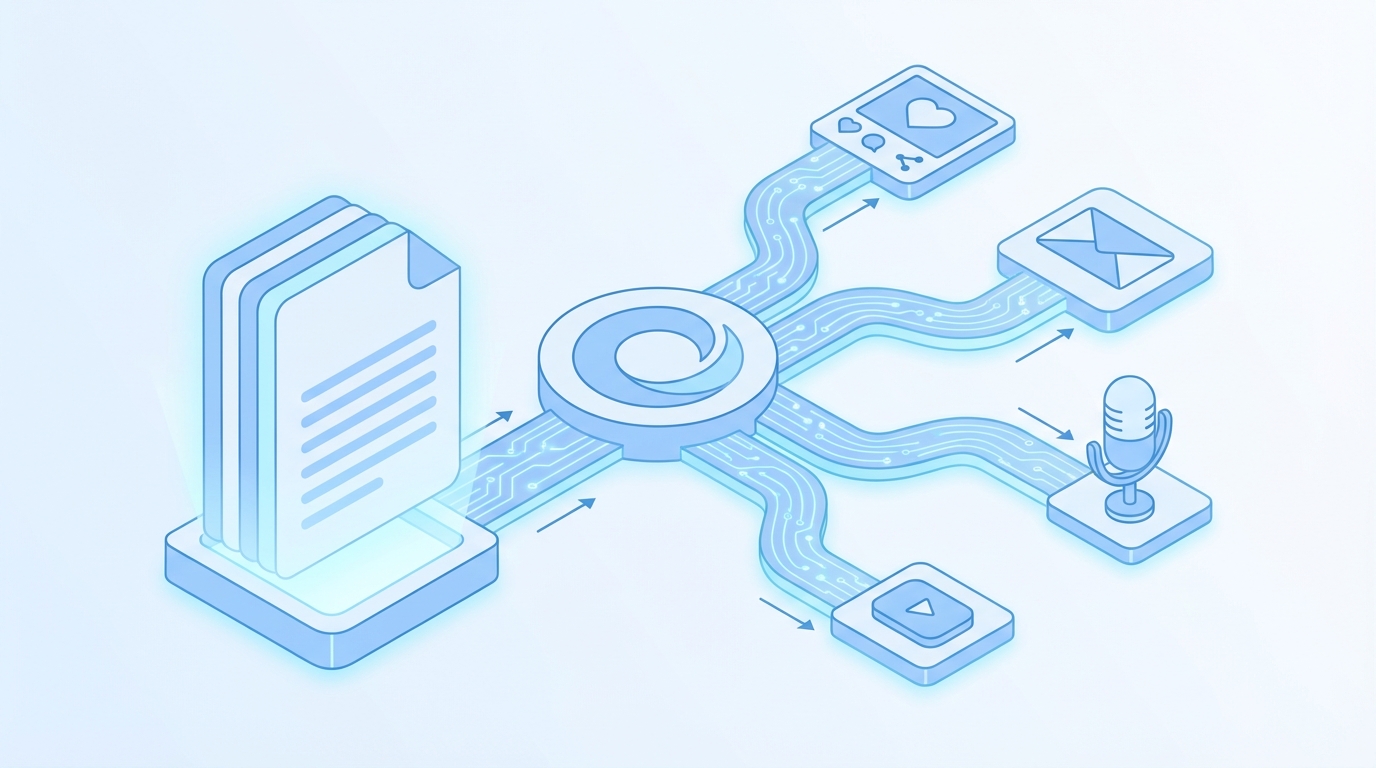
Oleno operationalizes this new way by enforcing voice, extracting angles, and producing platform-ready variants for review in one place. It keeps your positioning and product truth intact while you move from article to scheduled posts. The output is consistent, on-brand, and easy to ship.
You still decide the narrative. Oleno makes it reliable at scale.
Distribution Studio: From Article To Queue In One Session
Distribution Studio takes an approved article and produces LinkedIn and X variants with multiple hook styles, then routes them to a review workbench for quick edits and approval. Approved items move into a publishing queue with schedule controls, profile routing, and an evergreen pool that recycles winners automatically.
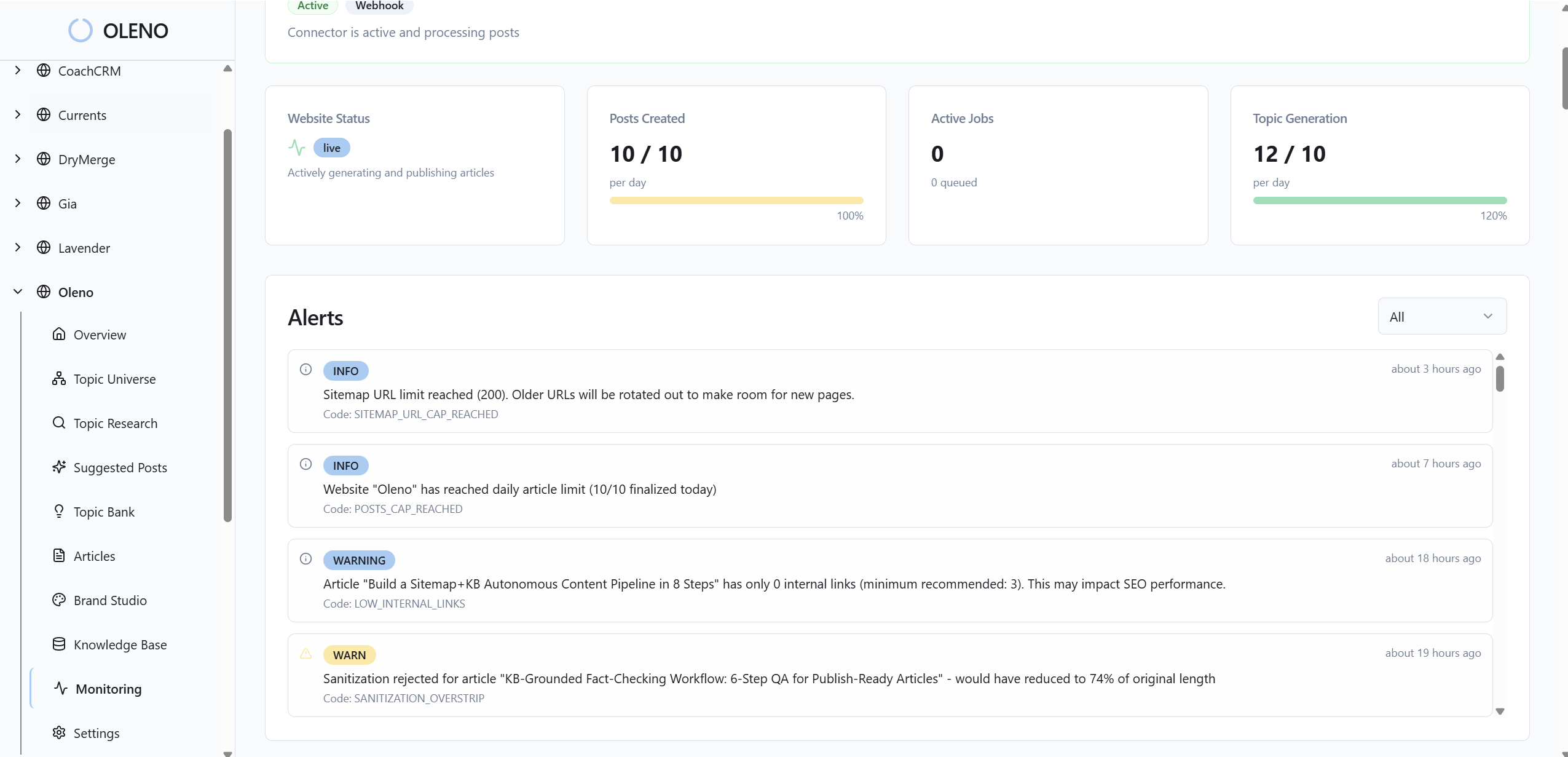
You can turn one article into 5 to 10 social assets without floating between docs, editors, and schedulers. The cadence holds, and you stop bleeding hours to coordination.
From 3 hours of manual repurposing to roughly 20 minutes of review and scheduling. That’s the shift teams feel in week one. If you want to see the flow end to end, book a demo.
Brand And Product Truth, Enforced Automatically
Brand Studio encodes your tone, vocabulary, rhythm, and CTA rules so every post sounds like you. Product Studio anchors claims to approved features and boundaries, which prevents invented capabilities from sneaking into copy.
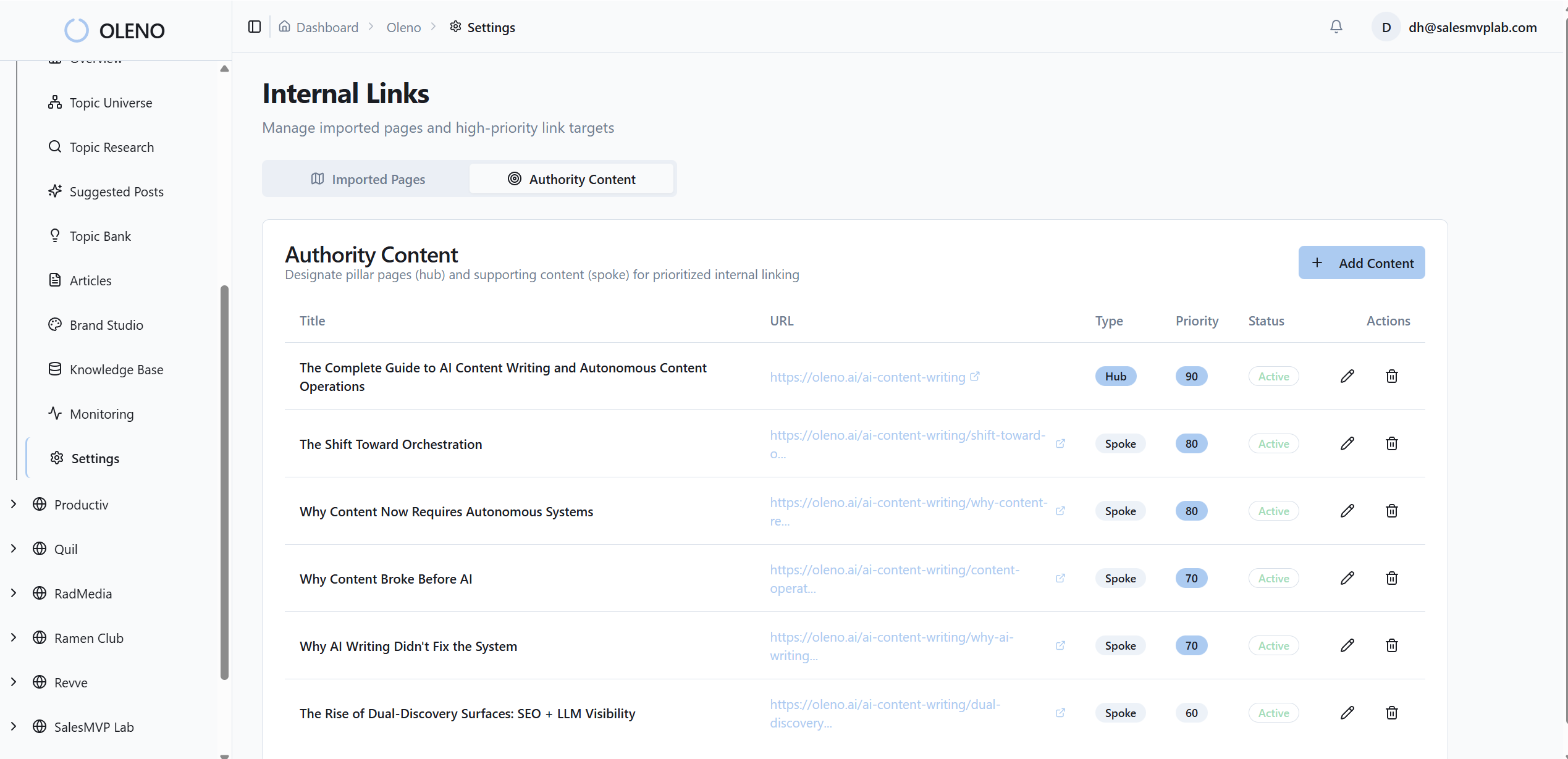
That combination cuts rewrites and late approvals. You reduce the 11 PM edits and keep leadership comfortable with what goes out.
Measure The Lift Without New Headcount
Quality Gate scores outputs on voice, structure, and clarity before anything reaches your queue. Health Monitor shows whether your distribution engine is running on pace and where failures creep in, so you can fix root causes early.
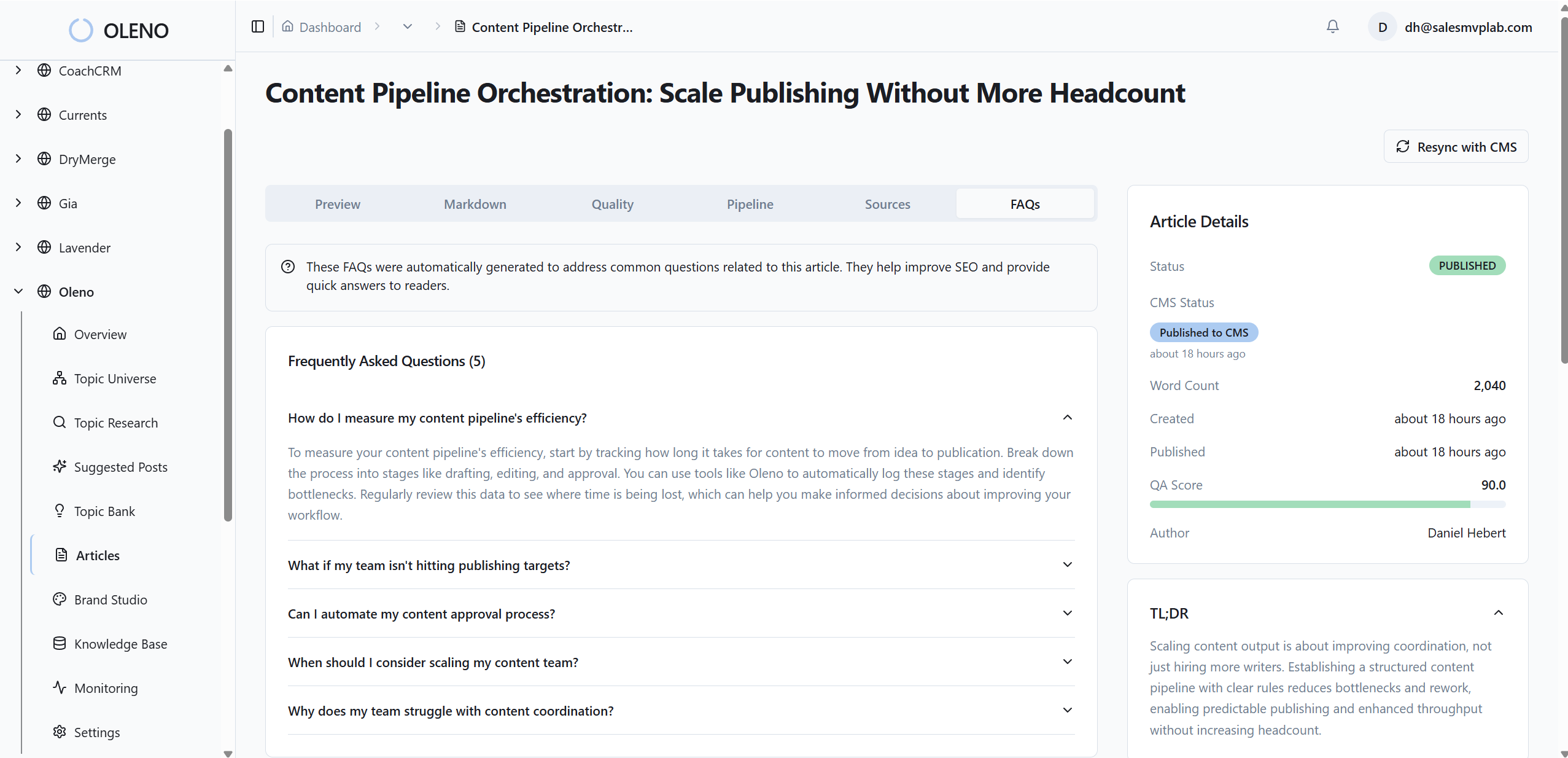
You get the lift from consistent repurposing without hiring or adding new tools. The system stays steady during launches, vacations, and spikes in demand elsewhere.
Conclusion
You don’t need more posts. You need a system that turns one strong article into 3 to 10 platform-native pieces with hooks, arcs, and lightweight visuals. Do the extraction upfront, map H2s to a thread, apply proven hooks, and queue everything in one sitting. You’ll see steadier engagement and fewer late-night rewrites.
If you want that outcome with built-in voice control, product truth, and a repurposing queue that never runs dry, Oleno makes it practical for a small team to run every week. When you’re ready to turn depth into distribution, request a demo.
About Daniel Hebert
I'm the founder of Oleno, SalesMVP Lab, and yourLumira. Been working in B2B SaaS in both sales and marketing leadership for 13+ years. I specialize in building revenue engines from the ground up. Over the years, I've codified writing frameworks, which are now powering Oleno.
Frequently Asked Questions