Revenue Attribution for Content: Link Articles to Closed Deals

I’ve sat in too many meetings where someone points to a neat dashboard and declares, "Content drives revenue." Then we dig into how credit was assigned. UTMs are mushy. Titles changed. A random “Resources” page soaked up last-click credit. Everyone nods, but no one trusts it. You’ve probably been there.
When I led sales at Proposify, our blog ranked for a ton of keywords. Gorgeous design. Great writing. But we couldn’t credibly tie it back to pipeline. Earlier in my career, I ran Steamfeed and watched traffic spike with volume and depth, which was great for SEO, but again, revenue proof was hazy. I’ve learned the hard way: if you want to link articles to closed deals, you need a first‑party attribution pipeline you control end to end.
Key Takeaways:
- Treat attribution as a first‑party data problem, not a reporting problem
- Instrument durable content IDs and identity stitching before you scale output
- Model sessions and sources consistently, then assign multi‑touch credit you can re‑run
- Quantify the cost of messy UTMs and over‑credited pages to build urgency
- Build an auditable pipeline in your warehouse, then align your roadmap to what moves deals
- Use Oleno to stabilize identifiers and structure upstream; keep analytics in your stack
Why You Still Cannot Prove Content Drives Revenue
You can’t prove content drives revenue when your identifiers drift and your model lives in a black box. Vanity metrics feel good but don’t link to deals. Without durable IDs and explainable joins, attribution is a guess with slide‑friendly charts. Example: your “Top Posts” report credits a hub page that never influenced the opportunity.

The Vanity Metric Trap
Traffic, impressions, and time on page aren’t useless. They’re just not proof. Most teams lean on last click because it’s tidy. It’s also biased toward navigational pages and late‑stage actions that tell an incomplete story. If your UTMs are inconsistent or your slugs changed mid‑quarter, you’re not measuring behavior. You’re measuring happenstance.
I’ve seen this pattern repeat. You publish a strong POV piece that opens doors, but a catch‑all page hoards last‑click credit. The team then doubles down on the wrong format. Pipeline stalls a bit later and everyone blames “content mix.” What’s really happening is structural. Without durable identifiers and explainable joins, your reporting turns into a vibes check. That’s not a decision system.
What Is First‑Party Attribution And Why Should You Care?
First‑party attribution means you own the raw events, the identity graph, and the models. Your stack captures content_view, lead_submitted, and user_identify events. You stitch anonymous sessions to known users on login or form submit. Then you join touches to opportunities in your warehouse. It’s your SQL, not someone else’s magic.
The benefit isn’t a flashy dashboard. It’s explainability. You can re‑run models, audit bot filtering, and version changes to weights. When the board asks, “What moved pipeline last quarter?” you walk through definitions, joins, and outputs. People may disagree with the weighting. They can’t dismiss the method. That’s the point.
Want a sanity check on black‑box risk? The conversation shows up in mainstream content circles too. See this perspective on opacity and credit in The Black Box Of Content Attribution.
Ready to make upstream structure less fragile? Use a publishing system that keeps identifiers stable and content metadata consistent. It removes a lot of the measurement headaches later. If that’s on your list, Try Using An Autonomous Content Engine For Always‑On Publishing.
The Real Bottleneck Lives In Your Data Model
Attribution fails less because the math is wrong and more because the inputs are messy. Fix the data model first: durable content IDs, identity stitching, and normalized sources. If titles change, slugs drift, or UTMs are freestyle, models inherit bias. Example: typos inflate a phantom “source” you didn’t plan.

Instrument Content With Durable IDs, Not Titles
Titles change. Slugs drift. A content_id doesn’t. Define a stable, unique content_id in your CMS and emit it on every view and CTA event. Store canonical_url, publish_date, and language. Yes, it’s boring. It’s also the difference between hard joins and wishful fuzzy matches. You want hard joins.
While you’re at it, enforce UTM hygiene. Create an allowlist for source, medium, and campaign. Normalize casing at ingest. Drop or map fields you can’t clean deterministically. Separate your taxonomy from campaign tags so content attribution isn’t at the mercy of someone’s “quick launch” shortcut. Guardrails now save weeks later.
How Do You Capture Identity Without Cookies?
Anonymous sessions are fine. The trick is stitching. Emit user_identify on login, form submit, or email click. When that happens, backfill the prior anonymous session history to that user_id. Keep visitor_id for device continuity. This gives you a clean way to treat early touches as part of the same user journey. It’s not perfect. It’s consistent.
In B2B, bring account_id into the mix. Map domains to accounts deterministically wherever possible. Avoid probabilistic guessing unless you can explain the error rate. If you can’t stitch identity with confidence, your content credit leaks fast. It looks like attrition. It’s actually attribution.
Normalize Sessions And Sources For Apples To Apples
Define sessions with a deterministic rule. A common approach is a rolling 30 minutes of inactivity. Collapse self‑refresh noise and auto‑reload quirks. Then canonicalize source and medium with a mapping table. Merge utm_content variants that only differ by casing or punctuation. Don’t let typos become faux channels.
When you normalize inputs, model outputs improve without changing a single weighting rule. This is the unglamorous truth. Your math didn’t suddenly get smarter. Your data did. That’s the unlock.
The Hidden Costs Of Fuzzy Attribution
Fuzzy attribution eats time, inflates the wrong pages, and lets bots claim a slice of credit. The costs compound quietly until a quarter slips. Then a year. Add up rework hours, misallocated budget, and slow‑burn pipeline loss. Example: one over‑credited hub page tilts your roadmap for months.
Hours Lost Reconciling Messy UTMs
Let’s pretend you ship 30 posts in a quarter. One analyst spends 8 hours a week cleaning UTMs, deduping sessions, and debugging slugs. At a modest fully loaded rate, that’s thousands a month in rework. Worse, the fixes are manual and ephemeral. The same mistakes return because nothing changed upstream.
I’ve seen talented analysts become professional broom wielders. They’re sweeping behind the parade instead of designing better streets. The opportunity cost is brutal. They could be building models, running sensitivity analyses, or partnering with sales on pipeline insights. Instead, they’re reconciling “Email” vs “email.” Not great.
Revenue Misallocation That Distorts Roadmaps
Last‑click bias over‑credits navigational pages and under‑credits early influence. If a resource hub grabs the final click, your editorial plan tilts toward hubs instead of the argument that opened the deal. A few points of misallocation each quarter compound into budget decisions that don’t pay off. Small drift. Big outcome.
You don’t need perfect attribution. You need consistent, auditable rules that reduce bias. First‑touch, linear, time‑decay, pick a lane, version it, and re‑run occasionally. Measure the deltas. If the model is explainable, leadership can argue weights while trusting the method. That’s real progress.
When Bots Pollute Your Dataset
Bots inflate views, break session logic, and skew decay weights. If you don’t filter obvious bot user‑agents, data centers, or unrealistic hit rates per minute, you’re handing credit to no one. Literally no one. This isn’t a rounding error. On high‑traffic posts, it can swing attribution in visible ways.
Build guardrails early. Maintain bot lists. Filter known ASNs. Cap events per minute per visitor_id. Keep a simple anomaly detector to catch spikes that don’t look human. It’s cheaper to block noise at ingest than defend an inflated dashboard later. Pain avoided is time reclaimed.
If you need a broader lens on ROI expectations (not attribution specifics), this overview is a helpful backdrop: Content Marketing ROI.
Still cleaning the same inputs every week? Upstream consistency changes everything. If you want to see how a stable creation pipeline reduces downstream cleanup, Try Generating 3 Free Test Articles Now.
This Is Fixable With A First‑Party Pipeline
You can build a defensible system that links articles to pipeline without pretending it’s perfect. Own the events, stitch identity, and version your models. Then show the math. Example: name five articles that influenced last quarter’s wins, and how you assigned credit. Confidence changes behavior.
When You Can Name The Five Articles That Moved Last Quarter’s Pipeline
Something shifts when you can list the exact pieces that show up in larger, faster‑closing deals. Sales asks for updates on those assets. Product marketing backs them with enablement. Editorial decisions move from “what’s hot” to “what advances opportunities.” It’s calm, focused work. You spend less time arguing channels. More time shipping the next lever.
And when leadership asks, “Which content accelerates deals?” you pull up the model. Definitions first. Then the filters. Then the CRM join that allocates ARR across articles. People might favor different weights. Fair. The point is that the system is explainable, auditable, and rerunnable. You’re not guessing. You’re allocating.
For a clear primer on model shapes you can adapt, see this rundown of Marketing Attribution Models.
A Practical Promise, Not A Miracle
Let’s be honest. You’ll miss off‑site consumption. Social lurkers. Podcast listeners. AI summaries. Some influence won’t show up in your logs. That’s okay. The goal isn’t perfection. The goal is a defensible system with known blind spots you can improve over time. Good enough to reallocate budget with a straight face.
I’ve used this framing with skeptical execs. “We know where it’s strong. We know where it’s blind. We revisit weights quarterly.” It diffuses the hunt for a perfect number. It creates room for judgment. And it keeps the bar where it belongs: credible, repeatable, explainable.
Build The Pipeline End To End
Build attribution like you build product. Define the data contract. Capture reliable events. Model sessions and touches. Assign credit you can version. Then join to CRM and operationalize guardrails. Example: durable content_id, stitched user_id, normalized sources, time‑decay weights, and a model_version on outputs.
Instrument Content And Identity For Joinable Data
Start in your CMS. Define content_id, canonical_url, and publish_slug. Emit them in page view and CTA events. Add publish_date and language to reduce downstream guesswork. Enforce an allowlist for utm_source and utm_medium. Reject non‑compliant values at the edge. You’ll thank yourself later.
Identity next. Capture user_identify on form submit, SSO, or email click. Stitch previous anonymous events to user_id. Keep visitor_id for device continuity. In B2B, store account_id or a deterministic domain map. These basics turn your warehouse into a join‑friendly environment. The rest gets much easier.
Ingest And Model Events For Reliable Sessions And Touches
Land events in your warehouse with schemas for content_view, lead_submitted, and user_identify. Deduplicate by event_id or a hash of key fields. Build a session table with a 30‑minute inactivity rule. Then roll a touches table that aggregates content interactions at user and account levels. Clean inputs before attribution.
Normalize sources with a reference map. Collapse utm_content variants that differ only by formatting. Keep a lightweight bot filter at ingest. These steps reduce false variance. You’ll see fewer “mystery channels” and clearer pathing. If you need a vendor lens on content attribution framing, skim Content Attribution for terminology alignment.
Write SQL For Multi‑Touch Attribution Models
Implement first touch and last touch with window functions over touches ordered by first_seen_at. Linear assigns equal weight across touched articles per deal. Time‑decay applies weights using an exponential function over days from touch to opportunity creation or close. Persist outputs with model_version to compare runs.
Join users and accounts to CRM opportunities using email, domain, or a deterministic account map. Allocate ARR or ACV across articles using chosen weights. Filter bots by user‑agent and datacenter ASN. Run sampling checks and sensitivity analysis across weights. Then materialize daily views. For a simple reference, see how a major platform frames content views and revenue in Analyze Revenue Attribution For Content.
How Oleno Supports A First‑Party Attribution Pipeline
Oleno doesn’t do analytics. It creates stable, structured content you can instrument cleanly. Deterministic publishing and quality gates reduce the variability that wrecks joins. That’s the handoff. Example: idempotent CMS publishing means slugs don’t drift, so content_id stays trustworthy across time.
Deterministic Publishing That Stabilizes Content Identifiers
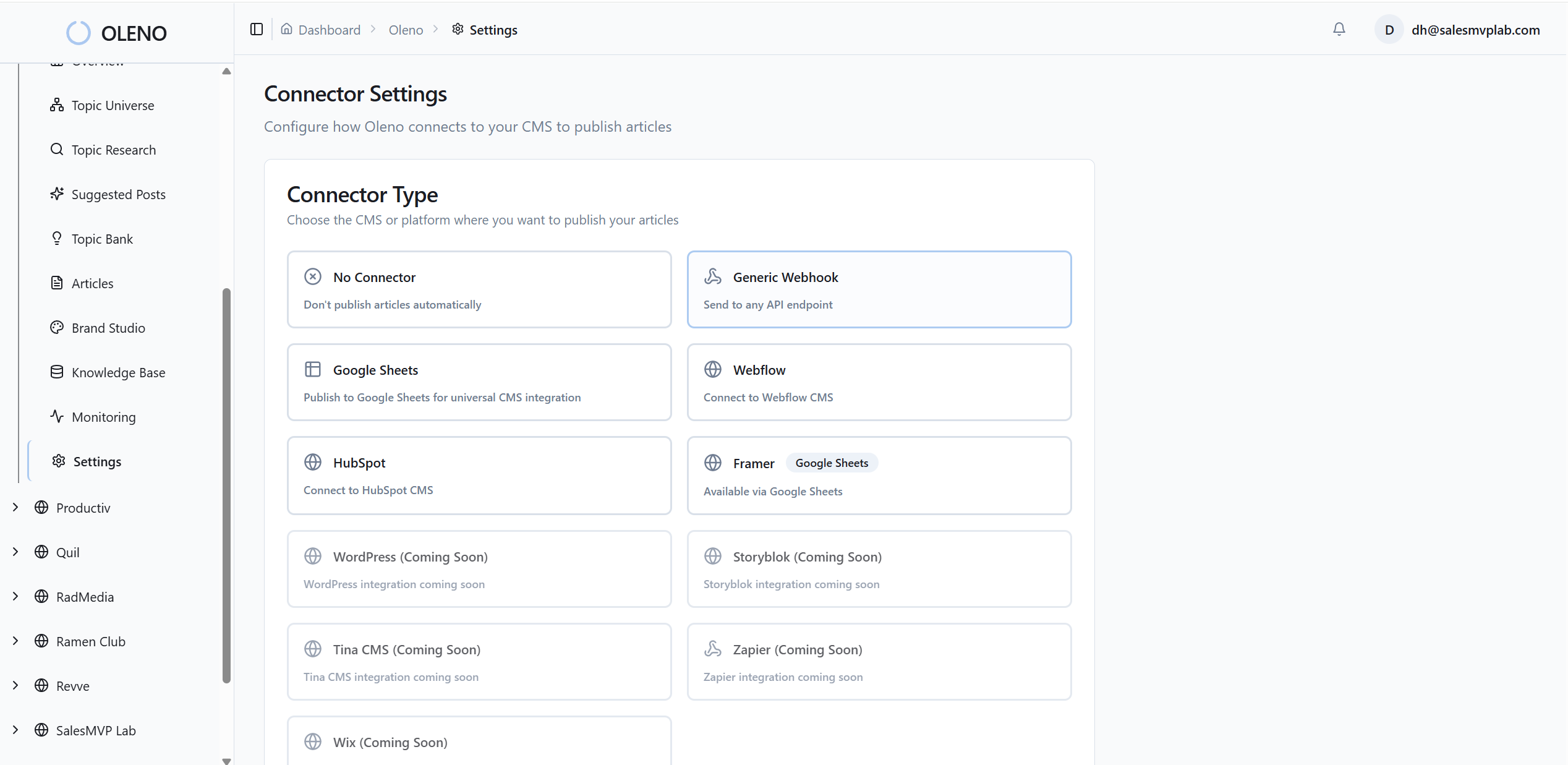
Oleno publishes directly to your CMS, WordPress, Webflow, Storyblok, HubSpot, Framer, with idempotent behavior to prevent duplicates. That stability makes it realistic to rely on content_id and canonical_url across page views, CTAs, and refreshes. Less cleanup. Fewer broken joins. More time modeling, less time reconciling.

Quality is enforced upstream. The QA Gate checks narrative structure, voice alignment, SEO placement, and KB grounding before anything goes live. Consistent structure yields predictable headings and markup your analytics can parse without bespoke exceptions. When the system handles structure, analysts stop firefighting weird one‑off pages. They get their weekends back.
Where Oleno Stops And Your Analytics Begins
Oleno determines what to write, creates full articles in your voice, and publishes them on a reliable cadence. It does not track performance, ship dashboards, or assign revenue credit. That boundary is intentional. Your team should own events, identity stitching, and the CRM join in your warehouse. Clean separation. Clean accountability.
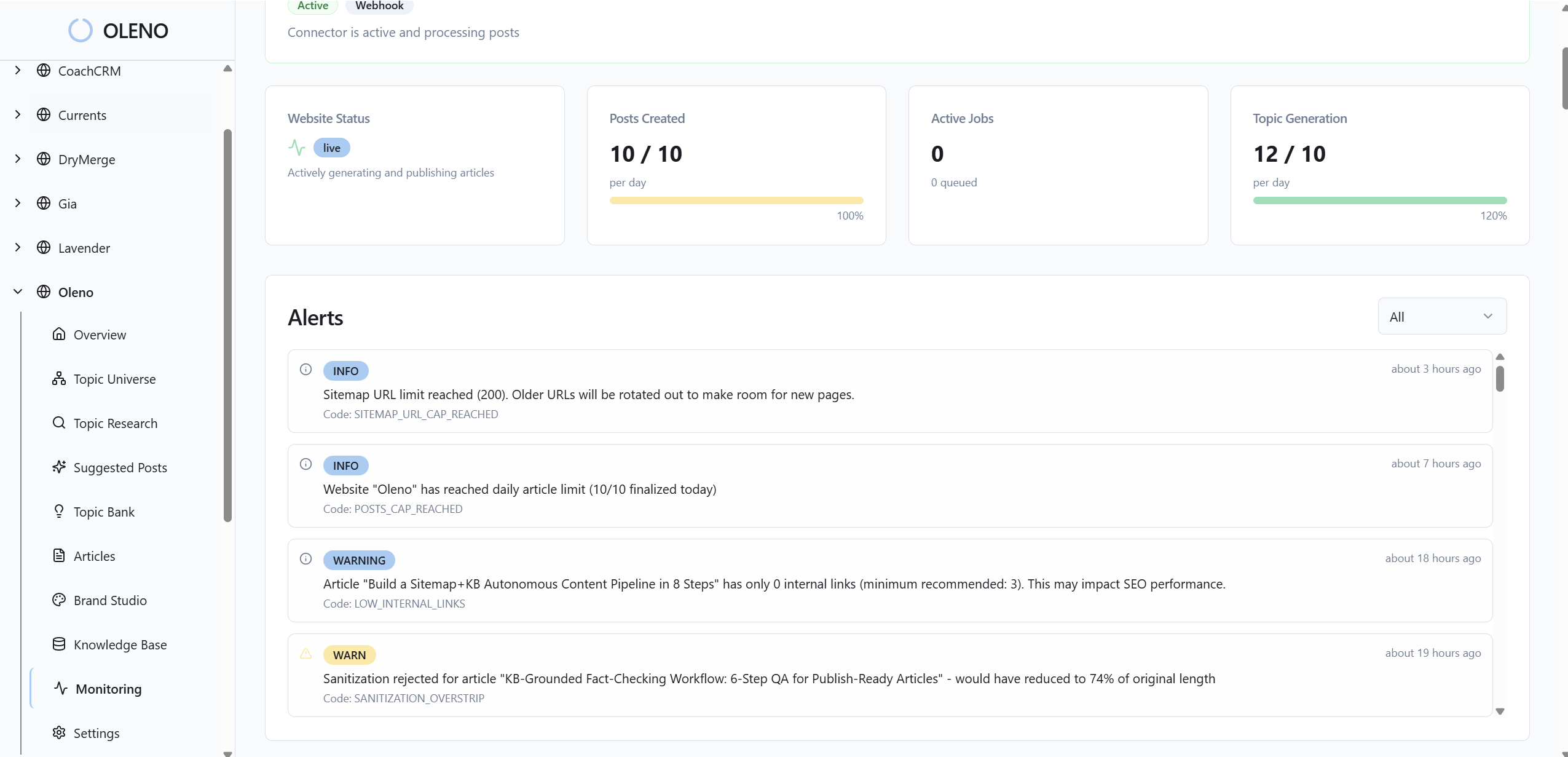
In practice, Oleno complements your attribution pipeline by reducing upstream noise: deterministic Topic → Angle → Brief → Draft → QA → Visuals → Publish keeps content identifiers and metadata consistent over time. You bring the events and models. Together, you get a system that’s explainable end to end without overpromising precision. If you’re ready to stabilize the upstream and accelerate the downstream, Try Oleno For Free.
Conclusion
If content is going to earn budget on revenue, the proof needs to move from “neat chart” to “defensible model.” That starts with a data contract, durable content IDs, stitched identity, and normalized sources, then extends to versioned multi‑touch models you can explain. No miracles. Just better inputs and transparent math.
We’ve learned this the long way. The creation system matters as much as the measurement system. Use Oleno to keep identifiers and structure consistent upstream. Build your first‑party pipeline to measure downstream. When you can name the five articles that moved last quarter’s pipeline, and show the join, roadmap and resourcing decisions get a lot simpler.
About Daniel Hebert
I'm the founder of Oleno, SalesMVP Lab, and yourLumira. Been working in B2B SaaS in both sales and marketing leadership for 13+ years. I specialize in building revenue engines from the ground up. Over the years, I've codified writing frameworks, which are now powering Oleno.
Frequently Asked Questions