Revenue-Ranked Topic Backlog: Prioritize Content with Product Usage & Attribution

Most B2B SaaS teams still chase keywords and publish by volume, then wonder why pipeline barely moves. A revenue-ranked topic backlog fixes that. It blends product telemetry and attribution into one priority score so you publish what drives expansion, retention, and high-fit MQLs. I like it because you cut noise fast, and you can show the math.
When we build a revenue-ranked topic backlog, we stop arguing about ideas and start ranking by expected ARR. The queue becomes a living list. It refreshes off usage cohorts and opportunity truth, not opinions. And the payoff shows up quickly, fewer wasted drafts, faster approvals, and content that sales actually shares.
Key Takeaways:
- Pull three revenue signals first: expansion gaps, churn risk cohorts, and win reasons tied to ICP tiers
- Score topics by impact, confidence, and effort, then publish by ARR priority, not search volume
- Wire a basic data flow from events to a trusted table that refreshes weekly
- Backtest your top 10 against last quarter’s pipeline to validate lift before scaling
- Keep the queue clean with idempotency keys and SLAs so work actually starts on time
- Enforce brand, product, and claim governance so speed never turns into risky claims
- Close the loop by writing performance signals back into scores
Why a Revenue-Ranked Topic Backlog Beats Keyword Volume
A revenue-ranked topic backlog is a living queue of topics scored by expected ARR impact. It fuses product usage, account health, and attribution into one number so you publish the work that grows revenue. When teams shift to this model, they reduce wasted effort and stop celebrating traffic that does not convert.
What a Revenue-Ranked Backlog Actually Is
Think of it as a scoreboard for content ideas. Each topic gets a transparent score tied to expansion, retention, and net-new contribution. You set weights that reflect your revenue model, then sort and ship. No more arguing in meetings about pet topics, the data breaks ties.
We feed this backlog with the same signals sales and CS live in daily. Topics move up or down as cohorts change, not when someone updates a slide deck. That matters because timing is the quiet killer. If expansion windows open and you miss them, you lose deals you already earned.
It also forces clarity on who the piece is for and why it exists. Practically, you tag the intended segment, the primary intent, and the outcome you expect. That context travels with the work, which cuts review cycles. And yes, SEO still matters, but now it is distribution, not the decider.
After you set the rules, keep the input simple:
- Map every topic to a single objective, expansion, retention, or acquisition
- Attach the audience and ICP tier you actually win with
- Track the last outcome, so learnings feed the next pick
Signals, Not Gut Feel, Drive Priority
Priority should come from behavior your buyers already show you. High-value features touched but not activated. Seats added versus seats used. Win reasons that repeat for your best-fit deals. When those patterns show up, your backlog should light up too.
I like negative signals even more. Stalled PQLs tell you where education is missing. Down-sell indicators say where confusion lives. Early drop-off in onboarding shows weak spots in guidance. You do not need perfect data, you need honest patterns.
The secret isn’t fancy models. It is choosing inputs that track to money in your world. A team selling usage-based plans will rank topics differently than a team selling tier upgrades. Make that explicit. Then you can defend every pick when finance asks why you wrote three activation pieces in a row.
The Real Bottleneck: Your Content Queue Ignores Product Telemetry and CRM Truth
Low pipeline yield with higher output happens because the queue is blind to product and CRM truth. Teams default to keywords, opinions, and ad-hoc requests, so content drifts away from revenue. When you anchor topics to usage and opportunity data, the queue finally reflects what buyers do, not what we hope they do.
Symptom Versus Root Cause in Prioritization
You push more posts and get the same pipeline. That is the symptom. The root cause is the queue treats every idea like it is equal. Without a single source of prioritized topics ranked by ARR impact, you publish what is easiest, or loudest, or trending.
The cost snowballs. Expansion windows close because product education never shipped. Retention work slips behind thought leadership you did not need. MQLs rise on paper while demo-to-win stalls. It feels like you are working hard, and you are, but the system is working against you.
I have seen teams fix this in weeks. Not by writing more, but by changing the order of work. Once the queue reflects telemetry, the top ten looks different. Fewer “nice to have” explainers. More activation and renewal content mapped to cohorts that actually move the number.
Why Keywords Without Attribution Miss
A high-volume keyword can be a trap if it attracts the wrong segment or the wrong stage. You get traffic, but you do not get pipeline. Last-touch bias makes this worse because it hides assisted influence from earlier education that actually set up the deal.
Better to tie topics to assisted conversions and account-level lift. If a piece shows up across multiple wins for the same ICP tier, it earns a higher score even if volume looks average. Sales starts trusting marketing when the content stories line up with win reasons. That is when sharing becomes automatic.
You do not have to throw SEO out. Keep it as your distribution edge. Just refuse to let raw volume pick the work. If a topic cannot explain its path to revenue, it is a lower priority, full stop.
The Cost of Guesswork: Missed Expansion, Churn Risk, and MQL Waste for Revenue-ranked topic backlog
Guesswork wastes budget and time because it sends writers toward topics that do not move revenue. You miss expansion by ignoring activation gaps, you increase churn by skipping retention education, and you flood the top of funnel with mismatched visitors. The bill shows up as lost deals and higher support load.
Expansion Revenue Left on the Table
Expansion is often the fastest path to new ARR, yet it gets the least content. If 22 percent of Pro accounts touch a high-ROI feature but do not activate, that is a list of names, not a mystery. A small uplift across that cohort pays real money.
Tie topics to activation flows. Show the outcome first, then the steps. Add one objection-busting snippet that sales hears every week. It is not sexy, but it works. And it travels well into emails, enablement, and in-product nudges.
I like to quantify it simply. Activation gap size times realistic conversion lift times ARPU. Even a three point lift at scale is material. When the math is on the page, nobody argues about the next piece, especially when evaluating revenue-ranked topic backlog.
External support: see the Salesforce State of Sales report on win rate drivers and cycle time to align language with how sales teams evaluate momentum.
Retention Content That Saves Accounts
Retention content rarely gets a line on the calendar, then everyone panics sixty days before renewal. Onboarding gaps, unclear workflows, and missing “what good looks like” examples create avoidable churn. Support drowns, CS scrambles, and you lose logos for the wrong reasons.
Target the drop-off cohorts. Week two issues and day thirty confusion usually predict tickets and cancellations. Short pattern-based guides, a few crisp use cases, and one objection pre-answered can change renewal math. Your backlog should always keep two or three retention pieces near the top.
Good news, these pieces lower support volume too. When articles answer the real questions, tickets drop. That gives CS time to coach value, not chase fires. Everyone wins, and the queue keeps earning its place.
Make It Tangible: Build the Data Pipelines and Scoring Model for a Revenue-Ranked Topic Backlog
You can stand up a basic flow with tools you already own. Collect product events, sync account truth from CRM, model assisted influence, then publish a trusted topic scoring table weekly. Once the data is stable, the queue stops drifting with opinions.
Reference Architecture You Can Stand Up
Start simple and get it working. Product events land in your tracking layer, account and opportunity truth lives in your CRM, and campaign touches sit in your marketing platform. Move data into your warehouse, then model joins on account and user IDs. Tests keep you honest.
Do not chase perfect. Aim for a weekly refresh that your team can trust enough to make decisions. Add entity resolution rules you can explain in one slide. If the ops setup is confusing, people will not use it. Clarity beats complexity here.
For patterns on event collection and modeling, lean on vendor docs. The Twilio Segment documentation covers event collection, and dbt Labs documentation helps with modeling and tests that keep transformations sane.
To implement, follow a tight first pass:
- Define your core events and ID strategy, then ship them
- Land CRM accounts, opportunities, and win reasons in the warehouse
- Model topic influence joins and produce a ranked table the team can read
The Scoring Formula You Can Defend
A simple scaffold works and is easy to explain. Score equals impact times confidence, divided by effort. Impact itself is a weighted sum of expected expansion ARR, retained ARR, and net-new ARR. You can measure each term with numbers your finance team already uses.
Expected expansion ARR looks like activation gap size times conversion uplift times ARPU. Expected retained ARR looks like cohort ARR at risk times realistic save rate. Net-new ARR comes from intent fit times historical assisted pipeline. Keep weights transparent so debates are productive.
Confidence matters. If a topic has strong cohort evidence, it gets a higher confidence factor. If it relies on a narrative bet, set confidence lower, but keep a small budget for it. You will never have perfect certainty, so codify how you treat uncertainty.
Calibrate, Backtest, and Iterate
Backtest your top ten against the last two quarters. Compare to a keyword-ranked top ten. Look at pipeline, activation, and renewal deltas, not just traffic. If the revenue-ranked list wins, lock the weights for a month. If it does not, change the weights, not the idea of revenue ranking, especially when evaluating revenue-ranked topic backlog.
Add minimum data thresholds so thin signals do not sneak in. Tie-breakers help too. If two topics score the same, prefer the one that closes a documented gap in the funnel. When you write this down, the team stops relitigating the rules every week.
Attribution modeling can help you see influence more clearly. The Google Analytics 4 attribution guide is a solid reference if you need to align on definitions before you assign weight to assisted touches.
Ready to prioritize content with a backlog that maps to revenue, not pageviews? Request a Demo
Operationalize the New Way: Idempotent Push-to-Topic Workflow and Governance for a Revenue-Ranked Topic Backlog
Operationalizing the backlog means the queue stays clean, work starts on time, and governance blocks risky claims automatically. You define stable IDs, store the right fields, set SLAs, and wire QA to keep quality high. When the rules are clear, execution gets fast.

Idempotency Keys Keep Your Queue Clean
Duplicate topics are silent killers. Two writers start the same idea with slightly different titles, and you waste hours without noticing. Fix it with a stable identity. Combine title, segment, intent, and objective into a single key and treat it as the source of truth.
Every downstream job checks the key first. If a job already ran, update the state. Do not create a new row. On re-runs, overwrite state and keep one canonical history. It is a small habit that keeps trust intact across the pipeline.
When the backlog is clean, the team moves faster with less drama. You stop chasing status updates and start reviewing real drafts. Confidence climbs because the system behaves the same way every week.
Topic Bank Schema, Queue Rules, and SLAs
Structure matters more than people think. Store the fields you will actually use in decisions, then write simple rules for how work flows. Keep the schema short enough that people maintain it.
A practical schema often includes:
- topic_id, objective, ICP tier, and primary intent, so purpose stays clear
- score, confidence, effort, and data freshness timestamp, so priority stays honest
- owner, due date, state, and last_outcome, so you know where work sits
Set SLAs that force motion. For example, top ten starts within seven days, stale scores refresh weekly, and overrides require one paragraph with the revenue reason. When you write the rules down, debates shrink and output grows.
How Oleno Turns a Revenue-Ranked Topic Backlog Into Published Pipeline Content
Oleno makes the new way easier to run by executing the governed parts of production at scale. Once you feed the ranked topics in, Oleno turns them into briefs, drafts, and published assets that match your voice and stay inside approved product claims. The result is fewer manual handoffs, fewer duplicates, and less rework.

From Backlog to Governed Briefs
Marketing Studio carries your point of view into each brief so the angle stays aligned with strategy. Brand Studio enforces tone, terminology, and CTA style, which kills voice drift as volume grows. Product Studio keeps claims inside approved boundaries and pulls the right descriptions and screenshots when needed.
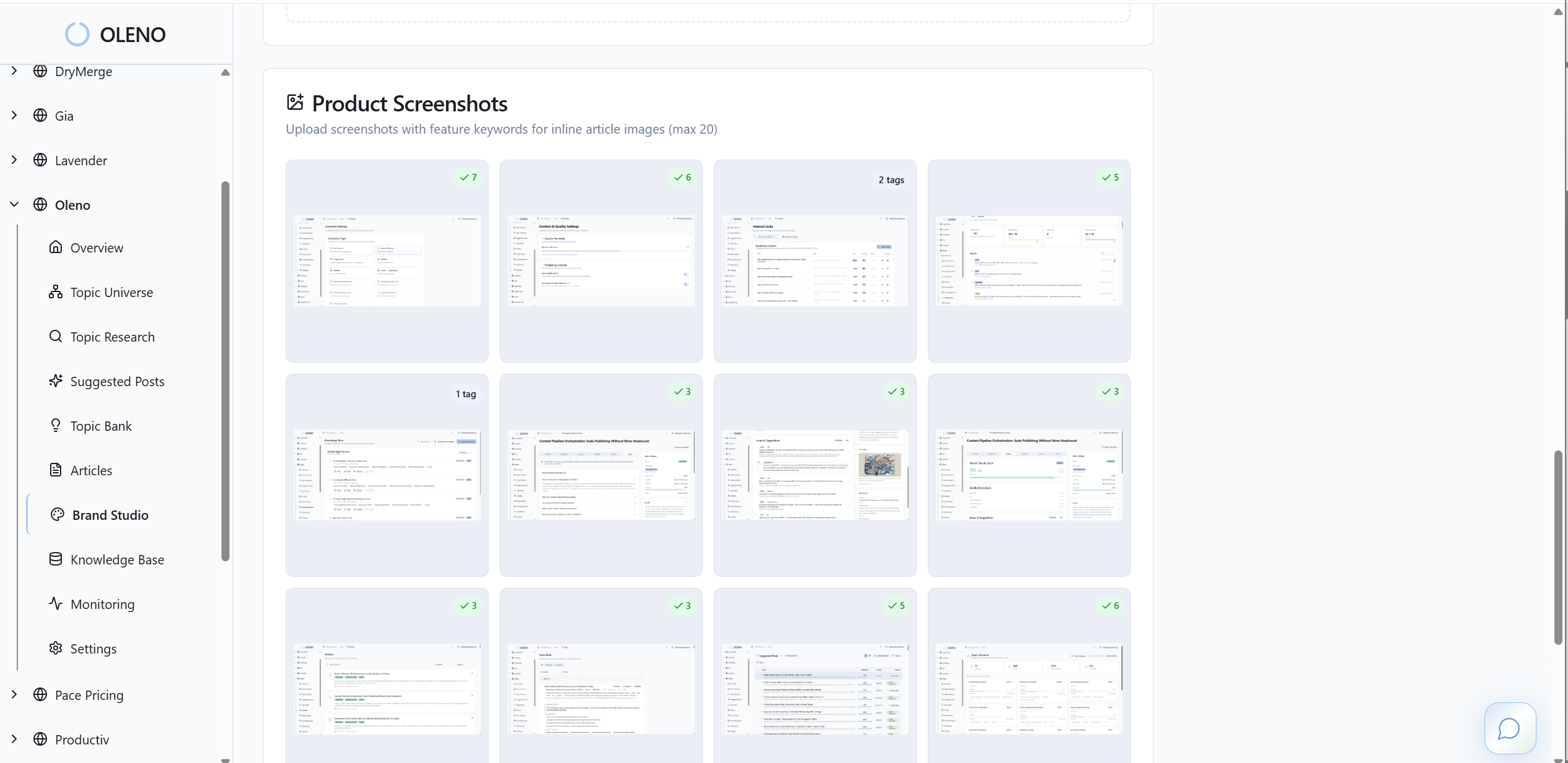
SEO Studio creates locked-structure briefs that keep readability and structure consistent while respecting the backlog’s objective. Variation Layer adapts each piece to audience and persona without multiplying manual work. When briefs start this strong, review time drops and the queue keeps moving.
The best part is repeatability. The same backlog rules drive the same brief quality every week. You are not relying on memory, or which freelancer is on deck. You are running a system that preserves what works and quietly removes what does not.
Quality Gate, Variation, and CMS Publishing
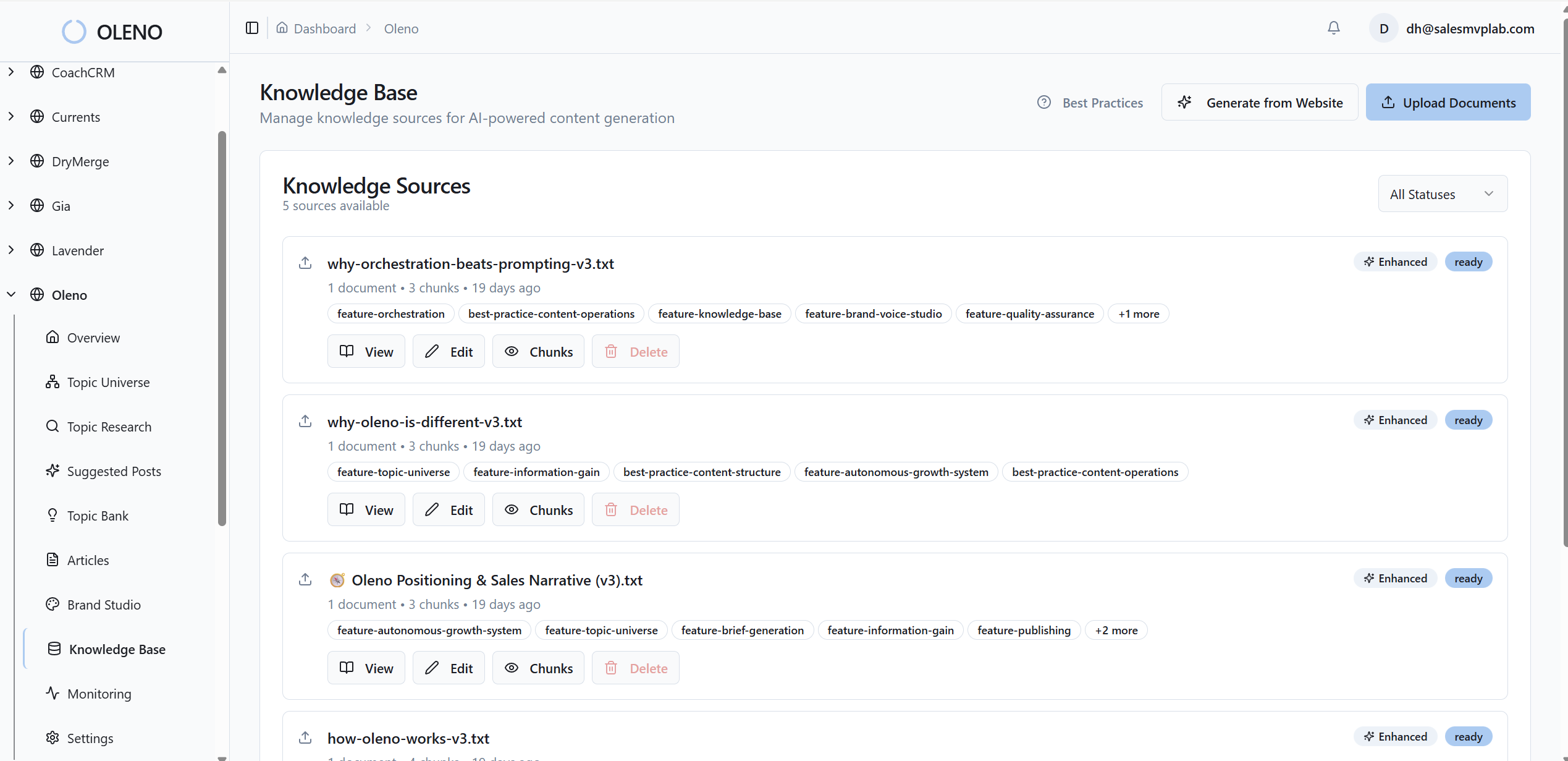
Quality Control enforces a non‑negotiable QA gate before anything goes live. It checks voice fit, narrative structure, grounding accuracy against your Knowledge Archive, and essential SEO readability. If something misses, Oleno targets the fix and re-tests, which cuts the back-and-forth that used to burn days.
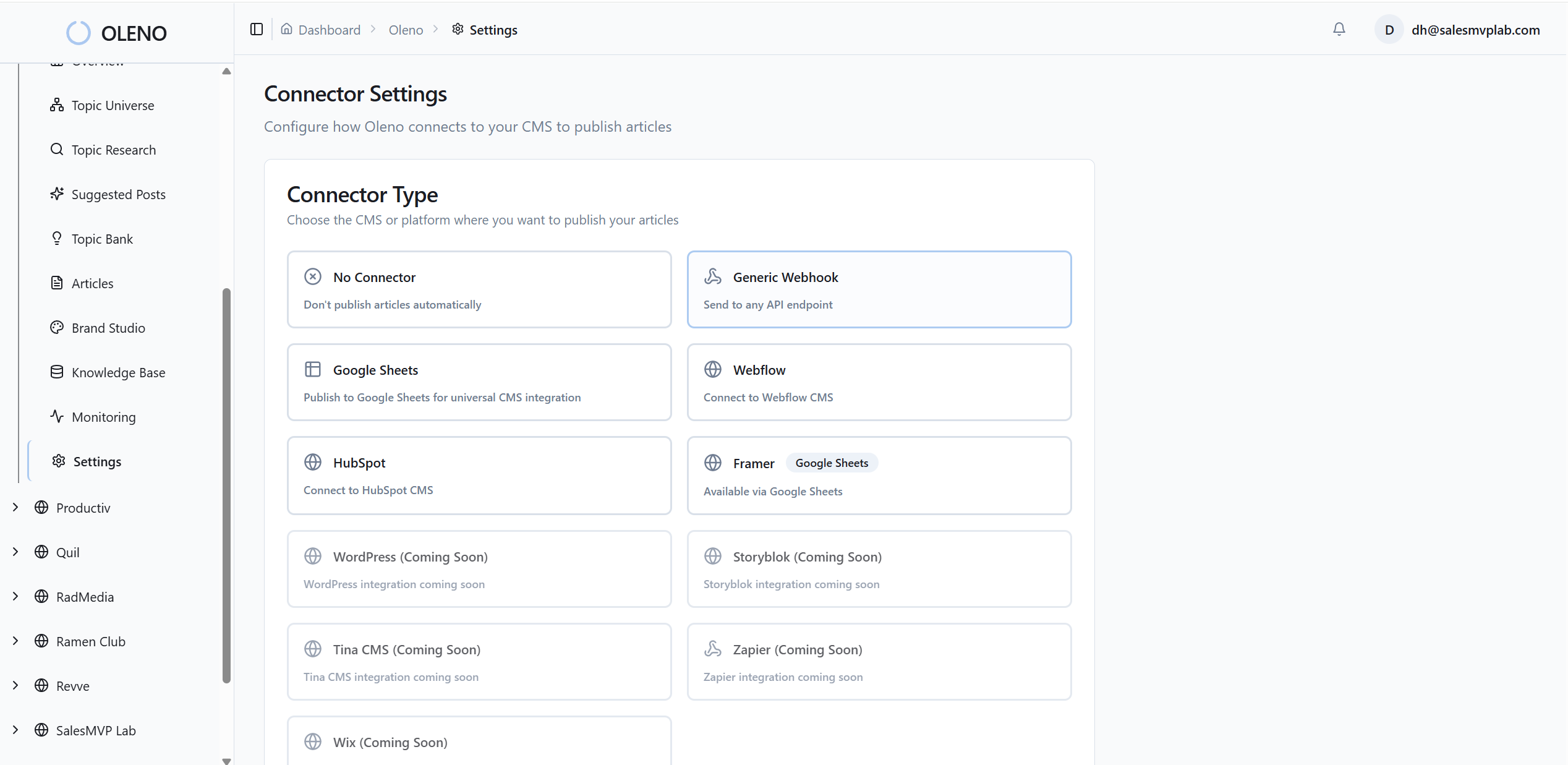
CMS Publishing pushes approved content into WordPress, Webflow, HubSpot, and more as drafts or live posts, so the last mile is not copy-paste. Distribution turns long-form wins into social variants that keep channels active without inventing new positioning. Measurement & System Health watches cadence and quality trends so you spot bottlenecks before they hurt output.
When teams use Oleno this way, the costs we called out earlier shrink. Reviews stop eating the week, risky claims do not slip through, and expansion or retention pieces ship while the window is still open. You feel momentum because the machine keeps running during busy weeks.
3x faster calendar stabilization in quarter one is common when governance removes drift and QA blocks rework. If that is the kind of relief you need, Request a Demo.
Before we wrap, one more thing. If your backlog is ready and you want the execution layer that actually ships governed content on schedule, Book a Demo.
Conclusion
Most teams do not need more ideas. They need a queue that ranks topics by revenue, then a system that ships those topics without drama. Build a revenue-ranked topic backlog, wire a simple scoring model, and enforce governance so speed never turns into risk. The outcome is focus, fewer mistakes, and content that sales trusts. That is how you cut wasted work by about half and see content-to-opportunity conversion lift within a quarter.
About Daniel Hebert
I'm the founder of Oleno, SalesMVP Lab, and yourLumira. Been working in B2B SaaS in both sales and marketing leadership for 13+ years. I specialize in building revenue engines from the ground up. Over the years, I've codified writing frameworks, which are now powering Oleno.
Frequently Asked Questions