Safely Create Competitive Content Without Sacrificing a Consistent Marketing Message

Most comparison pages don’t fail on facts. They fail because one loose sentence gets copied into five other places and your message starts to wobble. You wanted a clean, credible “vs” page. You got a slow leak that spreads across decks, ads, and sales scripts.
I’ve lived that mess. We were shipping at pace, proud of our volume, and a single overreach forced us to pull pages, patch decks, and retrain sellers on new language. It wasn’t a quality crisis in the traditional sense. It was drift. Once you see that pattern, you stop thinking “we need better writers” and start thinking “we need stronger claim governance.”
Key Takeaways:
- Treat comparison content as claims management, not copywriting
- Centralize approved truths, banned patterns, and required proof before writing
- Use fairness templates and consistent criteria to increase credibility
- Quantify correction costs to build urgency for governance
- Lock distribution guardrails so channel variants inherit the same truths
- Use Oleno’s claim control, fairness rules, QA gate, and distribution to reduce risk
Why Most Comparison Content Hurts Your Brand More Than It Helps
Competitive content backfires when it drifts from approved truths, not when a competitor looks strong in one area. Message drift usually starts small, then spreads across channels and time until sales stops trusting marketing. A single overclaimed line on a “vs” page is enough to trigger that slide.

The Real Risk Is Message Drift, Not The Competitor
Message drift is what erodes credibility, creates rework, and confuses buyers. You see it when a “nice-to-have” feature becomes implied parity, or when tone shifts from fair to snark across channels. Teams try to fix it with more reviews, but reviews don’t scale when new variants keep popping up. According to Upland’s guidance on message consistency, consistent language reduces mixed signals and downstream corrections, which tracks with what I’ve seen during high-velocity periods.
The better fix is moving truth into a governed system your pages borrow from. Writers shouldn’t invent claims inside the draft. They should assemble from approved truths, then focus creativity on narrative order and buyer relevance. Prompting alone won’t help here. It increases output volatility and forces humans to carry consistency on their backs.
What Gets Teams In Trouble
Three patterns cause most problems. First, invented advantages that sound great in a line but can’t be backed up by product docs. Second, tone drift, where the blog is measured and fair, but paid ads punch above the truth line. Third, claims with no source of record, so reviewers can’t verify quickly. None looks fatal in isolation. Together they trigger legal review, sales confusion, and frustrating rework.
Governance breaks that cycle. Product truth and claim control define the boundaries. Writers pull from what’s approved, and accuracy checks block fuzzy language. The best part is boring on purpose. You want predictable claims, then compelling storytelling inside those lines.
What Does Safe And Persuasive Really Look Like?
Safe and persuasive starts with anchoring every claim in approved language. You show evidence inside the page, not in a footnote nobody reads. You set fairness rules so comparisons feel credible, and you avoid unsourced superlatives. You don’t give your competitor the benefit of the doubt. You give your reader the benefit of proof.
Buyers notice. Fair, evidence-backed pages increase trust and, oddly enough, persuasion. They’re easier to share internally. Sales wants to link them. Marketing can reuse them without worrying about contradictions later.
Ready to cut the back-and-forth and see a governed approach in action? Request a walkthrough and we’ll show how teams lock claims before they write. Request A Demo
Treat Competitive Content As Claims Management, Not Copywriting
Treat comparison pages like claims documents with a narrative wrapper. Governance defines what’s true, what’s allowed, and what’s off-limits, then writing focuses on clarity, order, and buyer context. Pages assemble from truths, rather than inventing them mid-draft.

Why Governance Comes Before Writing
Writers shouldn’t decide what is true about your product. Governance does. Put product truth, allowed claims, disallowed patterns, and required evidence in one place. Lock it, then route pages to assemble from those primitives. That shift cuts review cycles, because reviewers check against a single source of truth, not taste.
What changes when you do this? Facts stop moving between the blog, paid, and decks. Tone stops drifting. Sales stops asking, “which page is right?” I’m a fan of structure first in general. Oleno leans into this by encoding voice, positioning, product claims, and quality rules up front so execution stays inside the lines.
Where Do Approved Truths Live?
Centralize them in a knowledge base that contains product docs, feature definitions, supported use cases, and exact claim phrasing. Add a red-line list of what not to say. Writers and designers pull from it, not memory. If it’s not in the knowledge base, it doesn’t go in the page.
That one rule eliminates a ton of review churn. It also helps with version control when product evolves, because changes are announced once and then inherited by every future asset. You take the risk out of speed.
How Fairness Strengthens Positioning
Fair comparisons read like you respect the buyer’s intelligence. That boosts credibility, which boosts persuasion, especially in complex deals where multiple stakeholders are scanning for bias. Set fairness controls like consistent evaluation criteria, equal depth per vendor, and an explicit “where we may not be the best fit” note. Research on content consistency from 1WorldSync backs the idea that consistent structure improves trust.
You’re not trying to “win” every row of the table. You’re trying to help a buyer believe you on the rows that matter. That’s what moves deals.
The Hidden Costs Of Overclaiming And Inconsistency
Inconsistency doesn’t just bruise your brand. It compounds cost across marketing, legal, product, and sales. Each correction cycle eats hours, delays campaigns, and erodes internal trust. Three cycles per quarter and you’ve lost a week of execution to cleanup.
Where The Rework And Risk Pile Up
Let’s pretend your team publishes a comparison that implies feature parity you don’t have. Legal flags it. Product submits a correction. Marketing edits the page, the deck, the ad, and the partner listing. Five people, eight hours each, plus the opportunity cost of a delayed campaign. That’s 40 hours gone before you’ve even factored in performance loss.
You also pay a persuasion tax. Readers who saw the first version now see the correction and wonder what else changed. There’s research showing consistency improves engagement and reduces skepticism, even in regulated categories, which maps to the pattern I’ve seen across B2B as well. For a quick window into how consistency shapes engagement, see this analysis on content and message consistency effects on audience behavior from KW Publications.
How Much Does A Single Correction Cycle Cost?
Add it up. Writer time to redraft, editor time to re-QA, legal review, CMS updates, and re-briefing sales and success. You’re easily at 12 to 20 hours per asset, often more when multiple channels are affected. Fix three pages a quarter and you’re losing a week of execution to cleanup. And that’s just the visible cost. There’s also the momentum loss from context switching and the quiet erosion of audience trust.
Multiply across the funnel and the waste becomes structural. It’s not a one-off problem. It’s a system problem.
Why Distribution Conflicts Undo Hard Work
You can have a spotless comparison page and still create confusion if paid ads, product pages, and partner listings use different claims. Distribution is where drift sneaks back in. Set guardrails so channel variants inherit the same truths and evidence. Paid should not invent new claims. Product pages should reuse the same phrasing. Social summaries should link to the evidence. Guidance from Siteimprove on cross-channel consistency matches what we see in practice: alignment at distribution prevents contradiction.
Without guardrails, your funnel becomes a contradiction machine. That’s preventable.
When A Single Line In A Comparison Page Starts A Fire
One stray sentence in a “vs” page can trigger exec escalations, legal reviews, and a scramble to patch assets across channels. The problem isn’t your team’s work ethic. It’s the lack of a system that blocks risky claims before they spread.
The Exec Escalations And Legal Headaches
You know the drill. A VP forwards a screenshot. “Did we really say this?” Legal wants the page pulled. Sales asks for a talk track to explain the change. Product wants to know why the phrasing drifted. Meanwhile your pipeline review is in two hours, and now you’re juggling brand risk and deal risk at the same time.
Heroics aren’t a plan. A governed system that encodes claim rules and blocks risky drafts is the only reliable fix at scale. People are fallible. Systems catch patterns before they ship.
Ever Had To Pull A Page Same Day?
I have. Different context, same pain. Years ago we shipped high-volume content with dozens of contributors. Reach went up fast, but alignment went sideways more than I like to admit. Pulling and patching pages killed momentum and trust that week. That experience is why I push governance first now. Write once, reuse confidently, sleep better.
You don’t need more talent or more meetings. You need deterministic rails.
What It Feels Like When Sales Loses Trust
If sellers stop linking to your comparison pages, you’ve got a credibility problem. They revert to custom decks and side-by-side spreadsheets. Fragmentation grows. Give them assets that are safe by default, evidence rich, and consistent across channels. Sales uses what they trust. You earn that with process, not promises. And you preserve that trust with steady consistency, which echoes the “consistency is queen” idea highlighted by 1WorldSync.
Trust once lost is expensive to rebuild. Better to protect it.
Still firefighting corrections and escalations? There’s a steadier way to run this. If you’re curious how governance reduces those incidents, we can walk through a live setup. Request A Demo
A Practical Workflow For Safe, Persuasive Competitive Content
A safe, persuasive workflow locks product truth first, then uses templates, evidence blocks, and distribution guardrails to keep variants aligned. Writers focus on narrative flow and buyer context, not debating claims in the draft. The result is consistent, credible pages that sales actually uses.
Define Product Truth And Claim Boundaries Once
Start with product truth. Document feature definitions, supported use cases, exact claim phrasing, and banned patterns. Include examples of acceptable and unacceptable wording. Treat this as the single source your pages reference. When product evolves, update this source carefully and announce changes.
Make it easy to pull the right phrasing. That’s how you avoid creative rewrites of facts. It also shortens legal review since reviewers check the source, not the prose.
Use Fairness Templates For Comparisons And Alternatives
Create a standard layout that uses consistent criteria, equal depth per vendor, and a short fit summary at the top. Include a field for “where we may not be the best choice.” That single detail disarms skepticism and makes the rest of the page more persuasive. Standard templates also reduce review friction because everyone knows where claims, proof, and notes must live.
This is how you keep extensions and refreshes consistent over time. You minimize drift by design.
Apply Evidence Blocks And Banned Patterns
Require evidence next to each claim. Screenshots, doc references, support article excerpts, and benchmarks grounded in your knowledge base. Keep a banned claims list that rejects unsourced superlatives or market-share boasts. Evidence blocks raise trust. Banned patterns reduce legal involvement. Both reduce rework. The engagement consistency patterns covered in this study are different context, but the lesson holds: consistency plus proof earns attention.
Evidence isn’t decoration. It’s the core of persuasion in comparison pages.
Add Distribution Guardrails And Channel Notes
Write distribution notes per asset: what can change, what cannot, and required disclosures. Paid ads should not invent language. Product pages should inherit the same truth set. Social summaries should link to the long-form evidence. Your channel variants vary framing, not facts. Recommendations from Siteimprove on cross-channel controls reflect how to operationalize this without constant oversight.
Guardrails feel slow once. They make everything faster after that.
How Oleno Enforces Safe, Persuasive Competitive Content
Oleno enforces claim control, fairness templates, QA gates, and distribution guardrails so small teams can publish confidently. You define truths once, then drafts pull from those truths and pass through quality checks before anything hits your CMS. Consistency stops being a hope. It becomes a property of the system.
Claim Control With Approved Truths And Boundaries
Oleno lets you define approved product descriptions, allowed claims, and red lines up front. Drafts pull from those truths automatically, which prevents invented features and fuzzy language from slipping in. You’re not relying on memory or one editor’s attention. You’re relying on a governed source that never changes between channels.
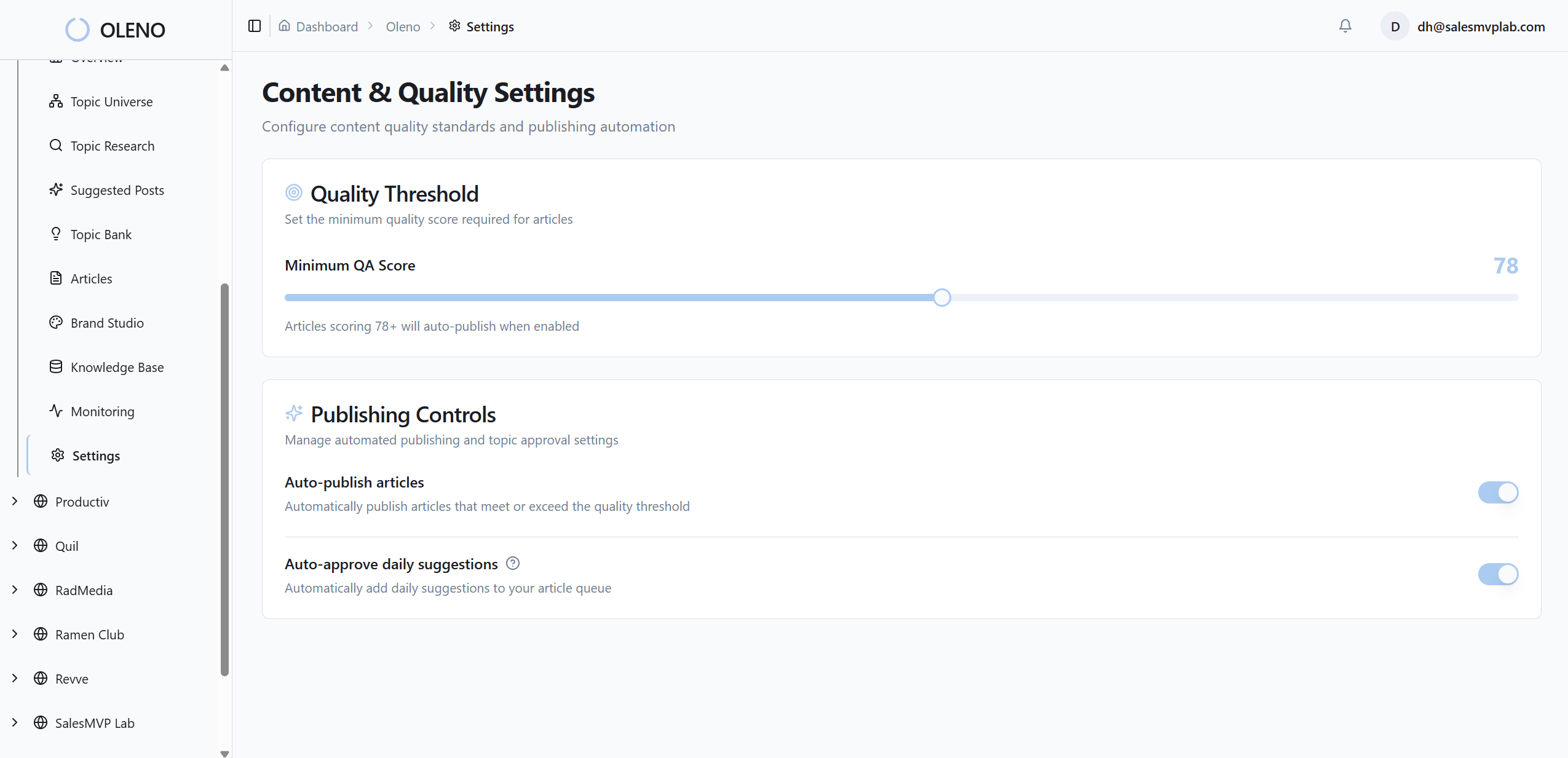
The direct benefit is fewer escalations and faster approvals. Reviewers check alignment to the approved truth set, not style. Facts stop moving as assets travel from blog to ads to decks.
Fairness Rules And Structured Comparison Templates
Competitive and evaluation content in Oleno uses locked templates with consistent criteria and fairness controls. You get structured comparison tables that feel credible and align to your positioning. Equal depth per vendor is built into the format, and “fit” summaries keep context upfront.
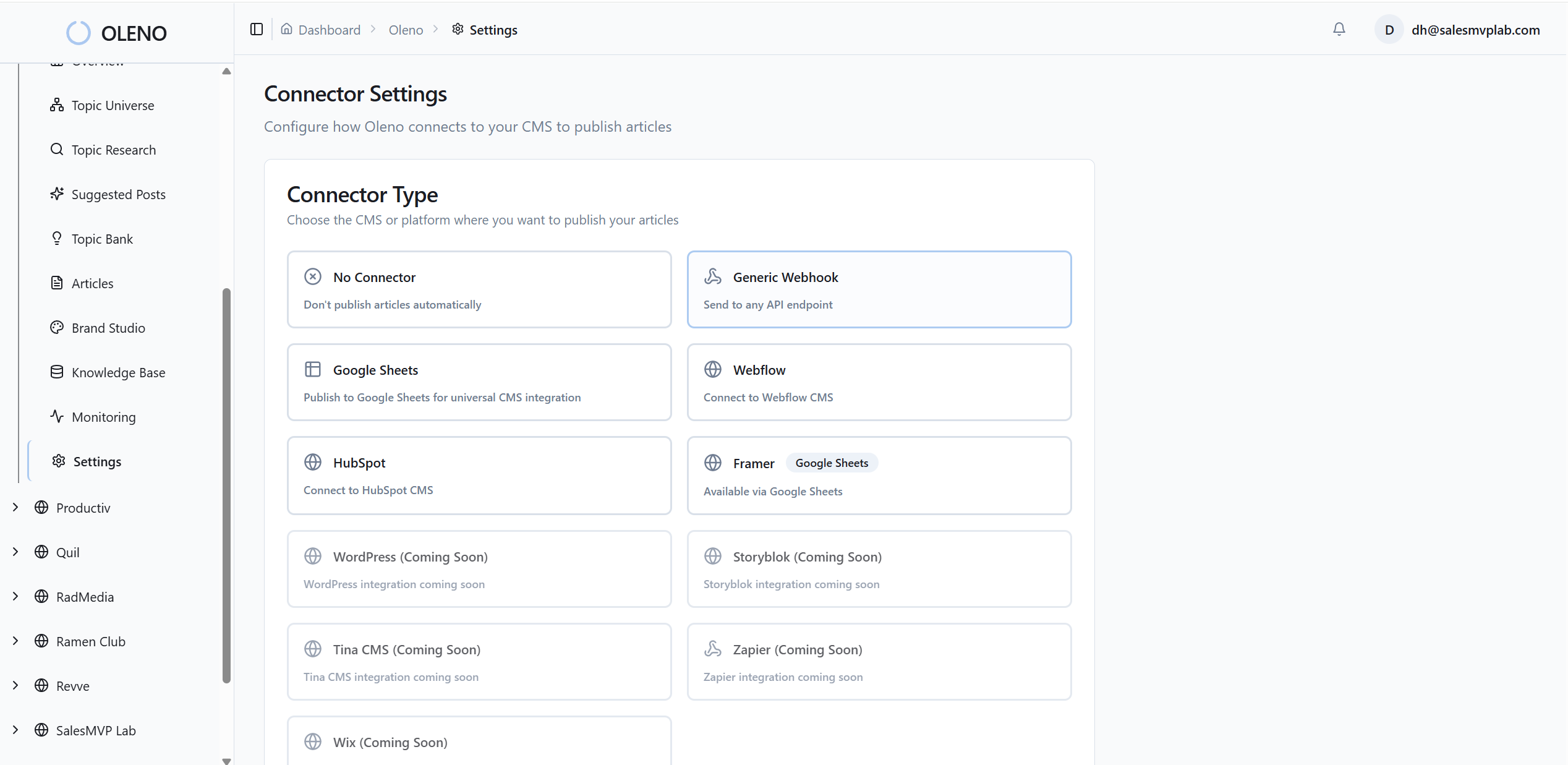
Sellers tend to trust these assets more. Buyers do too, because the structure signals care and balance without watering down your point of view. Oleno keeps that balance steady as you scale.
Automated QA Gate That Blocks Risky Drafts
Nothing publishes until it passes Oleno’s QA gate. Checks include voice and tone alignment, narrative structure, clarity, grounding to your knowledge base, and accuracy constraints. If a draft fails, Oleno remediates and retries until it meets the bar. That’s the difference between hoping quality holds and encoding quality so drift is blocked before it ships.
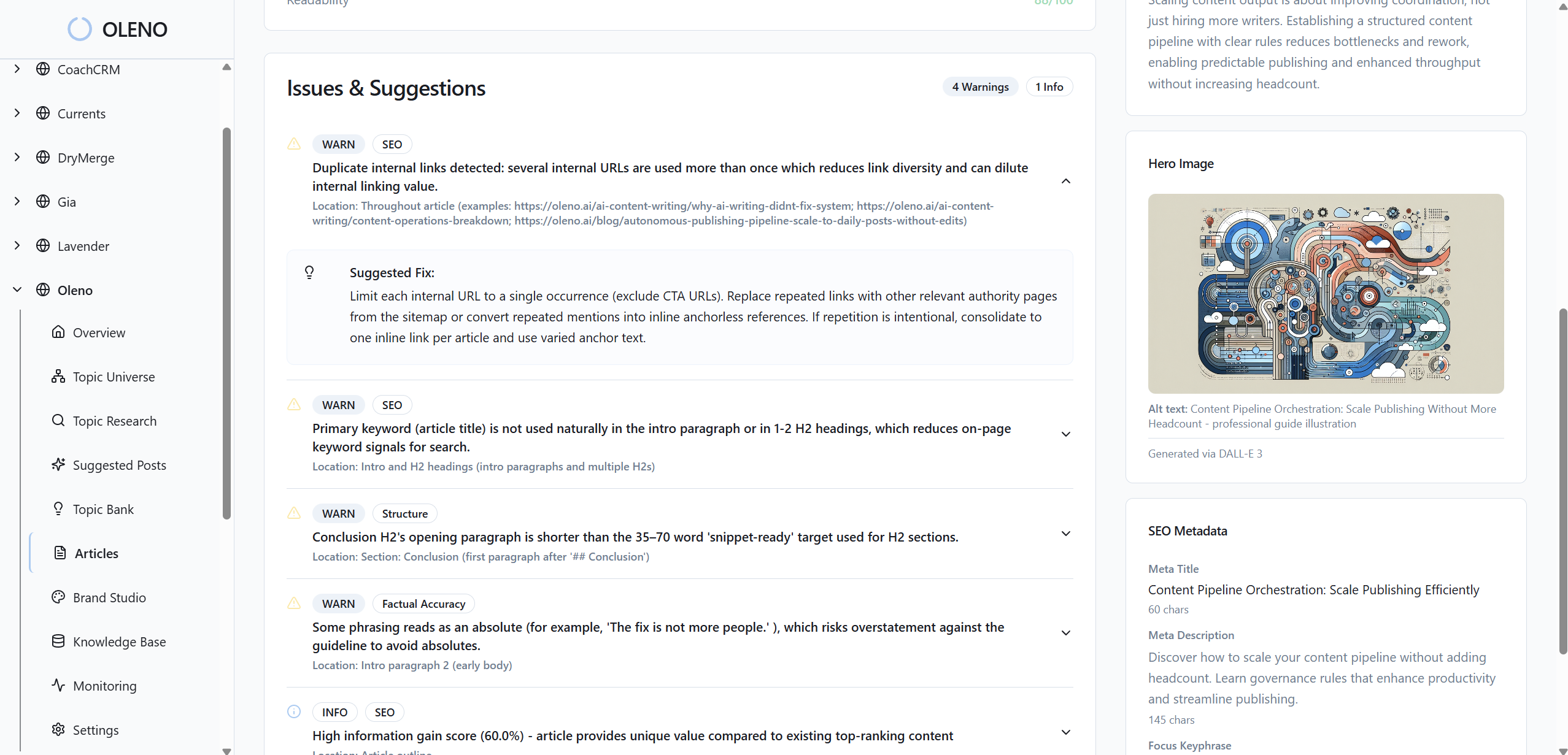
The downstream effect is less rework and far fewer “pull the page” incidents. Your team gets their time back.
Distribution Guardrails And CMS Publishing Without Drift
Oleno publishes directly to your CMS and reuses approved content across channels with cadence and reuse rules. Distribution doesn’t invent new positioning. It formats, schedules, and repurposes what already passed QA. That means your “vs” pages, ads, and product pages speak the same truth set. You get speed without contradiction.
If you want to see how claim control, fairness templates, and QA gates work together in Oleno, we can walk through a real setup end to end. Request A Demo
Conclusion
Comparison content isn’t a writing problem. It’s a claims governance problem that shows up as drift, rework, and lost trust. When you define truths once, enforce fairness, require evidence, and lock distribution guardrails, competitive pages become reliable assets. Oleno turns that approach into a system, so a small team can publish with confidence while keeping the story consistent across every channel.
About Daniel Hebert
I'm the founder of Oleno, SalesMVP Lab, and yourLumira. Been working in B2B SaaS in both sales and marketing leadership for 13+ years. I specialize in building revenue engines from the ground up. Over the years, I've codified writing frameworks, which are now powering Oleno.
Frequently Asked Questions