Scaling Agency Content: Strategies for Effective Delivery

Scaling agency content breaks for a pretty simple reason. Most teams think the issue is writing capacity. Usually not it. The real issue is that once you add more writers, editors, freelancers, clients, and approvals, the whole thing starts wobbling. Scaling agency content is less about producing more words and more about keeping context, quality, and approvals from falling apart as volume rises.
I've seen both sides of this. Back in 2012-2016 I ran a website called Steamfeed. At our peak, we hit 120k unique visitors a month. We got there because we had depth and breadth at the same time, and we had enough structure to keep the machine running. Later, in small SaaS teams, I saw the opposite. Limited time. Lots of demand. No real system. That's where scaling agency content usually falls apart too.
Key Takeaways:
- Scaling agency content fails when coordination cost gets bigger than creation cost
- More writers won't fix weak briefs, unclear positioning, or messy approvals
- Agencies that scale well treat content like a system, not a set of one-off projects
- Brand consistency matters more now because LLMs reward repeated, clear signals
- The best fix is tighter inputs, tighter workflows, and fewer judgment calls in the middle
- Once the process is stable, volume gets a lot easier to add
Why scaling agency content breaks earlier than most teams expect
Scaling agency content usually breaks before teams think it will. Not because the writers suddenly got worse. Because complexity shows up early, and revenue rarely catches up right away. A team can handle a few clients with hustle, shared context, and late nights. Past that point, the same loose process starts creating delays, rewrites, and quality drift.
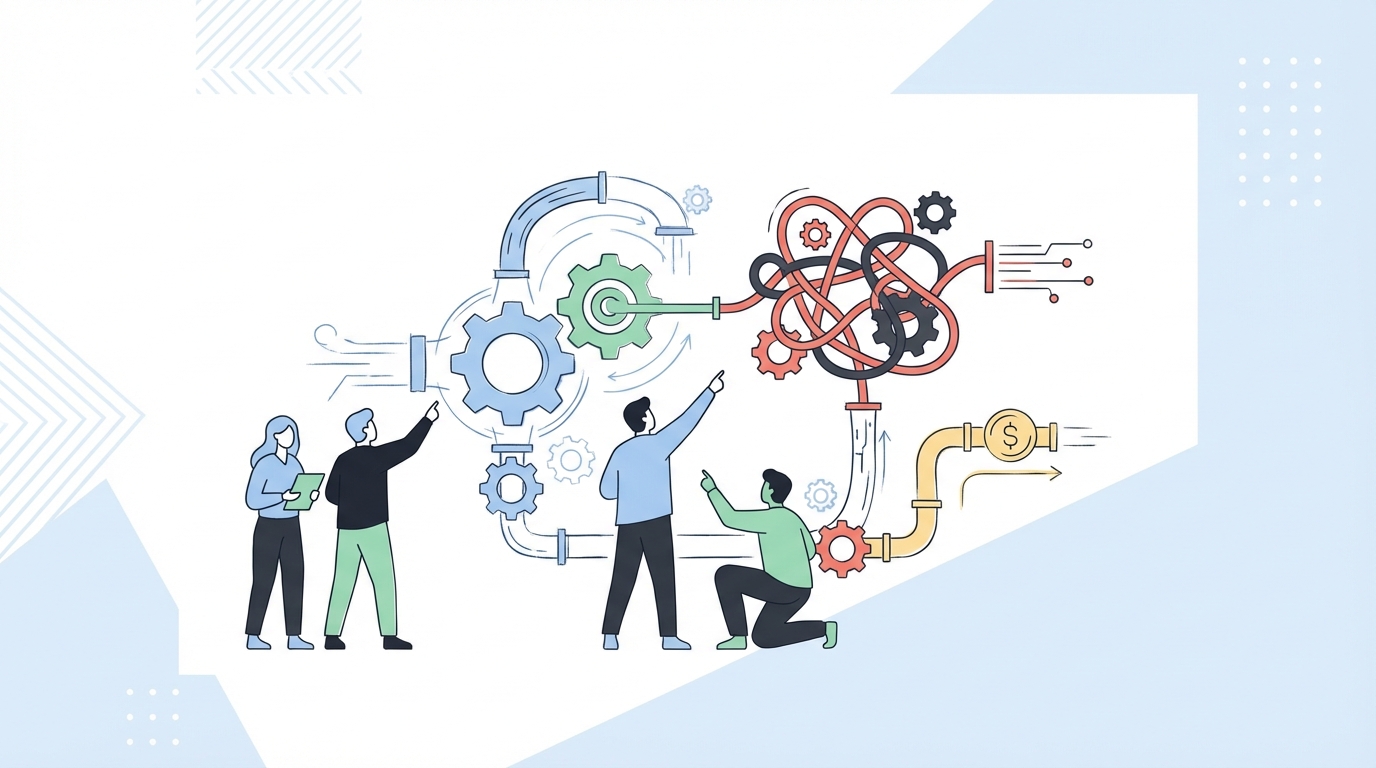
More output usually creates more confusion
A lot of agency leaders assume the path is obvious. Get more clients. Hire more writers. Add an editor. Maybe a strategist. Then keep filling the pipeline. On paper, sure, that sounds right.
In practice, it gets messy fast. Each client has different positioning, different approval habits, different SMEs, different goals, different definitions of success. One client wants SEO traffic. Another wants thought leadership. Another wants bottom of funnel comparison pages. Another says they want demand gen, but really they want someone to rescue a random quarterly campaign. So your team isn't just producing content. They're translating chaos.
That translation layer is where the cost hides. Writers wait for context. Editors rewrite weak first drafts because the brief was thin. Account managers chase approvals. Strategists keep re-explaining the same messaging on every kickoff call. That's the part most shops underprice.
The bottleneck isn't writing speed
Most people think scaling agency content is about producing faster. I don't think that's the right frame. Fast writing only matters if the work is pointed in the right direction and gets approved without getting torn apart.
The real bottleneck is all the invisible stuff around the writing. Positioning. Source material. Product accuracy. Audience clarity. Review cycles. Handoffs. When those are loose, every draft becomes a negotiation. And when every draft becomes a negotiation, margin disappears.
I've seen this with tiny teams and bigger ones. A founder or agency lead can often write the first dozen great pieces because they hold all the context in their head. Then the business grows. Now they can't write everything. Someone else takes over. Quality dips. Output slows down. The founder says the writer isn't strong enough. Sometimes that's true. A lot of the time, the system is what's weak.
Small mistakes compound into delivery risk
One weak brief isn't a disaster. One off-brand article isn't a disaster either. One missed CTA, one vague argument, one generic intro, one unsupported product claim. Fine. You can survive that.
But stack that across 20 clients and 60 pieces a month, and you've got a real problem. A broken production system doesn't fail all at once. It leaks margin and trust a little at a time. You feel it in late delivery, frustrated clients, endless revisions, and a team that starts every week already behind. That's exhausting. And if you're the Head of Marketing or agency owner carrying the whole thing, it starts to feel like content can never become predictable.
The real problem with scaling agency content is fragmented execution
Scaling agency content usually fails because execution gets fragmented. Not because teams run out of ideas. Most agencies have enough talent. Usually enough ambition too. What they don't have is one operating model that keeps voice, positioning, product truth, and workflow aligned across every account.
Every contributor creates a new context gap
This is the part people don't like admitting. Every new contributor creates a context gap.
A freelancer doesn't know the account like the strategist does. The strategist doesn't know the product as well as the client. The editor doesn't know what got promised in the sales call. The account manager doesn't know why the writer made a certain argument. The client reviewer wasn't in the kickoff. So they react to a draft without seeing the reasoning behind it.
Now multiply that by a bunch of clients. That's why scaling agency content feels harder than it should. Not because the people are bad. Because the knowledge is trapped in heads, Slack threads, Loom videos, docs, and scattered comments.
A lot of teams try to patch this with more meetings. Bad trade. Meetings don't fix missing systems. They just slow the week down.
Prompting creates output, but not reliability
AI made this weirder. It made first drafts faster, which is useful. But it also gave agencies a false sense that production got solved.
It didn't.
Prompting creates output. It doesn't create a dependable operating system. Someone still has to decide what content should exist, what angle to take, which client message matters most, what language is off limits, what claims are accurate, and what stage of the funnel the piece is supposed to influence. Then someone has to review it all.
So yes, AI can cut drafting time. But if your agency workflow is still prompt, edit, reprompt, copy, paste, review, rewrite, approve, publish, you're still carrying the system manually. That's why a lot of teams feel busy while still missing publish targets.
There is a case to be made for prompt-based workflows in small bursts. For ad hoc work, sure. For sustained scaling agency content across many accounts, it gets shaky fast.
GEO raises the bar for consistency
There used to be more room for inconsistency. You could publish a decent article, target a keyword, get some links, and call it a day. That's less true now.
LLMs don't just look at one page. They synthesize patterns across lots of pages and lots of sources. So if your client messaging changes every few pieces, if the point of view is generic, if the product explanation is fuzzy, if the content feels stitched together by different people with different assumptions, you risk getting ignored. That's the hidden shift with GEO.
So the old agency move of just getting more words out the door is weaker than it used to be. Consistency across scale matters more. Repetition matters more. Clear positioning matters more. That's why scaling agency content now is as much about governance as it is about writing.
What scaling agency content actually costs when the system is loose
Scaling agency content gets expensive when the system is loose, and most teams don't track the real cost. They look at writer cost per article and miss the coordination tax around it. The spend shows up in rewrites, approvals, lost context, slower publishing, and clients who stop trusting the process.
Rewrites are usually a systems tax
If a draft needs a light edit, no big deal. That's normal. But when your editor is reworking the angle, rewriting the intro, fixing the CTA, tightening the positioning, swapping examples, and correcting product details, the issue isn't just the draft.
The issue is upstream.
Most rewrites come from one of four problems:
- The brief didn't carry enough context
- The audience wasn't clear enough
- The client position wasn't sharp enough
- The review standard wasn't defined early
I've watched this happen over and over. A writer spends four hours on a piece. An editor spends ninety minutes changing the structure. The account lead spends thirty minutes defending it to the client. The client sends back comments that could have been prevented in the brief. Suddenly that "efficient" article isn't efficient at all.
Approval chains destroy cadence
You can't scale content if every asset sits in limbo. Simple.
A lot of agencies accept slow approvals as a normal part of the business. I think that's a mistake. Slow approvals don't just delay one post. They break planning, create bottlenecks, and force your team into reactive mode. Then your calendar becomes fiction.
For a Head of Marketing on the client side, this is brutal too. They want consistent GTM content. They want campaigns supported. They want feature launches, comparison pages, FAQs, and thought leadership all moving. But if the system depends on five separate human nudges every time, output becomes fragile.
According to the Content Marketing Institute, documented process is strongly tied to content success and consistency (Content Marketing Institute research). That tracks with what I've seen. Teams with a defined process don't just publish more. They waste less time deciding the same things again and again.
Generic content creates a growth ceiling
This one is easy to miss because generic content can look polished. It can even rank sometimes. But it usually doesn't move the business much.
When scaling agency content gets rushed, teams default to safe education. Broad intros. Broad advice. Broad examples. Nobody objects to it, which is exactly the problem. If nobody objects, nobody remembers it either.
For GTM and demand gen work, generic is expensive. It misses pipeline intent. It weakens differentiation. It creates a body of work that doesn't reinforce the same market signal. And for GEO, that's dangerous. Google and LLM-driven experiences increasingly reward original, people-first, reliable content with clear expertise (Google Search guidance).
If your agency is producing a lot of "fine" content, you might already be hitting this wall. Output is happening. Results aren't compounding.
A better system for scaling agency content
Scaling agency content gets easier when you stop treating every article like a custom project. The better model is to standardize the thinking, not flatten the writing. You want tight inputs, clear workflows, and repeatable review rules. That's what lets a small team produce a lot without sounding generic.
Start with positioning before production
A lot of teams start with the calendar. I wouldn't. Start with the message.
If the positioning is fuzzy, your writers will guess. If your differentiators are weak, the content will drift to generic education. If your audience language isn't documented, every contributor will bring their own assumptions. That's why the first fix for scaling agency content isn't more headcount. It's clearer strategic inputs.
For each client, lock down a few things first:
- What market do they want to shape
- What do they believe that competitors don't
- What claims are safe and accurate
- Who exactly are they talking to
- What outcomes matter by funnel stage
Once those are clear, briefs get tighter. Drafts get better. Reviews get faster. The whole machine settles down.
Build repeatable briefs that reduce guessing
The best briefs do one thing really well. They remove avoidable judgment calls.
You still want writer creativity. Of course. But you don't want writers guessing about audience, angle, CTA, product truth, examples, or search intent every single time. That's where inconsistency comes from.
A good repeatable brief for scaling agency content should cover:
- the audience and persona
- the client's point of view
- the use case or funnel job
- the core argument
- examples or proof points
- product boundaries
- desired CTA
- structural expectations
This sounds basic. It is basic. That's why it works.
Honestly, most content quality issues start before the draft. People like blaming writers because the draft is visible. The upstream brief is usually where the real miss happened.
Reduce handoffs and define review ownership
More reviewers rarely means better work. It usually means slower work with blurrier accountability.
If you're serious about scaling agency content, decide who owns what. One person owns strategic direction. One person owns editorial quality. One person owns client communication. Beyond that, be careful. Too many cooks is real. I've seen teams bury decent content under endless layers of preference.
You also need to define what counts as a valid review comment. That's a small thing that makes a huge difference. "I don't love this" is not useful feedback. "This doesn't reflect the client's onboarding positioning" is useful feedback. One is taste. The other is a standard.
That shift matters because scale dies in subjective review loops.
Use structured variation instead of reinventing everything
You don't need every asset to be built from scratch. You need variation with control.
For growth-stage SaaS teams, this is especially important. The Head of Marketing isn't asking for one brilliant article. They're asking for consistent GTM output across launches, comparisons, FAQs, product education, and acquisition content. And they need it without hiring a mini newsroom.
So build content from repeatable patterns:
- one pattern for acquisition content
- one for product education
- one for buyer decision content
- one for thought leadership
- one for launch support
Then vary the audience, examples, use case, and proof. That gives you scale without flattening everything into mush.
Discover how leading teams govern scaling agency content without adding more meetings.
How Oleno supports scaling agency content without adding coordination chaos
Scaling agency content gets a lot more manageable when strategy, voice, and product truth are turned into operating rules. That's the role Oleno plays. Instead of relying on scattered prompts and human memory, it uses defined studios and controls to keep output aligned. For lean teams, that's the difference between momentum and constant cleanup.
Governance keeps client messaging from drifting
This is where a lot of tools fall short. They help with drafting, maybe editing, maybe SEO checks. But they don't hold the strategic center.
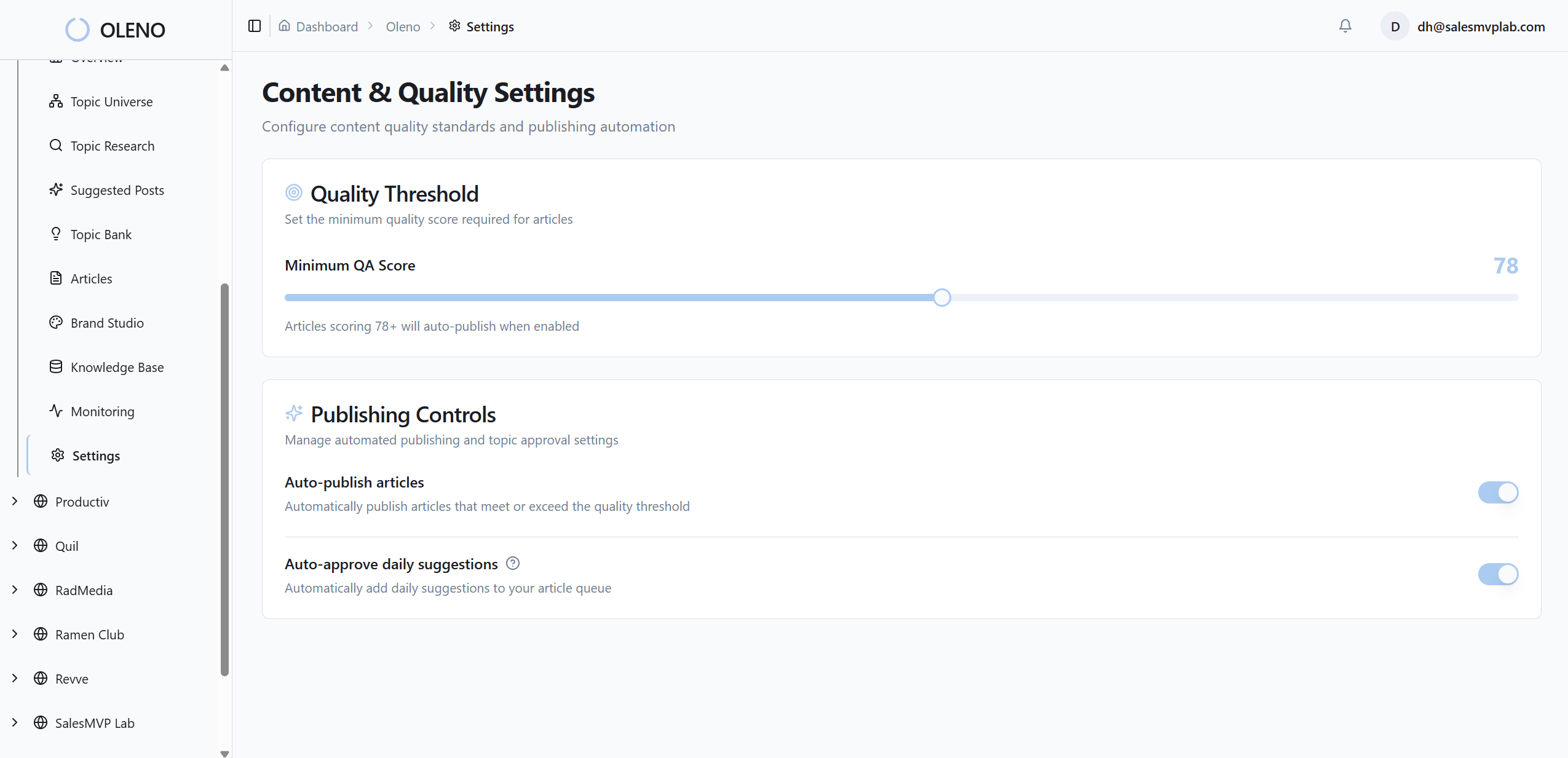
Oleno does that through governance. Brand Studio stores tone, style, vocabulary, CTA rules, and exemplar snippets so voice doesn't drift as volume rises. Marketing Studio encodes key messages, category framing, and narrative structures so content argues a real position instead of falling into safe, generic education. Product Studio stores approved product descriptions, supported use cases, boundaries, pricing, and screenshots so content stays accurate.
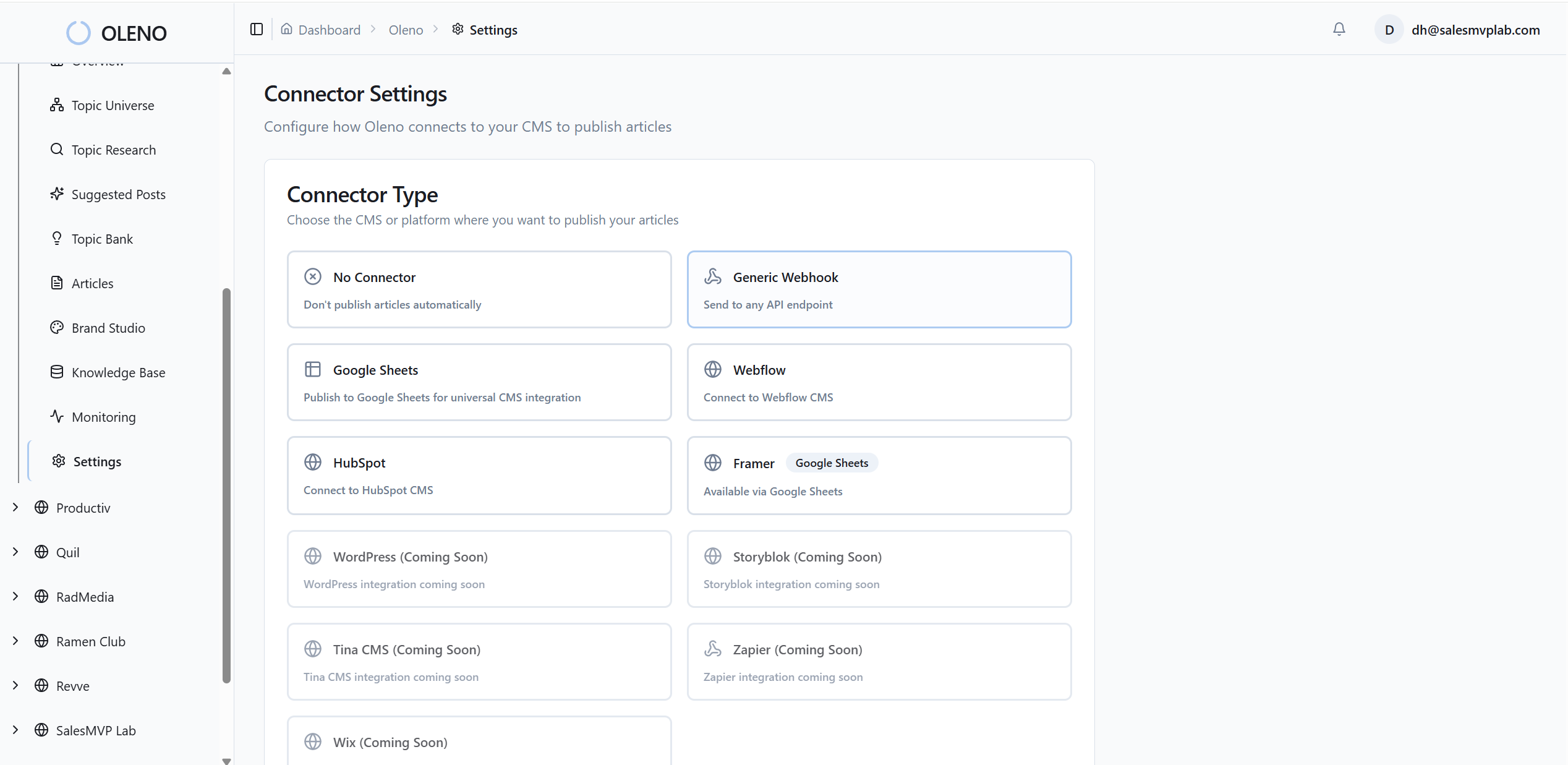
That's a big deal for scaling agency content. Especially when you're supporting GTM execution across launch content, product pages, evaluation content, and acquisition pieces at the same time. You don't want every contributor re-learning the client's story from scratch.
For teams that live in review cycles now, this is the appeal. Less rebriefing. Less rewriting. More consistency.
Start automating governed content execution with Oleno.
The system turns planning and production into a steady cadence
Oleno also addresses the operational side. Programmatic SEO Studio creates acquisition content through a locked pipeline that discovers topics, builds briefs, drafts, scores, enhances, and publishes on a steady cadence. The Orchestrator runs jobs by blueprint and quota, so the work keeps moving without someone manually pushing every asset through the line. Storyboard allocates content across audiences, personas, products, and use cases based on coverage gaps and planning weights.
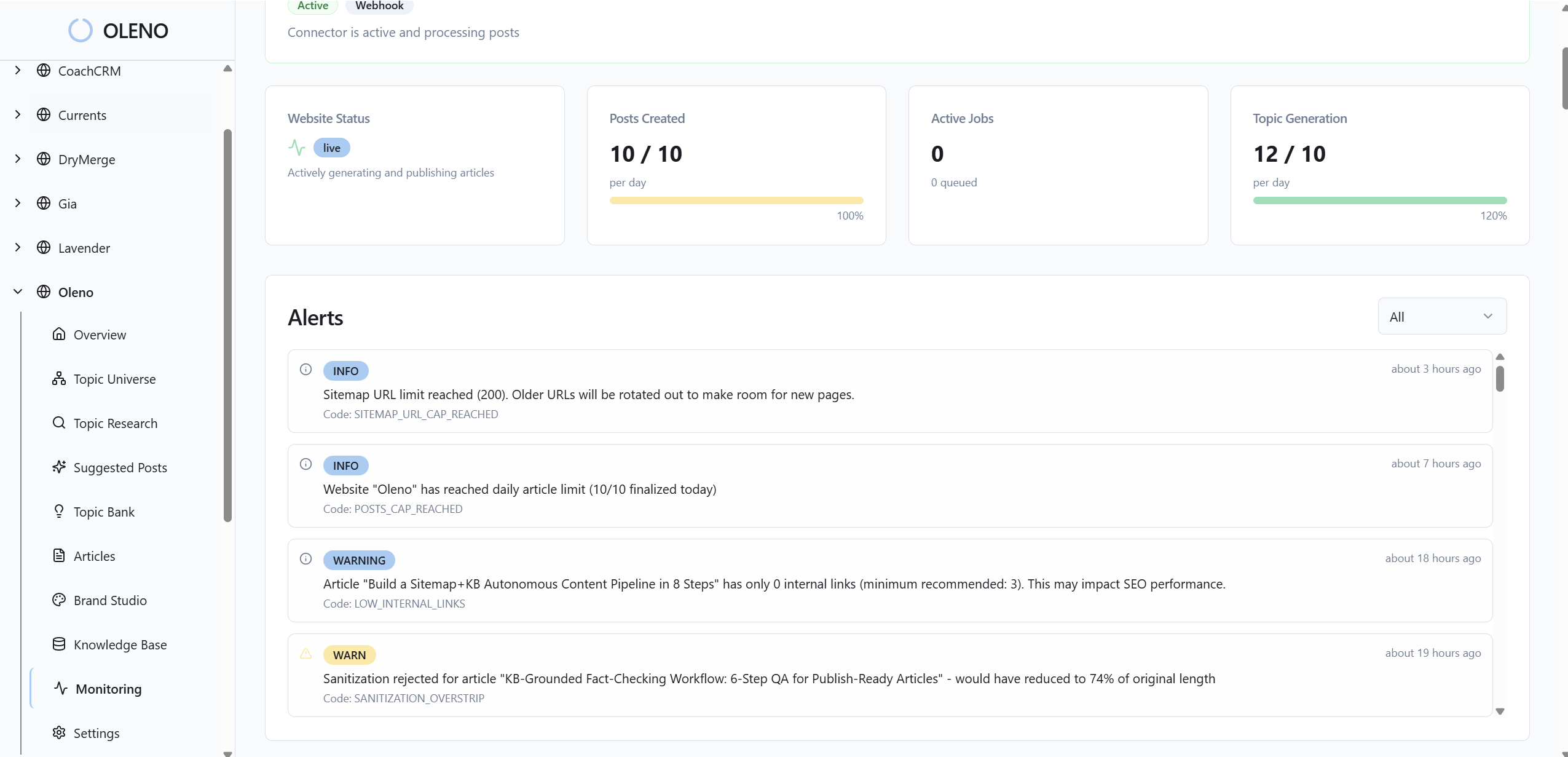
That matters because scaling agency content usually breaks in the handoff layer. Planning sits in one place. Briefing sits in another. Drafting sits in another. Publishing sits somewhere else. Oleno closes those gaps by treating execution as one system.
And then Quality Gate checks whether the article actually meets the bar on voice, structure, clarity, grounding, and SEO before it moves forward. That's important. More output only helps if the floor stays high. Oleno doesn't replace judgment on strategy, and it doesn't invent product truth for you. It enforces the rules you define.
Ready to transform scaling agency content into a steadier system? Get started here.
Scaling agency content works when the system carries the weight
Scaling agency content can work really well. I've seen the upside firsthand. Volume creates reach. Depth creates trust. Consistency makes the whole thing compound. But none of that happens if your process depends on a few smart people remembering everything all the time.
That's the shift. Stop asking how to squeeze more output from the same messy workflow. Ask what kind of system would let good work happen repeatedly without so much hero effort. For small SaaS marketing teams and the agencies serving them, that's usually the difference between constant resets and real momentum.
About Daniel Hebert
I'm the founder of Oleno, SalesMVP Lab, and yourLumira. Been working in B2B SaaS in both sales and marketing leadership for 13+ years. I specialize in building revenue engines from the ground up. Over the years, I've codified writing frameworks, which are now powering Oleno.
Frequently Asked Questions