Scaling Marketing Across Products: Modular Narrative & Cost Allocator

I’ve worked on both sides of this. The “we have one product” scrappy simplicity and the “we now have a portfolio, plus two regions quietly doing their own thing” complexity. The second one breaks faster than people expect. Not because the ideas are bad. Because the story fragments and your team writes the same thing ten different ways.
When I ran Steamfeed back in the day, we grew by combining breadth with depth. Later, at PostBeyond and LevelJump, I learned the painful lesson: if the narrative isn’t centralized, small teams drown in rework. At Proposify, I watched great content miss the mark because it drifted too far from product truth. Multiply that by multiple products and you’ve got a duplication tax you don’t even see.
Key Takeaways:
- Centralize narrative atoms (claims, proof, disallowed lines) and let product teams parameterize locally
- Create a reuse-first rule: if 70–80% is shared, adapt before you draft net-new
- Encode governance in templates and QA gates so claims don’t drift during crunch time
- Model a simple, weighted cost allocator to reduce budget fights and fund shared work
- Treat demand gen as a system: steady cadence, consistent narrative, compounding coverage
- Use templates with locked sections plus IDs for canonical claims to shorten review cycles
Stop Treating Each Product As A Separate Island
Treating each product as its own content island looks efficient. It isn’t. You quietly rebuild the same explainer in parallel, drift the message, and triple your review time. A shared narrative layer with reusable proof reduces edits and speeds launches. Think canonical claims that travel, with local examples swapped.

The Hidden Duplication You Do Not See
The duplication rarely shows up on a spreadsheet. It shows up as five versions of “What We Solve” written by different people in different weeks, each with slightly different claims. No one intends it. It just happens because ownership is unclear and reuse isn’t enforced by the system.
You see it in sales one-pagers, product pages, decks, and comparison articles. Teams rebuild the same structure, then fight review cycles because the voice and claims don’t match what legal approved two months ago. Multiply that by three products and two regions and you’ve created a shadow content factory that exists purely to re-state the same ideas.
The fix isn’t more meetings. It’s a shared layer of narrative atoms, approved claims, proof, disallowed lines, plus templates that lock sections requiring consistency. Local teams still plug in product specifics, screenshots, and pricing context. But the backbone stays stable, which keeps speed without sacrificing truth.
Why Shared Narrative Beats Product Silos
A shared story sets the floor. You define canonical claims, disallowed claims, and proof once, then stamp that backbone into reusable templates. When product teams ship, they’re not inventing narrative, they’re applying it. Launches move faster because the risky parts (claims and proof) are solved upstream.
If you need a primer on portfolio messaging across markets, this aligns with the discipline described in Dragon360’s portfolio messaging strategy guide. The point isn’t to eliminate nuance. It’s to centralize what must be true, everywhere, every time.
The punchline: silos feel fast in week one and cost you months by quarter’s end. Shared narrative feels heavier upfront and pays you back with every reuse, refresh, and region that needs to ship.
What Should Be Centralized Versus Decentralized?
Centralize anything that expresses who you are and what you can claim. That means voice rules, canonical claims and proof, templates, and QA gates. Decentralize what actually varies by product: specific use cases, region-specific examples, screenshots, pricing context, and competitive nuance that truly differs.
Here’s the rule of thumb I give teams: if the message applies to multiple products with parameter changes (names, screenshots, examples), keep it in the shared layer. Only split when the narrative itself diverges. Use a simple decision matrix to avoid “vibes-based” choices that explode maintenance later.
The Real Constraint Blocking Cross-Product Scale
Cross-product scale breaks under fuzzy ownership, drifting claims, and budget debates. You’re not short on ideas; you’re short on a system. Governance defines who owns the shared layer. Reuse rules prevent duplication. A fair allocator funds what’s shared without weekly escalations. Clarity speeds everything.

Fragmented Ownership And Drifting Claims
When writers carry the system in their heads, the system changes every week. People leave. Prompts drift. A product marketer copies a good paragraph from an old deck and tweaks a verb; six months later, you’ve got three tolerated versions of the same claim and none match what legal signed off.
Governance isn’t a committee; it’s clarity. Who owns the canonical claims and proof set? Where do the rules live? What’s the SLA for reusing versus net-new drafting? Simple answers prevent friction. And when you encode those answers in templates and QA gates, consistency stops depending on memory.
This is where teams get stuck with AI. Prompting produced text. It didn’t run the system. You still needed judgment on what’s allowed, where it fits, and what to publish. Rules beat vibes. Every time.
Budget Fights Without Formulas
Budget follows volume or whoever shouts loudest. Shared work gets underfunded because it’s everyone’s responsibility and no one’s line item. The solution isn’t precision; it’s a defensible rule you can run quarter after quarter without renegotiation.
Use a weighted allocator for shared assets. Blend time contributed, expected impact, and value to the business. There’s research showing dynamic allocation beats static splits in shifting portfolios; see Marketing Science’s 2020 paper on dynamic resource allocation. You don’t need a PhD model. You need something repeatable enough to outlast leadership changes.
The meta-goal: stop arguing the last 10%. Agree on the formula, then iterate weights quarterly. That consistency alone removes a surprising amount of friction.
The Duplication Tax You Are Already Paying
Duplication hides in 17-hour explainers and “quick” regional rewrites that start from zero. Centralizing narrative atoms and using modular templates can cut drafting time and reviews in half. Those saved hours become the comparison pages and product-led walkthroughs you never get to. Opportunity cost is real.
How Much Rework Are You Funding Today?
Let’s pretend three product lines each create a “What We Solve” explainer quarterly. Four hours to brief, eight to draft, three to review, two to publish. That’s 17 hours per product, 51 hours total. Nobody blinks because it’s “just how we work.” Until you add it up.
Now reuse the shared layer. Keep narrative atoms and a modular template with locked sections. Drafting drops to three hours per product because the risky, slow parts are predefined. Reviews shrink by half because claims and voice are already approved. You’ve saved roughly 28 hours this quarter on one asset type.
Structured authoring reduces rework. If you want more background on why, the University of Hong Kong’s research on content reuse and structure outlines how standardization reduces cycle time and error rates across complex document sets. We’re applying the same idea to marketing assets.
When Localization Becomes Parallel Content Factories
Translation is not adaptation. Without reusable claims and locked sections, regions rebuild assets and legal restarts the review every time. Local teams aren’t wrong; they lack a safe way to customize without breaking the narrative.
Standardize shared sections, parameters, and review gates. Let regions swap examples, customer names, and CTAs inside those boundaries. Costs drop, turnaround shrinks, and legal reviews focus on what’s actually new. You’ll publish faster without rolling the dice on risk.
The side effect you’ll like: when regions get a safe template, they stop inventing local versions that drift off-message. Less firefighting. Fewer weekend edits.
Still dealing with this manually? There’s a better way to run the engine. Try Using An Autonomous Content Engine For Always-On Publishing.
What It Feels Like When The Narrative Drifts
Narrative drift doesn’t announce itself. It shows up as late-night edits, contradictory pages, and anxious approvals. Lock allowed claims and voice rules, enforce them at publish time, and assign a reuse owner. Suddenly, launches feel boring in a good way. Less chaos. More confidence.
The 3am Edit Cycle No One Wants
You’ve lived this. Launch eve. Five pages contradict each other on the same benefit. A sales leader drops a screenshot in Slack. Legal flags a claim on the product page that isn’t in the datasheet. Now you’re editing live with twenty people in a doc. No one’s sleeping.
This happens when allowed claims, voice rules, and proof are suggestions, not gates. When you encode those rules into templates and block publishing unless the content complies, the late-night scramble becomes rare. Not gone forever, rare. Which is a very different life.
And when drift happens, and it will, teams fix the shared source of truth first, not patch one asset. That’s how fatigue stops compounding.
The Politics Of Approvals
Approvals drag when every draft feels like a new dialect. If claims and visuals change every time, feedback becomes taste. That’s slow and emotional. Decide what’s frozen in the template and what fields are editable. Lock shared sections. Let teams tailor examples and CTAs.
Also decide who owns reuse. In the chaos, reuse gets skipped because accountability is fuzzy. Assign a reuse owner with an SLA. If an asset is 80% shared, reuse gets attempted before net-new drafting. A simple rule, a clear owner, fewer headaches. People stop fighting the system because the system is clear.
A Modular Way To Scale Marketing Across Products
Modular scale starts with a portfolio-to-need matrix, a canonical layer of narrative atoms, and templates that encode what’s shared versus local. Add a simple cost allocator for shared assets. You don’t need perfection. You need a structure teams can follow without heroics.
Map Your Product Portfolio To An Audience Need Matrix
Put products on one axis, audience jobs-to-be-done on the other. Mark where one narrative serves many. You’ll see the overlaps that belong in the shared layer and the pockets of true specialization that deserve local treatment. This is not busywork. It’s a heatmap for reuse.
Start with three questions. Which jobs recur across products? Which claims are identical, aside from examples and screenshots? Which assets have the largest funnel impact if standardized? Prioritize those overlaps first. Reuse before drafting anything net-new. It’ll feel restrictive for a week. Then very freeing.
If you’re short on time, do a rough version. Get to 80% clarity. Update quarterly as reality changes. The goal is repeatability, not elegance.
Define Narrative Atoms And Canonical Messaging
Break your story into atomic parts: claims, proof points, specific examples you’re allowed to use, and disallowed lines. Give each atom an ID and store them in a canonical layer. Every brief references atom IDs. Every draft cites them. This is how truth stays synchronized at scale.
Two things happen when you do this well. Reviews get shorter because you’re reviewing assembly and context, not arguing adjectives. And drift is easier to spot because the atoms are visible. If a field team needs to change an atom, they trigger an update to the shared layer, once, then everyone benefits.
Don’t overcomplicate it. Start with ten to twenty atoms that most assets use. Expand as you see patterns. You’ll build a library that actually gets used.
Design A Modular Asset Taxonomy And Templates
Create asset families with locked shared sections and parameterized fields. Examples: POV explainers, problem-framing guides, product-led walkthroughs, and comparisons. Each template specifies what’s frozen (claims, proof blocks, narrative spine) and what varies (product names, screenshots, examples, CTAs). It also encodes QA checks that block publish if rules aren’t met.
Boxes to tick before you ship: voice alignment, narrative structure sanity, clarity, grounding in your knowledge base, and SEO/LLM-readable structure. Define them once. Apply them every time. Interjection. This is where teams claw back days per asset.
Fold cost allocation into your taxonomy. For each shared asset, allocate cost using a weighted model, say 40% time contributed to creation and maintenance, 30% projected impact (traffic or assisted pipeline proxies), 30% value (revenue share or TAM relevance). Review weights quarterly. Keep the rule, not the argument.
How Oleno Operationalizes Modular Narrative And Cost Allocation
Oleno runs the operational layer you keep trying to manage in docs and meetings. Governance codifies narrative atoms and claim boundaries. Job-based studios produce reusable asset families on a steady cadence. QA gates and controlled publishing reduce rework and drift. You define direction; the system executes.
Governance Codifies The Narrative Atoms And Claim Boundaries
You define voice, allowed claims, disallowed lines, and product truth once. Oleno applies those rules to every brief and draft. No guesswork. No relying on who remembers last quarter’s legal notes. The shared layer becomes enforceable instead of optional.
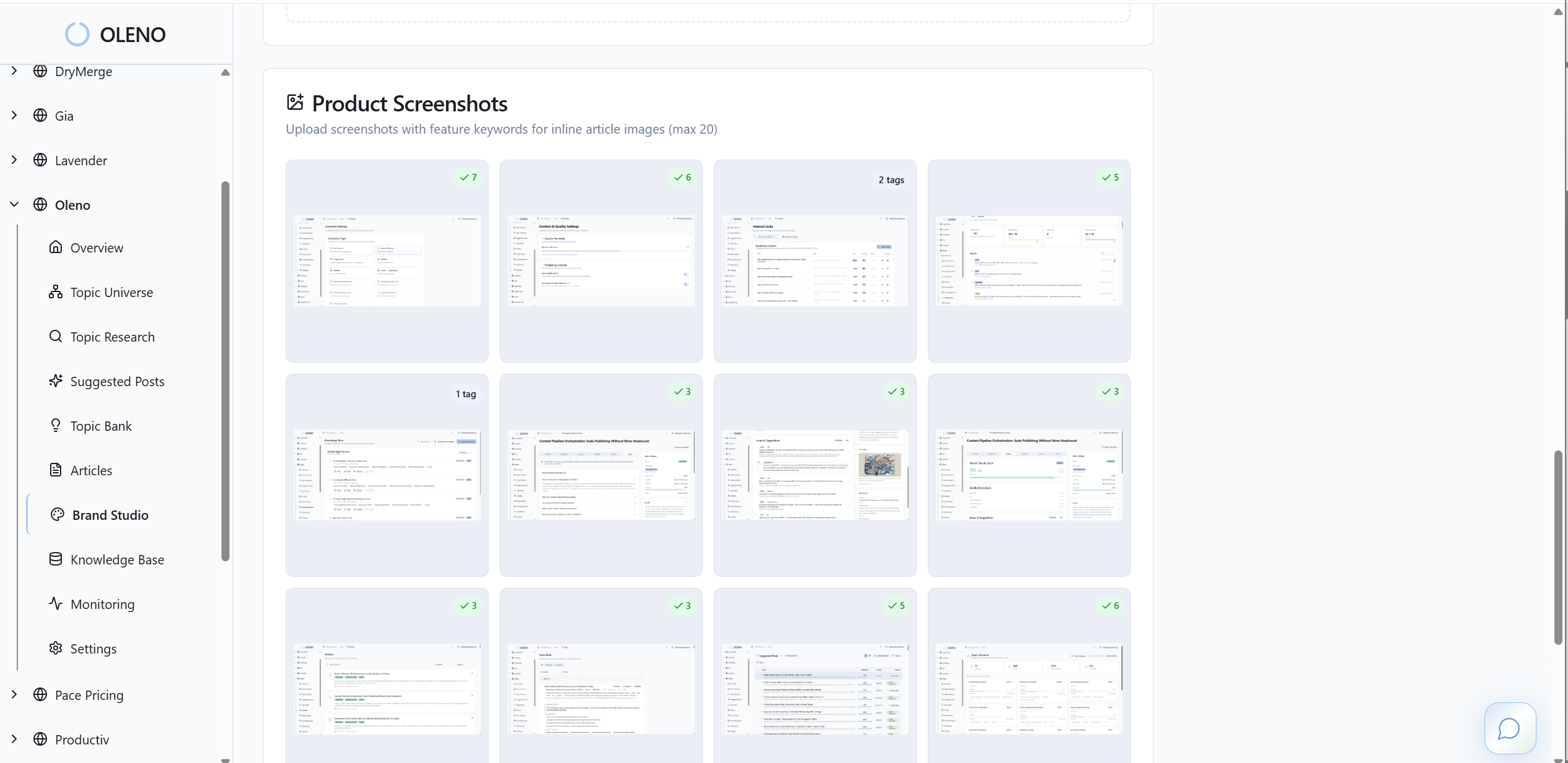
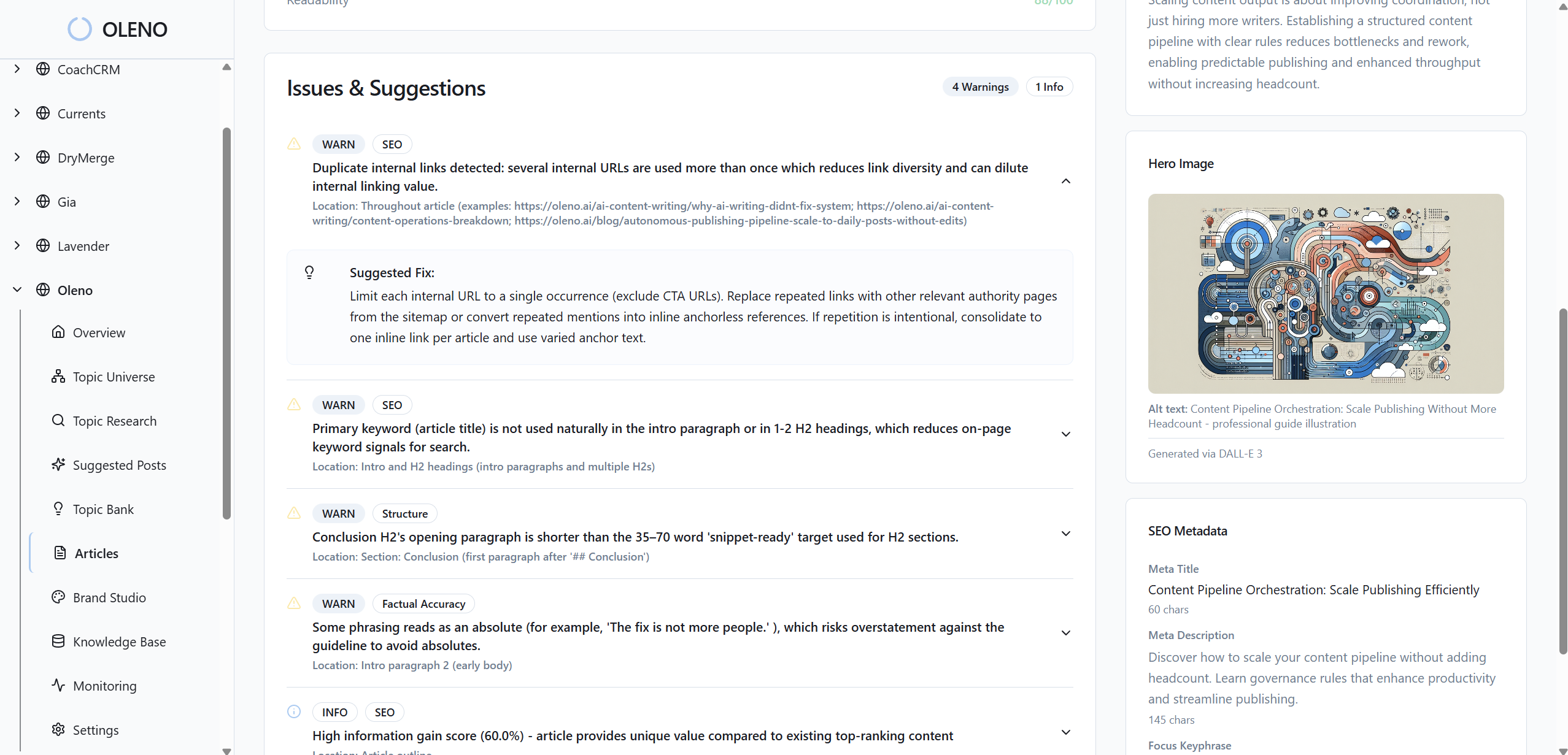
Because governance travels with the work, new writers and regions don’t start from zero. They inherit the same atoms, the same proof, the same off-limits lines. That’s how you reduce review time without watering down the story. Oleno keeps your opinion intact while you scale output.
If you’ve felt the pain of narrative drift, this is where it stops compounding. Consistency shifts from a hope to a rule.
Job-Based Studios Produce Reusable Asset Families
Oleno organizes work into studios aligned to demand-gen jobs: POV and category education, frameworks and guides, product marketing explainers, and comparison content. Each studio runs through one execution engine, Discover → Angle → Brief → Draft → QA → Enhance → Visuals → Publish, so templates, structure, and QA repeat across products.
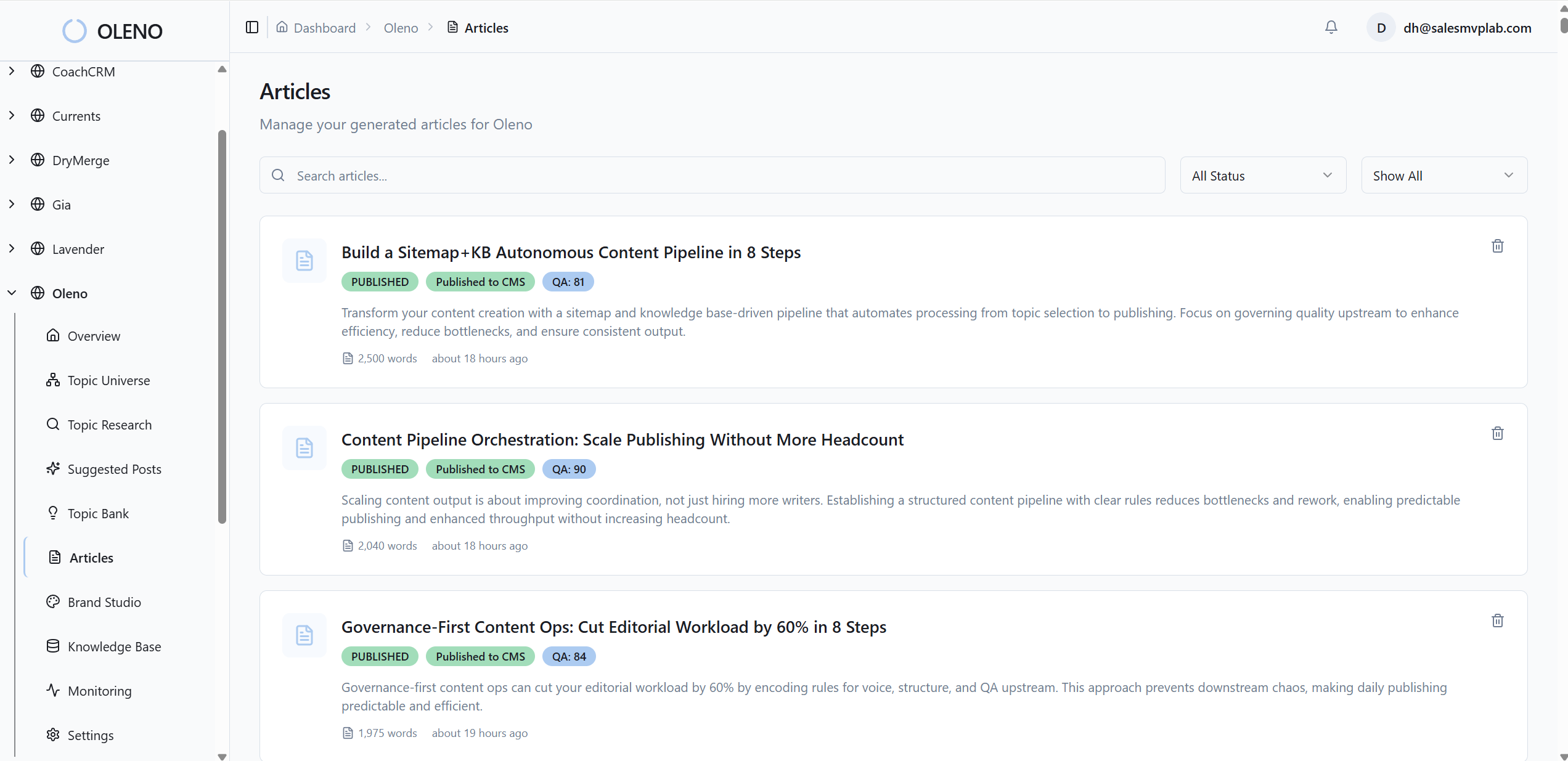
What that means in practice: once you define the template for a product-led walkthrough, every product can ship its version by changing parameters, not reinventing the narrative. Families of assets, explainers, comparisons, guides, stay consistent across the portfolio. Reuse becomes the default path, not the exception you hope teams remember.
Teams using this pattern can shift attention from coordination to coverage. The portfolio gets mapped and filled, methodically.
QA Gates And Publishing Controls Reduce Rework
Nothing publishes in Oleno unless it passes quality checks: voice and tone alignment, narrative structure, clarity and logical flow, grounding and accuracy constraints, and SEO structure. Publishing to your CMS is idempotent and controlled, no duplicate pages, drafts when you want, live when you’re ready.
Distribution rules reuse approved content across channels without inventing new messaging. Optional measurement and system health show output cadence, common failure patterns, and where the engine needs attention. It’s operational reliability, not rank tracking. If you want a broader view on why operationalizing beats ad hoc efforts, skim McKinsey’s lessons on scaling data products.
Here’s the throughline: the hours you saved in the duplication tax now fund the comparison pages and walkthroughs you never had time to publish. Oleno doesn’t replace strategy. It lets your strategy keep shipping. Ready to see what a governed, reuse-first system looks like? Try Oleno For Free.
Conclusion
You don’t need a bigger team to market across products. You need a modular narrative, reuse-first rules, and a fair way to fund the shared layer. Centralize the atoms. Parameterize the rest. Encode governance in templates and QA so consistency isn’t a wish.
Do that and launches get faster, reviews get lighter, and the story stops drifting. The work compounds. The politics cool off. If you want to skip the duct tape and run this as a system, you can. Try Generating 3 Free Test Articles Now.
About Daniel Hebert
I'm the founder of Oleno, SalesMVP Lab, and yourLumira. Been working in B2B SaaS in both sales and marketing leadership for 13+ years. I specialize in building revenue engines from the ground up. Over the years, I've codified writing frameworks, which are now powering Oleno.
Frequently Asked Questions