Schema Markup for Demand Gen: Boost Qualified Organic Clicks

Most teams treat schema like a checkbox. Add FAQPage, maybe Product, watch search impressions climb a bit, call it a win. But if you sit in a revenue seat, you know the truth. Impressions aren’t qualified sessions, and thin rich results often bring the wrong crowd.
I’ve seen both ends. Rank well, get the pretty snippets, still miss pipeline by a mile. The fix isn’t more types or stuffing more fields. It’s mapping schema to the job of the page and the stage of the buyer. When you do that consistently, you attract evaluators, not browsers.
Key Takeaways:
- Aim schema at decision intent, not vanity visibility
- Map types to buyer stage, then standardize a repeatable pattern library
- Use Product, Review, and ItemList where evaluation is the job
- Keep FAQPage and HowTo scoped and honest to avoid trust and manual action issues
- Track qualified sessions and downstream MQL/SQL, not just CTR
- Bake author creds and provenance into JSON-LD to reduce legal churn
- Operationalize rules so schema ships correctly every time
Ready to skip the theory and see a working system? Book time and we’ll walk through it in your context. Request A Demo
Why Schema Needs To Serve Demand, Not Just Rankings
Schema should increase qualified clicks by aligning rich snippets to buyer intent, not by inflating impressions. Most sites paste in FAQPage or Product because it is easy, then see little change in pipeline. Treat schema as a demand lever, where the snippet pre-frames evaluation, proof, and fit.

Most Schema Tutorials Optimize For Impressions, Not Intent
The common playbook is simple, and a little dangerous. You paste FAQPage beneath every section, watch impressions and occasional CTR bumps, then assume progress. But when the snippet highlights trivial questions or buries proof, you attract curious readers, not evaluators. The job is to set accurate expectations in the SERP, so the right person clicks for the right reason.
What changes is the target. Instead of “How do we appear more?” you ask “Which snippet would convince a serious buyer to click this page?” That reframes property choices and field order. It also forces discipline, because schema that over-answers in the SERP can reduce clicks, while schema that misleads invites the wrong traffic. Intent first, always.
What Changes When You Optimize For Decision Intent
Once schema lines up with decision intent, evaluation pages get Product with verifiable attributes, AggregateRating, and Review where proof exists. Comparisons earn ItemList with clear positions and on-page mirroring. Scoped FAQPage handles objections about pricing, integration, or procurement. The snippet pre-qualifies, instead of entertaining.
You’ll notice traffic patterns shift. Volume may level off or even dip slightly, yet the session mix improves. We’ve seen conversion lift when snippets surface comparison structure, ratings, or implementation clarity. Provenance fields, dates, and author credibility matter here too. They reduce risk for evaluators who are one meeting away from putting your page in a buying doc.
What Is Schema Markup And Why Does It Matter For Demand Gen?
Schema describes the entities and relationships on your page so search engines can render richer results. That means you can show comparison order, ratings, authorship, dates, pricing rules, and FAQs rather than leaving it to chance. For demand gen, that is the difference between generic blue links and evaluators seeing the proof they care about.
Start by aligning your KPI. If the goal is qualified sessions, not raw CTR, you’ll pick fields that frame the decision and hold back the rest for the page. You can learn the baseline rules from Google’s structured data overview, then lean on schema definitions like Product on schema.org for property specifics.
Map Schema To Buyer Journeys, Not Page Templates
Schema should follow the buyer stage the page serves, not the template it uses. Start by labeling pages by job: awareness, consideration, decision. Then assign schema patterns that surface proof and clarity for that stage. Decision pages favor Product, Review, and ItemList. Awareness pages often need far less.

Buyer-Stage Mapping To Schema Types That Lift Qualified Clicks
When you map pages to stages honestly, patterns become obvious. Decision pages benefit from Product with specific, safe fields and AggregateRating when you can back it. Comparisons often deserve ItemList with explicit positions and names that match the visible list. Guides sometimes qualify for HowTo, but only when steps, tools, and time exist on page.
The mistake is attaching schema to a template without considering the job. A “product overview” used for both education and evaluation might need different patterns or a constrained subset. Get that wrong and you either overshare in the SERP or make claims you can’t support on page. The remedy is a simple matrix, stage by stage, property by property.
When Should You Use FAQPage Or HowTo Without Hurting Trust?
Use FAQPage for real Q&A blocks, visible on page, where answers are crisp, dated, and grounded. Keep scope tight. Decision pages often benefit from a short objection-handling set, not an encyclopedia. Use HowTo only when the content is truly procedural, with tools, steps, and time estimates that a person could follow end to end.
You avoid two risks this way. First, trust erosion when snippets promise things your page doesn’t actually deliver. Second, manual action if you stretch definitions or spam FAQs without visible on-page content. Google’s structured data general guidelines cover these basics, and they are surprisingly easy to violate when chasing edge-case visibility.
Pattern Library For Evaluation Content, Pick Once And Repeat
Evaluation content scales best when you standardize a tiny library. Comparisons get ItemList with ListItem position, name, url, and a short description mirrored on page. Product explainers get Product with brand, description, and offers if pricing is public. Only include aggregateRating and reviewCount with verifiable proof.
Repeat the same property order and field sizes across categories. That keeps snippets predictable, makes QA faster, and prevents drift when multiple people touch the content. Over time you’ll notice search features stabilize. That is the compounding effect you get from consistency, not creativity.
The Cost Of Chasing Impressions Instead Of Qualification
Chasing impressions produces busy dashboards and thin pipeline. The cost shows up in lower qualification rates, wasted reviews, and cleanups after manual actions. The better move is to trade a bit of CTR for higher-quality visits, then measure pipeline impact.
The Math That Hides In Plain Sight
Let’s pretend your comparison page earns 30,000 impressions per month, a 4 percent CTR, and 1,200 clicks. Only 7 percent are qualified sessions, so 84 sessions matter. Now you tighten the snippet with ItemList and focused FAQs that pre-qualify. CTR dips to 3 percent, clicks drop to 900, but qualified rate rises to 15 percent. That is 135 qualified sessions.
You just lifted qualified sessions by roughly 60 percent with fewer clicks. Same content. Different schema and on-page alignment. When you roll this out across a dozen decision pages, the math compounds fast. But you only see it if you track qualification, not just top-of-funnel metrics.
Invisible Risks That Spike Rework And Risk
Loose markup has two hidden costs. First, claim drift. If your Product offers, pricing references, or medical statements stray from policy or screenshots, legal slows everything down. Editors scramble for provenance after the fact. Second, eligibility risk. Misused FAQPage or HowTo can lead to lost snippets or manual actions that take months to unwind.
Both problems create rework cycles that steal engineering and editorial time. Worse, they erode trust between marketing and compliance. A small layer of rules in your schema patterns, backed by visible on-page corroboration, prevents most of this. Google’s guidelines on eligibility and quality are clear enough if you read them closely.
Which Metrics Actually Prove Demand Impact?
Pair Search Console CTR with page-level qualified-session rate. Then track MQL and SQL creation tied to session source. If you can, hold out one or two pages per template as controls when you roll changes. Your goal isn’t a prettier SERP. It’s a steady lift in qualified sessions and downstream creation, even if impressions hold flat.
You might notice a lag between snippet change and pipeline movement. That’s normal. Evaluators click, read, and bring your page into internal docs before a form fill happens. Your measurement window should reflect that reality. If it does, the win shows up cleanly.
Still doing this by hand and guessing at lift? There is an easier path. We can show you a governed setup that removes the guesswork. Request A Demo
The Headaches Of Pretty Snippets That Do Not Convert
Pretty snippets feel good in weekly updates, then disappoint in pipeline reviews. I’ve been on teams that ranked for big keywords, celebrated, and then realized we attracted the wrong click. Schema can repeat that mistake if it isn’t tied to the sales narrative and proof.
The Time We Ranked Well, But Missed The Point
At Proposify, we had an incredible content engine. Voice, design, rankings, the whole package. But some of our top pages were detached from how our product actually helped sales teams send proposals and close contracts. Traffic looked great. Sales couldn’t tie it back to pipeline in a meaningful way.
Schema can amplify that gap. Snippets get more visible, but the content and the click are still detached from buying jobs. Sales asks where the evaluation clicks are, and you realize the schema framed entertainment, not decision support. Hard lesson. Fixable with better alignment.
Rework From Legal Or Brand When Citations Are Missing
Approvals slow down when author credentials are vague, claims lack citations, or pricing references don’t match public rules. Editors end up doing a retroactive provenance pass that nobody planned. A light E-E-A-T layer in JSON-LD and on-page short-circuits most of this. Name, job title, sameAs, citations that match real sources.
You don’t need to overdo it. Just enough detail to pass legal quickly and give evaluators the trust signals they’re looking for. It’s a small lift that prevents a lot of churn.
A Practical Schema Playbook For Decision-Stage Clicks
A practical playbook starts with intent mapping, then applies consistent JSON-LD patterns that your team can repeat. Keep it boring, repeatable, and safe. Your reward is steadier eligibility and better-qualified clicks.
Audit Your Pages And Map Intent Before You Touch JSON-LD
Inventory your templates and top pages, then label each with a primary job: awareness, consideration, decision. Pull GSC queries to validate stage. Decision pages likely deserve Product, Review, ItemList, and a scoped FAQPage. Others might need minimal markup to stay honest.
Make the plan visible. Create a simple table that maps URL patterns to schema patterns and fields, plus required provenance. This avoids on-the-fly decisions that cause drift and rework later.
Key JSON-LD inclusions to plan:
- Person for author with name, jobTitle, and sameAs to LinkedIn and author page
- WebPage with datePublished and dateModified
- BreadcrumbList to anchor hierarchy
Add JSON-LD Patterns For Comparisons And Product Evaluations
Comparison pages should use ItemList with ListItem objects that include position, name, url, and a short description that mirrors on-page text. Product explainer pages should add Product with brand, description, and sku if relevant. Only include aggregateRating and reviewCount if you can support them with visible proof.
Offers need to reflect public pricing, currency, and availability, or be omitted if you don’t publish pricing. Always mirror the data in visible content so reviewers, legal, and search systems see the same truth. Consistency prevents accidental eligibility loss.
Fields to include:
- ItemList, itemListElement, ListItem, position, name, url
- Product, brand, description, sku, aggregateRating, reviewCount
- Offer, priceCurrency, price, availability, url
E-E-A-T-Safe Attribution, Author, Citation, SameAs
Declare author identity with Article and Person nodes. Include sameAs to LinkedIn or published speaker profiles if you have them. Tie claims to citations with mentions or isBasedOn that correspond to visible references on page. Keep credentials and key claims in the visible content, not just the JSON-LD.
This reduces review friction and sets a tone of credibility in the SERP. Evaluators look for these signals when they are moving from shortlists to serious evaluation. Make their job easier without overpromising.
Recommended fields:
- Article, author, Person, name, jobTitle, sameAs
- Organization with sameAs and url
- mentions or isBasedOn for source provenance
Lead-Friendly Rich Snippets, CTA Placement, And Click Intent Tradeoffs
You have to balance how much the snippet reveals. If you answer everything, you might reduce clicks. If you say too little, you invite the wrong click. For decision pages, show enough to qualify, like category names in ItemList or the presence of ratings, then hold deeper detail for the page.
Place the primary CTA above the snippet-triggering section on the page, so motivated evaluators see it as soon as they arrive. Then measure scroll depth and qualified-session rate to validate placement. Adjust as patterns emerge.
Measurement notes:
- Watch SERP CTR against qualified-session rate to spot the right balance
- Use page-level tests to validate schema and CTA placement before scaling
- Track MQL and SQL creation over a reasonable window to capture lag
For safe implementation details, read Google’s examples for FAQPage structured data. They’re strict for a reason.
How Oleno Operationalizes Schema For Demand Gen Teams
Oleno turns schema from a one-off task into a governed part of your demand-gen system. You define rules once, then the execution engine applies them consistently across pages and templates. It is about reliability, not hacks.
Governed Schema Patterns Tied To Buyer Stage
Oleno starts with governance. You define your approved page types, voice, claims, and the schema patterns each stage should use. That includes which templates get Product, ItemList, or FAQPage, and which fields are allowed or restricted. Once encoded, those rules apply everywhere so authors aren’t making ad-hoc decisions under deadline pressure.
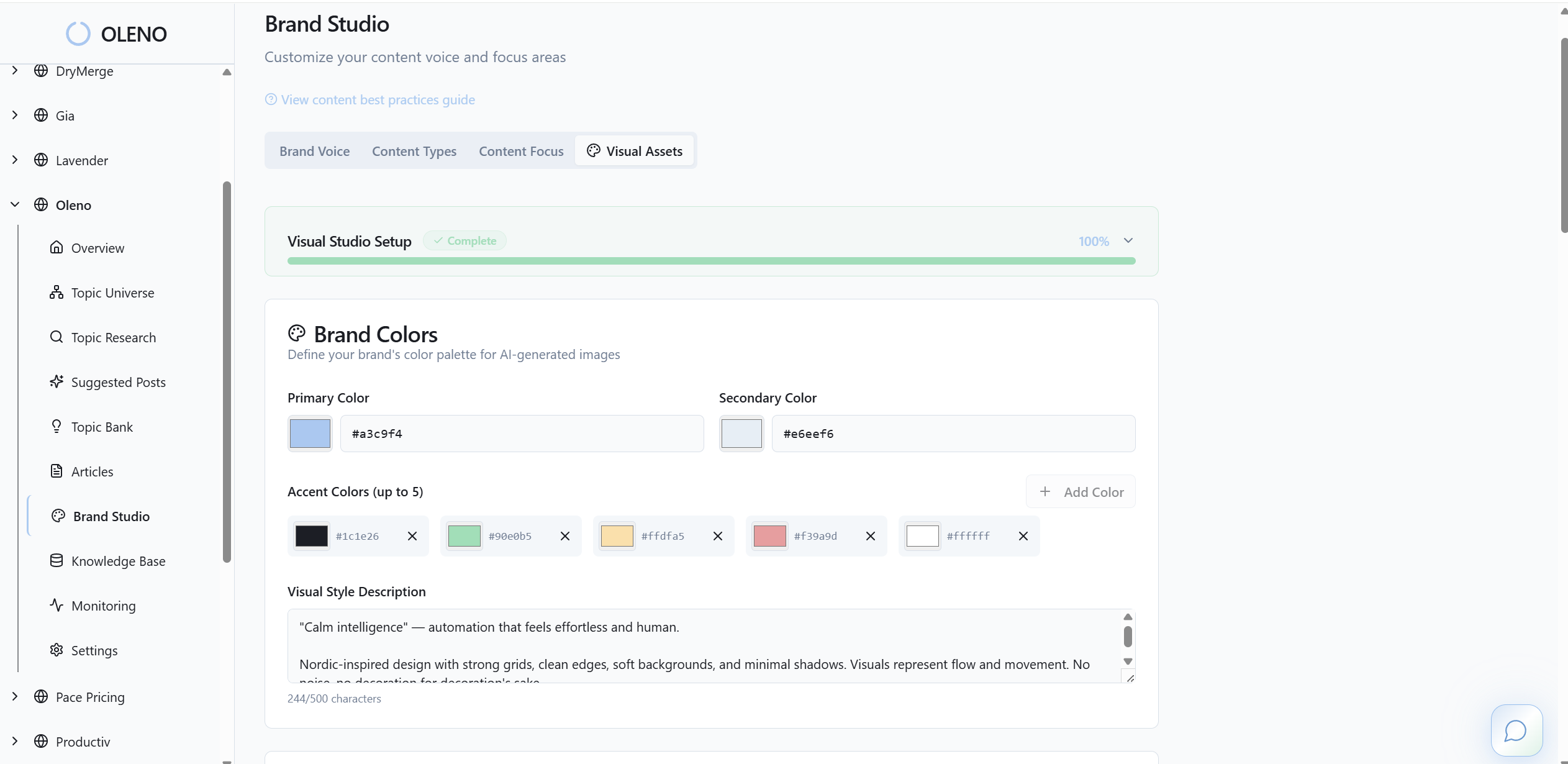
Because Oleno is organized around demand-gen jobs, not formats, schema patterns attach to the job. Evaluation content gets the patterns that surface proof, comparisons, and fit. Awareness content stays lighter and safer. The result is fewer eligibility errors, less drift, and a tighter match between snippet and the job of the page. It compounds because it is consistent.
Safe Attribution, Claim Control, And Validation In The Pipeline
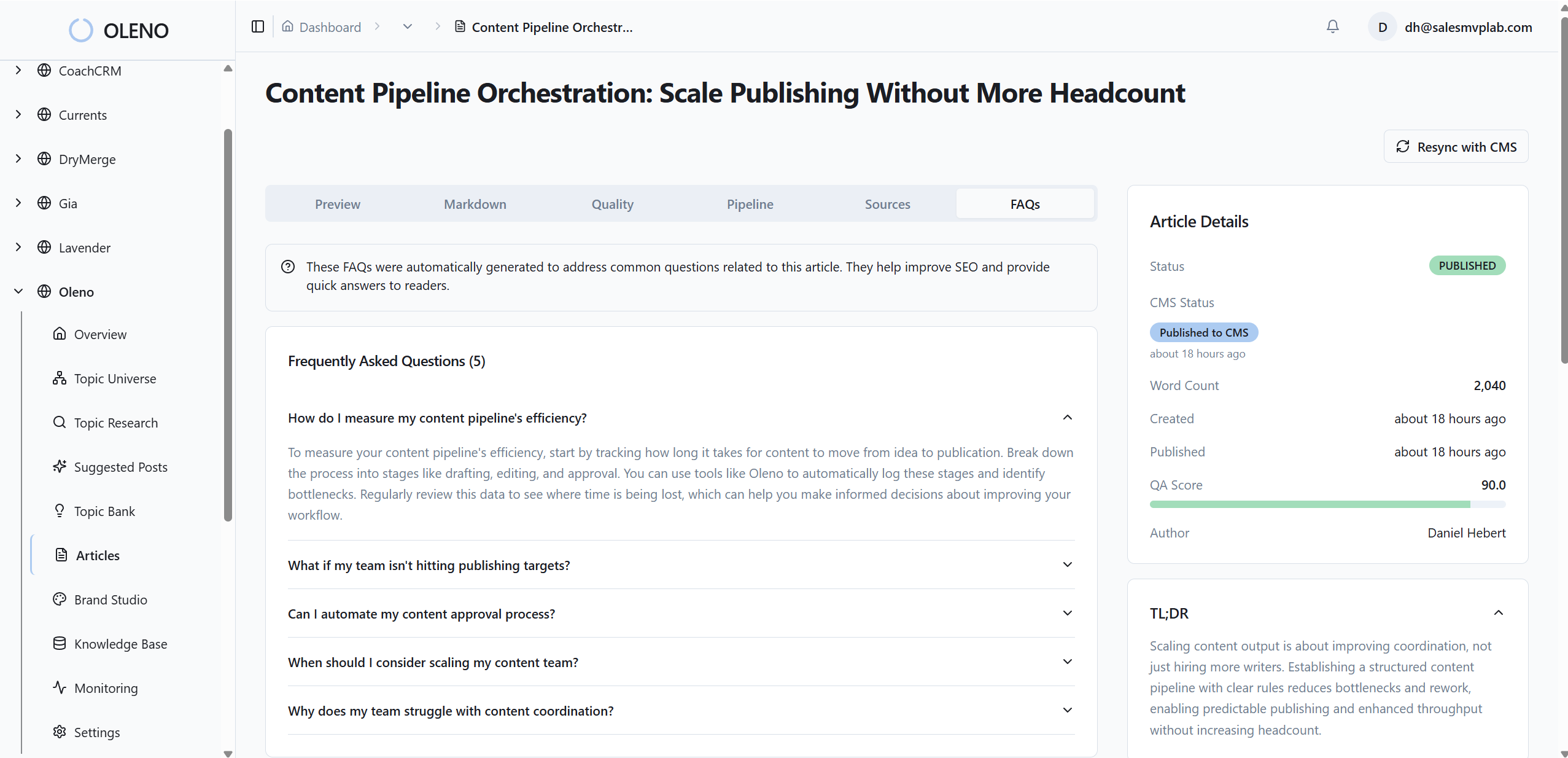
Product truth and claim control live upstream in Oleno. Author identity, sameAs links, and allowed claims are defined once, then reused automatically. Oleno’s QA gate checks for required provenance fields and rejects drafts that violate your rules. Nothing publishes unless it meets the bar for voice, narrative structure, grounding, and accuracy.
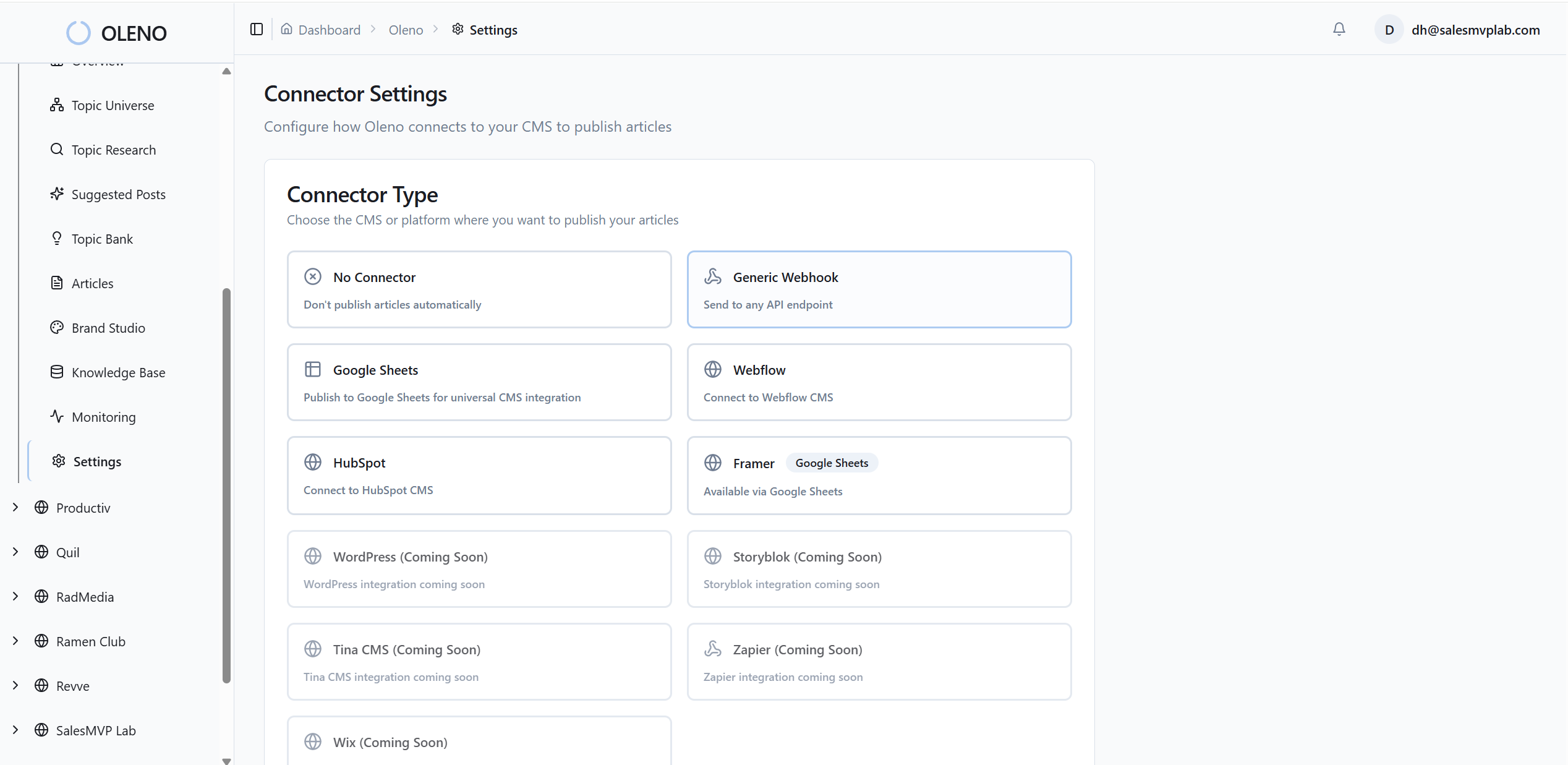
Publishing is handled through CMS connectors with idempotent publishing, so JSON-LD ships alongside content without creating duplicates. Oleno validates structure and required fields pre-publish, catching silent failures that usually appear after a template edit. The operational layer keeps execution predictable: Discover, Angle, Brief, Draft, QA, Enhance, Visuals, Publish. You get fewer surprises, faster approvals, and schema that stays aligned to stage and safety constraints.
Want to see how governed patterns and QA gates reduce missed eligibility and rework? We can show you live examples and the exact checks we use. Request A Demo
Conclusion
Schema is not about chasing more blue. It is about making the right promise in the SERP so evaluators choose your page for the right reason. When you map patterns to buyer stage, standardize fields, and encode provenance, you lift qualified sessions without inflating rework or risk.
Do it once manually and it works for a while. Operationalize it and it keeps working when priorities shift. That’s the difference between snippets that look good and snippets that generate demand.
About Daniel Hebert
I'm the founder of Oleno, SalesMVP Lab, and yourLumira. Been working in B2B SaaS in both sales and marketing leadership for 13+ years. I specialize in building revenue engines from the ground up. Over the years, I've codified writing frameworks, which are now powering Oleno.
Frequently Asked Questions