SEO A/B Testing for Demand Gen: Hypothesis-Driven Playbook

Back when I ran Steamfeed, I thought rankings were the prize. We crossed 10,000 pages, hit 120k uniques per month, and the charts looked great. But here’s the part I learned later in sales leadership: search traffic is a vanity faucet if it doesn’t reach your CRM and convert into qualified conversations.
At Proposify, our content machine was top-tier, great writers, strong voice, gorgeous design. We ranked for all kinds of things. The problem? A lot of those topics were detached from what we sold. Sales couldn’t feel the lift. That’s the gap we’re closing here, turning SEO tests into pipeline tests, not just prettier graphs.
Key Takeaways:
- Redefine success around MQLs, SQLs, and revenue-assisted influence, not rankings
- Test at the cohort level, not single pages, to reduce noise and prove causality
- Encode guardrails (canonicals, schema, UTMs) before shipping any variant
- Pre-register hypotheses with pass/fail rules tied to CRM reality
- Favor deterministic execution: QA gates, idempotent publishing, and rollback rules
- Treat tools as system participants, not the system itself
Why Rankings Alone Miss The Demand Gen Point
Rankings alone don’t prove demand; qualified pipeline does. Track MQLs, SQLs, and assisted revenue within a defined window so success can’t drift into vanity metrics. For example, a template update that lifts SQL rate by 12% over 28 days matters more than a jump from position 9 to 6.
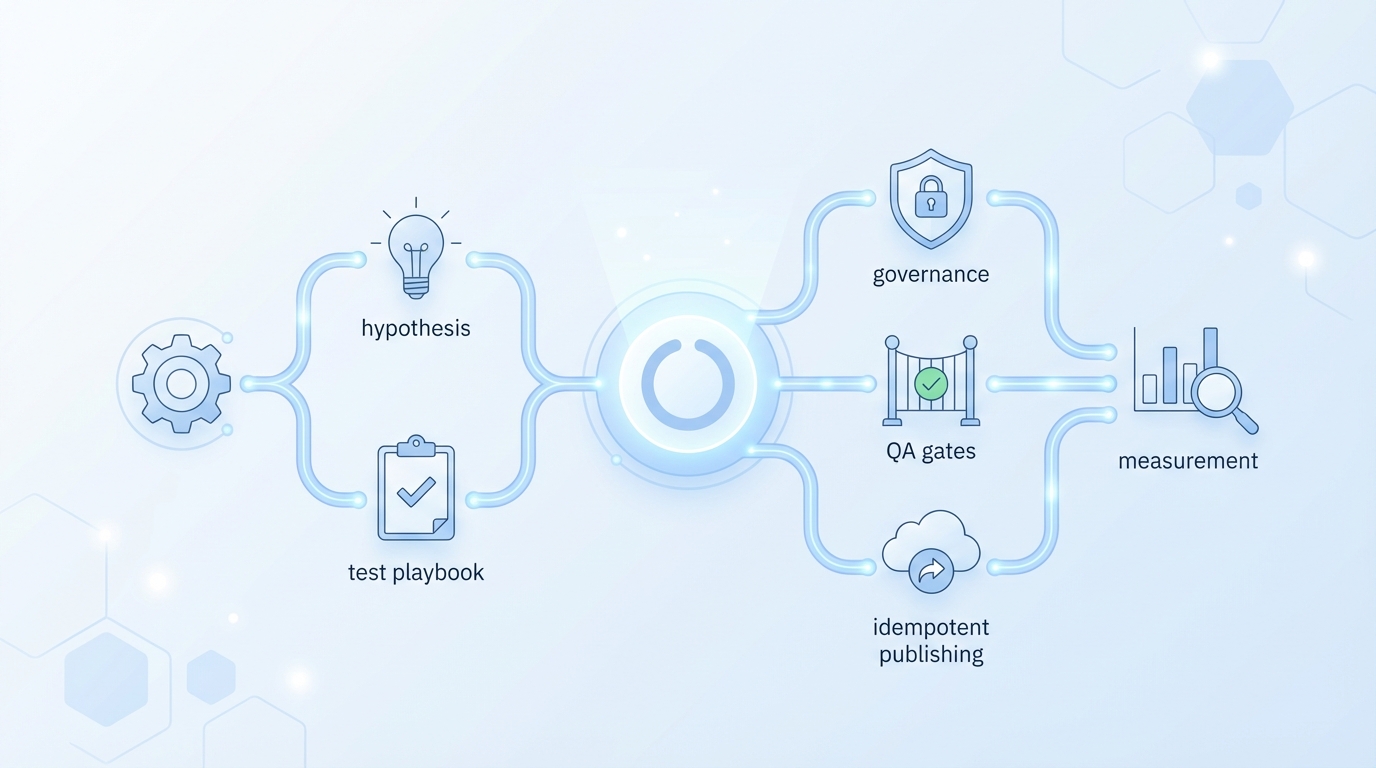
The metric swap that changes behavior
The minute you swap “rankings” for “revenue-assisted influence,” your decisions change. Traffic becomes a diagnostic input, not the goal. You’ll feel the discipline kick in, clear hypotheses, intentional tradeoffs, tighter storytelling. Pick one north-star outcome. Lock a conversion window. Decide what you’re willing to trade (e.g., fewer sessions for higher SQL rate) before you launch.
I’ve seen teams obsess over a keyword climb, then realize SQLs didn’t budge. The fix wasn’t another round of on-page tweaks. It was elevating proof, clarifying CTAs, and aligning pages to the journeys that actually convert. That alignment shows up in the CRM, not just in Search Console.
What is SEO A/B testing for demand gen?
For demand gen, SEO A/B testing means changing website components that could increase qualified pipeline, then proving it with CRM-verified outcomes. Your variables: content structure, messaging hierarchy, or UX elements tied to conversion intent. Your outputs: MQLs, SQLs, assist rate, and revenue influence, tracked to cohorts, not isolated pages.
Cohorts matter because Google doesn’t treat pages in isolation. Neither should you. Design template-level changes with cohorts of similar pages, map consistent UTMs, and route forms to the right campaign. You’re testing the system, not a one-off.
Why are rankings seductive but misleading?
Rankings move fast. Pipeline moves on human time. That mismatch seduces teams into celebrating early “wins” that never survive the CRM. A climb from 9 to 6 can flood you with unqualified sessions and silently tank conversion rates. It looks active. It isn’t progress.
If you want a sanity check on priorities, skim a primer on SaaS demand generation. Notice how the work ladders to pipeline, not just eyeballs. Your SEO tests should do the same, prove intent alignment and sales acceptance, or they don’t count.
Ready to validate pipeline over pageviews? Want a fast first step without building the whole system? Try it hands-on: Try Generating 3 Free Test Articles Now.
The Real Bottleneck Behind SEO Experiments That Prove Pipeline
Pipeline-positive SEO testing breaks when execution is fragmented. The gaps aren’t in keyword ideas, they’re in attribution, variant consistency, and publishing reliability. The fix is systemizing inputs (UTMs, templates) and outputs (QA, deploy, rollback) so tests show up where leaders look: the CRM.

What traditional SEO tests miss in the funnel?
Traditional tests stop at position and clicks. The funnel fails later, UTMs get messy, forms don’t map to campaigns, and lead sources don’t tie back to cohorts. You end up with “interesting” numbers leaders can’t use. Pre-register UTMs, harden form routing, and define the CRM view before you touch a template.
Think of it like chain-of-custody for conversions. From impression to form fill to sales acceptance, every handoff should be named, mapped, and recoverable. If I can’t trace the path in the CRM in under five minutes, the test isn’t ready.
The unit of analysis is not the keyword, it is the cohort
Keywords are inputs. Cohorts are how you test causality. Group pages by shared intent, structure, and template so you can isolate a variable that matters, say, moving product proof above the fold. Define treatment and control at the cohort level, track conversions across both, and you’ll reduce noise without heavy statistics.
It’s also faster. Cohorts stabilize variance and make test windows sane. You’ll see reliable directional signals in weeks, not quarters, even with modest volume. Then you have permission to scale.
Why tool-first experiments fail handoffs
Point tools create artifacts, drafts, audits, snippets. They don’t guarantee the system runs end to end. That’s where drift creeps in: copy changes without updated UTMs, QA happens in someone’s head, publishing isn’t idempotent, and the rollback plan lives in Slack.
Encode guardrails. Templatize the variant fields. Make publishing idempotent so retries don’t double-create. Aim for boring reliability, not clever hacks. If you want ideas for variant levers, skim a roundup of SEO A/B testing ideas and pick the ones tied to conversion intent.
The Hidden Costs Of Testing Without A System
Testing without a system burns time on preventable errors. One broken canonical can split signals for weeks. Missing UTMs can erase attribution. Manual handoffs multiply mistakes. The cost isn’t just traffic, it’s credibility, analysis debt, and delayed rollouts of winners.
The week you lose to broken canonicals
I’ve seen entire cohorts stall because a canonical got copied wrong. Crawlers split authority, pages self-compete, and your “lift” turns to noise you can’t untangle. Then the team spends the week reverting, reindexing, and apologizing for the delay. It’s a morale tax.
Put non-negotiables in your pre-publish gate: canonical, robots, schema, internal link integrity, CTA tracking. Fail closed on staging rather than debug live. If you need a refresher on the SEO implications, this overview on running A/B tests without hurting SEO covers the basics you’ll want locked down.
Let’s pretend you ran a 20 page test and saw noise
Let’s pretend you shipped 20 treatment and 20 control pages. Traffic up 9%. MQLs flat. That’s not failure; it’s a signal. Likely culprits: intent mismatch, weak CTA alignment, or a conversion window that’s too short to capture sales acceptance.
Document every assumption. Change one variable. If you moved proof, next try CTA clarity. If volume is low, extend the window or tighten your cohort. The most expensive choice is thrashing across variables and hoping the math will save you.
The coordination tax of manual QA and publishing
Every manual handoff adds risk and cycle time. Writer tweaks tone. Dev fixes templates. Someone forgets UTMs. Multiply by two variants and a rollback plan, and you’ve got weeks of delay. It’s avoidable.
Encode rules once. Enforce them at the gate. Make publishing deterministic and idempotent so retries don’t duplicate pages or scramble canonicals. That’s how tests complete on schedule and winners roll out clean.
Tired of losing weeks to preventable thrash? There’s a simpler way to standardize execution without adding headcount: Try Using An Autonomous Content Engine For Always-On Publishing.
When SEO Wins Do Not Move Leads, It Hurts
Nothing stings like a chart that looks great and a pipeline that doesn’t move. This is where teams learn the difference between activity and progress. Align tests to real buyer journeys, track CRM outcomes, and decide rollback rules before the pressure hits.
The 3am traffic spike with zero MQLs
We’ve all had it. Overnight spike. Slack celebrates. Then you open the CRM and it’s a ghost town. That pit in your stomach? It’s the realization that your KPI ladder’s upside down. Rank wins feel good; revenue wins keep the lights on.
Reset your slate around the journeys that actually create qualified conversations. On intent pages, move proof higher. Clarify the CTA. Tighten the narrative to the moment someone chooses “talk to sales.” Test those changes. Then measure MQLs and SQLs, not just sessions.
When sales asks what changed and you have no log
If you can’t show what shipped, where, and when, trust erodes. Leaders don’t want lore; they want logs. Keep a change log tied to cohorts and variants with date, fields changed, CTAs, templates, and target metrics. It turns “we think” into “we did,” which makes the next test easier to approve.
This also protects your wins. When a variant hits the threshold, the log becomes your rollout spec. No re-litigating the decision in the next quarterly review.
Who owns the rollback call?
In the heat of a test, hesitation kills speed. Predefine stop rules and ownership before you publish. For example: if MQL rate drops more than 20% for two weeks, revert. If SQL rate increases more than 10%, roll forward. Decide who pulls the lever.
Make it simple. A named owner, a clear threshold, and a clock. The point isn’t perfection; it’s consistent, defensible decisions you can make under pressure.
A Practical Playbook To Run SEO A/B Tests That Prove Pipeline
A pipeline-first SEO testing playbook is simple: write tight hypotheses, design cohorts, ship safely, and measure in the CRM. Do less, prove more, and roll forward quickly when you win. Treat every step as system setup, not one-off heroics.
Hypothesis to pipeline: map changes to MQLs and SQLs
Write hypotheses in cause-and-outcome language. For instance: “If we move product proof higher and upgrade CTA clarity on intent pages, SQL rate will rise by 15% within 28 days.” Lock the metric, the window, and acceptable tradeoffs. Draft a minimal observation plan, including event naming and CRM campaign mapping.
Then pre-register the test. Store it in an experiment log so approvals are faster and analysis doesn’t drift. Commit to thresholds before launch, not after outcomes.
- Pre-register the test in an experiment log.
- Define pass and fail thresholds before launch.
Cohort design and sample sizing without heavy math
Pick 20–50 pages per arm, matched on intent, template, and baseline conversion rate. Balance by historical traffic and MQL rate. Exclude obvious outliers. If volume is lower than you’d like, extend the observation window or tighten page matching to reduce variance. Freeze other edits during the test.
You don’t need fancy stats to get signal. Cohorts stabilize the noise so simple conversion-rate comparisons are informative and defensible.
- Balance by traffic and historical MQL rate.
- Freeze other edits during the test.
Safe variant shipping: staging, canonicals, and canary rollouts
Ship to staging and run automated checks: canonical tags, robots directives, schema, internal links, and CTA tracking. Canary to 10% of the treatment cohort for 3–5 days. Watch for crawl errors and conversion tracking integrity. If signals are clean, roll to 100% of treatment.
Keep publishing idempotent so retries don’t duplicate pages. Document exact template fields changed so rollbacks are instant if needed. Borrow guardrail concepts from Google’s experiments guidance if you need a mental model for safe ramp-ups.
- Keep idempotent publishing, so re-runs do not duplicate.
- Document exact template fields changed.
Attribution that survives CRM reality: UTMs, windows, significance
Standardize UTMs for variants and cohorts. Decide on lookback windows for form fills and assisted conversions. Match leads to pages in the CRM, not just last-click analytics. Use simple significance checks on conversion rates between arms. When in doubt, extend duration rather than over-interpret early noise.
Track MQLs, SQLs, and assist rate side by side. Reuse the same analysis scripts so results are consistent and audits are simple.
- Track MQLs, SQLs, and assist rate side by side.
- Keep analysis scripts reusable.
How Oleno Operationalizes SEO Experiment Workflows For Small Teams
Small teams win when execution is boring and reliable. Oleno turns your test playbook into repeatable jobs with governance, QA gates, and idempotent publishing. You own the hypothesis and measurement. Oleno keeps variants consistent, guardrails tight, and deploys recoverable.
Variant construction patterns you can templatize
Oleno lets you lock brand voice, CTA style, and structure rules so variant copy stays consistent across cohorts. Content jobs produce intent-specific modules you can slot into templates without rewriting from scratch. Ground drafts in your real knowledge base to avoid drift and unapproved claims.
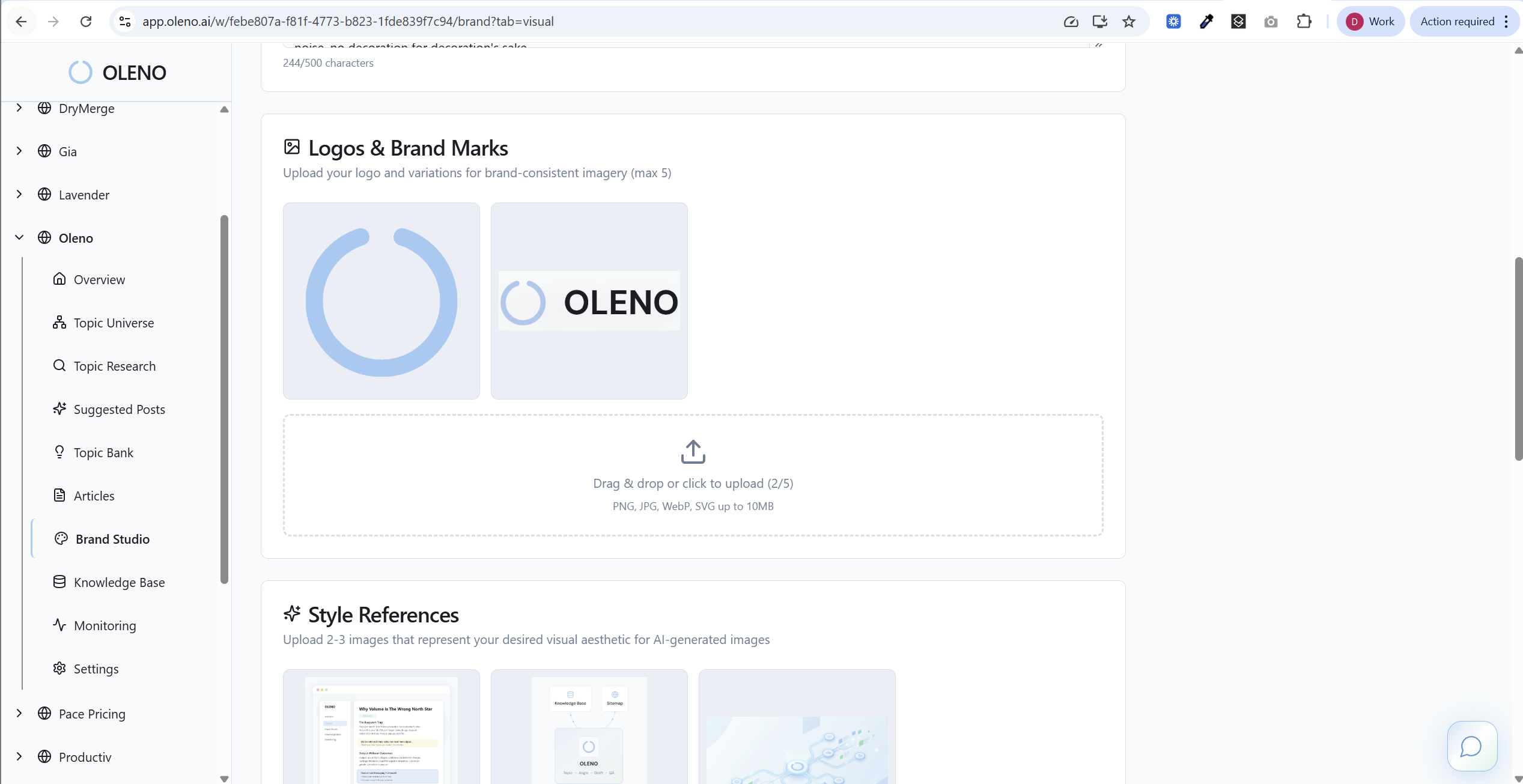
That means fewer rewrites, faster approvals, and variants that actually reflect your positioning. You decide the change; Oleno helps the change ship safely and consistently.
- Benefit: fewer rewrites and faster approvals.
- Pain addressed: frustrating rework on tone and claims.
Safe publishing with QA gates and idempotent control
Oleno enforces pre-publish checks for structure, clarity, narrative compliance, and schema-friendly markup. Publishing is idempotent, so retries don’t create duplicates or break canonicals. You keep control of staging and rollout; Oleno handles the gate so tests don’t fail on preventable errors.
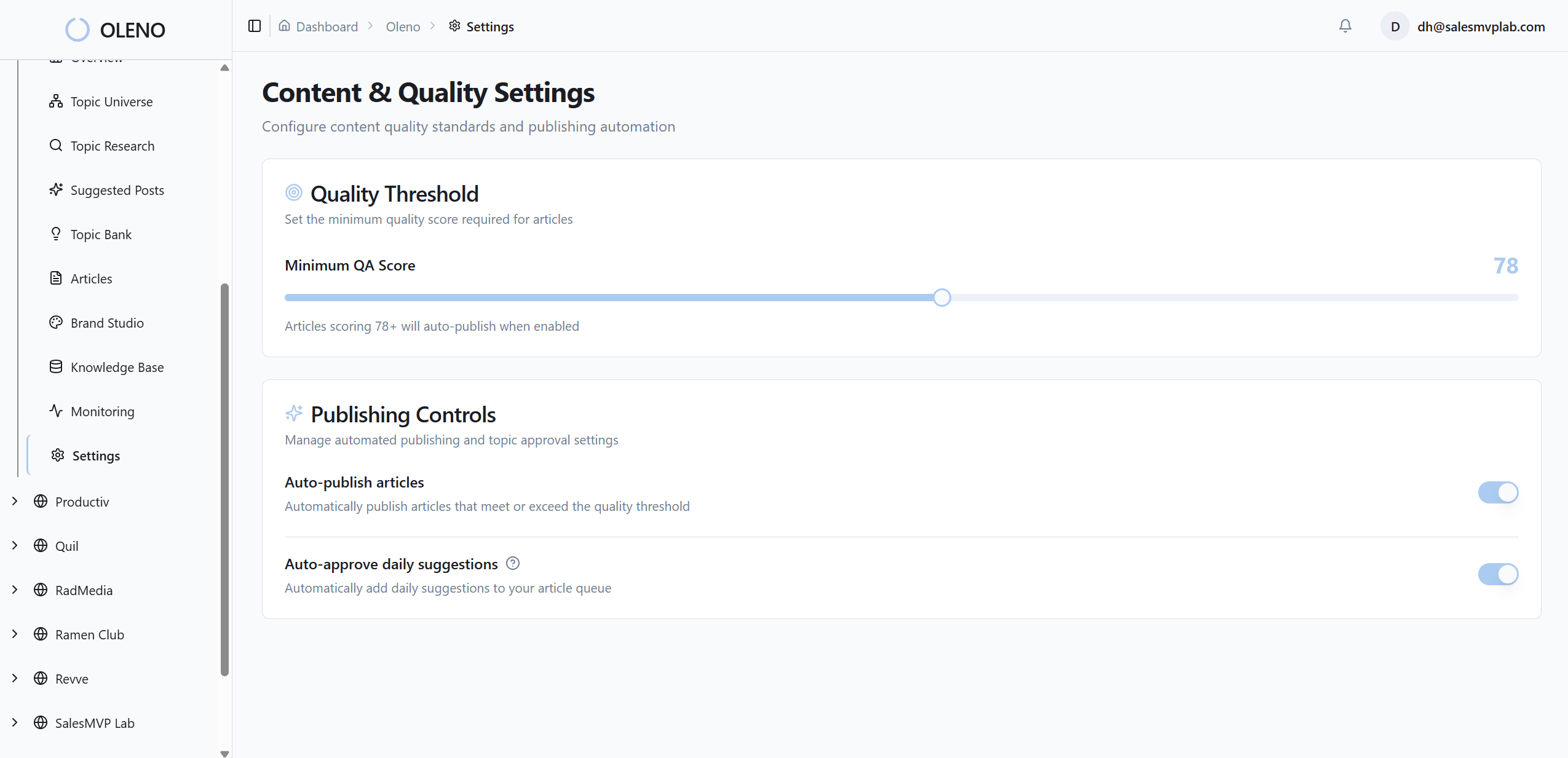
In practice, that reduces rollback headaches and shortens cycle time from idea to clean, measurable release. The boring stuff gets dependable.
- Benefit: fewer production errors, cleaner tests.
- Pain addressed: rollback headaches and fragile releases.
Measurement lives in your stack, Oleno keeps execution reliable
Oleno fits alongside your analytics and CRM. Keep your UTMs, windows, and attribution rules. Oleno focuses on execution: consistent content, deterministic flows, and reliable publishing. The result is cleaner inputs so your measurement tells the real story, not the “we forgot the UTM” story.
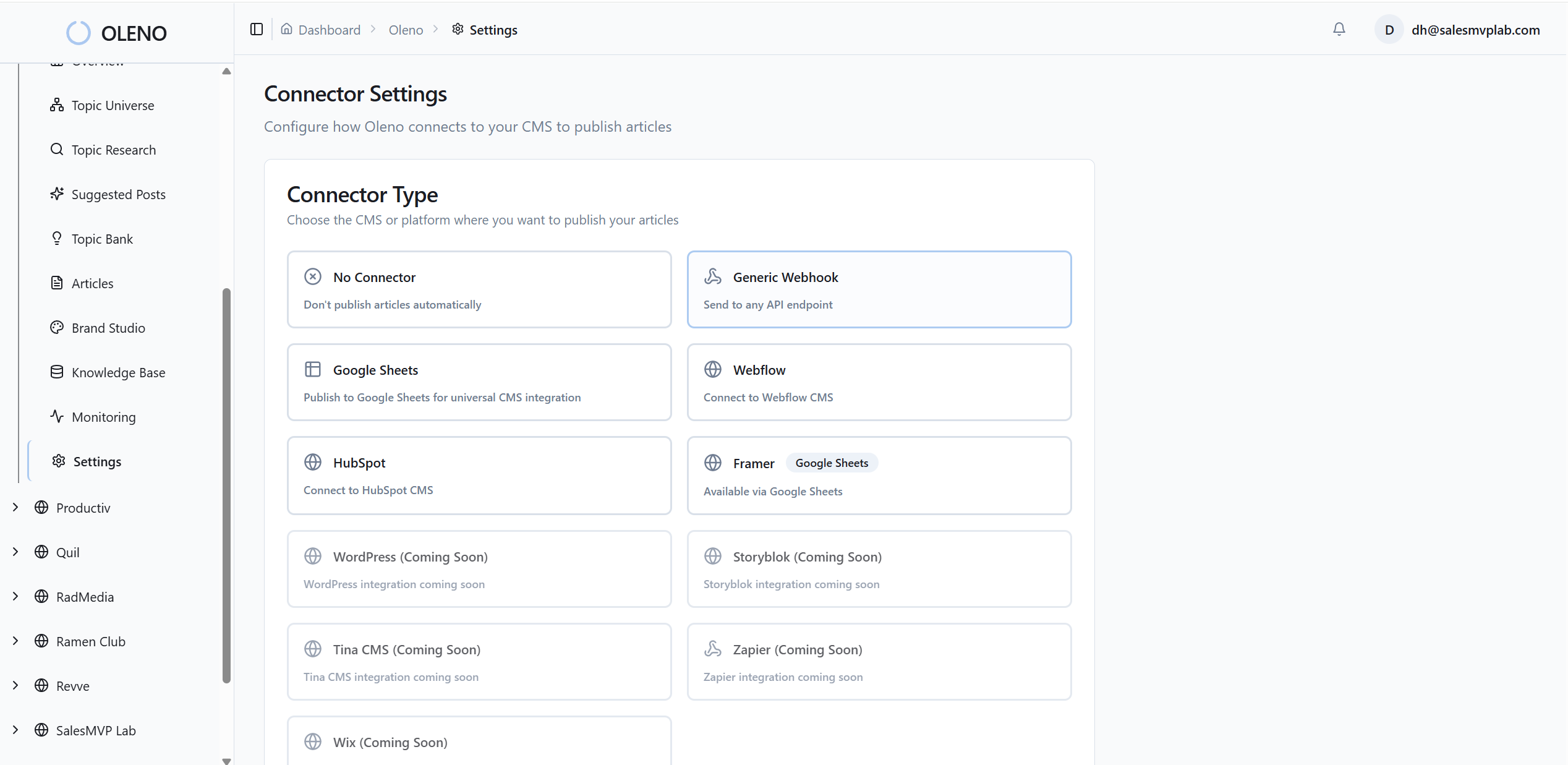
This separation of concerns matters. You maintain analytical trust while the system handles repeatable work.
- Benefit: credible measurement without new analytics.
- Pain addressed: noisy inputs that hide real lift.
Document, decide, and roll forward with less thrash
With Oleno’s structured jobs and repeatable flows, you can codify test protocols once, hypotheses, cohorts, change fields, and outcomes. When a variant passes thresholds, templatize the winner and roll it to adjacent cohorts with the same controls and gates. Decisions turn into deployable templates, not one-off artifacts.
That’s how teams stop resetting every quarter and start compounding wins.
- Benefit: faster rollouts and fewer one-off experiments.
- Pain addressed: decision drift and slow follow-through.
Curious how this looks in your world? Give it a spin and see where the operational lift shows up first: Try Oleno For Free.
Conclusion
If your SEO tests don’t ladder to pipeline, they’re busywork with good branding. Shift the metric, test cohorts over keywords, and encode guardrails so execution doesn’t wobble. You’ll make fewer bets, learn faster, and ship winners with less drama. That’s how small teams act bigger, steady, opinionated, and hard to knock off track.
About Daniel Hebert
I'm the founder of Oleno, SalesMVP Lab, and yourLumira. Been working in B2B SaaS in both sales and marketing leadership for 13+ years. I specialize in building revenue engines from the ground up. Over the years, I've codified writing frameworks, which are now powering Oleno.
Frequently Asked Questions