SEO Content Pruning: 7-Step Playbook to Consolidate & Boost Rankings

You don’t have a content problem. You’ve got a surface-area problem. Too many pages chasing the same intent, diluting signals, and capping the pages that should be winning. I’ve been on both sides of this — head down shipping content, and on the sales side watching qualified traffic dip because a thin tag page outranked the money page. It’s not fun. It’s fixable.
Here’s the thing: pruning isn’t a confession of failure. It’s an operating choice. When you consolidate, you concentrate authority, reduce decision fatigue, and force clarity at the cluster level. The result isn’t fewer opportunities. It’s stronger pages that actually rank, get clicked, and convert. Less yard to mow. Faster growth.
Key Takeaways:
- Treat pruning as an accelerator: fewer pages per intent, stronger signals, cleaner crawl paths
- Measure wins on destination URLs (impressions, CTR, conversions), not sitewide vanity metrics
- Cannibalization hides in variant queries and template sprawl — audit by intent clusters
- Remove index bloat to speed discovery of updates and let authority compound
- Use deterministic, engineering-safe consolidation patterns with canaries and rollbacks
- Codify rules so re-sprawl doesn’t creep back when the team gets busy
Ready to skip theory and see a system handle this end-to-end? Try Oleno For Free.
Stop Publishing More Pages Just To Grow SEO
Pruning improves rankings by consolidating pages that compete for the same search intent. It reduces index bloat, clarifies which URL should win, and concentrates internal and external link equity. Think of merging four “okay” posts into one strong, comprehensive asset that actually earns clicks and conversions.

What Is Content Pruning And Why Now?
Content pruning is the deliberate removal, merging, redirecting, or deindexing of low-value or overlapping URLs to strengthen the pages that matter. You’re not “deleting content.” You’re reallocating authority and cleaning up crawl paths so search engines find, trust, and reward your best work. The payoffs tend to show faster than net-new production when sprawl is the constraint.
What changed? The web is noisier, SERPs are more intent-specific, and minor overlaps create ambiguity. If your hub on “sales enablement” has three near-duplicates, every one caps the others. By pruning, you send one coherent signal per intent. That’s the difference between hovering on page two and sitting top three. For more on the basics, see this overview from Search Engine Land’s guide to content pruning.
Why More Pages Often Dilute Signal
More pages only help if they represent distinct buyer intents or add net-new information gain. Otherwise, every thin “spin” splits crawl attention and link equity. Search engines see multiple candidates for the same query and hedge. One strong asset routinely beats four weak ones, and it’s easier to maintain over time.
I’ve seen teams publish because “we need more” and then wonder why nothing moves. The index starts to reflect the backlog instead of the strategy. The fix isn’t heroic production. It’s fewer, clearer targets per intent. Publish less. Improve more. When your calendar stops rewarding volume for volume’s sake, you free up time for meaningful refreshes that actually lift rankings.
The KPI That Actually Matters
Measure consolidation by net gains on the destination URLs. Track impressions, rank movement, CTR, and conversions for the page you chose to win — not just sitewide traffic. A 10% drop in indexed pages with a 35% lift in conversions on five target URLs is a trade most teams would make every time.
Tie it to money where you can. If your “proposal software” page captures more qualified traffic and moves demo requests up 18% post-pruning, that’s the headline. Watch second-order metrics too: internal link path length to the destination, crawl frequency of the destination versus siblings, and time-to-index after updates. These tell you if consolidation actually cleared the pipes.
The Real Root Cause Of Ranking Decay Is Intent Collision
Ranking decay often comes from multiple pages competing for the same intent, not from a single “bad” page. Traditional audits miss this because they rate pages individually instead of by clusters and intents. Resolve intent collisions first; quality improvements work better once the destination is clear.

What Traditional Audits Miss
Most audits score pages in isolation. They flag thin content, slow load times, and title issues, which is useful but incomplete. The real enemy is overlap — two decent pages targeting the same outcome. Both stall because search engines can’t decide which to rank, and your internal links send mixed signals.
This looks like “we keep slipping a few spots” across multiple URLs. In reality, you’ve got intent collision hiding in plain sight. Evaluate clusters, not pages. Define “one page to win” per intent, then enforce it everywhere — content, internal links, canonicals, and sitemaps. A page-level fix on a cannibalized cluster is a band-aid at best. For a deeper view of content pruning with an intent lens, read Surfer’s content pruning guide.
Where Does Cannibalization Hide In Your Data?
Cannibalization isn’t always two URLs for the same exact query. It’s often close variants and mixed-intent SERPs. Pull queries by stem, group by task (e.g., “how to,” “template,” “tool”), then look at landing page dispersion. If impressions cluster but clicks split across multiple URLs, you’ve got a conflict.
SERP snapshots help. If the results page shows mostly guides and your “comparison” page is in the mix, you’re misaligned. Users would expect one clear page. Consolidate content and retarget links to the destination. Watch impression share and CTR on the winner rather than average position across the group. That tells you if you actually solved the collision. A foundational starting point is Search Engine Land’s content pruning guide.
The Hidden Complexity Behind Template Sprawl
Cannibalization isn’t just articles. It’s duplicated templates, parameterized routes, tag archives, and hub pages that got out of hand. Those pages rank for little, but they soak crawl budget and disperse link equity. The result is noise — and your best assets wait longer to be discovered or re-crawled after updates.
Clean this up at the template and routing level. Normalize parameters, fix canonicals, deindex low-value archives, and make sure only one indexable version exists per path. Small technical edits have outsized impact when they remove hundreds of near-duplicate URLs. If you’ve ever untangled query-string chaos, you know the relief when crawl reports finally quiet down.
The Hidden Costs Of Site Bloat You Can Actually Measure
Site bloat drains crawl budget, splits link equity, and multiplies maintenance effort. It shows up as slower discovery, stalled rankings on important pages, and more rework for your team. Quantify it through impression dispersion, duplicate landing page counts, and time spent refreshing multiple siblings per intent.
What Is The Real Cost Of Index Bloat?
Let’s pretend you’ve got 2,000 low-value URLs with 0.2% CTR and zero conversions. They attract trickle traffic that looks harmless. But they slow discovery of high-impact updates and dilute internal link signals to the pages that actually drive pipeline. That’s months of opportunity cost you can’t see in a single dashboard.
When we trimmed similar deadweight, the practical effect was faster recrawl on key assets and clearer internal link flow. You’ll feel it in how often your “money pages” respond to updates and how confidently you can prioritize refreshes. If you need a primer on pruning economics, this overview from WebFX on content pruning SEO lays out common scenarios.
How Cannibalization Burns Budget And Time
Two teams updating two pages for one intent means double briefs, double edits, and double link fixes. It’s frustrating rework and a weekly argument about which URL “should” win. Multiply that by ten clusters and you’ve got a backlog that never clears, plus a CMS full of half-fixes that break again later.
Pick a winner, merge the rest, and re-point links once. The ops cost drops immediately. You’ll redirect debates into higher-impact refreshes or net-new pages that fill actual gaps. It’s not just SEO efficiency; it’s team sanity. When the rules are clear, work speeds up and quality goes up with it.
The Compounding Impact On Authority
Clusters work when hubs are clear. If your “sales proposal templates” hub has five near-duplicates, external sites hesitate to link and your internal equity spreads thin. After pruning, a single canonical hub earns more links and redistributes PageRank predictably across the cluster.
That predictability compounds. Better links to the hub, cleaner breadcrumbs, and consistent anchor text make your entire cluster sturdier. Rankings stabilize, and conversion paths simplify. You’ll see more “right-page” landings, fewer pogo-stick sessions, and steadier revenue contribution from organic.
Still trying to wrangle this manually? Shift execution to a system and keep cadence steady. Try Using An Autonomous Content Engine For Always-On Publishing.
What It Feels Like When Sprawl Takes Over
Sprawl feels like whack-a-mole: rankings slip, quick fixes stack up, and the backlog keeps growing. You publish more to compensate, which creates more overlap. When the surface area outpaces your capacity to maintain it, quality slips and signals get fuzzy.
The 3am Dip You Did Not Anticipate
I’ve watched a thin tag page outrank the page that actually converts. Weekend traffic looked fine. Monday’s pipeline dipped. We pushed a “fast” update and made it worse. The fix wasn’t more content. It was fewer pages, clearer intent, and a ruthless redirect plan that made the winner unmistakable.
It feels counterintuitive to delete anything a chart shows as “traffic.” But when that traffic never converts — and it’s actively confusing crawlers — you’re carrying debt. Consolidation clears it. You won’t miss the vanity visits. You’ll notice when your “money page” climbs and stays there. If you need a refresher on why thin and duplicative content gets penalized, see CognitiveSEO’s analysis of content pruning and Panda-era lessons.
The Backlog That Never Shrinks
At PostBeyond, I could crank out 3–4 strong posts a week because the framework was tight. As the team grew and competing priorities hit, the backlog ballooned. Refreshes sat in queue because we were fixing template issues and internal links on too many siblings. Publishing faster didn’t fix it.
Once we simplified the surface area, work moved again. Editorial felt lighter. CMS changes didn’t ricochet through a maze of duplicates. This is the hidden benefit of pruning: you get your operational headroom back. That space turns into better research, sharper angles, and pieces you’re not embarrassed to promote.
The New Way To Prune And Consolidate Without Wrecking Rankings (7 steps)
You prune safely by auditing intent clusters, picking one destination per intent, and applying engineering-safe consolidation patterns. Measure impact in 30–90 day windows with canary rollouts and rollbacks. Then codify rules so duplicates don’t creep back when the team gets busy.
Step 1: Build A Clean Inventory And Triage List
Start with a full export of indexable URLs. Add sessions, impressions, CTR, average position, conversions, backlinks, last updated date, and template type. Pull query groups by stem to quantify overlap. Flag low traffic, low conversion, and high-overlap pages.
Now prioritize by business value and cannibalization severity. A money page with two strong siblings gets top attention. Note your proposed action before you open the editor — keep/refresh, merge, 301, or archive. Decisions get smarter when you separate triage from rewriting. Document everything in one place so you can measure outcomes against choices later.
Step 2: Map Search Intent And Detect Cannibalization
Group pages by primary intent: informational how-tos, templates/tools, comparisons, or product-led outcomes. Pull current SERP snapshots for representative queries to confirm intent sameness. If the SERP is 80% guides and you’ve got a comparison page competing, you’ve found a mismatch.
Analyze impression share and landing page dispersion across the group. If clicks spread across three URLs for the same task, pick one to win before touching copy. Label the rest as merge or redirect candidates. You’re choosing outcomes, not word counts. This keeps you from “polishing” a page that should be folded into the destination.
Step 3: Apply A Decision Matrix
Use a simple matrix across traffic, conversions, backlinks, freshness, and fit. Keep and refresh when value is high but content quality lags. Merge when value is split across siblings. 301 when the page has links but no unique value. Archive or noindex when value is negligible and links are minimal.
Write the rationale down. “Merged guide B and C into A due to better links and conversions; 301 both; moved best sections.” When performance moves (or doesn’t), you’ll know why. You can’t optimize what you can’t trace. A living matrix also prevents emotional editing — every action ties to a rule you agreed to upfront.
Step 4: Use Engineering-Safe Consolidation Patterns
When merging, move the best sections into the destination first. During staging, you can set rel=canonical from sources to the destination to signal consolidation while you QA. On release, ship 301s from sources to the winner, normalize URL parameters, and ensure only one indexable version remains.
Test on staging. Validate canonicals, redirects, breadcrumbs, and schema. Avoid redirect chains. Keep it boring, repeatable, and verifiable. The most painful consolidation projects weren’t hard because of SEO — they were hard because small CMS quirks turned into broken links and orphaned pages. Don’t wing it.
Step 5: Consolidate Templates And Rebalance Internal Links
Unify duplicate templates to reduce accidental duplicates. Remove low-value tag archives and date pages that rank for nothing. Update hub pages to link to the single destination per intent. Then retarget internal links sitewide from merged pages to the winner with consistent anchor text.
Re-run a crawl and verify there are no conflicting paths, lingering indexable parameters, or orphaned assets. If your breadcrumbs and sidebar nav support the new structure, PageRank flows where you intended. This is where many teams stop prematurely. Do the linking work now; it’s what makes consolidation stick.
Step 6: Measure In A 30 To 90 Day Window With Rollbacks
Define success up front. Track the destination’s rankings, impressions, CTR, conversions, and index coverage. Roll out in a canary group first. If KPIs regress beyond thresholds for two consecutive windows, rollback redirects or restore sections via versioned content. Keep a change log that maps decisions to outcomes.
This isn’t about being timid. It’s about maintaining optionality. When you can roll back safely, you’re more confident running the playbook regularly. You’ll prune more often, with less stress, because you’re not betting the quarter on a giant cutover that can’t be undone.
Step 7: Prevent Re-Sprawl With Automation Rules
Codify rules: no new tags without owner approval, 90-day cooldowns on near-duplicate topics, and an information-gain check before publishing. Add QA-as-code for canonical and schema patterns. Schedule a weekly job to flag new cannibalization, and run quarterly consolidation sprints with this same seven-step flow.
The point is simple: don’t rely on memory. When the rules live in the system, not docs, busy weeks don’t wreck your structure. You’ll catch duplicates earlier, before they become four refreshes you’ll dread in six months.
How Oleno Turns Pruning Into A Safe Repeatable Workflow
Oleno helps small teams run this pruning workflow as a system. You define governance rules once, then execution runs through deterministic pipelines with QA gates and controlled publishing. That’s how you reduce risk, catch duplicates early, and keep consolidation from becoming a quarterly fire drill.
Governance Rules That Prevent Re-Sprawl
With Oleno, you set voice, structure, and duplication rules upfront — including information-gain constraints — so new drafts don’t recreate cannibalization. Governance applies everywhere: narrative consistency, allowed claims, canonical patterns, and template safety. When the team is slammed, those rules still fire.
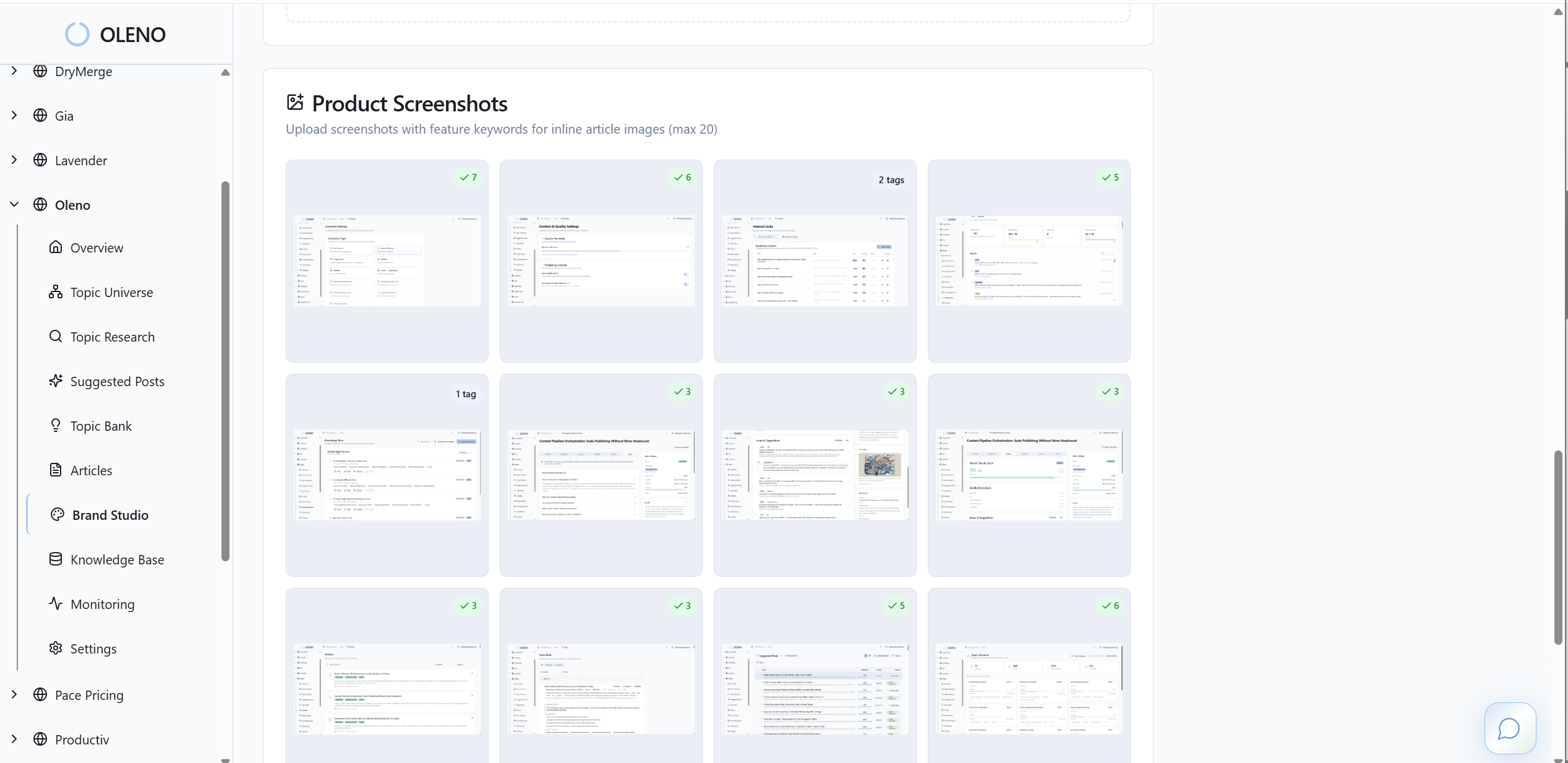
This turns “remember to check X” into “the system won’t let X ship wrong.” The result is fewer near-duplicates entering your index and less frustrating rework later. It’s not about locking creativity. It’s about preventing the avoidable mistakes that dilute clusters and slow your winners.
Deterministic Pipelines With QA Gates
Oleno runs work through a consistent flow: discover, angle, brief, draft, QA, and publish. At each stage, quality gates check structure, accuracy boundaries, canonicals, schema, and URL safety. Nothing goes live until it passes. That makes canary rollouts straightforward — and rollbacks clean if thresholds slip.
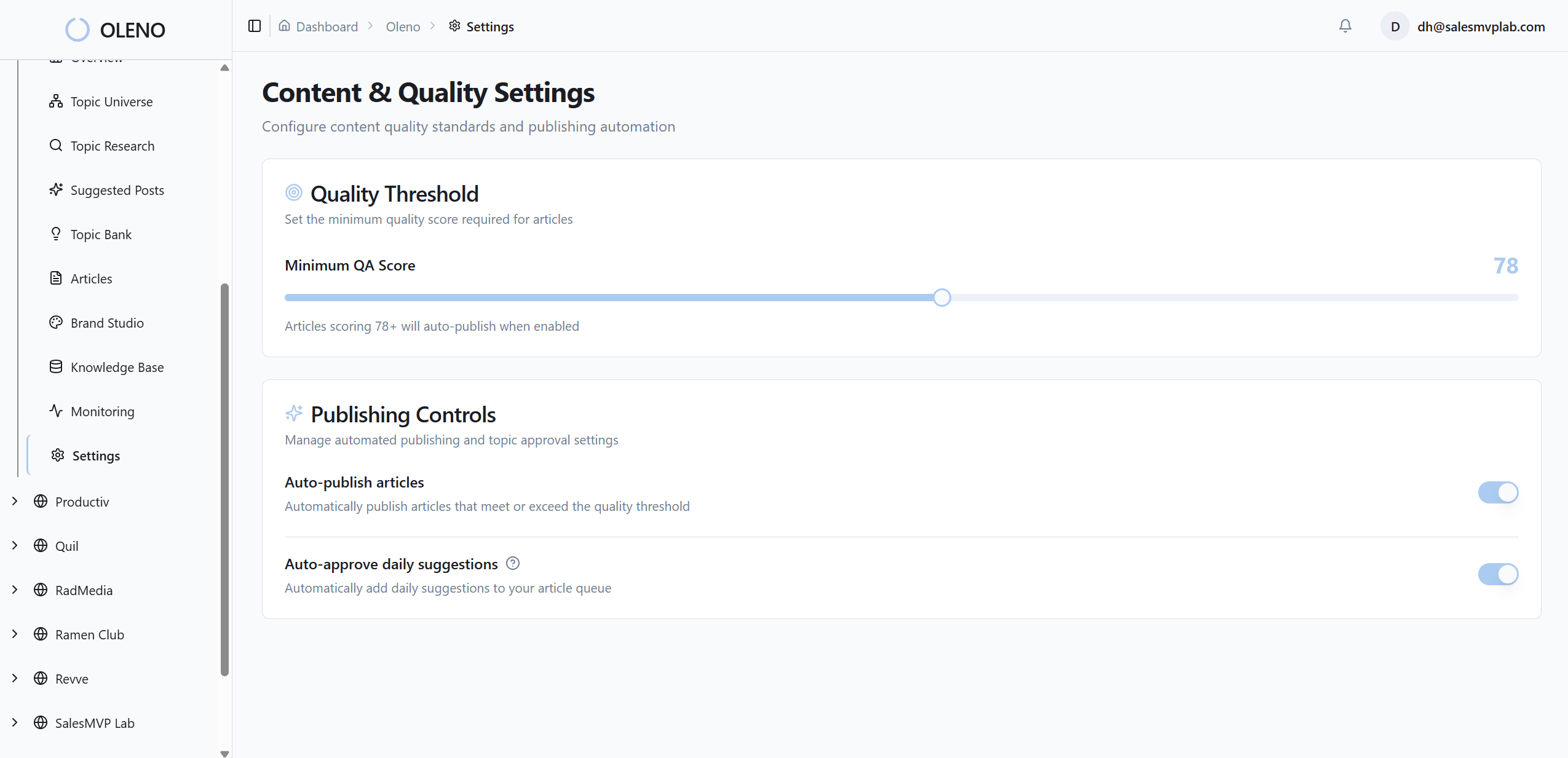
Because the pipeline is deterministic, you don’t rely on prompts or tribal memory. Execution is reliable, week after week, even when priorities shift. This is where teams feel the leverage: fewer meetings, fewer back-and-forth edits, and outputs that stick to the plan you set at the cluster level.
CMS Publishing That Reduces Risk
Oleno publishes directly to your CMS using idempotent patterns to avoid duplicates. You can stage changes, schedule releases, and map redirects as part of the same flow. If a consolidation underperforms, versioned assets make rollbacks simple — no ad hoc edits that break templates or links.
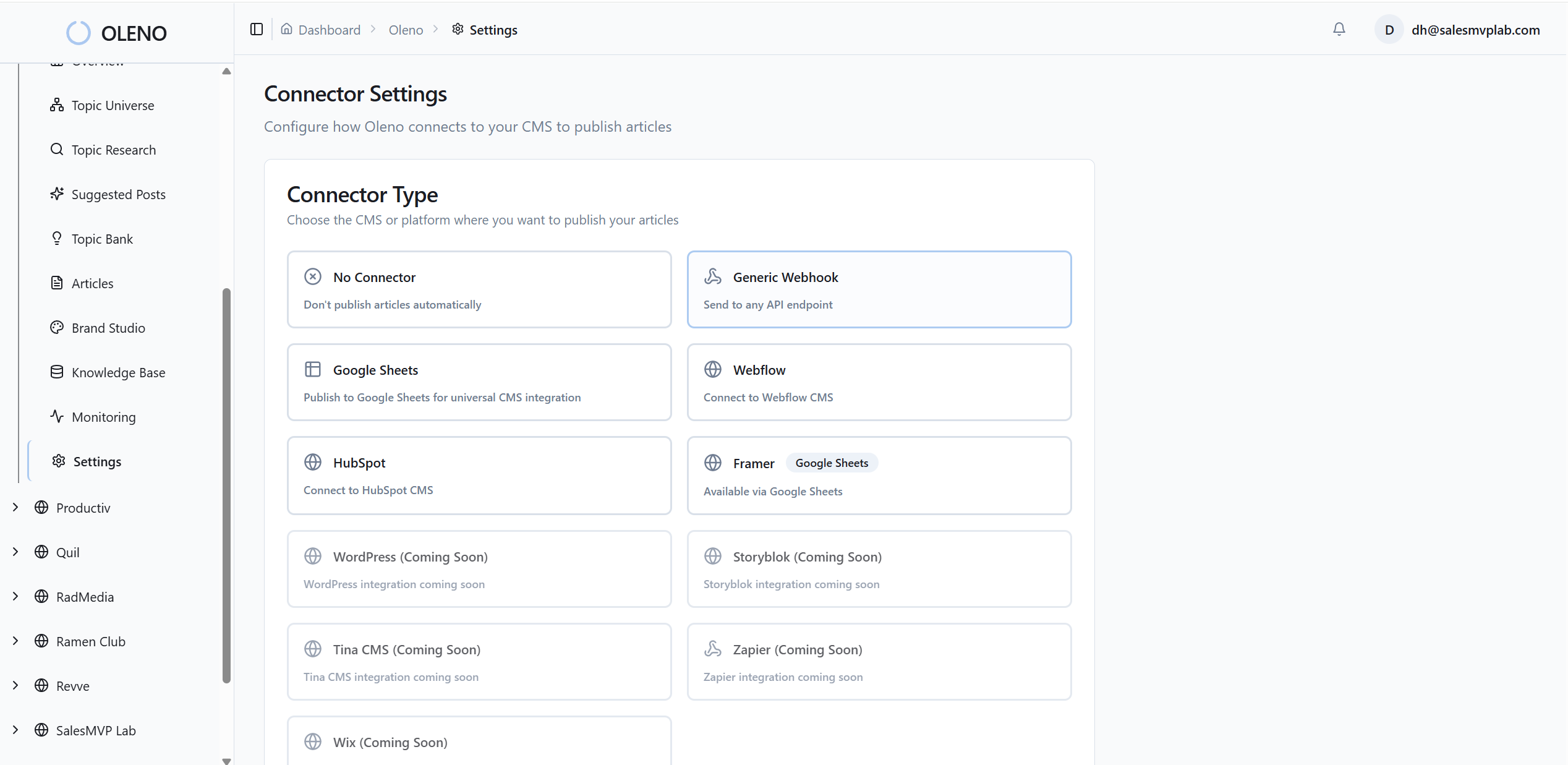
This is the practical bridge from “we decided to consolidate” to “we shipped it safely.” By controlling publishing and redirects in one place, Oleno reduces the chance of chain redirects, orphaned pages, and indexable parameters slipping back into the mix. It’s how you turn pruning from a brittle project into routine maintenance.
If you’re ready to see how this runs in your stack, Try Generating 3 Free Test Articles Now. Prefer to start smaller? Try Oleno For Free and kick the tires on governance and QA first.
Conclusion
Pruning isn’t about doing less. It’s about doing the right amount, on the right pages, with the right rules. When you consolidate by intent, fix template sprawl, and enforce governance in the system, rankings stabilize and revenue-bearing pages move. You’ll publish fewer new URLs, and see more of the ones that matter. That’s the point.
About Daniel Hebert
I'm the founder of Oleno, SalesMVP Lab, and yourLumira. Been working in B2B SaaS in both sales and marketing leadership for 13+ years. I specialize in building revenue engines from the ground up. Over the years, I've codified writing frameworks, which are now powering Oleno.
Frequently Asked Questions