Sitemap-Driven Internal Linking: A Deterministic System to Boost SEO

I used to think internal links were an editorial chore. The stuff you fix at the end before publish. Then we shipped a 3,000-word pillar that got picked up everywhere, and two of the links sent readers to stale redirects. We spent half a day patching a post that should’ve been printing authority. That’s when it clicked for me. Links aren’t copy edits. They’re infrastructure.
If you’ve ever scaled content the hard way, writers, editors, designers jogging in different lanes, you’ve felt the link debt pile up. Orphan pages. Hubs that become dead ends after a template tweak. Plugins guessing anchor text. It’s deceptively small in the moment. Then rankings slide and you’re “mysteriously” down 12% organic in a quarter. Not mysterious at all. Just physics.
Key Takeaways:
- Treat internal links as code that runs after drafting, not as manual edits
- Build a sitemap-first system: verify canonicals, map clusters, enforce rules
- Pull anchors from titles, inject at natural boundaries, and cap duplicates
- Enforce 5–8 links per article with QA gates and publish blockers
- Re-verify links before publish to avoid staleness, redirects, and wasted crawl
- Log injections and retries so audits are boring and fixes are fast
Manual Linking Is Why Your Best Articles Underperform
Manual internal linking underperforms because humans guess anchors, miss canonicals, and can’t keep pace with volume. Plugins don’t help much; they match keywords, not context, and often fabricate or reuse stale URLs. The safer path is deterministic: verified targets, title-matched anchors, and QA gates that block bad links before publish.

What actually goes wrong with auto-link plugins?
Most auto-link plugins scan text for keywords, then slap a link onto the nearest match. Helpful in theory. Risky in practice. They don’t resolve canonical URLs, they rarely consider cluster relevance, and they’ll happily link the same sentence twice if the keyword appears twice. Feels efficient. Isn’t.
Over time, this approach creates a mess: mismatched anchors, links to redirected content, and connections that dilute topical relevance instead of concentrating it. If the same anchor points to five different destinations across your site, you’re confusing both readers and crawlers. You don’t need guesses. You need rules and verification. For a grounding in anchor fundamentals, review Yoast’s internal linking guidance.
The invisible tax of fabricated and stale URLs
Fabricated URLs look fine in a draft and then fracture in production. Stale URLs silently degrade equity by sending crawlers through chains or to 404s. It’s the worst kind of tax: paid later, with interest. You won’t feel it on one post. You’ll feel it after a hundred.
The fix sounds simple, link only to verified targets from your live sitemap and re-verify on publish, but it’s hard to do with people and plugins alone. You need a system that knows your canonical map, enforces anchor rules, and blocks bad links automatically. Otherwise, you’re relying on tired eyes and good luck. There are solid strategy basics in Siteimprove’s internal linking primer, but strategy still needs enforcement.
Why editors cannot keep up reliably
Editorial cleanup doesn’t scale. As volume increases, humans miss anchors, over-optimize phrases, and skip linking to orphan pages because it takes time to find the right target. Even disciplined teams accumulate “link debt,” which turns into incidents later. The irony: the more you publish, the harder it gets to link correctly.
What you really want is a post-draft, pre-publish pass that: knows your sitemap, scores link candidates for relevance, places links at natural sentence boundaries, and never rewrites the sentence. Then it locks everything behind a QA gate. No judgment. Just rules. That’s the difference between hope and reliability.
Ready to stop editing links by hand and ship governed content instead? Start a quick test and Try Oleno For Free.
Internal Links Should Be Engineered, Not Edited
Internal links work when they’re engineered from a single source of truth, your live sitemap and canonical rules. An engineered system picks verified targets, matches anchors to titles, and places links contextually. The output is auditable, reproducible, and resistant to hallucinations or human drift. That’s the point.
What is a sitemap-first linking system?
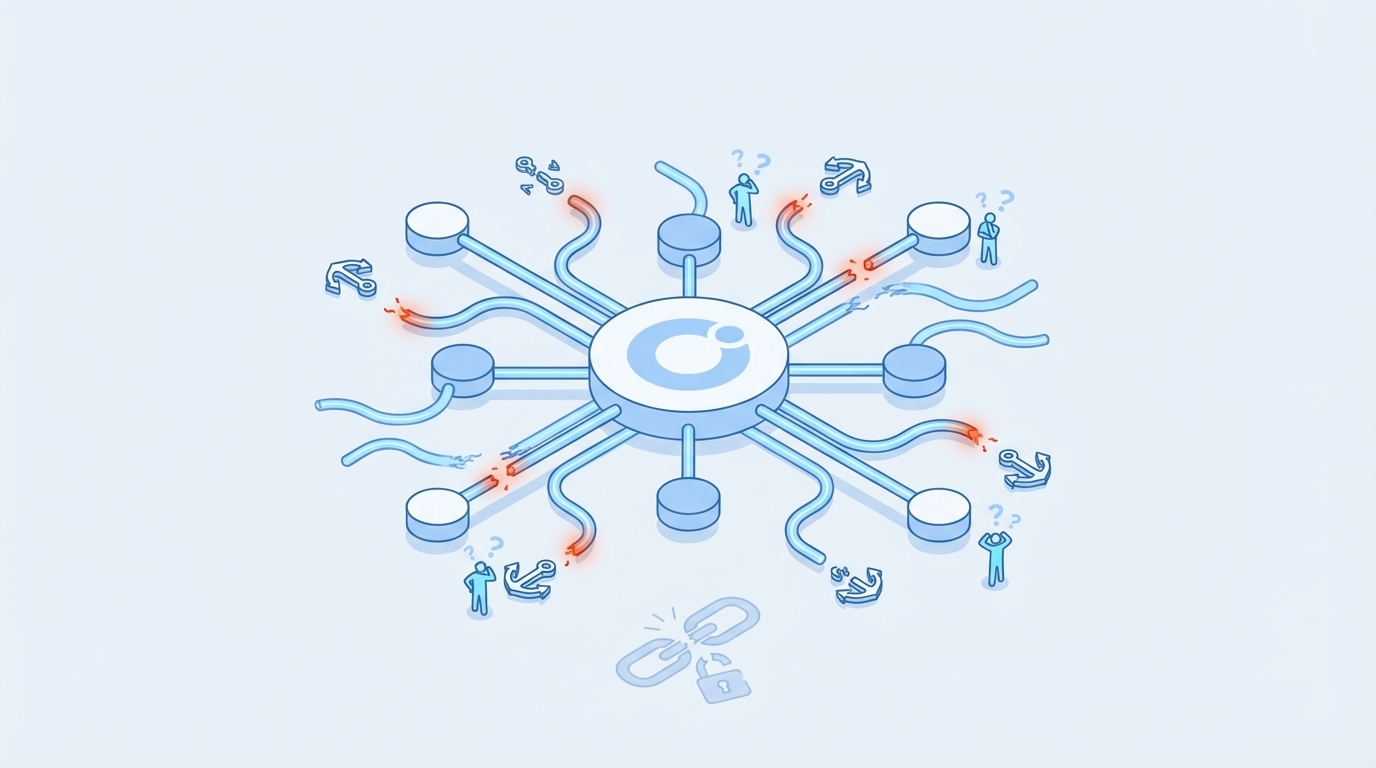
A sitemap-first system begins with parsing your XML sitemap, resolving canonicals, and enriching each URL with metadata like page title, pillar, and cluster. From there, your engine selects targets only from verified URLs, pulls anchor text from titles, and uses placement heuristics that respect meaning and tone. No guesswork. No fabricated routes.
Because the sitemap is the ground truth, your link graph stays current even when templates change or pages move. And since anchors match titles, you avoid the fuzzy synonym problem that confuses both readers and crawlers. The outcome isn’t just clean links, it’s a trail you can audit and reproduce anytime.
Why topic clusters must drive targets
Linking blindly spreads equity thin. Cluster-aware linking does the opposite; it concentrates relevance. When each URL maps to a pillar and cluster, you can prefer intra-cluster links that reinforce the topic, while reserving some capacity for hub-to-spoke and spoke-to-hub paths. You’re creating pathways that help both discovery and meaning.
This is also how you avoid cannibalization. If two posts target overlapping intent, the cluster map helps you decide which one should get the link and which should receive a different internal path. Over time, that consistency compounds authority instead of scattering it.
The Costs You Only Notice After Rankings Slip
The costs show up as wasted crawl budget, diluted equity, and invisible pages that never get pulled into the network. It’s subtle day to day and painfully obvious in the quarterly report. A deterministic, sitemap-driven pass prevents these losses by blocking stale links and enforcing safe anchors automatically.
Crawl budget and equity wasted on dead ends
Let’s pretend you run a 500-URL blog and inject six internal links per article. If 10% of those links go stale each quarter, you’ve created roughly 300 misfires a year. Each one burns crawl resources and misdirects equity. Multiply that across clusters and your most important pages get discovered and refreshed more slowly.
This isn’t theoretical at scale. The relationship between internal links and discovery has been observed repeatedly, including in the 10,000-page test from Search Engine Journal. Preventing stale links upstream, before publish, is cheaper than cleaning them up downstream after rankings slip.
Rework, incidents, and missed opportunities
Broken anchors trigger rework. Editors scramble to fix posts. Engineers hotfix templates. Meanwhile, the hub you wanted to rank never gets consistent, relevant links. Or worse, it’s a dead end because pagination or canonical settings changed. That’s not a content problem. That’s a process problem.
A deterministic pass with logging and retries reduces incidents and keeps velocity steady. It also creates a reliable path for elevating orphan pages into the network. You get fewer emergencies and cleaner authority signals. If you need a reminder on the benefits side, skim seoClarity’s overview of internal linking strategies.
If this sounds familiar, it’s time to systemize the fix. Spin up a sandbox and Try Generating 3 Free Test Articles Now.
When Link Drift Hits Production, Everyone Feels It
Link drift shows up as broken anchors, mismatched targets, and hubs that quietly lose their spokes. The human cost is context switching and late-night patches. The brand cost is trust. A pre-publish verification loop turns “we hope” into “we checked”, and blocks the worst issues before they become incidents.
When a big post ships with broken anchors
You know this moment. The post goes live, traffic spikes, and two DMs roll in with 404 screenshots. Now you’re triaging instead of promoting. It’s avoidable. Verify every URL against the live sitemap and run a link test job before publish. If anything fails, block the publish and re-run after remediation.
The key is avoiding manual spot checks. People are great at story and nuance; machines are better at rules and repetition. Let the system verify links, anchors, and canonical targets. Your team stays on narrative and distribution instead of ops firefighting.
When your hub becomes a dead end
Hubs decay. Pagination changes. Canonical tags flip during a redesign. A few template tweaks and suddenly spokes don’t point home. You won’t notice immediately. Rankings fade slowly first, then a lot. A sitemap-driven pass catches these shifts, reroutes links to canonicals, and surfaces orphan candidates for reintegration.
Think of it as routine maintenance, not a rescue mission. An automated map makes it trivial to spot missing edges and reattach them. Your hub’s job is to connect. The system’s job is to verify it still does.
A Deterministic Pipeline For Sitemap-Driven Linking
A deterministic pipeline maps the sitemap to clusters, enforces anchor rules, and validates every link before publish. It logs decisions, handles edge cases, and limits links per article for readability. The outcome: 5–8 clean, contextual links that reinforce authority without breaking the narrative.
How do you map your sitemap to clusters?
Start by parsing the sitemap and de-duplicating by canonical. Enrich each URL with page title, H1, primary topic, and pillar. Then assign it to a cluster, flag hubs and spokes, and set priority. This becomes your candidate pool, and it’s the only place link targets are allowed to come from.
Exclude redirects, noindex routes, and soft-404s. Keep the map fresh with a daily job and checksums so you can detect changes quickly. When the map is current, every other rule gets easier: anchors, placement, validation, and publish gating.
Anchor text rules that keep you safe
Anchor text should be predictable and consistent. Pull it from the target page title. If the title is long, prefer the shortest exact phrase that preserves meaning. Allow a small set of semantic variants per cluster to avoid repetition, but never keyword stuff or invent anchors that don’t reflect the destination.
If a title and anchor don’t align, don’t force it. Pick another candidate or adjust the sentence. Safety beats variety every time. And block generic anchors like “learn more” or “click here”; they add no meaning and age poorly.
Practical anchor guardrails to enforce:
- Match anchor text to the destination title or a faithful substring
- Allow a limited, pre-approved variant list per cluster
- Disallow generic anchors and any that don’t map to a verified title
- Cap one link per sentence and avoid anchors in headings or CTAs
Scoring, validation, and edge cases in one loop
Link candidates should be scored by cluster proximity, recency, and uniqueness. Then enforce constraints: 5–8 links per article, no duplicated targets, and a balanced mix of hub and spoke paths. Validation blocks any URL that isn’t verified in the sitemap, including redirects. Re-check after render to catch template-level issues.
Handle orphans proactively. Keep a queue of URLs that lack inbound links and auto-suggest two or three placements in upcoming posts. Log every decision, what was added, skipped, or blocked, so audits are straightforward and changes are traceable.
Validation checklist to serialize:
- Verify URL is in the sitemap and resolves to canonical
- Confirm anchor-text-to-title alignment
- Prevent duplicate targets within the same article
- Re-validate links after render and before publish
How Oleno Automates Sitemap-Driven Internal Linking End To End
Oleno automates internal linking with a sitemap-first, rule-governed system. It imports your sitemap, resolves canonicals, maps clusters, and injects 5–8 verified links with title-matched anchors. Placement happens at natural sentence boundaries, and 80+ QA checks block anything that isn’t safe to ship, before it hits your CMS.
Verified sitemap ingestion and cluster mapping
Oleno imports your verified sitemap, de-duplicates by canonical, and enriches each URL with titles and cluster assignments so your link targets are always current. Redirects and noindex routes are excluded by design. That keeps the candidate pool clean and significantly reduces stale-link risk.
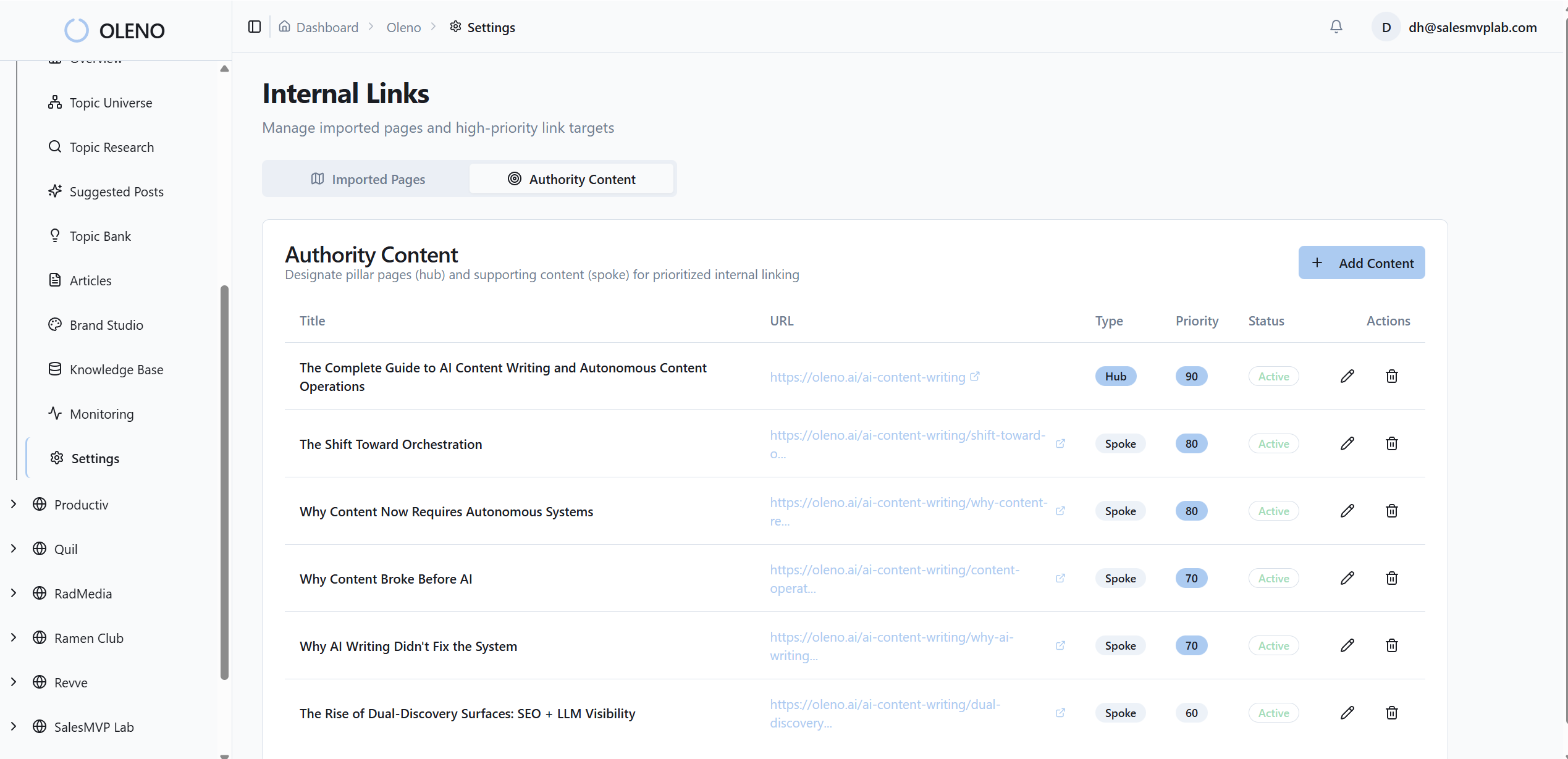
Because the map is refreshed continuously, cluster-aware linking stays reliable as your site evolves. Hubs, spokes, and priority pages are clear, so the system can favor intra-cluster links while maintaining healthy hub-to-spoke paths. You get structure that compounds authority, not randomness that erodes it.
Anchor matching and contextual placement engine
Oleno pulls anchors directly from destination page titles and matches them to sentences with high semantic relevance. Links are injected at natural boundaries inside paragraphs, never in headings or CTAs, and capped at one per sentence. The goal isn’t density; it’s clarity and context.
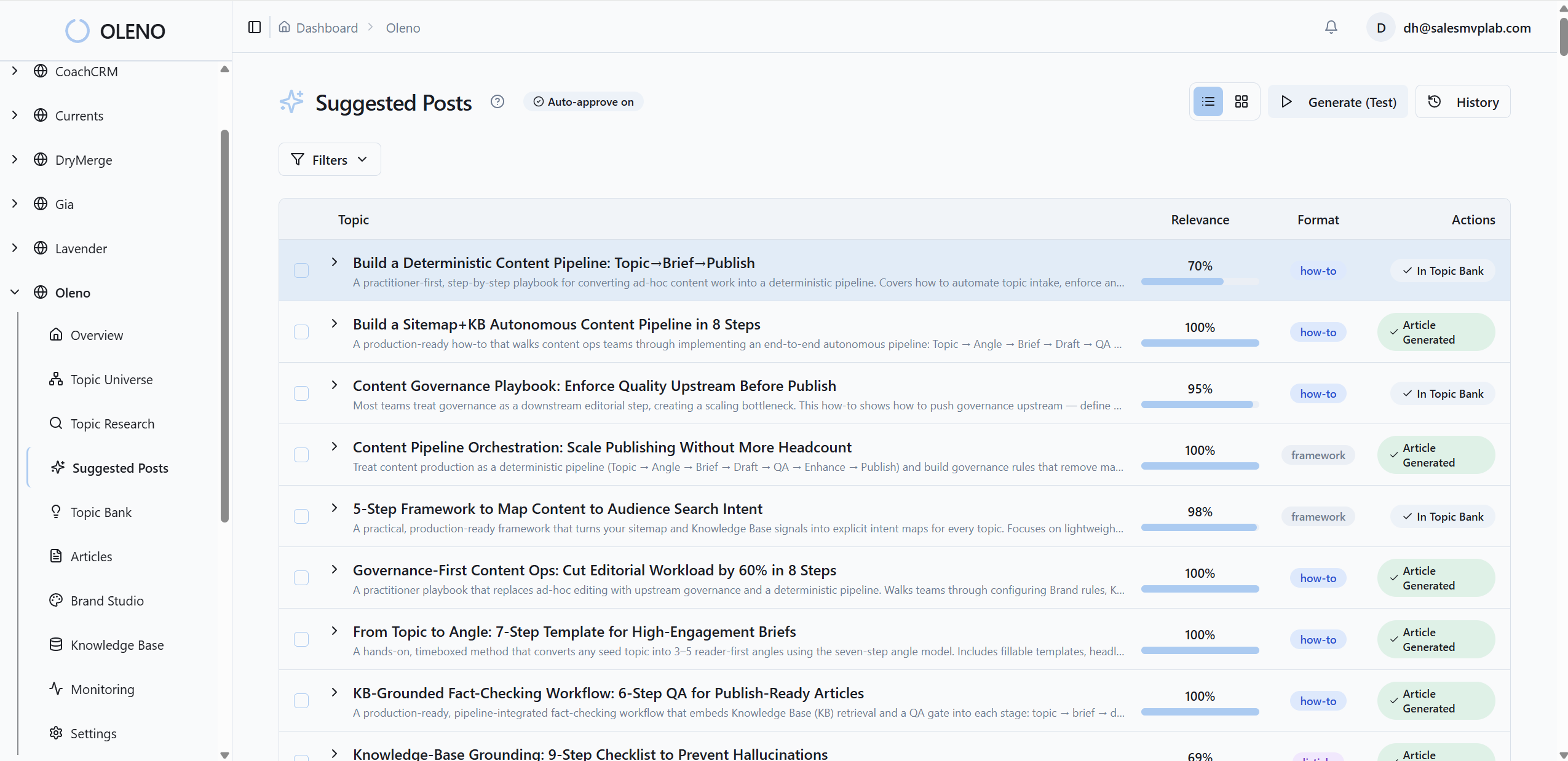
Deterministic rules prevent duplicate targets within a post and keep the total link count in the safe 5–8 window for readability. Since anchors mirror titles, you avoid the synonym lottery that confuses both crawlers and readers. The effect is subtle in one article and compounding across a library.
QA gates and publish blockers to prevent bad links
Before anything goes live, Oleno runs 80+ checks across structure, anchors, link targets, and placement. Bad links don’t get edited later, they don’t publish. If a verification fails, Oleno retries after remediation and logs the event. You get an audit trail you can actually use.
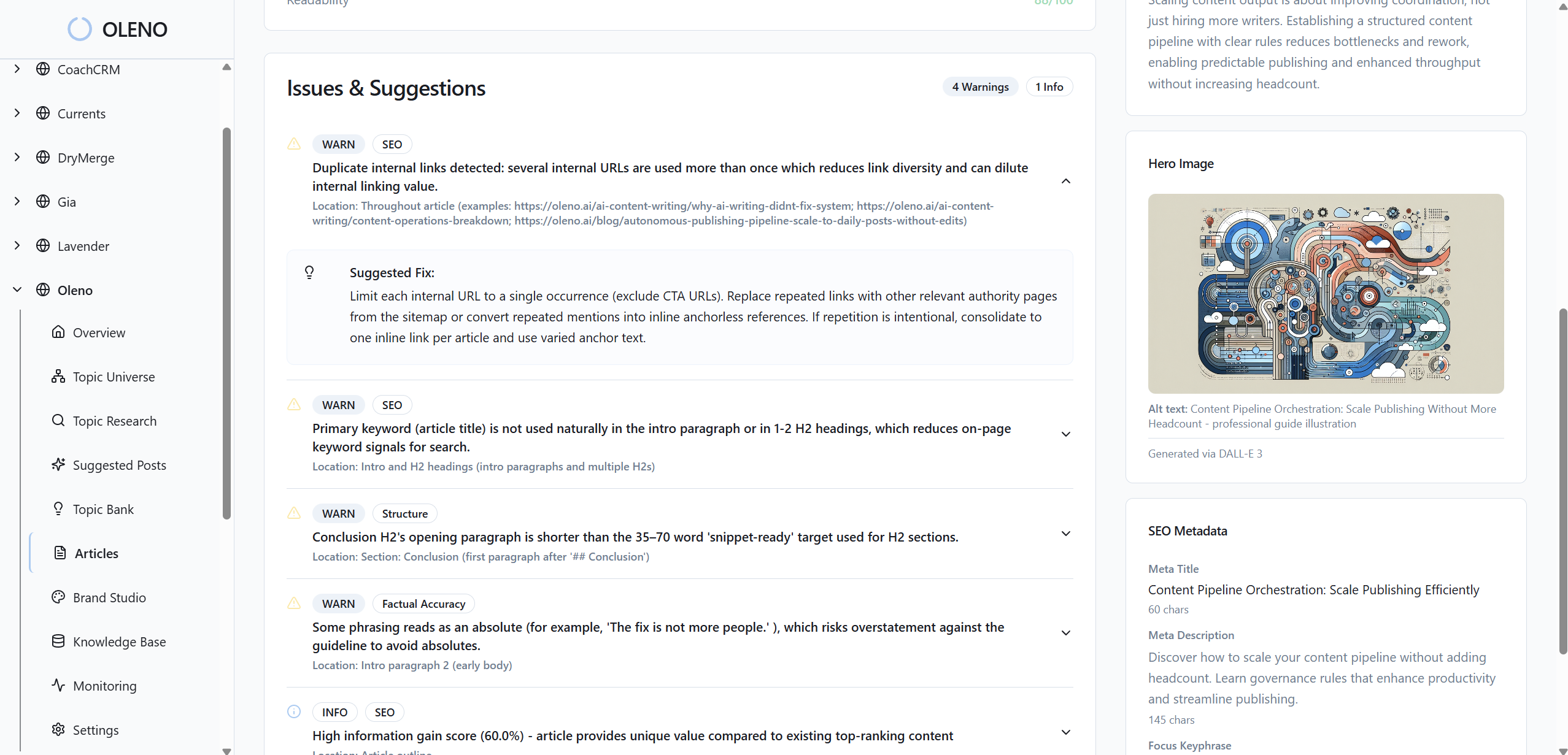
When QA passes, Oleno converts markdown to CMS-ready HTML and delivers through mapped connectors to WordPress, Webflow, or HubSpot. That end-to-end path, sitemap verification, deterministic injection, QA gating, and clean publishing, reduces incidents and gives your team back hours every week. Want to see the governed version of “set and forget”? Try Using An Autonomous Content Engine For Always-On Publishing.
Conclusion
You don’t fix internal linking with more careful editors. You fix it by turning links into a deterministic, sitemap-driven system that runs after the draft and before publish. Verified targets. Title-matched anchors. Contextual placement. QA gates that block the bad stuff. Whether you build it yourself or let Oleno run it, the outcome is the same: cleaner paths, stronger clusters, fewer incidents, and authority that compounds month after month.
About Daniel Hebert
I'm the founder of Oleno, SalesMVP Lab, and yourLumira. Been working in B2B SaaS in both sales and marketing leadership for 13+ years. I specialize in building revenue engines from the ground up. Over the years, I've codified writing frameworks, which are now powering Oleno.
Frequently Asked Questions