SME Interview to SEO Article: 5-Step Pipeline for Small Teams

Most teams have no shortage of expert insight. You have smart SMEs. Strong opinions. Plenty to say. The problem is what happens between the interview and publish. Drafts get stuck. Structure slips. Claims drift. And the final piece reads like a recap, not a page that wins a snippet or moves a buyer one step closer to “tell me more.”
I learned this the hard way. At LevelJump, we recorded founder videos, transcribed them, then tried to “shape it up” after. Fast? Sure. Search-ready? Not really. At PostBeyond, I could write four high-quality posts a week myself because I had a structure baked in. The minute we scaled the team, quality wobbled. Not because people weren’t talented. Because we didn’t lock structure, voice, and product truth before writing.
Key Takeaways:
- Treat the outline as a contract: intent, subheads, claims, and links get locked before you hit record
- Record once, then auto-generate a brief that maps quotes to publishable H2s/H3s
- Ground every claim in your knowledge base to cut legal churn and protect product truth
- Use QA-as-code for voice, structure, and link checks so one light edit replaces five rounds
- Publish on a steady cadence with idempotent workflows to protect momentum
Why Written Drafts From SMEs Keep Failing Search And Sales
Most SME drafts fail because they optimize for coverage, not intent. Search doesn’t reward meandering expertise; it rewards structured answers that match query types and next-step paths. When drafts skip intent mapping, you get great quotes buried in generic sections that never earn a snippet or drive evaluation clicks.
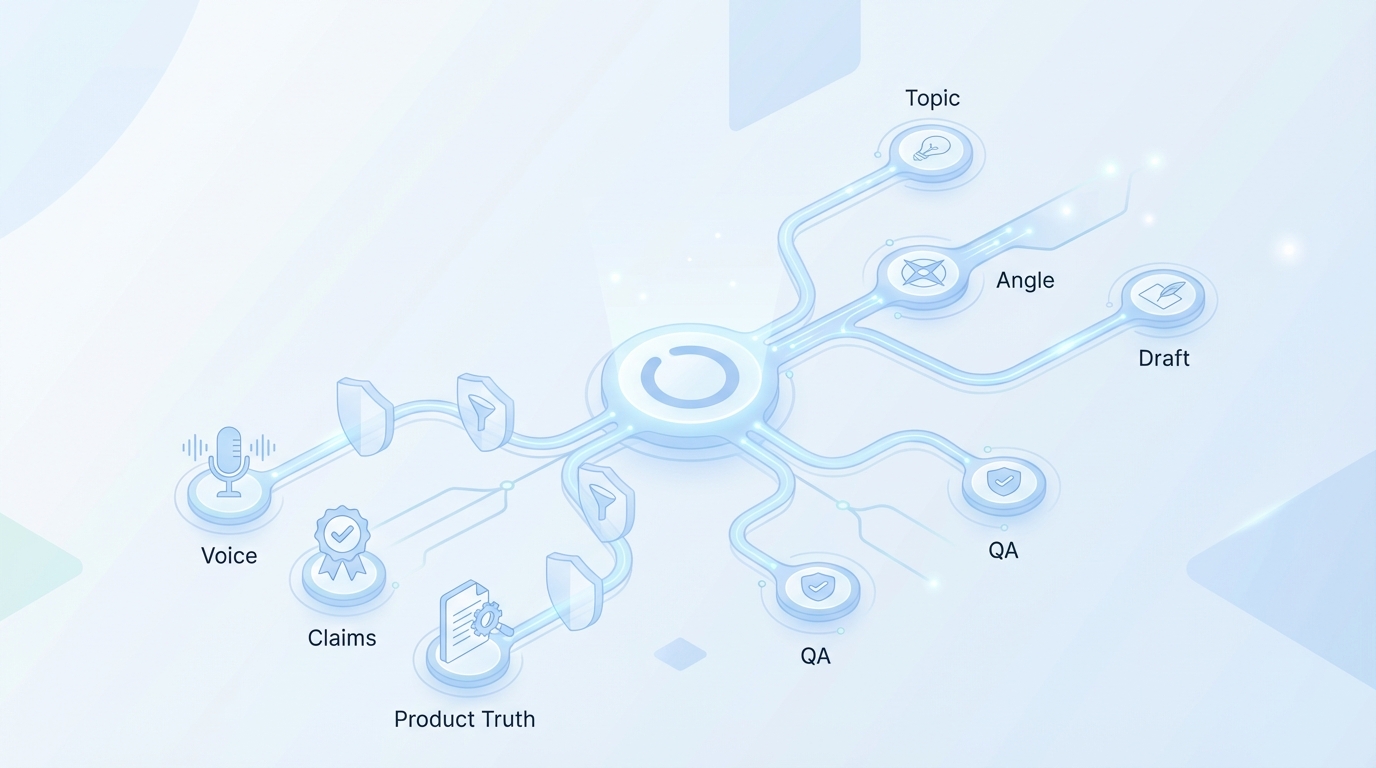
The metrics that matter for search intent and conversion
If your SME interview doesn’t map to intent, the article won’t win. Start by forcing alignment to navigational, informational, and transactional signals, then define success up front: target queries, snippet angle, internal links, and a CTA that matches the section’s job. Without this, editors chase coherence instead of outcomes.
When we did this well, drafts practically edited themselves. H2s mirrored buyer questions. H3s held direct answers. Quotes were captured to slot neatly under each subhead, not sprinkled “where they fit.” If you’ve ever shipped a piece that ranked but didn’t convert, you’ve felt the gap. Intent tells you what to answer and where to send readers next.
Here’s the sanity check I like using:
- Does every H2 answer a query with a snippet-ready paragraph?
- Does every section point to a logical next step on your site?
- Are the SME’s quotes mapped to the questions buyers actually ask?
Interjection. If you can’t answer yes to those three, you’re still guessing.
For more detail on long-tail buying intent, I like how CXL breaks down long-tail SEO tradeoffs. The point isn’t more keywords. It’s better matches and clearer paths.
Why “record then transcribe” usually misses SEO structure
Transcripts meander. That’s their job. Editors then spend hours retrofitting structure, which usually means cutting good lines or forcing awkward transitions. The fix is simple: write the table of contents before you hit record. Tell the SME the exact soundbites you need for each subhead. Park tangents for later posts.
I’ve seen teams shave days off production with this one move. No more “where does this go?” debates. No more half-rewrite to make room for an off-the-cuff story. And because you’re recording against an outline, the transcript already mirrors the page that will publish. That beats carving marble from a boulder.
If it’s not in the outline, you don’t chase it. You capture it and tag it as a separate angle for another article. That protects focus. And it keeps you from turning one strong idea into a grab bag that pleases no one, least of all the reader.
[Early CTA] Ready to see this pipeline in a working system? Try a hands-on run: Try Generating 3 Free Test Articles Now.
The Real Bottleneck Is Structure, Not Ideas
The bottleneck isn’t convincing SMEs to write more. It’s converting their expertise into pages machines and buyers can parse. When teams make the outline the contract, intent, subheads, claims, and links, velocity climbs and quality stabilizes. The work stops depending on one heroic editor’s judgment.

What traditional approaches miss
Teaching SMEs to “write like marketers” sounds sensible. It rarely works. The job isn’t to turn experts into writers; it’s to extract expert language and wrap it in a structure that search and humans can scan. That’s why the outline matters so much. It controls the narrative and prevents drift.
I’ve watched teams burn weeks trying to “get more from the SME” when what they really needed was a stronger brief. If the outline sets the questions, the SME just answers them. We then place those answers where they belong, and we already know which internal link supports evaluation. Everyone’s time gets used for what they’re best at.
One more thing traditional approaches miss: internal links. When outlines don’t specify the destination content, sections become dead ends. That’s a conversion tax you pay quietly every month. Fixable. You just decide it up front.
Where voice and product truth drift
Drift doesn’t announce itself. It accumulates. A vague feature reference here, a banned term there, an outdated claim that sneaks through. The way around this isn’t more review meetings; it’s attaching approved product truths and banned terms to the brief so editors never have to guess.
I like to cite exact KB excerpts next to each claim field. It turns “sounds right” into “source-backed.” When reviewers see the provenance, they verify instead of rewriting. And your voice stays intact because you’re enforcing rules mechanically, not by line-editing every sentence.
Google’s own guidance on “helpful content” reinforces this bias toward clarity and reliability over fluff. It’s worth a skim: Create helpful, reliable content.
The Hidden Cost Of Unstructured SME Content
Unstructured SME content doesn’t just slow you down, it taxes every part of the system. Time ballooned on retrofits. Accuracy kicks to legal. Conversion drops because sections don’t map to next steps. The individual costs seem minor. Stack them up and you’re shipping half of what you could.
Time lost to retrofitting structure
Let’s pretend one 1,500-word post requires four hours to carve a transcript into H2s/H3s and two more for copy fixes. Six hours per article. At eight articles per month, there’s your 48-hour tax. A locked brief with mapped quotes shrinks that to about an hour. You just bought back a week.
We ran this math on a small team earlier this year. Same SME time. Same topics. Different process. Velocity didn’t jump because people worked harder. It jumped because structure eliminated rework. And once you bank those hours every month, you can finally cover breadth and depth without burning out the team.
The trick is consistency. If every piece demands a different process, savings melt away. This is where systems, rules encoded and steps repeated, earn their keep.
Accuracy risk and legal review churn
When claim rules aren’t explicit, drafts quietly accumulate risky or vague statements. Legal sees one incorrect feature line and the content can sit for a week. Not because it’s controversial. Because it’s unclear. If you pre-attach approved claims with citations and run a “claim linter,” review turns into verification.
I’ve watched teams shift from “we fixed it in legal” to “we confirmed it in legal.” That’s a different world. Less ping-pong, fewer versions, and far less anxiety for anyone hitting “publish.” And yes, fewer misses where a piece ships with a nuance you didn’t actually support.
If you want a sense of how structured SEO efforts connect to outcomes, skim Omniscient Digital’s case studies. Notice the throughline: process, not heroics.
The Pain Of Rewrites And Lost Momentum
Rewrites kill momentum. Not because editing is bad, but because rewriting late is expensive and demoralizing. You get brilliant quotes and ship a mediocre article because structure and claims weren’t set. SMEs stop saying yes to interviews. Cadence slips. Pipeline stutters.
When a great interview becomes a mediocre article
I’ve lived this one. We once captured two killer customer stories in a 45-minute interview. The final piece? A lukewarm think-piece with no snippet-ready subheads and vague product tie-ins. The content wasn’t wrong. It just didn’t do a job. That’s how momentum dies, quietly, one “fine” piece at a time.
The fix isn’t “be better editors.” It’s protecting the narrative upstream. Freeze the outline. Don’t let a strong quote yank you off intent. Use the quote as a callout or a sidebar, great. But the subhead’s job remains the subhead’s job. Readers feel that clarity. So do search engines.
Once you taste the difference, it’s hard to go back. Pieces ship faster. Review gets lighter. SMEs actually recognize their words on the page. Trust builds.
What happens when cadence breaks?
Cadence is a compounding asset. Break it, and you reset momentum while inviting every ad hoc priority to fill the gap. That’s how you end up doing sales decks instead of publishing. Protect cadence with staging rules and a publishing checklist that doesn’t depend on one person’s availability.
I like guardrails: scheduled slots, fallbacks for missed interviews, and a rule that no single failed publish can derail the calendar. It keeps the system honest. It also gives you cover when other parts of the business pull you into urgent work. The content engine still ships.
If you’re constantly getting pulled into reactive tasks, you’ll appreciate a lightweight request triage approach built for small teams. It keeps the cadence intact, which is the point.
[Mid CTA] Tired of babysitting drafts and chasing edits? You can offload the grind while keeping control: Try Using An Autonomous Content Engine For Always-On Publishing.
A 5-Step Interview-To-Article Pipeline That Small Teams Can Run
The pipeline works because it sets rules once and repeats reliably. You design an SEO-first interview, record to the outline, generate a locked-structure brief, ground claims in your KB, run QA-as-code, then publish on a steady cadence. Fewer meetings, fewer rewrites, more articles that actually do a job.
Design an SEO-first interview guide
Start by drafting the publishable H2s and H3s with target queries and explicit intent. For each subhead, write two to three questions that pull specific stories, numbers, and examples. Add “proof needed” notes so you know what requires a KB citation or screenshot. The goal is simple: record against the page you intend to publish.
You’ll notice something when you do this. Interviews tighten up. SMEs answer the exact questions buyers ask because you put those questions on the page before the call. Editors stop guessing. And you can hand this guide to anyone on your team and get consistent, usable output. That’s leverage.
If you want a deeper refresher on long-tail opportunities and why specificity wins, Ahrefs’ primer on long-tail keywords is a solid foundation.
Generate a locked-structure brief and map quotes
Record 45 to 60 minutes with good audio and speaker diarization. Transcribe, then auto-generate a brief that keeps your H2s/H3s, adds snippet-ready intros, and maps quotes to sections. Pull SERP intent and FAQs to close coverage gaps without bloating. This is the pivot from raw transcript to publishable structure.
Two things matter here: don’t let the tool re-outline your article, and don’t let gaps slip by unnoticed. If the SERP shows a recurring objection, address it in a short H3 or a callout. If a quote is perfect but off-topic, tag it for another post and move on. That discipline keeps velocity high without sacrificing depth.
Ground, QA, and publish on a reliable cadence
Attach approved product truths and claim boundaries to each section. Trigger a “claim checker” to flag statements lacking a source. Add internal links to the most relevant use-case explainer or comparison next step. Then run a light editor pass with QA-as-code for voice, structure, banned terms, and link integrity. Publish idempotently with metadata set in the brief.
This is the boring part. You want boring here. The brief contains the title, schema, TL;DR, and image alt text. The publisher applies them. If a publish fails, it retries and never duplicates. The system logs what shipped and what didn’t. You enforce a weekly cadence and remediate failures quickly. That’s how output compounds.
How Oleno Automates The Workflow While Preserving Voice And Product Truth
Oleno helps small teams run this pipeline without growing headcount or adding coordination overhead. You define voice, claims, and product truth once. Oleno enforces them automatically as content moves from Discover to Brief to Draft to QA to Publish. The execution becomes predictable, while your narrative stays opinionated.
Governance-first voice, claims, and knowledge grounding
Oleno starts with governance, not output. You define brand voice, preferred phrases, banned terms, and CTA placement. You encode approved product truths and claim boundaries. You upload internal docs so drafts pull from real knowledge, not memory. The system applies these rules everywhere so voice stays consistent and claims stay safe.
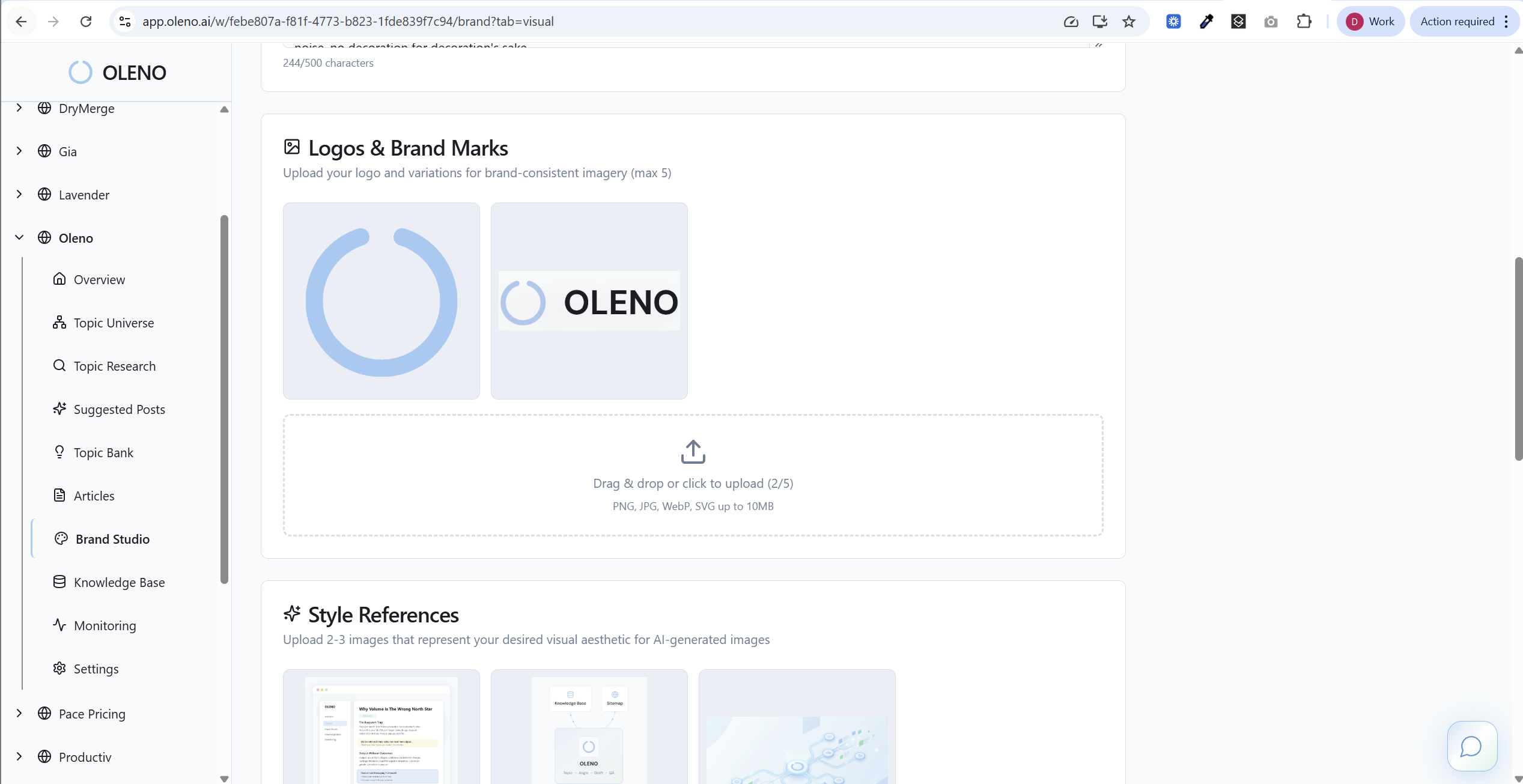
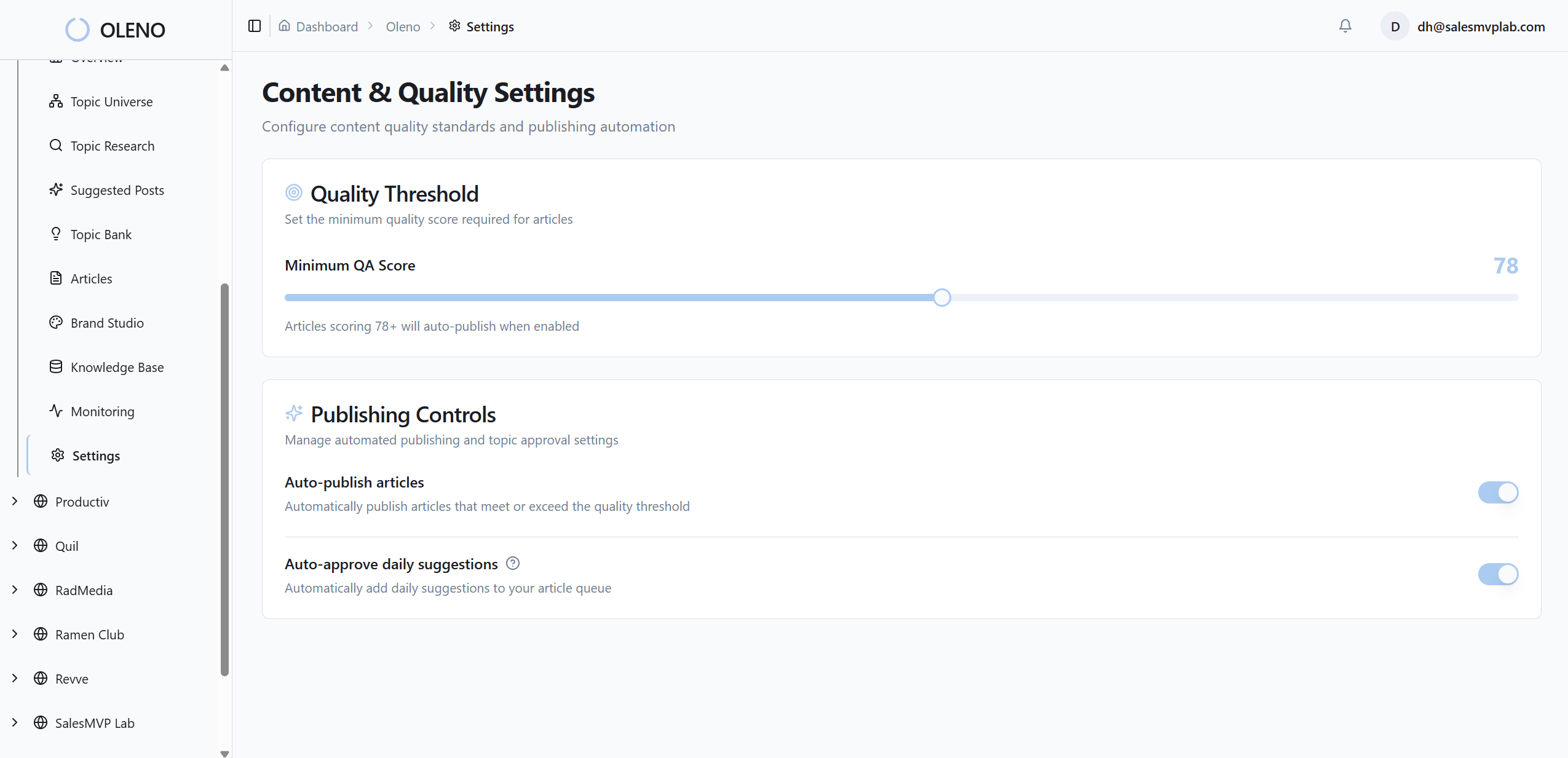
In practice, this means editors stop line-policing tone and accuracy. Oleno’s quality gates check voice and narrative structure before anything moves forward. SMEs see their phrasing preserved as quotes and callouts, while risky language gets flagged early. Your team focuses on the story and specificity, not chasing commas or disclaimers.
QA gates and publishing reliability, built for small teams
Oleno blocks publishing until quality checks pass: structure compliance, clarity, repetition, factual grounding, and internal link integrity. If something fails, it’s revised automatically against your rules. When it’s ready, Oleno publishes directly to your CMS, WordPress, Webflow, HubSpot, and more, with idempotency and scheduling so retries never double-post.
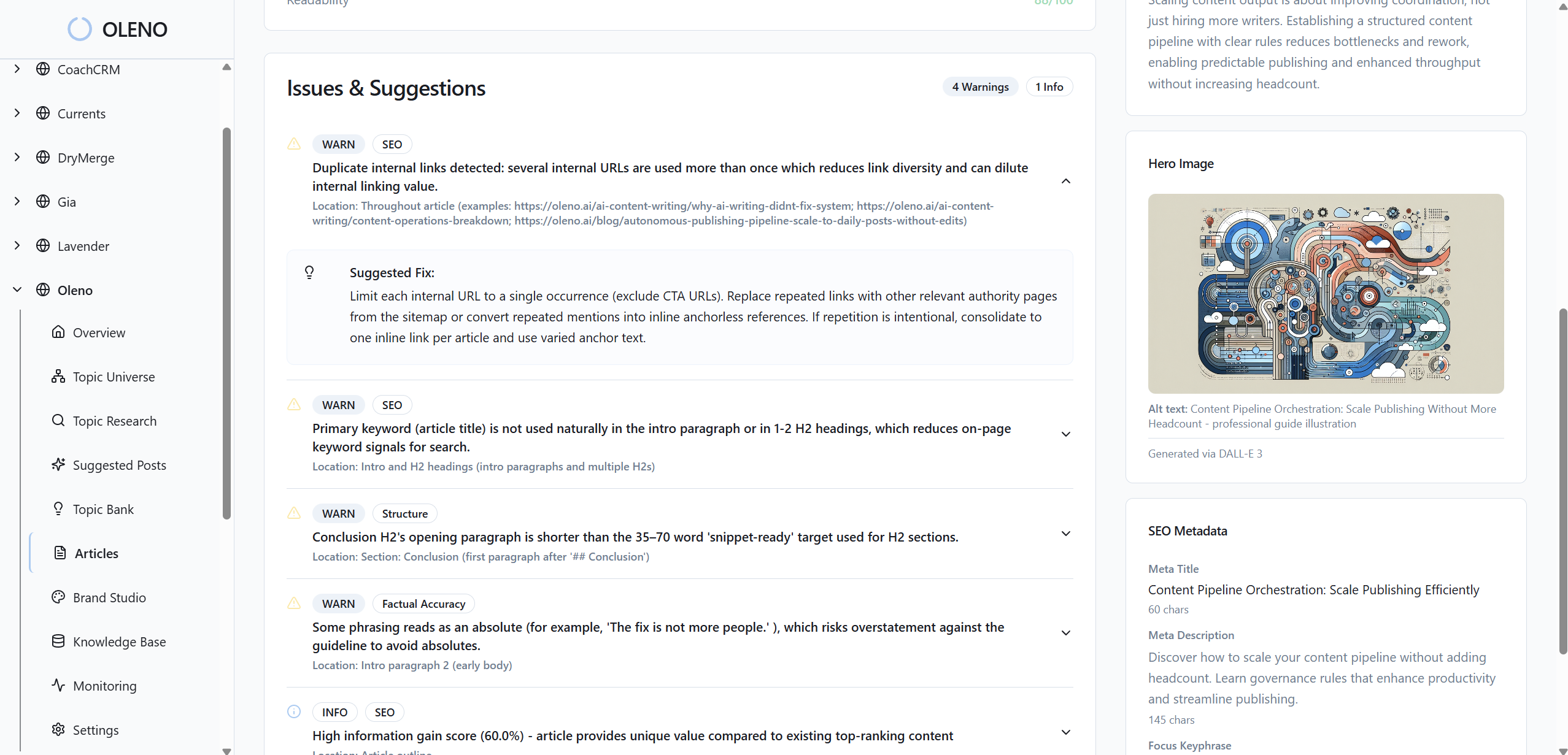
That operational layer matters. Small teams can’t afford fragile workflows. Oleno’s steady cadence, deterministic pipelines, and visibility into what’s running help you protect momentum, even when priorities shift. It replaces manual coordination, not your strategy. And it ties back to the costs we walked through, less rework, safer claims, more pages that do their job.
If you’re ready to operationalize this approach without adding headcount, Oleno is built for it. Configure the rules once. Let the system run the work. Then refine as you learn. Want to see it with your topics and voice? Try Oleno For Free.
Conclusion
You don’t need to turn SMEs into writers. You need a pipeline that captures their expertise and publishes it in structures buyers and machines can actually use. When the outline is the contract, claims are grounded, QA is code, and publishing is reliable, you ship more, without inventing features or watering down voice. That’s how small teams punch above their weight and stay consistent week after week.
About Daniel Hebert
I'm the founder of Oleno, SalesMVP Lab, and yourLumira. Been working in B2B SaaS in both sales and marketing leadership for 13+ years. I specialize in building revenue engines from the ground up. Over the years, I've codified writing frameworks, which are now powering Oleno.
Frequently Asked Questions