Snippet-Ready Article Framework: H2 Openers, Paragraph Size & Schema

Most teams assume snippets are about polish. Clean writing, including the rise of dual-discovery surfaces:, bold ideas, clear headlines. Nice, but not enough. The extractors want structure they can trust more than adjectives you love. If your sections don’t open with compact answers, machines won’t risk quoting you. That’s the hard truth that bites even strong writers.
I learned this the long way. Years ago, we scaled Steamfeed to 120k monthly visitors with depth and breadth. Tons of good content. But when I looked back, the pieces that got lifted into cards or quoted in roundups had one thing in common: short, precise openers that stood on their own. Not just pretty sentences. Boundaries the machines could grab.
Key Takeaways:
- Treat H2 openers as extractable answers, not introductions
- Size the first paragraph of every H2 to 40-60 words, three sentences
- Write for dual discovery: search snippets and LLM citations
- Add JSON-LD early and validate before publishing
- Block publication when opener length, schema, or alt text fail checks
Why Most Teams Miss Snippets Even With Strong Writing
Most teams miss snippets because their structure hides the answer. Extractors prioritize short, self-contained openings they can quote safely. Without a 40-60 word, three-sentence opener, your section becomes guesswork. For example, a “Why X matters” header with a 180-word story opener almost never gets pulled.

Structure is an extractability signal, not a style preference
Structure tells machines where an answer starts and ends. Humans forgive context wandering, extractors don’t. They need boundaries. A tight opener, predictable paragraph size, clean headings, and schema together signal “safe to lift.” It’s less about beautiful prose and more about clarity under constraints.
Back at PostBeyond, I could ship 3–4 strong posts a week because I followed a strict writing framework. The lift wasn’t talent. It was rules. Direct openers, including the shift toward orchestration, consistent paragraph sizing, definitions on the spot, and minimal pronouns. When I deviated, our quotes dropped. When I stayed disciplined, we got pulled more often.
You don’t need to guess here. The constraints are known. Keep openers three sentences long, 40-60 words total. Make the first sentence the answer, not a tease. Align with the helpfulness guidelines in Google’s Creating Helpful Content. The “style” is actually a retrieval contract.
The simple test teams rarely run
Open any recent article. Copy the first 50 words after each H2 into a blank doc. Do they read like a complete answer? No stray pronouns. No “as above.” No detours. If you can’t paste that block into a card without losing meaning, the section isn’t extractable.
I run this test in reviews. It’s uncomfortable at first because it exposes how much we rely on context. But within a week, writers start drafting openers first, then filling in the rest. Velocity improves because we avoid late-stage surgery. Bonus: sales can finally lift clean definitions into decks without rewrites.
If you want a forcing function, time-box it. Ten minutes per H2. No adjectives, no preambles. Answer → rule → example. You’ll fix 80% of snippet misses with that habit alone.
The Real Root Cause Of Low Citation Rates
Low citation rates don’t come from weak ideas. They come from ambiguous chunks. Extractors avoid blocks with unclear boundaries, including why content broke before ai, pronoun chains, or bloated first paragraphs. The fix isn’t more flourish. It’s deterministic structure: short openers, stable anchors, and schema that clarifies meaning. Picture a definition lifted cleanly into a card.

What traditional advice misses
Conventional advice optimizes for readability. That’s good for humans. It’s less helpful for machines that need precise extraction targets. Missing opener templates, inconsistent microcopy, and paragraph bloat create fuzzy segments. Fuzzy equals risky to quote, so your great paragraph gets skipped.
Think of it like packaging. If the label (your opener) is long, nested, and referential, the scanner balks. If it’s crisp, consistent, and local, the scanner moves. This is why content-experience thinking matters. The frameworks in MadCap’s content experience guide underscore structure, not just style.
How dual-discovery changes your checklist
You’re writing for two surfaces now: search and LLMs. That means answer-first paragraphs, consistent anchors per section, and JSON-LD that matches intent. A human-focused intro can still work, but only after the opener does its job. If a model can’t quote your section independently, you’re leaving distribution on the table.
Dual-discovery isn’t a buzzword. It’s a constraint. The same opener that lands a featured snippet tends to be the one assistants cite. So bake the pattern into your draft flow, not as a post-publish patch. You’ll see fewer round-trips and more reuse across channels.
The Hidden Costs Draining Your Content Budget
Structural misses burn time, shrink surface area, and slow revenue work. The costs look small per article, 15 minutes here, 30 minutes there, but they pile up. Over a quarter, rework becomes a hidden line item. Imagine recapturing that time and putting it into new briefs, not fix-its.
Rework compounds when structure is unclear
Let’s pretend you ship 12 articles a month. Eight need late edits to fix bloated openers and pronoun-heavy lines. That’s 30-60 minutes per article, or 4-8 hours monthly. Spread across a quarter, you’ve lost roughly a workweek to structural cleanup. It’s not glamorous work. It’s frustrating rework.
At LevelJump, we tried to scale by transcribing founder videos. Fast, sure. But the structure wasn’t there. We spent cycles re-cutting paragraphs, adding micro-headers, and retrofitting schema. The content was smart, the packaging wasn’t. Every “quick win” turned into a long tail of edits.
If that sounds familiar, you don’t have a writing problem. Effective why schema metadata and clean strategies You have a rule enforcement problem. Rules block rework before it starts.
Missed snippet exposure reduces surface area
When sections aren’t snippet-ready, you miss paragraph, list, and table snippets. Fewer SERP surfaces, fewer zero-click exposures, and fewer assistant citations. It doesn’t take much to move the needle. Two additional snippets per month can meaningfully lift discovery across a year, with no extra articles.
This is why schema and clean markup matter. Teams that implement the basics see more stable rich results, especially for definitions and FAQs. If you want tangible examples of how markup turns into surfaces, scan Prerender’s overview of rich snippets. The mechanics apply beyond ecommerce.
Want this to run quietly in the background? Consider an autonomous system that validates openers and schema before publish. When structure is enforced upstream, rework doesn’t spread. If you’re curious, you can Try Using An Autonomous Content Engine For Always-On Publishing.
The Frustration Of Great Prose That Never Gets Quoted
Strong articles can still vanish in extractors. The issue is rarely the idea. It’s opener length, unclear anchors, or lists that run long. Extractors won’t risk lifting partial or referential text. Trim, localize, and lead with the answer. For example, define the term in sentence one before storytelling.
When your strongest article disappears in results
You’ve got a deep piece that readers love. Time on page is solid. But it never lands a featured snippet or an AI overview mention. That’s not a failure of thought leadership. It’s structure. Long first paragraphs force truncation. Pronoun chains break meaning outside context. Models skip it.
A small rewrite changes the fate of that section. Tighten the opener. Rename the H2 with a clear intent. Add a micro-definition locally. And yes, attach schema that disambiguates the block. Extractors see a safe, complete unit and lift it.
How do you turn this into a repeatable win?
Stop bolting structure on at the end. Create a simple template that forces snippet-ready openers, 40-70 word paragraphs, and JSON-LD in the right place. Add automated checks that fail the build when rules break. You’ll sleep better because the system catches drift, not a PM at 3am.
If you want to see how machines actually consume text segments, the reading patterns in Jina Reader are instructive. It’s a helpful mental model: shorter, self-contained, local clarity beats sweeping intros every time.
A Practical Framework To Make Every H2 Snippet-Ready
A snippet-ready H2 opener uses a three-sentence, 40-60 word pattern. Sentence one answers directly, sentence two adds a rule, sentence three anchors with an example. Draft the opener first, then write the section under it. For instance, define “topic cluster” in one sentence, add why it matters, then show a single cluster.
H2 opener pattern, three sentences that fit the card
Write the opener before anything else. Keep it to 40-60 words. Use this sequence: direct answer (12-18 words), rule or nuance (12-18), quick example (12-18). You’re optimizing for safe extraction without truncation. It reads naturally to humans and signals boundaries to machines.
What you’ll notice is how much ambiguity disappears. The rest of the section becomes easier because the opener provides the scaffolding. If you need evidence your pattern is working, paste the opener into a doc and ask, “Would I quote this without edits?” If yes, move on. If not, trim and clarify.
How long should paragraphs and lists be?
Aim for 40-70 words per paragraph, with the first paragraph at 40-60 words. That keeps cadence tight and skimmable. Use lists when the content truly branches. Keep bullets under 20 words, 4-8 items. Start bullets with verbs. Avoid pronouns without clear referents, especially in the first two bullets.
This isn’t about robot writing. It’s about predictable packaging. The benefit is compound: easier reading, fewer edits, better extractability. If a paragraph creeps past 90 words, split it. If a list drifts past eight bullets, consider a table or two shorter lists with clear subheads.
Automated QA checks that block bad structure
Treat structure like unit tests. Regex the opener to 40-60 words and exactly three sentences. Assert presence of Article and BreadcrumbList JSON-LD. Check for alt text on images. Enforce bullet count and length. Fail fast, fix upstream. Manual spot checks are helpful, but unreliable at scale.
Teams hesitate to “block publishing,” but here’s the tradeoff: a predictable cadence with fewer emergencies, or speed that backfires in rework and missed surfaces. The QA guardrails don’t slow teams, they prevent stalls. Once writers internalize the rules, output speeds up.
Want to pilot this workflow without building a rules engine from scratch? Try Generating 3 Free Test Articles Now and use the template as your forcing function for a week.
How Oleno Automates Snippet-Ready Structure, Schema, And QA
Oleno bakes snippet-ready structure, schema, and QA into the pipeline. Every H2 opens with a three-sentence, 40-60 word answer, validated automatically. JSON-LD is generated and attached correctly. Quality gates enforce rules before publish. For example, drafts iterate until opener length, alt text, and schema checks pass.
Snippet-ready paragraphs generated by default
Oleno opens every H2 with the three-sentence pattern: direct answer, context or rule, and a quick example. This isn’t a suggestion, it’s the default during draft generation and it’s re-verified in QA. You spend less time rewriting bloated intros and more time improving the narrative.
Because the structure is deterministic, sections stand alone cleanly. That’s useful for search, assistants, and your internal reuse. Marketing can paste a definition into a deck. Support can link the exact paragraph that answers a question. No extra editing cycles required.
Want to test how that feels in your stack? Try Oleno For Free and see a snippet-ready draft end to end.
Schema markup auto-generated and attached correctly
Oleno generates valid JSON-LD for Article, including why content now requires autonomous, FAQ, and BreadcrumbList and passes it through WordPress, Webflow, or HubSpot connectors without extra configuration. That reduces last-mile risk, like publishing without schema or pasting malformed markup into the wrong field.
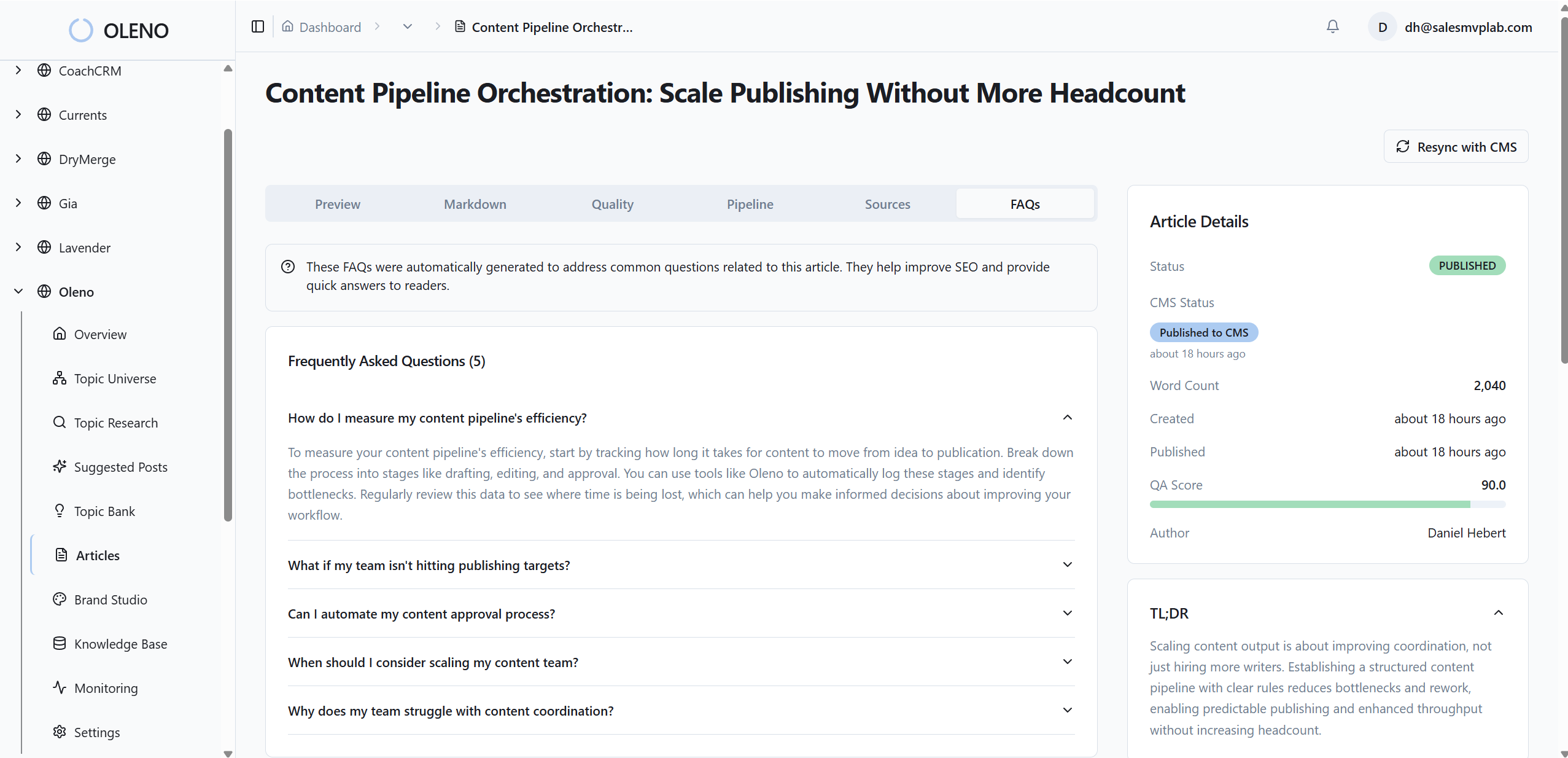
This matters for visibility and stability. Clean schema clarifies meaning for machines, which supports snippet eligibility and reduces preventable rich result failures. You’re not promised outcomes, but you lower unforced errors, which is what you actually control.
Quality gate that enforces structure before publish
Oleno runs 80+ checks across structure, voice alignment, snippet readiness, and visual details (including alt text and filenames). Drafts improve until they pass the minimum score threshold. No human is stuck policing paragraph size at 6pm on a Friday. The system handles it.
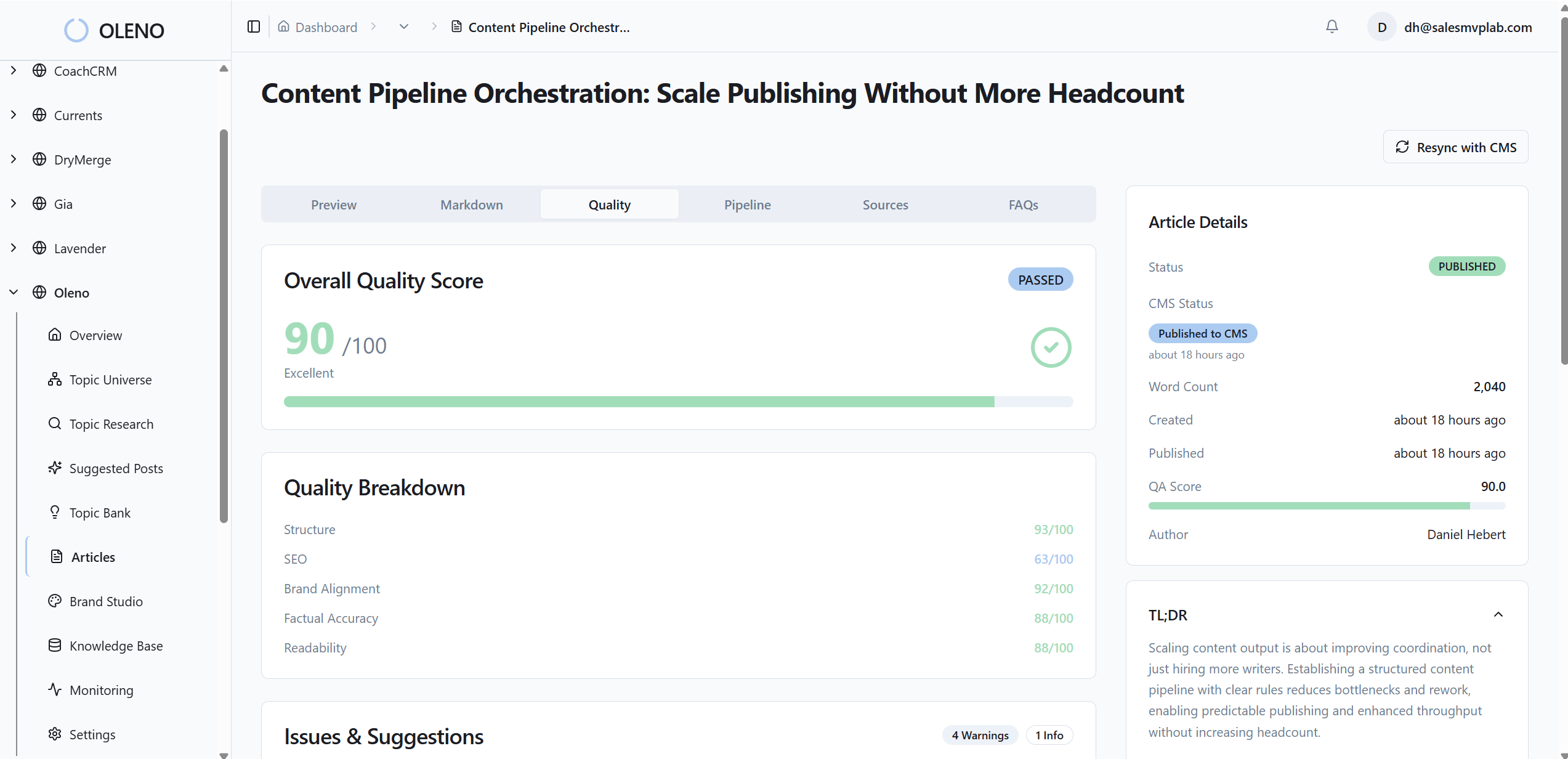
The upside is cadence. When quality is enforced upstream, your publishing schedule stabilizes. You work on new ideas, not cleanup. That’s the quiet compounding most teams want but rarely achieve with manual workflows.
Visuals and internal links placed with rules
Oleno’s Visual Studio generates brand-consistent hero and inline images using your color system, logos, and style references, then writes SEO-friendly alt text. Deterministic internal linking pulls only verified URLs from your sitemap and places them contextually with exact-match anchors.
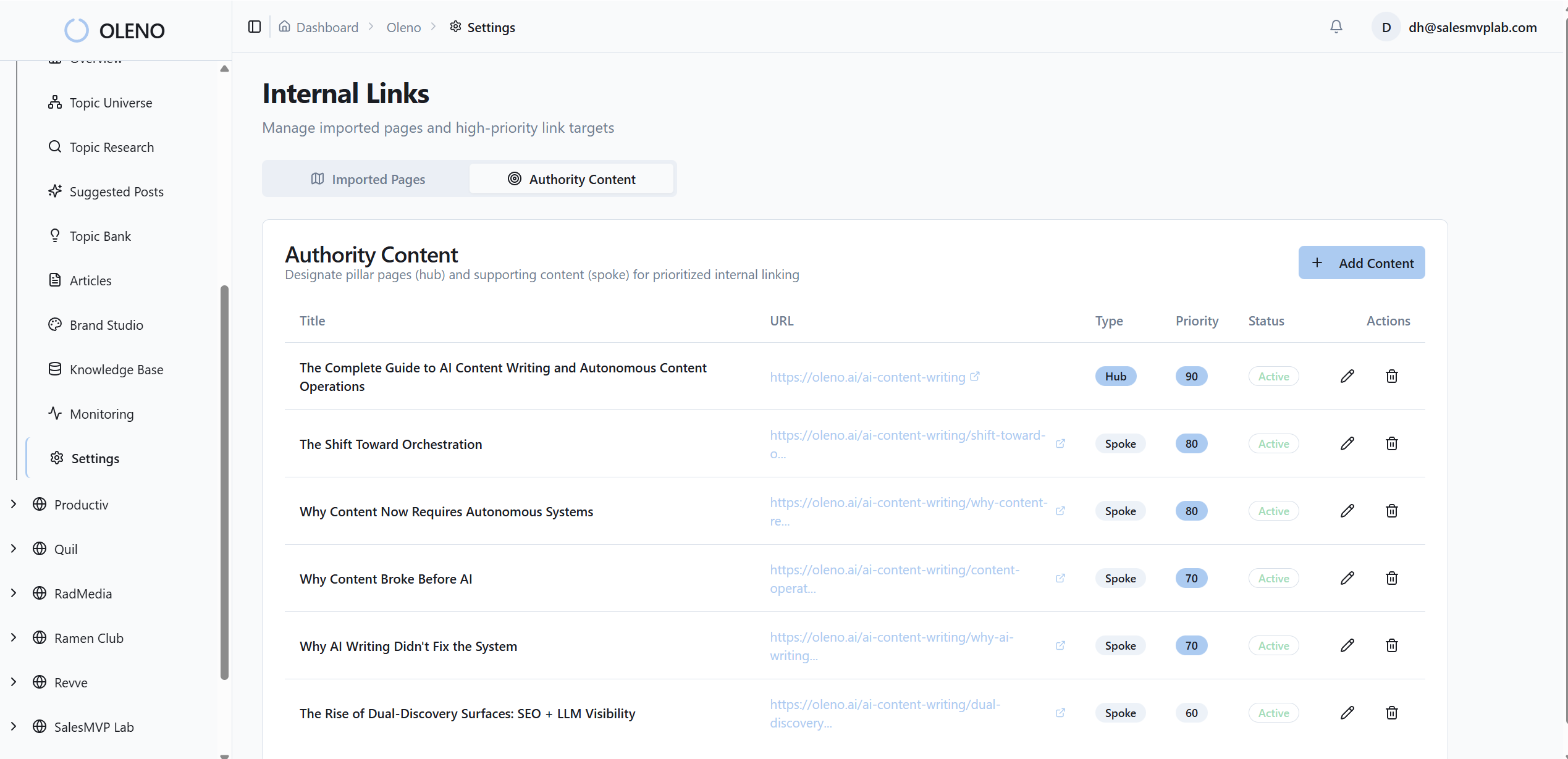
The result is cleaner, more quoteable sections. Images align with the story, links are correct by design, and nothing looks bolted on. Your content reads like your brand because the visuals are part of the system, not an afterthought.
If you want to see all of this run without handoffs, you can Try Using An Autonomous Content Engine For Always-On Publishing. It’s a low-risk way to validate whether rules, not heroics, are what your team needs.
Conclusion
Here’s the punchline. You don’t need bigger ideas to get quoted more often. You need tighter packaging: three-sentence H2 openers, right-sized paragraphs, and schema in the right place. When those rules are enforced by a system, rework drops, cadence stabilizes, and your best lines actually get surfaced.
We learned this through trial, late-night fixes, and too many “quick edits.” You don’t have to repeat that. Write the opener first. Validate structure before publish. Let software handle the checks. Then get back to the story only you can tell.
About Daniel Hebert
I'm the founder of Oleno, SalesMVP Lab, and yourLumira. Been working in B2B SaaS in both sales and marketing leadership for 13+ years. I specialize in building revenue engines from the ground up. Over the years, I've codified writing frameworks, which are now powering Oleno.
Frequently Asked Questions