Snippet-Ready Article Structure: Win Featured Snippets in 90 Days
Most teams still chase snippets with keywords. They tweak title tags, including the rise of dual-discovery surfaces:, chase volume, then wonder why the box quotes someone else. The awkward truth: machines reward structure, not vibes. Give them clean, citable chunks and you’ll see movement. Delay the answer and you hand the snippet to the next best page.
I learned this the hard way. At one company, we ranked on page one for a core term. Solid post. Lots of context. But the competitor led with a 45-word answer and a tiny list. They owned the box for months. We matched the structure, kept the voice, and the snippet flipped within a few weeks. Not always that neat, but the pattern holds.
Key Takeaways:
- Snippets favor sections that open with 40–60 word direct answers
- Treat each H2 as an atomic page: answer, context, example
- Use lists for processes and small tables for comparisons
- Validate JSON-LD and keep section markup clean
- Gate changes so openers don’t bloat after publish
- Run a focused 90-day program: audit, rewrite, validate, reindex
Ready to skip theory and test the pattern? Generate 3 Free Test Articles.
Why Structure, Not Keywords, Decides Who Wins Snippets
Winning featured snippets comes down to answer design, not just keyword density. Open with a 40–60 word paragraph that answers cleanly, then add supporting detail and a quick example below. That structure gives search engines a precise, quotable unit they can lift without guessing.
What is a snippet-ready article structure?
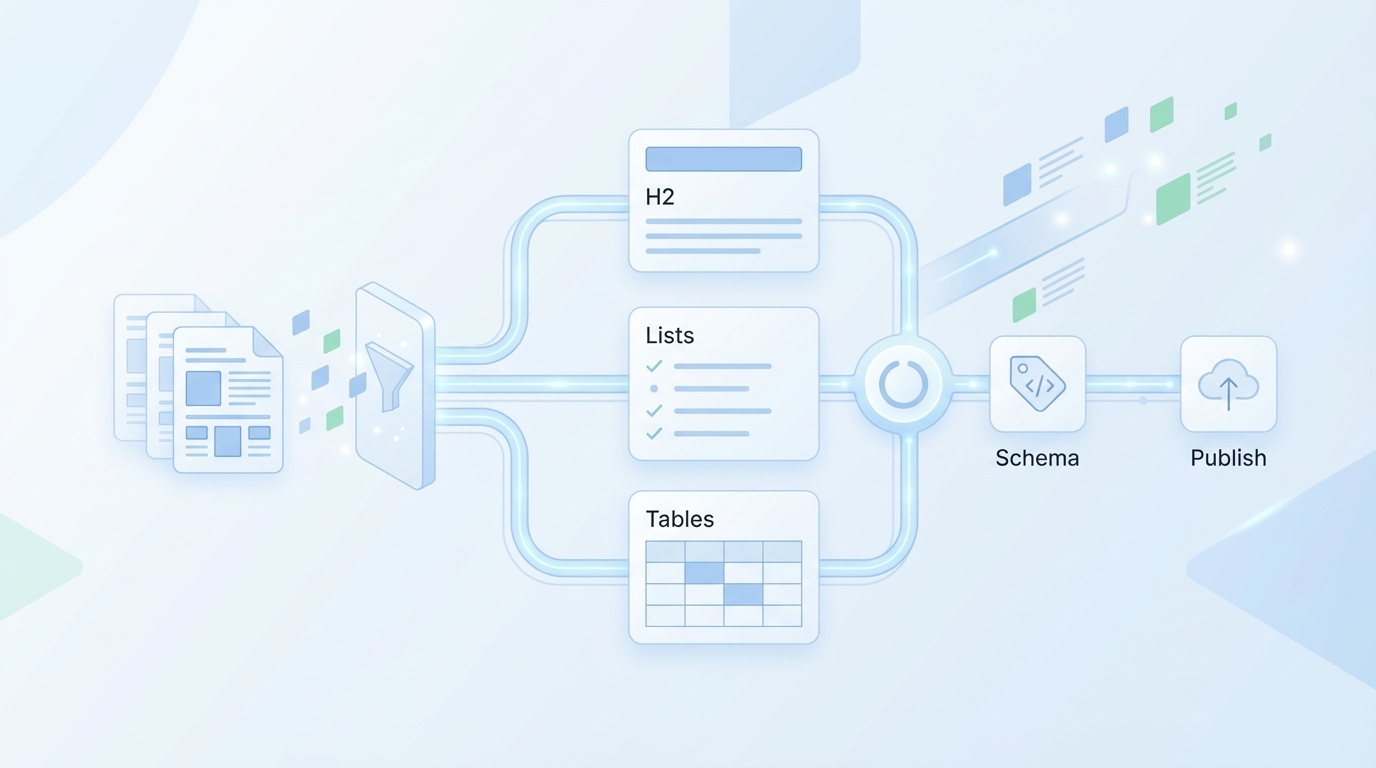
Think in units, not pages. A snippet-ready structure treats each H2 like a standalone mini page: lead with a direct answer, including the shift toward orchestration, follow with context, then a concrete example. Keep markup honest, ordered lists for processes, tables for comparisons. That’s what makes your content extractable by machines, not just readable by humans.
When we stopped burying answers under warm-up sentences, snippet win rates climbed. The pattern is boring in the best way, repeatable, reviewable, and easy to QA. Editors know how to fix “too long,” “too vague,” or “no example.” Search systems know how to quote it. Both matter.
I still like keyword research. But keywords set the stage, they don’t decide who walks out with the mic. Structure does. Even industry guides acknowledge snippet logic revolves around answer clarity and formatting, not volume alone. See the breakdown in Featured Snippets and the 2025 perspective from Are Featured Snippets Still a Thing 2025 SEO Guide.
Why conventional keyword tactics miss citations
Keyword stuffing and long throat-clearing intros slow the answer. You make readers scroll. You force machines to guess where the nugget lives. That’s how another page, with the same idea packed into 50 words, steals your box. Fast answer. Tight context. Tiny example. Then everything else.
Here’s the nuance. You don’t abandon keywords. You reposition them. Put the primary term in the H2 or opener naturally, then move on. Use lists when the query implies steps and a table when it implies comparison. That’s how you satisfy the intent and the parser at the same time.
The Real Work Is Making Sections Citable, Not Just Readable
Sections are “citable” when they stand alone: a direct answer, including why content broke before ai, clean markup, and no “as mentioned above” dependencies. This lets assistants and search systems lift the chunk confidently. It’s a small structural shift that compounds across your site once you lock the pattern.

What does an atomic H2 look like?
An atomic H2 answers the question by itself. It doesn’t rely on earlier context or buried definitions. It opens with a 40–60 word answer, followed by one list or table if the intent calls for it. The rest supports, not meanders. If you delete the rest of the page, the section still makes sense.
When we applied this atomic pattern, editing got simpler too. Reviewers could judge each H2 like a product spec: Is the answer clear? Is the list accurate? Is the example useful? No arguments about flow. No debates about “voice” as a catch-all. It either stands alone or it doesn’t.
The 3-sentence opener pattern in practice
Use a repeatable template: sentence one answers the question directly. Sentence two adds the most important why or how. Sentence three gives a quick example or rule of thumb. Keep it under 60 words. It reads cleanly for humans and extracts cleanly for machines.
In audits, we highlight bloated openers. Most can be tightened to the pattern in one pass. Where appropriate, reinforce with a small list or table and keep schema tidy. If you want a broader perspective on structure that wins snippets, this Featured Snippets Guide lays out common extraction formats.
The Hidden Costs of Near-Miss Content and Slow Iteration
Near-miss content hides in plain sight: ranking pages with weak openers, uncitable sections, and markup that breaks extraction. It burns time in rewrites, slows publishing, and leaves demand on the table. A little structural rigor up front avoids weeks of back-and-forth later.
Wasted edits from unclear openers
Let’s pretend you publish 12 articles this month. Eight need opener rewrites because the answer shows up in sentence six. At an hour per fix, you’ve lost a full day. Double it if a second reviewer gets involved. And while you’re reworking, your competitors keep shipping.
The bigger cost is trust with machines. Pages that bury the lede get skipped for citation even when they rank. You built the substance already. It’s the packaging that’s off. Teams who track “opener pass rate” and “valid schema” quietly improve snippet eligibility while others keep chasing volume. That separation widens.
Why regressions happen after publish
Regressions creep in when well-meaning edits stretch the opener or break list semantics. Someone adds fluffy context. Another swaps an ordered list for dashes. A quick FAQ gets removed “to simplify.” Without checks, your snippet-ready unit dissolves into a generic paragraph again.
The fix is boring and effective: validation gates. Enforce opener length, require lists for processes, keep tables with headers, and verify JSON-LD before updates go live. If you want tactics on formatting for extractions, the guidance in Rank For Google Featured Snippets is a useful reference point.
The Frustration of Watching Others Capture Your Answer
You know the feeling. You’re on page one, but the snippet quotes a competitor with the same point, just tighter. It stings because you did the work. The fix usually isn’t more content. It’s better packaging. Answer first. Then context. Then the example that makes it stick.
When your paragraph ranks but the snippet goes elsewhere
I’ve lived this. At one SaaS, we had brilliant thought leadership, strong voice, great design. We still lost snippets to simpler pages that led with the answer and a tiny list. Rewriting into 50-word openers with precise markup turned losses into wins. Not every time. Often enough to matter.
It’s tempting to defend the long setup, especially when you care about narrative. Keep the narrative, after the opener. Think of the first three sentences as the price of admission to be cited. Once you pay it, including why content now requires autonomous, you can tell the full story below without sacrificing eligibility.
The 90-day window that tests your patience
Snippets rotate. Some in days, many in weeks. Give yourself 90 days and treat it like a production plan: audit, restructure top targets, validate, publish, request reindex, and watch for swaps. You’ll see movement in bursts. That’s normal. The goal is persistent eligibility, not instant dominance.
I’ve run this cadence with small teams juggling everything else. The trick is scoping it: 10–20 URLs, two waves of edits, one recheck. Keep it light, deterministic, and boring. Boring is repeatable. Repeatable scales.
Still wrestling with near-misses and rewrites? It might be time to let a system handle structure. Try Using an Autonomous Content Engine for Always-On Publishing.
A Production-First Pattern to Win Featured Snippets in 90 Days
A 90-day program focuses on near-miss pages and structural fixes. Start with page-one or -two rankings where a snippet exists. Rewrite H2s into 40–60 word openers, add the right lists or tables, validate schema, publish in waves, and request reindexing. You’re optimizing units, not whole sites.
Audit for snippet opportunity and near-miss candidates
Begin with keywords where you already have distribution. Pull the pages that rank but don’t own the box. Mark which sections bury the answer, lack a list where a process exists, or miss a simple comparison table. That shortlist becomes your pipeline, prioritized by effort and impact.
I’ve done this with two people over a quarter. The constraints force clarity. We scored each section on opener quality, list correctness, and schema validity. That made trade-offs straightforward. If you need a refresher on formats that commonly trigger citations, this guide on Optimize For Featured Snippets is a solid complement to your checklist.
Draft H2-first answers in 40–60 words
Rewrite each target section using the three-sentence pattern: direct answer, crucial context, quick example. Keep it human. Keep it tight. If the query implies steps, add an ordered list under the opener. If it implies comparison, drop in a 2–3 column table with clear headers.
We found question-form H3s can capture long-tail and FAQ boxes without bloating the page. Use them sparingly. The more atomic your H2s, the less you need to chase sub-questions. If you want broader background on snippet behavior and selection, cross-check the fundamentals in Featured Snippets.
How Oleno Enforces Snippet-Ready Structure End to End
Oleno bakes snippet-ready structure into the writing process: every H2 opens with a 40–60 word answer, lists and tables are used where intent demands them, and schema gets attached at publish. The system handles consistency so your team can focus on substance and voice.
Snippet-ready paragraphs with 3-sentence openers
Oleno generates sections that start with a direct answer, including mastering featured snippets technical seo, a single supporting line, and a quick example, kept between 40 and 60 words. That opener pattern isn’t a suggestion; it’s enforced during drafting and validated again during QA. The outcome is clean, citable paragraphs that machines can lift with confidence.
In practice, that means fewer rewrites and fewer near-miss pages. The structure closes the gap we talked about earlier: unclear openers that waste editing time and cost citations. Oleno keeps the answer upfront so the rest of your narrative can breathe without hurting extractability.
Schema auto-generation and deterministic internal links
Oleno generates valid JSON-LD for Article, including featured snippets guide, FAQ, and BreadcrumbList automatically, then passes it through publishing connectors. Internal links are injected from verified sitemaps only, with exact-match anchor text, no fabricated URLs, no ambiguous slugs. That combination reduces extraction friction and prevents link regressions that break citations.
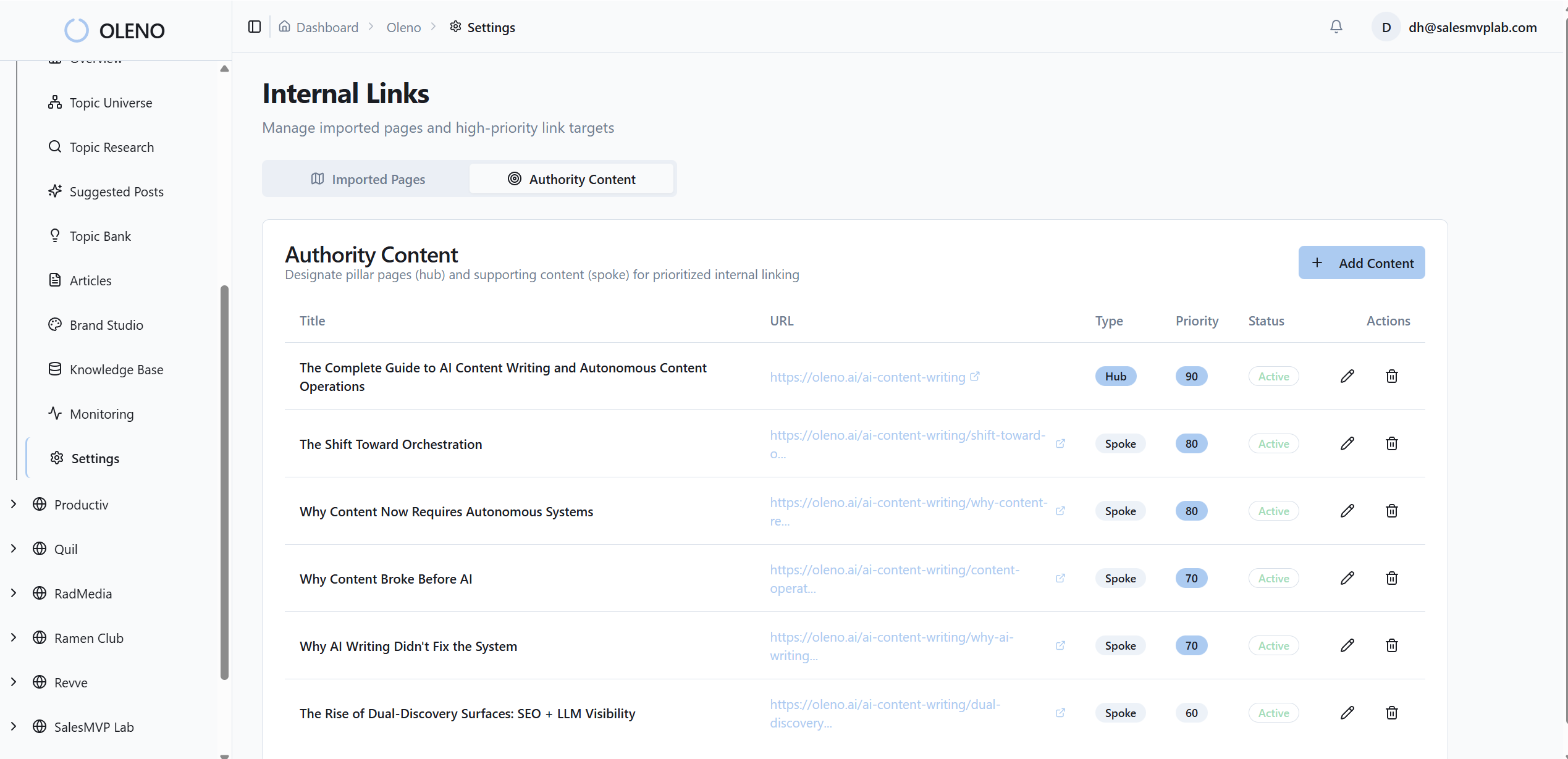
Because these steps are deterministic, they don’t drift when content gets updated. Schema stays valid. Anchors stay precise. Your team doesn’t lose time fixing invisible issues that quietly erode snippet eligibility. If you’re mapping formats, the technical SEO primer in Mastering Featured Snippets Technical SEO complements this approach.
QA gates that score snippet readiness and remove AI-speak
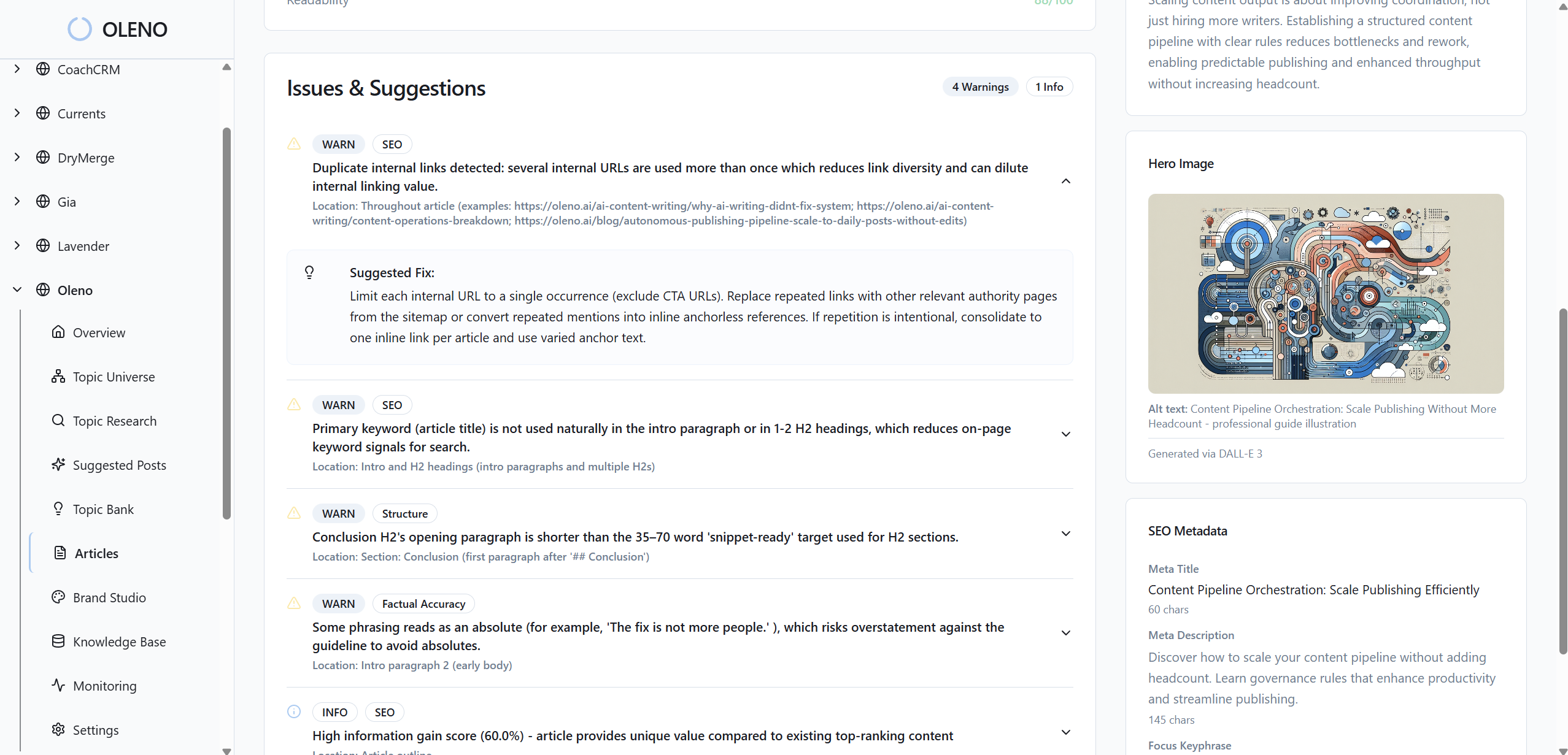
Every article passes a multi-criteria QA gate. Oleno checks opener length, list integrity, table headers, and section independence. Low scores trigger automatic refinements that tighten phrasing and remove AI-sounding filler. The goal isn’t perfection, it’s predictable, citable units that reduce rework and missed citations.
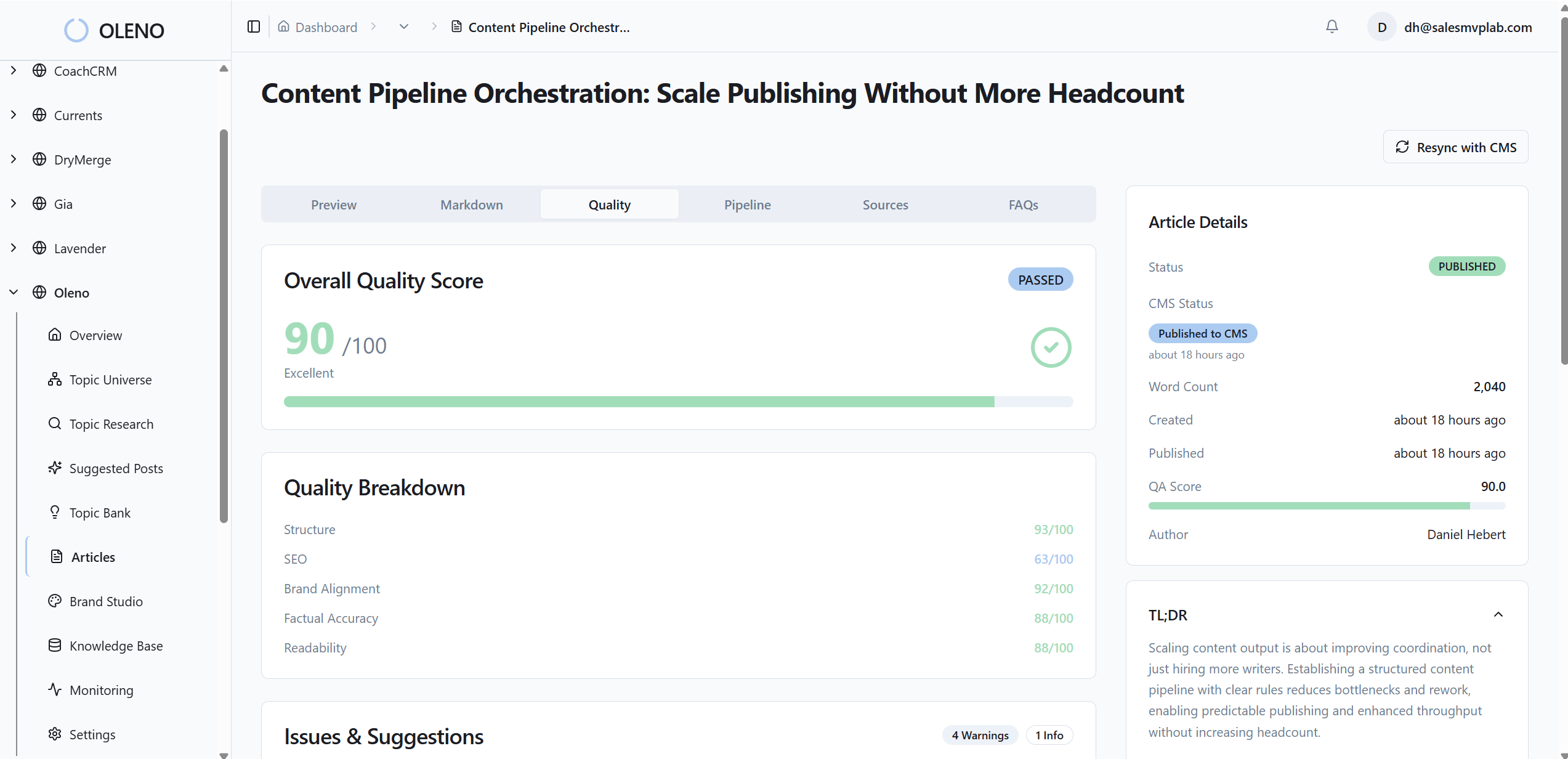
And when you want to ship updates, the same gate prevents regressions. No more stretching a crisp opener into a meandering paragraph. No more “helpful” edits that delete the only list a crawler cares about. Quality becomes a system, including ai content writing, not a hope.
Oleno handles the structure so you can stay focused on the story. If you want to see how this looks on your site, you can Try Oleno For Free.
Conclusion
Keywords open doors. Structure gets you invited in. If you lead with 40–60 word answers, use lists and tables where intent demands them, and validate schema on the way out, you’ll see fewer near-misses and more citations. It’s not a hack. It’s a production habit that compounds.
You don’t need a bigger team to do this. You need consistency. Whether you run the 90-day program by hand or let Oleno enforce the pattern for you, the shift is the same: make each section citable on its own, and the box stops feeling random.
About Daniel Hebert
I'm the founder of Oleno, SalesMVP Lab, and yourLumira. Been working in B2B SaaS in both sales and marketing leadership for 13+ years. I specialize in building revenue engines from the ground up. Over the years, I've codified writing frameworks, which are now powering Oleno.
Frequently Asked Questions