Snippet-Ready Content Structure: 3-Step H2 Pattern for Featured Snippets

Most teams think snippets come from clever headlines and punchier prose. They don’t. The articles that get quoted lead every section with a tight, citable paragraph that answers the implied question immediately, then adds just enough context and a tiny example. That’s what machines can lift cleanly.
I learned this the slow way. At Steamfeed, volume gave us reach, but the pieces that spiked had predictable structure. Years later at PostBeyond, my own drafts outperformed the team’s not because I was smarter, because I used a rigid opening pattern. Style was variable. Structure wasn’t. That’s the lesson.
Key Takeaways:
- Lead every H2 with a 3-sentence, 40-60 word opener: answer, scope, example
- Treat sections as standalone “chunks” designed for extraction and citation
- Replace keyword-first habits with section-level rules that reduce variance
- Quantify the cost of rewrites; make snippet readiness a non-negotiable
- Use a repeatable 3-step opener pattern across your briefs
- Automate enforcement from draft to publish so misses don’t reach production
Why Structure, Not Style, Drives Snippet Wins
Structured openers win snippets because machines extract clean, self-contained answers, not vibes or clever intros. A 40-60 word paragraph with answer, scope, and example maps cleanly to how crawlers and LLMs parse. For instance, define rate limiting in one line, note a per-minute range, then cite Stripe’s approach.
The metrics that actually matter for citation eligibility
Snippet eligibility is mostly a format problem: section isolation, opener length, and clarity. When the first 40-60 words answer the question directly, parsers don’t need your headline or surrounding context to decide “quote-worthy.” Humans like it too. You reduce cognitive load and earn the right to tell a story after.
Here’s what I watch: opener length, sentence count (three), and whether the example could stand alone without earlier pronouns or references. If you need ten lines of preamble, you’re hiding the answer. For a refresher on semantic structure at the heading level, see the practical guidance in header tag best practices.
What is a snippet-ready H2 and why does it matter?
A snippet-ready H2 opens with a concise, three-sentence paragraph that stands on its own and can be quoted without edits. It states the answer, sets a reasonable scope, and gives a micro-example that anchors meaning. It matters because assistants and search extract chunks, not entire narratives.
When I rewrote our highest-traffic SaaS post years ago, nothing changed but the H2 openers. Same ideas, same visuals. The shift? Each section began with a clean answer, a condition, and one concrete example. Snippets started landing. Not instantly, not everywhere, but more often, and for the right terms.
Why keyword-first writing often fails machines
Keyword density without structure invites noise. You get lengthy preambles, hedging, and buried answers, great for essays, terrible for extraction. Crawlers aren’t evaluating your prose style; they’re looking for clear, bounded statements that map to questions. Put the answer first, support it, then elaborate.
I’m not anti-creativity. I’m anti-ambiguity up top. Use your voice in paragraph two. Give the story there. But earn it with a clear, citable first move. If you don’t, you make both the reader and the retrieval model work harder than they should.
The Real Bottleneck Is Section-Level Rules, Not Talent
The real bottleneck isn’t writer skill; it’s the absence of enforceable section rules that eliminate variance where machines care. If every H2 begins with the same three-sentence shape, quality stabilizes. Example: a definition line, a scope line, then one micro-example before any storytelling.

What traditional outlines miss
Traditional outlines plan topics and subheads, then leave paragraph structure to chance. That’s where drafts wobble. You end up with one writer opening tightly, another meandering, and a third burying the answer in paragraph three. Editors spend cycles normalizing, which delays shipping without adding insight.
Shift the unit of governance. Don’t just approve subheads, approve the opener shape per subhead: three sentences, 40-60 words, a named example (format, number, scenario). Decide on pronoun discipline (use nouns), acronym policy (spell it once), and the example type. It’s less about talent, more about rules that are easy to follow under deadline pressure.
Dual discovery requires chunk-level clarity
Readers scan, crawlers parse, and LLMs retrieve. All three prefer clean chunks with self-contained meaning. When each H2 stands alone, you increase odds in both discovery systems, search and assistants. Chunk-level clarity isn’t writing for robots; it’s removing ambiguity that blocks retrieval.
In practice, think like a landing page at the section level. No forward references. Restate the noun. Include one example that would make sense out of context. For a deeper dive on why chunking helps both humans and machines, the overview on content chunking for SEO lays out the mechanics cleanly. Want this enforced daily without managing writers? When you’re ready to shift from prompts to a system, Try Using An Autonomous Content Engine For Always-On Publishing.
The Hidden Cost Of Non-Snippet-Ready Sections
Poor openers quietly drain time, block citations, and compound across your library. Let’s pretend you ship eight posts monthly with five H2s each. If two H2s per article miss the opener pattern and each takes 20 minutes to fix, you’ll spend five-plus hours on preventable rework. That’s momentum lost, not just minutes.
Rewrites drain hours and kill momentum
Missed openers create a nagging friction tax. Someone has to rewrite, then reflow images, then recheck anchors, then republish. None of that work adds new information; it’s mechanical cleanup you could have avoided with a simple rule in the brief. And it always happens when you’re already behind.
If you need a reminder of why “Position Zero” matters for compounding returns, the current featured snippet playbook highlights how structured answers influence visibility. You don’t need to chase every variant. You do need to make every section eligible so one piece can win multiple surfaces.
Why do AI assistants ignore your page?
Assistants tend to quote the first clean answer they find. If your direct answer sits in paragraph three, or your example never shows up, your page reads fine but fails extraction. You’ll see traffic without attribution. You feel invisible in AI citations, even when you’re actually informing the conversation.
The opportunity cost is sneaky. One non-citable section is whatever. A library full of them becomes expensive content that rarely gets referenced. You paid to plan, write, and design, then left citations on the table. The cheapest fix? Paragraph shape, repeated consistently across every H2.
The Frustration You Feel When Sections Miss Snippets
When sections miss snippets, it’s not just a metric dip, it feels like good work being skimmed, not cited. You see readers bounce to someone else’s cleaner paragraph. The ideas were there. The opening wasn’t extraction-friendly. Preventable, which is why it stings.
When your best post gets skimmed, not cited
You’ve been there. Strong take, clear visuals, helpful examples, and still no citation. I’ve watched this play out on founder-led content too. We’d transcribe a great conversation, publish fast, and then wonder why search loved it but assistants didn’t. The answer was simple: we buried the answer beneath the charm.
Once we standardized openers, those same pieces started earning quotes. Not everywhere, not instantly, but enough to notice. And our editors stopped playing whack-a-mole with length and examples. They coached on nuance and point of view instead of structure.
The late edit that derails your week
A single off-structure H2 triggers a chain reaction. You rewrite the opener, which shifts the paragraph order, which breaks screenshot placement, which changes alt text, which moves an anchor, which upsets internal links. Momentum gone. The fix is boring and effective: specify opener shape in the brief and block non-compliant drafts.
When writers get a clear template, variance drops and speed rises. At PostBeyond I could produce 3–4 quality posts a week because the pattern was pre-decided. Later, when I handed topics to newer writers without that context, timelines slipped and quality drifted. The difference wasn’t talent, it was rules.
A Repeatable 3-Step H2 Opening Pattern Your Team Can Ship Today
Use a simple three-step pattern for every H2: a direct answer in one sentence, a scoping line to set conditions, and a micro-example to anchor meaning. Keep it to 40-60 words. For example, define “customer onboarding,” specify “for B2B SaaS,” then cite “a 45-day time-to-value baseline.”
Step 1: Write a single-sentence direct answer
Open with one crisp sentence that answers the implied question behind the H2. Keep it under 22 words, avoid hedging, and use active voice. Name the thing precisely. You’re creating a self-contained claim a crawler can lift. If you need nuance, add it next, not in the opener.
Make this a rule, not a suggestion. In briefs, include the literal first line writers should be aiming for, “What is X? X is …” or “How does Y work? Y works by …” This removes guessing and keeps the cognitive load low when deadlines are tight and multiple topics are moving.
Step 2: Add one line that narrows scope
Follow with a clarifying sentence that sets conditions, scope, or exceptions so the statement holds up. Keep it under 20 words. Prefer positive statements over negations. Specify the audience, system, or constraint that makes the claim durable. “For early-stage PLG SaaS” is better than “not for enterprises.”
This is where you buy precision. You’re telling machines what type of question you’re answering and for whom. It makes answers more credible and less likely to be misapplied. Think of it as anchoring your claim in a context the model can understand and reproduce.
Step 3: Close with a micro-example
Finish with a tiny example that shows the claim in action. One clause or one sentence. Name a format, number, or scenario. “For instance, lead with a 45-word summary, add a scoping line like this, then close with a short example.” The example invites citation because it grounds the abstract in something concrete.
Teams often ask for templates. Here’s the short list we use most. Remember: paragraphs first, then lists.
- Definition, context, example
- Rule, caveat, use case
- How-to, constraint, for instance
- Claim, condition, micro-case
- What, when, example
Interjection. Pick one and stick with it for a quarter. If you want a ready-to-use template wired into your workflow, Try Generating 3 Free Test Articles Now. For broader tactics on winning answer boxes, this overview of featured snippet optimization approaches is a useful reference point.
How Oleno Enforces Snippet-Ready Sections From Draft To Publish
Oleno enforces snippet-ready openers by writing to the 3-sentence pattern, then validating length and structure in QA before anything ships. The system checks answer-first structure, 40-60 word sizing, and a micro-example. Example: “What is X,” scope line, then a brief scenario that can stand alone.
Snippet-ready paragraph enforcement
By default, Oleno drafts each H2 with a three-sentence opener: direct answer, scoped context, and micro-example. That pattern isn’t a suggestion; it’s baked into the writing pipeline and then validated. If a section drifts long or vague, the draft is refined until it matches the briefed shape.
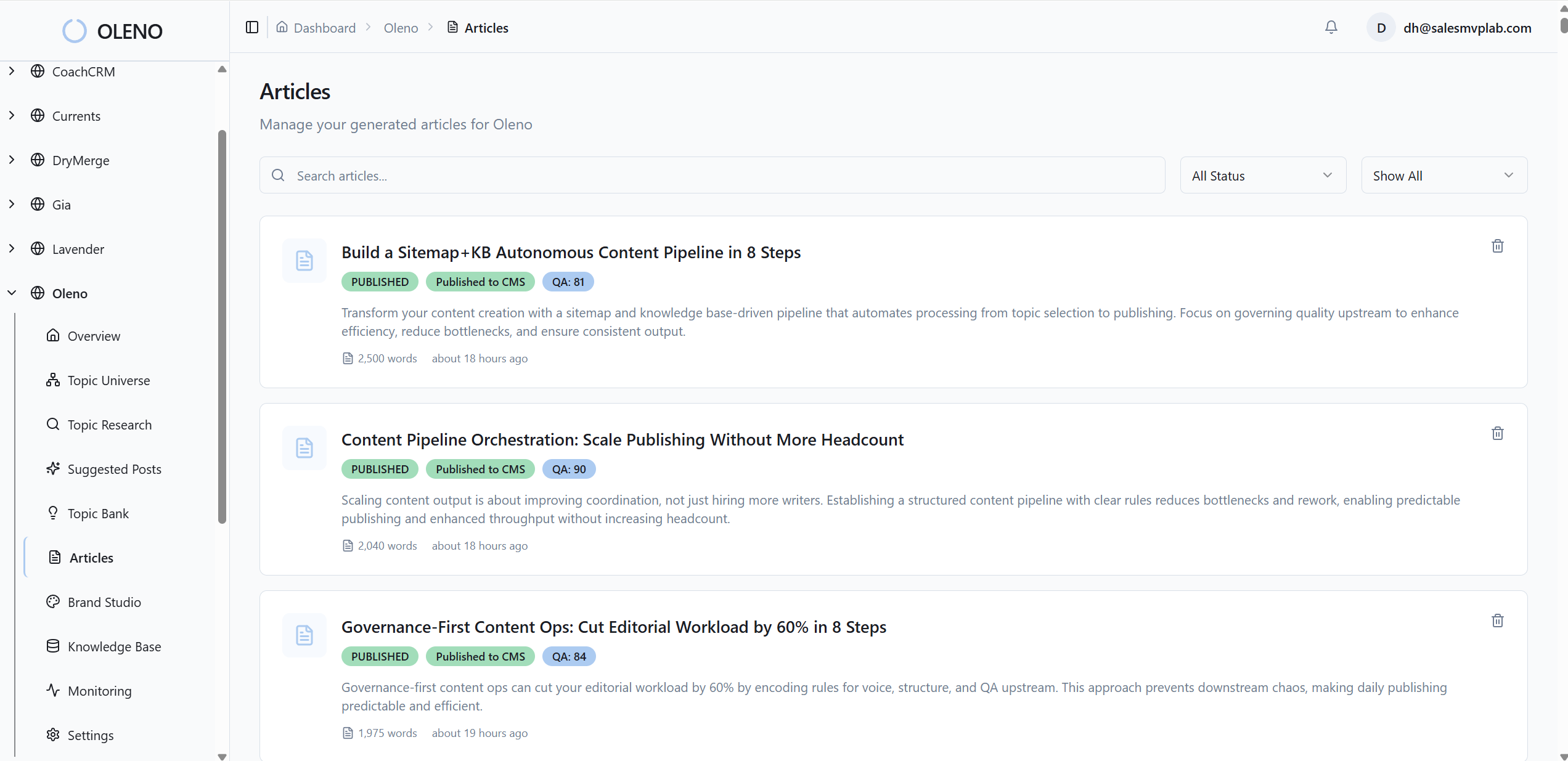
This removes the mental overhead of remembering rules under deadline. Your team can focus on the argument, not the fences. Over time, the consistency shows up where it matters: fewer after-the-fact rewrites, cleaner citations, and sections that can be quoted without hauling the whole page along for context.
QA gate that blocks non-compliant sections
An automated QA gate evaluates more than 80 criteria, including information gain, opener clarity, and stand-alone section integrity. If a section misses the 40-60 word window, lacks a concrete example, or leans on forward references, Oleno refines it before publish. Schema for Article, FAQ, and BreadcrumbList is generated automatically, and Visual Studio creates SEO-friendly alt text and filenames as it produces brand-consistent images.
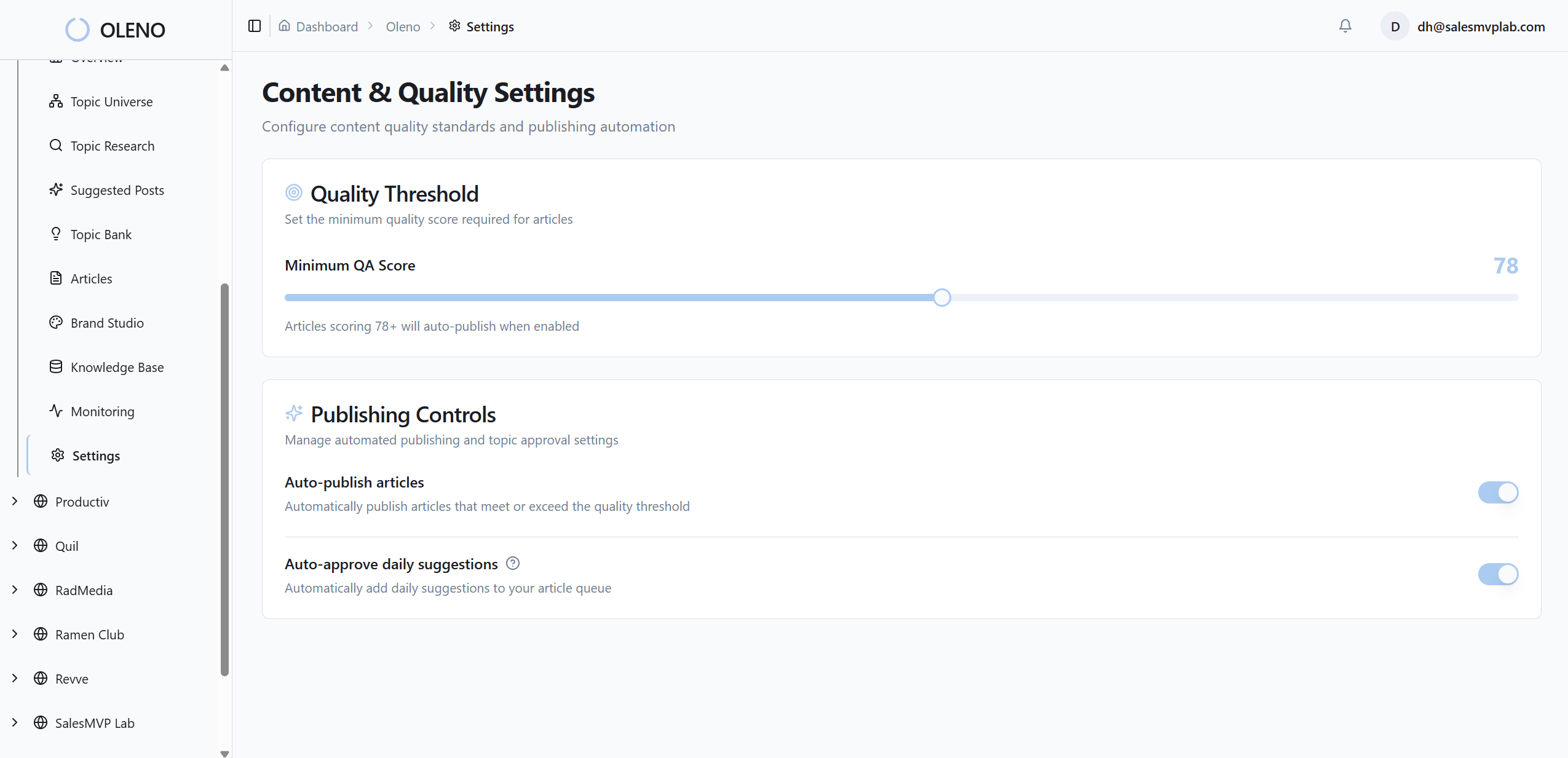
The net effect ties straight back to the rework math we walked through earlier. You ship fewer surprises, avoid late edits that break anchors or captions, and keep section quality consistent as the library grows. Less thrash, more throughput, and content that’s easier for both humans and machines to trust.
Deterministic internal linking that stays accurate
Internal links are injected after drafting from your verified sitemap only. Anchor text matches page titles exactly, placement is contextual, and fabricated URLs are impossible. This keeps sections connected without manual link passes, especially useful when a late rewrite would normally force a messy relink.
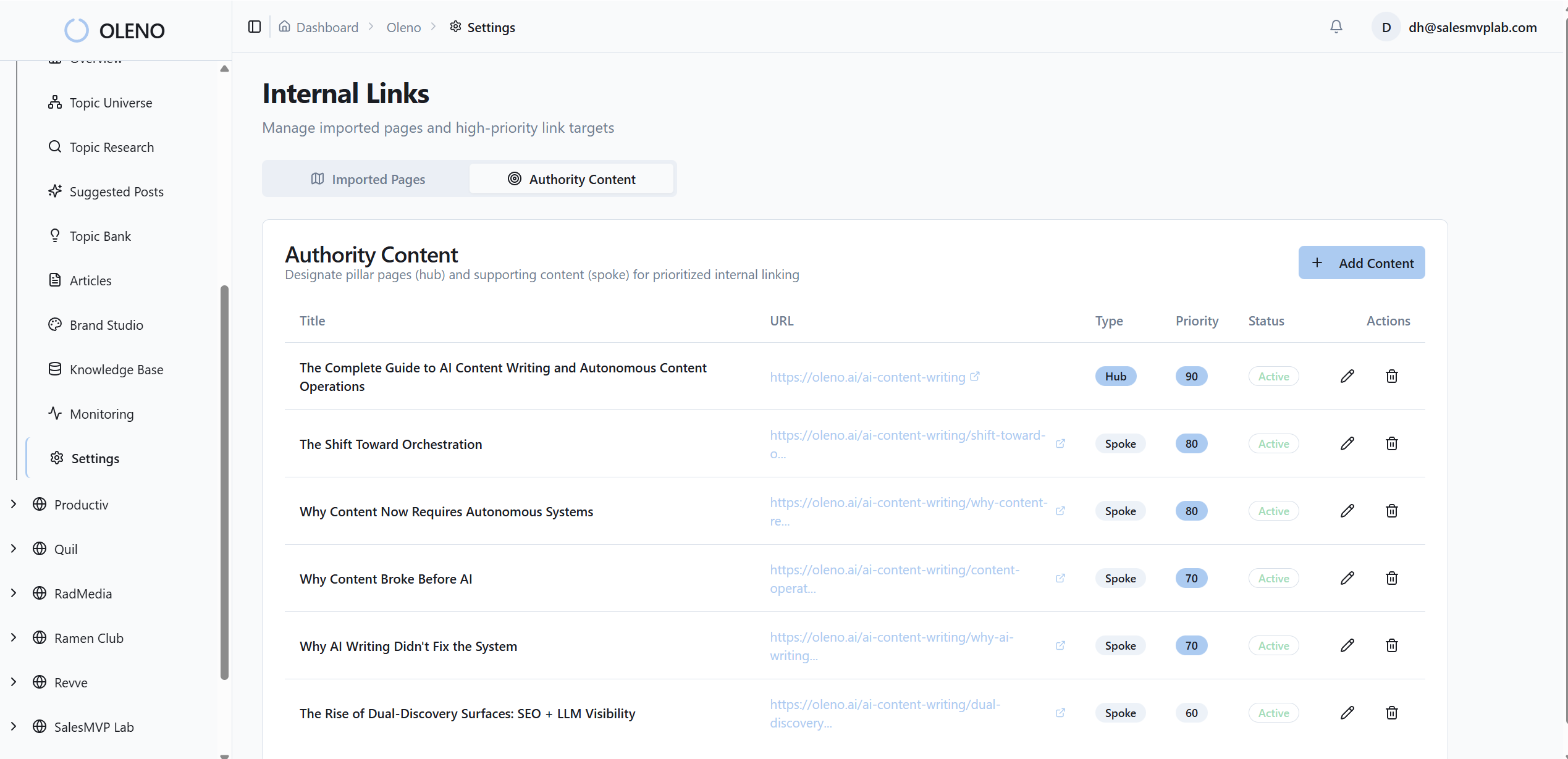
Oleno isn’t trying to be your analytics team or a monitoring tool. It’s deliberately narrow: produce complete, citable, on-brand articles and ship them correctly, every time. If you want the rules above to enforce themselves rather than living in a checklist, Try Oleno For Free.
Conclusion
Here’s the thing. You don’t need louder headlines or more adjectives. You need sections that answer cleanly, stand alone, and can be quoted without a comma out of place. Decide the opener shape. Make it non-negotiable. Then let a system enforce it so your team focuses on the argument, not the scaffolding.
About Daniel Hebert
I'm the founder of Oleno, SalesMVP Lab, and yourLumira. Been working in B2B SaaS in both sales and marketing leadership for 13+ years. I specialize in building revenue engines from the ground up. Over the years, I've codified writing frameworks, which are now powering Oleno.
Frequently Asked Questions