Statistical QA Audits: Sampling Playbook for High‑Volume Content

You can fool yourself with spot checks. I’ve done it. Pull five posts from the queue, skim for obvious mistakes, and feel good about shipping. Then a week later you find a template regression that nuked rich results on 60 pages. The “quick review” wasn’t wrong. It just wasn’t a defensible audit.
When you’re publishing daily, quality isn’t a vibe, it’s a system. You decide the acceptable risk, you sample across the right populations, and you close the loop when you find defects. That’s how you avoid the 3am rollback. And no, you don’t need a PhD. You need a playbook you can run on Tuesdays.
Key Takeaways:
- Replace casual spot checks with attribute sampling tied to tolerable defect rates and confidence levels
- Set quality SLOs first, then compute sample sizes and cadence by stratum (template, author, traffic)
- Quantify hidden costs (lost rich results, rework, trust) to create urgency for audits
- Run tight manual audits with evidence capture, blind double-checks, and owner-bound remediation
- Use deterministic pipelines and QA signals to focus audits without slowing publishing
- Operationalize audits with steady cadence, clear populations, and upstream fixes
Spot Checks Are Not Enough When You Publish at Scale
Spot checks fail at scale because they’re biased, small, and blind to clusters. Randomized attribute sampling with a defined confidence level catches systematic issues that judgment picks miss. Think template changes, schema drift, or voice rule regressions that hide in one cohort until they spread.

The false economy of casual sampling
Casual sampling looks efficient. You “look around,” fix a typo, and move on. The hidden cost is what you never see, errors clustered in one template, an author cohort, or a specific traffic tier. Selection bias creeps in fast when you pull from the top of the queue or choose “representative” pieces. You won’t notice until the pattern bites you.
Defensible sampling starts with randomness and enough N to detect problems that matter. Not 500 samples. Enough. Attribute sampling gives you a simple pass/fail frame that maps to your checklist. It’s boring on purpose. The goal isn’t to grade writers, it’s to surface fixable system defects. When in doubt, lean on standards like the guidance in PCAOB AS 2315 on audit sampling to align risk, confidence, and documentation.
What counts as a defensible audit?
Defensible means you can explain the why. Why this N, why those populations, and what confidence you have in the proportion of defects. You’re picking a tolerable defect rate, a confidence level, and a selection method, then drawing randomly from the right populations. It’s not academic; it’s operational risk management with a clipboard.
Here’s the bar I use: if a VP asks, “Why 60 pages?” you can say, “Because at 95% confidence we can detect a 3% defect rate in our highest‑volume template.” That’s enough to decide, not enough to stall work. If you want a quick reference on methods, see the OCC Sampling Methodologies Handbook for selection techniques and planning basics. Keep it simple and consistent.
Why simple spot checks break with volume
As you ship more, defects cluster. A harmless tweak to a schema block breaks FAQs on one layout. A voice rule update misflags contractions for a specific category. Tiny changes become cluster bombs. Small, judgment-based samples wash these out because your sample rarely lands on the impacted stratum. You declare things “fine” while the defect compounds quietly.
Statistically valid sampling doesn’t need to be large to work. It needs to be targeted. Random draws inside the right strata, run on a predictable cadence, surface patterns faster. You fix upstream while the cost is still small. That’s the whole game.
Ready to stop guessing and see your QA guardrails in action against real drafts? Try Generating 3 Free Test Articles Now.
Define Risk Tolerance Before You Sample Anything
Define quality SLOs and tolerable defect rates before writing a single audit plan. Set targets by defect category, factual, schema, voice, accessibility, and match them to confidence levels. These numbers drive sample sizes, cadence, and tradeoffs across teams. No SLOs, no alignment.

What defect rates and SLOs should you set?
Start with user harm and brand risk. Factual errors carry more weight than a minor voice drift. Set category‑level tolerances: maybe 1% factual, 2% schema, 3% voice. Pair each with a Service Level Objective like “95% of posts ship with zero critical defects.” Now you’ve got thresholds that reflect reality, not wishful thinking.
These SLOs aren’t a report card; they’re resource allocation tools. If your schema defect SLO is tight, you sample that category more often and fix it faster. If voice has slack, you accept more variance to keep throughput high. This is the difference between arguing taste and managing risk. The governance frame in the Data Quality Playbook from CFO.gov maps cleanly to publishing SLOs.
Attribute vs variable sampling for content defects
Most content QA is attribute-based. Pass/fail against a checklist: schema present, links valid, claims grounded, brand voice within tolerance. That aligns with binomial math, simple proportions, and quick decisions. Variable sampling fits continuous measures like word count drift, reading level deltas, or time-to-publish variance.
Mixing methods isn’t a status symbol. Use attributes for governance checks and variables only where continuous measurement adds signal. Overcomplicating the method wastes reviewer time and muddies decisions. If you need a refresher, the ASQ: Attributes vs. Variables Sampling guide is a good primer.
The hidden complexity across templates and authors
Defects don’t spread evenly. They bunch up in templates, topics, authors, vendors, and traffic tiers. Treat each as a stratum with its own tolerable defect rate and sampling plan. Your high‑volume template might tolerate 2% schema issues because the impact is broad, while a niche FAQ block gets 1% because it feeds rich results on high‑value pages.
Stratification prevents masking. A clean result in a large cohort can hide spikes in smaller, riskier cohorts. Allocate your total N proportionally across strata, then draw randomly inside each. You’ll find issues faster and spend less time arguing about edge cases.
The Real Cost of Missed Errors Shows Up Later
Missed defects compound into lost traffic, lower conversion, and repeated rework. A small schema drift can suppress rich results for weeks, while a factual slip can erode trust for months. Quantifying these costs turns quality from a “nice to have” into operating discipline.
Let’s pretend you publish 300 posts a month
Run a simple scenario. You publish 300 posts monthly. A quiet 2% schema defect rate hits a high‑intent template. That’s 6 posts losing FAQ visibility. If each missed 500 incremental visits and converted at 0.5%, that’s 15 leads gone. Say a $10k average deal, 10% close rate, $15k in pipeline at risk. Every month, until you catch it.
The kicker isn’t the headline number. It’s the time lag. You notice only after the drop surfaces in reporting, which is weeks out. Sampling compresses that lag. You detect the drift early, pull the template, fix upstream, and recover the loss before it snowballs. It’s not perfect, but it’s faster.
The compounding effect on trust and SEO
Readers forgive a typo. They don’t forget contradictions or outdated screenshots. Search systems, similarly, don’t penalize once, they just stop rewarding. Schema inconsistencies, link rot, and markup drift send weak signals over time. By the time you notice “weird volatility,” you’re rebuilding momentum, not just fixing a bug.
This is why “we’ll fix it later” gets expensive. You keep spending to produce more content while shipping avoidable rework. Audits cut that loop in half. They protect compounding assets: trust, structure, and coverage.
Why teams repeat the same rework cycles
Rework repeats when audits lack closure. If results don’t feed a fix queue with owners and deadlines, the same issues circle forever. Writers rewrite, editors chase, engineers shrug, and nothing changes upstream. A good audit plan ends with named remediation: update the template, adjust the QA rule, refresh the KB entry.
Document the sampling basis, the result, and the corrective action. Then verify on the next cadence. For a quick framework on linking sampling to corrective action, the IGNET QAWG whitepaper on audit sampling lays out the planning and accountability basics in plain terms.
If you’re done guessing and want a steady publishing rhythm with defensible audits, Try Using An Autonomous Content Engine For Always-On Publishing.
When Errors Slip, Everyone Feels It
Operational pain shows up as late-night rollbacks, sprint-eating hotfixes, and finger-pointing. Sampling on a cadence, plus extra draws after change events, reduces the blast radius. The goal isn’t zero defects. It’s fewer surprises.
The 3am rollback no one wants
You know this one. A Slack ping, “traffic dropped 30% overnight,” and a forced rollback to last week’s template. Not fun. Nine times out of ten, the root cause is predictable: a template tweak, a markup change, or a rule regression rolled out without a targeted audit.
Build the safety valve into the plan. In addition to daily or weekly samples, run ad‑hoc samples tied to change events: new template, updated schema block, revised voice rules. You won’t catch everything. But you’ll catch enough to sleep.
When a high‑traffic page ships with bad schema
Schema drift looks small. Until your best page loses rich results. Leaders ask what changed, the team scrambles, and the fix eats a sprint you didn’t budget. Binary checks shine here. “Is the FAQ block valid?” is faster to sample and score than subjective style notes.
Make those binary checks a standard part of your audit on high‑impact strata. Focus there first when the stakes are obvious. Then expand.
Who gets blamed when governance is unclear?
Without written SLOs, sampling rules, and remediation owners, accountability blurs. Editorial points to engineering. Engineering points to content ops. Leadership points to the calendar. A short, published playbook narrows the path: here’s how we sample, here’s our risk tolerance, here’s who fixes what.
It’s not about blame. It’s about time. Every hour you spend replaying “how did this happen” is time not spent closing the loop. Clear owners reduce the cycle time from “we found it” to “it’s fixed.”
The Sampling Playbook You Can Run This Quarter
A workable audit program fits on one page. Define SLOs, compute sample sizes by stratum, set a cadence, run the audit with evidence, and tie results to remediation. Don’t overthink it. Do it consistently.
Define quality SLOs and acceptable defect rates
Start by listing critical defect categories: factual, schema, brand voice, accessibility, internal links, KB grounding. For each, set a tolerable defect rate and a confidence goal. Example: detect a 2% schema defect rate at 95% confidence; detect a 1% factual error rate at 99% confidence. Publish these SLOs so debates anchor to risk, not taste.
This is where you align stakeholders. Legal cares about factual accuracy. SEO cares about schema. Brand cares about voice. When everyone sees the same targets, tradeoffs get clearer. And yes, you can update SLOs as your risk profile changes. That’s healthy.
How big should your sample be each day?
Attribute sampling for proportions is straightforward: n = (Z^2 × p × (1 − p)) / E^2, where p is the expected defect rate and E is your margin of error. If your population is small that day, apply the finite population correction. It keeps sample sizes practical without torpedoing confidence.
Pick p from prior audits. If you don’t have history, use a conservative default like 3–5% for a new template. Compute separate n for daily cadence, weekly rollups, and change‑event audits. You’ll build intuition within a month. Interjection. Keep the math in a simple sheet your whole team can use.
Stratify across templates, authors, and traffic tiers
Create strata where defects cluster: page template, author or vendor, topic cluster, and traffic tier are common picks. Allocate your total n proportionally by volume. If you have defect variance estimates, Neyman allocation tightens detection where variance runs hot.
Randomness still matters. Draw randomly inside each stratum to avoid convenience bias. Keep a record of your draw method so you can defend it later. Your future self will thank you.
Run the manual audit like an investigator
Run a tight checklist with binary calls wherever possible. Capture evidence, URLs, screenshots, snippets, and short notes. Blind double‑check a subset to estimate reviewer bias. If two reviewers diverge a lot in a specific category, tighten the rubric or retrain.
Log fails by defect category and stratum, not just pass/fail. You’re trying to learn where the system breaks, not assign blame. Tag each fail with an upstream owner and feed it into a remediation queue. Close the loop and verify on the next cadence. That’s the work.
How Oleno Helps You Operationalize Audits Without Slowing Publishing
Oleno complements your audit program by enforcing quality before publish and creating clean populations to sample from. The pipeline runs deterministically, scores drafts against specific categories, and publishes on a fixed cadence. You get the throughput you want and the hooks you need to audit without guesswork.
QA‑Gate signals focus your audit effort
Oleno enforces a QA gate before anything touches your CMS. Drafts are scored against narrative structure, brand voice alignment, clarity, SEO formatting, LLM readability, and knowledge‑base grounding. Those categories become natural audit lenses. If a cohort trends borderline on knowledge‑base grounding, you over‑sample that stratum for a week to verify reality.
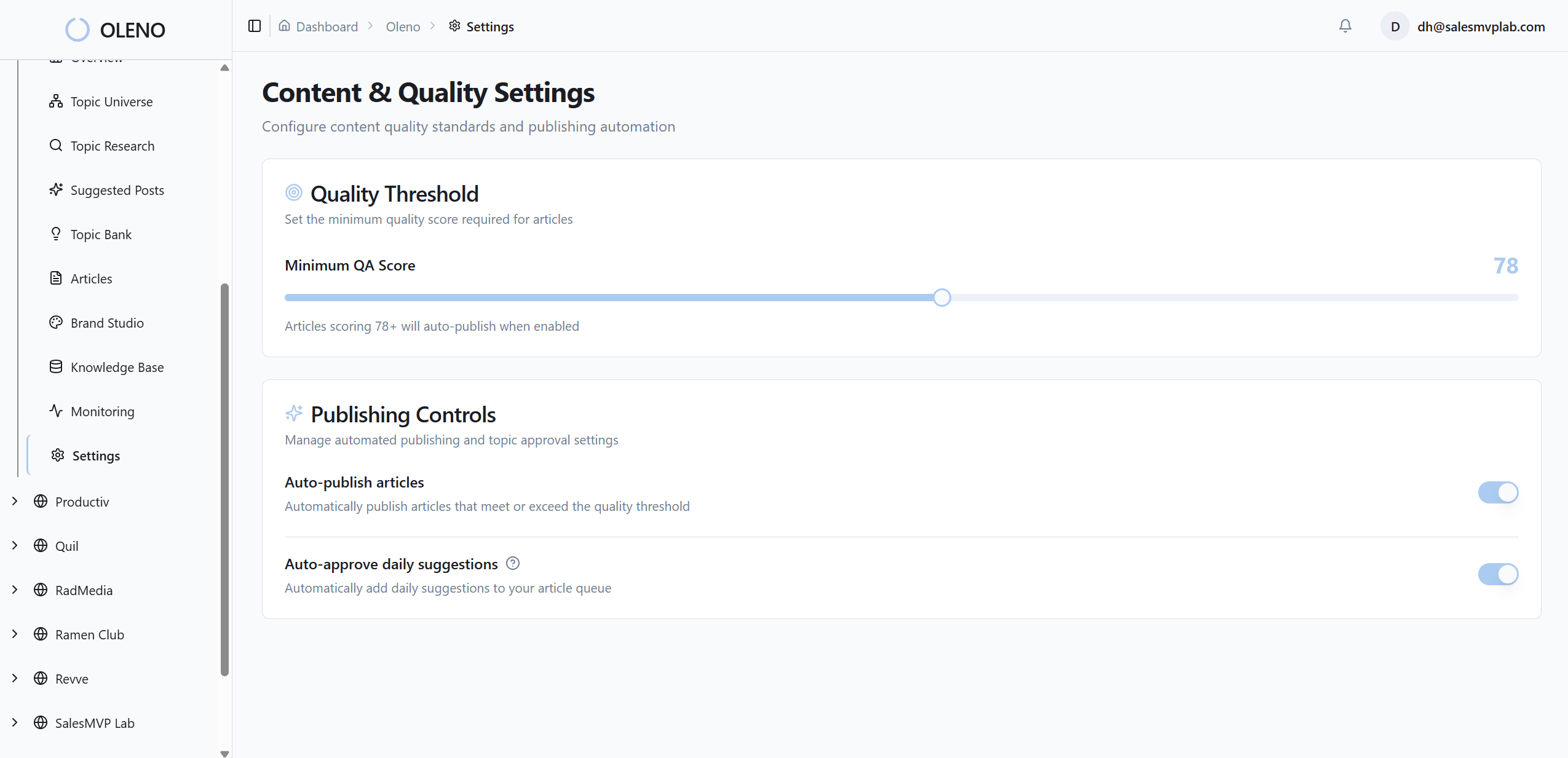
This isn’t a replacement for your sampling math. It’s a prioritization signal. Use Oleno’s categorical QA outcomes to decide where your limited audit time will find the most signal. Then push fixes upstream: adjust a rule, tune phrasing constraints, or refine KB entries so similar defects stop at the gate next time.
Deterministic pipeline and internal logs create clear populations
Oleno runs the same steps every time: Discover → Angle → Brief → Draft → QA → Visuals → Publish. That determinism, plus internal logs of pipeline events and QA scoring, makes your sampling populations obvious. You can sample “posts published this week on Template A,” or “articles that just cleared QA with a borderline voice score,” without guesswork.
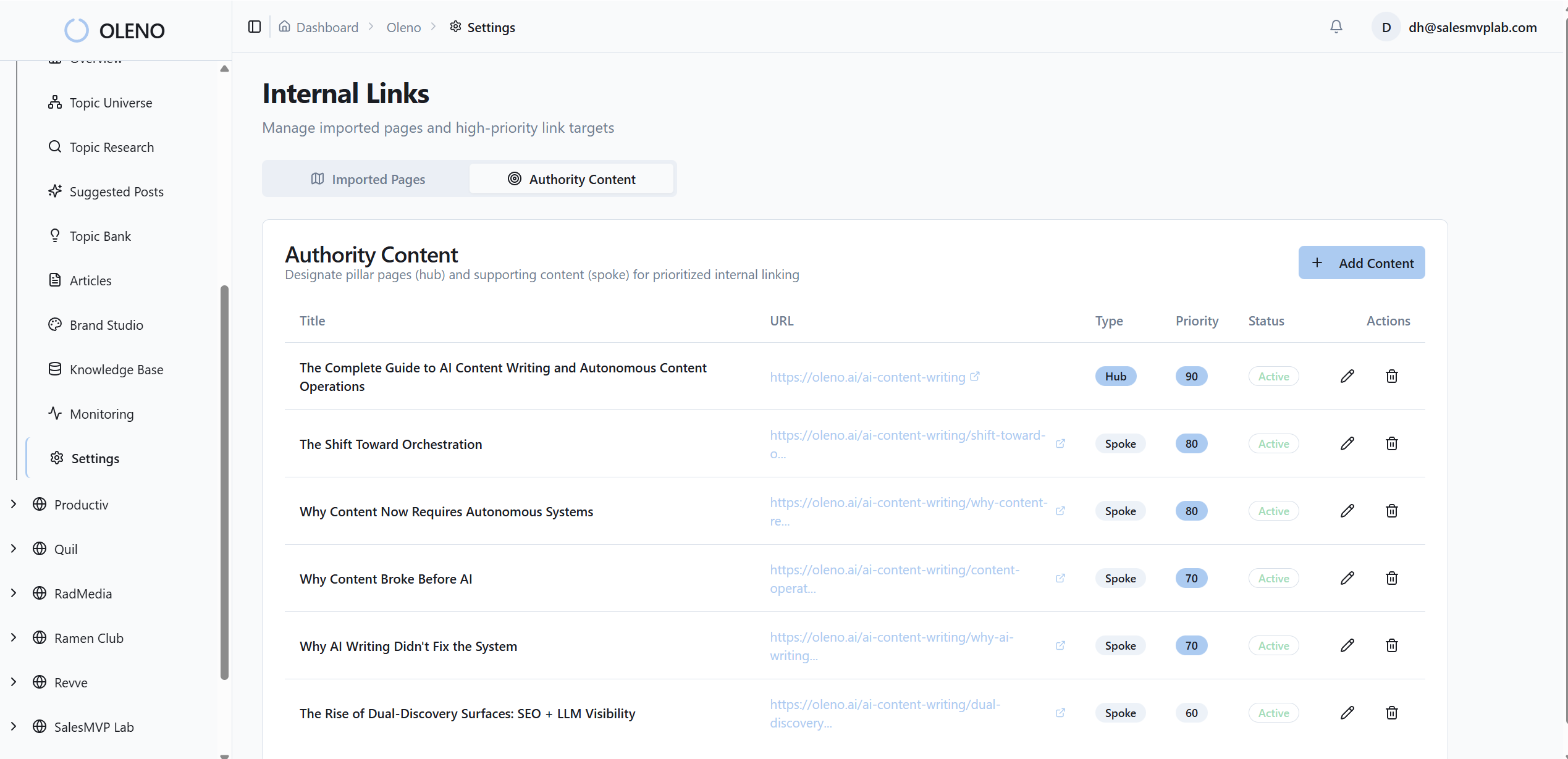
Important nuance. These logs are internal system records, not analytics or monitoring dashboards. They exist so the system can retry work and maintain consistency, and so you can define clean sampling frames when you need an ad‑hoc audit after a change event.
Publishing cadence simplifies scheduling and remediation loops
Oleno publishes directly to your CMS, WordPress, Webflow, Storyblok, HubSpot, Framer, on a fixed cadence, draft or live, with idempotent safeguards to prevent duplicates. Predictable output means predictable audits. You can schedule daily spot audits and weekly rollups with known workloads, then map fails back to the nearest upstream control.
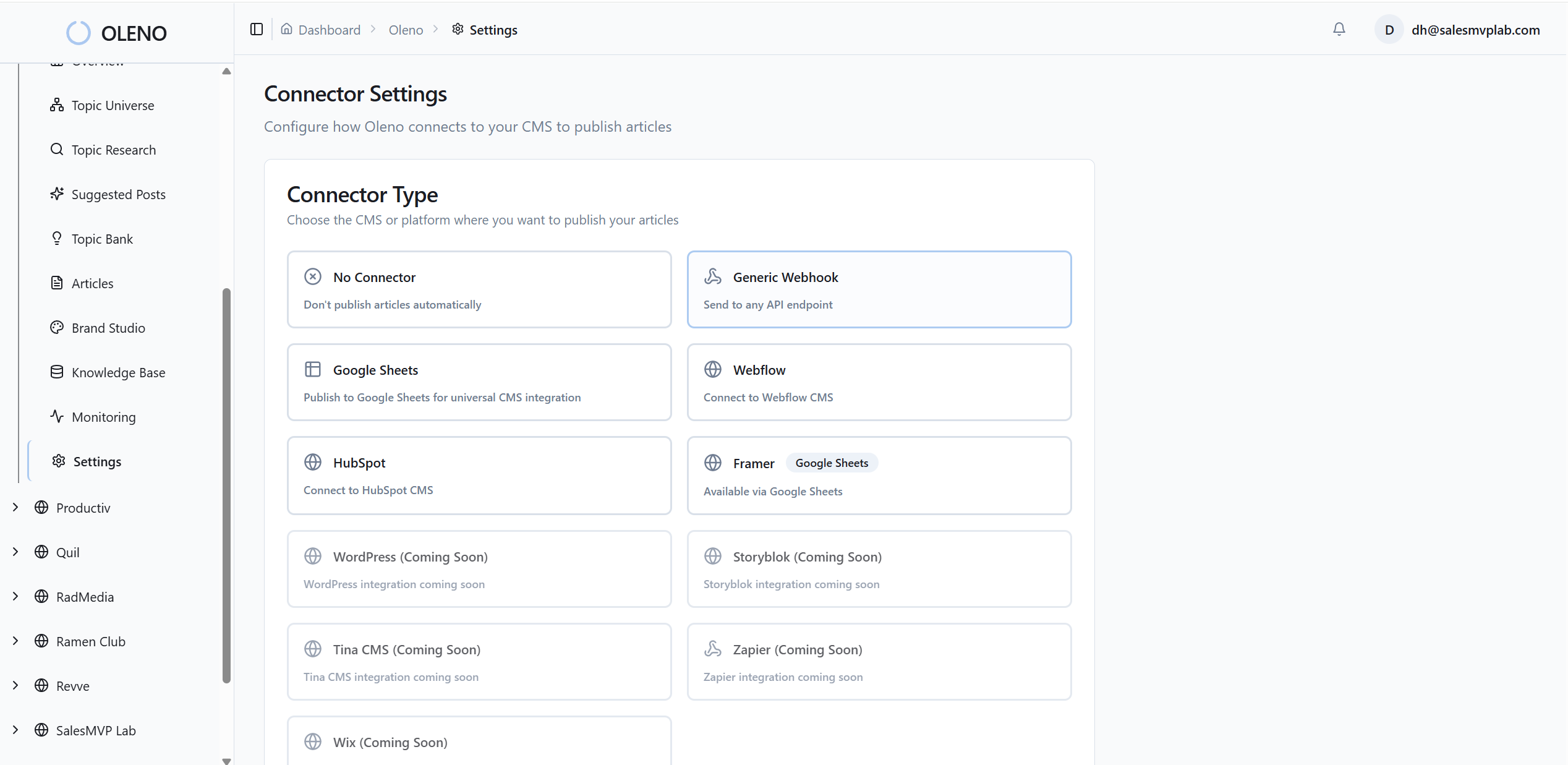
This is where the loop closes. A schema drift shows up in your audit? Update the template or the QA rule, re‑run impacted content through the gate, and verify on the next sample. Fewer fire drills. More closed loops. If you want to see how this feels in your stack, Try Oleno For Free.
Conclusion
Here’s the throughline. Casual spot checks feel efficient until a clustered defect makes them look naive. Define SLOs, sample with intent, stratify where risk clusters, and tie results to upstream fixes. When the publishing engine is deterministic and quality‑gated, audits get lighter and smarter. You ship more, worry less, and avoid the 3am rollback, not because problems vanish, but because your system finds them early and fixes them fast.
About Daniel Hebert
I'm the founder of Oleno, SalesMVP Lab, and yourLumira. Been working in B2B SaaS in both sales and marketing leadership for 13+ years. I specialize in building revenue engines from the ground up. Over the years, I've codified writing frameworks, which are now powering Oleno.
Frequently Asked Questions