Structure Content to Win SERP Features for Each Intent Type

I learned the hard way that “ranked” doesn’t always mean “seen.” At Steamfeed, we published at volume, hit big traffic spikes, and still missed a lot of clicks on high-intent queries. Later, as a solo marketer, I could ship 3-4 posts a week with a tight framework, but if the structure didn’t match the SERP surface, we lost the click to a box above us.
Here is the shift that actually moved numbers. Instead of “write an article about X,” we started with “which SERP feature are we trying to win and why.” That changed everything. The lead paragraph, the H2s, the tables, even the schema placement. Small structural decisions, big payoff.
Key Takeaways:
- Design pages for the SERP surface you want, not just the keyword you target
- Open each H2 with a 40-60 word direct answer, then add proof and an example
- Map intent to blocks: definition and PAA for informational, tables for commercial, steps for transactional
- Lock micro-structure in the brief so writers draft to it and editors verify it
- Track impressions with no clicks to find “structure gaps” that waste effort
- Use tables and consistent row order for “vs” and “best” queries
- Add schema only where it fits the page, then validate before you publish
[Early CTA] Stop doing painful rework on every draft. Start publishing pages that match SERP features by design. Request A Demo
Stop Optimizing for Keywords, Start Optimizing for SERP Experiences
Designing for SERP features means you decide the target surface first, then structure the page to be extractable. Start with a snippet-ready lead answer, follow with evidence, and close with an example. When pages mirror the surface, engines can lift your content cleanly, and users get a reason to click.

What changes when you design for SERP features?
You stop guessing at structure and start drafting to patterns that win extraction. If the goal is a Featured Snippet, you open with a crisp 40 to 60 word answer, then add a short proof list or stat, then a practical example. For PAA, you stack question-format H3s with 2 sentence answers and a brief expansion.
In practice, it feels like moving decisions forward. You commit to sentence counts before you write, which kills drift. Writers get clarity on format, editors focus on substance, and the owner checks eligibility. Most teams never make it this explicit, which is why they struggle to hold consistency at scale.
One more point. When your lead paragraph is built for extraction, you still need depth underneath. The click happens because the snippet answers quickly, then promises more. Think “answer now, teach next, prove fast.”
If you want a reference on feature types, the Semrush SERP features guide gives solid coverage. For simple definitions, this overview of SERP features defined is handy for onboarding new writers.
Why ranking without features fails
Ranking without a feature often means low or zero clicks. Position three can still lose to a paragraph snippet plus a PAA stack that steals attention. Treat features as placement opportunities, not decoration, or you risk wasting time on copy that no one expands.
I have seen teams celebrate rankings that quietly deliver nothing. It feels like progress, until pipeline fails to move. The mistake is assuming position equals visibility. It does not. The interface is the feature, and the feature determines attention.
So the bar is higher than “be on page one.” You need a structure that earns the box, then content that earns the click. Both matter.
Who owns this in your team?
One person should own page micro-structure. Not a committee. Their job is to enforce lead paragraph templates, heading patterns, and schema placement. Writers draft to the pattern, editors verify against it, and the owner checks eligibility with a short pre-publish checklist.
Most teams split this responsibility informally. That invites drift. Give the owner the authority to say “this lead is 18 words too long” or “this table is missing the decision column buyers actually use.” It sounds rigid. It prevents rework later.
If you are tight on resources, that owner can be the same person who sets briefs. The point is accountability. Without it, you will lose consistency fast.
Intent Is the Interface: Map Queries to Feature Types
Mapping intent to SERP features means pairing query intent with the block engines prefer to show. Informational queries tend to favor snippets and PAA, commercial favors tables and comparisons, and transactional favors HowTo patterns. You mirror the dominant surface on page one, then sharpen it for clarity and extraction.

Informational intent to Featured Snippets and PAA
For informational queries, lead with a snippet-ready answer box and three PAA candidates. Use question-format H3s that read like how people actually ask. Give a direct two sentence answer, then add a short expansion paragraph with one example or stat to ground it.
The trick is restraint. Keep the first answer self-contained at 40 to 60 words so engines can lift it cleanly. Add nuance later, not in the first line. If the PAA box shows a specific phrasing, mirror it without copying. That alignment often decides who gets cited.
I like to pick three PAA questions that ladder into depth. Start broad, then narrow, then edge case. It reads clean for humans and parses clean for machines.
Commercial investigation to comparisons and tables
“Best,” “vs,” and “alternatives” queries demand structure that supports evaluation. Summarize in a short paragraph, then use a comparison table. Choose columns that match buyer criteria, not what is convenient to write. Keep row order consistent so scanners and parsers recognize the pattern.
Tables reduce cognitive load. They also reduce ambiguity. If pros and cons are required, add a concise 3 to 5 item block below the table. Avoid vague adjectives and stick to facts or clear trade-offs. That honesty builds trust and prevents bounce.
One more thing on tables. Label columns with plain language. Fancy labels confuse readers and machines. Clarity wins.
Transactional intent to rich results and HowTo patterns
When queries imply action, use HowTo or step blocks. Each step gets a short imperative title, followed by one to two supporting sentences. Add an ordered list so the structure is machine-readable, and consider a small table of inputs and outputs if choices matter.
Action pages should be scannable on mobile. Short step titles, consistent verbs, and no filler. If you need schema, add it only after the page structure is final. Do not paste markup that does not match the visible content, or you will risk failing eligibility.
To speed mapping, do a quick 3 minute SERP scan. Note the features that dominate page one, record count by type, and mirror the winning structure on your page. The Advanced Web Ranking SERP overview and this rundown of Google SERP features are useful primers for pattern spotting.
The Hidden Cost of Ignoring SERP Features
Ignoring SERP features costs clicks, time, and credibility. Zero-click rates are high across categories, so ranking alone is not safety. If your page misses snippet-ready structure while a competitor nails it, they get the attention and you get the impression without the visit.
Quantify the misses
Track impressions with no clicks against pages missing snippet-ready structures. A paragraph snippet can add noticeable CTR lift. Local Packs can route intent away from you entirely. The simple metric that reveals waste is impression-to-click gap on pages that lack clear answer blocks, tables, or steps.
I like to pair this with a simple audit. Which pages have a 40 to 60 word answer at the top of each section. Which comparison pages have a table above the fold. Which how-to pages use ordered steps. You will find surprising holes in pages that look polished.
You do not need perfect analytics to see the pattern. Where structure is missing, CTR often underperforms peers. That is the red flag.
Let’s pretend we model the impact
Assume 10 pages get 5,000 monthly impressions each. Without a snippet, CTR holds at 2 percent, roughly 1,000 visits total. If two pages add a paragraph snippet and move CTR to 3.5 percent, that is 150 extra visits per page, per month. Over a year, the “structure gap” compounds into meaningful traffic.
This is conservative. In some SERPs, the lift is larger. In others, the lift is modest, but still worth the minutes it takes to fix a lead paragraph. The point is not the exact number, it is the consistent miss across dozens of pages.
Run the math for your site. It usually surprises people how much they leave on the table.
Production waste shows up as rework
Every rewrite of a lead paragraph or table rebuild costs real hours. A 20 minute micro-fix repeated across 50 posts is a week lost. Prevent that with locked patterns for answers, lists, and tables. Treat structure as a template, not a suggestion, then enforce it during draft, not after publish.
I have been in those late edits where we shave words from a lead to fit under 60. That should happen at the brief, not at 9 pm on a Thursday. The fix is boring and effective. Decide the pattern once, then apply it everywhere.
If you want a broad context on how features evolved, this overview of the evolving SERP landscape is a good sanity check. For a quick list of feature types, this short piece on SERP features works for training.
[Mid CTA] Fewer rewrites, more pages that actually earn the box. That is what Oleno delivers. Request A Demo
Why Your Content Ranks But Loses the Click
Pages lose clicks when the SERP answers the question before your page loads. The emotional tax is real. You see impressions spike, clicks stall, and start guessing at titles or competition. Often the root cause is structural, not topical, and the fix lives in your lead paragraph and first block.
The emotional tax of impressions without clicks
You refresh the dashboard. Impressions jump, clicks barely move. It is frustrating. You tweak headlines, worry about rivals, and still feel stuck. The SERP rewarded a paragraph snippet while your page buried the answer under a soft intro and a wall of text.
Give readers a reason to click. Start with a crisp answer, then immediate depth, an example, and a useful table if they need to compare. People want closure fast, then detail. Engines want extractable blocks. Serve both.
In my experience, once teams feel this shift, the guesswork fades. They see patterns, not random noise.
Common failure patterns writers report
Vague lead paragraph. Headings that restate the title. Bulleted lists with no verbs. Long setup before the first answer. Fix them with templates. Start sections with a direct definition or action, then a line of context, then why it matters. Short, then detail, then proof.
Writers like constraints when the rules are clear. It reduces anxiety and speeds drafting. Editors like constraints because reviews move from “does this feel right” to “does this meet the pattern.”
Where most teams go wrong is optimizing structure after the draft is finished. Editing rarely rescues a page that started wrong. Decide feature targets in the brief and lock micro-structure early. You will save hours.
Production-Ready Patterns That Win Features
A page that wins features uses extractable building blocks. Write the H1 for clarity, not cleverness. For each H2, open with a three sentence lead that answers directly, adds one crucial how, and finishes with why it matters. Keep it 40 to 60 words, then add a stat or example to ground it.
Headline and lead paragraph blueprint for snippets
Put the core topic up front in the H1. Avoid wordplay that hides the subject. For each H2, follow a three sentence opener: definition or direct answer, one line on how it works, one line on why it matters now. Keep it within 60 words so the paragraph can be lifted cleanly.
After that opener, add a proof element quickly. A stat, a tiny example, or a short comparison. You are signaling that the page has depth without forcing the reader to scroll far. Engines see a block that fits the box. Readers see a reason to invest.
If your team needs a crash course on surfaces, the Semrush SERP features guide covers the common ones and shows examples.
HTML and schema placement checklist
Place the first table above the fold when targeting comparisons. Use clean ordered lists for steps. Put FAQ content as real questions and two sentence answers, not fluff. Where policy allows, add matching schema types in JSON-LD for HowTo and FAQ. Validate syntax, make sure the markup reflects visible content, and avoid duplication.
Schema is not a shortcut. It is an eligibility hint. The visible structure still needs to earn the feature. Paste-only workflows often fail because the markup does not match the page. Keep the page honest and the markup accurate.
One more reminder. Use one schema type per target block and test before you push live. Broken markup is a quiet failure you rarely notice until traffic slips.
How Oleno Operationalizes SERP-Feature Structure at Scale
Oleno operationalizes structure by encoding rules once, drafting to those patterns, and enforcing them with a QA gate before anything ships. Governance defines voice and structure, the execution engine generates briefs and drafts to match, and the system checks for extractable blocks where they matter most.
Governance locks patterns and voice
In Oleno, you define structure rules in Brand and Marketing Studios, including heading patterns, lead paragraph length, and allowed blocks. Those rules guide every brief and draft, so sections open with direct answers, include scannable lists where appropriate, and respect voice. Consistency becomes the default, not the exception.
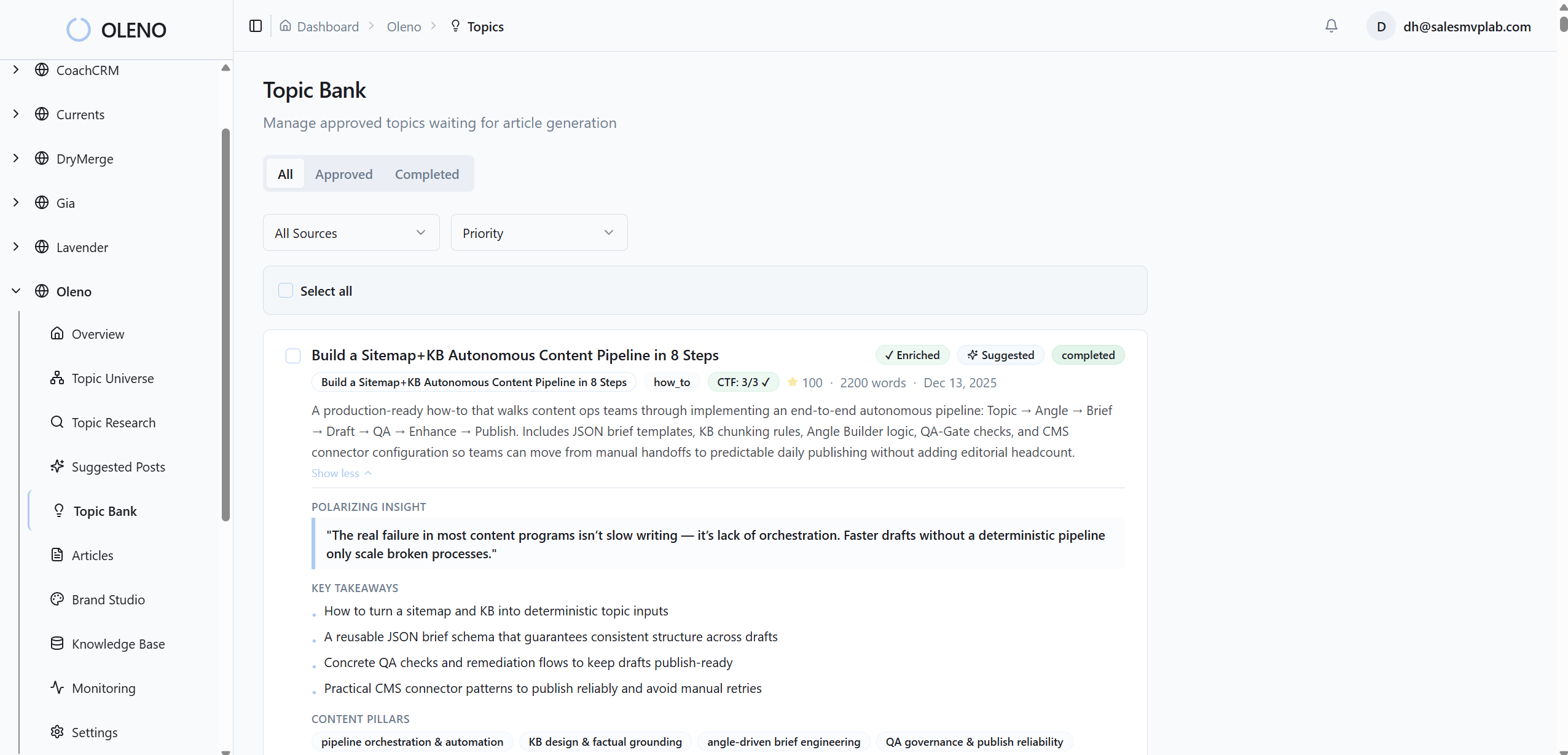
This matters because drift is the silent killer at scale. Without guardrails, tone slips, intros get long, and tables vanish from pages that need them. Governance keeps the page honest. It also prevents invented claims by grounding content in your approved product truth.
You still decide what to say. Oleno makes sure it shows up the way you intended, every time.
Deterministic briefs and QA gates prevent rework
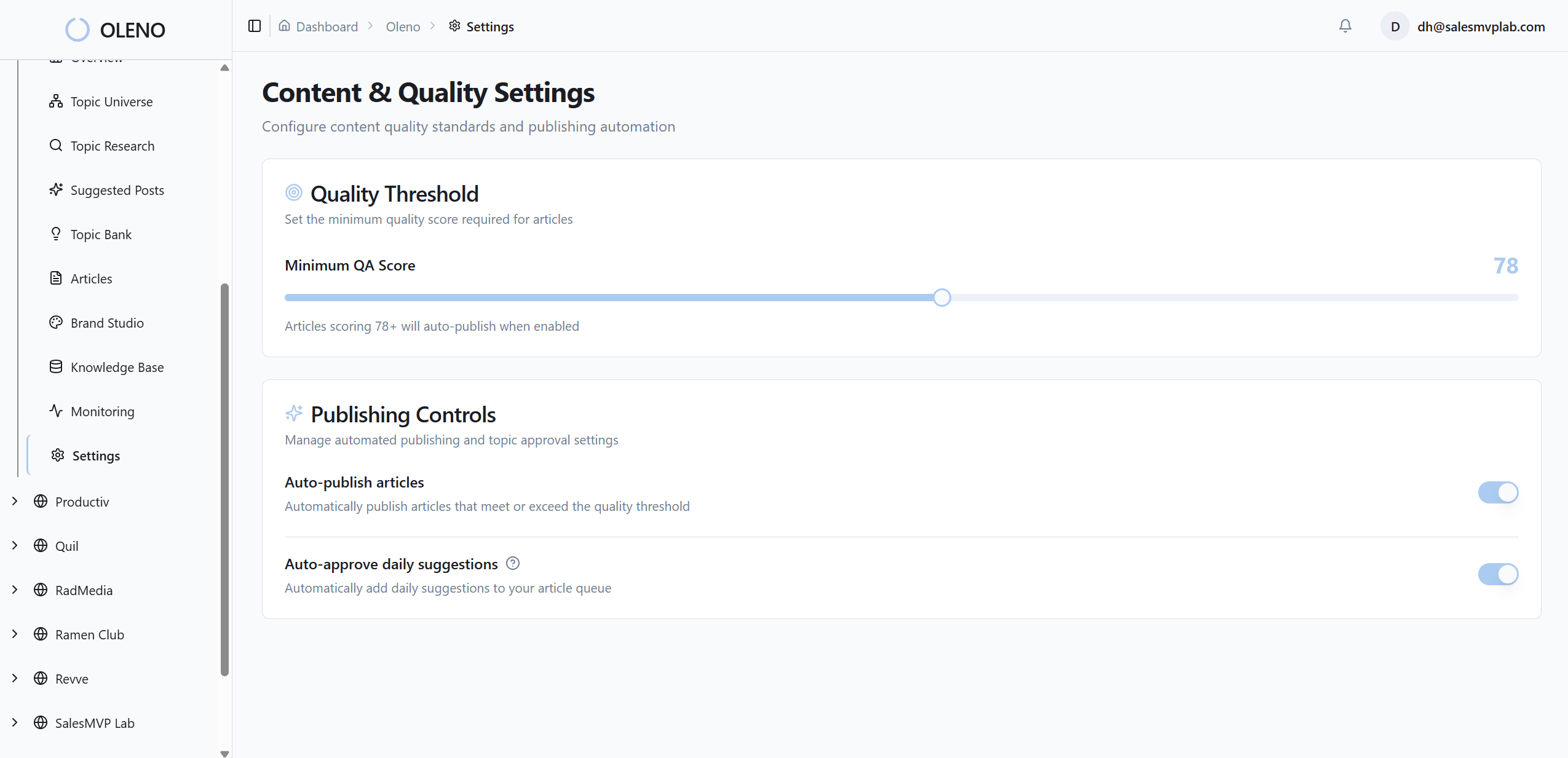
Oleno generates briefs with locked H2 and H3 structures, then drafts to those patterns. The QA gate enforces paragraph length, answer-first intros, and structural checks before publishing. If an article targets comparison features, the system requires a table in the right spot. That cuts the 20 minute “fix it later” loop that eats your week.
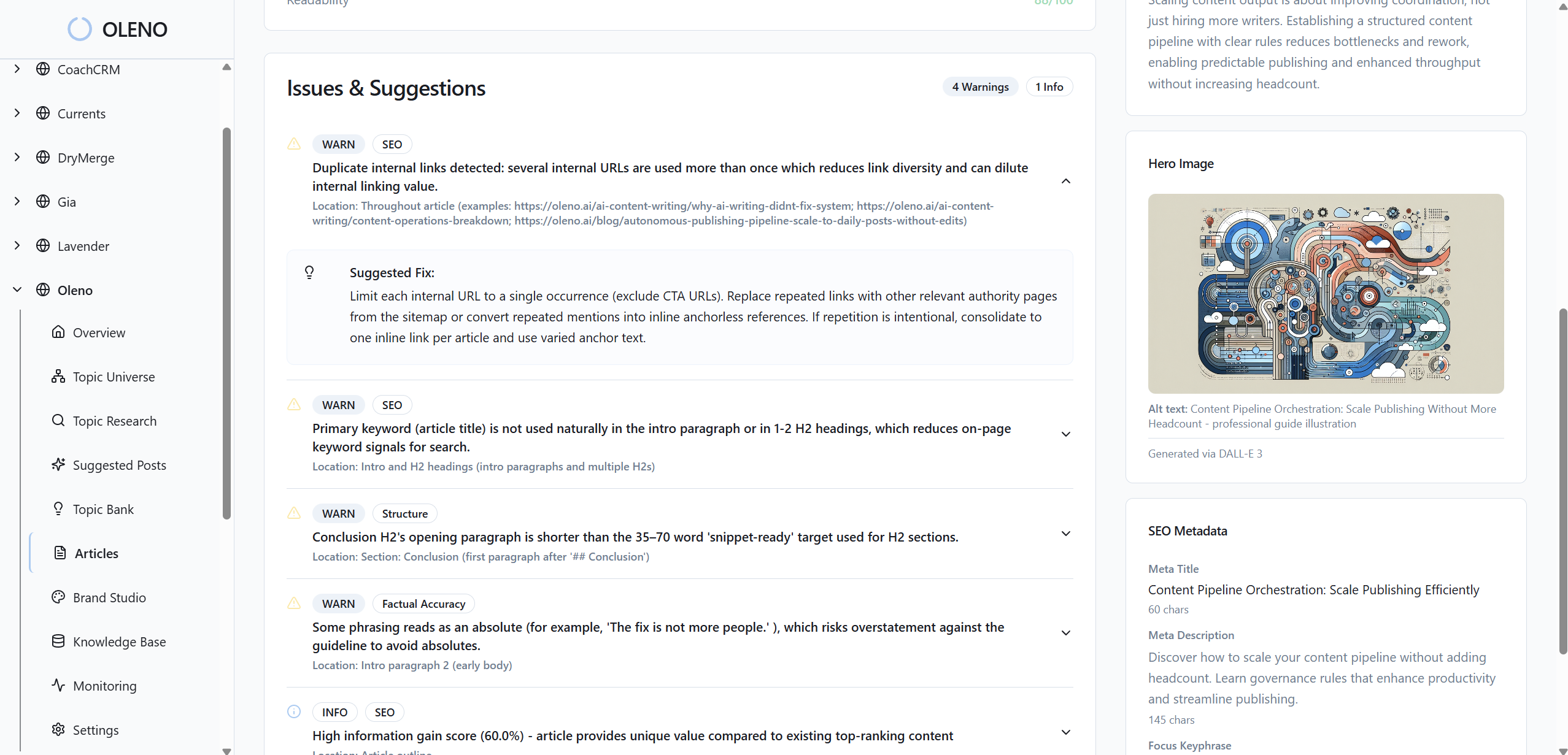
Earlier we modeled a week lost to micro-fixes across 50 posts. Oleno’s brief-to-QA flow reduces those recurring edits by enforcing answer-first intros and required tables at draft time, turning that lost week into net-new production. Fewer rewrites, more coverage.
Publishing is built in, so approved content goes directly to your CMS. The Variation Layer adapts the same structure to different audiences without losing consistency, which lets you replicate a winning snippet blueprint across multiple pages and refine where it does not stick.
Oleno is not replacing your strategy. It is running the execution layer that keeps it consistent and measurable.
[Solution CTA] Oleno’s brief-to-QA pipeline and structure rules handle this automatically. If you want your pages to match SERP surfaces by design, not luck, let’s talk. Request A Demo
Conclusion
If your content ranks and still loses the click, structure is the likely culprit. Start by choosing the feature you want, then write to that surface. Lock the patterns in your brief, give one person ownership, and measure impression-to-click gaps to find the worst offenders. When you are ready to make it repeatable across dozens of pages, encode the rules so the system enforces them and your team stops carrying everything manually.
About Daniel Hebert
I'm the founder of Oleno, SalesMVP Lab, and yourLumira. Been working in B2B SaaS in both sales and marketing leadership for 13+ years. I specialize in building revenue engines from the ground up. Over the years, I've codified writing frameworks, which are now powering Oleno.
Frequently Asked Questions