Syndication-Safe Distribution: Prevent Duplicate SEO Loss Across Channels

Most teams treat republishing as reach. It feels smart, fast, and low effort. Then the partner post outranks your original and your traffic falls off a cliff. The fix isn’t to stop syndicating. You need syndication-safe distribution that protects the original as the source while still getting reach across channels.
If you’ve felt that sting, I get it. I’ve made the same mistake. You copy the full article to a bigger site, and within a week Google picks their page as the canonical. You lose your rankings, your narrative control, and your attribution. So let’s make syndication-safe distribution your standard play, not a one-off rescue mission.
Key Takeaways:
- Always pick a channel pattern first: rel=canonical, noindex, or summary-first. Don’t copy-paste blindly.
- Ask partners to set rel=canonical to your original. If they refuse, require noindex. If they refuse again, do a summary-first post.
- Put JSON-LD on both versions. Make the original the source of truth, and the copy a derived work.
- Build a one-week monitoring checklist to catch regressions fast in Search Console.
- Lock contract language that forces a clean link back, clear attribution, and a defined window before republishing.
- Treat LinkedIn, Medium, Substack, and partner blogs differently. The safe choice varies by channel.
Why Syndication-Safe Distribution Decides Who Owns the Rankings
Syndication-safe distribution keeps your original page as the primary source while expanding reach through partners and platforms. The core is simple: tell crawlers which page is canonical, block indexing when needed, and avoid full-text copies on high-authority domains. When done right, you get distribution without losing search authority.
Republishing Feels Like Reach, But It Transfers Authority
Full-text syndication looks like free traffic. It often isn’t. When a larger domain carries your article word for word, Google may assign them as the canonical. That’s the algorithm doing its job. It consolidates duplicates under the most authoritative version. Your post becomes the copy in the cluster.
You don’t notice on day one. A week later, your impressions drop and your branded queries start showing the partner first. It’s frustrating, because you did the work and they got the authority. I’ve seen this play out enough times to treat it as a rule, not an edge case. Bigger site, same article, you lose control unless you hard-code the rules.
Here’s the pattern you want to avoid turning into a habit:
- Full-text copy on a stronger domain
- No rel=canonical back to your original
- Indexable partner page with your headline, your body, and your internal links stripped
What “Safe” Actually Means for Syndication
“Safe” means you can publish across 3 to 5 channels without eroding the original page’s rankings. It doesn’t mean zero risk. It means you’ve set explicit rules that crawlers and partners follow. You decide which version Google should treat as the source, and you back it with consistent metadata.
Safe also means channel-aware. LinkedIn articles behave differently than a partner’s blog. Medium has its own canonical quirks. Substack newsletters often end up on web pages that index by default. So your standard should adapt by channel and still roll up to the same goal: protect the original, grow reach.
Use this as a quick gut check:
- Can crawlers see a canonical back to the original?
- If not, can you make the partner page noindex?
- If neither, did you publish a summary-first post that links to the original for the full piece?
The Real Problem: Syndication Without Canonicals Hands Authority Away
The root cause isn’t syndication. It’s copying full text without clear canonical or indexing rules. Search engines consolidate duplicates, so the strongest domain wins the cluster unless you point back to your original. That’s why “post everywhere” backfires when you skip technical guardrails.
Symptoms You Notice vs The Root Cause
The symptom looks like a ranking dip. You see the partner page sitting above you on the same query. You also notice your engagement dropping on the original, because every social share points to the partner’s link. Sales then ask why the new article isn’t showing up anymore. Tension rises.
Under the hood, nothing is broken. The system works as designed. Crawlers found two near-identical pages. They picked one as canonical. You didn’t tell them which. Authority clustered around the bigger site, and your page got treated as a duplicate. So the problem you must solve is ownership signaling, not content quality.
To fix this at the root:
- Make canonical intent explicit on the partner page
- Keep your original indexable and stable
- Avoid timing overlaps that confuse crawlers during first discovery
Ownership Rules Google Understands
Google respects explicit canonical hints, but treats them as signals, not commands. Stronger domains can still win if everything else screams “this is the main version.” So you stack signals. Put a rel=canonical on the syndicated copy, add matching structured data, and keep your original stable and consistent.
Start with the basics that Google documents. Use rel=canonical for duplicate consolidation, and use robots meta noindex when canonical isn’t possible on the partner site. Then reinforce with JSON-LD that references the original. Details matter, because crawlers look for multiple aligned hints before locking canonical choice. See Google on canonicalization and Google on robots meta noindex for exact behavior and edge cases.
The Hidden Cost of Getting Syndication Wrong: Lost Canonicals, Lost Control
Syndication mistakes cost you rankings, time, and pipeline. A single full-text copy on a stronger domain can drain impressions within a week, and you’ll spend days unwinding it. The bigger cost is narrative control. Partners rank for your big ideas, then competitors cite them instead of you.
Traffic, Attribution, and Pipeline You Lose
You don’t just lose clicks. You lose the analytics trail that shows marketing influence. When a partner owns the ranking, they also own the assisted journeys that start there. Your internal links, CTAs, and on-page paths disappear. You can’t retarget those visitors, and you don’t get the email subscriber they captured with your content.
That rolls downhill. Your quarterly numbers look softer, even though the content hits. Sales sees less influenced pipeline from organic. Leadership questions whether the content program is working. Meanwhile, the partner’s traffic graph looks amazing. I’ve been in the room for that conversation. It’s not fun and it’s avoidable.
One-Week Regression Watchlist
You can catch most syndication regressions in the first week. The key is to watch for indexation swings and canonical shifts daily right after a partner post goes live. Small signals appear early. Move fast while crawlers are still evaluating clusters.
Run this checklist for seven days after each syndication:
- Inspect both URLs in Search Console with the URL Inspection tool. Confirm “User-declared canonical” and “Google-selected canonical” match your intent.
- Check the partner page’s source for rel=canonical and robots meta. Verify noindex is present if canonical isn’t.
- Monitor impressions and clicks for your target queries. Look for sudden drops on your URL and spikes on the partner.
- Validate your original’s structured data passes. Fix JSON-LD errors immediately.
- Watch backlinks for the partner page. If they start earning links with your headline, escalate fast, especially when evaluating syndication-safe distribution.
- Confirm the partner’s link to you is followed, high in the intro, and not behind a “read more” accordion.
- If canonical intent fails by day five, request noindex on the partner page. Don’t wait a month. Use Search Console’s inspection workflow to verify changes.
What It Feels Like When Partners Outrank You for Syndication-safe distribution
It feels wrong. You did the work, and someone else shows up first for your idea. You start second-guessing the strategy. You consider shutting down syndication completely. Meanwhile, the board wants to know why organic dipped after last month’s “big win.”

The Late-Night Fire Drill
You get the Slack at 9:47 pm. A teammate was searching a core keyword and saw the partner page above yours. You open Search Console, see the drop, and your stomach sinks. You message the partner contact to ask for a canonical. They reply in the morning. Until then, you wait.
I’ve run that fire drill. Hard lesson. The fix is to set rules before anything publishes, not after. When the contract and the CMS settings are locked, your nights stay quiet. You can keep syndicating, but on your terms.
Leadership Pressure Without Answers
When traffic falls, everyone has a theory. More links. Rewrite the intro. Change the headline. But none of that matters if canonical ownership is wrong. You need a simple, confident answer that calms the room. “We syndicate safely or we don’t syndicate at all. Here are the rules and the monitoring plan.”
That level of clarity wins trust. It also creates space for your team to move faster. You stop debating syndication each time and start running a repeatable play. You also earn the right to push partners to follow your rules, because you’re consistent and prepared.
A Syndication-Safe Distribution Playbook You Can Run Every Week
The safe playbook picks a pattern per channel, encodes it in metadata, and enforces it with contracts and checklists. The goal is simple, publish widely while protecting the original page’s ownership signals. Start with policy, then bake it into process and templates so no one forgets.
Decide Channel Pattern: Canonical, Noindex, or Summary-First
Make the choice before you touch content. The tradeoff is reach vs authority. Canonical on the partner gives you both. Noindex gives you reach without risk. Summary-first gives you distribution without duplication. Different channels demand different defaults.
Use this selection flow:
- Partner blogs you control via contract. Require rel=canonical to the original. If they can’t, require noindex. If they push back, shift to summary-first.
- Medium. Prefer summary-first with a clear link to the original at the top. Medium’s canonical tools exist but can be inconsistent across publications.
- LinkedIn Articles. Always summary-first. Keep it to 200 to 400 words, then link “Read the full guide” to your original. Use posts for distribution, not full copies.
- Substack web posts. Summary-first unless you can set noindex on the web version. Keep the email long, the web version short, and link back high in the copy.
- Developer communities like Dev.to. Summary-first or noindex if full text is required. Lead with context and link to the complete article.
Implement the Right Tags and JSON-LD
Once you pick the pattern, wire the tags. If the partner supports canonical, add it on the partner page. If not, ask for robots meta noindex. Then add JSON-LD so machines see the relationship clearly. Consistency matters. One-off fixes cause drift later.
Partner page with canonical back to you:
<!-- in partner <head> -->
<link rel="canonical" href="" />
Partner page with noindex when canonical isn’t possible:
<!-- in partner <head> -->
<meta name="robots" content="noindex,follow" />
Original page JSON-LD (Article) with your canonical URL:
<script type="application/ld+json">
{
 "@context": "",
 "@type": "Article",
 "headline": "Your Original Headline",
 "url": "",
 "mainEntityOfPage": "",
 "datePublished": "2026-01-10",
 "author": { "@type": "Person", "name": "Your Name" }, This is particularly relevant for syndication-safe distribution.
 "publisher": { "@type": "Organization", "name": "Your Company" }
}
</script>
Syndicated copy JSON-LD, referencing the original:
<script type="application/ld+json">
{
 "@context": "",
 "@type": "Article",
 "headline": "Your Original Headline",
 "url": "",
 "isBasedOn": "",
 "datePublished": "2026-01-15",
 "author": { "@type": "Person", "name": "Your Name" },
 "publisher": { "@type": "Organization", "name": "Partner Publication" }
}
</script>
If you need deeper field guidance, review Google’s Article structured data and keep fields consistent across copies.
Lock Contract Terms and Link-Back Rules
Verbal agreements fail. Put your syndication rules in writing. Make canonical or noindex mandatory. Define where the link-back appears and how it’s formatted. Set a timing window so your original publishes first, then the partner follows.
Clauses I’ve used that work:
- Canonical requirement. “Syndicated versions must include a rel=canonical linking to
- Noindex fallback. “If canonical isn’t supported, partner will add meta robots noindex, follow.”
- Link-back placement. “First paragraph includes a followed link to the original article with the exact headline as anchor text.”
- Timing window. “Partner will publish no sooner than 48 hours after the original publishes.”
- Edits policy. “No edits beyond title case and minor copyedits without written approval.”
Short outreach language when you need a fix later:
- “Mind setting rel=canonical to our original here? That keeps Google from picking the copy as primary.”
- “If canonical isn’t possible in your CMS, can you add robots noindex on this page?”
Stop chasing approvals. Start protecting your source with a standard.
Stop chasing approvals. Start publishing safely with a standard. Request a Demo
How Oleno Makes Syndication-Safe Distribution Reliable
Oleno turns the safe playbook into muscle memory. Governance defines your voice and product truth, Demand-Gen Jobs produce consistent articles, and operations keep the cadence. Distribution Studio repurposes without changing your narrative, so summary-first becomes the default instead of a manual rewrite.
Governance That Codifies Your Rules
Brand Studio, Marketing Studio, and Product Studio keep you on-message across scale. You define tone, claims, and the story once. Drafts inherit those rules automatically, and the Quality Gate blocks anything that drifts or introduces risky claims. That matters when you’re syndicating. The original stays consistent, so every derivative points to a stable source.
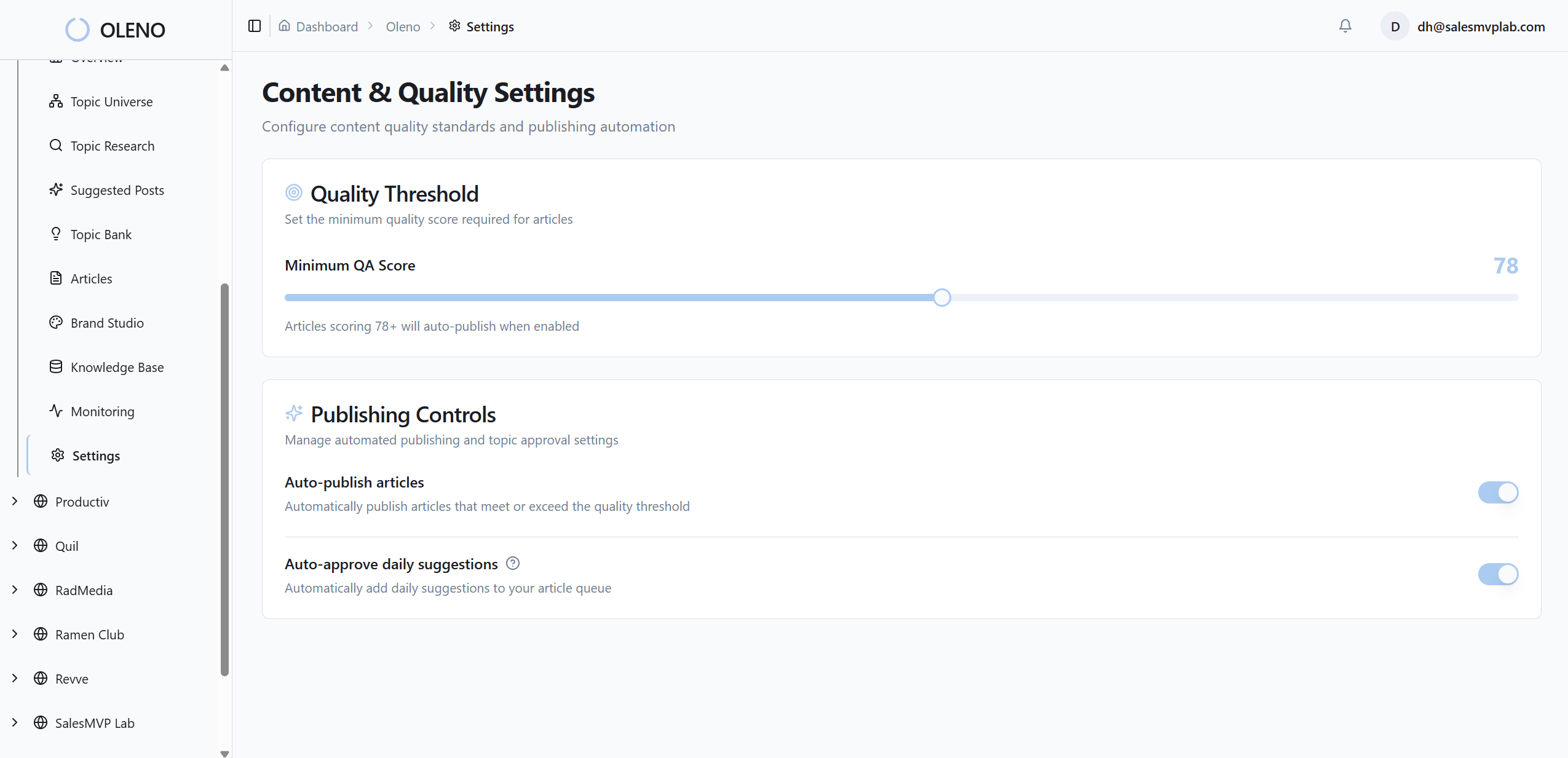
I like that Product Studio centralizes feature boundaries. No invented capabilities slip into partner copies or summaries. Knowledge Archive backs drafts with real sources, which reduces the post-publish rework that derails syndication timelines. You get accuracy, voice alignment, and fewer last-minute fixes.
Distribution Without Drift
Distribution Studio repurposes long-form pieces into platform-ready posts. It creates LinkedIn and X variants, hooks, and captions from approved articles, then routes them to a review queue. That’s summary-first distribution by design. You keep authority on the original, and you still get reach across channels without pasting full text everywhere.
Evergreen pools recycle top performers, so you stay visible without copying the article again on external domains. Small team, steady presence, no accidental duplicates. That’s the point. Consistency beats one-off bursts.
3x more publish-ready assets from each article. That’s normal with Distribution Studio. Request a Demo
Quality Gate and Operational Control
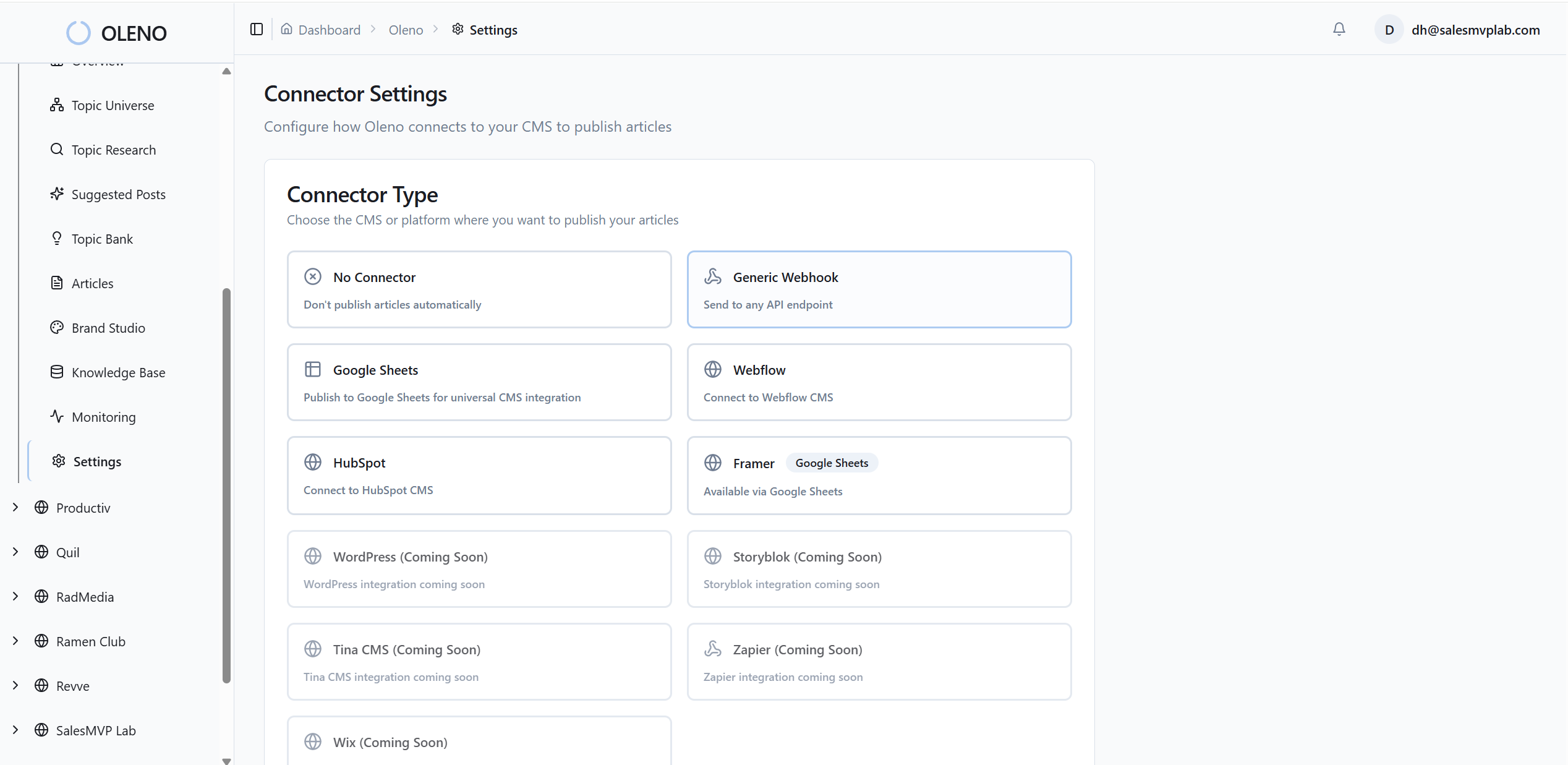
Quality Gate scores every article on structure, grounding, and GEO readiness. Weak pieces don’t ship. That lowers the chance a sloppy partner copy becomes the version that ranks, because your original is clean, accurate, and snippet-ready. CMS Publishing pushes the final content directly into your CMS, so structure and metadata land exactly as intended.
The Orchestrator keeps cadence steady. It schedules jobs, enforces quotas, and protects your weekly rhythm even when priorities shift. That reliability matters for syndication windows. When your original publishes on time with the right tags, partners follow your clock, not the other way around.
Oleno’s Distribution Studio and Product Studio make summary-first and factual accuracy the default. Pair that with Quality Gate, and you reduce duplicate-content incidents while keeping output high. Book a Demo
Conclusion
You don’t need to pick between reach and rankings. You can ship across 3 to 5 channels and still keep the original page as the source. Choose the right pattern per channel, encode it in tags and JSON-LD, lock your partner terms, and run a one-week checklist after each syndication. Do that, and you’ll see fewer duplicate incidents within a month, steadier rankings on your domain, and a cleaner story in Search Console. That’s syndication-safe distribution done right.
About Daniel Hebert
I'm the founder of Oleno, SalesMVP Lab, and yourLumira. Been working in B2B SaaS in both sales and marketing leadership for 13+ years. I specialize in building revenue engines from the ground up. Over the years, I've codified writing frameworks, which are now powering Oleno.
Frequently Asked Questions