Teach Your Content Engine to Protect Positioning: Job-Based Framework for Consistent Messaging

Most teams think positioning drifts because a few writers went off script. That’s not what’s happening. Drift comes from how work runs day to day, when briefs are optional, inputs are loose, and quality checks happen at the end instead of the beginning.
I’ve lived this. Early-stage teams, limited hands, lots of pressure to publish. We’d sprint, publish, then spend the next week untangling mixed claims and “what are we actually saying?” arguments. It wasn’t malice or incompetence. It was a missing system. Once we started thinking in jobs, not formats, the narrative stopped wobbling and output got faster, not slower.
Key Takeaways:
- Briefs don’t prevent drift; upstream inputs and QA gates do
- Plan by job (Acquire, Educate, Convert, Retain), not format, so content has a reason to exist
- Studios enforce positioning by requiring anchors, approved claims, and evidence before drafting starts
- Quantify drift costs to get buy-in, then pilot one studio and expand
- Oleno turns this into daily execution with governance, deterministic pipelines, and QA that blocks publish until it’s right
Ready to see a studio-based system, not more prompts and docs? Request A Demo.
Why Briefs Alone Do Not Protect Your Positioning
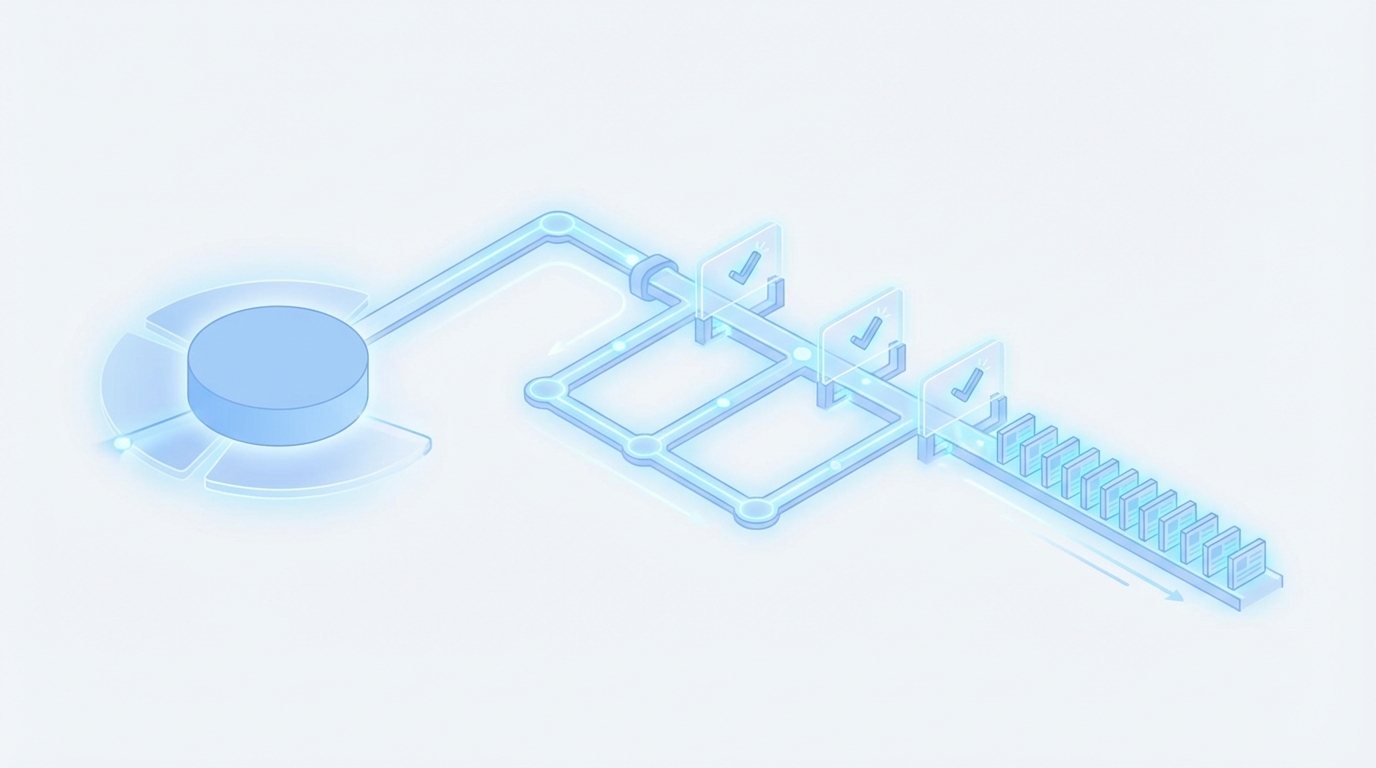
Briefs don’t stop positioning drift because they’re advisory, not binding. As velocity picks up, edits stack, stakeholders weigh in, and small changes compound into a new message. A studio model replaces “hope the brief sticks” with required inputs and QA checks that fail drafts that drift.
The hidden pattern of drift in creative teams
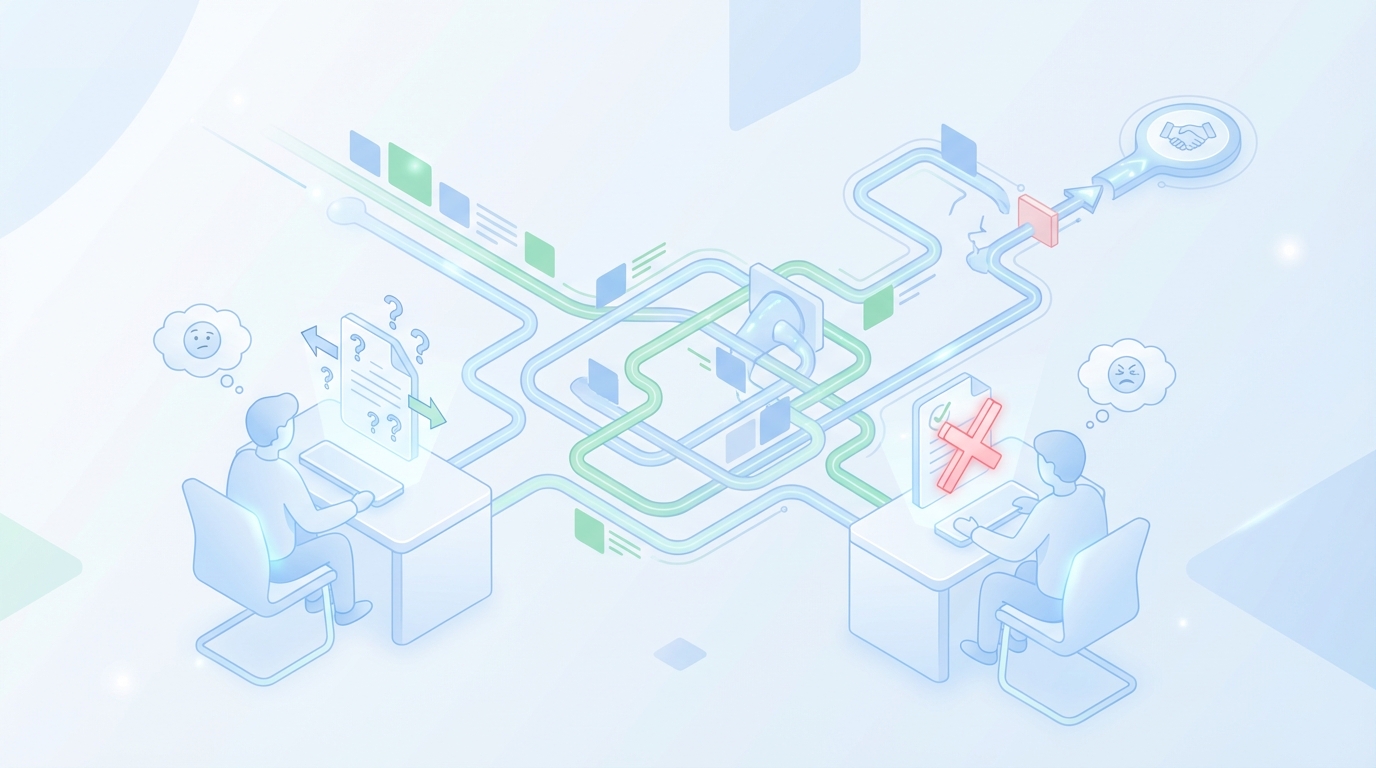
Most teams put a lot of faith in briefs. Then velocity picks up, stakeholders jump in, and writers swap a line here and there. Over a quarter, those “small” edits remix your point of view. Now your content says three slightly different things about the same problem. The fix isn’t stricter briefs, it’s a system that forces the right inputs every time.
What’s really happening is fragmentation. Strategy lives in decks. Claims live in someone’s head. Product truth lives in docs no one opens. Writers end up making judgment calls to fill gaps. They’re not trying to derail positioning, they’re shipping under uncertainty. Without a gate that checks anchors and claims up front, drift is inevitable.
What is a job-based studio, and why should you care?
A studio is a standardized workflow for one job in demand generation. Each studio requires specific inputs, then produces predefined outputs with narrative anchors. Think of studios as guardrails that make the right thing easy, and the off-brand thing hard. You get speed without drift. You also get fewer meetings about “what are we even trying to say.”
Practically, this means Convert assets always include your risk-reduction anchor and an approved proof element. Educate assets always include your category belief and problem frame. Acquire assets always reference the same market POV and glossary. The studio forces those choices before writing begins. Consistency stops being a nice-to-have and becomes a pass-or-fail event.
Think In Jobs To Lock Your Narrative
Jobs give content purpose, which locks your narrative. Formats are the package; jobs are the reason. When you plan by job, you define the required anchors, claims, tone, and proof types for each stage. That’s how you scale output without letting voice and positioning wander.
Formats are outputs, jobs are reasons
Formats are how ideas show up. Jobs are why they should exist. When you plan by job, the question shifts from “write a blog post” to “run a Convert job that reduces perceived risk for mid-funnel buyers.” That shift clarifies inputs, evidence, and tone. It also tells you which narrative anchors must show up, every time.
If you’ve worked with Jobs To Be Done thinking, the fit is obvious. You’re aligning each asset to the customer’s progress, not a calendar slot. The job dictates the narrative anchors, which dictates the content. For deeper context, the classic Jobs To Be Done resources are helpful, and messaging adaptations like this JTBD messaging guide map cleanly to B2B content.
The inputs studios must require every time
Studios force inputs up front. Examples, approved positioning lines, disallowed terms, claim boundaries, proof sources, and target outcomes. No inputs, no brief. No brief, no draft. Consistency isn’t a review task, it’s a gate at the beginning. You standardize reason, not just format, which keeps voice and story intact as you scale.
I’m a big fan of making evidence selection explicit. If an Educate asset needs a benchmark or product doc, the brief should list the specific options to pick from. If a Convert asset needs a customer quote or comparison table, that’s checked before writing starts. This reduces risk and shortens the back-and-forth later.
How do studios map to Acquire, Educate, Convert, Retain?
Map studios to a simple flywheel. Acquire for visibility and discovery. Educate for point of view and problem framing. Convert for evaluation content that reduces risk. Retain for customer proof and adoption. Each studio has different inputs, outputs, and narrative anchors. That’s how one system serves different stages without muddling the message.
Here’s the nuance. Acquire can support programmatic SEO and distribution-friendly explainers, but still needs your POV anchor present. Educate can include frameworks and guides, but shouldn’t drift from your category belief. Convert can run comparisons and alternatives content with fairness rules. Retain can ship customer stories and adoption content with clear use-case anchors. Different jobs, one message.
The Cost Of Drift You Are Probably Not Counting
Positioning drift hides in rework, missed relevance, and slow pipeline. Rewrites steal hours, wrong angles blunt outcomes, and sales spends time unlearning mixed messages. You don’t need perfect math to see the waste. A simple model will do, and it’s usually larger than expected.
Rework hours, missed relevance, slow pipeline
Let’s pretend a team ships 20 assets this quarter. Five need rewrites because claims were off. Each rewrite costs 3 to 4 hours across writer, editor, and approver. That’s 60 to 80 hours burned on preventable fixes. Meanwhile, two high-intent topics shipped with the wrong angle and missed the audience entirely. Opportunity cost sits off the books.
The lag is real. Those edits push other work, which pushes your publish dates, which pushes pipeline. Sales now sees blog lines that don’t match product truth and has to explain the discrepancy. The compounding effect is what hurts. A small upstream miss creates a big downstream tax.
A simple model to quantify leakage
Start with three variables. Rewrite rate per asset, hours per rewrite, and share of assets with weakened positioning. Multiply by average hourly cost. Then add a soft factor for pipeline slip, say one lost week per month due to rework. You don’t need a perfect model. You need enough signal to argue for upstream guardrails that reduce this waste.
If you want something more formal, connect this to message consistency research. Teams with consistent messaging reduce back-and-forth and improve comprehension, which shows up as fewer rewrites and clearer sales conversations. A quick primer on consistent messaging is a good refresher.
The small team tax when knowledge lives in heads
When context lives in people, not the system, performance depends on who’s available that week. Good weeks look great. Then someone goes on leave and narrative quality dips. I’ve been there. Early team, lots of output, then voice and structure drifted because the writers were guessing. Studios replace memory with inputs and checks.
The other cost is morale. Writers don’t want to redo work for ambiguous reasons. Sales doesn’t want to triangulate blog claims during calls. Leadership doesn’t want surprises at the end of the month. Moving decisions upstream fixes all three. It’s not perfection, it’s reliability.
If you’re staring at rework every month, the system is telling you something. Stop paying the tax. Start enforcing inputs.
Still dealing with this manually and losing weeks to preventable rewrites? Set one studio up right and measure the difference. When you’re ready, Request A Demo.
The Human Side Of Mixed Messaging
Mixed messaging is a daily drag, not just a strategic problem. It shows up as surprise rewrites, fraught approvals, and confused handoffs to sales. The fixes are straightforward if you move decisions to the start and make anchors non-negotiable.
The 3 pm rewrite that derails your day
You know the one. A draft lands, a claim doesn’t match product truth, and now your afternoon is edits and approvals. It’s not the writer’s fault. The inputs were fuzzy. Studios prevent this by making the approved claim set and disallowed terms part of the brief, not tribal knowledge you hope someone remembers.
We used to transcribe leadership videos and publish fast. It felt productive. It failed on structure and relevance. We ranked for topics we couldn’t tie back to product, and we paid for it in confused leads and rework. Once we locked inputs and anchors per job, the 3 pm derailments slowed way down.
Who feels the pain first when narrative slips?
Sales feels it on the next call. Product feels it when support tickets quote a blog line that isn’t accurate. Leadership feels it when pipeline misses roll up. Writers feel it too, stuck in frustrating rework. A studio model spreads the load. It moves decisions upstream so the same mistakes don’t boomerang back every week.
There’s a broader point here. This is less about writing talent and more about operating discipline. If you make the system carry the weight, people can do their best work without guessing.
Design A Studio Catalog That Enforces Positioning
A good studio catalog defines the job, enforces anchors, and standardizes evidence. You don’t need 20 studios. Start with a handful that map to your flywheel. The trick is encoding narrative rules into the brief and QA, so drafts can’t drift.
Define the studio catalog and narrative anchors
Create a catalog with four families, Acquire, Educate, Convert, Retain. For each studio, list the core job to be done, target audience, required narrative anchors, proof types, and outputs. Anchors are the non-negotiable lines your brand repeats. Examples include your category framing, key belief, and product-fit claims. If a draft misses an anchor, it’s not ready.
Two things matter most. First, be specific about the proof types that qualify for each anchor. Second, define the tone and stance by job. Convert can be more direct and comparative. Educate can be more expansive and explanatory. Acquire needs clarity and quick value. Retain needs credibility and real usage.
- Required anchors: category belief, problem frame, differentiator, product truth
- Proof types: customer quote, product doc, benchmark, comparison table
- Outputs: article, one-pager, slide, snippet set
Build brief templates with approved lines and evidence
Turn anchors into fields inside the brief. Include approved claims, disallowed phrases, CTA pattern, supporting evidence options, and link targets. The brief should force inclusion of at least one proof element, customer quote, product doc, benchmark, or explainer. Writers pull from a library of pre-approved language, which speeds drafting and reduces risk.
The best briefs read like assembly instructions for narrative. You’re not controlling creativity, you’re removing ambiguity. And you can iterate. When a phrase stops pulling its weight, update it in one place and every new draft benefits. If you’re using JTBD thinking to shape inputs, here’s a good overview of frameworks that support it: Top Frameworks That Support JTBD Thinking.
Encode rules into QA so drift gets caught early
Don’t rely on final reviews to spot problems. Encode rules that check for voice, anchor presence, factual grounding against your knowledge base, and claim boundaries. If a required anchor is missing, the draft fails. If a disallowed term appears, it flags. Consistency becomes a pass or fail event that happens before something hits the CMS.
Pilot this with one studio first. For example, Convert, comparisons. Run it for four weeks. Measure rewrite rate, time to publish, and anchor compliance. Use what you learn to refine rules and templates, then add a second studio. You’ll be surprised how quickly drift drops once the system starts catching issues early.
How Oleno Turns Studios Into Repeatable Execution
Oleno turns this studio approach into daily execution. Governance captures voice, positioning, and product truth once. Then deterministic pipelines run jobs with QA gates that block publish until anchors and claims are right. Publishing and optional visuals keep cadence steady without hand-holding.
Governance setup captures narrative, voice, product truth
With Oleno, you define positioning, market POV, voice, claim boundaries, and product facts once. That governance applies everywhere. The benefit is simple. Writers don’t guess. The system supplies approved language, and content stays anchored as volume increases. This reduces the rework and inconsistency you saw earlier.
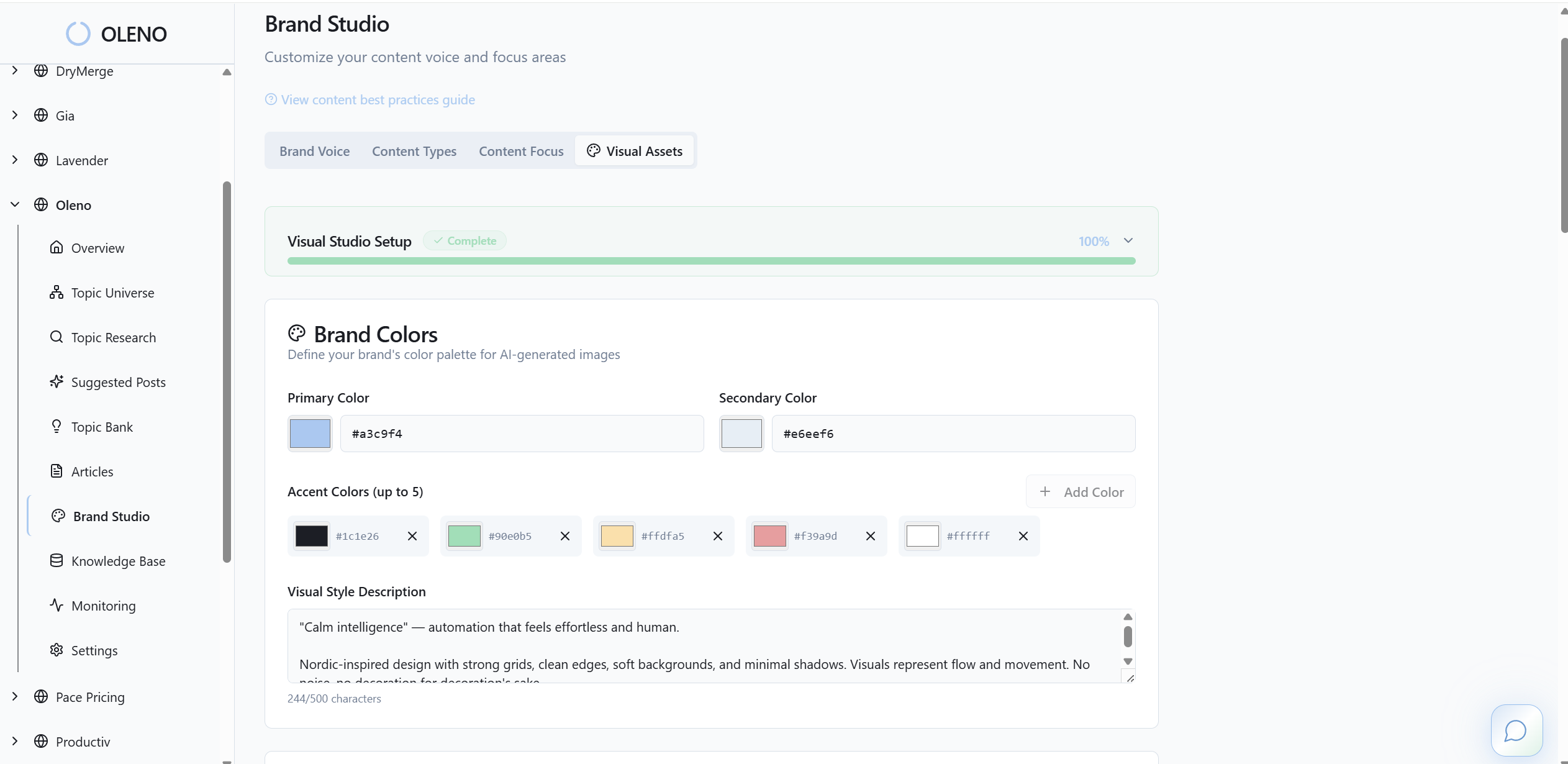
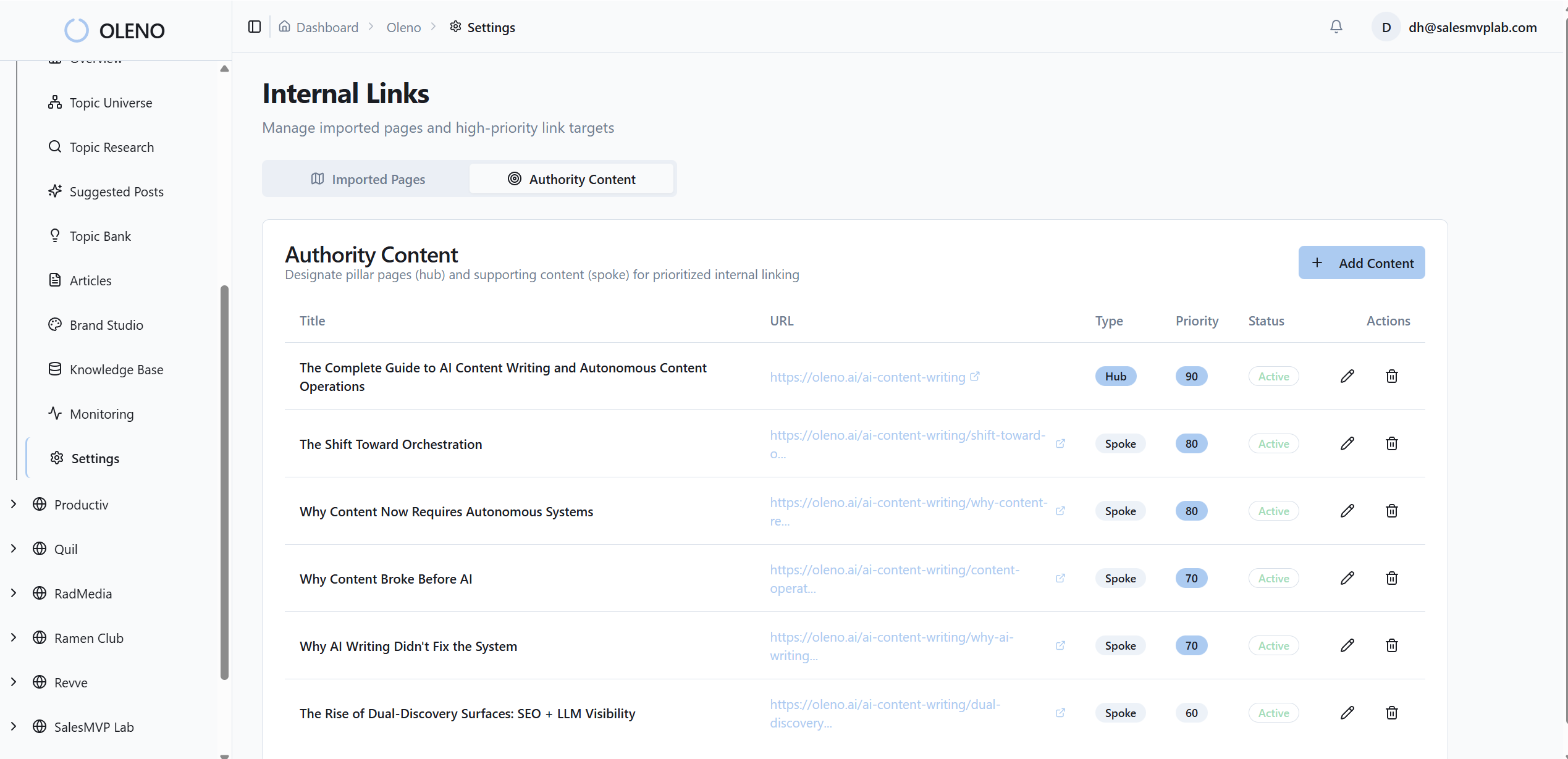
Oleno’s governance also includes disallowed terms and scope boundaries, so claims don’t drift into risky territory. Product truth and knowledge base grounding ensure statements line up with real capabilities. It’s the difference between “we’ll catch it in review” and “it can’t get past the gate if it’s wrong.”
Studios run a deterministic pipeline that enforces anchors
Studios in Oleno follow the same flow. Discover, angle, brief, draft, QA, enhance, visuals, publish. Inputs change by studio, the process doesn’t. That gives you predictable quality and a cadence you can plan around. It’s easier to add capacity without re-inventing how the work gets done.
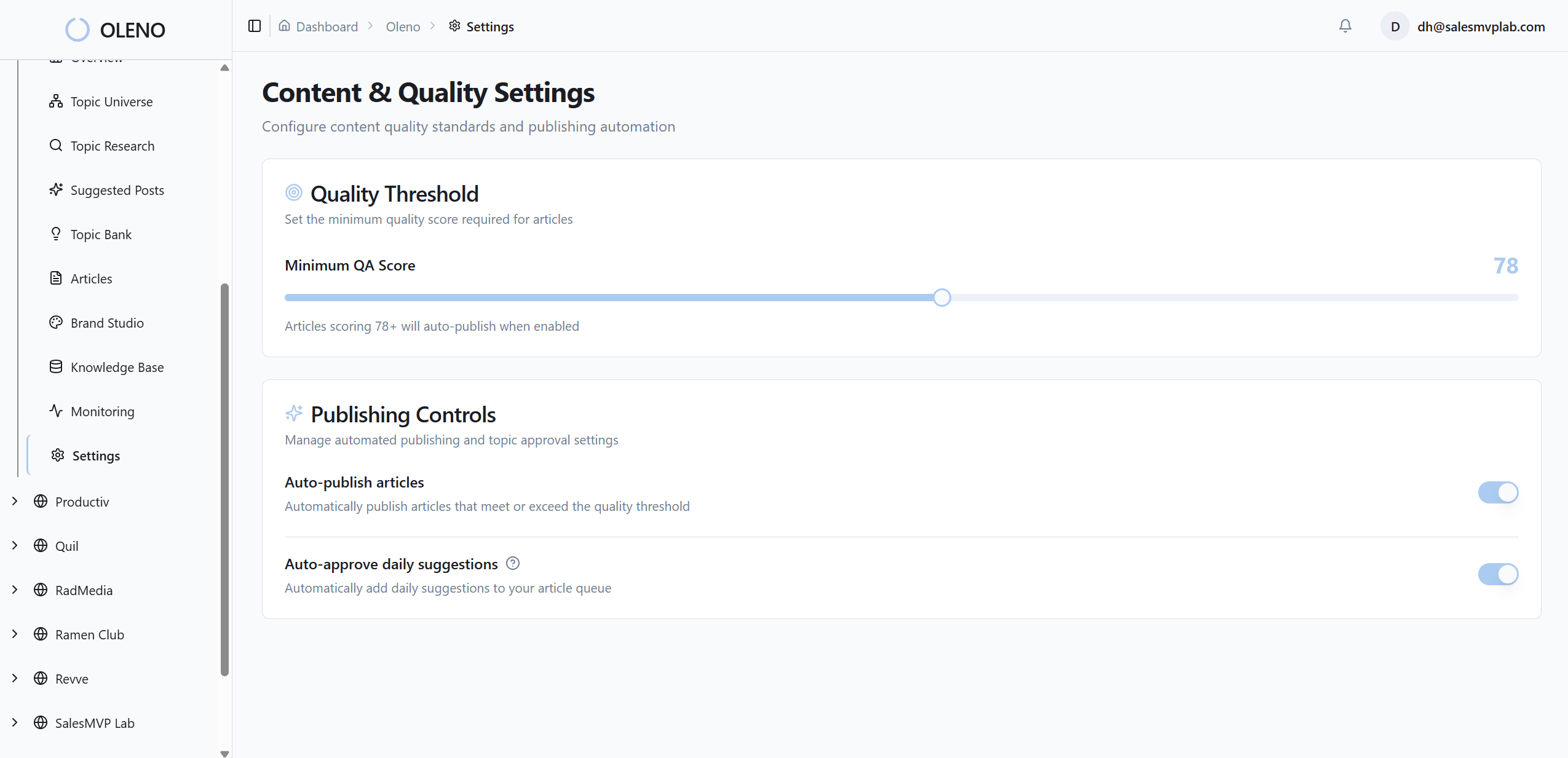
Here’s where Oleno shines for small teams. The QA gate enforces voice, anchor presence, and claim boundaries automatically. If an anchor is missing or a claim falls outside approved limits, the draft fails with clear reasons. Oleno can also generate brand-consistent visuals when enabled and publish directly to your CMS without duplicates, so approved content moves fast. The net effect is reduced rework hours, fewer missed angles, and a steady cadence that doesn’t depend on constant coordination.
I won’t pretend software solves everything, but Oleno is built to carry the operational load. It becomes the execution layer that turns your demand-gen strategy into continuous output. The system compounds over time, which is exactly what the flywheel needs.
3x fewer rewrites in month one is realistic when anchors and claims are enforced at the gate. Want to validate that for your team? Request A Demo.
Conclusion
Briefs are helpful, but they don’t protect positioning on their own. Studios do. When you plan by job, require anchors and proof up front, and encode rules into QA, you get two wins at once, speed and consistency. That’s the whole point. Make the system carry the weight so your team can focus on the work that actually moves pipeline. If you want this to run daily without adding headcount, you now know where to start.
About Daniel Hebert
I'm the founder of Oleno, SalesMVP Lab, and yourLumira. Been working in B2B SaaS in both sales and marketing leadership for 13+ years. I specialize in building revenue engines from the ground up. Over the years, I've codified writing frameworks, which are now powering Oleno.
Frequently Asked Questions