The Complete Buyer's Guide to Oleno

If you’re searching for a complete buyers guide to a demand-gen execution tool, you’re probably already feeling the drag: too many moving parts, too many handoffs, and a whole lot of “why did we publish this again” content that doesn’t go anywhere.
And the stakes are real. Pick the wrong setup and you don’t just waste budget, you waste quarters. Your team spends months doing frustrating rework, arguing about messaging, and chasing approvals, while the market moves and your pipeline doesn’t.
If you read this all the way through, you should be able to answer one clean question: should we evaluate Oleno now, later, or not at all, based on how we run demand gen and what we actually need to fix.
Key Takeaways:
- If your bottleneck is coordination (not writing), you should evaluate systems that reduce handoffs before you hire more people.
- A useful evaluation comes down to inputs and repeatability: what your team can standardize, verify, and measure every week.
- Expect a real pilot to take 2 to 4 weeks, mostly because you’ll be defining workflows, ownership, and quality checks.
- If you can’t explain how content influences pipeline in plain English, you’ll struggle to pick the right tool, even with a perfect demo.
- The highest risk in this category isn’t “bad AI,” it’s buying software before you’ve agreed on what “good output” means internally.
The Problem Most Buyers Are Actually Trying To Solve
Most teams aren’t losing because they can’t write. They’re losing because execution is broken, and content becomes a pile of disconnected drafts that never build momentum.
I’ve lived this. Back when I ran Steamfeed (2012 to 2016), we got to 120k uniques a month by publishing a lot, but also by having a system that let dozens of writers ship without everything sounding random. We didn’t “try harder.” We built repeatable inputs, consistent structure, and a way to keep quality from collapsing as volume went up.
Now swap “80 contributors” for “two marketers, one founder, and a freelancer.” Same issue. If you don’t have a system, every new piece is a fresh negotiation: what are we saying, who approves it, where does it go, what does good look like, why does it sound off-brand, why is legal back in the doc again.
And if you’re selling into a market where LLMs influence what people see, consistency compounds. In a good way. Or a bad one. If your messaging is mushy, you’re basically teaching the internet to repeat mushy.
Coordination overhead quietly eats the week
The first cost is time, but it shows up like death by a thousand paper cuts. You lose 20 minutes here, an hour there, then suddenly you’ve burned half a week and you still don’t have something you feel good shipping.
Let’s pretend a pretty normal flow: one marketer writes a draft, it gets edited, leadership tweaks positioning, someone wants “more proof,” then it sits. If each handoff costs even 30 minutes of context switching and back-and-forth, and you have 6 handoffs per piece, that’s 3 hours of pure coordination. Per piece. Not including writing.
And you can feel it. Your calendar turns into a headache. Your team stops taking swings because every swing triggers more review.
The real failure mode is inconsistent messaging at scale
Inconsistent messaging doesn’t look scary at first. It looks like “eh, this post feels a bit different.” Then you zoom out six months later and realize your site reads like five different companies.
The painful part is you can’t fix that with a better writer. Writers can only write with the inputs you give them. If your positioning, narrative, and proof points aren’t packaged in a repeatable way, every piece becomes a reinvention.
Some people will argue “we just need better editorial.” Fair. Editorial matters. But editorial without a system still collapses when volume goes up, or when the one person holding the whole story in their head gets pulled into exec meetings.
If LLM discovery matters to you, randomness becomes a risk
If your buyers are using ChatGPT or AI search tools to shortlist vendors, your content isn’t just “content.” It’s training data. That’s not hype, it’s just how retrieval works.
So the risk is not only wasted effort. It’s teaching the market the wrong story about you. Confusing prospects. Creating more “can you clarify what you do” calls. Those are expensive calls.
What Matters When You’re Buying A Tool Like This
A complete buyers guide to any execution platform should focus on one thing: what changes in your process, week to week, when the tool is in place.
You’re not buying “content.” You’re buying repeatability. Output you can verify. A way to publish, measure, and improve without the whole thing turning into a bespoke craft project every time.
Here are the criteria I’d care about if I were you.
A shared definition of “good” beats a bigger content calendar
If your team can’t agree on what good looks like, software won’t save you. You’ll just argue faster.
Good needs a definition that can survive a new hire. It should include narrative (what story are we telling), voice (how do we sound), structure (how do pieces get built), and proof (what we cite, what we don’t).
You don’t need a 40-page brand book. You need something you can actually use while publishing.
The best tools reduce rework by controlling inputs
Most content rework comes from missing inputs. Not bad effort.
When you see a draft that’s “fine but not quite it,” it’s usually because the writer didn’t have the right context: what objections we’re addressing, what terms we use, what proof points we trust, what we refuse to claim.
So you want to evaluate whether the tool helps you lock inputs, not just generate outputs. Inputs are where consistency is born.
Publishing is a system, not a final step
A lot of teams treat publishing as the last step. In reality, publishing is a whole pipeline: deciding what to write, aligning it to a narrative, producing it, verifying it, and distributing it.
If the tool only touches the middle part, you’ll still have chaos. You’ll still have the “where is this doc” problem. You’ll still have the “who owns this” problem. And you’ll still be worried about quality because nobody knows what checks happened before it went live, especially when evaluating complete buyers guide to.
You need a way to measure progress that isn’t vanity metrics
Traffic is fine. Rankings are fine. But for buying decisions, you want something tighter.
You want to know if output is consistent, if cycle time is shrinking, and if the work is actually mapping to demand gen outcomes. If your team can’t answer “what are we trying to make true in the buyer’s mind this month,” you’ll end up producing a lot and learning very little.
How To Evaluate Oleno Without Getting Sucked Into A Demo Story
You can run a clean evaluation without falling into the trap of “the demo looked cool.” Demos are supposed to look cool. Your job is to figure out if it fits the way you operate, and what it replaces.

I’d run it like a short pilot with a hard scoring rubric. Two to four weeks is usually enough to know if the approach clicks, assuming you’re actually shipping something in that window.
A pilot that ships 3 pieces tells you more than 10 meetings
The evaluation should force real work through the system. If you don’t ship, you’re evaluating vibes.
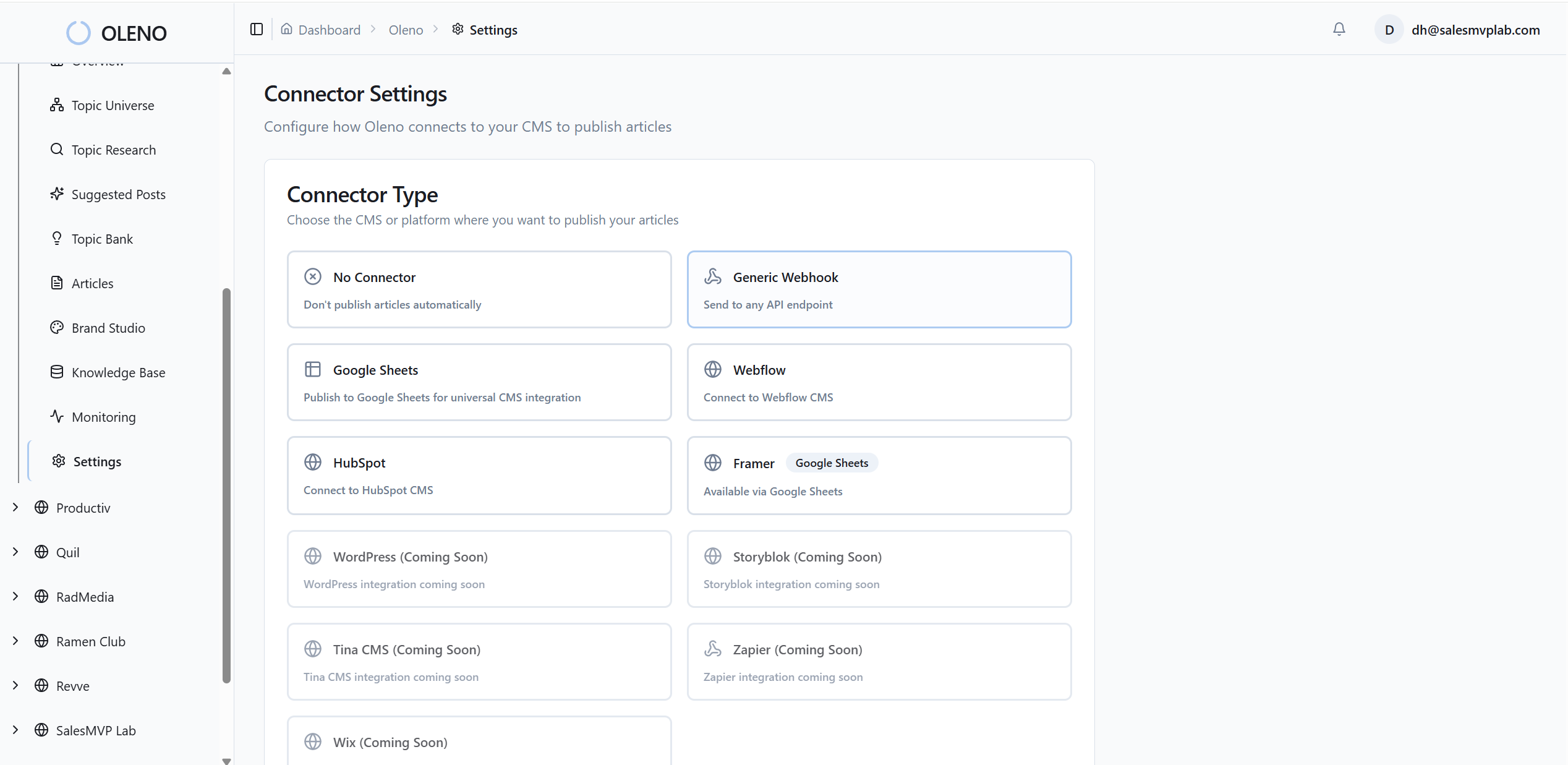
Pick 2 to 3 content types you actually publish: a landing page, a buyers guide, a sales email sequence, whatever. Run them through your current workflow, then run them through the new workflow. Compare the friction.
What you’re watching for is not “did it write.” It’s: did it reduce coordination, did it reduce rework, did it keep the narrative consistent, did it help you verify what you’re claiming.
Score the tool on workflow ownership, not feature checklists
Feature lists lie by omission. Workflow reveals the truth.
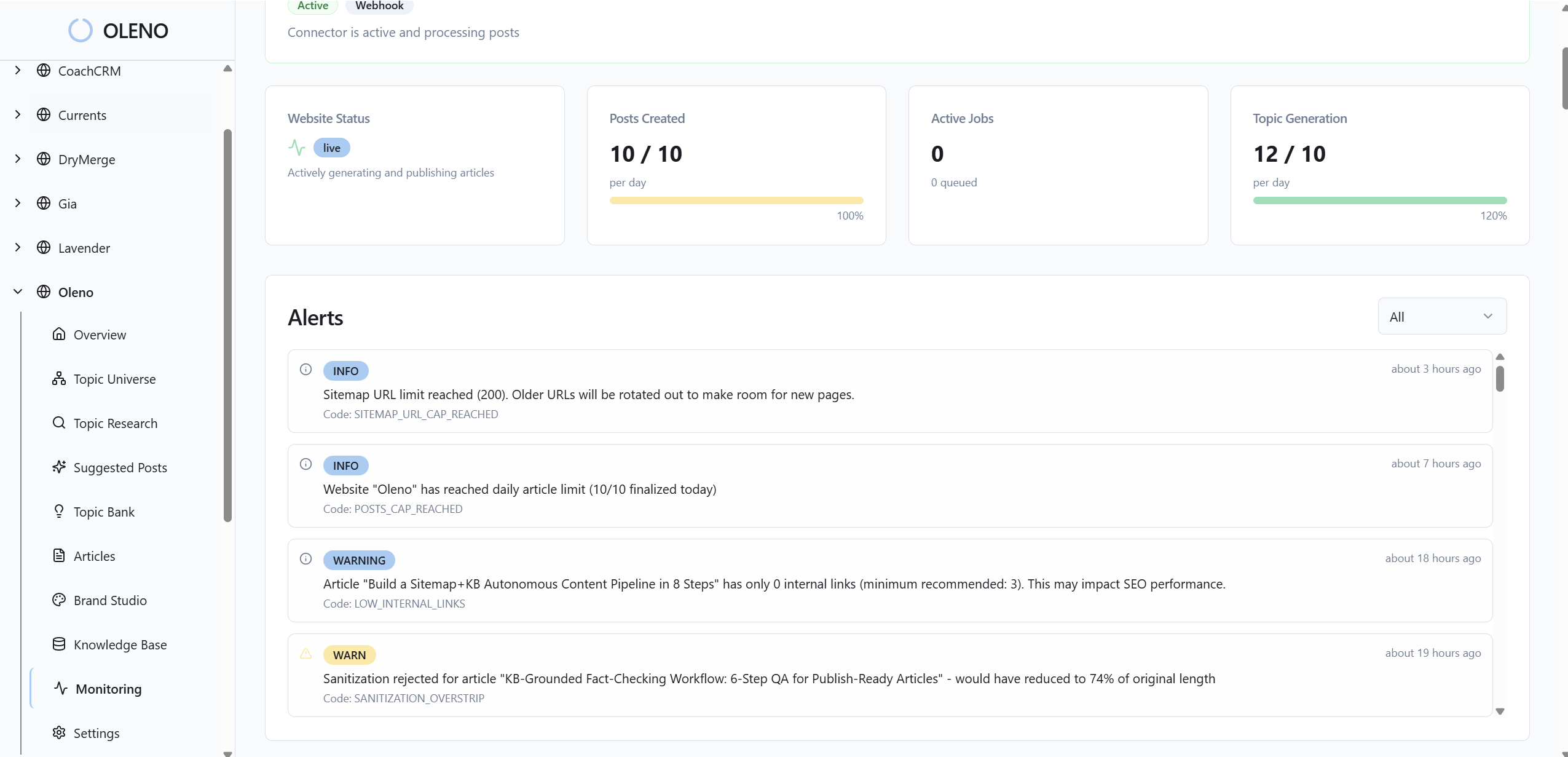
In your scoring, include stuff like: who owns the inputs, how changes get approved, how quality checks happen, how you prevent the “random draft” problem, and whether the output looks like your company or like generic content.
If you want a simple scoring model, use a 1 to 5 scale across a few categories:
- repeatability of inputs
- quality verification before publish
- cycle time from idea to publish
- consistency of narrative across pieces
- ease of handoff between roles
Keep it boring. Boring is good here.
If your team can’t agree on messaging, fix that during the evaluation
This is the awkward part. Evaluation often exposes internal misalignment.
You might find that the tool is fine, but your team has three competing versions of the story. That’s not a tool problem. It’s a leadership problem. Still solvable, but you’ve got to see it.
And honestly, this is why pilots are useful. They surface the real blockers early, before you sign a contract and pretend the contract will create alignment.
If you want to pressure test your evaluation plan against Oleno specifically, start with a simple walkthrough focused on your workflow and scoring rubric, not a generic product tour: request a demo
Common Mistakes Buyers Make When They Pick A Demand Gen Execution Platform
Most buying mistakes here aren’t about price. They’re about buying the wrong “shape” of solution for your actual bottleneck.

I’ve made this mistake on smaller teams. You buy something because it demos well, then you realize your real constraint was approvals, or messaging, or distribution, not writing.
Buying output before you’ve locked inputs creates endless rework
If you don’t define your narrative and your proof points, you’re going to get drafts that trigger debates. Every draft becomes a referendum on positioning. That’s exhausting.
And it’s not the writer’s fault. You’re asking them to guess what’s in your head. Same with any system that generates drafts. If you don’t feed it clean inputs, you’ll spend your time rewriting.
One sentence that’s worth remembering: rework is a symptom, not a phase.
Over-rotating on “AI quality” and ignoring process fit
People get obsessed with whether the writing is “good.” That’s understandable. But in a business context, the bigger question is whether the process is controllable.
Can you reproduce a good output next week, with a different person doing the work. Can you verify claims. Can you keep voice consistent across 20 pieces.
If you can’t, you’ll ship less, not more, because every piece becomes scary to publish.
Letting the loudest stakeholder define success
This happens all the time. A founder hates a headline. A VP wants more “enterprise language.” Someone wants fewer words. Someone wants more.
You end up optimizing for internal taste. Not the buyer’s decision journey, especially when evaluating complete buyers guide to.
You still need stakeholders involved, obviously. But you need a definition of success that’s tied to buyer behavior, not internal opinions. Otherwise, you’ll be stuck in review cycles forever.
Treating implementation like “turn it on and go” backfires
Most tools fail because implementation is treated like a light switch. It’s not.
You’re changing how work moves through the team. That means roles, responsibilities, approvals, and quality checks. If you skip that work, you’ll blame the software for a process problem.
I’ve watched teams do this, then churn six months later. Not because the tool was bad. Because nobody owned the system.
A Decision Framework You Can Use To Decide If Oleno Fits
You should be able to make a decision with a framework that a skeptical operator would respect. Not a vibe check. Not “I liked the UI.”
Use this table as a simple decision tree. Score each line honestly, then decide whether it’s worth running a pilot.
A simple fit matrix beats a long debate
If you’re stuck in internal arguments, quantify the decision. Even rough scoring helps.
| Decision Factor | What “Good Fit” Looks Like | What “Bad Fit” Looks Like | Your Score (1-5) |
|---|---|---|---|
| process maturity | you can describe your workflow end to end | work is ad hoc and changes weekly | |
| messaging clarity | you can write your positioning in 3 to 5 sentences | every piece triggers a new positioning debate | |
| approval complexity | stakeholders can approve quickly with clear criteria | approvals are subjective and slow | |
| need for consistency | you publish enough that inconsistency hurts | you publish rarely, so drift is less visible | |
| measurement discipline | you track cycle time and outcomes, not just volume | success is “we posted” |
Now, how do you interpret it.
- If most scores are 4 to 5, a pilot should be straightforward.
- If most scores are 2 to 3, you can still run a pilot, but the goal is learning what you need to standardize first.
- If most scores are 1 to 2, I’d pause and fix your internal definition of “good” before buying anything.
And yeah, you can disagree with parts of this. Some teams buy first to force discipline. It can work. It can also turn into a blame game.
A quick “let’s pretend” cost model keeps the decision grounded
No proof context was provided here, so I’m not going to invent numbers. But you can do the math for your team in five minutes.
Let’s pretend:
- you publish 8 pieces per month
- each piece takes 6 hours of writing and 4 hours of coordination and review
- your fully loaded cost for the people involved averages $120 per hour
That’s 10 hours per piece, 80 hours per month, or $9,600 per month in labor. If even 25 percent of that is frustrating rework and waiting, that’s $2,400 per month you’re burning just on the broken parts of the process.
You can replace my numbers with yours. The point is you should quantify the waste before you start comparing tools.
Next Step: What To Ask Oleno To Prove In A Real Evaluation
Oleno is worth evaluating if your problem is repeatable execution for demand gen content, especially when consistency matters and your team can’t afford endless coordination.
The fastest path is to ask for proof in your context. Not generic claims. Bring your workflow, your messaging constraints, and one real piece of content you need to ship.
Here’s what I’d ask Oleno to demonstrate, specifically, without turning the session into a feature tour:
- how you define and reuse your narrative inputs across multiple assets
- how you prevent random one-off messaging from sneaking into drafts
- how you verify claims and keep quality checks consistent before publishing
- how the workflow reduces handoffs, or at least makes handoffs clearer
Interjection. If the demo can’t show the work moving through your real process, it’s not a demo, it’s theater.
Midway through your evaluation, you should also ask what Oleno expects you to own internally. A tool can support execution, but it won’t replace decision-making on positioning, proof, and approvals.
If you want to run that kind of evaluation, keep it simple and practical: request a demo
When you’re ready to make the call, don’t overcomplicate it. Either the workflow reduces rework and protects consistency, or it doesn’t. Either you can see yourself shipping with it weekly, or you can’t.
If you want to pressure test Oleno against your fit matrix and a real pilot plan, do the last step and put time on the calendar: book a demo
About Daniel Hebert
I'm the founder of Oleno, SalesMVP Lab, and yourLumira. Been working in B2B SaaS in both sales and marketing leadership for 13+ years. I specialize in building revenue engines from the ground up. Over the years, I've codified writing frameworks, which are now powering Oleno.
Frequently Asked Questions