Five Stages of GEO for Demand Gen Content Operations

Demand-generation execution software is a marketing operations system that enforces positioning, product truth, and voice at scale to create consistent, compounding content signals by running planning, creation, and distribution as one workflow. The five stages of geo are basically a maturity model for whether your demand gen operation is set up to create that compounding signal, or if you’re stuck doing a bunch of disconnected activities that never add up.
Unlike SEO tools or AI writing tools, demand-generation execution software isn’t focused on optimizing a single page or making drafts faster. It’s focused on making your whole body of work feel like it came from one brain, one point of view, and one consistent definition of what you do, across months and hundreds of assets.
Most growth-stage teams are living inside Fragmented Demand Generation right now. Not because you’re bad at marketing. Because you’re under-resourced, you’ve got a patchwork of tools, and the only way to make it all “work” is a ton of manual coordination, rewrites, and weekly resets.
Key Takeaways:
- The five stages of geo are a maturity model for whether your content operation compounds signal, or just produces isolated output.
- Fragmented Demand Generation costs you twice: you waste time on rework, and you lose visibility in AI-generated results because your narrative drifts.
- Stage 5 isn’t “more content.” It’s consistent, governed execution that reinforces the same POV, the same definitions, and the same use cases across the funnel.
GEO Rewards Consistency Across Your Whole Library, Not One Great Post
LLMs Reward Coherence Across Hundreds Of Pieces, Not Single Posts
LLMs don’t read one article and decide you’re legit. They pattern match across everything they can find on you, then they pick the clearest and most consistent “source” when they assemble an answer. That means one banger post won’t save you if the rest of your content sounds like a different company every week.
That shift is why the five stages of geo matter. GEO isn’t a checklist. It’s more like a grading curve for your marketing fundamentals. Positioning clarity. Definitional consistency. Audience specificity. Repetition without drift. If you’ve got those things, the system can start compounding. If you don’t, you’ll keep producing content that feels fine in isolation, but weak as a catalog.
I’ve seen this in the SEO world for years. Back when I ran Steamfeed, we saw step-function jumps at 500 pages, 1000 pages, 2500 pages, 5000 pages, then 10000 pages. Most posts were under 100 views a month. Didn’t matter. The catalog was deep, consistent enough, and it created breadth plus authority.
GEO is the same idea, just harsher. Because now it’s not only “do you rank,” it’s “do you get picked.”
More Prompts And Tools Increase Drift Without A Governing System
Fragmented Demand Generation usually starts innocent. You add one tool for SEO. Another tool for briefs. A freelancer. A prompt library. A doc with positioning notes. A Slack thread where you explain the same thing for the 50th time.
Then you ship more. Sort of.
The problem is every extra tool and person adds a new place where judgment has to happen. Someone has to decide if the draft matches the POV. Someone has to catch product inaccuracies. Someone has to rewrite the intro because it doesn’t sound like you. Someone has to reframe it for a different persona. That “someone” is usually you, the Head of Marketing, already stretched thin.
Speed goes up at the draft level. Reliability goes down at the system level. And the drift sneaks in slowly, which is what makes it so painful. You don’t notice it on Monday. You notice it three months later when your content reads like five companies stitched together.
That’s the enemy in this whole story. Fragmented Demand Generation. It isn’t a people problem. It’s a system problem.
The Five Stages Of GEO Readiness Separate Noise From Compounding Signal
The five stages of geo are a way to stop guessing and start diagnosing. You can look at how your demand gen actually runs, then place yourself on a maturity curve.
The stages I’ll walk through later are:
- Stage 1: ad hoc prompting
- Stage 2: tool-driven production
- Stage 3: governance-defined creation
- Stage 4: orchestrated multi-format execution
- Stage 5: continuous, compounding GEO signal
Each stage has a defining behavior, and each stage has a failure mode. That’s what most teams miss. They keep trying to “fix” a Stage 3 problem with Stage 1 tactics. More prompts. More tools. More freelancers. Same headache.
The point of the model is simple. You’re trying to move from producing content, to running an engine.
The Unit Of Work Isn’t A Blog Post, It’s An Execution System
Orchestration Replaces Prompting As The Unit Of Marketing Work
Demand gen isn’t a writing task. It’s a system of work that has to hold together over time. You need a consistent POV, clear product definitions, different assets for different funnel stages, and repetition without sounding like a robot. That’s hard if your “unit of work” is a prompt or a single draft.
A better unit of work is orchestration. Not in a buzzword way. In a plain way.
Orchestration means you decide the rules once, then you execute inside those rules repeatedly. Positioning rules. Voice rules. Audience rules. Product truth rules. Content structure rules. Approval rules. Distribution rules. Once those are stable, your weekly output becomes predictable instead of fragile.
When I was doing the manual GPT grind for a B2C app last summer, I felt this firsthand. I had a bunch of GPTs, and I was copy-pasting outputs into my CMS every day. It took me 3 to 4 hours a day. Total waste. And the worst part wasn’t even the time. It was the resets. Every day felt like starting over, because nothing was connected to a system.
So I hard-coded an autonomous content engine into my site. Queue topics, write, QA, post. The outputs got more consistent because the workflow was consistent. That’s the lesson. Output quality isn’t only about “good writing.” It’s about repeatable structure.
You don’t need a bigger team. You need fewer resets.
Governance-First Marketing Is Now The Prerequisite For GEO Visibility
Most teams treat governance like a nice-to-have. Like a brand doc you write once, then ignore because you’re busy shipping.
GEO doesn’t care if you’re busy. GEO cares if you’re coherent.
Governance-first just means your fundamentals are defined before you scale output. Stuff like:
- What’s your POV, and what do you disagree with in the market?
- How do you define your category, in one tight sentence?
- What’s true about your product, and what is not true?
- Who are you selling to, and what do they actually care about?
- What should your content sound like, consistently?
If those aren’t defined, then more volume just increases your risk. Risk of drift. Risk of inaccurate claims. Risk of sounding generic. Risk of becoming invisible in AI-generated answers because the model can’t “lock in” who you are.
A lot of people hear this and think I’m saying tactics don’t matter. Tactics matter. SEO structure matters. Distribution matters. But tactics without a system turn into a treadmill. You can run faster. You won’t get further.
Why Consistency Beats Random Volume Spikes In The GEO Era
Breadth Plus Consistent Structure Creates Step-Function Discovery Gains
I’m biased here because I’ve lived it, but the compounding effect is real.
Steamfeed hit 120k unique visitors a month because we covered depth and breadth at a high volume, and we did it with enough consistency that Google could understand the site. We had 80 regular contributors submitting one post a month, and over 300 guest contributors. Tons of different voices, but the structure and topic coverage created order.
Traffic didn’t grow in a straight line. It spiked in steps. 500 pages. 1000 pages. 2500 pages. 5000 pages. 10000 pages.
That pattern matters for GEO because LLMs also respond to catalogs, not one-offs. They need enough consistent material to triangulate your definitions, your POV, and your expertise. If your content is a random mix of topics and tones, you don’t get that compounding effect. You get noise, especially when evaluating five stages of geo.
And if you’re a growth-stage SaaS team, you don’t have the luxury of wasting months producing noise.
Rankings Without Narrative Alignment Don’t Produce Pipeline
I’ve also seen the opposite. Great content. Great rankings. Weak demand gen.
At Proposify, we had a killer content team. Writers with personality. Designers who made everything look sharp. We ranked incredibly well on Google for a lot of topics.
But a bunch of that content was detached from the solution. We’d rank for stuff like “how to manage an SDR team.” Helpful content. Not connected to what we sold. So pipeline attribution was messy, and the narrative didn’t pull people toward a next step.
That’s a classic Fragmented Demand Generation symptom. Content success measured page by page, without forcing the catalog to reinforce product truth, category framing, and positioning.
GEO pushes that even harder. If your content doesn’t consistently connect problem framing to your solution space, LLMs won’t confidently associate you with the answer. You might still get traffic, but you’ll miss the buyer moments that matter.
Fragmented Execution Feels Like Busy Weeks And Empty Metrics for Five stages of geo
You Spend More Time Coordinating Fixes Than Creating Value
If you’re a Head of Marketing at a 20 to 150 person SaaS, you already know this feeling.
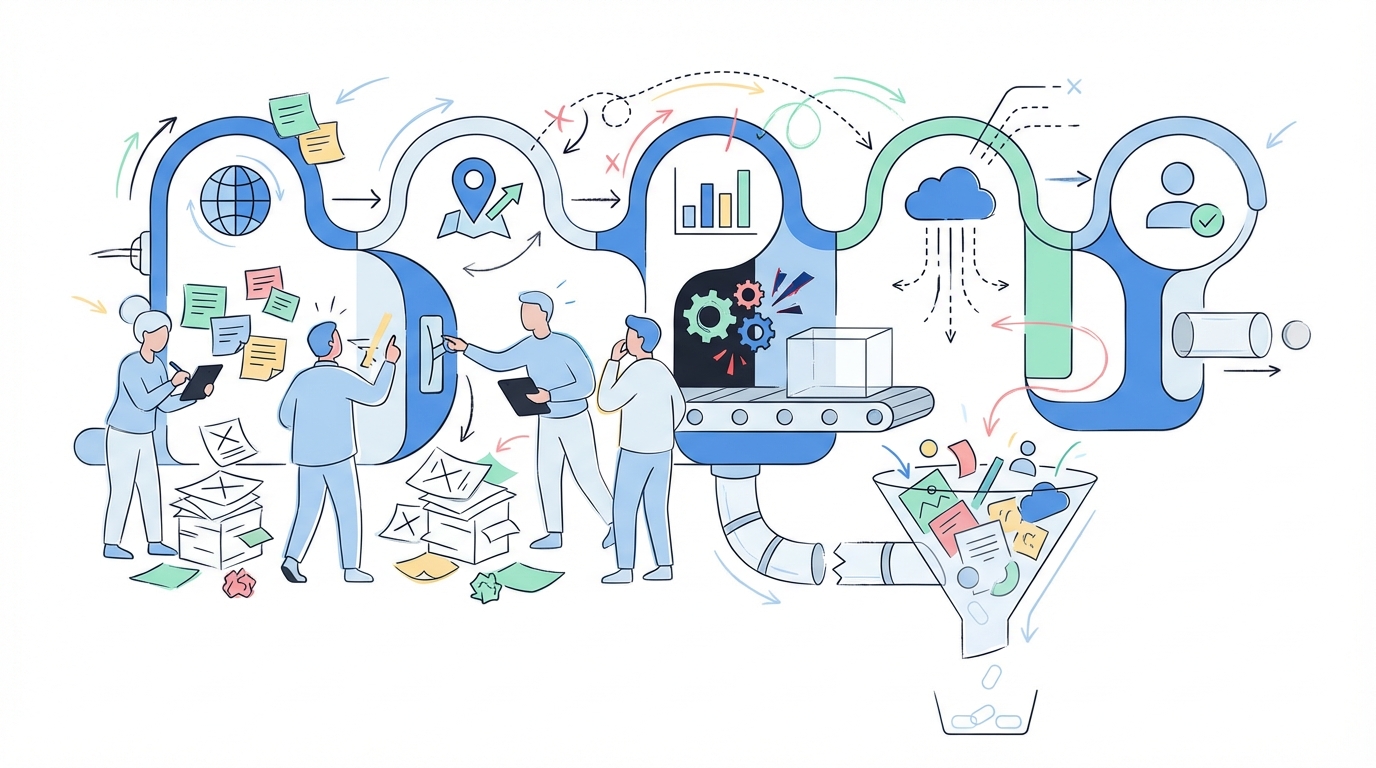
Monday: you’re writing briefs. Tuesday: you’re rewriting the draft because it missed the point. Wednesday: you’re in Slack debates about tone. Thursday: you’re fixing product claims because someone guessed. Friday: you’re trying to ship, but you’re also trying to report results to the CEO.
Then next Monday comes and you do it again. That’s not a workflow. That’s a loop.
And the loop has a nasty side effect. You stop doing the strategic stuff because you’re stuck being the “human Quality Gate” for everything. You don’t have time to think about category narrative, or multi-persona coverage, or buyer enablement gaps. You’re stuck in rework.
That’s the cost. Not only time. Opportunity.
Every New Contributor Quietly Changes Your Brand Voice
I learned this the hard way at PostBeyond.
I was the sole marketer, and I could crank out 3 to 4 high quality posts a week because I had the context in my head and I was using a structured writing framework. As we grew, the content writer didn’t have that context. They took longer, and the output quality dropped. Not because they weren’t talented. Because the context wasn’t transferable.
That’s the drift problem again. Every new contributor, agency, freelancer, or “AI workflow” introduces subtle changes. Vocabulary. Tone. What they emphasize. What they leave out. Over time, your brand voice becomes a mashup.
You might not notice until you read five posts in a row and think, “Wait, do we even know what we believe?”
LLMs notice. Buyers notice too.
The Five Stages Of GEO-Ready Content Operations
The five stages of geo are a maturity ladder for content operations. Each stage is a real place you can land. And each stage has a clear reason why it breaks.
You might be thinking, “Cool, but I just need more output.” Fair. Output matters. But if you don’t know what stage you’re in, you’ll keep trying random fixes. That’s how you burn quarters.
So let’s go stage by stage.
- Governance-First Clarity: Encode positioning, product truth, audiences, and voice so every asset reflects the same narrative without manual policing.
- Orchestrated Execution: Plan, create, and distribute as one governed workflow that reduces judgment load and maintains cadence across teams and formats.
- Continuous Reinforcement: Systematically refresh, repurpose, and extend content so signals compound and GEO can confidently cite your brand.
Stages 1 To 2: Prompting And Tool Sprawl Create Busywork, Not Demand
Stage 1 is ad hoc prompting. It’s you, ChatGPT, and a Google Doc. Maybe you’ve got a Notion page with prompts. Maybe you’re copy-pasting into your CMS. It feels productive because words are showing up on the screen.
Stage 1 breaks when you try to do it consistently. Because every draft becomes a new debate. Voice debate. POV debate. Accuracy debate. Audience debate. You’re basically re-briefing an LLM every time, then re-reviewing everything every time.
Stage 2 is tool-driven production. You add an SEO platform. You add an AI writer. You add a freelancer. You add a project board. Output goes up, but so does coordination.
The failure mode in Stage 2 is sneaky. You ship more drafts, but you also spend more time on reviews and resets. Let’s pretend you publish 8 pieces a month and each piece takes 2 hours of “fixing” across rewrites, SME checks, and formatting. That’s 16 hours. Then you try to scale to 20 pieces. Now it’s 40 hours of fixing. You didn’t scale output. You scaled rework.
The move out of Stage 1 and 2 isn’t “better prompts.” It’s writing down the fundamentals and standardizing the structures. Positioning. Definitions. Voice. Audience. Use case framing. Then you can stop arguing with every draft like it’s a one-off.
Stages 3 To 4: Defined Rules Turn Volume Into Reliability
Stage 3 is governance-defined creation. This is where you stop relying on tribal knowledge and start codifying how you go to market, especially when evaluating five stages of geo.
You define what you believe. You define what’s true about your product. You define who you’re talking to. You define voice rules. You define what a “good” piece looks like structurally. And then you enforce those rules, not just in your head, but in the process.
Stage 3 still might be manual. You can do it with docs and discipline. It’s not a tooling requirement. It’s an operating requirement.
Stage 4 is orchestrated multi-format execution. This is where you stop treating SEO, category content, competitive pages, and product-led content as separate projects. They become different job types that all pull from the same governance.
That’s where the compounding starts to show up. Because your SEO content reinforces your category framing. Your category content reinforces your competitive POV. Your competitive pages reinforce your product truth. Everything sounds like one company, even if multiple people are touching it.
Most teams don’t get to Stage 4 because they keep the fundamentals in one person’s head. Usually yours.
Stage 5: Continuous Reinforcement Forces Compounding Signal
Stage 5 is where your content operation becomes a reinforcement machine.

You’ve got clear definitions. Clear POV. Clear audiences and use cases. And now you’re not only producing net new content, you’re also refreshing, repurposing, and extending content so the signal compounds.
Stage 5 has a different measurement mindset too. You stop obsessing over whether one page ranked. You start looking at portfolio-level consistency. Are we reinforcing the same enemy? Are we repeating the same category definition? Are we covering the same use cases across different personas? Are we showing up in the buyer moments that matter?
And the feedback loop changes. Instead of rewriting drafts forever, you update the governance. You fix the root, not the leaf.
If you want to see what Stage 5 looks like inside a system built for it, you can request a demo. Not because you need software to start, but because it’s easier to recognize the target when you can see it running end to end.
What Stage 5 Looks Like When The System Actually Runs
From Governance To Distribution, One System Preserves Voice And Truth
Stage 5 in practice is boring in the best way. Boring means predictable. Predictable means you can actually focus on strategy again.
Oleno is built around that idea. Instead of living in prompt land, you encode your rules once, then run governed pipelines that keep your voice, POV, and product truth consistent even when you’re tired, busy, or shifting priorities.
The core of that is a few pieces working together:
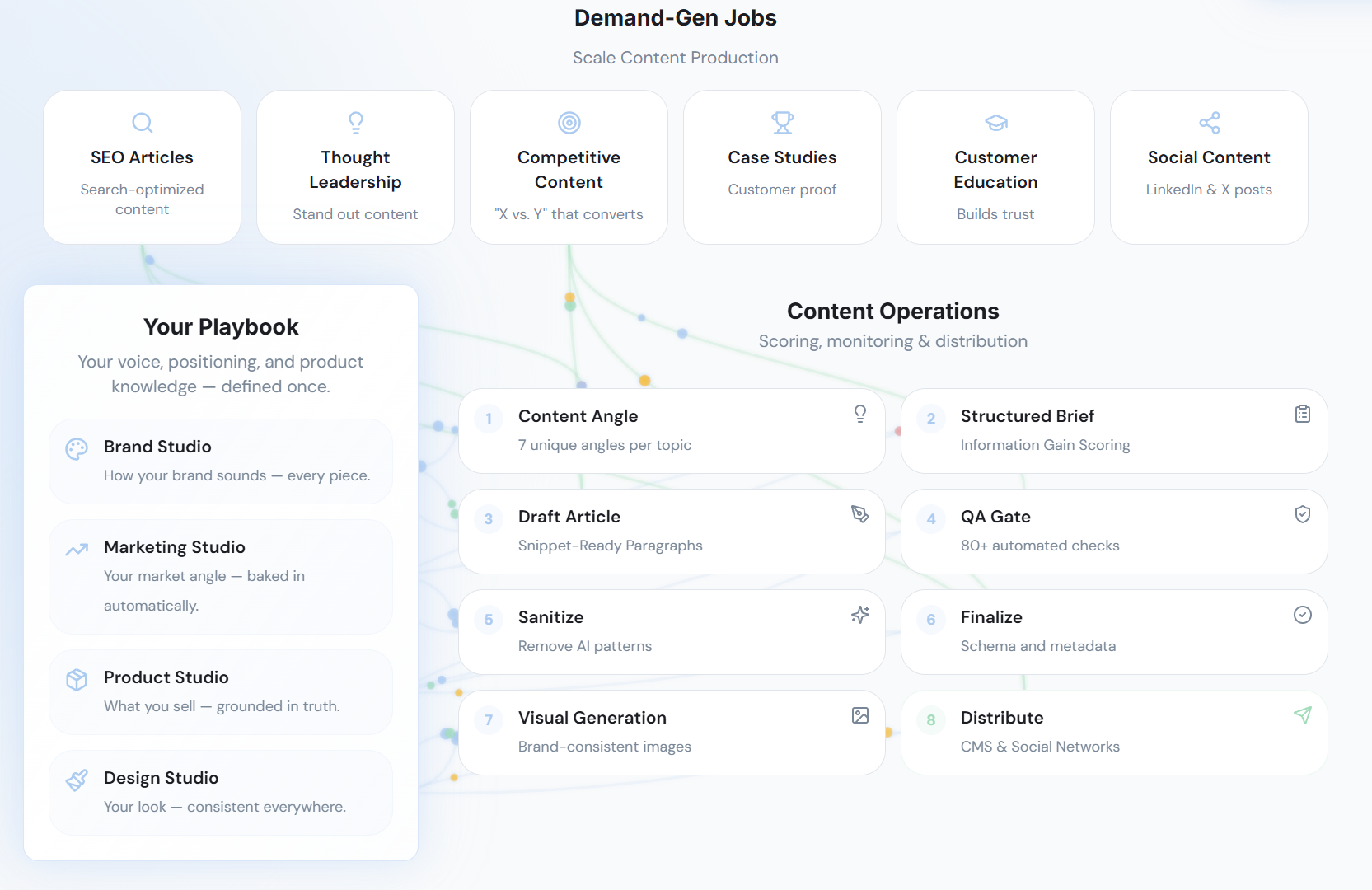
Brand studio defines how you sound, including words to avoid and structure rules. Marketing studio defines what you want the market to believe, including category framing and enemy framing. Product studio defines what’s true about your product, what claims are allowed, and what boundaries cannot be crossed.
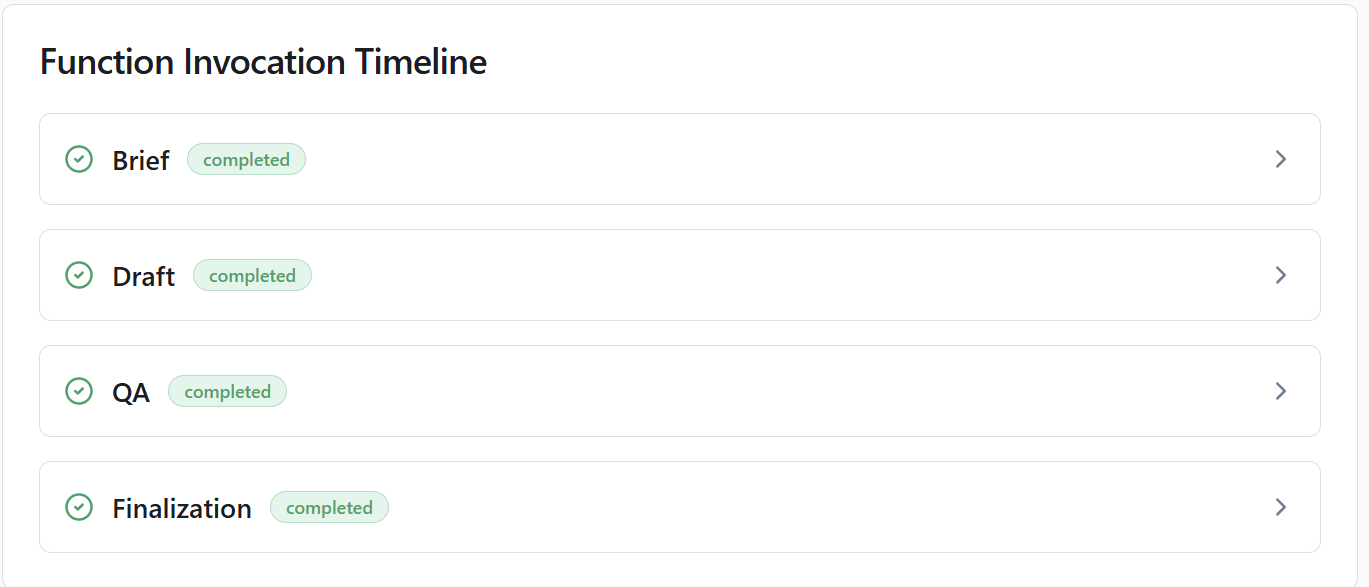
Then the quality gate checks the output against those objective standards, so you aren’t stuck doing endless subjective edits. When content is ready, cms publishing pushes it to your CMS without the copy-paste grind. Distribution & social planning can repurpose approved articles into social posts, so the work doesn’t die after publication.
None of that matters if it’s just a pile of features. The point is the flow. Governance shows up in every step, so you don’t get drift.
If you want to see the workflow and what it replaces, you can request a demo.
Orchestrated Studios Keep SEO, Category, And Competitive Content From Contradicting Each Other
Most teams accidentally run three different marketing departments.
One for SEO. One for thought leadership. One for competitive and PMM stuff.
Different docs. Different writers. Different tone. Different truth. That’s Fragmented Demand Generation in a nutshell.
Oleno pulls those job types into one governed system. Programmatic seo studio, category studio, competitive studio, and product marketing studio can all run with the same underlying rules from brand studio, marketing studio, product studio, and audience & persona targeting. Orchestrator keeps cadence steady by scheduling and executing the pipeline, instead of relying on you to remember what’s due this week.
Executive dashboard gives you visibility into output and quality trends without you babysitting every draft. Article editor gives you control when you want to step in and rewrite something fast, without breaking the system.
The practical outcome is fewer resets and less coordination cost. Not “zero work,” but less of the dumb work that burns you out.
If you’re at the point where you’re thinking, “I can’t keep doing this manually,” that’s usually the right moment to book a demo and see what a Stage 5 operation looks like when it’s actually running.
Getting Out Of Fragmented Demand Gen Starts With One Honest Audit
Fragmented Demand Generation is the default for growth-stage SaaS. You inherit tools. You inherit expectations. You inherit a content calendar and a bunch of half-finished drafts. Then GEO shows up and raises the bar on consistency, and you’re left holding the bag.
The five stages of geo give you a way out that isn’t vague. Figure out your stage. Identify the failure mode. Then upgrade the system, not the prompts.
Stage 5 isn’t a dream state. It’s just what happens when you treat demand gen like a real operating system instead of a to-do list.
About Daniel Hebert
I'm the founder of Oleno, SalesMVP Lab, and yourLumira. Been working in B2B SaaS in both sales and marketing leadership for 13+ years. I specialize in building revenue engines from the ground up. Over the years, I've codified writing frameworks, which are now powering Oleno.
Frequently Asked Questions