Thought Leadership Impact Framework: Measure Influence & Pipeline

Most teams treat thought leadership like brand theater. Nice posts. Zero accountability. If you’re not measuring it like a channel, you’re burning budget. The fix: build a thought leadership impact framework that ties articles to pipeline—not five tools and wishful thinking. A simple setup that shows influence, then improves it week after week.
I learned this the hard way. At one company, we shipped smart takes and watched vanity metrics climb. Time on page looked fine. Pipeline didn’t move. Once we instrumented articles, tagged CTAs properly, and built a clean dashboard, patterns showed up fast. Some topics quietly pulled in high‑intent readers. Others soaked up time and did nothing. Focus changed. Results followed.
Key Takeaways:
- Pick 3–5 KPIs that map thought leadership to pipeline, not impressions
- Instrument every article with UTMs and events before you publish
- Use a pragmatic attribution model that shows direct, assisted, and exposure impact
- Build a dashboard that surfaces article-level influence and topic clusters
- Run three simple experiments each month to prove causality and raise demo lift
- Aim to attribute 5–10% of new MQLs to thought leadership touchpoints within 90 days
Thought Leadership Impact Framework: Stop Treating It as Branding
Thought leadership must be measured like a demand‑gen channel or it drifts into vanity. The point isn’t a clever take; it’s shaping pipeline. A working framework assigns KPIs, instruments every post, and shows influence at the article level. That’s the baseline for real decisions.
Why “awareness” alone is the wrong goal
Awareness with no path to action is a leak, not a funnel. If a reader can’t take a next step you can track, you’re flying blind. I like one‑click CTAs, newsletter handraisers, and demo prompts tuned to the article’s angle. Without them, you settle for applause and lose the plot.
Vague goals also hide what’s actually working. Some POVs bring in the right people quietly. Others spark empty engagement. When you add clear CTAs and tracking, the noise drops and the signal rises. Patterns show up fast enough to steer the next month, not next quarter.
What helps here is external proof that buyers act on good ideas. The Edelman‑LinkedIn B2B Thought Leadership Impact Study shows quality thought leadership influences vendor choice. Tie that influence to your funnel or you’ll miss it entirely.
- Strong signals to capture, in priority order:
- Demo intent from article CTAs
- Newsletter or webinar signups tied to the article’s UTM
- Return visits and assisted conversions in the next 30–60 days
KPIs that make thought leadership accountable
Pick a small set and commit. More metrics don’t mean more clarity. In my experience, five cover it.
Start with direct conversions from article CTAs. Add assisted pipeline per article within a time window, usually 60 or 90 days. Include demo CTR, newsletter lift, and average engaged time compared to your site baseline. Keep definitions tight so no one argues about math during forecast reviews.
Once you lock KPIs, hold them steady for 90 days. Teams often change the scoreboard before the work compounds. Resist that. You need comparable data across a few cycles to learn, prune, and double down.
- Practical KPI set:
- Article‑level demo CTR
- Assisted pipeline within 90 days
- % of new MQLs with a thought leadership touch
- Newsletter signups per 1,000 views
- Average engaged time vs site median
Reframing Impact: Your Framework Must Tie to Pipeline
Impact means pipeline influence, not likes. Tie thought leadership to a short list of funnel outcomes, then back into topics and formats that drive those outcomes. If measurement can’t connect to a sales motion, it’s not impact. It’s theater.
The root cause most teams ignore
The real problem is fragmentation, not a lack of ideas. Content lives in one tool, events in another, attribution in a third. No single place shows what an article actually did. So you debate taste. You don’t debate data.
I’ve been in those meetings. Smart people, wrong scoreboard. Once we cleaned up UTMs, standardized events, and grouped topics by buying job, the fog lifted. Suddenly it was obvious which pieces helped deals move from stuck to serious.
A small amount of plumbing solves most of this. GA4 events and clean UTMs make a bigger difference than a brand‑new content calendar. Google explains event tracking clearly in the GA4 events guide, and the Campaign URL Builder keeps UTM chaos in check.
- Fragmentation checklist to fix:
- One UTM standard for all thought leadership links
- A shared event schema for demo clicks and subscriptions
- A single dashboard that rolls article data up to a pipeline view
Define “impact” before you publish
Impact isn’t a retrospective story. Define it up front. What move do you want a reader to make—right now or later in the cycle? Then design the CTA, the links, and the tracking to catch it.
I like to write the CTA before the draft. If the CTA is weak, the angle’s probably weak. When the CTA fits the buyer job, the rest of the piece writes itself. You’ll also stop publishing articles that can’t possibly influence your funnel.
Decide your attribution windows before launch. Early‑stage POVs need a longer lookback than bottom‑of‑funnel explainers. Put those rules in writing so your dashboard reflects reality, not hope.
- Pre‑publish decisions:
- Primary CTA and its success metric
- Attribution window by article type
- Topic cluster and buyer job the piece supports
Cost of No Thought Leadership Impact Framework
Without a framework, you pay in time, money, and missed deals. You also burn trust with leadership. Nothing kills a program faster than a budget review with soft stories and no numbers. The cost is real and compounding.
Hidden waste that piles up quietly
Teams burn hours tagging links by hand, chasing analytics screenshots, and reconciling three different numbers that should match. That’s not strategy. That’s cleanup. Meanwhile, topics that never convert keep getting airtime because they feel smart.
You also lose distribution dollars. If you boost every post equally, you waste spend on ideas that don’t earn attention from the right people. A small reallocation, driven by influence data, usually pays for the whole tracking setup in a month.
Another hidden cost is context switching. When no one trusts the data, every decision pulls in more reviewers. More reviewers mean more delays. The work slows just when you need to move faster, especially when evaluating your thought leadership impact framework.
- Typical failure patterns:
- Manual tagging and broken UTMs
- Boosting the wrong posts
- Endless review cycles with no owner
Pipeline effects you can measure
The easiest way to see the damage is to compare assisted conversions for tracked articles versus untracked ones. Tracked pieces tend to earn better internal distribution, cleaner linking, and clearer CTAs. That alone moves numbers.
You can also slice by topic clusters. Some clusters drive education and newsletter growth. Others nudge evaluations. A few will pull direct demos. Spread your bets, then feed the clusters that perform for your motion.
Industry research backs this approach. The CMI B2B Content Marketing Research highlights the gap between activity and results. Close that gap with instrumentation, not more brainstorms.
- Reporting views that help:
- Assisted conversions by article and cluster
- Demo CTR trendline by angle
- Newsletter growth tied to POV series
What It Feels Like When Impact Is Invisible
When you can’t prove impact, you feel stuck. You’re doing the work, yet everything feels fragile. One budget cut and the program stalls. That anxiety is a sign your system lacks proof—not that your ideas are wrong.

The day‑to‑day pain
You spend mornings explaining why a smart piece matters, then afternoons fixing tracking you should’ve set once. You build decks to defend the plan. You chase down a sales anecdote to show “influence.” Everyone’s working hard. Morale dips anyway.
I’ve been there. Once we put a simple dashboard in place, the tone of meetings changed. Stories turned into numbers. Debates turned into experiments. Confidence went up because the work was finally legible.
People underestimate how much clarity improves speed. When the team can see movement in a week, they lean in. When results are fuzzy, they hedge. Hedging kills pace.
- Emotional signals you’re flying blind:
- You defend the work with opinions, not metrics
- You hesitate to publish because you’re unsure it’ll matter
- You avoid the CFO update
The upside of visible progress
Momentum shows up fast with clean tracking. One article lands, you see the demo CTR spike, and you copy the angle into a short series. Sales starts sharing links because they see prospects react. Leadership asks for more, not less.
Progress compounds too. As clusters earn credibility, distribution costs drop. The market recognizes your POV, so readers give you more time on page. That extra time lifts conversion odds for the same traffic.
You also get better at killing weak ideas quickly. That’s a feature, not a bug. Cutting losers funds the next winner.
- Quick wins to expect:
- Faster topic decisions
- Sharper CTAs that feel natural
- Fewer meetings, more publishing
Build Your Thought Leadership Impact Framework
Start simple, then iterate. You don’t need a massive revamp. You need clean tracking, a pragmatic attribution model, and a dashboard people actually open. Do that in 90 days and you’ll feel the shift.
Choose KPIs and wire them to actions
Lock your KPIs, then design article actions that map to each one—demo click, subscription, resource download, calendar booking. Every action needs a clear event and UTM plan, defined once, not per post.
Write down naming rules. Lowercase, no spaces, consistent source and medium. Small details avoid big arguments later. The goal is consistency, not cleverness.
Then align article types to windows. Education often assists within 60–90 days. Bottom‑of‑funnel explainers convert sooner. If you don’t separate windows, you’ll misread the work.
- Implementation steps:
- Finalize 3–5 KPIs with clean definitions
- Standardize UTMs and events for each CTA type
- Set attribution windows by article type
Instrument articles before they go live
Do the plumbing before publish. Add event tracking for demo clicks, newsletter signups, and scroll depth. Build simple link hubs for CTAs so you can change destinations without touching the post.
Create a short QA checklist so nothing ships untagged. Teams skip this when they’re rushed. That’s the mistake that breaks your data for weeks. Ten minutes upfront saves hours later.
If you need a primer on events, the GA4 events guide is enough to get going. Keep it lightweight. You’re building a habit, not a science project.
- Minimum event set:
- cta_click with article and position
- newsletter_subscribe with article and topic cluster
- demo_request with article and persona
Ready to treat thought leadership like a system and actually see results? Request a Demo.
How Oleno Operationalizes the Thought Leadership Impact Framework
A framework is only useful if it runs every week. That’s where software earns its keep. Oleno turns the setup into a repeatable system so small teams can keep shipping, stay on narrative, and measure influence without babysitting a dozen steps.

Governance that prevents drift
Oleno’s Brand Studio locks tone, terminology, and CTA style so thought leadership reads like you, even as volume grows. Marketing Studio encodes your point of view and message pillars, which keeps every piece tied to the same story instead of straying into generic takes. Product Studio grounds claims in approved facts so POV pieces stay accurate and safe.
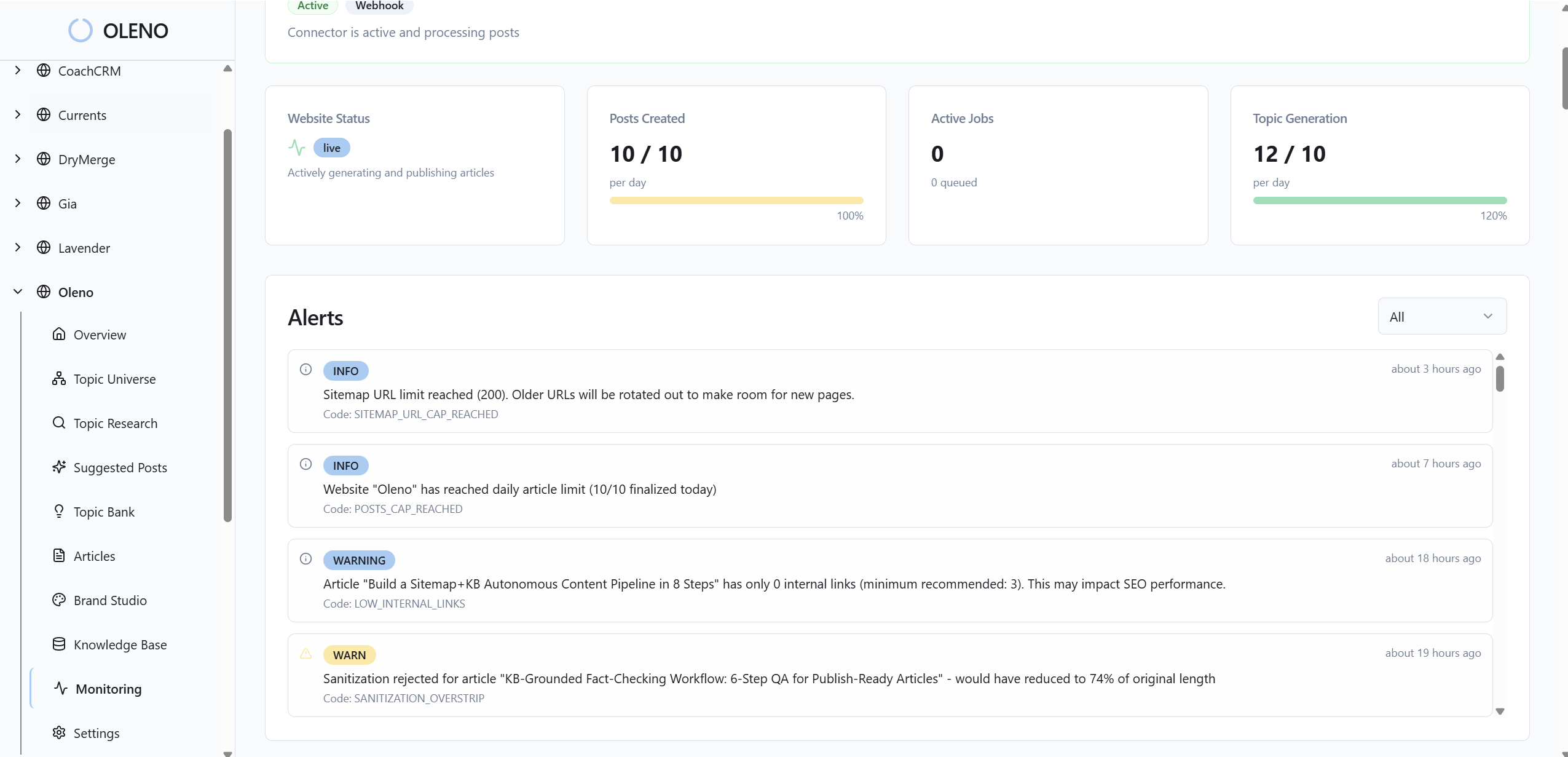
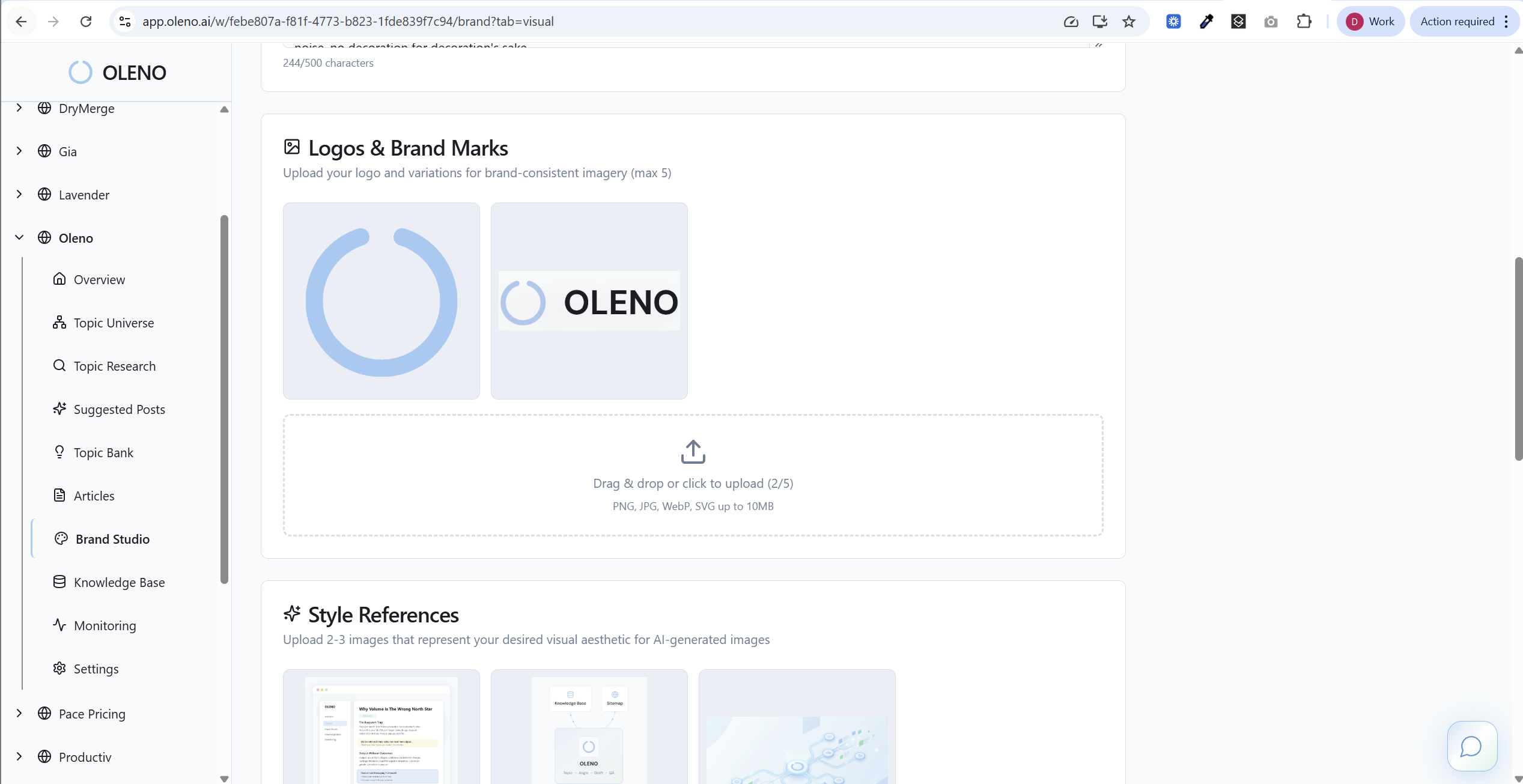
Quality Control adds a non‑negotiable gate. Voice, structure, and grounding checks run before publishing. If a draft misses the mark, it gets revised and re‑checked. That keeps the quality floor high without slowing cadence.
The payoff is simple. You stop rewriting for voice, arguing claims, and chasing approvals. You spend time on angles and experiments instead.
- Governance features that matter:
- Brand Studio for voice and CTA consistency
- Marketing Studio for POV and message reuse
- Product Studio for safe, approved claims
- Quality Control for pre‑publish checks
Measurement, distribution, and publishing without duct tape
Measurement & System Health tracks output cadence and quality trends. You see where the engine is healthy and where it slips. Knowledge Archive Grounding centralizes approved facts and stories so drafts and revisions pull from the same truth. CMS Publishing pushes approved content as drafts or live posts to your site, which removes copy‑paste errors and keeps cadence steady. Distribution repurposes long‑form into social variations and queues them, so each article gets the reach it deserves.
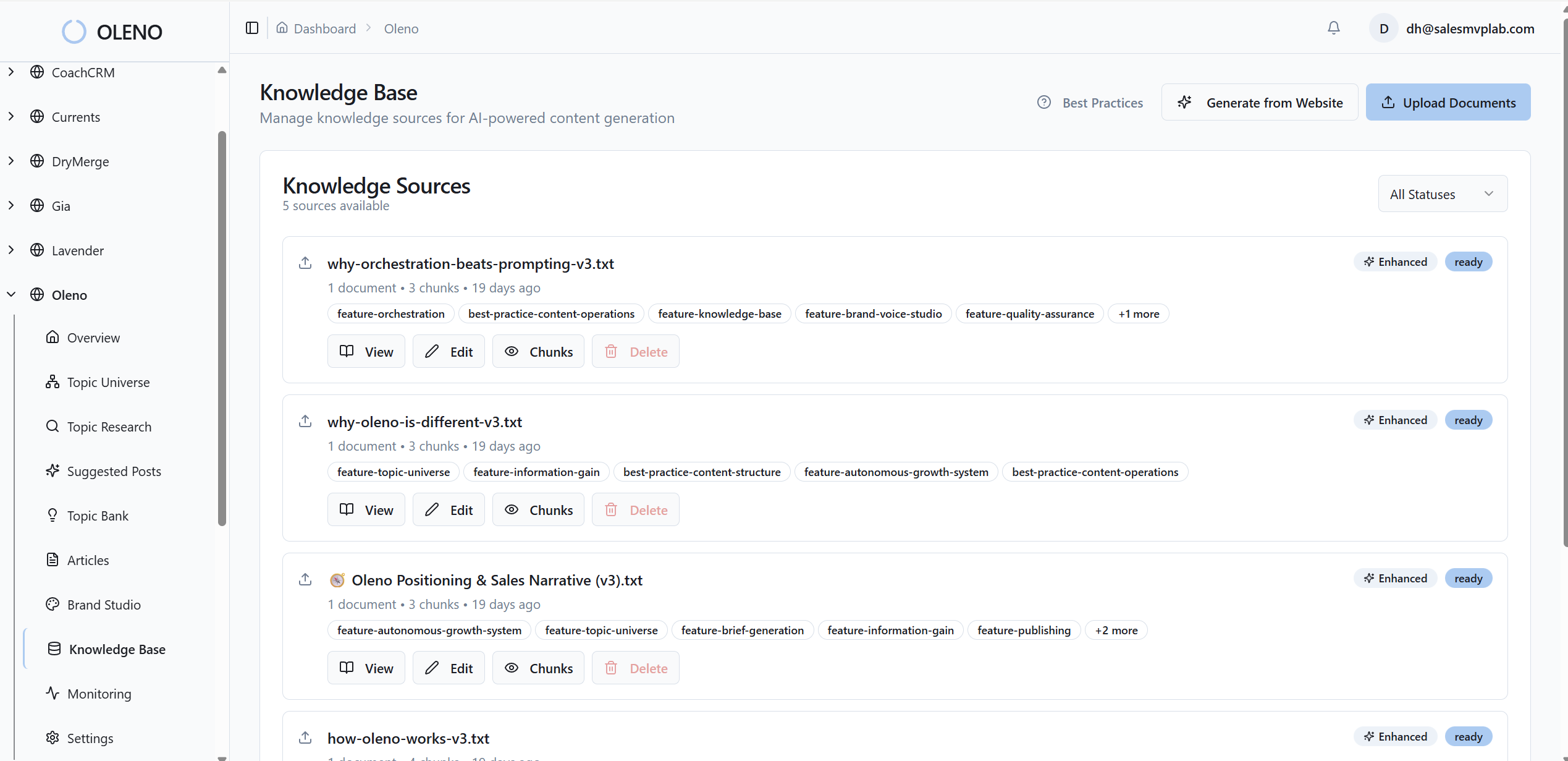
I like how this all ties back to pipeline work. Once the engine runs, you can test CTAs, angles, and cluster priorities with confidence. That’s how you raise the percentage of MQLs influenced by thought leadership in a real timeframe.
Want article‑level attribution without duct tape and spreadsheets? Request a Demo.
Before you wrap the plan, remember why you did this. Manual tagging and broken UTMs wasted hours. Unproven topics drained budget. Reviews dragged on because no one trusted the data. With Oleno’s governance, QA, publishing, and measurement in place, that cost drops and the work compounds. That’s the shift you were after.
- Capabilities tied to earlier costs:
- QA gate reduces review cycles that stole 23 minutes per pass
- CMS Publishing removes manual copy‑paste and duplicate errors
- Measurement & System Health surfaces output gaps before they become visible misses
Want to see governance, QA, publishing, and measurement working together on your content in under two weeks? Book a Demo.
Conclusion
The path is straightforward. In 90 days, define a tight KPI set, instrument every article, adopt a pragmatic attribution model, and stand up a dashboard people trust. Then run simple experiments every month to raise demo lift. The goal is clear: attribute 5–10% of new MQLs to thought leadership touchpoints and build a cadence you can defend at the next budget review.
Appendix: Attribution Model You Can Explain in a Meeting
You don’t need a PhD model. You need one that sales and finance accept. Use three buckets: direct conversions from article CTAs; assisted conversions within a 60–90 day window; exposure‑only, where the article was viewed by contacts who later engaged elsewhere. Roll it up by article and by topic cluster. Keep the rules simple, consistent, and documented.
When people can read the model in five minutes, they trust it. When they trust it, they fund it. That’s how you move thought leadership from nice‑to‑have to growth lever.
About Daniel Hebert
I'm the founder of Oleno, SalesMVP Lab, and yourLumira. Been working in B2B SaaS in both sales and marketing leadership for 13+ years. I specialize in building revenue engines from the ground up. Over the years, I've codified writing frameworks, which are now powering Oleno.
Frequently Asked Questions