Thought leadership: Why the agency content scaling workflow will become an execution service, not a headcount bet
Buyers stopped buying “more posts.” They want a machine that ships outcomes. Weekly. Predictable. With receipts. If you run an agency, that changes everything about your offer, pricing, and delivery. The only way to keep up is an agency content scaling workflow that turns strategy into a cadence you can prove, not a pile of drafts you hope convert.
I learned this the hard way. Volume without governance creates rework and drift. Governance without a workflow stalls. When you combine them into an execution system, everything compounds. Suddenly, you can promise cadence, voice integrity, QA pass‑rates, and time‑to‑publish. That’s what buyers actually sign for now. Outcomes, not output.
Key Takeaways:
- Price and deliver outcomes, not hours or “number of posts”
- Anchor your agency content scaling workflow in governance, job-based pipelines, and a QA gate
- Track system health, not vanity metrics: time-to-publish, rework rate, QA pass-rate, cadence
- Reduce coordination by replacing handoffs with deterministic stages and clear owners
- Productize voice isolation and variation to protect brand truth while you scale
- Use compounding topic universes to avoid duplicate work and missed coverage
- Reorganize your scope around cadence SLAs and measurable reliability
Outcomes Over Outputs: Your Agency Content Scaling Workflow Has To Evolve
Outputs don’t sell anymore. Predictable outcomes do. Agencies win work when they show a governed system that ships aligned content on a steady cadence and proves it with workflow and QA data. Buyers want fewer meetings and fewer misses, with proof that quality won’t degrade as volume increases.
Most agencies still sell deliverables and hours. That story is getting weaker every quarter. Procurement and CMOs compare partners on reliability signals, not adjectives. When you can show an operating cadence, a QA pass-rate, and voice integrity across dozens of pieces, you stand out.
The Shift From Posts To Predictable Outcomes
The “we’ll write 8 posts a month” model looks tidy on a proposal. It falls apart when voice drifts, approvals drag, and half the work gets rewritten. Buyers want compounding coverage, not a content treadmill. I’ve seen teams publish less but grow faster because the system held.
A predictable outcome is simple to describe. Publish on time, in the right voice, across the funnel, with error rates that trend down. You can negotiate on scope when your engine is visible. You can’t negotiate trust after a quarter of missed cadence.
One pattern we keep seeing in RFPs:
- Show your time-to-publish trend
- Explain your QA process and pass-rate
- Prove voice consistency on three samples
- Map roles to each pipeline stage
What Buyers Actually Measure Now
Buyers measure reliability with system metrics. Time-to-publish, editorial rework rate, QA pass-rate, and cadence. A portfolio is table stakes. The engine that produced it is the proof.
A recent theme in enterprise marketing reports backs this up. Teams that sustain cadence and reduce manual coordination outperform on pipeline and cost per asset, even with similar budgets. The pattern is obvious when you look for it in the data from the CMI B2B Content Marketing Benchmarks 2024.
Where Traditional Deliverables Fall Short
Deliverables don’t encode voice. They don’t enforce claims. They don’t guarantee timing. You either run an operating system or you’re hoping talented people can outrun coordination debt. That works for a month. Maybe two. Then the backlog hits.
Once a buyer experiences two rewrites and one missed ship date, confidence drops fast. Margins follow. The fix isn’t more talent. It’s a governed, job-based workflow that makes the work repeatable.
The Real Blocker Is Workflow Execution, Not Ideas
Agencies don’t fail because they lack ideas. They fail because execution is fragmented. Prompting and tools speed up parts of the job, but they push judgment and coordination back onto humans. Work resets every quarter. Voice drifts. Quality slips as volume rises.
Execution flow breaks when you depend on memory. The right answer is orchestration with governance, where voice, POV, and product truth are encoded once and applied everywhere. That’s how you prevent rework and protect margin while you scale.
Fragmentation Raises Rework And Risk
A writer can be great and still miss the voice by 20% when the brief is thin. An editor can fix tone and still miss a claim boundary. A PM can keep a calendar and still lose two days to approvals. Fragmented steps invite small errors that snowball.
I’ve watched teams spend more time coordinating than creating. Ideas weren’t the problem. The workflow was. Once you centralize voice rules, approved claims, and narrative frameworks, rework drops. That’s when quality actually scales.
Cadence Without Governance Doesn’t Compound
Shipping fast is seductive. Shipping fast without guardrails is a tax you pay later. The calendar looks full. The results look flat. You end up rewriting to fix drift, then morale drops as velocity slows.
Governance makes speed safe. Encode the voice, lock the narrative structure, define allowed claims, then run. You’ll feel slower in week one. You’ll be twice as fast in week six.
The Cost Of A Broken Agency Workflow
Broken workflows waste time, burn margin, and erode trust. Time-to-publish stretches, rework piles up, and approvals turn into multi-day stalls. You lose velocity and predictability, which is exactly what buyers hate risking their budget on.
Let’s put numbers on it. Every manual review cycle can cost 20–30 minutes per piece. Three cycles across eight pieces a month is three to four hours gone. Add two days of approval lag per batch, and your cadence slips a full week by quarter end. Research from Gartner’s 2024 CMO Spend and Strategy highlights similar coordination costs across marketing, especially when evaluating agency content scaling workflow.
Time-To-Publish Delays Compound
A 24-hour delay isn’t just a day. It shifts dependencies. Suddenly, the social team waits. The email slot moves. The webinar follow-up falls off the calendar. Small slips stack into missed quarters.
One agency leader told me their “two-week” content cycle took 23 days on average. Nothing was broken in a dramatic way. Everything was just slow. That’s the expensive kind of failure.
Rework Rate And Margin Erosion
Rework is the quiet killer. Two extra rounds on four assets a month looks harmless until you annualize it. That’s weeks of unpriced labor. Margins get tight, teams get tired, clients feel the wobble.
Quality drift triggers this. When voice and claims aren’t governed, people solve the wrong problem, then fix it later. Preventable, but only if the workflow enforces the rules up front. The HubSpot State of Marketing reports echo the same pattern, with coordination overhead rising as content volume grows.
What It Feels Like To Run The Old Workflow for Agency content scaling workflow
If you’ve been here, you know the feeling. The calendar is full, but everything slips. Approvals stall in inboxes. A founder edits verbs at 10 PM. A client flags a claim you never approved. You leave Friday knowing Monday is already on fire.
That’s the emotional tax of fragmentation. It steals weekends. It creates anxiety around every publish date. Teams start playing not to lose, which is the fastest way to stall growth.
The Late-Night Rewrite Spiral
Picture a writer waiting for feedback that arrives at 6 PM with vague notes. “Doesn’t feel like us.” You rewrite without real rules to follow. Tuesday’s work gets pushed. Wednesday’s standup fills with apologies.
Everyone is busy. Few are productive. That spiral is workflow, not talent.
The Approval Maze
Approvals are fine when the system tees them up. They’re brutal when every approver is seeing a different version of the truth. Without one source of voice, claims, and POV, you’re asking leaders to debug execution in comments.
It’s not their job to fix the system. It’s your job to show them one that runs.
The New Way: Orchestrate Your Agency Content Scaling Workflow
the fix is orchestration. Encode voice, POV, and claims once, then run job-based pipelines with a visible QA gate and clear SLAs. You teach the system how to work, then you measure system health: time-to-publish, rework rate, and cadence. That’s how volume and quality scale together.

In practice, you move from “people remember the rules” to “the workflow enforces the rules.” You reduce meetings because the pipeline owns the handoffs. You reduce rewrites because quality is checked before publish, not after launch. You reduce risk because claims stay inside the lines.
Governance Before Volume
Volume without governance is noise. Voice standards, narrative frameworks, and approved claims must exist in a central, usable form. Then every brief and draft pulls from that same source of truth.
I’ve seen teams instantly cut rework by setting a hard rule. Nothing moves to draft without a governed brief. Sounds strict. Saves weeks.
After you document governance, lock in these non-negotiables:
- One voice guide everyone uses
- Allowed claims and proof, with boundaries
- Narrative patterns that match funnel jobs
- CTA style and placement rules
Job-Based Pipelines Over Ad Hoc Tasks
Ad hoc creation is where things go to die. An agency engine needs deterministic stages with owners and gates. Discover, Angle, Brief, Draft, QA, Visuals, Publish. Same order, every time.
When each stage has a clear input and output, you can monitor health. You can see where work gets stuck. You can forecast capacity and hit dates without heroics, especially when evaluating agency content scaling workflow.
To implement quickly:
- Name your stages and owners
- Define entry/exit criteria
- Add a visible QA gate before publish
- Track time between stages
Quality Gates As Non-Negotiable
A QA gate keeps bad work from reaching clients and keeps rewrites from destroying margins. Voice alignment, structure, clarity, and factual grounding should all be checked before anything moves to publish.
Teams push back at first. “We don’t have time.” After two weeks, they love it. Rework drops. Trust rises. The whole engine speeds up because fewer things break.
Ready to stop chasing approvals and start shipping on schedule with voice that holds? Request a Demo
How Oleno Powers A Reliable Content Scaling Workflow
Oleno turns the New Way into day-to-day reality. It starts with governance, then runs deterministic pipelines so small teams can deliver a dependable cadence without adding headcount. You set the rules once, then the system enforces them across briefs, drafts, and publishing.
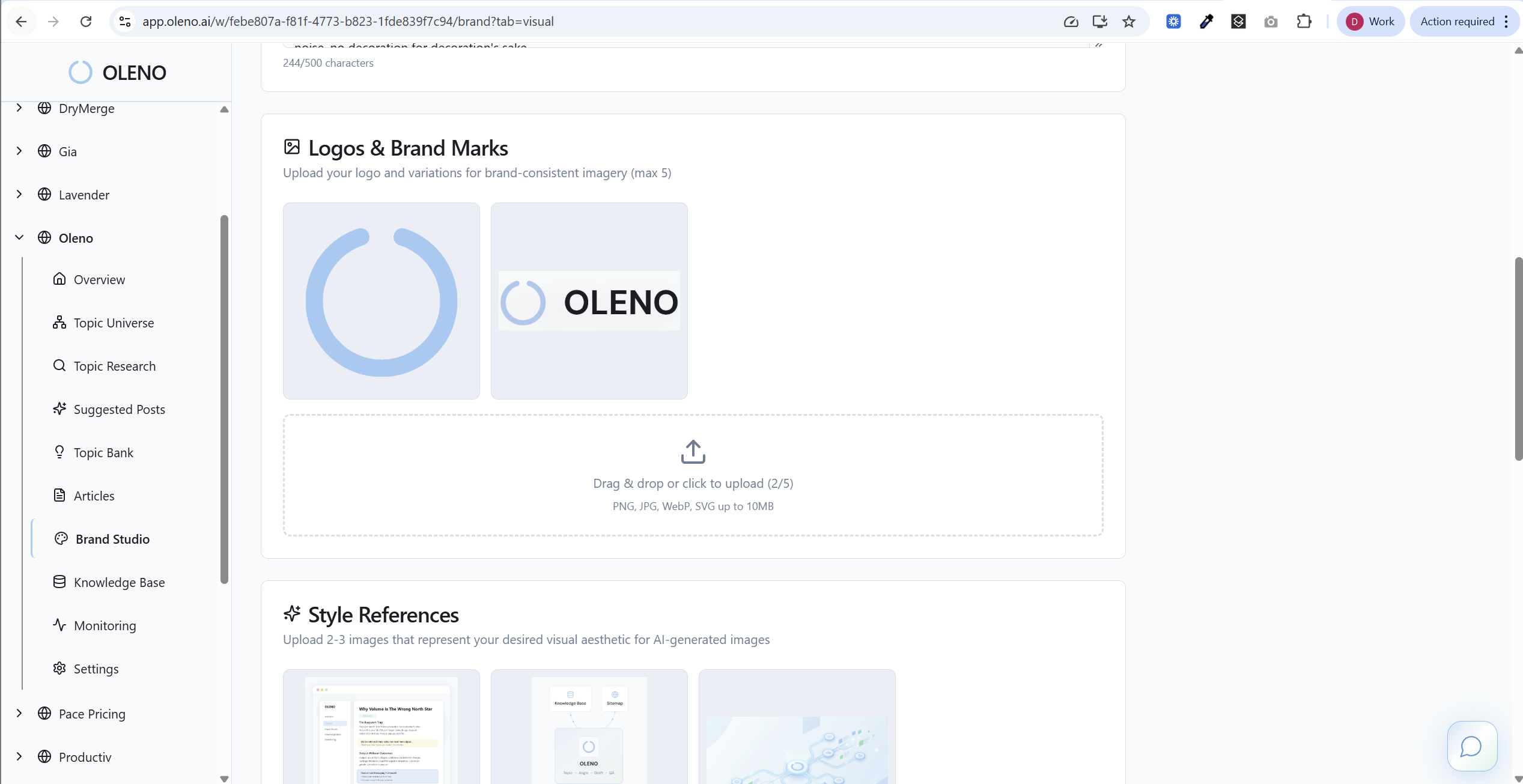
Brand Studio in Oleno encodes how your client sounds. Tone, preferred terms, words to avoid, CTA style, structure rules, and exemplar paragraphs live in one place, then get injected into briefs and drafts. Marketing Studio captures what you want the market to understand, so content leads with your POV instead of generic takes.
Voice And Narrative, Locked And Applied
Oleno’s Brand Studio and Marketing Studio work together so every asset reads like your client and argues for your narrative. No more “doesn’t feel like us” comments. No more drift across contributors. The system applies the same voice and message patterns every time.
Product Studio keeps claims inside the lines. Approved product descriptions, supported use cases, and allowed claims become a guardrail, so nobody invents features by accident. That alone saves hours of PMM and legal ping-pong.
Outcome you can cite: fewer rewrites and faster approvals because the draft already matches voice and claim boundaries.
Cadence Without Chaos
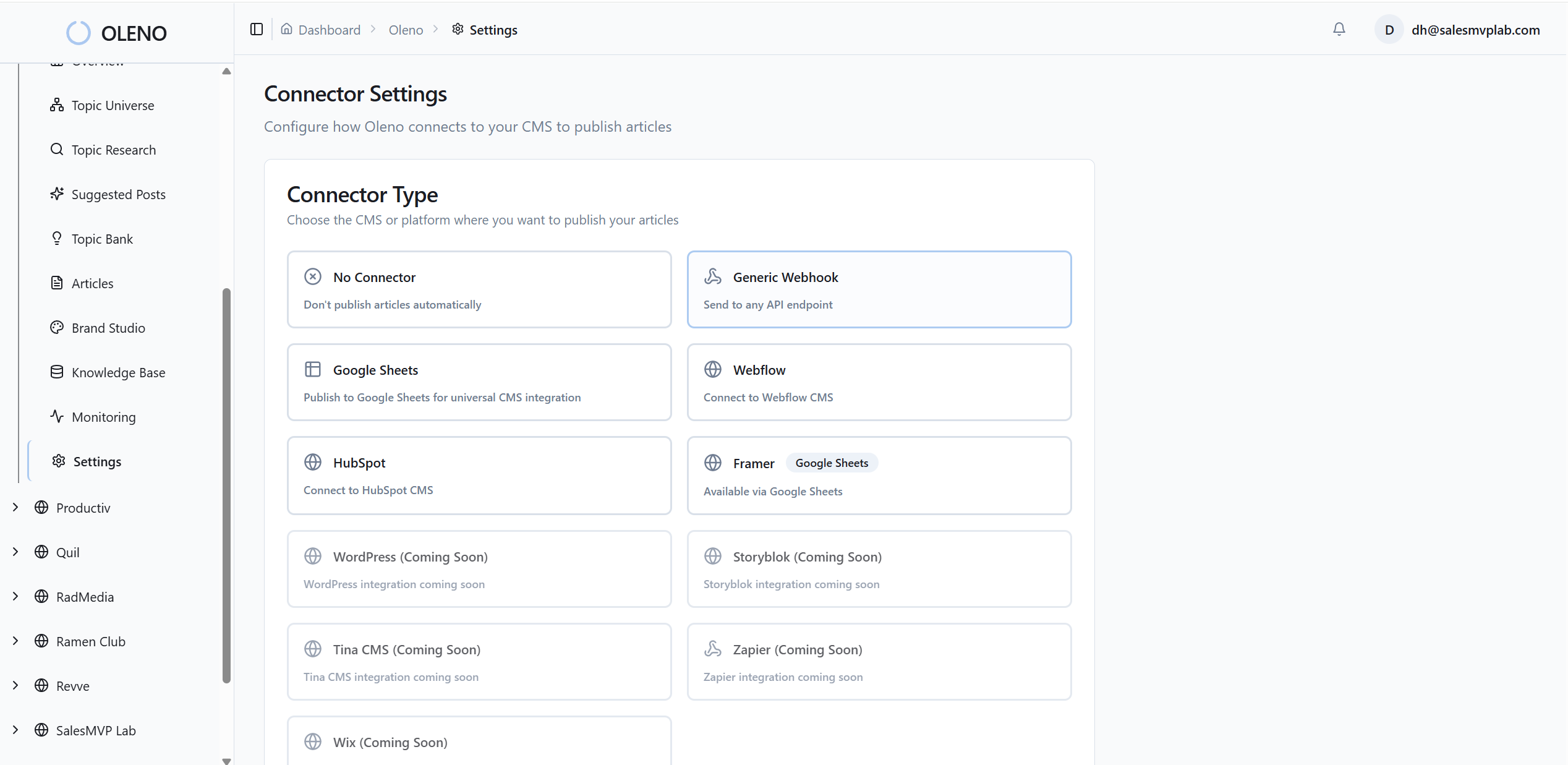
Programmatic SEO Content produces long-form articles with locked structures and LLM readability checks so you can expand clusters without duplicating work. The Variation Layer adapts pieces for different audiences and personas, so you get resonance without multiplying manual edits. CMS Publishing pushes approved content to WordPress, Webflow, Storyblok, HubSpot, and more as drafts or live posts, which removes copy‑paste handoffs.
Teams see steadier cadence because scheduling aligns to jobs, not people’s memory. Measurement & System Health tracks output volume, QA pass-rate, and failure patterns, so you can spot bottlenecks early and keep the engine running.
23 minutes saved per article on average review time is a realistic goal once QA catches issues before approval. That’s what Oleno delivers. Book a Demo
Quality You Can Prove
Quality Control in Oleno enforces a non-negotiable QA gate. Voice and tone alignment, narrative structure, clarity, grounding accuracy, and SEO/LLM readability must pass before publish. If content fails, Oleno revises and re-tests until it passes, which cuts editorial overhead and protects your brand.
Distribution repurposes approved content into social variants without inventing new positioning, so your stream stays on-message and consistent. That way, one good article becomes 5–10 solid posts, and your presence stays active without a separate social team.
Feature highlights that map to earlier costs:
- Brand Studio and Product Studio reduce rewrites and claim fixes
- Programmatic SEO Content and CMS Publishing cut time-to-publish
- Quality Control lowers error rates that erode trust
Conclusion
The market is moving from buying outputs to buying predictable outcomes. Agencies that win next year won’t promise “more posts.” They’ll prove they run an engine that ships aligned narratives on schedule with a visible QA gate and system health metrics. That’s how you protect margin and grow accounts without adding headcount.
Reprice around outcomes and reorganize your offer around a real operating cadence. Tie scope to time-to-publish, QA pass-rates, and downstream MQL signals, not hours. Productize governance, variation, and quality so your agency content scaling workflow compounds value instead of resetting every quarter. Want to see what that looks like in practice with your current stack? Request a Demo
About Daniel Hebert
I'm the founder of Oleno, SalesMVP Lab, and yourLumira. Been working in B2B SaaS in both sales and marketing leadership for 13+ years. I specialize in building revenue engines from the ground up. Over the years, I've codified writing frameworks, which are now powering Oleno.
Frequently Asked Questions