Topic Universe Playbook: Prioritize and Scale Content Coverage Without Redundancy

You can crank out content all day. That’s not the problem. The problem is you’re probably publishing overlapping articles that fight each other. Keyword tools said “volume,” so you chased it. Then three “best X tools” posts show up on your site with slightly different takes, splitting signals and confusing readers.
I learned this the hard way. At Steamfeed, volume plus angles worked because we had breadth and depth across thousands of pages. At Proposify, we ranked for big keywords but saw content drift away from the solution. Great traffic, weak demand connection. When you don’t run coverage like a system, volume creates noise, not authority.
Key Takeaways:
- Treat topics like a governed universe with tiers, not a flat keyword list
- Use coverage signals, cooldowns, and information gain to prevent duplication
- Assign canonical intent owners to avoid cannibalization inside clusters
- Enforce a 90‑day cooldown for same‑intent subtopics to stop knee‑jerk rewrites
- Require delta statements in briefs to prove what’s net‑new
- Track cluster health first, traffic second, authority over time always
Why Keyword Volume Obsession Wastes Your Budget
Keyword volume obsession leads to lookalike content that competes with your own pages. You get thin roundups, cloned “how‑to” guides, and duplicate intent across multiple URLs. Authority grows when clusters compound, not when you stack similar posts. Think coverage-first: clusters, tiers, and guardrails that prevent internal collisions.
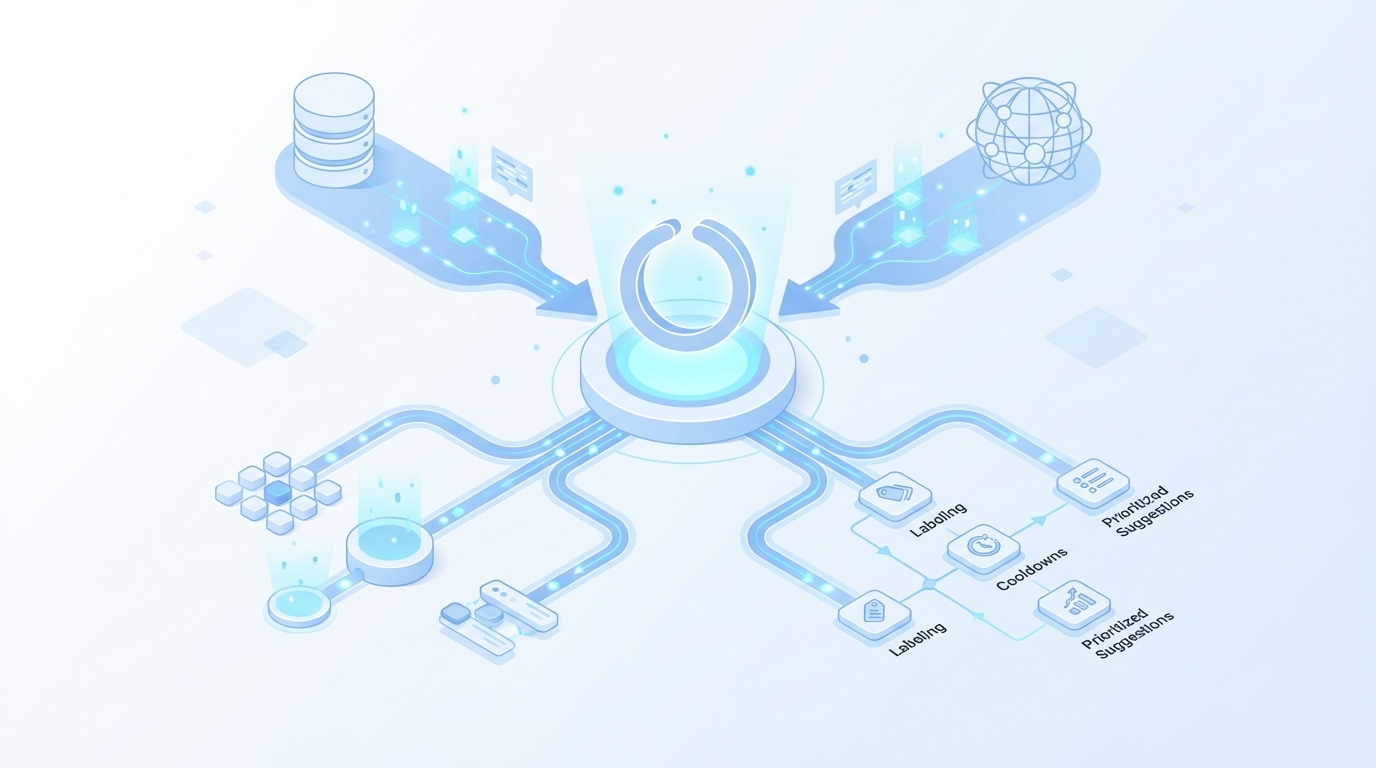
The vanity metric trap undermines authority
You can rank for a “big” keyword and still lose ground if that page detaches from your pillar. I’ve watched teams ship three listicles on the same topic because volume looked attractive. It felt productive. It diluted authority. The shift is simple: stop asking “what has volume,” start asking “what strengthens this pillar’s coverage.”
Volume-led planning creates internal competition because it rewards sameness. Coverage-led planning rewards differentiation. And differentiation requires rules. When you re-anchor on cluster strength, your KPI becomes compounding authority, not isolated wins. That’s how content becomes infrastructure, not a one-off campaign. If you want deeper framing on systems thinking, skim the Microsoft Cloud Adoption Framework. Systems beat sprints.
What should replace keyword chasing?
You need a minimum viable signal set that orients decisions around coverage, not vanity. Keep it lean and trackable.
- Sitemap coverage by cluster and subtopic
- Last-published timestamps per intent
- Title and intent overlap detection
- Canonical page patterns per pillar
- Internal link density to and from the pillar
Move the analysis upstream. Choose topics because the cluster needs support, not because a term spiked last week. Then run the order in this sequence: topic, coverage position, differentiation plan, publish. If you want the broader argument for systems over speed, this explainer on Why Content Requires Autonomous Systems is a useful companion.
What is the business risk of duplication?
Redundant content steals from your best pages. It splits anchor text signals, confuses architecture, and misaligns CTAs. If a sacrifice must be made, you do not want it to be the converting page. Leaders feel it as wasted budget and messy attribution. Search engines also downrank muddled sites. Google is explicit about confusion risks in its guidance on duplicate content.
Curious what this looks like in practice? You can Request a demo now.
Treat Topics As A Universe With Tiers, Not A Keyword List
A Topic Universe is your strategy layer for what to write next and what to pause. It ingests your knowledge base and sitemap, then outputs clusters, coverage labels, and prioritized suggestions. The value is simple: it prevents over-publishing one idea while forgetting others. That’s how you build authority across pillars.
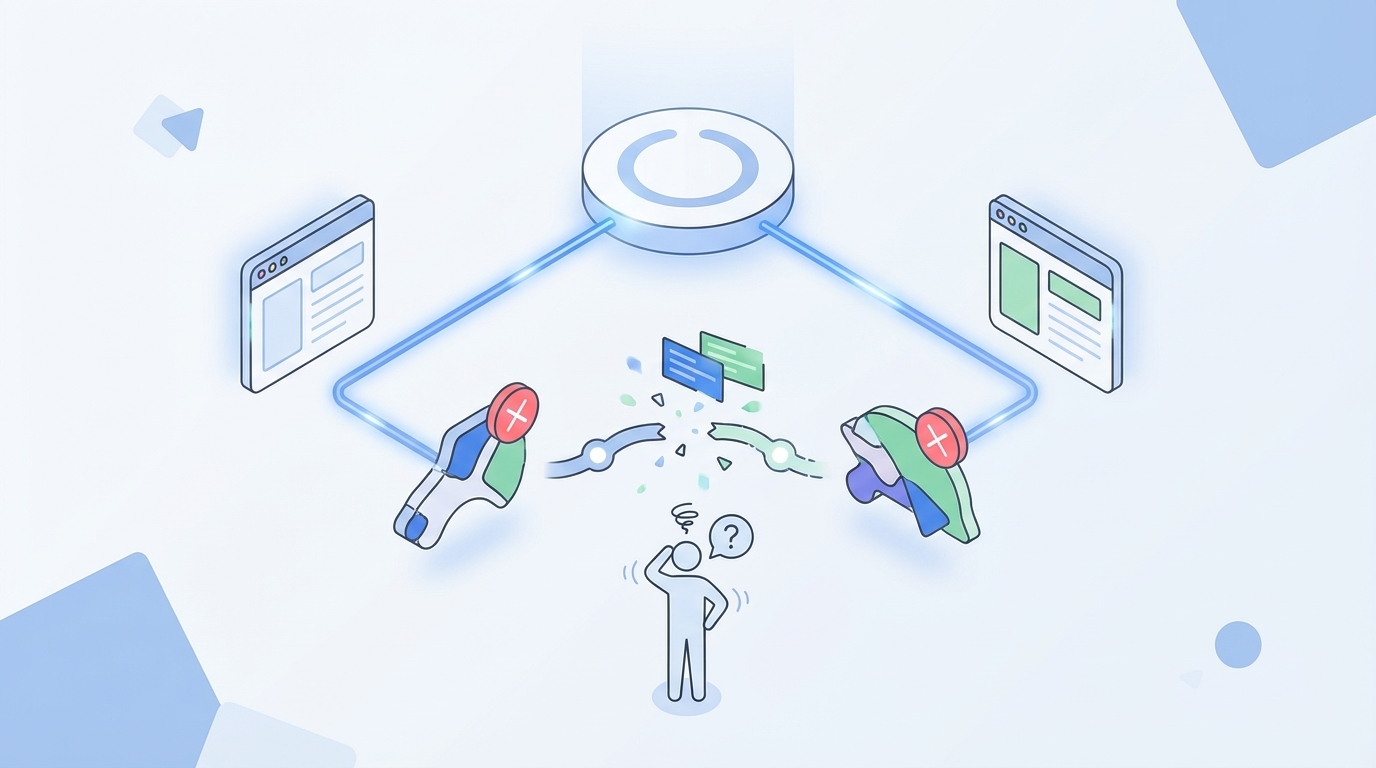
The four coverage tiers and what they mean
Think in tiers because tiers drive behavior. Underserved means you lack the basics. You publish net-new pillars and subtopics to establish the skeleton. Healthy means you can deepen with formats and counter-angles to shore up the pillar. Well‑covered means maintain with updates and interlinks. Saturated means slow down. Enforce a 90‑day cooldown and only republish with meaningful differentiation.
Governance matters here. Write the actions per tier into your editorial rules. Tie every accepted brief to its cluster and current tier. Treat the cooldown as non‑negotiable unless new information genuinely changes the page’s job-to-be-done. This keeps your publishing calendar honest.
What is a Topic Universe and why does it matter?
The Topic Universe answers one question: what should we write next to build authority. Inputs include your knowledge base, sitemap, and focus areas. Outputs include clusters, saturation labels, a prioritized queue, and enforced cooldowns. It is not analytics or rank tracking. It is coverage control. That distinction matters because it stops duplication before it starts.
You want deterministic decisions. Not gut checks. A governed universe makes it much harder to approve “yet another” post with the same intent. For operationalizing rules and roles, the Guru Knowledge Management Playbook is a good primer on documenting how work happens.
The Hidden Cost Of Redundant Content And Cluster Drift
Redundancy burns time you never planned for and creates quiet drag on discoverability. You do the work, then you do the rework, then you explain the work. Search engines and LLMs also struggle when multiple pages share the same chunk-level patterns. Unique sections get cited. Duplicated sections get ignored.
Let’s pretend you published 8 overlapping posts
Let’s pretend you ship eight “how‑to” posts on the same subtopic across 90 days. You brief each one, edit each one, design each one. Even conservatively, you spend 3–5 hours of editorial cleanup per article as you wrangle overlaps and fix intent. That’s 24–40 hours of “why did we do this again?” time, which could have been spent in underserved clusters.
Cannibalization is not dramatic at first. Rankings shuffle. Internal links split. Sales picks the wrong URL in their template. Then you realize your best converting page lost ground because you fed it competition. You feel it in pipeline more than in pageviews. A short explainer contrasting reactive prompts with governed systems is here: The Shift Toward Orchestration.
The compounding impact on discoverability
Overlap erodes chunk clarity. If three pages reuse near-identical H2s and paragraph patterns, retrieval systems struggle to identify a definitive answer. That hits both SEO snippets and LLM citations. You want every H2 to stand alone with a distinct angle or data point. Otherwise, you are training machines to shrug at your site.
This is why structure matters. Snippet-ready openings, unique sub-claims, and clear intent framing keep chunks citable. If dual visibility is on your roadmap, this breakdown on The Rise of Dual-Discovery Surfaces: SEO + LLM Visibility is worth a skim.
When Competing Pages Make You Look Unclear
Nothing derails a week like a sales rep dropping two URLs that give conflicting advice on the same question. You feel the trust wobble in the room. The quick fix is not rewriting one of them again. The fix is system rules that prevent two canonical answers to the same intent from existing at the same time.
The meeting you don’t want: sales vs. content
I’ve sat in the meeting. A rep asks which article to share with a prospect. Two links. Two takes. Same topic. The remedy is boring and effective. Assign cluster ownership. Declare a canonical intent owner page per subtopic. Enforce a 90‑day cooldown to stop well-meaning duplicates. Then review CTAs so the page path aligns to the sales motion.
You prevent the meeting by design, not by heroics. That starts with a simple brief checklist and an editor empowered to reject low-differentiation drafts. It is the difference between feeling responsive and being intentional. For examples of how teams formalize guardrails, the Artsy Engineering Playbook shows how codified rules keep work predictable.
The 3am incident no one saw coming
The late-night “please unpublish that post” request happens when rules live in tribal knowledge. The faster path is deterministic guidance that makes incidents rare. Cooldowns, canonical owners, and an information gain threshold create a buffer so ad-hoc fixes are the exception.
You want to sleep through that alert. Your team does too. If you inherited a stack of overlapping content, start by declaring owners and pausing net-new on saturated subtopics. It buys you space to cleanly merge or redirect without tying up your week.
If you’ve felt this headache, it might help to read why faster drafting alone didn’t solve it: Why AI Writing Didn’t Fix The System.
Operate A Topic Universe With Cooldowns, Tiers, And Information Gain
You can run a Topic Universe with a few consistent rules. Map your clusters, label coverage, enforce cooldowns, and require information gain at the brief level. Keep the daily rhythm simple. The system should run even on days you publish one high-value article. That cadence compounds authority.
Step 1: Map your clusters from KB + sitemap
Pull topics from your knowledge base and sitemap, then group into 5–8 pillars. Label subtopics. For each cluster, log last published date, intent owner, and canonical CTA. This becomes your baseline. You do not need a keyword dashboard to start. You need clarity on what exists and who each page is for.
A quick personal note. At LevelJump, we recorded the CEO and shipped transcripts to move fast. It got words on the page, but search intent was fuzzy and structure suffered. A simple universe map would have kept our thought leadership tied to jobs-to-be-done and power pages.
Step 2: Assign coverage tiers and set guardrails
Tag every cluster as Underserved, Healthy, Well‑covered, or Saturated. Define the allowed actions per tier once, then bake them into editorial guidelines. Enforce a 90‑day cooldown for any subtopic with the same intent in the last cycle. Exceptions should be rare and justified by new information, not urgency.
Write the rules down. Share them. Train new contributors on how intent owners work. If you like having playbooks everyone can follow, the Guru Knowledge Management Playbook is a useful model for roles and rules.
Step 3: Enforce information gain at the brief level
Every brief needs a delta statement that spells out what is net‑new compared to your current site. Use an information gain score from 0–100 as a forcing function. Reject outlines below your threshold, for example anything under 70. Then audit a simple metric monthly: the percentage of low-gain briefs you rejected. That number should trend down as your team learns the bar.
Short interjection. Editors love this rule. It gives them a clean reason to say “not yet,” which saves painful rewrites later.
Ready to make this daily rhythm real without adding headcount? Learn the exact 3-step process teams use to keep cadence consistent and governed, then try using an autonomous content engine for always-on publishing.
How Oleno Runs Your Topic Universe End-To-End
Oleno turns the rules above into a working system. It maps clusters from your knowledge base and sitemap, labels coverage, enforces cooldowns, and produces prioritized suggestions. Then it generates briefs, drafts, visuals, links, and schema with a QA gate before publishing. You get complete, on-brand articles, not drafts to babysit.
Step 5: Turn on Topic Universe and cluster tracking in Oleno
Connect your knowledge base and sitemap. Oleno auto-maps topics into clusters, tracks coverage and saturation, and enforces a 90‑day cooldown before re-covering the same intent. The outcome is a daily “what to write next” list grounded in your pillars. Fewer overlaps. More progress in underserved areas that actually build authority.
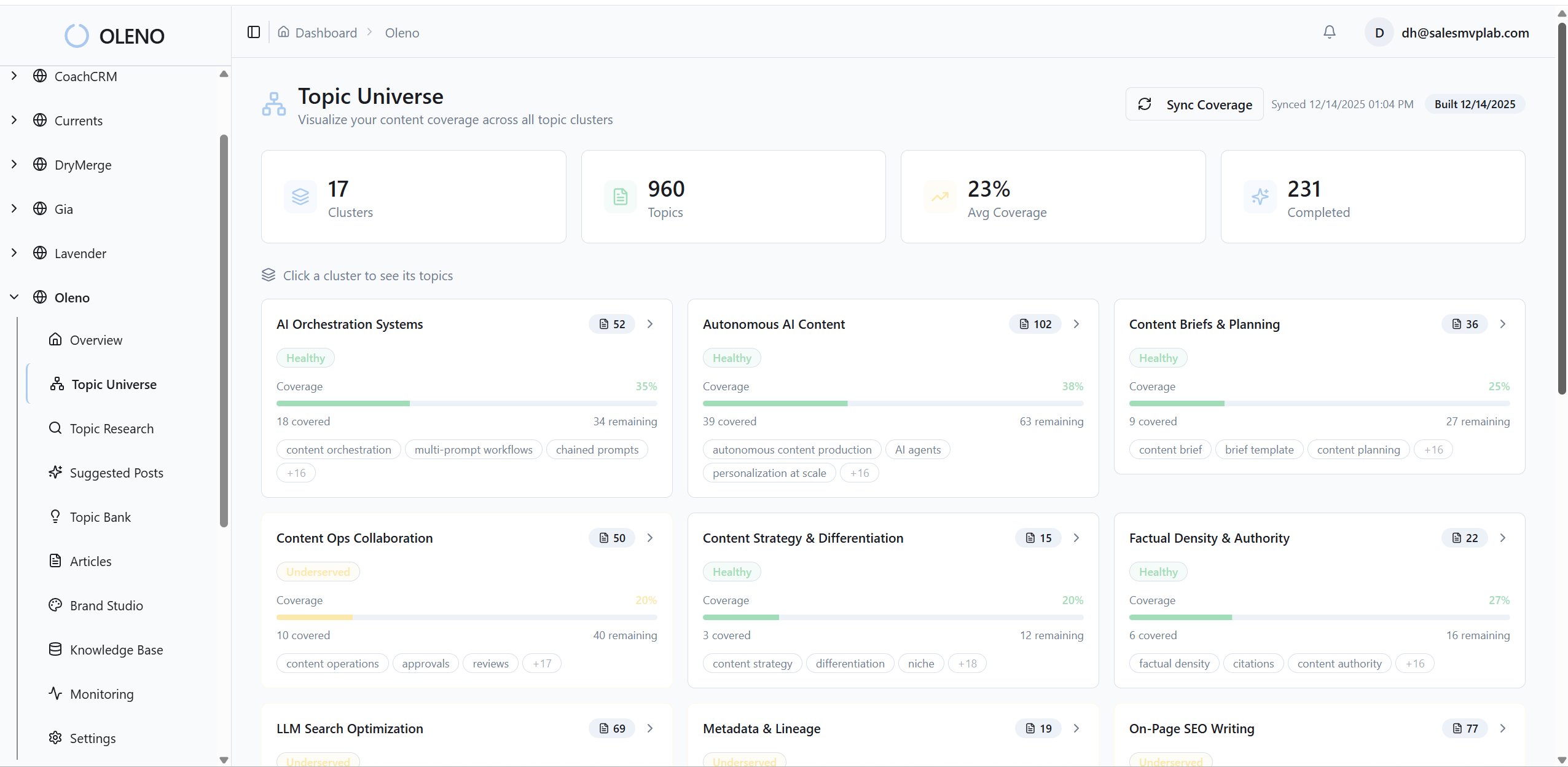
This is where strategy becomes daily operations. If you want to see the end-to-end model beyond this article, this hub guide shows the whole pipeline: The Complete Guide to AI Content Writing and Autonomous Content Operations.
Step 6: Approve high-gain briefs, auto-generate drafts and visuals
Each brief includes competitive scans, an information gain score, and a short list of authoritative external link candidates. Approve in one pass. Oleno generates long-form drafts aligned to your brand voice, with snippet-ready H2 openings and brand-consistent visuals from Visual Studio. This eliminates the usual back-and-forth and reduces frustrating rework because quality and structure are enforced upstream.
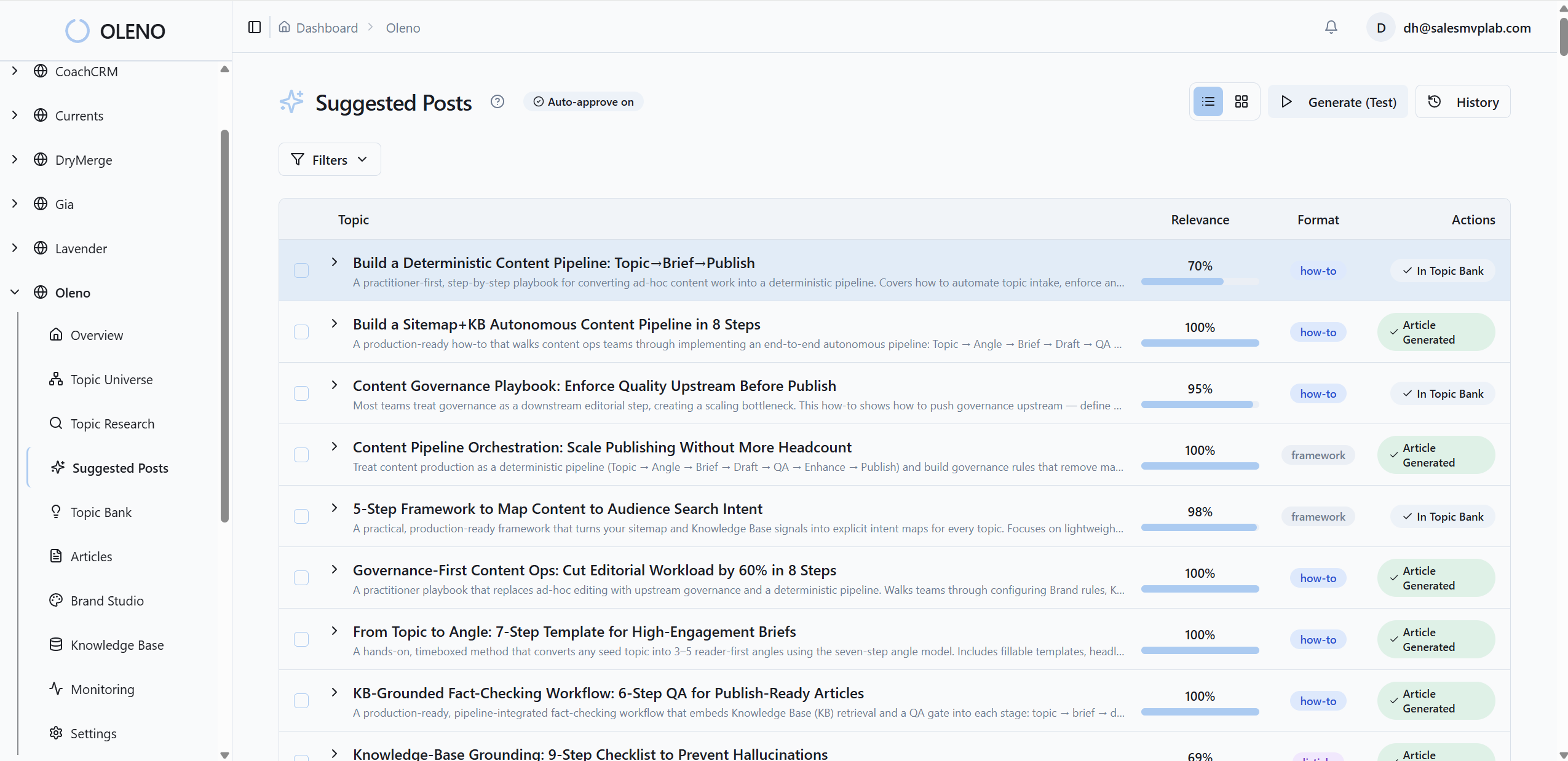
Step 7: Publish with deterministic links, schema, and QA gates
Before publishing, Oleno injects only verified internal links from your sitemap with exact-match anchors, generates JSON‑LD for Article, FAQ, and BreadcrumbList, and runs an 80+ point QA gate for structure, tone, and information gain. It delivers directly to WordPress, Webflow, or HubSpot with mapped fields and duplicate prevention. That protects clusters and keeps execution consistent.
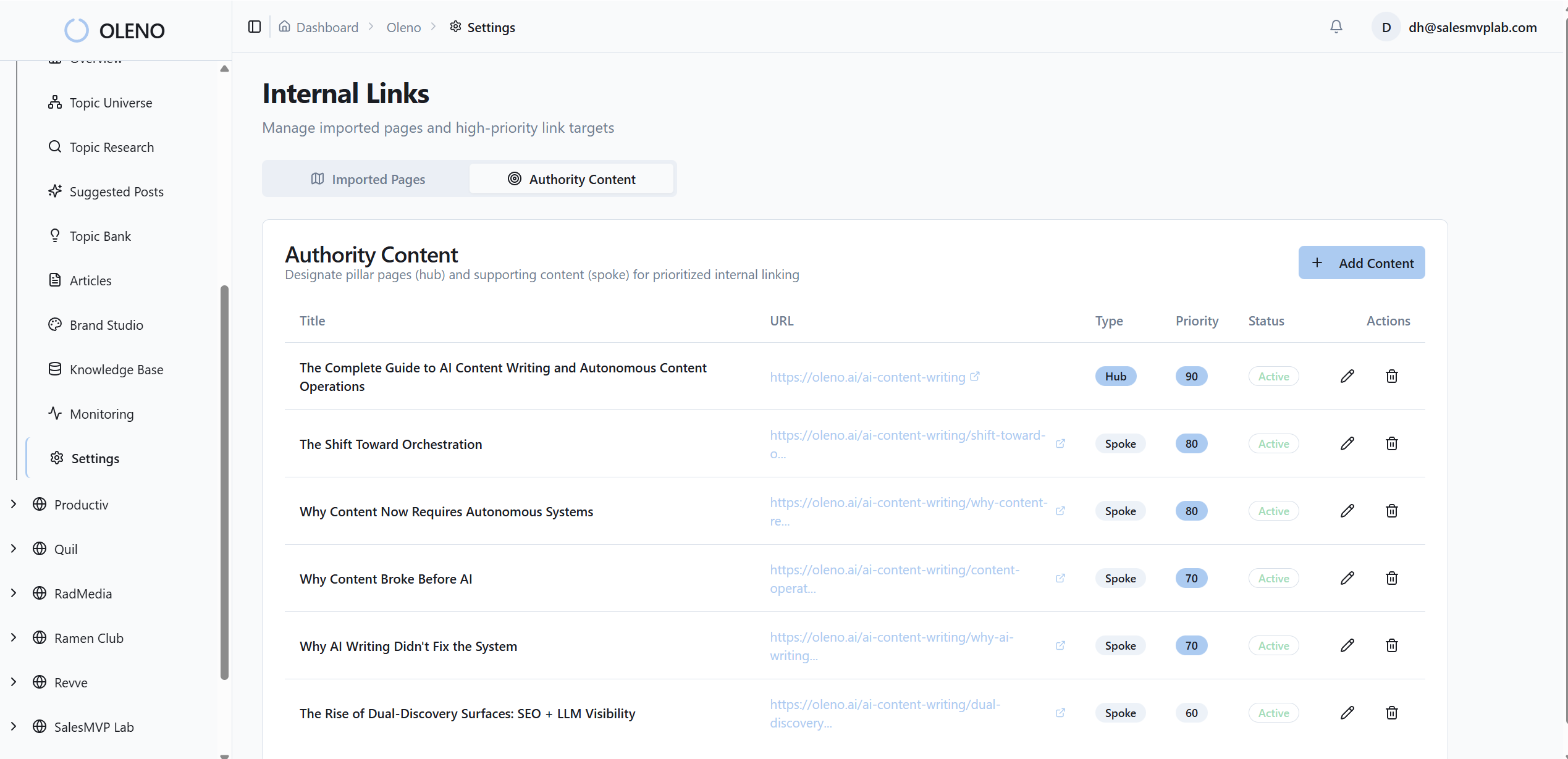
Remember that 24–40 hours of cleanup from overlapping posts we estimated earlier? Oleno is built to prevent that rework through rules, not heroics. If you want a deeper dive into how the pipeline runs, here’s the overview: How Oleno Works.
Ready to eliminate duplicate intent without adding editors? You can Request a demo.
Conclusion
This is the shift. You stop chasing volume, and you start running coverage as a system. Topics live in a universe with tiers. Cooldowns stop accidental duplication. Delta statements and information gain make every new article additive. And your clusters grow stronger month after month.
I like systems because they protect your time. They also protect your best pages. Whether you run this with a spreadsheet or switch it on with Oleno, the goal is the same: authority that compounds. Not just more content. Better content, placed intentionally, that earns trust and keeps you out of those 3am fixes.
About Daniel Hebert
I'm the founder of Oleno, SalesMVP Lab, and yourLumira. Been working in B2B SaaS in both sales and marketing leadership for 13+ years. I specialize in building revenue engines from the ground up. Over the years, I've codified writing frameworks, which are now powering Oleno.
Frequently Asked Questions