Turn Content into Infrastructure: 7-Step Orchestration Playbook
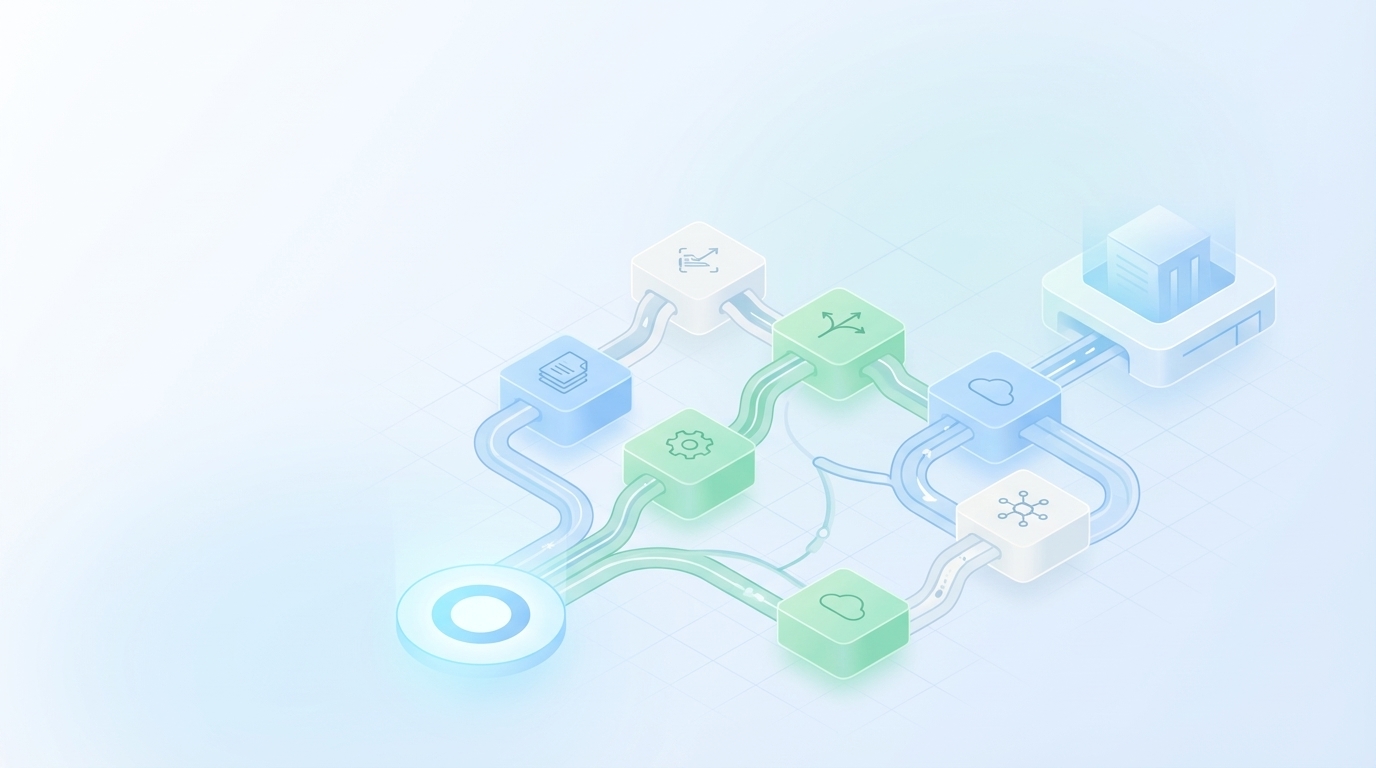
Most teams try to outrun their content problems with faster drafts. I did too. When I was the sole marketer at a B2B SaaS, I could crank out 3–4 posts a week. Felt productive. But we were chasing output, not authority. The moment I stepped into exec meetings and had less time to write, quality dipped, structure got messy, and publishing slowed to a crawl.
Here’s the thing. You don’t fix authority with speed. You fix it with a system. At PostBeyond and later at LevelJump, the gap wasn’t writing skill. It was fragmentation. Strategy in one place, research in another, drafting in a third, visuals and schema bolted on at the end. Each handoff created drift and rework. You can sprint. Or you can ship predictably. I’ll take predictable.
Key Takeaways:
- Faster drafting doesn’t fix fragmentation, govern the pipeline end to end
- Treat content like code: centralize inputs, define outputs, enforce rules
- Use a Topic Universe with cooldowns to prevent cannibalization
- Score briefs for information gain before writing to avoid rewrites
- Open every H2 with direct, snippet-ready answers for citation eligibility
- Make links and schema deterministic to eliminate last-mile drift
- Publish via mapped connectors with retries and duplicate protection
Ready to skip theory and see the system work? Try a controlled run: Try Generating 3 Free Test Articles Now.
Why Faster Writing Does Not Fix Authority
Speed helps output, not authority. Authority comes from coordinated execution, strategy, differentiation, structure, visuals, links, and publish all working as one. When those are disconnected, faster writing just multiplies inconsistencies. Picture a clean draft that still needs manual links, images, and schema at 5 p.m. on Friday.

The hidden cost of isolated projects
The cost of isolation isn’t obvious at first. One-off posts look fine in a vacuum. But the minute you zoom out, you see duplicated angles, missing coverage, and a brand voice that changes post to post. That’s because each draft starts from zero context. No persistent memory. No enforced structure. No system to protect quality when the pace increases.
I’ve lived this. We recorded CEO videos, transcribed them, and turned them into quick posts. It got content out the door, sure, but it missed the structure search expects: clear hierarchy, direct answers, schema. Good ideas, weak execution. The fix wasn’t “write more.” It was connecting the dots upstream, topics, briefs, and rules, so every draft started on rails.
Once you treat content like code, the posture changes. Inputs are centralized. Outputs are defined. Review becomes system-level, not draft-by-draft. And small problems stop compounding into big ones.
What is content as infrastructure and why does it matter?
Content as infrastructure is a governed pipeline. Topics move through briefs, drafts, visuals, links, schema, and publishing with rules that enforce differentiation, structure, and brand. It’s not a calendar. It’s not an editing checklist. It’s execution that looks the same every time, even when contributors change.
When Steamfeed hit 120k monthly uniques, it wasn’t because we had one superstar writer. We had volume plus structure. Many voices, one system. That’s the punchline here. A pipeline lets you scale without losing credibility. You reduce rework, prevent duplication, and make every article strengthen clusters you already own.
If that sounds rigid, good. Consistency creates trust. And trust is what authority is built on.
The Real Bottleneck Is Fragmented Workflows
Fragmented workflows slow everything. Ideas from one tool, drafts from another, images tagged on at the end, links pasted manually, schema “we’ll add later.” None of this is owned by a single system. You get drift at every handoff and unpredictable quality at publish. That’s the bottleneck. Not writing speed.

What traditional approaches miss
Traditional workflows optimize individual steps, not the outcome. You might streamline drafting, but then pay for it during publish because visuals, links, and schema weren’t planned. Quality depends on people catching issues, not the pipeline preventing them. There’s no single place where brand voice and facts are enforced.
The missing piece is governance. Not heavy process, codified rules. Brand voice that’s applied during drafting, not “fixed later.” Knowledge base facts that ground claims, not ad hoc searches. Deterministic linking that pulls only from your verified sitemap. A system that makes the right choice the default.
When teams do this, the chaos quiets down. Drafts show up cleaner. Edits shrink. Shipping is consistent. And no one is reverse-engineering structure at the finish line.
Where accuracy and brand drift start
Accuracy fails when drafts aren’t grounded in a curated knowledge base. Brand drifts when tone rules are optional and visuals are added late. Links and schema drift when they’re manual. These aren’t editorial problems. They’re system design problems. Solve them at the source.
Use persistent memory for facts and voice. Make link injection code-based so URLs and anchors are correct every time. Generate JSON-LD programmatically and validate it. Less judgment calls. Fewer surprises. When decisions move from “someone should remember” to “the pipeline enforces,” quality stabilizes.
And yes, humans still matter. They just work on narrative, not commas and cleanup.
The Hidden Costs That Compound Every Week
Hidden costs stack fast. A few minutes here for links, a few there for schema, a small reformat, a screenshot hunt, a duplicate slug. Multiply across posts and a month disappears. You feel busy. Output looks okay. But you’re not compounding authority. You’re maintaining a machine that wasn’t designed to scale.
Engineering hours lost to manual coordination
Manual linking, schema pasting, and CMS field mapping seem small, until you add them up. One hour per post times 20 posts a month is half a week gone. Add retries when a webhook fails or a duplicate slug blocks publish. Coordination becomes the job, not the content.
The fix is idempotent delivery, mapped fields, and code-based linking. Idempotent means a publish can run twice without messing with slugs or duplicating images. Mapped fields mean your CMS gets what it expects, every time. Code-based linking means no fabricated URLs. You claw back hours without new headcount, because the system stops making you pay a tax on the basics.
Repetition and cannibalization drag
Publishing similar angles across a cluster drains authority. It’s unintentional. But without coverage tracking and cooldowns, teams flood the same topics and split demand. You get internal competition, weaker rankings, and confused sales narratives. It feels like you’re covering ground. You’re not.
A Topic Universe with a 90-day cooldown helps. It sounds restrictive. It’s protective. You focus on gaps, not repeats, and every article compounds. When a cluster is saturated, move. When it’s underserved, double down. You make progress you can actually feel.
When snippets fail, discovery suffers
If H2s don’t open with direct answers, you miss featured snippet eligibility and clean chunking for AI assistants. You’ll still get traffic, sometimes, but you give up citations that accelerate trust. A snippet-ready structure isn’t a guarantee. It’s a consistent signal you can ship every time.
This is a controllable variable. Write 40–60 word direct answers at the top of each H2 using a tight three-sentence pattern. It aligns with how snippet extraction works today, and with how machines parse content. If you want the mechanics, start with Google’s featured snippets guidance.
The Human Toll When Quality Depends on Handoffs
This isn’t just about time. It’s about stress, context-switching, and credibility hits. When the system drops the ball at publish, you pay for it, nights, weekends, and trust with your stakeholders. You can feel this. I’ve been there. It’s not sustainable.
The 3am CMS failure you did not see coming
A connector times out. The post publishes without images. You revert, fix, republish, and break the canonical. No one planned for it, but everyone pays for it. The late-night Slack pings. The mini postmortem that steals your morning. It’s a mess.
Build publishing with retries, idempotency, and duplicate protection. Then failures become events, not crises. You get a clean notification. The system retries. If it fails again, you fix it once, not in five places. The team sleeps. And your credibility stays intact.
When your best draft still needs a full rewrite
A great draft can still be wrong for the cluster. That happens when differentiation checks run late. Score briefs for information gain before you write, not after. Low-gain flags are cheaper than rewrites. You don’t eliminate edits, nor should you, but you reduce the heavy ones that burn cycles and morale.
We used to learn this the hard way. “This angle’s already been covered.” Or worse, “It’s good, but it adds nothing new.” When briefs carry uniqueness signals, writers have a target. Editors can say yes faster. And rewrites become rare exceptions, not the plan.
Still tired of negotiating quality at the finish line? You don’t have to keep doing this manually. Try Using an Autonomous Content Engine for Always-On Publishing.
A Production-First Pipeline for Compounding Authority (7 steps)
A production-first pipeline turns content into infrastructure by enforcing rules end to end. Start with voice and knowledge, then sequence differentiation, drafting, visuals, links, schema, and publishing. The goal isn’t speed alone, it’s predictable quality that compounds. Here’s a practical way to run it without adding headcount.
Steps 1–2: Initialize strategy and map Topic Universe
Centralize facts and brand rules before anything else. Ingest your knowledge base, import the sitemap, set content pillars, and apply voice constraints. This creates persistent memory for claims and tone so the system doesn’t start from zero each time. It’s your single source of truth for drafting, visuals, and narrative checks.
Then discover topics from the KB and sitemap, cluster them, and label saturation across pillars. Track coverage and enforce a 90-day cooldown to prevent over-publishing. Approve suggestions based on gaps, not guesses. This is where you stop cannibalization early and aim writing at authority-building surfaces.
Steps 3–4: Generate information-gain briefs and draft with snippet-ready structure
Turn approved topics into briefs with competitive analysis and a uniqueness score. Identify common coverage, missing angles, and shallow sections. Flag low information gain so you don’t waste drafting cycles. Include external link candidates with context and suggested anchors. A strong brief prevents expensive rewrites later.
Draft from the brief using brand constraints and KB facts. Open every H2 with a 40–60 word direct answer. Keep sections independent and scannable. Use a clean hierarchy, clear sentences, and examples. Your goal is citation-friendly chunks that search and AI can quote. Drafts should be text-only at this stage, no images or links yet.
Steps 5–6: Govern visuals and inject deterministic links with JSON-LD
Use a brand asset library so images look like you. Generate a hero plus two to three inline visuals that reinforce understanding. Match product screenshots to the most relevant sections using semantic similarity, and prioritize solution areas. Generate alt text and SEO-friendly filenames automatically. Place visuals intentionally, not randomly.
Next, inject links and schema deterministically. Scan your verified sitemap to select five to eight relevant internal pages and insert them at natural boundaries with exact-match anchors. Generate and validate JSON-LD for Article, FAQ, and BreadcrumbList. For implementation context, see Google’s Article structured data guidelines. Keep this code-based to eliminate fabricated URLs and markup drift.
Step 7: QA gate and publish via mapped connectors
Evaluate content against structure, brand alignment, information gain, snippet readiness, visuals, and accessibility. Set a passing threshold and trigger refinement loops for low scores. Once it passes, finalize metadata, lock assets, and deliver to your CMS as draft or live. Map fields, prevent duplicates, and retry on failure.
Publishing should be boring. That’s the point. When the pipeline guards quality and delivery, you stop firefighting and start compounding.
How Oleno Automates the 7-Step Pipeline End to End
Oleno runs this pipeline as a single system, from strategy to publish. It doesn’t replace your judgment. It removes the guesswork that creates drift, rework, and those late-night fixes. You get consistent structure, enforced differentiation, brand-consistent visuals, deterministic links and schema, and connected publishing without manual handoffs.
Differentiation, structure, and visuals handled upstream
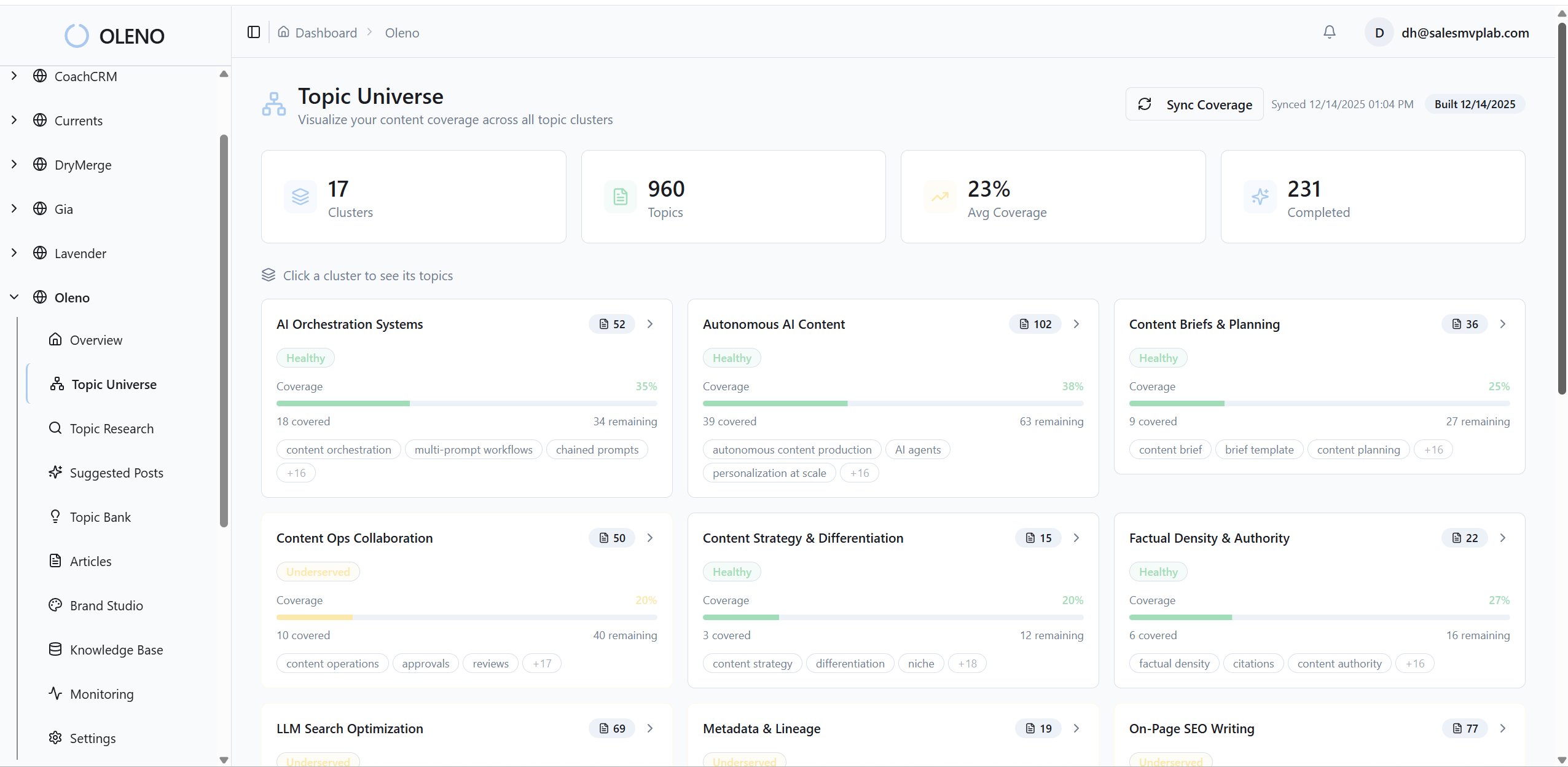
Oleno’s Topic Universe discovers topics from your KB and sitemap, clusters them, scores saturation, and enforces cooldowns. You approve suggestions that target gaps. Brief generation runs competitive research and calculates an information gain score, flagging low-differentiation outlines before anyone writes. That shrinks the rewrite risk you felt in earlier sprints.
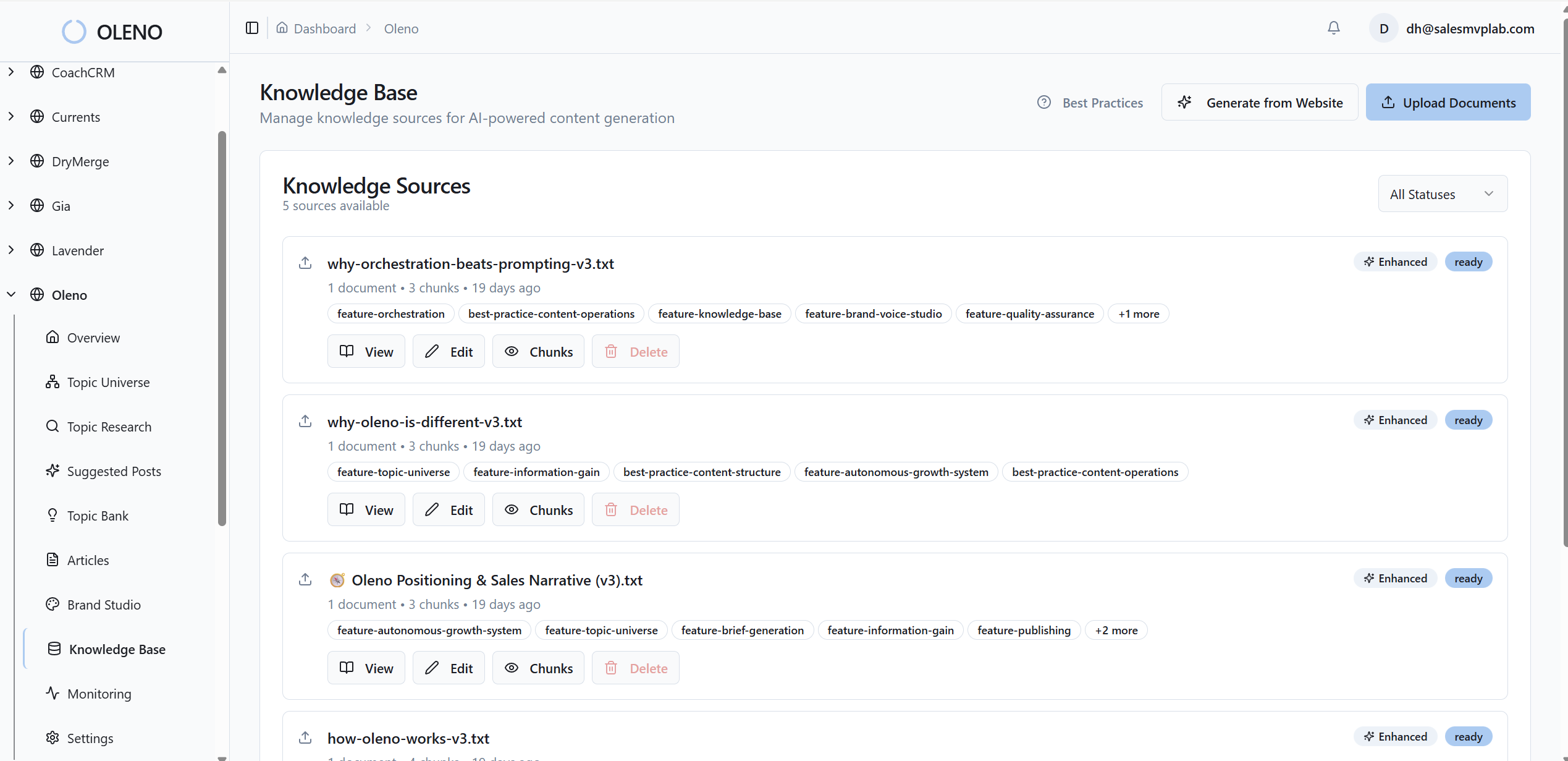
Drafts open sections with direct answers sized for snippets and AI citation. Visual Studio generates brand-consistent heroes and inline images, then matches product screenshots to relevant sections automatically. Alt text and filenames are generated for you. The result: articles that read cleanly and look on-brand at first publish.
Deterministic delivery that cuts last-mile rework
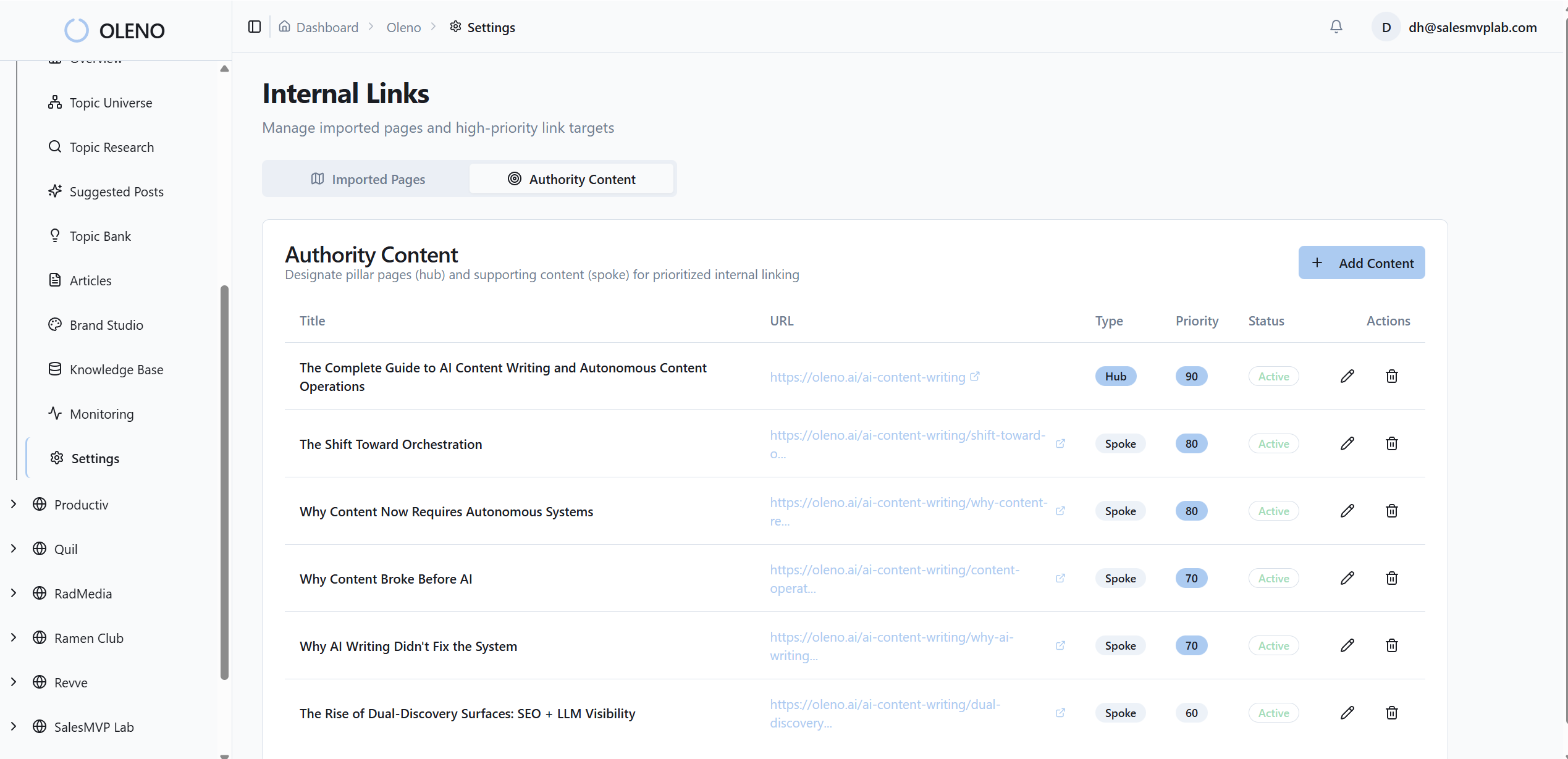
Oleno injects internal links from your verified sitemap with exact-match anchors, then generates and validates JSON-LD for Article, FAQ, and Breadcrumbs. Publishing maps fields to WordPress, Webflow, or HubSpot, prevents duplicates, and retries on transient failures. If you’re curious about the plumbing behind CMS delivery, the WordPress REST API documentation gives a sense of how programmatic publishing works generally.
What does this change in practice? The costs you felt earlier, manual links, schema drift, duplicate slugs, failed publishes, get handled by the system. Oleno reduces frustrating rework, protects your clusters from cannibalization, and frees your team to focus on narrative and strategy. You won’t eliminate edits, but you will eliminate the recurring cleanup that burns a week every month.
Want the production safety net without building it yourself? Let the system carry the load. Try Oleno for Free.
Conclusion
You can’t edit your way to authority at scale. You need rules that a system enforces. Centralize voice and facts. Enforce information gain before writing. Open sections with direct answers. Make visuals, links, schema, and publishing deterministic. When you do, quality stops depending on heroics, and your content starts behaving like infrastructure that compounds month after month.
About Daniel Hebert
I'm the founder of Oleno, SalesMVP Lab, and yourLumira. Been working in B2B SaaS in both sales and marketing leadership for 13+ years. I specialize in building revenue engines from the ground up. Over the years, I've codified writing frameworks, which are now powering Oleno.
Frequently Asked Questions