Turn Product Changelogs into SEO Traffic for SaaS Acquisition

I used to treat release notes like housekeeping. Ship the thing, write a tidy blurb, push it to an archive, move on. When I was running sales at Proposify, I saw a different pattern. Great content, tons of traffic, but big chunks of it didn’t point back to what we actually sold. Releases were the opposite problem. Plenty of product truth, zero acquisition value.
If you run a small team, you’ve felt this. You’re shipping, but updates don’t show up in search where buyers evaluate options. Your archive grows. Sales keeps answering the same “does it integrate with X?” question. You’re busy. The site is busy. Pipeline is not.
Key Takeaways:
- Treat meaningful releases as acquisition pages, not just log entries
- Decide promotion criteria up front to prevent bloat and cannibalization
- Use clean taxonomy, version metadata, and structured data to rank reliably
- Front-load buyer outcomes, then link to docs for detail
- Quantify the missed pipeline from invisible updates to get buy-in
- Build a repeatable template so PM, PMM, SEO, and legal stop fighting the same fight
Stop Letting Changelogs Sit Invisible To Buyers
Release notes can capture bottom-of-funnel intent when you frame them as answers to evaluation questions. Buyers search for feature names, integrations, and version modifiers before trials. Lead with outcomes and who benefits, not commit logs or ticket numbers. When the update reduces switching risk or speeds time-to-value, say it directly, then show the path to try.

Why Release Notes Can Capture Bottom-Of-Funnel Intent
Searchers near a buying decision look for confirmation, not stories. Queries like “feature X version Y,” “tool A integration with B,” and “[product] SSO” carry purchase intent. Align your title and first paragraph to that intent, then show what changes, who benefits, and how to try it. Keep code-level details, but move them down the page.
Most teams bury these pages under a feed that no one finds from search. That’s a waste. If an update removes a blocker, say “teams can switch without rework” in plain English. Add one screenshot that proves it. Close with a micro CTA to start a trial or test the feature, so the page actually moves the next step.
One more thing. Evaluation content should use the buyer’s language, not your internal terms. If your update enables “Okta SSO,” don’t hide it behind an internal label like “Identity Phase 2.” You’ll lose the match and the click.
What You Miss When Updates Live As Archives
Archive-only patterns turn high-intent changes into dead ends. You lose long tail queries for feature names and integrations. You burn internal authority on paginated lists that never rank. You also fail to answer simple evaluation questions in the moment, so the buyer clicks elsewhere and never returns.
A smarter pattern is a hybrid. Keep the index for chronology and completeness, then promote meaningful releases to standalone pages that can rank. Your internal link structure can still flow authority through the index, but you give high-value changes a shot at page one. That balance protects both coverage and discoverability.
I’ve seen teams wait because they fear clutter. The fear is valid. The fix is governance, not inaction. Decide what gets a page and what stays in the index. Then stick to it.
What Searchers Actually Expect On Release Pages
Searchers want a short summary that answers “what changed” and “why it matters.” They expect the problem solved, who benefits, and one or two screenshots that make it real. They want links to docs and a clear way to try it now. Rich results help, so add structured data and version metadata to clarify context.
Put buyer lens up front, then keep technical notes for engineers lower on the page. Use FAQs for edge cases, link to setup instructions, and include version, date, and affected plans. That blend covers both evaluation and implementation without confusing either group.
If you need evidence that search behavior is shifting, the AI overview rollout analysis from Semrush shows how specific, citable answers keep earning clicks. Release pages are perfect for that.
Ready to turn releases into acquisition pages without hiring an army? Request A Demo. We’ll walk your changelog together and build the first template live.
The Real Problem Is Structure, Not The Number Of Releases
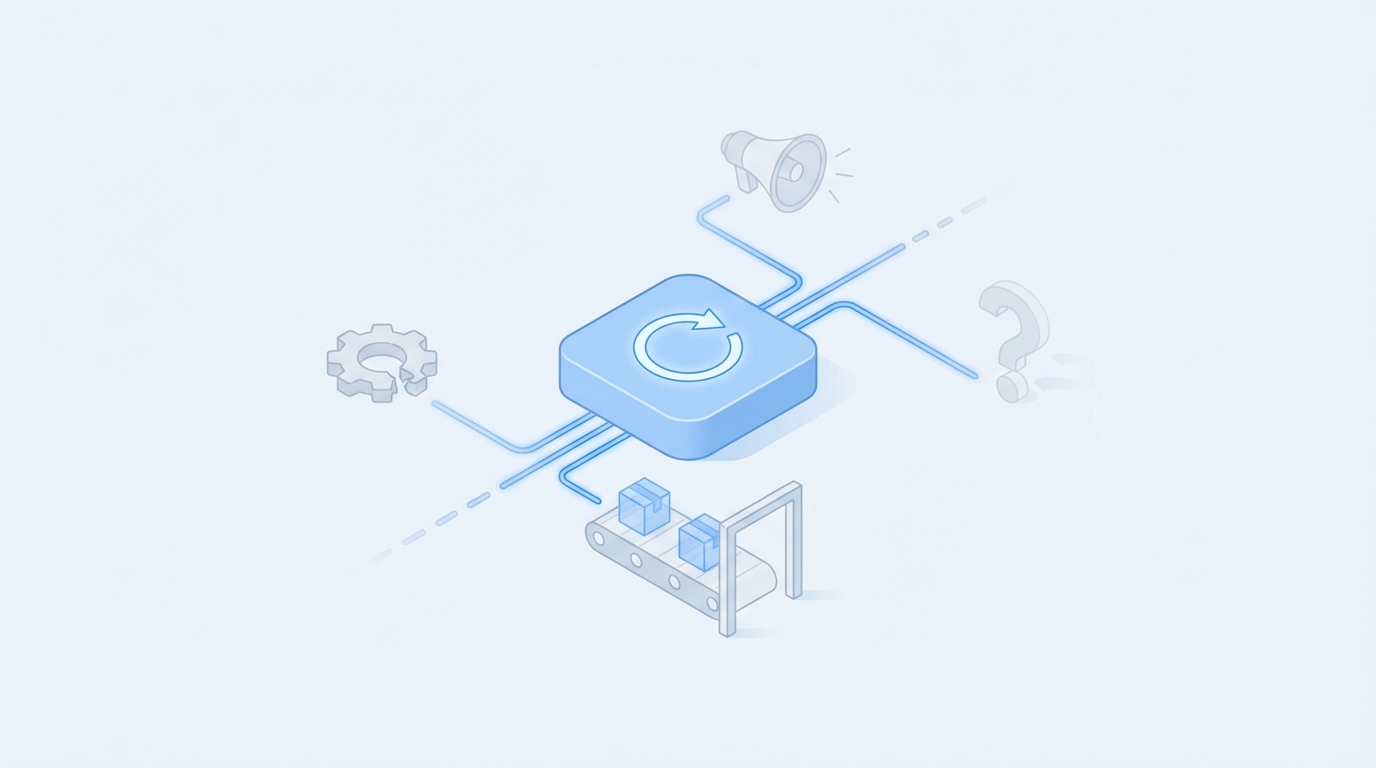
Your index, taxonomy, and canonicals decide whether release content ranks. A clean taxonomy keeps discovery and navigation coherent while allowing promotion of meaningful changes to standalone pages. Use a canonical index for the feed, self-referencing canonicals on promoted releases, and consistent tagging for product area, persona, and integration. That clarity prevents overlap.
Your Index, Taxonomy, And Canonicals Decide Whether You Rank
Start by defining a stable release taxonomy. The index is for completeness and navigating history. Individual pages are for acquisition. Promoted releases should carry their own URL, title, and canonical. The index should list and link, not compete. Map tags across product areas, personas, and integrations to power safe faceting and relevant internal links.
Once taxonomy is locked, keep H1 patterns consistent and obvious. Titles should join feature name, outcome, and version, so engines and humans understand relevance immediately. Use self-referencing canonicals on standalone pages and a canonical to the first page for the index. Simple rules like these cut down crawl waste and reduce duplication risk.
Your future self will thank you. Changing slugs and canonicals after publish is where teams lose hours and authority.
Cannibalization Is A Taxonomy Mistake, Not An SEO Fate
Cannibalization happens when multiple pages target the same query with overlapping signals. Duplicate titles, messy slugs, and unmanaged archives create that problem. Decide URL patterns up front. Use /changelog/ for the index and archived rows, and a separate, stable pattern for promoted releases, such as /product/{feature}/release-{version}.
Lock your title structure before content gets written. Align headings with search intent and stay consistent across the archive. Use rel=canonical on any duplicate or near-duplicate content. If two pages cover the same change for different audiences, state that clearly and link between them with distinct titles. The goal is clarity, not volume.
You don’t need complex rules to win here. You need rules you’ll actually follow.
Governance Beats Guesswork On What Gets A Page
Decide promotion criteria in advance. Material features, net new integrations, pricing or packaging changes, and measurable adoption spikes usually earn a page. Layer in intent signals like branded feature queries and support ticket clusters. Those inputs protect against bloat while pushing real opportunities forward.
Codify the process so PM, PMM, SEO, and legal don’t renegotiate every time. A one-page checklist with must-haves, nice-to-haves, and hard no’s will save weeks per quarter. That is not an exaggeration. It’s the difference between shipping one page late and publishing reliable acquisition assets every month.
If you want a deeper process reference, Virayo’s breakdown of SaaS SEO processes is a good framing for how the work fits together.
The Cost Of Invisible Release Notes
Invisible releases leave traffic and pipeline on the table. Let’s pretend two meaningful updates ship each month. If each could pull 150 qualified visits and convert 1.5 percent to trials, that’s 54 trials a year you miss. Multiply by ACV and the math gets uncomfortable fast. The cost compounds with every quarter you delay.
Traffic And Pipeline Left On The Table
Evaluation queries add up. Feature names, integration searches, and “version X” checks tend to convert better than top-of-funnel topics. If each promoted release lands even modest traffic and a conservative conversion rate, you’re looking at dozens of trials per year with near-zero paid spend. Skip the page and you lose all of it.
When the team sees the number, priorities shift. It’s easier to get design time for a template and engineering time for clean metadata when people see trial impact expressed in real dollars. You don’t need perfect attribution to justify the work. Directional math is enough.
That’s the lever for buy-in.
Rework And Internal Waste When Structure Is Unclear
Without rules, teams fix the same problems repeatedly. Slug changes, redirect chains, duplicated intros, inconsistent titles, and last-minute legal edits. Engineers paste raw change logs into the CMS, then PMM rewrites for voice. SEO cleans structure after publish. Each pass costs minutes that turn into hours across a quarter.
The hidden cost is momentum. When a release page requires a rescue every time, teams stop asking for one. That’s how the archive swallows everything and why search never sees the pages that matter. A template with built-in structure removes most of that drag.
Speed increases when people trust the pattern. Quality does too.
Duplicate Content And Crawl Waste You Can Avoid
Unmanaged archives produce near duplicates across list pages, feeds, and thin standalone posts. Crawl budget gets burned on low-value rows while the high-value page never gets a clean shot. Engines split signals, and neither page wins. Clear canonicals, paginated indices, and selective promotion stop this failure mode early.
Fix the basics. Ensure only one primary page targets a given evaluation query. Make the index a navigation asset rather than a competitor. Use consistent titles and meta for clarity. These are boring choices that prevent expensive problems.
A quick tune-up can reverse the trend line. Grizzle’s content optimization case study shows how structure and on-page fixes can unlock stalled pages without new content.
You want the mid-article checkpoint too? If your release pages aren’t moving trials yet and you want a working template you can ship next week, Request A Demo. We’ll map it to your stack.
What It Feels Like When Updates Do Not Move Pipeline
You ship, then silence. The post gets a few likes, then disappears. Sales doesn’t hear new questions. Support keeps answering the old ones. It feels wrong because it is. The page never matched buyer intent or search behavior, so discovery failed before the CTA mattered.
You Ship, Then Silence
The pattern is familiar. Publish on Thursday, share the link internally, see a small spike, watch traffic drop by Monday. A week later, the page is already buried under the next update. No new signups, no demo requests referencing it, and no searchable trace when you check the SERP.
The feeling you’re having is not imaginary. It’s a signal. The structure didn’t serve the searcher. The content didn’t express the outcome they cared about. The page reads like a journal entry, not an acquisition asset.
You can fix that with framing and metadata alone.
The Stakeholder Headache You Do Not Need
Stakeholders want different things. PM needs accuracy. SEO wants structure. Design cares about consistency. Legal needs safe claims. Without a shared template, you negotiate every requirement on every page. That’s rework risk, and it slows the next release.
When the template carries rules, meetings get shorter. Everyone sees where their input belongs. PM puts details in the implementation section, legal reviews the summary and claims checklist, and SEO owns schema and markup. You review once, not five times.
The point is to reduce the number of decisions per page. Not add new ones.
Worried About Site Bloat And Mixed Messages
Leaders worry that promoting releases will clutter navigation or dilute core pages. It can happen if you promote everything. A clean taxonomy, strict promotion criteria, and canonical discipline remove that fear. You get findability without flooding the site.
A lean site can still cover what matters. The test is whether a buyer can confirm fit in under two minutes. If the update helps them do that, it deserves a page. If not, it belongs in the index.
That line keeps bloat in check.
Release Driven SEO That Does Not Cannibalize: The Playbook
A release-driven SEO approach converts updates into acquisition pages without cannibalizing core content. Start with a selection matrix, design two templates, and lock on-page structure, schema, and version metadata. Promotion criteria protect focus. Clean URL patterns and consistent titles keep the archive from competing.
Audit Opportunities With A Selection Matrix
Score releases across four inputs to decide promotion. Use search intent volume for feature and integration queries, buyer impact in plain language, integration co-intent with partner names, and internal momentum signals like adoption spikes. Promote a release when at least two inputs are strong. Keep the rest in the index.
Validate with support logs and roadmap labels. If support tickets cluster around the change, that’s a signal. If sales has been waiting for the update to unblock accounts, that’s another. The goal isn’t perfect scoring. It’s a clear, fast call that the team trusts.
Add one human override rule. If a release removes a major switching risk, promote it regardless of volume.
Page Design And Taxonomy That Scale
Design two templates. First, a paginated changelog index with filters for product area, audience, and integration. Second, a promoted release template with a hero summary, who benefits, feature details, screenshots, FAQs, and related links. Use breadcrumbs that reflect the taxonomy and keep URL patterns distinct for index rows versus promoted pages.
Keep titles consistent. Combine feature, outcome, and version in a plain pattern. Use the same intro structure every time so readers and engines know what to expect. That consistency will cut review time in half because people stop debating structure and focus on substance.
A little rigidity here saves a lot of friction later.
On Page SEO, Schema, And Version Metadata
Write titles that join the feature name, outcome, and version. Use H2s for benefits and setup steps. Add Product or SoftwareApplication schema, and add HowTo or FAQ when the page includes tasks or questions. Include version numbers, release dates, and affected plans in microdata so engines understand context quickly.
Front-load a three-sentence outcome summary. Add a short table mapping change to value, recipient, and proof. Include one screenshot per major improvement. Link to docs for implementation. Close with a micro CTA to start a trial and another to explore the feature page. That simple pattern earns rich results and guides action without fluff.
If you want more on structured data winning SERP features for B2B, the case study catalog at SUSO Digital has useful examples.
How Oleno Turns Releases Into Acquisition Pages
Oleno makes the new approach practical for small teams that can’t carry more coordination work. You define the rules once, and the system runs governed jobs that turn releases into acquisition pages. The pipeline enforces voice, structure, and metadata before anything goes live. That cuts review time and protects cadence.
Governed Briefs And Schema By Default
Oleno turns each qualified release into a governed brief with your approved voice, claims, and section structure. The Programmatic SEO job generates outlines with buyer outcomes, FAQs, and schema blocks ready for JSON‑LD, so you don’t scramble for markup at the end. You keep technical notes, but the buyer lens leads by default.
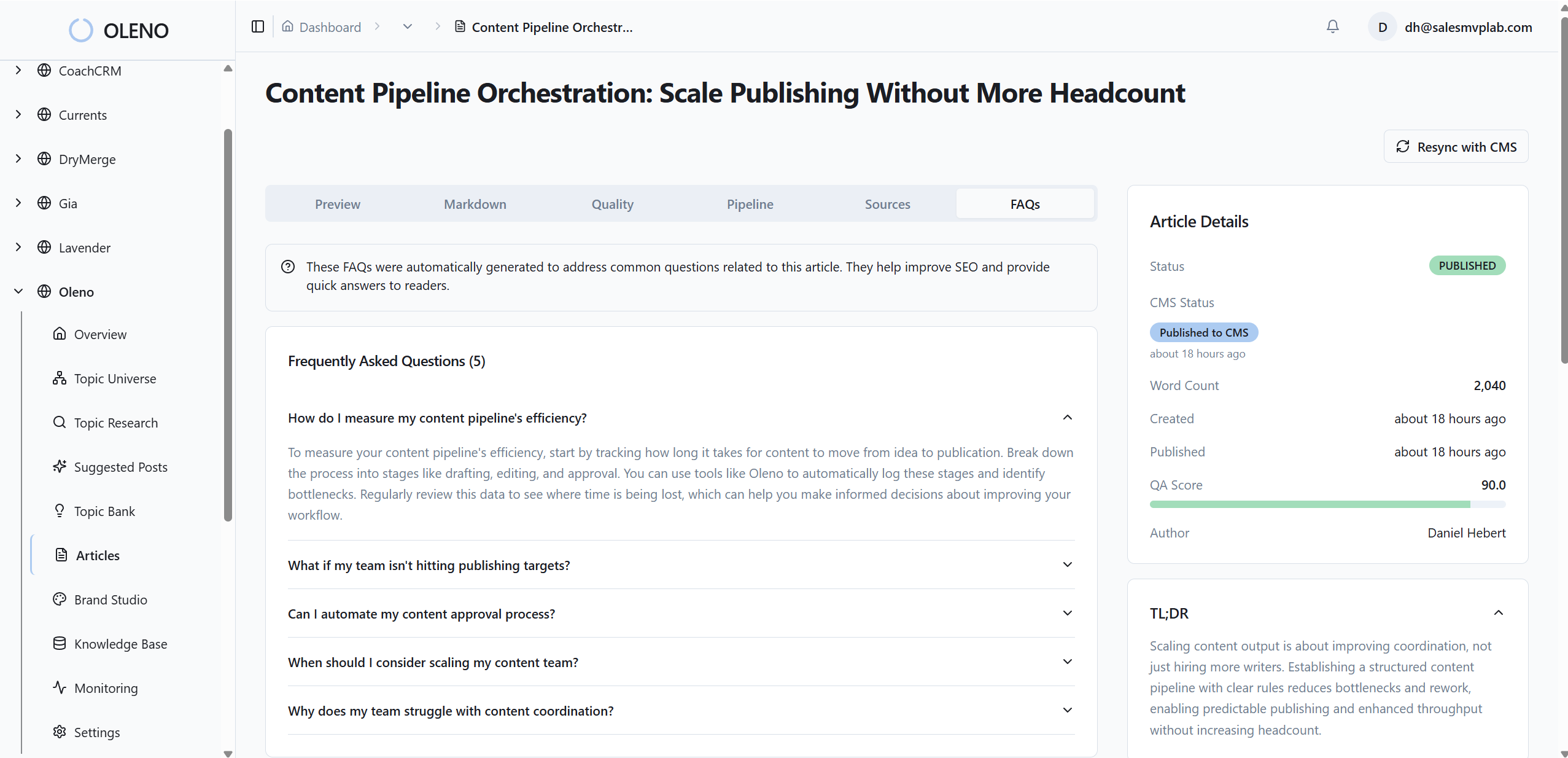
The brief pulls from your Knowledge Archive, which means feature names, integration partners, and plan details stay accurate. That’s how you avoid the mistake where a page claims support that doesn’t exist yet. Writers focus on clarity because the structure is already settled.
Buyers get the right page. You get fewer review cycles.
Idempotent Publishing, Canonicals, And Linking
Oleno’s publishing pipeline controls slugs, canonicals, and index pagination so duplicates don’t slip in. Self-referencing canonicals are applied correctly on promoted pages, and the index points to the right canonical target. Internal links are handled programmatically based on your sitemap and content map, so the index and promoted pages support each other rather than compete.
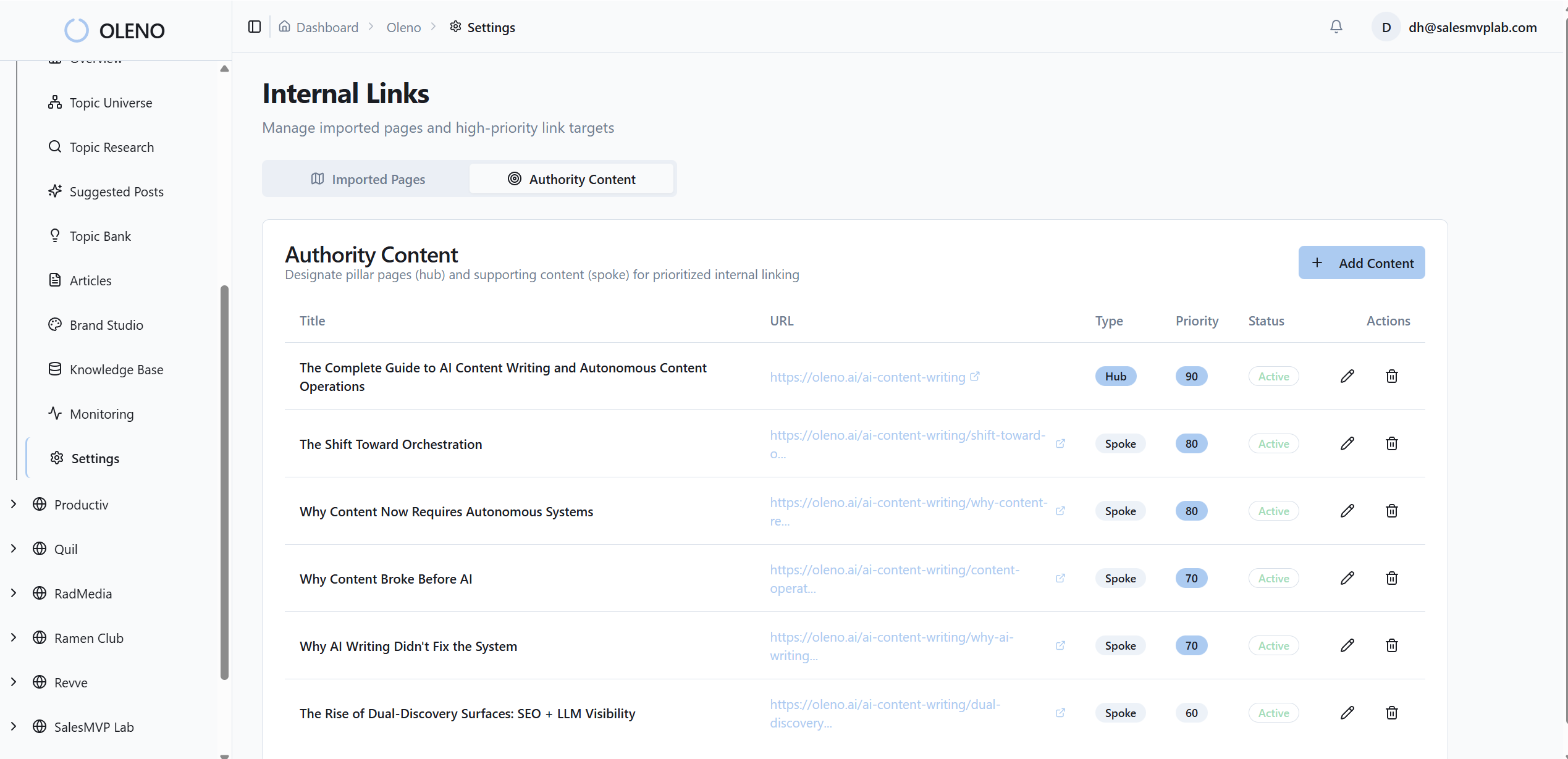
Topic Universe and coverage tracking help you spot overlap before it happens. When a theme already has a promoted page, the system can route new details to the index or suggest an update instead of adding a near duplicate. That’s how you reduce cannibalization risk across clusters without manual audits every month.
Set the rules once. Execution follows them.
Measurement And Cadence You Can Trust
Oleno’s QA gate checks voice, accuracy, structure, and metadata before publish. Nothing goes live until it meets the bar you defined. Operations features help you maintain cadence even when priorities shift, so the release content actually ships. That closes the loop on the costs we discussed earlier, like missed trials and hours lost to cleanup.
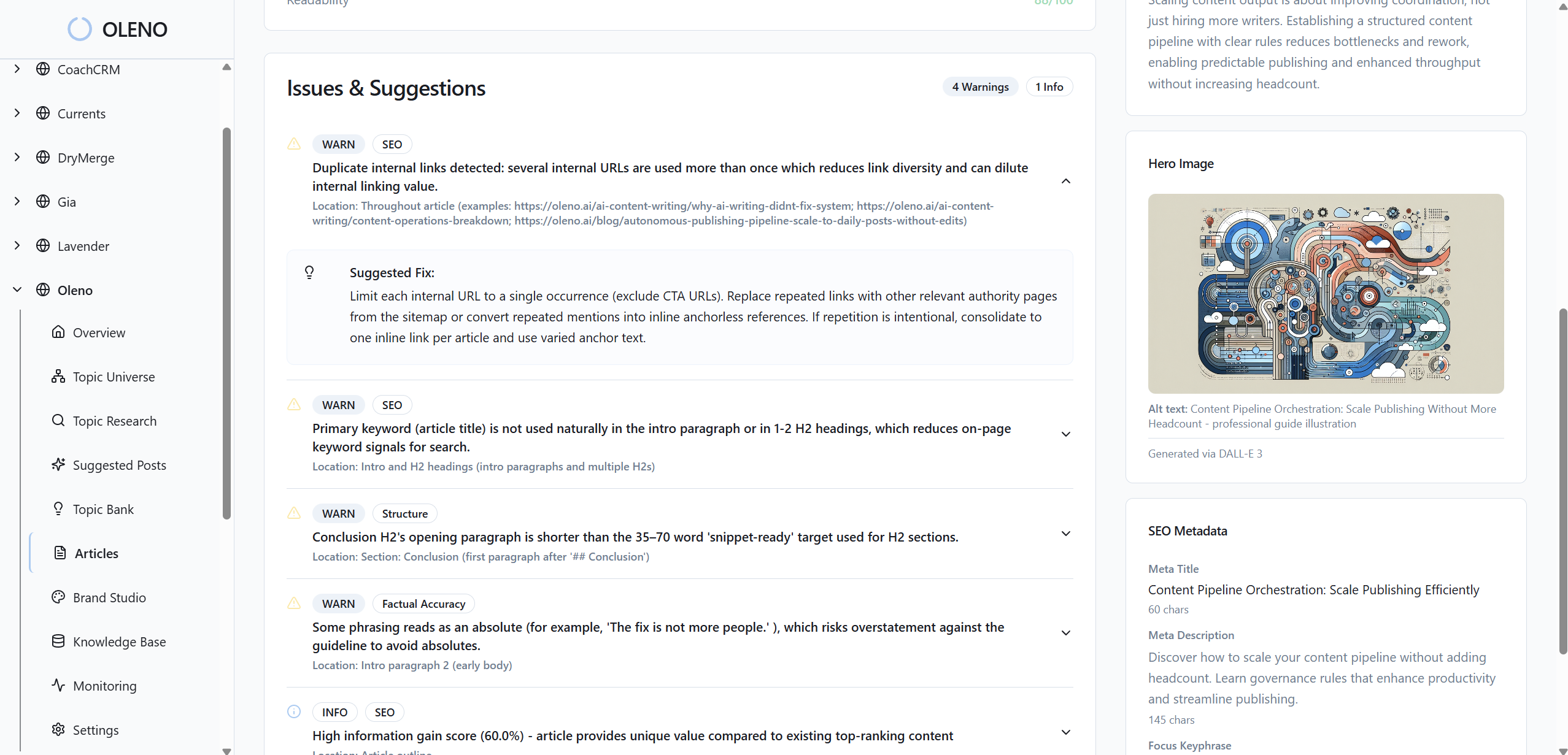
If each promoted release reliably adds a handful of trials per month, you’ll see the lift in pipeline without changing your headcount. That’s the point. Steady output at a consistent quality floor compounds. For a view on SEO pipeline math in B2B, this First Page Sage case study is a helpful benchmark.
Want the outcome without the rework? The setup is straightforward. Oleno handles Programmatic SEO jobs, QA gates, and CMS publishing out of the box. Request A Demo and we’ll map your release process to a governed pipeline you can run weekly.
Conclusion
Releases already contain the highest intent stories you can tell. When you frame them for buyers, enforce simple structure, and publish with clean taxonomy, you earn qualified clicks and remove friction in evaluation. The hard part isn’t writing more updates. It’s turning meaningful ones into pages that rank, prove value, and move someone to try.
Structure solves that. Governance makes it repeatable. Execution turns it into pipeline.
About Daniel Hebert
I'm the founder of Oleno, SalesMVP Lab, and yourLumira. Been working in B2B SaaS in both sales and marketing leadership for 13+ years. I specialize in building revenue engines from the ground up. Over the years, I've codified writing frameworks, which are now powering Oleno.
Frequently Asked Questions