Visual Cluster Strategy: Infographic Suites That Stand Out in Social Feeds

Most teams treat social posts like lottery tickets. New look every time, new color, new layout. It feels creative. It also resets recognition on every scroll. If your content is a moving target, feeds and people stop recognizing you.
You do not need more random ideas. You need a repeatable visual system that trains the feed to spot you in 200 milliseconds. Build the system once, then let creativity happen inside it. That is how authority grows without adding headcount or late-night rework.
Key Takeaways:
- Commit to visual tokens and a stable frame so feeds and people recognize you instantly
- Write rules once, then bake them into templates to eliminate drift and re-decisions
- Reduce creative friction by fixing retrieval, decisions, and handoffs upstream
- Treat visuals as a cluster, not one-offs: hero, carousel, and micro assets that reinforce each other
- Name, tag, and export consistently so metadata helps both search and AI surfaces
- Use a governed pipeline to avoid frustrating rework across design, content, and publishing
Feeds Reward Patterns, Not One-Offs
Feeds surface repeatable patterns because they signal familiarity and reduce friction for fast-scrolling users. A stable frame, consistent tokens, and reliable cadence teach both people and algorithms what your content looks like. Think family look first, then vary headlines, data points, and examples inside the frame.

Pattern Recognition Beats Novelty
A consistent, family look wins more impressions over time than isolated creative spikes. Lock a two-color palette, a simple grid, and a corner badge, then let topics change inside that frame. People remember the container first. If your frame is stable, they clock you without reading the handle.
Why Random Creativity Stalls Distribution
Randomness resets recognition. Thumbnails compress nuance. If every post looks different, you train audiences to scroll past you. Build constraints that survive compression: bold color blocks, a stable type system, and clear icon shapes. Make the first 200 milliseconds count by being instantly recognizable, not unexpectedly different.
Curious what this looks like in practice? Try Oleno for free.
Recognition Comes From Visual Tokens, Not Vibes
Recognition comes from repeatable, constrained elements that appear in every asset. Tokens reduce decisions, including the rise of dual-discovery surfaces:, speed production, and signal brand identity at a glance. Vibes are subjective. Tokens are objective and enforceable. They work across 1:1, 16:9, and 9:16 without constant tweaks.

Define Brand Tokens With Clear Rules
Write rules for colors, grid, iconography, and motion. Document exact hex values, column counts, gutter widths, stroke weights, corner radii, and animation timings. Keep combinations limited so the system is hard to misuse. For hero imagery, see this practical guide to brand-consistent visuals.
Enforce Token Reuse Across Formats
Put tokens inside your files, not just your wiki. Templates should autopopulate palettes, grids, text styles, icon sets, and motion presets. Lock export presets for 1:1, 16:9, and 9:16. When tokens travel with templates, you lower rework, cut review cycles, and protect recognition even when teams move fast.
The Hidden Costs Of Ad‑Hoc Design Work
Ad hoc design looks nimble, but the invisible costs compound quickly across a month. Every small decision steals focus from message and story. The fix is governance in the system, not heroic effort from individuals. Govern once, then ship many.

Production Thrash Looks Small; It Isn’t
Let’s pretend a designer spends 45 minutes re-deciding palette, grid, and motion for each post. At 15 posts per month, that is 11.25 hours on choices you already made. Add two review cycles, timezone delays, and re-exports, and you can double it. That is a week of attention lost to indecision.
Recognition Loss Compounds Downstream
Inconsistency shrinks carousel completion, tanks saves, and confuses your media library. Slide one says “us,” slide two says “someone else,” and people stop swiping. Filenames and alt text drift, so search becomes guesswork later. The answer is not force. It is a shift toward orchestration that reduces degrees of freedom upstream.
- Token drift causes mismatched slides
- Ad hoc exports break aspect ratios
- Missing alt text hurts accessibility and discovery
- Unnamed clusters scatter analytics and attribution
When optimizing why content broke before ai, pause on that last point. It is the easiest to fix.
The Creative Friction You’re Feeling Is Fixable
Most friction is not about creativity. It is retrieval, decisions, and handoffs. When assets, presets, and naming live in ten places, teams slow down and quality wobbles. Fix the plumbing and your message gets the attention, not the mechanics.
Where The Friction Hides
Friction hides in missing token rules, absent shared presets, untagged screenshots, and filenames your CMS cannot parse. Build a single source for tokens and templates. Store screenshots with tags. Standardize export presets. Your team should argue about headlines, not hex codes. If you want scale without drift, see why autonomous systems matter.
- Centralize tokens and templates
- Enforce preset exports at the file level
- Tag screenshots with features and topics
- Add a pre-publish checklist for visuals
When Should You Change The Visual Recipe?
Hold tokens steady for 6 to 8 weeks so feeds can learn the pattern. Run experiments as limited capsules, then return to base. If performance slips, change one token at a time. Start with color, then grid, then icon style. Keep the badge and type system steady until you have clear signal.
Build A Repeatable Visual Cluster System
A cluster is a set of assets that share tokens, reinforce a single idea, and publish in a planned sequence. Clusters train recognition and increase serial consumption. You are not producing isolated posts. You are producing a set that works together across formats and days.
What Is A Visual Token And Why Does It Matter?
A visual token is a small, consistent element that says “this is us” at a glance. Think corner index (1/10, including the shift toward orchestration, 2/10), diagonal color bar, or fixed icon placement. Tokens speed production by removing choices and boost recognition by repeating in every asset. That is how patterns compound.
The 3‑Tier Template System (Hero, Carousel, Micro)
Design three template tiers and you can cover most feed mechanics without new design work.
- Hero: single-image anchor with high-contrast token placement, exported in 1:1, 16:9, and 9:16
- Carousel: 8 to 10 slides using one grid, clear headline lockup, numbered modules, and a recap or CTA slide
- Micro: one or two data points or quotes that reuse the same grid and type system
Resist the urge to add a fourth template.
How Do You Sequence For Pattern Recognition?
Publish the hero on day one. Follow with micro singles that reuse slides two, five, and eight across the week. Close with the full carousel on day five to capture saves. Keep a predictable cadence, like Monday, Wednesday, Friday. Name assets with a cluster ID so platforms and people mentally group engagement. If you want this to run daily, consider autonomous content operations.
Ready to formalize your cluster system without adding headcount? Try using an autonomous content engine for always-on publishing.
How Oleno Operationalizes Visual Clusters At Scale
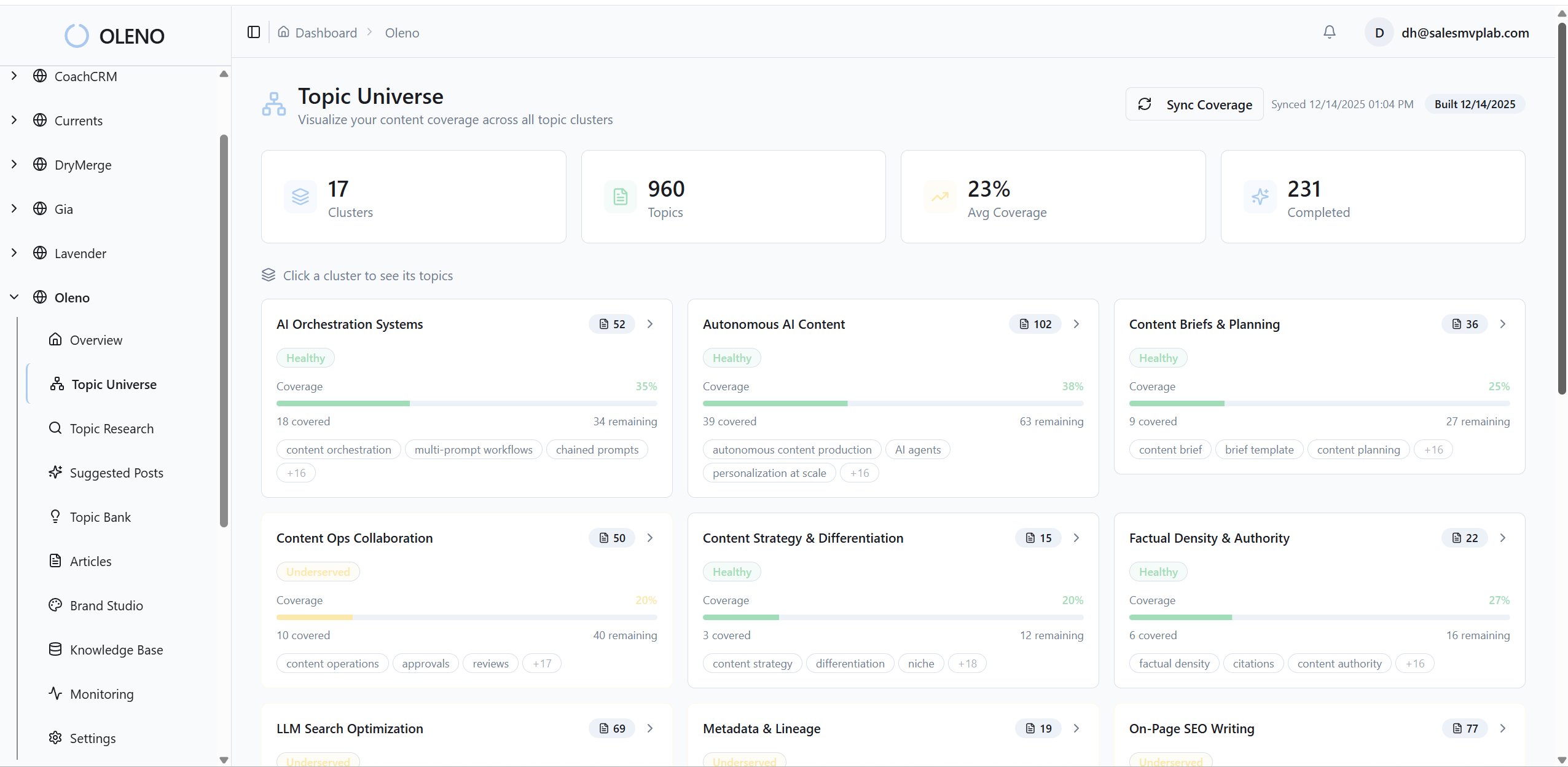
Oleno turns your cluster rules into a governed pipeline that produces complete, on-brand content reliably. Text, visuals, links, and schema are generated, validated, and delivered to your CMS together. You get pattern recognition without manual chasing, and creativity stays focused on story.
Batch Production Workflow You Can Repeat
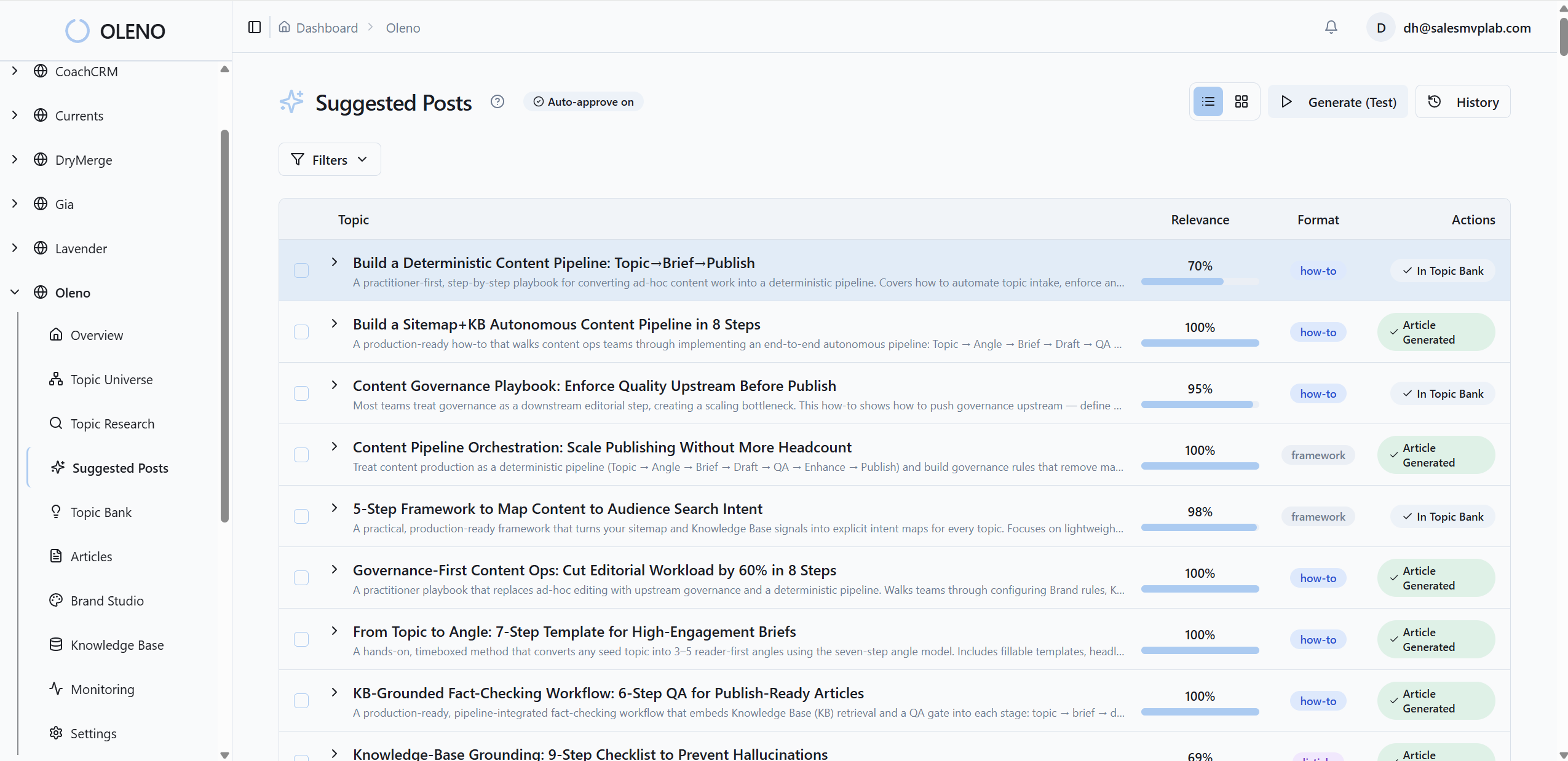
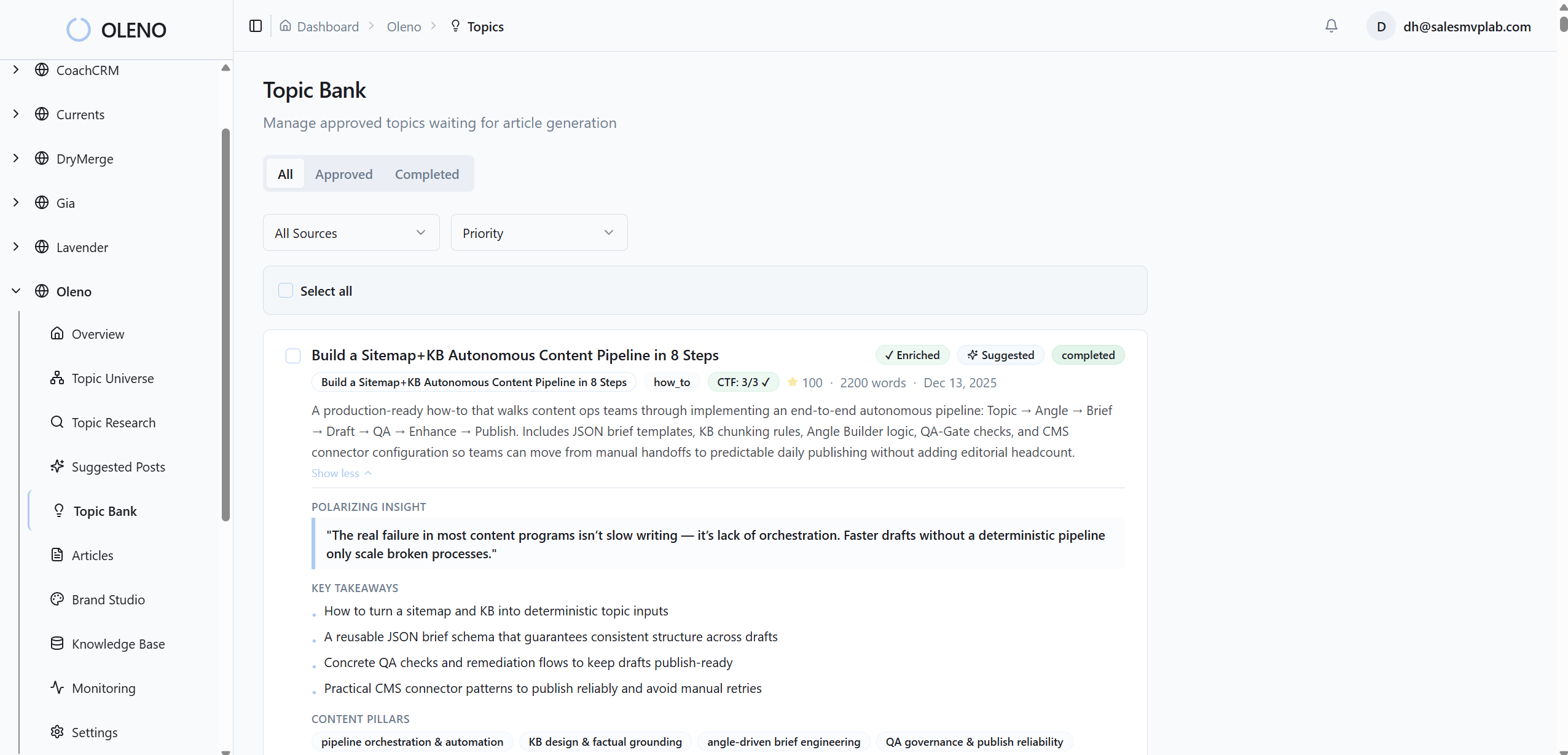
Remember the Topic to Publish loop. Oleno runs a fixed sequence: brief, draft generation, Visual Studio images, quality checks, and publishing. Visual Studio uses your Brand Asset Library to apply colors, logos, style references, and tagged product screenshots. Images are generated using image models, then placed intentionally where they reinforce the narrative. Oleno maps fields to WordPress, Webflow, HubSpot, or Google Sheets and prevents duplicate publishing. Policy lives in the system, so people ship work instead of managing steps.
Want to see the full pipeline end to end? Try generating 3 free test articles now.
Accessibility And Metadata That Travel With Assets
Start with a standard alt text pattern, like “cluster, slide number, topic, brand token.” Adopt a filename schema, for example “cluster-keyword_sXX_ratio-brand.” Oleno generates SEO-friendly alt text and filenames automatically, attaches JSON-LD for Article, FAQ, and BreadcrumbList, then passes everything through connectors so publish does not break. Metadata discipline supports dual discovery surfaces, and consistent titles and schema follow the guidance in these metadata patterns and JSON-LD schema resources.
A Creative QA Checklist You Can Enforce
Quality should not rely on heroics. Build a checklist you can run every time. Verify color contrast and legibility, token adherence across color, grid, and icon, screenshot-to-slide relevance, and cross-aspect crops. Oleno evaluates visuals, links, and schema against 80 plus criteria and triggers refinement when scores fall short. An automated QA gate removes AI-sounding phrasing, normalizes tone, and ensures snippet-ready structure, then locks text and images before publishing. If you want a deeper dive into the process, start with this overview of a QA gate.
What Visual Studio Contributes Concretely
Visual Studio in Oleno focuses on brand consistency at speed. It references your Brand Asset Library for colors, marks, style references, and tagged screenshots. It generates hero and inline images, matches screenshots to relevant sections through semantic similarity, and prioritizes solution areas for product visuals. It also supports multiple aspect ratios and up to 4K output, with alt text and filenames produced automatically. The result is predictable placement and consistent identity without manual design handoffs.
Deterministic Elements That Prevent Drift
A few parts are code-based, not probabilistic, including why ai writing didn't fix, which keeps accuracy high. Internal links are injected only from verified sitemaps with anchor text that matches page titles exactly. JSON-LD is generated programmatically for clarity. CMS connectors map fields automatically and block duplicates. The deterministic safeguards eliminate the most common sources of drift so your team can focus on message and story.
Bringing It Together Across Weeks
Run clusters in two-week arcs. Week one establishes the pattern with a hero, including ai content writing, two micros, and a full carousel. Week two deepens the topic with a second carousel that references the first, reuses tokens, and pushes a new angle. Oleno’s Quick Start Wizard initializes the system with brand voice and site inputs so you can move from plan to publish quickly. QA loops make sure each article meets thresholds before it ever reaches your CMS.
Conclusion
You do not need infinite formats. You need a recognizable frame, a small set of tokens, and a predictable sequence that the feed can learn. Patterns build authority because people know what they are looking at before they read it. That is the job.
Lock your tokens, constrain your templates, and publish in clusters. Use metadata that travels and a checklist that enforces. If you want the mechanics handled so your team can focus on the message, Oleno operationalizes the system end to end, from draft to visuals to structured data and publish.
About Daniel Hebert
I'm the founder of Oleno, SalesMVP Lab, and yourLumira. Been working in B2B SaaS in both sales and marketing leadership for 13+ years. I specialize in building revenue engines from the ground up. Over the years, I've codified writing frameworks, which are now powering Oleno.
Frequently Asked Questions