Voice Drift Detection: Build an NLP Pipeline to Catch Tone Regression
Most teams treat brand voice like a memory test. A PDF in a folder. A vibe you hope everyone remembers. That guarantees drift. The fix isn’t more reminders or heroic edits. You need voice drift detection that catches tone regressions before they ship—backed by thresholds you can measure and improve week after week.
I learned this the hard way. As volume climbs, tiny deviations creep in. A softened verb here. A hedge there. Give it a quarter and your library sounds like five different companies. You wonder why inbound trust feels flat even though you’re shipping more. It isn’t an effort problem. It’s a control problem.
Key Takeaways:
- Turn voice rules into measurable signals so tone stops being subjective
- Build a small, precise classifier; keep false positives under a target service-level objective (SLO)
- Set thresholds and alerts that block drift before publish—not after
- Wire detection into QA gates and canary flows so regressions never go live
- Run an ops loop for retraining, triage, and governance updates when drift appears
- Aim for >85% precision across a corpus and cut post‑publish voice fixes by ~60% in 8 weeks
The Hidden Tax of Voice Drift
Voice drift hurts more than teams expect. Consistency compounds trust; inconsistency erodes it fast. The impact shows up as longer review cycles, vague edits, and assets that don’t sound like you. One quarter of drift leaves you with a library that feels off, even when the facts are right.
Most teams assume drift is a craft issue great writers can solve. It isn’t. It’s a system issue created by scale, handoffs, and human memory. I’ve seen excellent writers produce inconsistent work when inputs shift or rules live in static docs. Without detection, you keep paying a hidden rework tax and never fix the root cause.
Style Guides Don’t Scale Past 100 Pieces
Style guides are necessary, but they rely on people to remember and enforce rules perfectly. That breaks as contributors rotate, priorities change, and volume rises. The moment you’re juggling freelancers, agencies, or AI drafts, the memory approach fails. Not because people are bad. Because memory isn’t a control surface.
As output grows, editors start doing voice by feel. That creates disagreement, which creates delays. Worse, drift sneaks in through small compromises that seem harmless alone. After a few months, the voice isn’t wrong in obvious ways. It’s just different enough to confuse readers who thought they knew your tone.
Drift Spreads Quietly Across Contributors
Subtle changes spread through examples and templates. One off‑brand headline in a high‑traffic piece seeds new drafts with the wrong tone. Writers copy patterns that feel “normal,” even if the voice is quietly shifting. AI models will mirror whatever inputs you feed them, so bad samples accelerate drift.
You rarely spot the pivot in real time. You notice when sales says a deck and a blog post don’t match how you talk on calls. You notice when a leadership quote sounds corporate where you used to sound direct. By then, you’ve got a library cleanup project, not a quick edit.
Why Style Guides Fail at Voice Drift Detection
Voice drift detection turns “vibe” into signals you can measure. Simple idea. Easy to skip because it feels technical. You’re not building a research lab. You’re translating rules like “be direct, avoid hedging” into lexical, syntactic, and semantic features you can score. Start small. Tighten over time.
Voice stops being a guess when you define it as features. Track hedging phrases, sentence rhythm, and banned constructions. Score semantic similarity to exemplar paragraphs with embeddings—they capture “feels like our voice” better than keywords alone. Together, you get a detection layer that catches drift early.
Voice Is a Set of Signals, Not Vibes
Define the pieces. Lexical signals: words to use and avoid. Syntactic signals: sentence length variance, contractions, rhythm. Semantic signals: closeness to on‑brand exemplars via vector similarity. The combo beats any single check and avoids false confidence.
If you want a primer on semantic similarity, the Universal Sentence Encoder is a readable example of why embeddings map “meaning” better than bag‑of‑words: https://arxiv.org/abs/1803.11175. You don’t need that exact model. The concept matters. Represent text as vectors, compare examples to drafts, and you get a measurable “voice closeness” score.
From Rules to Measurable Features
Translate each guideline into a testable rule. “Avoid hedging” becomes a pattern list: seems, maybe, could, might, generally, often. “Use contractions” becomes a percentage target. “Stay direct” becomes a score for passive voice and throat‑clearing phrases. Now you can track drift per piece and across the corpus.
Semantic checks add resilience. Create a bank of on‑brand paragraphs and compute similarity per section of a draft. Low‑scoring sections trigger review or auto‑revision prompts. For a practical take on embeddings in production, see: https://platform.openai.com/docs/guides/embeddings. The point isn’t which vendor. The point is using meaning, not only keywords.
The Real Cost of Drift: Time, Trust, and Rework
Drift costs time in reviews, trust with readers, and money through waste. Each off‑brand paragraph ripples through edits, approvals, and republishing. Multiply by monthly output and you see why content velocity stalls at scale. You’re not under‑resourced. You’re over‑correcting a preventable problem.
I’ve sat in those review loops. Two managers and an editor debating hedges the day before a launch. Sales says the piece sounds soft. Brand says it’s fine. Product wants clarity. The compromise is a Frankenstein edit that satisfies no one. That cycle kills cadence and morale.
Review Loops Multiply Fast
One line comment about tone can spark rewrites across the whole piece. Writers second‑guess. Editors add guardrails. A two‑day article becomes a two‑week saga with three versions and a half‑dozen stakeholders. None of that creates demand. All of it is cost.
Voice drift detection cuts these loops by catching problems at draft time. You move decisions from opinion to thresholds, which ends debates that drag on. People still use judgment—inside a narrower band where rules and signals agree most of the time.
Inconsistent Tone Erodes Trust
Readers notice when you wobble. Maybe not consciously at first, but trust is pattern recognition. If product emails sound confident while your blog sounds hedged, something feels wrong. Mismatched tone is a credibility leak. You pay for that in pipeline where doubts kill momentum quietly.
There’s another cost people miss. Distribution pulls your words into new contexts with screenshots and quotes. Off‑brand lines live longer than you expect. Detecting drift before publish protects against those artifacts traveling farther than the original post.
What Drift Feels Like When You’re Living It
It feels like constant friction. Not enough to escalate, just enough to drain energy. You read a paragraph and think, “That doesn’t sound like us,” but you can’t prove it. So you ask for edits and hope the rewrite lands. Multiply that across writers and sprints, and everyone is tired.
The emotional tax matters. Writers feel whiplash. Editors feel like hall monitors. Leaders lose confidence in the content engine. When teams start skipping reviews to hit dates, drift accelerates. Then you wake up to a library cleanup project that steals a quarter.
Late‑Night Rewrites and Slack Pings
You know the pattern. It’s 9:30 PM and someone flags a post that goes live tomorrow. The tone feels soft. The piece hedges around an important claim. You rewrite the intro, trim the filler, and hope it passes in the morning. You hit the date, but the cost shows up next sprint.
I’ve lost weekends to this. Not because the team was bad. Because the system didn’t catch tone before it reached me. Voice drift detection would have flagged the same section when the draft landed, not the night before publish.
Writers Get Whiplash
Vague feedback like “more punch” or “less corporate” creates confusion. Writers try a new angle, then get pulled back. They’re not wrong. They’re reacting to signals that were never defined. Give them measurable rules and quality rises while drama drops.
The cleanest signal is relief. People stop arguing about taste and start shipping against standards. You still debate the hard stuff, but your baseline gets solid. That’s the goal.
A Practical Voice Drift Detection Playbook
You can operationalize voice drift detection with a simple framework: translate voice into signals, train a lightweight classifier, then wire thresholds into your QA and canary flows. Start with precision over recall so you catch true drift without burying writers in false alarms. Tighten thresholds after you build trust.
Set SLOs like you would for a service. Precision above 85%. False positive rate below 10%. Mean time to remediate a drift alert under two working days. For SLO thinking, the Google SRE workbook is a solid reference you can adapt to content: https://sre.google/workbook/setting-slos/
Translate Voice to Signals
Write your voice in two columns: what to keep, what to avoid. Convert each rule into features you can score. Keep contractions, avoid hedges, stay direct, maintain varied sentence rhythm, and prefer specific numbers over vague claims. Add exemplar paragraphs representing “this is us” and “this is not us.”
Keep the first pass simple. Start with lexical patterns and a similarity score to exemplars. Track metrics per section, not just per document. Section‑level scoring shows where drift lives so fixes are surgical, not sweeping.
Train a Lightweight Classifier
Label a small set of paragraphs as on‑voice or off‑voice. Feed your features into a simple model or a weighted rules engine. You’re not chasing research‑grade performance. You want a stable filter that catches obvious drift with high precision. Re‑label quarterly and retrain as your library grows.
Pick a sampling strategy so you’re not labeling everything. Ten to twenty examples per cluster is enough to start. You’ll improve faster by tightening rules and exemplars than by chasing marginal model gains. Precision is the hill to defend at this stage.
To implement, follow these steps once your signals are defined:
- Normalize and tokenize text, then compute section‑level features
- Generate embeddings for exemplar and candidate sections; compute cosine similarity
- Train a simple classifier or set weighted rules to combine scores
- Calibrate thresholds against labeled data until precision exceeds your SLO
- Ship to a staging QA gate and watch alert volume for two weeks
- Move to production QA once alert quality holds steady
Ready to spot drift before it ships? Request a Demo
How Oleno Operationalizes Voice Drift Detection
Oleno encodes voice, enforces it in draft and QA, and measures system health over time. Governance lives as machine‑readable constraints and exemplars—not a PDF. The QA gate blocks drift before publish. Measurement shows whether precision holds across the corpus as volume rises.
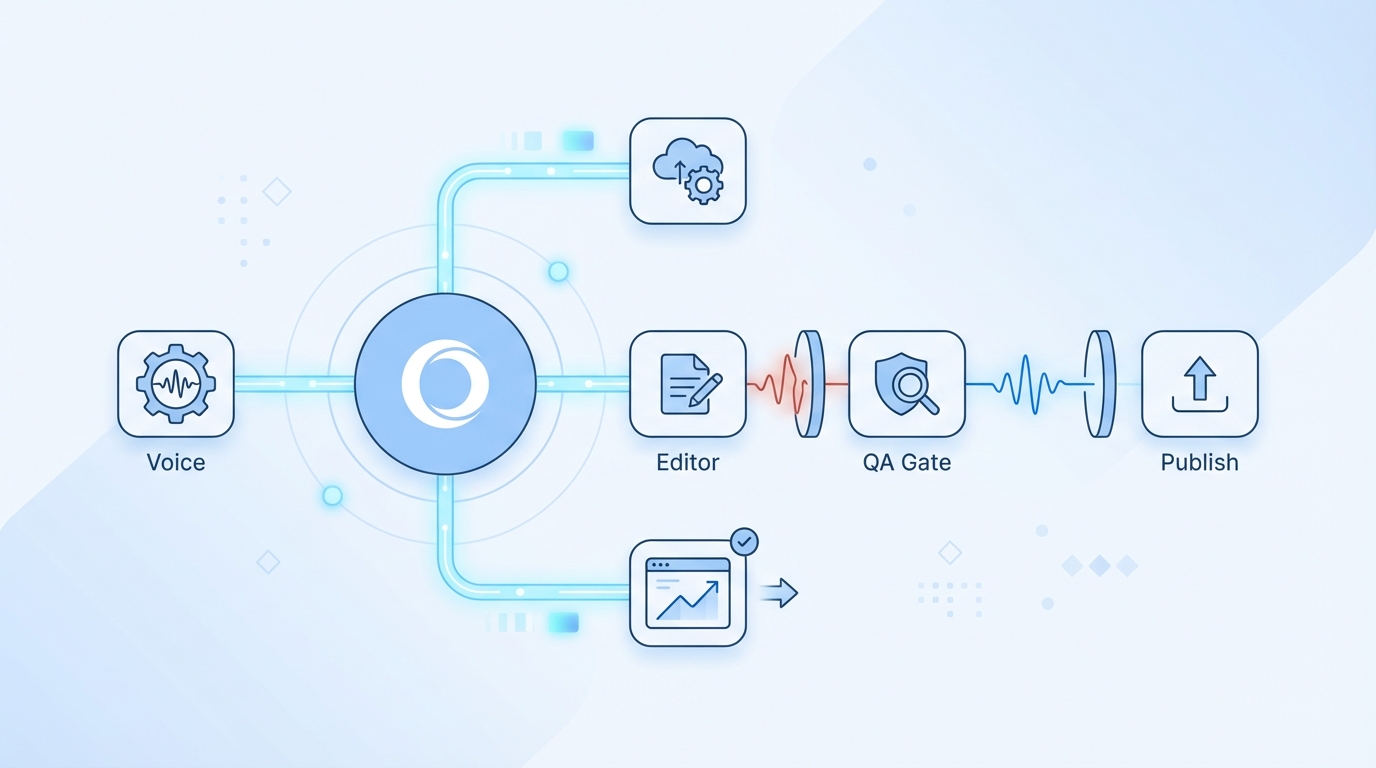
The outcome is easy to feel: fewer late edits, fewer tone debates, faster approvals. You aim for >85% precision on drift alerts and reduce post‑publish voice corrections by roughly 60% within eight weeks of deploying the pipeline. That’s the difference between manual vigilance and a system that holds the line.
Brand Studio Turns Voice into Constraints
Brand Studio captures tone, preferred terms, words to avoid, CTA style, and exemplar paragraphs as rules the system can apply. During briefs and drafts, those constraints guide generation so outputs start closer to your voice. QA then checks for violations, including hedging, missing contractions, and rhythm issues.
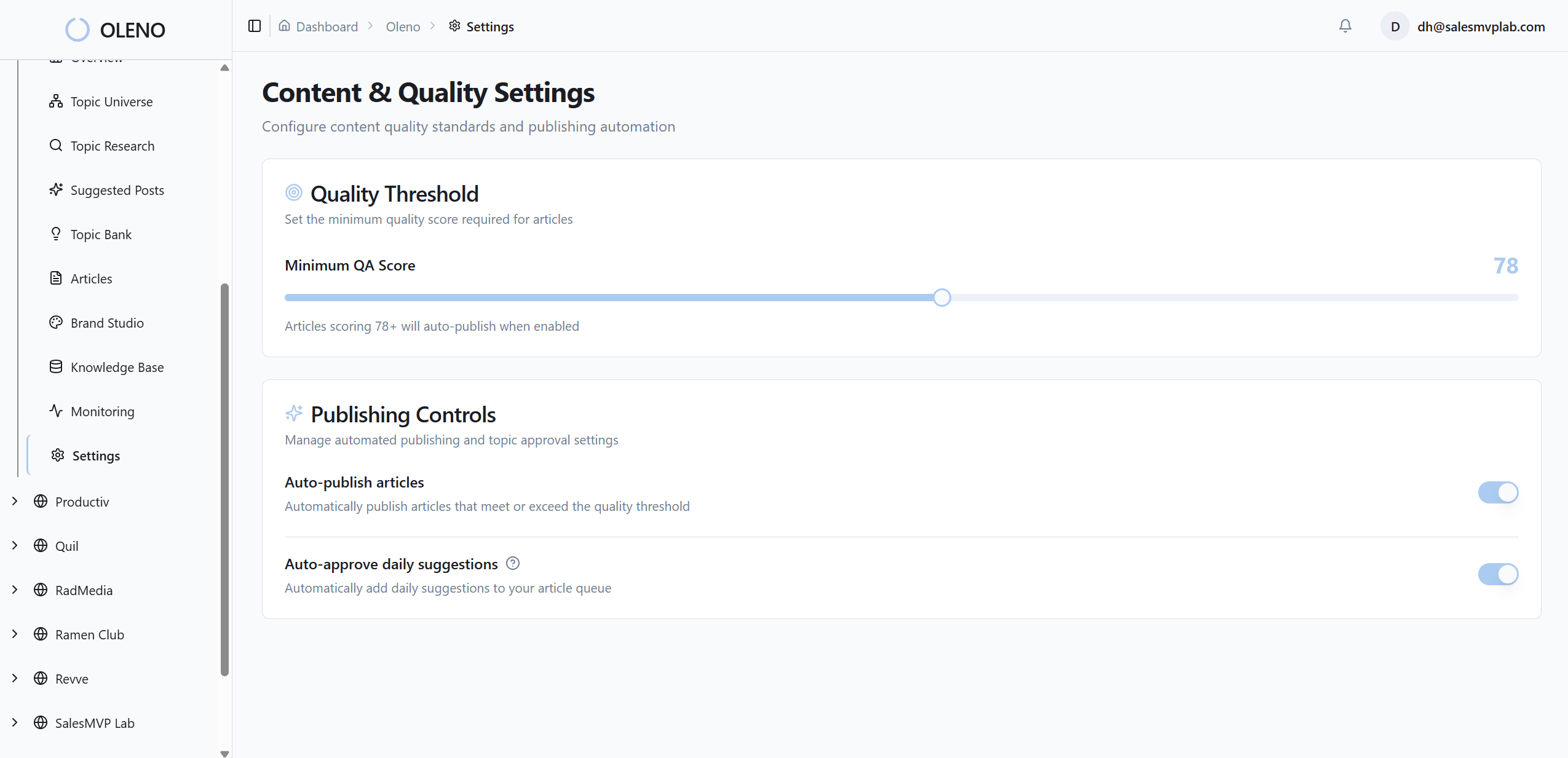
Marketing Studio adds the point of view and message pillars your brand stands on, so content stays opinionated instead of generic: https://oleno.ai/ai-content-writing/dual-discovery-seo-llm-visibility/?utm_source=oleno&utm_medium=internal-link&utm_campaign=voice-drift-detection-build-an-nlp-pipeline-to-catch-tone-regression. Together, the two studios turn “vibes” into guardrails writers and AI can’t ignore, shrinking the surface area for drift.
QA Gate Blocks Drift Before Publish
The Quality Control gate runs rule‑based and model‑based checks before anything can publish. Off‑voice sections get flagged with reasons—not vague warnings—so fixes are fast. If a draft fails, Oleno routes it back for targeted revisions and re‑tests until it passes standards for voice, clarity, and grounding.
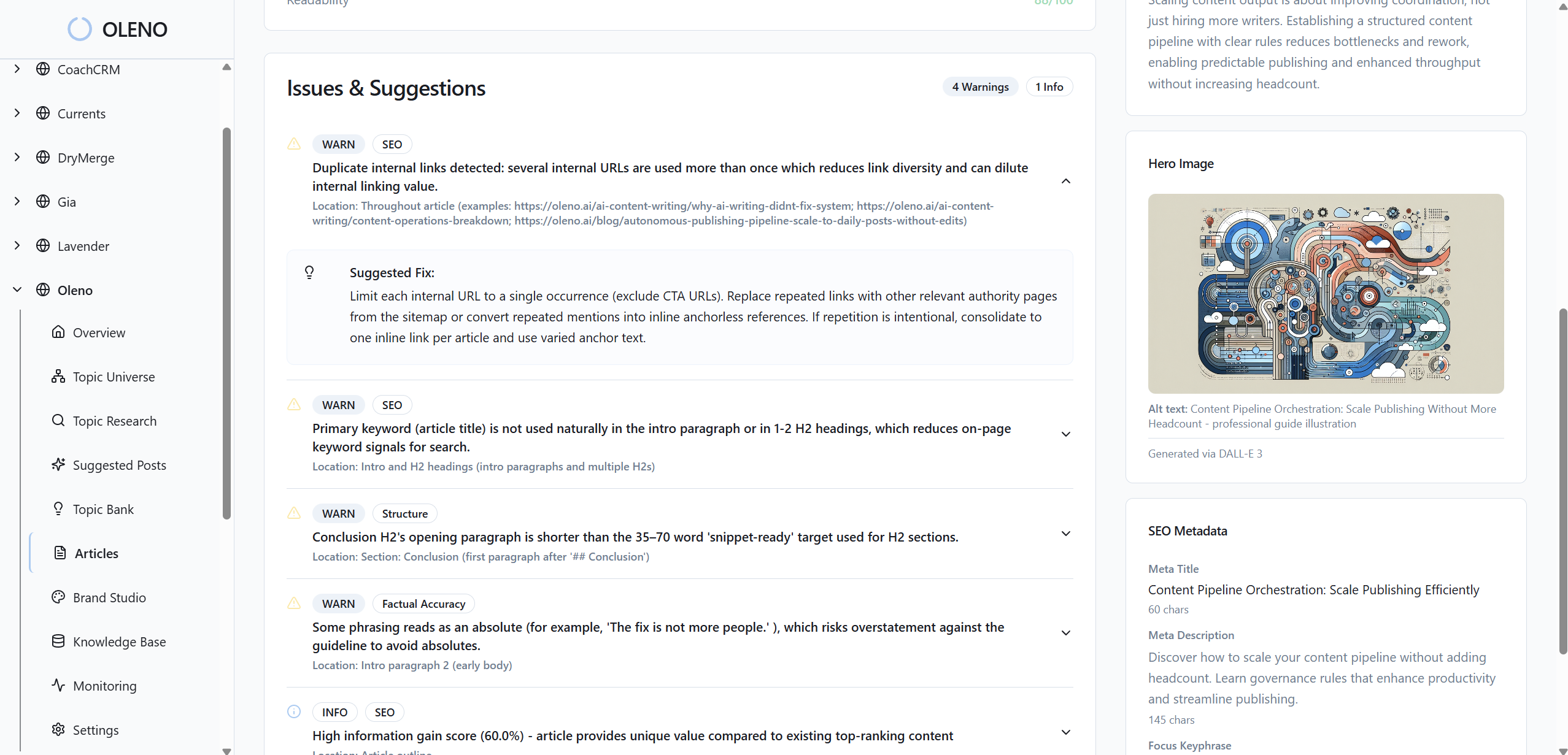
Knowledge Archive Grounding keeps claims tied to approved product truths, which prevents another subtle drift: confident tone on top of shaky facts. Voice without grounding reads slick. Voice with grounding reads credible. That balance builds trust over time.
Measurement Closes the Loop
Measurement & System Health tracks precision trends, failure patterns, and time‑to‑fix. You’ll see whether alerts spike in a specific content type, persona, or stage. That data guides governance updates, retraining, or a quick coaching loop. The goal is a stable baseline that doesn’t wobble when volume jumps.
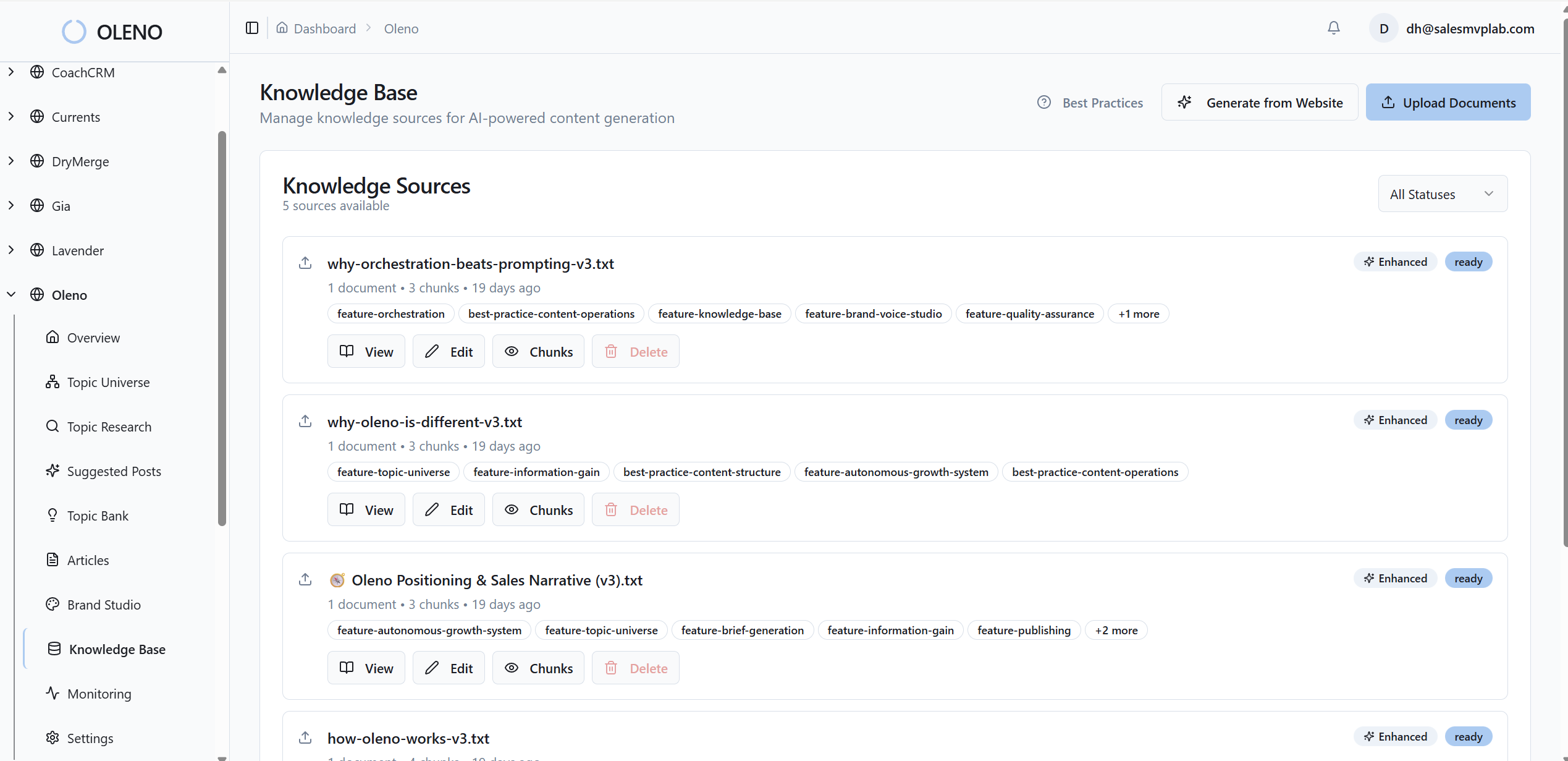
Here’s what Oleno brings together for day‑to‑day control:
- Brand Studio constraints: voice rules, preferred and banned terms, exemplars
- Marketing Studio narrative: POV and message pillars to keep content opinionated
- Quality Control gate: pre‑publish checks that block drift and force targeted fixes
- Knowledge Archive grounding: approved claims that keep tone and truth aligned
- Measurement & System Health: operational metrics that prove the system is holding
Cutting edit loops isn’t about hero editors. It’s about a system that catches problems early and prevents them from shipping. Oleno is built for that job on lean teams that can’t afford endless review cycles.
Sixty percent fewer post‑publish voice fixes in eight weeks. That’s the target Oleno is designed to help you hit. Request a Demo
Conclusion
Voice drift is predictable at scale, so prevention needs to be a system—not a pep talk. Translate your voice into signals, train a precise classifier, wire thresholds into QA, and watch precision trends like a product owner. You’ll ship faster, argue less, and sound like one company again.
If you want governance encoded, a QA gate that blocks drift, and measurement that proves it’s working, Oleno was built for that job. Book a Demo
About Daniel Hebert
I'm the founder of Oleno, SalesMVP Lab, and yourLumira. Been working in B2B SaaS in both sales and marketing leadership for 13+ years. I specialize in building revenue engines from the ground up. Over the years, I've codified writing frameworks, which are now powering Oleno.
Frequently Asked Questions