Voice Perception Testing: 8 UX Methods to Validate Brand Voice

Most teams obsess over voice guidelines and exemplar libraries. Then they never ask buyers if the voice actually lands. Voice perception testing closes that gap. It measures how customers hear you, not how you hear yourself. Without it, you optimize for internal comfort and wonder why clarity and conversion stall.
I learned this the hard way. We’d tighten rules, add more examples, run stricter editing, and still get the same comment from prospects: “Sounds generic,” or “Not for me.” The copy didn’t fail because it was off book. It failed because the market heard a different story than the one we meant to tell. Voice perception testing makes that mismatch visible and fixable fast.
Key Takeaways:
- Translate vague voice terms into measurable attributes buyers can rate
- Run three tests in four weeks: moderated interviews, unmoderated preference with rationale, and a simple multivariate test
- Use semantic differentials to quantify “approachable,” “direct,” “authoritative,” and other fuzzy traits
- Code qualitative notes into a rubric so governance updates are obvious, not subjective
- Pair small-sample research with a lightweight NLP scorer to monitor live content for drift
- Set SLOs for voice perception and block publishing when scores fall below your floor
Why Voice Perception Testing Beats Internal QA
Voice perception testing beats internal QA because customers decide what your voice means, not your style guide. Internal QA preserves consistency and reduces obvious errors, which matters for craft. Buyers judge clarity, trust, and fit, which decides pipeline and win rate. When those diverge, perception wins every time.
Internal Consistency Preserves Style, Not Meaning
Internal QA is great at catching brand terms, tone slips, and formatting quirks. It is terrible at predicting how a first-time reader feels after scanning a headline. Meaning lives on the reader side. If they read “approachable” as “casual,” or “direct” as “aggressive,” you get the wrong reaction despite perfect rule-following.
I have seen teams tighten rules after misses. More examples. Stricter edits. The result looked cleaner but didn’t change perception. The signal we needed was outside the room. Buyers needed to tell us where the copy felt off, which words triggered the wrong vibe, which claims sounded risky or vague. Internal edits polish. Perception testing steers.
When you link both, quality jumps. You keep the consistency gains from QA and aim the voice at what buyers actually hear. That is the unlock.
Perception Is the Only Score That Converts
A perfect voice score in your doc is a vanity metric. The only voice score that correlates with demos and deals is the one buyers give you, even if it is a quick scale rating plus a two-sentence rationale. That small loop exposes the gap between intent and impact.
Start painfully simple. Two or three brand statements. Two or three adjectives you care about. Ask ten qualified buyers to rate how each line feels on a 1–7 scale and explain why. The numbers give you a baseline. The words explain the delta. You cannot argue with it, and you should not try.
If you need help framing the craft side, use guidance like Nielsen Norman Group on brand voice. Then pressure-test it in front of people who do not work with you.
The Real Problem: You Don’t Measure Perception Drift
Perception drift is the slow slide from intended voice to how buyers actually hear you. It happens when vague adjectives guide writing and no external baseline exists. If you never measure perception, you catch drift as lost clicks, weak replies, and rework, which shows up too late to be cheap to fix.
Vague Adjectives Create Ambiguity
Most teams pass around adjectives like “approachable,” “confident,” and “helpful.” Without definitions and examples tied to buyer reactions, those words invite arguments. One person’s “confident” is another person’s “cocky.” One person’s “approachable” is another person’s “chatty.” That mismatch creates waste.
Translate each adjective into observable traits buyers can rate. For example, “approachable” could map to shorter sentences, low jargon, clear verbs, and one human example per section. Now it is testable. Now you can ask people to rate the feel on a scale and tell you what created that feel. A semantic differential scale, like the ones explained by Qualtrics on semantic differential surveys, works well here.
When you define traits, writers aim at the same target. Reviewers stop guessing intent. Buyers tell you if the target works for them.
Practical anchors you can use today:
- Approachable: stuffy (1) — approachable (7)
- Direct: vague (1) — direct (7)
- Authoritative: tentative (1) — authoritative (7)
- Energetic: flat (1) — energetic (7) Add one open-ended “What made it feel this way?” question.
No Baseline, No Signal
Without a baseline, every new piece is judged in isolation. That is why feedback whiplash happens. One week “too soft,” the next week “too sharp,” and both comments land on similar drafts. You never know what is right because “right” was not defined with buyers.
Create a baseline in two hours:
- Pick three representative assets
- Test with ten qualified buyers
- Capture 1–7 ratings on your top five traits
- Save the open-ended rationale
- Average the scores to set your starting line The goal is not a perfect number. It is a clear direction: higher or lower, with reasons.
Once you have a baseline, you can track movement. That single move reduces pointless debate more than another round of “preferred words.”
The Cost of Skipping Voice Perception Testing
Skipping voice perception testing costs time, money, and trust. You waste cycles on edits that do not fix the real problem, you miss intent in high-stakes moments, and you risk confusing the exact buyers you want to win. The hidden bill shows up as rework, slower campaigns, and lower conversion.
Rework, Delays, and Lost Momentum
Rework is the obvious cost. Three to five extra edit rounds on core pages adds days. Those days push launches, stall sequences, and pile more work onto your best writers. The team gets tired. Quality dips. Then you hire another editor, which adds another layer of subjective judgment.
Campaigns drift. Without a clear perception target, every asset lands a little different. You see it in inconsistent replies, weak time on page, and stakeholders asking for “one more change” that does not connect to a buyer signal. The longer you wait to get external input, the more expensive each fix gets.
A simple loop early in the process avoids this mess. Ten buyer ratings and rationale now beat forty internal comments later. If you want practical test ideas, CXL’s breakdown of message testing methods is a solid overview.
The Trust Hit You Do Not See Right Away
Trust erodes silently. Buyers will not email you to say “your voice felt off.” They just stop reading, stop clicking, or assume you are not for them. That is the cost you do not notice until forecast reviews feel off and sales asks for more leads.
When your voice lands wrong, the product can still be great and you still lose. You are not losing to a better product. You are losing to clarity. That is fixable, but only if you measure what people actually hear.
What It Feels Like When Your Voice Lands Wrong
When your voice lands wrong, feedback conflicts, writers lose confidence, and leadership questions the story. You push harder on rules and still miss. It feels like trying to tune a guitar by ear in a loud room. You are close, but never quite in key, and you cannot prove why.

Mixed Feedback Whiplash
You get pinged from every angle. “Too casual.” “Not bold enough.” “Feels salesy.” “Too academic.” None of it is wrong, and none of it agrees. People argue about taste because taste is all they have. The meeting ends with “tighten it up,” which does not tell anyone what to change.
A small sample of buyer ratings ends the taste debate. If five out of ten say a paragraph felt “aggressive” and point to the same phrase, you have a problem to fix, not a fight to win. The team breathes again. Editors stop rewriting in their own style and start aligning to what buyers said.
Even better, you start seeing patterns. Specific words, sentence shapes, and examples that either trigger trust or push people away. Now feedback has teeth.
Writer Confidence Erodes
Writers want to hit the mark. When the mark shifts every week, confidence breaks. You see safer choices. You see hedging. You see lifeless copy that avoids being wrong instead of trying to be right. That is not a skill problem. That is a signal problem.
The fastest way to rebuild confidence is to give clear, external targets. Show the attributes that matter, show the baseline, and show what buyers said. Then let writers ship drafts that aim squarely at those targets. When they see perception scores rise, they know the craft is working. Momentum returns.
Once that loop exists, you can coach to a scoreboard that matters, not to taste. That is better for everyone.
A Practical Playbook for Voice Perception Testing
You can launch voice perception testing in four weeks with three lightweight tests. Translate vague terms into measurable attributes, run small, fast studies with qualified buyers, then wire findings into governance. The goal: cut mismatch by about half within two months and keep drift visible.
Translate Voice Into Measurable Attributes
Turn adjectives into traits buyers can rate. Pick five attributes that matter most to your brand. Define each in plain English, list two to three writing cues for each, and set a desired range. Now the team has a target and you have something testable.
A simple survey instrument:
- For each attribute, use a 1–7 semantic differential (e.g., vague — direct)
- Add one open-ended “Why did it feel this way?”
- Keep it under 10 questions so people answer honestly If you need a quick primer, the Qualtrics guide to semantic differentials covers the basics.
Collect ten responses from people who match your buyer criteria. Average the scores, then read the rationale. The numbers tell you where you stand. The words tell you what to fix.
After you score, capture exact phrases that triggered negative reactions. Those phrases become “avoid” rules. Keep examples that worked. Those become “prefer” rules. Clear. Grounded. Actionable.
Run Three Tests in Four Weeks
Now run three quick tests to validate and refine your voice in the wild. Keep samples small at first. You are after direction, not academic proof.
- Moderated interviews
- Show two or three variants of a headline or intro paragraph
- Ask people to think aloud, rate each attribute, and explain why
- Record exact words and emotional cues
- Unmoderated preference with rationale
- Use a testing tool to show A, B, and C
- Capture first choice, a one-line “why,” and a 1–7 attribute rating
- Fast, cheap, and brutally honest
- Simple multivariate test in real channels
- Try two or three voice treatments on a low-risk surface (email intro or social post)
- Track clicks or replies
- Follow up with a one-question feel rating to tie performance to perception
Close the loop by coding notes into a small rubric. For each attribute, list writing cues to increase or decrease the felt intensity. That rubric becomes governance, not just research.
Want a quick walkthrough of how a governed system keeps your voice on target? Request a Demo
How Oleno Turns Voice Perception Testing Into Ongoing Governance
Oleno turns one-off voice perception testing into a repeatable system. It encodes what you learned, enforces it at brief and draft, blocks off-target outputs, and monitors drift over time. The result is fewer rewrites, faster approvals, and a voice buyers actually hear the way you intended.

Encode What You Learned, So It Sticks
First, you need your new rules living where creation happens. Oleno’s Brand Studio captures tone, preferred and prohibited terms, sentence shape guidance, CTA style, and exemplar paragraphs. That gives writers and AI the same playbook. Marketing Studio locks in the narrative and POV, so copy pushes the same arguments every time, not just the same style.
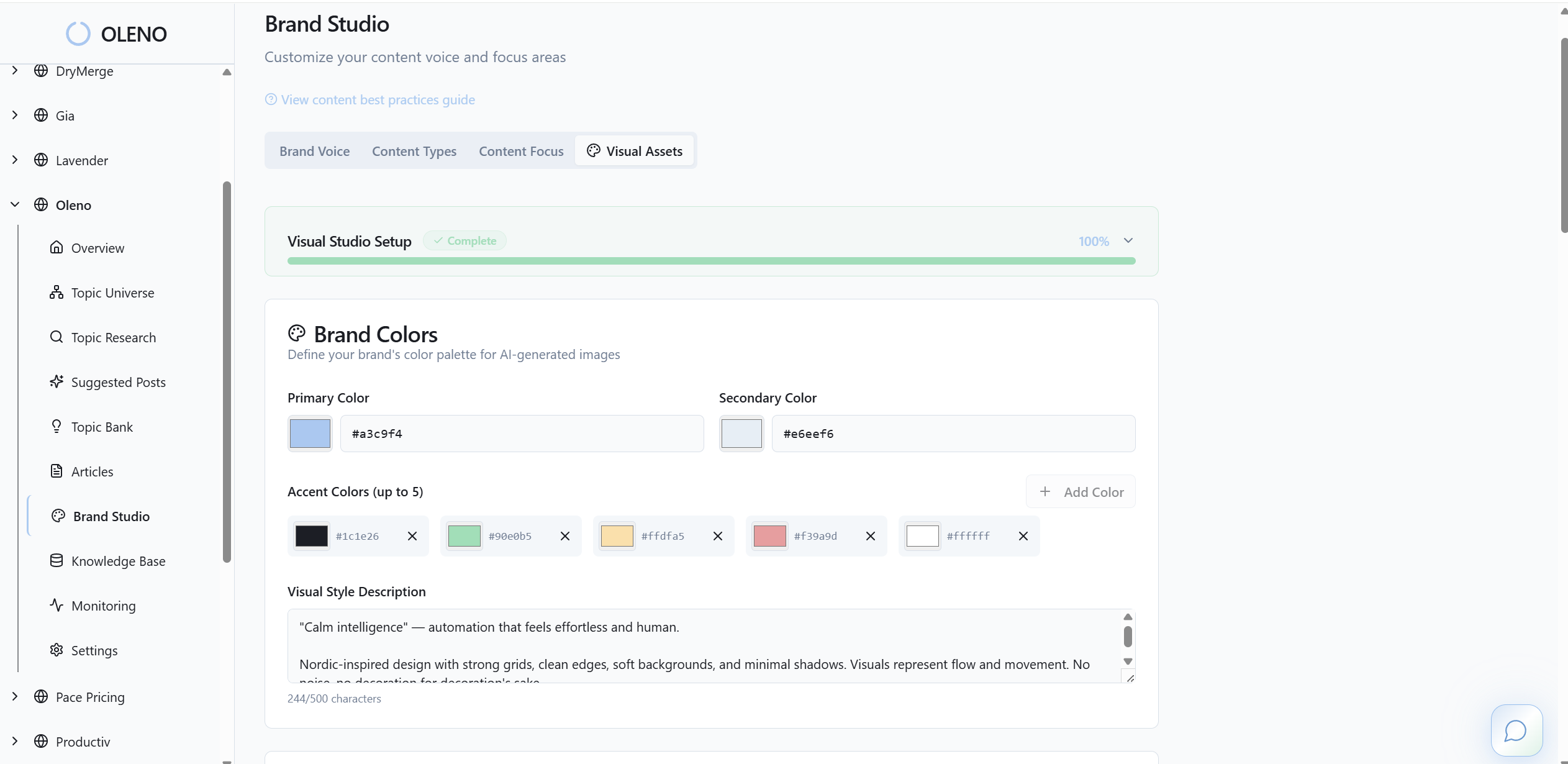
Your test results plug straight into those studios. The “avoid” phrases go into prohibited terms. The winning examples become few-shot prompts. The target ranges for “approachable” or “direct” translate into structural and language constraints. Now the machine helps you aim at the perception you want, consistently.
When the next asset kicks off, the Brief already reflects those rules. The Draft applies them. You do less policing and more improving. That is the shift.
QA Gate and Measurement Keep Drift In Check
Quality breaks when rules are optional. Oleno’s QA gate checks for voice alignment, clarity, structure, repetition, and grounding before anything can publish. If a draft slips into a tone buyers rated poorly, it gets flagged and revised. That reduces late-stage editing and protects trust.
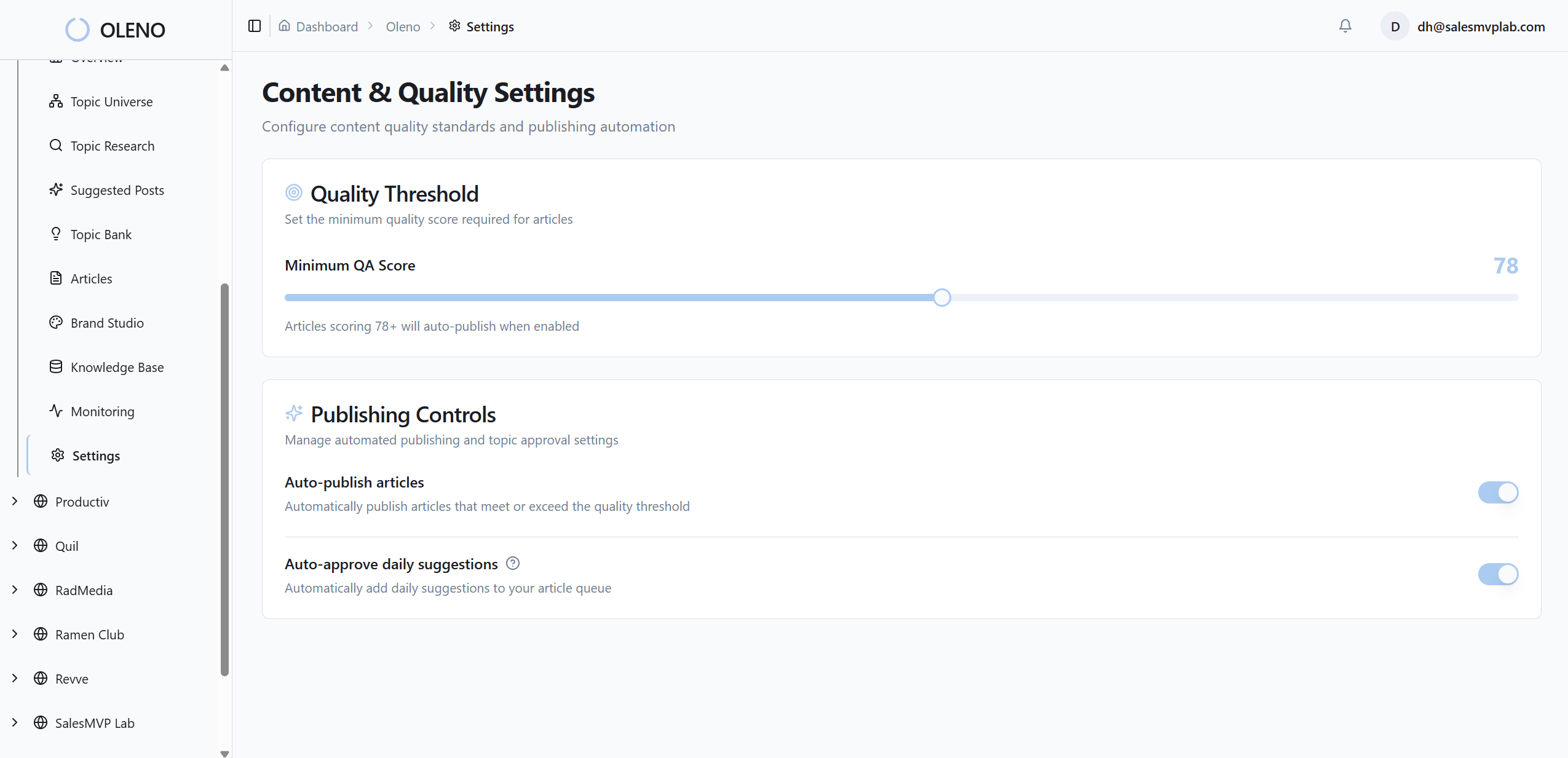
To keep the system honest over time, Measurement & System Health tracks cadence and quality trends. You can sample outputs weekly, re-run a small perception test, and update Brand Studio with fresh findings. Audience & Persona Targeting helps tailor voice by segment without spinning up a dozen conflicting styles. The Knowledge Archive keeps product truth tight so confident tones never spill into overclaiming.
Put together, that turns a one-time fix into an operating rhythm. Teams I work with aim to cut the perceived-versus-intended mismatch by roughly 50% in two months, then maintain that with weekly monitoring windows. Oleno is built to make that target realistic.
Key capabilities that make it work:
- Brand Studio: Encodes tone rules, preferred and prohibited terms, CTA style, and exemplars, so drafts read like you
- Marketing Studio: Injects your POV and message pillars, so style aligns with the story that moves buyers
- Quality Control (QA Gate): Blocks off-target outputs, reduces subjective editing, and enforces your perception-informed rules
- Audience & Persona Targeting: Adapts voice nuances by segment without creating chaos or contradictions
- Measurement & System Health: Surfaces drift early so you can course-correct before it costs you launches
Want a concrete plan to cut the mismatch by about half in two months and bake it into your pipeline? See how teams operationalize this with governance, QA, and monitoring in one place. Request a Demo
Conclusion
Internal QA keeps copy tidy. Voice perception testing makes it effective. The market decides what your words mean, and you can measure that. Translate fuzzy adjectives into traits, run three quick tests, then encode the results into rules you enforce at brief, draft, and QA.
Do that, and you will reduce the mismatch between intended and perceived voice by around 50% within two months as a working target. Then keep it tight with weekly sampling and a scorer watching for drift. If you want the guardrails and the engine in one place, Oleno ties governance, QA, and monitoring together so your voice stays on target while the work keeps shipping. Ready to turn testing into a habit, not a one-off project? Book a Demo
About Daniel Hebert
I'm the founder of Oleno, SalesMVP Lab, and yourLumira. Been working in B2B SaaS in both sales and marketing leadership for 13+ years. I specialize in building revenue engines from the ground up. Over the years, I've codified writing frameworks, which are now powering Oleno.
Frequently Asked Questions