Efficiency-Enhancing Habits in Content: The Real Fix for Teams That Keep Starting Over

Efficiency-Enhancing Habits in Content: The Real Fix for Teams That Keep Starting Over
Most founders think the answer is more discipline. Usually it’s not. It’s efficiency-enhancing habits in content that cut out resets, context loss, and those random publishing sprints that never turn into a real system. That’s the issue. Not motivation. Not effort. Not whether your team cares. Content gets messy fast, and once it does, everything starts taking longer than it should.
I’ve seen this from a few angles. When I was running content-heavy programs, output didn’t break because people got lazy. It broke because the system got messy. One person had the context. Another had the time. Nobody had both for very long. So if you’re a founder or CEO trying to delegate demand gen without losing the plot, this is usually the real bottleneck.
Key Takeaways:
- Efficiency-enhancing habits in content matter more than heroic effort
- Most slowdowns come from resets, handoffs, and missing context
- Good content habits start with one source of truth for voice, audience, and product facts
- Strong teams separate planning, creation, review, and publishing
- The best efficiency-enhancing habits in content reduce rework before they chase more output
- In the GEO era, consistency across lots of assets matters more than a few isolated wins
Why Content Habits Break the Second the Founder Steps Back
Most teams don’t have bad intentions. They have fragile operating habits. And once the founder gets pulled into hiring, sales, product, or board stuff, the cracks show up fast. That’s why efficiency-enhancing habits in content matter so much: they keep the work moving when one person can’t hold the whole system together anymore.

The founder habit usually isn’t a company habit
Early on, you can brute force a lot.
You know the product cold. You know the customer language. You know which objections matter and which ones are noise. So you can sit down and write something solid pretty quickly.
Then the company grows. Now you’ve got executive meetings. Team management. Sales calls. Product tradeoffs. Maybe fundraising. Maybe just too many things stacked into the same week. And the habit that used to work starts failing because it was never really transferable. It was living in your head.
I’ve seen this over and over. One person can keep the story tight for a while. But once that person gets stretched thin, output slows down and quality drifts. Not because the team is weak. Because the knowledge never got turned into a repeatable system.
Resets cost more than people think
A lot of teams assume the issue is writing speed. Usually it isn’t. The bigger cost is the reset.
You stop publishing for a few weeks. Then somebody says, alright, let’s get content moving again. And now you’re back in topic selection mode, briefing mode, angle debate mode, approval mode. Again.
That loop is expensive. HubSpot has shown marketers still spend huge amounts of time across planning, creation, and distribution, which tells you the work isn’t just writing, it’s all the coordination wrapped around writing (HubSpot State of Marketing). Asana’s research shows the same pattern from another angle: work about work eats a ridiculous amount of time inside teams (Asana Anatomy of Work Index).
For a growth-stage SaaS team, that waste hurts. You don’t have extra capacity sitting around. One slow month turns into a quarter with no compounding effect.
More tools won’t save scattered execution
This is where a lot of founders go shopping.
An AI writer. An SEO tool. A freelancer. Maybe a project board. Maybe all of it.
Fair enough. These can help. But tools on their own rarely create efficiency-enhancing habits in content because they don’t remove the friction between steps. One tool finds keywords. Another creates drafts. Another person edits. Someone else publishes. And you’re still the one checking whether the piece is accurate, on-message, and worth attaching your company name to.
So yes, output exists. But the system is still fragile.
That’s the hidden problem. The bottleneck usually isn’t effort. It’s fragmented execution. And when consistency matters across search, AI retrieval, product education, and category narrative, fragmented execution gets exposed fast.
The Real Lever Is Removing Rework, Not Writing Faster
If you want efficiency-enhancing habits in content that actually hold up, start here. The win is not typing faster. It’s avoiding wrong turns. Most teams don’t have a drafting problem. They have a rework problem, and rework quietly eats the capacity they think they’re missing.
Rework is what actually kills capacity
Founders usually notice the visible symptoms first. Drafts take forever. Reviews drag. Posts miss the mark. But underneath that, each asset is being rebuilt from scratch.
The writer doesn’t fully know the angle. The editor fixes tone. The founder fixes positioning. Someone else corrects product details. Then the piece finally gets approved, but by then it has burned way more time than anyone expected.
That’s why content can feel weirdly expensive even when nobody is doing it full-time.
A lot of teams blame the wrong thing. They blame writers. They blame AI. They blame bandwidth. Sometimes those are factors. Sure. But the deeper issue is usually that nobody encoded what “good” looks like before drafting started.
Fast-looking workflows create fake efficiency
Prompting feels fast. You type something in, words come out, and it feels like progress.
Sometimes it is.
But for ongoing demand gen, it often creates fake efficiency. All the judgment still sits with humans. Someone still has to define the audience. Someone still has to shape the point of view. Someone still has to catch generic phrasing or invented product claims. Someone still has to decide what gets published next.
So the machine creates text, but the team still carries the operating burden.
That’s why some AI-heavy teams feel busy but not relieved. Output increased. Confidence didn’t. If you’re the founder, you feel that immediately. You’re still the last filter. You’re still cleaning up work that should have been right earlier.
Better habits come from encoded judgment
The old habit looks like this: write when you have time, prompt when you’re blocked, edit when something sounds off, publish when someone remembers.
It feels scrappy. Sometimes it even feels productive. But it doesn’t compound.
The better habit is encoded judgment. Decide your voice once. Define product truth once. Spell out who you’re talking to and what they care about. Get clear on the use cases. Get clear on the objections. Then let content creation happen inside those guardrails.
That’s where efficiency-enhancing habits in content actually come from.
Not from speed.
From fewer preventable mistakes.
Discover how leading teams turn scattered content work into a governed system.
The Content Habits That Actually Make a Small Team Efficient
This is the practical part. Efficiency-enhancing habits in content are really operating habits. They shape how work gets defined, handed off, checked, and repeated. And if you’re a founder trying to delegate without losing control, this is where things start to click.
Habit 1: Start with a fixed point of view
Your team should not be inventing the argument every time they sit down to write.
They should already know what you believe, what category story you’re pushing, what you reject, and what matters most to buyers. Sounds obvious. It’s not common.
A lot of early teams are still running on vibes. They know the company story loosely. They know a few customer pains. They know some phrases that feel right. But loose understanding creates wide draft variation. And wide variation creates long review cycles.
What works is writing down the actual market stance in plain English. What problem do you believe buyers really have? What are they getting wrong? Why do other approaches fall short? What’s the angle your team should keep coming back to?
Once that exists, the work tightens up fast.
Habit 2: Define the audience before the topic
A lot of teams do this backward. They pick a topic first, then try to make it relevant later.
That’s a miss.
The same keyword lands very differently depending on whether you’re speaking to a founder, a VP Marketing, or a content manager. For a founder or CEO, the question usually isn’t “how do I write better blog posts?” It’s “how do I build a system I can trust without personally touching every draft?”
That changes everything. The examples. The framing. The stakes. Even the CTA.
So before assigning a piece, define:
- What role are they in?
- What pressure are they under?
- What decision are they trying to make?
- What language do they actually use?
- What would make them dismiss this as fluff?
That one move removes a surprising amount of wasted motion.
Habit 3: Turn product truth into a checklist
If product facts live across Slack threads, founder memory, and half-updated docs, you are basically inviting bad drafts.
And bad drafts are expensive. Not always because they’re unusable. More because they create trust issues. Once your team sees a few muddy explanations or invented claims, they start reviewing everything harder. That slows the whole machine.
A better habit is simple: keep approved product descriptions, feature boundaries, supported use cases, and current positioning in one place. Then review gets easier. You’re not re-debating what’s true every single time.
Habit 4: Separate creation from approval
One of the messiest content habits is blending drafting and executive review into the same stage.
A half-baked draft comes in. The founder edits live. New ideas get layered on. Positioning gets reshaped. Then the writer goes back and tries to interpret all of it. That loop is brutal.
A cleaner setup is boring, which is exactly why it works. Drafting happens first. Review happens second, against clear criteria: voice, accuracy, audience fit, and narrative clarity. If something misses, it gets fixed against those standards, not against whatever mood the reviewer happens to be in that day.
Habit 5: Build in clusters, not one-off pieces
One article rarely does much by itself. A cluster does.
I saw this years ago running larger content libraries. You’d hit 500 pages, then 1000, then 2500, and traffic would jump in ways that didn’t make sense if you only looked at one post at a time. Most pages weren’t huge winners on their own. Together, they created depth and breadth.
That’s why one of the strongest efficiency-enhancing habits in content is planning around clusters:
- a core problem
- a specific audience
- a repeated point of view
- related supporting articles
- downstream distribution angles
Once you do that, every new piece gets easier to brief, easier to review, and easier to repurpose.
Habit 6: Review the system weekly, not emotionally
A founder’s natural instinct is to react to individual pieces. Totally understandable. One draft feels weak and now you want to jump in.
But if you only review content at the asset level, you miss the system pattern.
A weekly operating review is better. Look at cadence. Look at where work keeps stalling. Look at which errors repeat. Look at where messaging drift starts showing up. Then fix the system behind the work.
That shift gets you out of micromanagement mode and into operator mode.
What Efficient Content Operations Look Like When They Finally Click
When efficiency-enhancing habits in content are working, the team stops relying on urgency to ship. The workflow has shape. The rules are clear. The rhythm holds. And the work keeps moving even when the founder isn’t hovering over every draft.
The workflow gets boring in the best way
When content starts working, it actually feels less dramatic.
Less scrambling. Fewer last-minute rewrites. Fewer Slack threads asking what angle to take. A topic gets picked, the audience is already clear, the argument is already framed, product facts are already grounded, and review becomes mostly verification.
That kind of boring is valuable. It means the process is carrying the load instead of people improvising every week.
Some founders worry this kind of structure will flatten the voice. I get it. But usually the opposite happens. When the basics are stable, the real personality comes through more clearly because the team isn’t wasting energy solving the same foundational problems over and over.
Consistency starts compounding across channels
This matters even more now. You’re not just writing for one article click. You’re building a repeated signal across your site, product-led pages, comparisons, supporting blogs, and distribution channels.
Google’s guidance on helpful, people-first content keeps pointing back to the same thing: expertise, clarity, and original value matter more than gaming structure alone (Google Search Central). And in AI-driven retrieval environments, consistency matters even more because systems don’t just evaluate one page in isolation. They look for repeated evidence that your brand knows what it’s talking about (Google AI Overview documentation).
So when your content habits improve, the upside is bigger than internal efficiency. Your market signal gets stronger too.
Founders get leverage without losing control
This is the real question, right?
Can you step back without the work going generic, inaccurate, or off-message?
If the answer is no, you don’t have a real system yet.
When it finally clicks, you’re not reviewing from scratch anymore. You’re reviewing exceptions. Edge cases. New market shifts. That’s a very different job.
That’s leverage.
Not because you vanished from the process. Because your thinking got built into the process early enough that the team can execute with confidence.
How Oleno Turns Good Habits Into a Repeatable System
This is where the theory becomes operational. Oleno takes efficiency-enhancing habits in content and turns them into a system that holds onto context, enforces standards, and keeps work moving through planning, drafting, QA, and publishing. For growth-stage SaaS teams, that matters because the challenge usually isn’t knowing what good looks like. It’s keeping that standard intact while the company is busy.
Governance that keeps voice, positioning, and product truth from drifting
A lot of content breaks because every draft starts from a blank page. Oleno fixes that by grounding work in governance first.
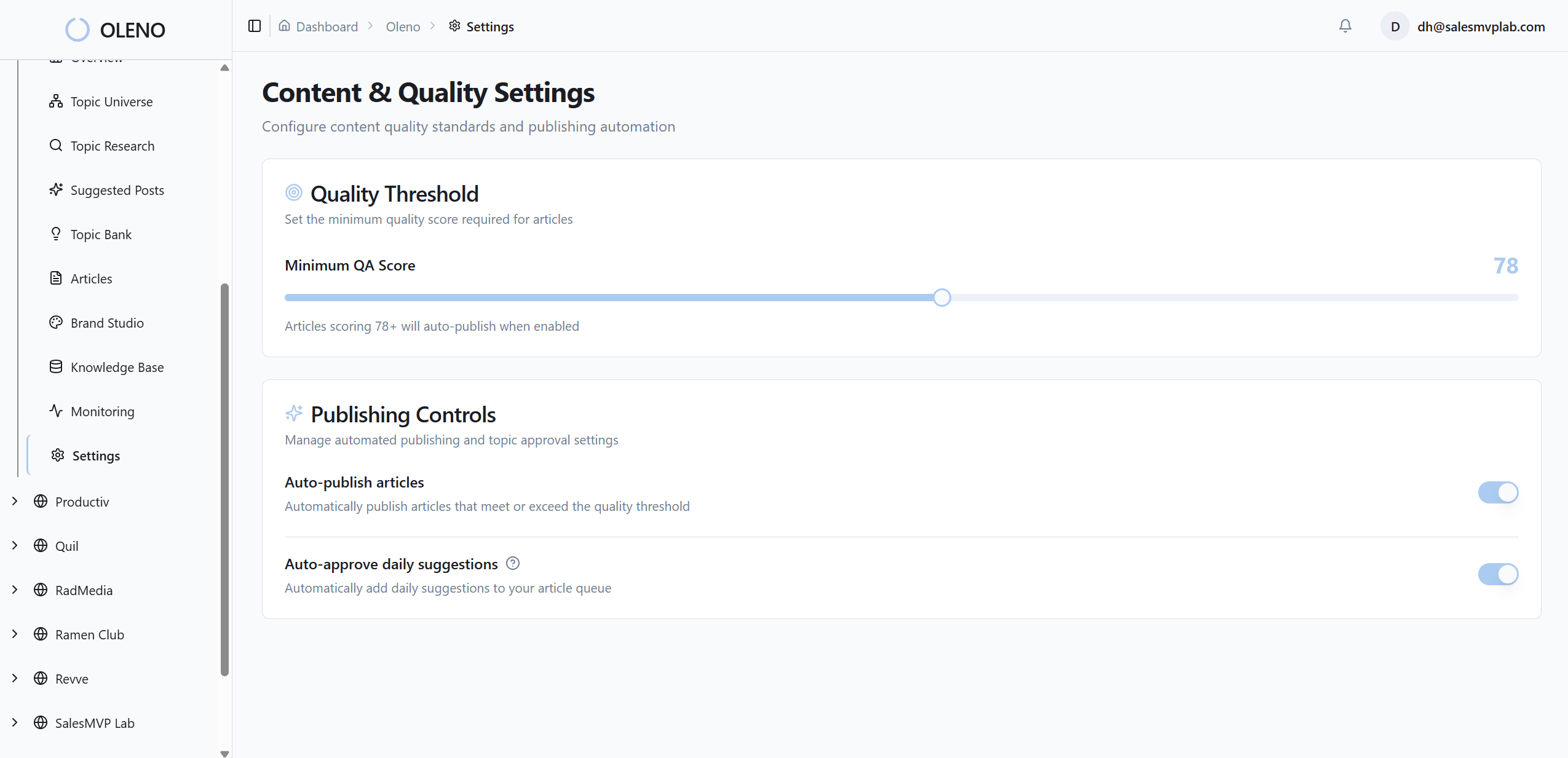
Brand Studio stores tone, style rules, and exemplar snippets so the system has a real writing reference. Marketing Studio captures key messages, category framing, and narrative structures so content argues a position instead of defaulting to generic education. Product Studio centralizes approved product descriptions, feature boundaries, and supported use cases, which reduces invented claims and endless PMM cleanup.
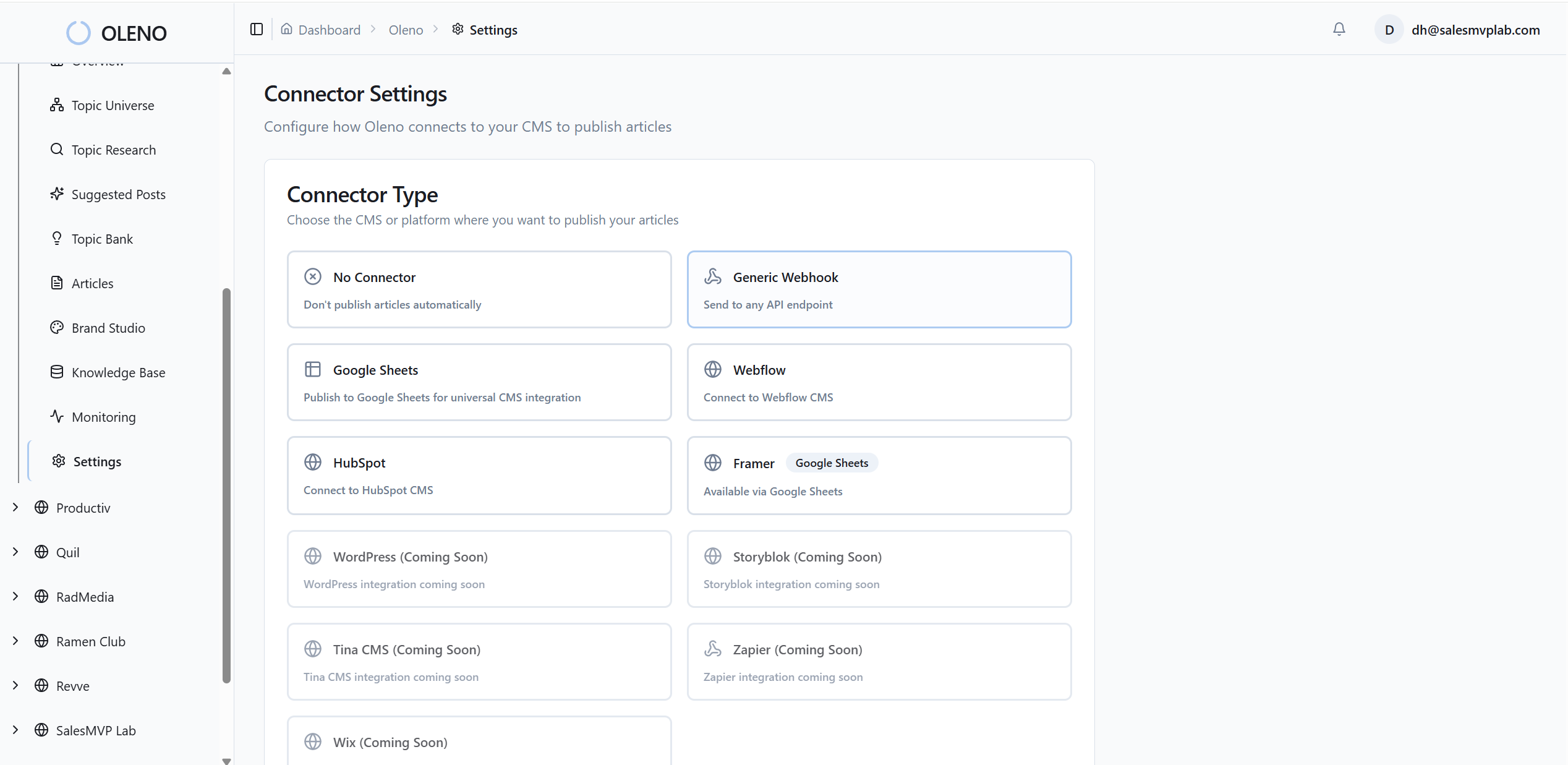
That stack cuts rework at the source. Instead of asking a founder to restate the same positioning in every review, Oleno carries that context into briefs and drafts automatically.
Structured execution that keeps content moving
Good habits still fail if nobody can sustain them. That’s where Oleno moves from guidance to execution.
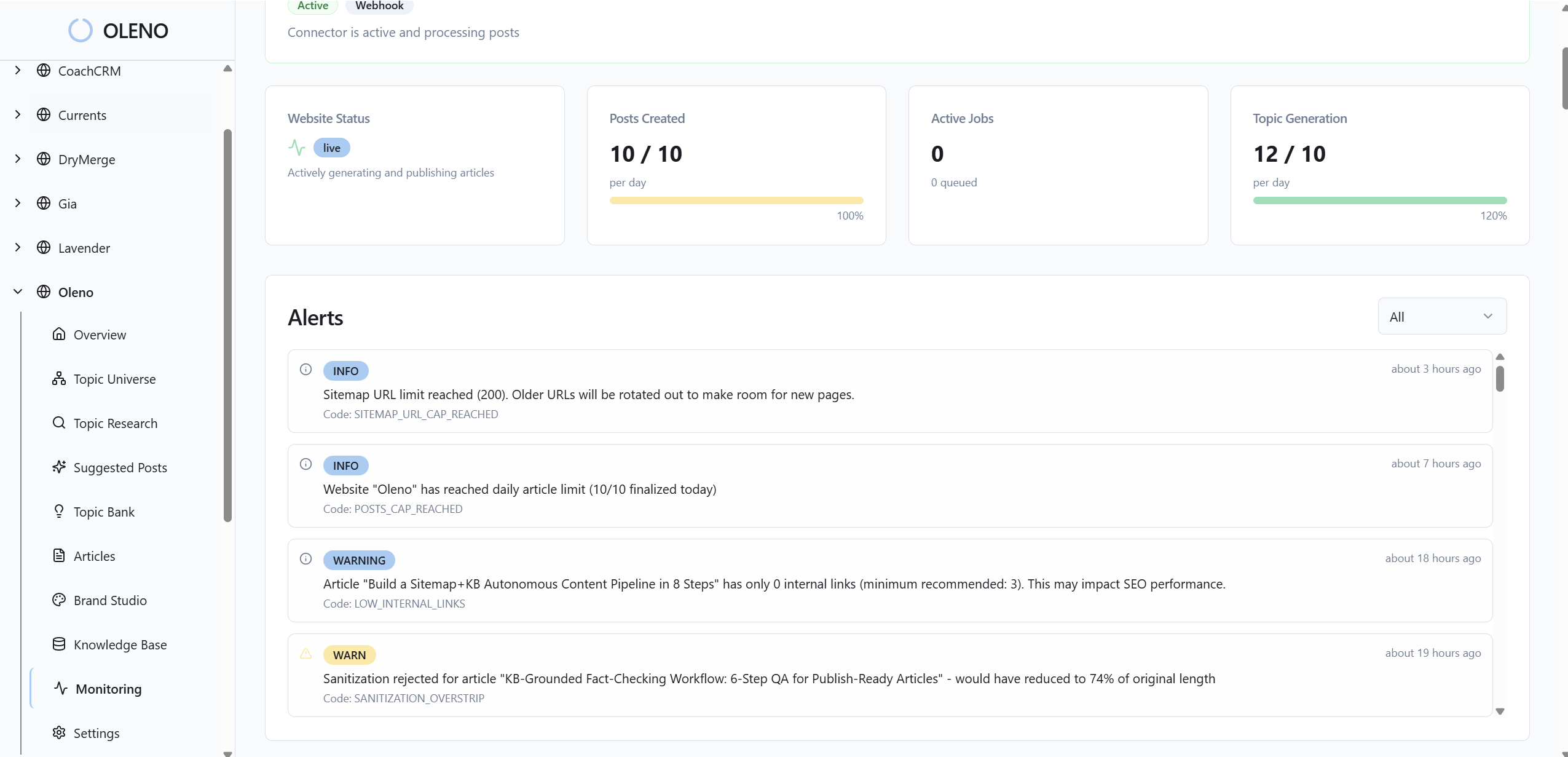
Programmatic SEO Studio handles acquisition content through a locked-outline pipeline that discovers, enriches, drafts, scores, and publishes on a steady cadence. The Orchestrator schedules approved topics by blueprint and quota, which keeps things moving without constant manual chasing. Quality Gate evaluates voice, structure, clarity, grounding, and SEO, then blocks weak articles or routes them through auto-revision before they hit review.
For founders, this means less dependence on personal intervention. Audience & Persona Targeting helps frame the same topic for the right reader. Stories Studio gives thought leadership content actual lived-in texture using documented founder stories and customer anecdotes, not generic filler. And the Executive Dashboard gives leadership a read-only view of cadence, quality trends, and coverage gaps.
Start building a more reliable content workflow with Oleno.
Why Efficiency-Enhancing Habits in Content Only Matter if They Survive Real Life
This is the real test. Not whether the process sounds smart in a strategy doc. Not whether one person can heroically keep it alive for a month. The question is whether efficiency-enhancing habits in content survive real life: busy founders, shifting priorities, missed weeks, handoffs, and all the other normal stuff that shows up inside a growing company.
Most content advice falls apart right there.
If you’re serious about building efficiency-enhancing habits in content, focus less on writing hacks and more on system habits. Fix the point of view. Fix the audience definition. Fix product truth. Fix the handoffs. Then let repetition do its job.
That’s how small teams get a lot more confident. And a lot less chaotic.
Ready to transform your content process into a repeatable engine? Get started with a demo.
Conclusion
The teams that publish consistently are not always the most disciplined. Usually they just have better operating habits. They’ve turned judgment into process, reduced rework, and made content easier to repeat without losing quality. That’s the point. Real efficiency-enhancing habits in content don’t depend on heroics. They survive the week when everything else gets busy.
About Daniel Hebert
I'm the founder of Oleno, SalesMVP Lab, and yourLumira. Been working in B2B SaaS in both sales and marketing leadership for 13+ years. I specialize in building revenue engines from the ground up. Over the years, I've codified writing frameworks, which are now powering Oleno.
Frequently Asked Questions