Why Narrative Drift Gets GEO Teams Ignored
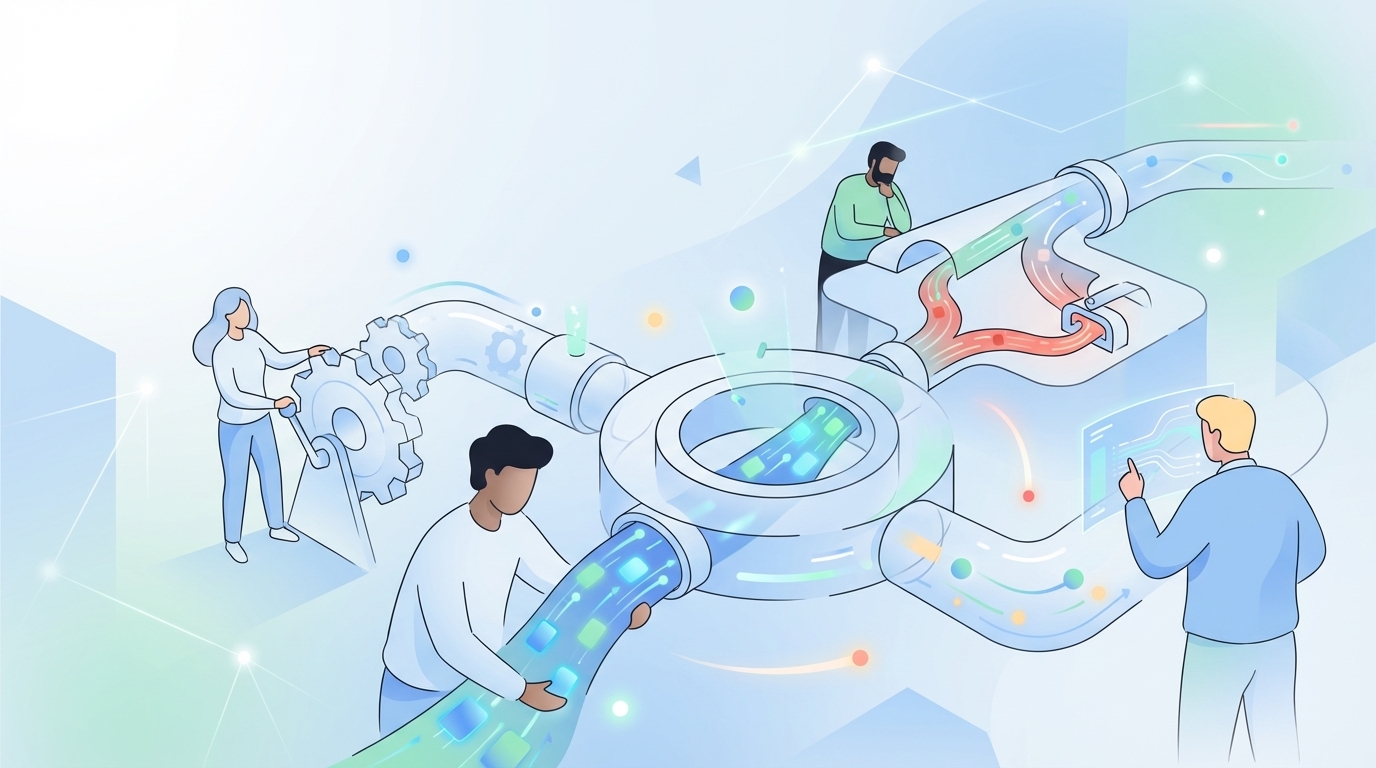
Narrative drift and why GEO punishes it comes down to one thing: inconsistency. Demand-generation execution software is a governed marketing system that turns strategy into consistent, repeated, multi-channel execution by unifying narrative, product truth, audience context, and publishing workflows in one operational layer. Unlike content tools or AI writers, demand-generation execution software is built to keep the whole system aligned over time, not just produce another draft.
Most teams don’t have a writing problem. They have a Fragmented Demand Generation problem. Content lives in one place, product truth lives somewhere else, audience context is half in someone’s head and half in a doc, and every new asset gets rebuilt from scratch. That might have been survivable when you were mostly writing for Google. GEO changes that. LLMs piece together patterns across what you publish, and if the pattern keeps shifting, you become hard to trust and easy to ignore.
That’s really the heart of narrative drift and why it matters now. Not because marketers suddenly forgot how to write. Because the system underneath the writing is leaking context everywhere.
Key Takeaways:
- Narrative drift is the gradual change in message, positioning, and product framing across assets over time.
- GEO punishes drift because LLMs look for repeated, coherent signals across many sources.
- Fragmented Demand Generation makes inconsistency feel normal, even when the team is working hard.
- More output doesn’t solve drift if every piece starts from different context.
- The real fix is operational consistency, not better prompts or more review cycles.
Why Narrative Drift Is Really A Demand Gen Problem
Narrative drift usually doesn’t start with some giant strategic mistake. It starts with normal work. Busy work. Real work. A launch happens, somebody updates a deck, a freelancer pulls from an older page, sales starts saying it a little differently, and suddenly the company story has three versions floating around. Nobody planned it. It still happened.

Narrative drift starts small. One article frames the product one way. A landing page frames it another way. Social posts simplify it too much. Sales decks pull in older language. Then six months later, your market story is kind of recognizable, but also fuzzy. Close, but not tight.
That’s why narrative drift and why it matters has become such a big issue in GEO. LLMs don’t just look at one strong page and call it a day. They synthesize. They compare. They look for repeated truth. So if your company sounds slightly different every time it speaks, you create a weak signal.
Narrative Drift Starts When Every Asset Pulls From Different Context
This is where the mess usually begins. Not with incompetence. With fragmentation. Different people are working from different inputs, and each asset ends up carrying a slightly different version of the story. That’s how narrative drift and why it sneaks up on teams becomes clearer the minute you line the assets up side by side.
Most teams don’t mean to create drift. It happens because every asset gets built from different inputs. One writer uses an old brief. Someone in product marketing adds new language in a launch deck. A freelancer leans on the website. The founder says it differently on LinkedIn. SEO wants one angle. Sales wants another.
Individually, none of this seems like a big mistake. Collectively, it becomes one. The message changes asset by asset, and because the changes are gradual, nobody notices until the whole thing feels diluted.
I’ve seen this firsthand. At PostBeyond, I could write 3-4 high quality blog posts a week because I had all the context in my head and a structure for how to write. As the team grew, output got harder, not easier. The writer didn’t have the same depth of product and market context I had. I had less time. More people got involved. Quality dipped and speed dipped with it. Sound familiar?
GEO Punishes Inconsistency Because LLMs Synthesize Patterns
This is the big shift. GEO is not evaluating one isolated page the way old-school SEO often felt. It’s looking for a body of work that hangs together. A pattern. A repeatable signal. That’s why narrative drift and why GEO punishes it is really a systems issue, not just an editorial issue.
GEO is a different game. SEO could sometimes forgive inconsistency if you had a strong page, strong backlinks, and the right keyword targeting. GEO is harsher in a different way. It rewards brands that say the same useful thing from multiple angles across lots of content.
That’s because LLMs are trying to figure out who really owns an idea. Not legally. Perceptually. Who sounds clear. Who sounds specific. Who keeps repeating the same market truth without wobbling. If your content says one thing, your comparison pages suggest another, and your founder content goes in a third direction, the model has less reason to surface you.
You might still have decent content. That’s the frustrating part. But decent and coherent aren’t the same thing.
More Content Does Not Help When The Signal Keeps Changing
A lot of teams try to outrun the problem with volume. Totally understandable. Traffic is flat, GEO visibility feels weak, pipeline attribution is messy, so the instinct is: publish more. But if the message keeps moving, all you’re doing is scaling confusion.
A lot of teams respond to weak GEO performance by producing more. More blogs. More prompts. More freelancers. More edits. More calendars. More activity.
That can actually make the problem worse.
Back in 2012-2016 I ran a website called Steamfeed. At our peak, we hit 120k unique visitors a month. We had 80 regular contributors and over 300 guest contributors. We saw traffic spikes at 500 pages, 1000 pages, 2500 pages, 5000 pages, then 10000 pages. Most pages got under 100 views a month. But breadth plus depth plus consistent quality compounded. Volume worked because it reinforced a broader signal.
Volume without consistency doesn’t compound like that. It just creates noise. So if you’re wondering about narrative drift and why more publishing hasn’t fixed it, that’s usually the answer. The issue isn’t lack of output. The issue is a changing signal.
Why Fragmented Demand Generation Feels Normal
This part matters because fragmented demand gen rarely looks broken from the outside. It looks like a pretty standard marketing setup. A few tools. A few people. A few docs. Some prompts. Maybe an agency. Maybe a contractor. Everybody’s busy. Stuff is shipping. Which is exactly why the problem can sit there for months.
Fragmentation is sneaky because it looks like a normal marketing stack. You have a doc for messaging. A CMS for publishing. Some prompts. A writer. Maybe an agency. Maybe a PMM. Maybe SEO support. On paper, that all sounds fine.
In practice, every piece requires manual reconciliation. And that’s where the hidden cost sits.
Prompting Makes Output Faster But The Story Weaker
I’m pro-AI. I use prompting all the time. But there’s a catch. Prompt-led production is usually optimized for generating a draft, not preserving a narrative system. So the words show up faster while the strategic burden quietly shifts back to the marketer.
Prompting is useful. I’m not against it. I use it. Most teams do. But prompt-led work has a structural problem. Each output is treated like a standalone event.
That’s fine for one task. It’s weak for a system.
Last summer I built a B2C app and wanted traffic, so I leaned into SEO and GEO. I built a bunch of GPTs, kept prompting the same stuff over and over, then copy-pasting everything into my CMS manually. It was taking me 3-4 hours a day. Total waste. It felt productive because text was coming out. But I was still carrying the whole system in my head.
That’s the trap. Prompting speeds up drafts while quietly pushing consistency work back onto you.
Rewrites Are Usually A Sign The System Is Broken
Teams love to call this “editing.” Half the time it’s not editing. It’s strategic reconstruction. You’re not polishing a draft. You’re fixing missing context, correcting product truth, tightening claims, and trying to reinsert the company’s actual point of view after the fact.
Most teams explain rewrites as a quality control issue. Sometimes that’s true. A lot of the time, rewrites are what happen when there’s no shared source of truth.
The draft is off, so someone corrects it. The next draft is better, but still off in a different way. Then another reviewer adds nuance. Then someone from sales says the language doesn’t match calls. Then product steps in because the claim is too broad. You aren’t really editing writing at that point. You’re rebuilding strategy inside the review process.
That gets expensive fast. Especially for a Head of Marketing wearing all the hats.
Teams Don’t Lose The Message All At Once
This is why drift is annoying. It’s rarely dramatic enough to trigger a big intervention. It just chips away at clarity over time. A softer headline here. A broader claim there. A use case that gets overstated because it sounds good. And then eventually the whole thing feels kind of... off.
Drift rarely shows up as one obvious failure. It’s slower than that. One campaign uses a softer angle. One use case gets overemphasized. One writer starts using language that sounds smart but doesn’t match how customers talk. One landing page keeps old positioning because nobody had time to update it, especially when evaluating narrative drift and why.
Then one day, you read five assets side by side and realize they don’t quite line up.
That’s why Fragmented Demand Generation is such a useful frame. Narrative drift is not just off-brand wording or random editorial variation. It’s the predictable result of a patchwork system where people, prompts, briefs, and reviews keep recreating the company story from scratch. And that problem got bigger right when GEO started rewarding coherence.
Why Repeated Signal Wins In GEO
This is the reframe. GEO is making consistency visible again. Not flashy consistency. Strategic consistency. Clear positioning. Stable product truth. Useful repetition. The brands that win are the ones that keep teaching the same true thing, from enough angles, long enough for the pattern to become undeniable.
GEO is pushing marketing back to fundamentals. Positioning clarity. Product definitions. audience specificity. A repeated point of view. Not because these ideas are trendy, but because LLMs need stable patterns to trust.
A brand that says the same thing clearly across a hundred assets has an advantage over a brand that says ten slightly different things across two hundred.
LLM Visibility Goes To Brands That Repeat The Same Truth
This is where a lot of marketers still think page-first. One keyword. One article. One ranking opportunity. But LLM visibility works more like reputation accumulation. It’s less about a single page win and more about whether your overall content footprint keeps reinforcing the same market truth.
The old way of thinking about content was page-by-page. Rank this keyword. Publish that article. Fix that title tag. There’s still some value there. But LLMs don’t consume your content in that isolated way.
They look across the body of work.
That’s why repeated strategic signal matters so much. If your company keeps teaching the same market truth from different angles, your authority gets easier to recognize. If every asset resets the framing, the pattern gets blurry.
Worth noting, this doesn’t mean every piece should sound identical. Some teams hear “consistency” and assume robotic repetition. That’s not it. You can have variation in examples, angles, stories, and format. But the core truth has to hold.
Coordination Cost Grows Faster Than Output
This is the hidden tax nobody budgets for. The more assets you produce, the more context has to travel. And when context is traveling through people, comments, Slack threads, prompts, and docs, it degrades. Fast.
Growth-stage SaaS teams feel this hard. You’re under-resourced. You want more output. But every new contributor adds a context gap. Every handoff adds a delay. Every review adds another chance for the strategy to get bent slightly out of shape.
Let’s pretend you publish eight pieces a month. Each one needs one hour of re-briefing, 45 minutes of review correction, and 30 minutes of factual cleanup. That’s 18 hours a month gone before you even count publishing and distribution. Double the output and the tax often grows faster than the content count, because complexity stacks.
That’s why some teams feel busier but not more effective. Coordination cost starts exceeding creation cost.
Pipeline Impact Gets Weird When Positioning Keeps Shifting
This is where the pain becomes real. Not in theory. In revenue. You can get traffic and still not get movement if the content isn’t aligned tightly enough to product truth and demand-gen narrative. I’ve seen that movie before.
I saw a version of this at Proposify. We had strong writers. Lots of personality. Great design. We ranked well for plenty of topics. But a lot of the content sat too far from the product and the demand-gen narrative. We got traffic, but tying it back to pipeline was much harder than it should’ve been.
That problem shows up in smaller teams too. You publish useful content, but the message doesn’t carry enough product truth or category framing to move people forward. So some assets get attention but don’t convert. Others convert a bit but don’t build authority. Others just sit there.
| Dimension | Old Way | Category Way |
|---|---|---|
| Narrative control | Lives across prompts, docs, people, and review comments | Lives in governed, reusable system rules |
| Content creation | Each asset is rebuilt from scratch | Each asset inherits shared strategy and context |
| GEO signal | Inconsistent and hard for LLMs to trust | Repeated and coherent across scale |
| Team workload | High coordination, resets, and rework | Lower coordination through systemized execution |
| Positioning | Dilutes as output expands | Strengthens as output compounds |
| Pipeline impact | Unpredictable from asset to asset | More consistent because message stays aligned |
The table looks simple. Living it isn’t.
Why Narrative Drift Feels Like You’re Working Harder For Less for Narrative drift and why
If you’re leading marketing, this issue feels extremely practical. It shows up as repeat work. Same feedback. Same corrections. Same nagging sense that everybody’s producing, but the message still isn’t getting sharper. That’s the exhausting part. Narrative drift and why it burns teams out are tightly connected.
If you’re a Head of Marketing or solo marketer, narrative drift usually doesn’t feel academic. It feels like re-explaining the business every week. You open a draft and restate the same positioning. You fix the same product framing. You tighten the same audience angle. Then next week you do it again. And again. After a while, the real headache isn’t just the extra work. It’s the sinking feeling that output is going up while confidence in the message is going down.
What Replaces Fragmented Demand Generation
So what’s the replacement? Not more heroics. Not better prompting alone. Not an even longer review chain. The replacement is a governed operating model where strategy is built into execution from the start. That’s the shift. That’s also the only durable fix I’ve seen for narrative drift and why it keeps resurfacing in growing teams.
The fix for narrative drift and why it keeps coming back isn’t stricter editing. It isn’t more prompts either. It’s operational consistency. You need a way for strategy to show up in execution automatically, not only when the right person is awake, available, and reviewing.
Demand-generation execution software emerged as GEO made fragmented, prompt-led, manually coordinated marketing unsustainable.
For growth-stage SaaS teams, this matters because you usually don’t have spare bandwidth. You can’t afford a content process that resets every quarter or depends on one person carrying the company story alone.
- Governed Narrative: The market story, product truth, audience context, and voice rules live in one source of truth that every asset inherits.
- Coordinated Content Execution: Content creation, SEO-focused article production, and social distribution work from the same governed system instead of disconnected tools and handoffs, especially when evaluating narrative drift and why.
- Compounding Signal: Each new asset reinforces the same positioning so visibility and authority strengthen over time instead of resetting.
Discover how leading teams keep narrative consistency without adding more review chaos
Consistency Starts With One Source Of Truth
This is the foundation. If your positioning, product truth, audience context, and voice are scattered across decks, call notes, old briefs, random docs, and one smart person’s brain, drift is inevitable. The system has no memory. So every draft becomes a negotiation.
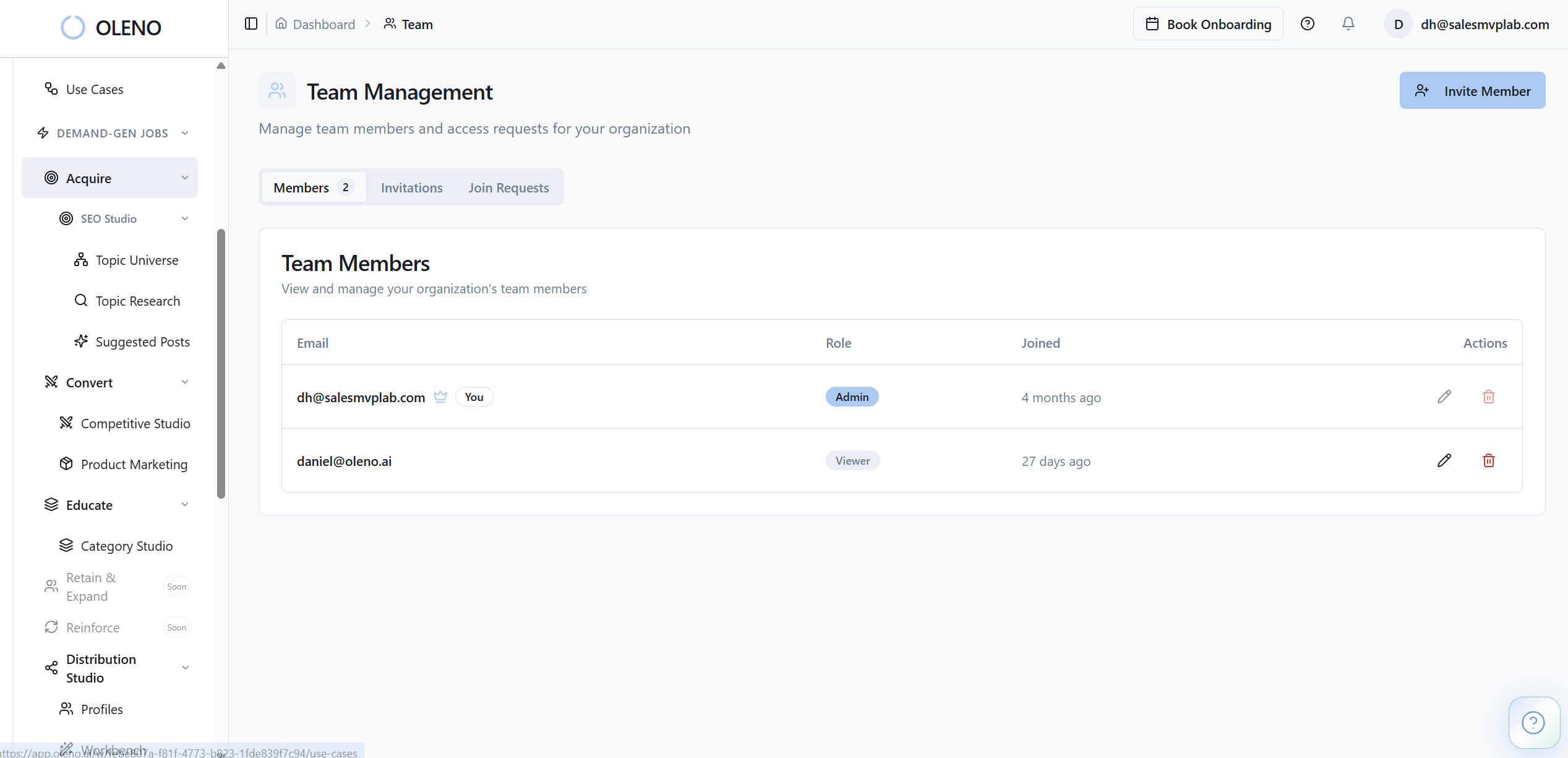
First, stop letting core strategy live in scattered places. If your positioning is in one deck, your product truth is in a PMM doc, your audience notes are in call recordings, and your voice exists mostly in your head, drift is going to happen. Not maybe. Often.
You need one governed source for what you believe, what you sell, who you sell to, and how you talk about it. That doesn’t mean locking everything down so hard nobody can write. It means defining the non-negotiables once so the team stops renegotiating them in every draft.
That’s where Oleno becomes useful. Marketing Studio captures your category framing and key messages. Product Studio keeps approved claims, feature boundaries, and use cases grounded in reality. Audience and persona targeting makes sure the same topic is framed differently for the people you actually sell to. Brand Studio carries tone, vocabulary, and CTA rules through the process so content still sounds like your company.
If you’ve tried this before with a messy Notion page and it didn’t stick, fair point. A lot of teams have. The issue usually isn’t intent. It’s that the process still depends on people remembering to apply it manually.
Execution Should Inherit Strategy
This is the operational leap. A good system doesn’t just store strategy. It applies it. Automatically. The brief should inherit it. The draft should inherit it. The audience angle should inherit it. Otherwise you’re still rebuilding context from scratch every single time.
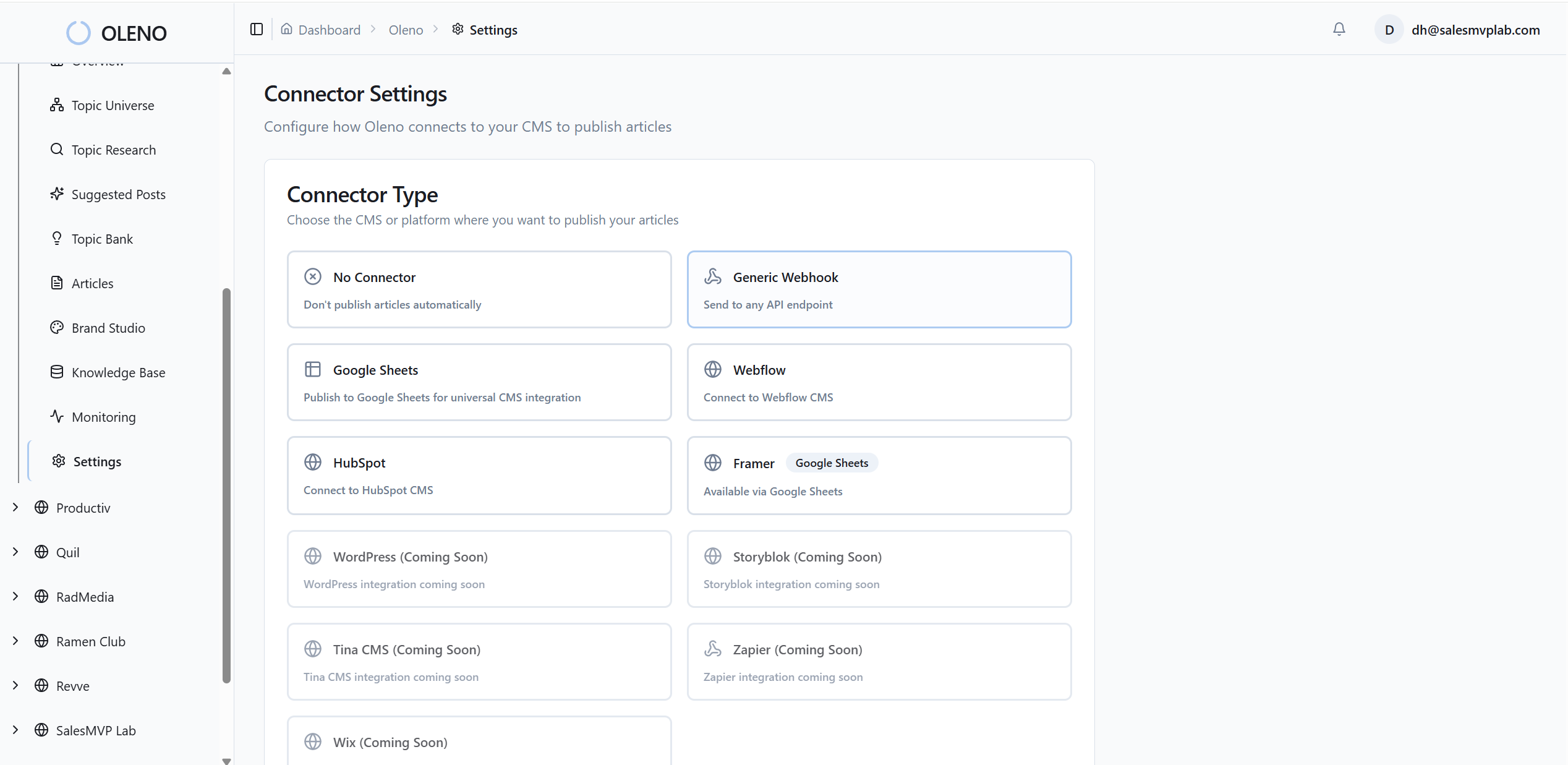
Second, every asset should inherit strategy instead of rebuilding it. That means the brief, draft, angle, audience framing, and factual boundaries all start from the same underlying source, rather than being recreated prompt by prompt.
This is where most systems break. They focus on writing faster. But writing faster is only useful if the faster output still sounds like the same company, teaches the same worldview, and stays inside approved product truth.
Oleno does this by injecting your positioning, product truth, audience context, and brand rules into briefs and drafts, then checking outputs with a Quality Gate before they move forward. If you’re producing SEO content, Programmatic SEO Studio keeps article production structured and consistent. If you want approved articles turned into social posts, distribution and social planning reuses that content in platform-specific formats instead of forcing your team to start over somewhere else.
You might be thinking this sounds restrictive. I get it. A lot of marketers worry structure kills creativity. In my experience, the opposite is usually true. When the foundation is handled, writers can spend more energy on insight, examples, and sharp framing instead of guessing what the company actually means this week.
Start building governed content workflows that actually preserve your positioning
Compounding Happens When Content Reinforces Positioning
This is where the payoff shows up. When each asset reinforces the same strategic signal, content starts to compound. Not in the fluffy “content machine” way people talk about on LinkedIn. In the real way. The market hears the same truth enough times, from enough angles, that trust builds.
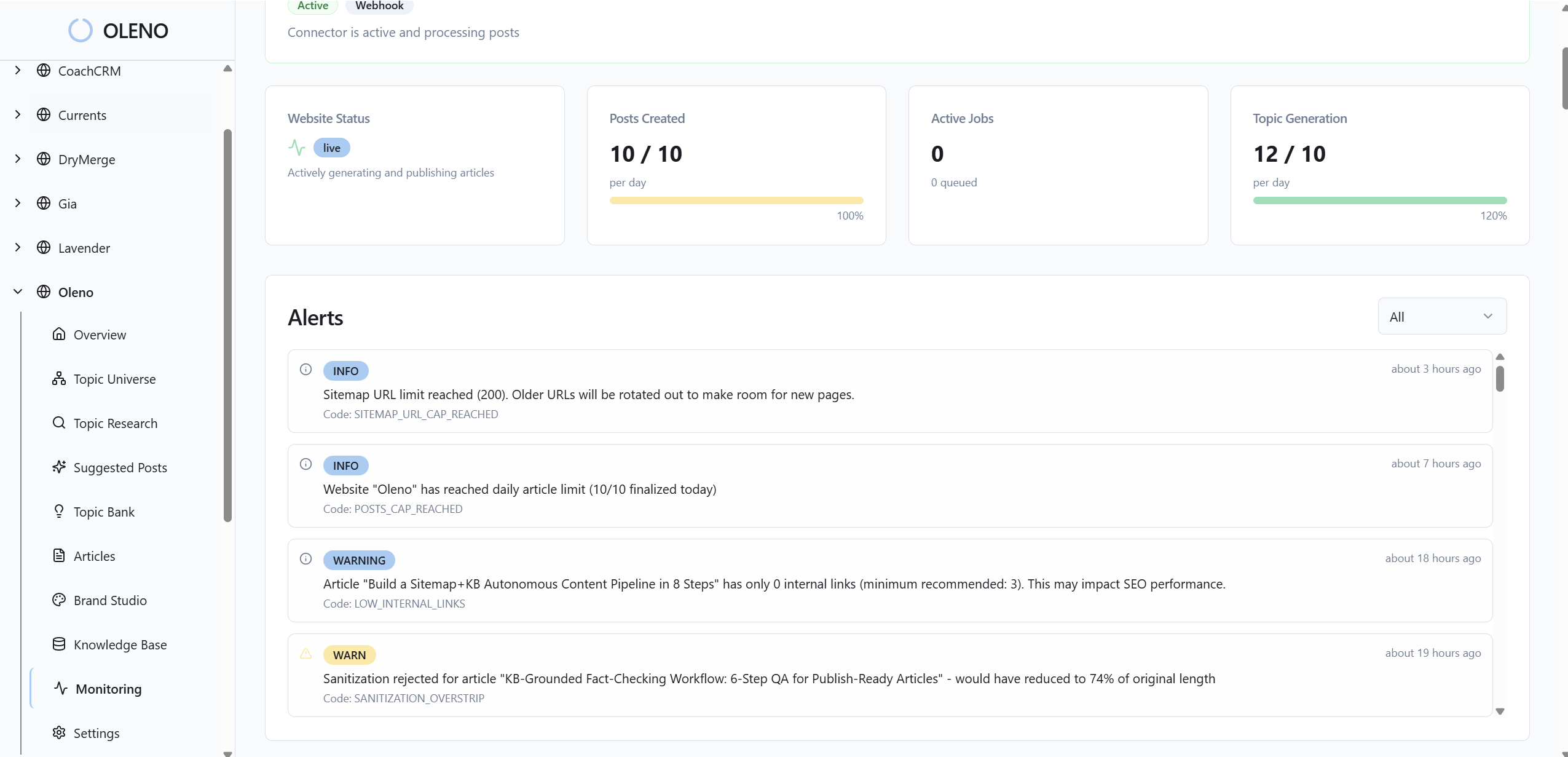
Third, stop treating every asset like a fresh start. The best content systems reinforce. They don’t just publish. One article sharpens a market point. Another expands it for a different audience. Another ties it to a product use case. Another supports evaluation. Over time, the market starts hearing the same truth from enough angles that it sticks.
That’s what compounding looks like in content. Not just more pages. Stronger signal.
Back at Steamfeed, scale worked because we had both volume and depth. At LevelJump, we were producing founder-led content by recording the CEO and transcribing videos, which was faster, but the SEO structure and topic discovery weren’t there. So the ideas were solid, but search intent was weak. Same lesson. Raw output isn’t enough. Structure and repeated signal matter.
What This Looks Like When The System Is Actually Built
Once you see the pattern, the category makes sense. This isn’t about another content tool. It’s about replacing fragmented demand gen with a governed execution layer. Strategy stops living in meetings and starts living in the workflow. That’s the difference.
Demand-generation execution software is for teams that need strategy to survive contact with scale. Not just in theory. In the weekly grind.
Oleno is built around that idea. Instead of asking marketers to restate their positioning, product truth, audience context, and voice in every brief, it stores those inputs up front and uses them throughout the content process. marketing studio holds category framing and key messages. product studio holds approved product descriptions, boundaries, and support content. audience & persona targeting keeps the framing tied to who you’re actually selling to.
Oleno Turns Manual Alignment Into A Repeatable System
This is where teams usually exhale a bit. Because once alignment becomes reusable, the work changes. You stop re-briefing the business every week. You stop correcting the same issues in every draft. You stop relying on memory as a process.
stories studio gives leadership and founder content a place to live so thought leadership doesn’t lose the company’s real voice. programmatic seo studio creates acquisition content on a steady cadence with topic discovery and locked outlines. category studio handles long-form market education built around enemy framing. product marketing studio keeps feature and use case content grounded in product truth.
Different content types. Same underlying strategic signal.
That matters because most teams aren’t struggling with ideas. They’re struggling with carrying context across assets without losing speed. Oleno reduces that reset work by making strategy reusable.
Consistency Stops Being A Review Task
This is probably the biggest practical win. Consistency should not depend on whether someone senior has 40 spare minutes to clean up the draft before it ships. That’s not a system. That’s a bottleneck.
The second big shift is operational. orchestrator runs the flow from topic to brief to draft to QA to publishing cadence. quality gate checks whether the output meets standards before it moves forward. cms publishing pushes finished content directly into your CMS, which cuts out a bunch of manual copy-paste work that usually creates more delay and more mistakes.
So instead of consistency depending on whether you had time to catch everything in review, consistency gets built earlier in the process. Not perfectly. No system removes human judgment entirely, and it shouldn’t. But the amount of frustrating rework drops when the draft starts from the right truth.
Ready to turn narrative consistency into a repeatable system? Get started with a demo
The Teams That Win GEO Keep Saying The Same True Thing
This is the punchline. Narrative drift and why GEO punishes it isn’t complicated once you strip away the noise. LLMs reward repeated clarity. Fragmented Demand Generation produces repeated inconsistency. One compounds trust. The other compounds confusion.
Narrative drift and why GEO punishes it isn’t really a mystery. LLMs reward repeated clarity. Fragmented Demand Generation produces repeated inconsistency. That’s the whole problem.
If your team is working hard but the message keeps slipping, don’t assume you need more content. You might need a different operating model. And if you want to see how a governed system handles narrative, product truth, audience context, and publishing in one place, book a demo.
About Daniel Hebert
I'm the founder of Oleno, SalesMVP Lab, and yourLumira. Been working in B2B SaaS in both sales and marketing leadership for 13+ years. I specialize in building revenue engines from the ground up. Over the years, I've codified writing frameworks, which are now powering Oleno.
Frequently Asked Questions