What to Look for in a CMS-Centric Publishing Stack

If your team is comparing Oleno vs WordPress plugins, you're probably not choosing between two publishing tools. You're choosing between two operating models. One usually grows by layering plugins onto a CMS. The other starts with the content system first, then pushes approved work into publishing.
That sounds subtle. It isn't. This is where a lot of PMMs and content leaders lose months to frustrating rework, version confusion, and narrative drift across launch pages, blog posts, comparison pages, and buyer content.
I've seen this pattern before. Back when I was running high-volume content teams, the issue usually wasn't that people couldn't write. It was that context lived in too many places, and every extra handoff introduced more room for error. That's what makes this decision matter now. In 2026, when more discovery starts in LLMs and less of your content gets read in sequence, consistency isn't some nice-to-have editorial goal. It's part of how buyers decide whether you sound credible.
Key Takeaways:
- A plugin-heavy WordPress setup can work when your main problem is publishing pages, not managing cross-functional content production.
- A CMS-centric stack starts to break once 4 or more contributors need shared messaging, review logic, and reusable context across multiple content types.
- The most important evaluation criterion isn't feature count. It's where your source of truth lives before content gets published.
- If your team spends more than 30 minutes per asset chasing approvals or fixing message drift, the process cost is probably bigger than the software cost.
- Buyers should test publishing stacks with one real launch workflow, end to end, over 7 to 14 days.
If you already know your stack is getting messy and want to pressure-test what a more controlled system looks like, you can request a demo.
Why CMS-Centric Publishing Decisions Get Expensive Fast
Most buyers frame this as a tooling decision. It usually isn't. It's a coordination decision wearing a tooling costume.
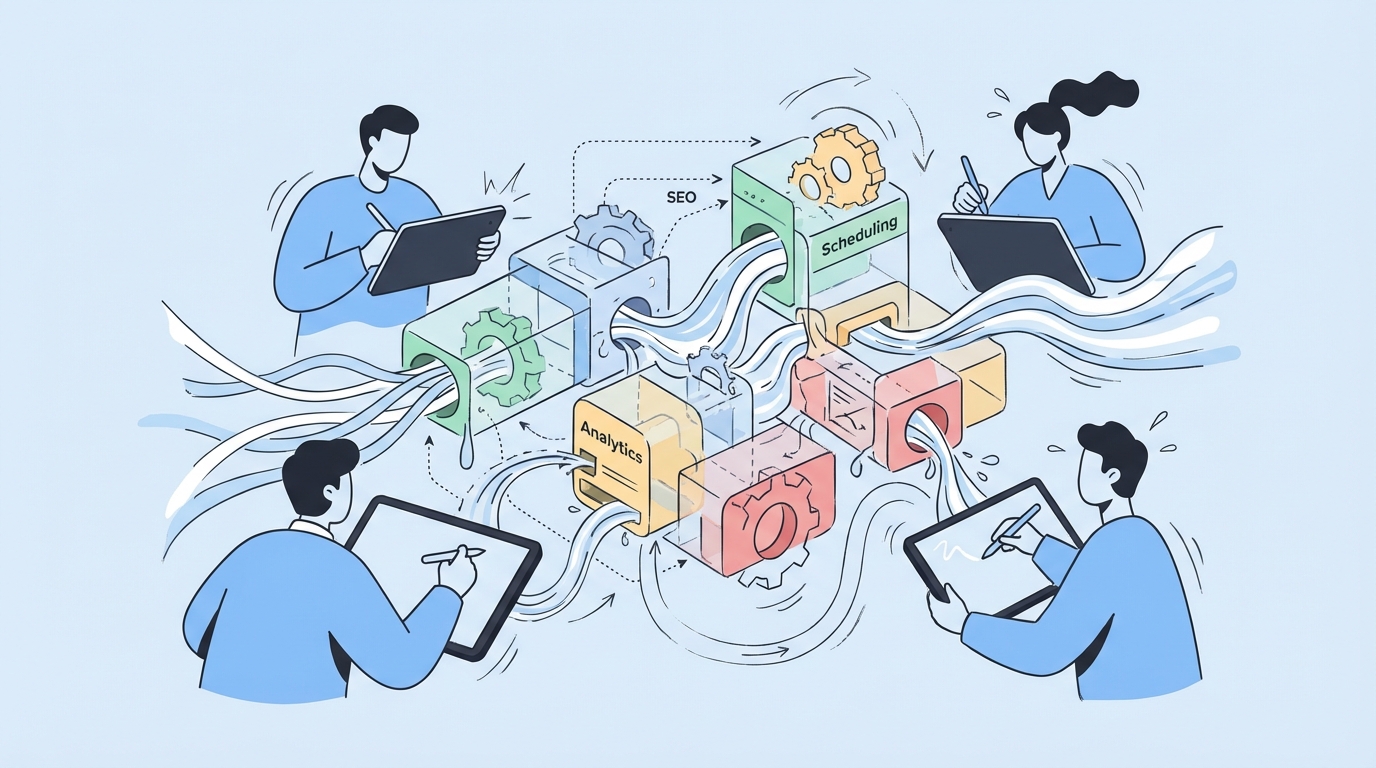
WordPress plugins are often bought one problem at a time. One for SEO. One for editorial workflow. One for redirects. One for schema. One for publishing approvals. That can feel sensible in the moment because each purchase looks cheap and contained. But your PMM team doesn't experience those purchases as isolated wins. They experience them as more surfaces to check, more rules to remember, and more places where product messaging can quietly go wrong.
Let's pretend you've got a senior PMM, a product marketer, a content lead, one freelancer, and a demand gen manager all touching a launch. The PMM updates feature language in one doc. The writer drafts from another. The editor checks SEO in WordPress. Legal feedback sits in comments. Then the final page gets published with old positioning because the CMS was the last place updated, not the first place aligned. That's not a plugin problem in the narrow sense. It's a source-of-truth problem.
There's a fair counterpoint here. A lot of teams like WordPress because it's flexible, familiar, and already paid for. That's valid. If your content motion is mostly blog publishing with a tight team, a plugin stack may be enough. But once your content process spans PMM, demand gen, SEO, and buyer enablement, flexibility can become expensive. You stop managing content. You start managing exceptions.
And that's the real cost. Not license fees. Rework tax.
What Actually Matters When You Compare These Approaches
The wrong buying criteria tend to be surface-level. People compare plugin catalogs, admin screens, and publishing convenience. Those matter a bit. They just don't tell you where the real risk sits.
The Source-Of-Truth Test Usually Predicts Future Headaches
The first thing I'd look at is simple: where does approved messaging live before content hits the CMS?
If the answer is "kind of everywhere," you've got a problem already. Product narrative in decks, launch notes in Notion, SEO direction in a brief, compliance notes in Slack, old positioning on the site. That's how drift starts. I call this the Pre-Publish Truth Test. If the final reviewer has to reconcile 3 or more systems manually, your process is too fragile for scale.
WordPress plugins generally improve the CMS layer. They don't necessarily solve upstream alignment. That's an important distinction. A plugin can make publishing smoother while leaving briefing, positioning, approval logic, and narrative control mostly untouched. If your team is worried about feature accuracy and launch consistency, upstream control matters more than one-click publishing convenience.
Review Compression Matters More Than Publishing Speed
A lot of buyers overweight how fast something can go live. I'd argue that's the wrong metric. Review compression is what matters.
If a system cuts publishing by 5 minutes but still forces 4 rounds of manual edits, you didn't really gain much. But if it reduces review loops from 4 rounds to 2 because the draft started from the right product context, audience framing, and messaging constraints, that's meaningful. The threshold I'd use is this: if the average content asset needs feedback from 3 or more stakeholders, optimize for review reduction first.
This catches teams off guard. They think the CMS is slow. Really, the process before the CMS is slow.
Shared Context Beats Feature Breadth Once Teams Grow
Feature breadth is seductive. Plugin marketplaces are full of options, and that can make a stack feel powerful. In practice, PMMs care more about whether the people creating content are working from the same context.
When I was at growing SaaS teams, that was always the dividing line. Not talent. Context. One person had the product nuance in their head. Everyone else was approximating it. That's why content quality often drops as the team gets bigger, even when you hire good people. The context doesn't scale with the headcount.
So ask a blunt question: can a new contributor generate accurate launch content from the system, or do they still need a 45-minute download from the PMM? If they still need the download every time, your stack hasn't solved the main problem.
Buyer Evaluation Should Include Failure Modes, Not Just Happy Paths
Most demos show the happy path. Real teams live in the messy path.
What happens when positioning changes mid-quarter? What happens when legal updates a claim? What happens when product marketing needs five assets updated across channels in two days? That's the stress test. I call it the Thursday Afternoon Rule. If your system depends on one hero operator to keep things aligned under deadline, it won't hold up for long.
This is also where buyers should be honest with themselves. Some teams don't need a heavier content operating layer. If you're publishing eight blog posts a month and not much else, keep it simple. But if launches, competitive pages, sales content, and thought leadership all need to stay tight, you need a stack built for message control, not just page publishing.
A useful next step here is to pressure-test that with your own workflow, not vendor slides. If you want to do that with Oleno in the mix, you can request a demo, especially when evaluating oleno vs wordpress plugins.
How To Evaluate A CMS-Centric Publishing Stack Without Getting Distracted
The cleanest way to evaluate this category is to run one live workflow through both approaches. Not a fake sample. A real launch, update cycle, or thought leadership piece your team actually needs.
A Two-Week Pilot Exposes More Than A Feature Tour
Give each option one real job to do over 7 to 14 days. Same brief. Same stakeholders. Same deadlines.
The pilot should include:
- One source input for product and audience context
- One draft creation flow
- At least two review rounds
- One final publish step into your CMS
- One revision after messaging changes
That last part matters. Anyone can look good on first draft day. The real signal shows up when the brief changes and the team needs to update fast without breaking consistency.
Score The Process Using The 5R Framework
I like a simple buyer model here: the 5R Framework. Review time, Rework, Reusability, Risk, and Readiness.
Use a table like this with your team:
| Criterion | What To Measure | Good Signal | Warning Sign |
|---|---|---|---|
| Review Time | Total stakeholder review time per asset | Under 60 minutes total | 2+ hours of fragmented feedback |
| Rework | Number of substantial revision cycles | 1-2 rounds | 3+ rounds from message drift |
| Reusability | Ability to reuse product and audience context | Shared context reused across assets | Context recreated in each brief |
| Risk | Likelihood of outdated or inaccurate claims | Centralized approval logic | Manual checking across tools |
| Readiness | Time for a new contributor to produce solid work | Productive in first session | Needs repeated PMM walkthroughs |
This is where buyers usually get clarity. Not because one side wins every category, but because the trade-offs become visible. A plugin stack may score fine on publishing flexibility and cost. A system-first approach may score better on control and consistency. Different teams will weight those differently.
Include One Red-Team Exercise Before You Decide
This one is worth doing. Have someone who wasn't involved in the setup try to produce a new asset using the approved materials.
Why? Because creator dependence is often hidden. A system can look organized when the person who built it is driving. Then it falls apart when someone else has to use it under time pressure. If the replacement operator can't find the right message, verify claims, and publish without heavy guidance, your system isn't really operationalized yet.
Honestly, this surprised us more than anything else in past team setups. The process often looked good from the inside. Then a fresh operator touched it and exposed all the hidden assumptions.
The Common Buying Mistakes That Create Rework Tax Later for Oleno vs wordpress plugins
Buyers usually don't make terrible decisions here. They make reasonable decisions using incomplete criteria. That's different.
Mistaking CMS Flexibility For Content System Maturity Backfires
WordPress is flexible. That's real. But flexibility at the CMS layer can hide immaturity upstream.
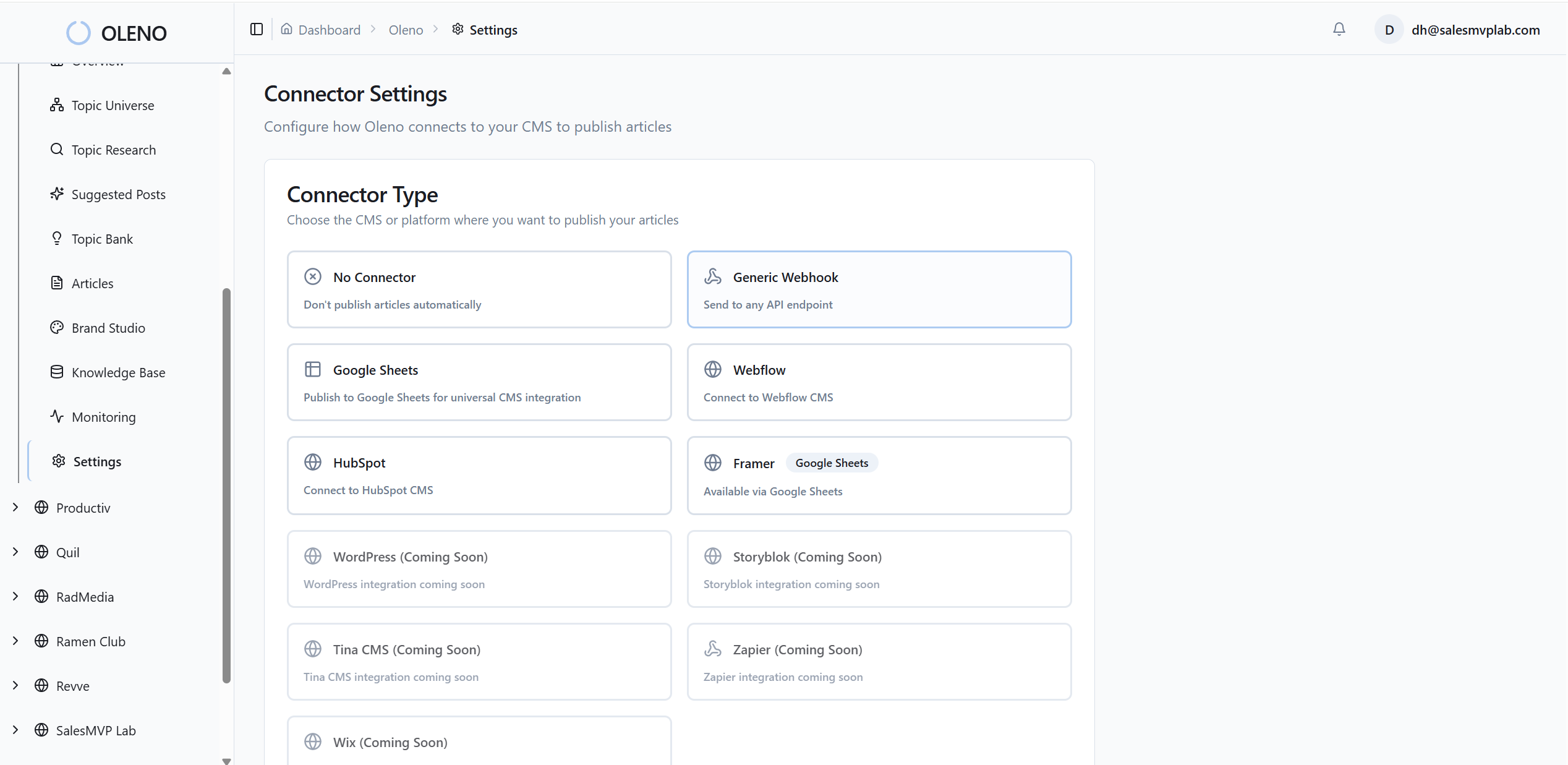
A lot of teams say, "we can just add another plugin." And sure, sometimes you can. The issue is that each add-on usually solves a narrow task, while the PMM still has to bridge product truth, market story, audience fit, and final page accuracy across the whole system. If you solve seven isolated tasks and still can't keep one launch narrative straight, the stack isn't mature enough for the work.
So a decent rule is this: if your buying logic starts with "we can patch that with another plugin," stop and ask whether you're fixing process fragmentation or just decorating it.
Underestimating The Cost Of Narrative Drift Gets Expensive
Narrative drift sounds abstract until it shows up in market-facing content. Then it gets very concrete.
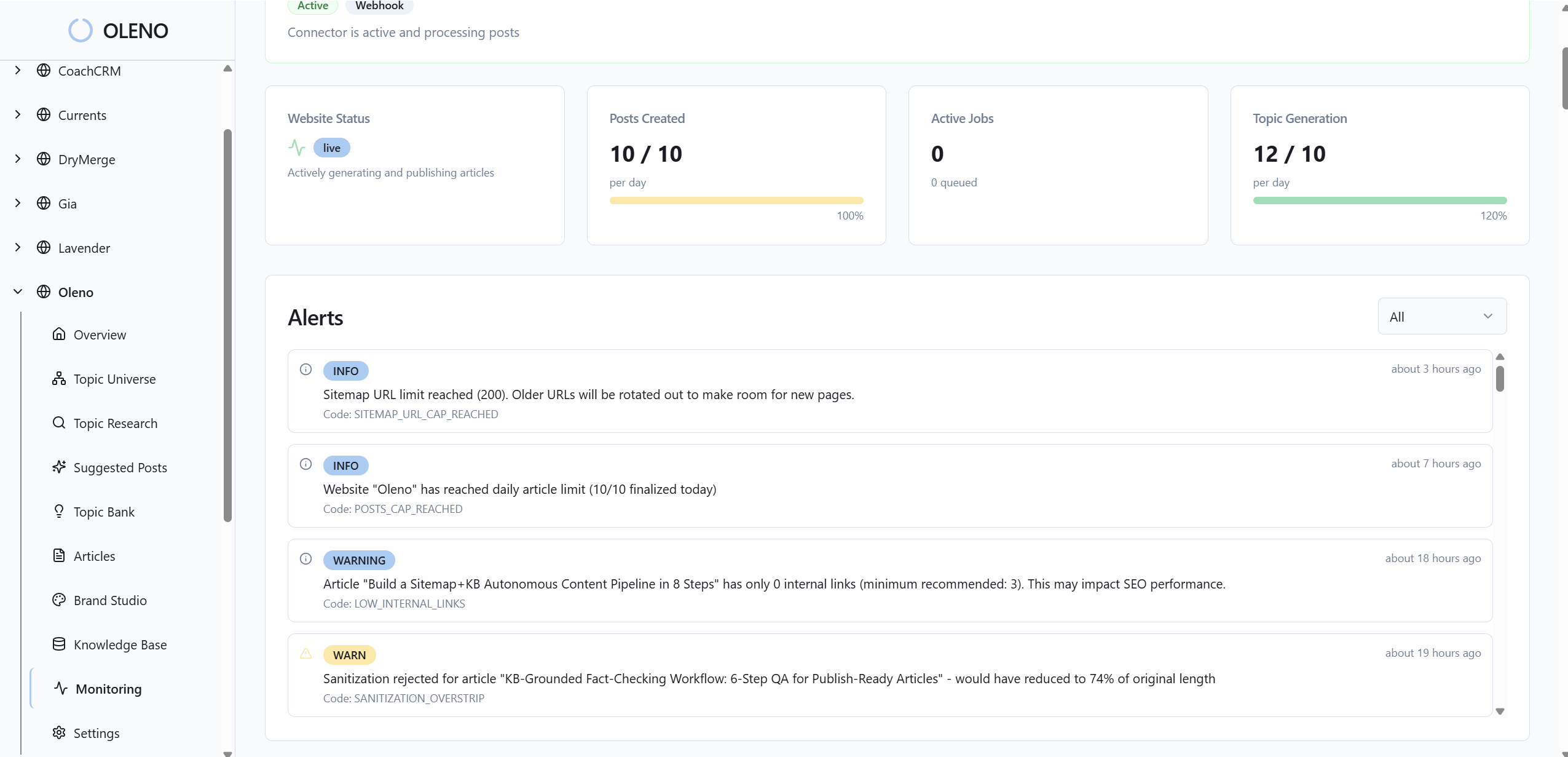
The homepage says one thing. The comparison page says another. Sales deck language trails two launches behind. Blog content ranks for terms that don't support the story your PMM team is actually trying to land. Buyers may not articulate that disconnect clearly, but they feel it. It makes your company sound less certain than it should, especially when evaluating oleno vs wordpress plugins.
Let's pretend your team ships 20 meaningful assets around one product launch and each asset needs just 45 extra minutes of correction because positioning isn't anchored properly. That's 15 hours of extra work right there. And that's before you count meetings, Slack threads, or opportunity cost. Once you see it that way, "cheap" tooling can become pretty expensive.
Buying For The Current Team Instead Of The Next Team Creates A Second Migration
This one happens all the time. A team buys for today's size, current workload, and current operator skill.
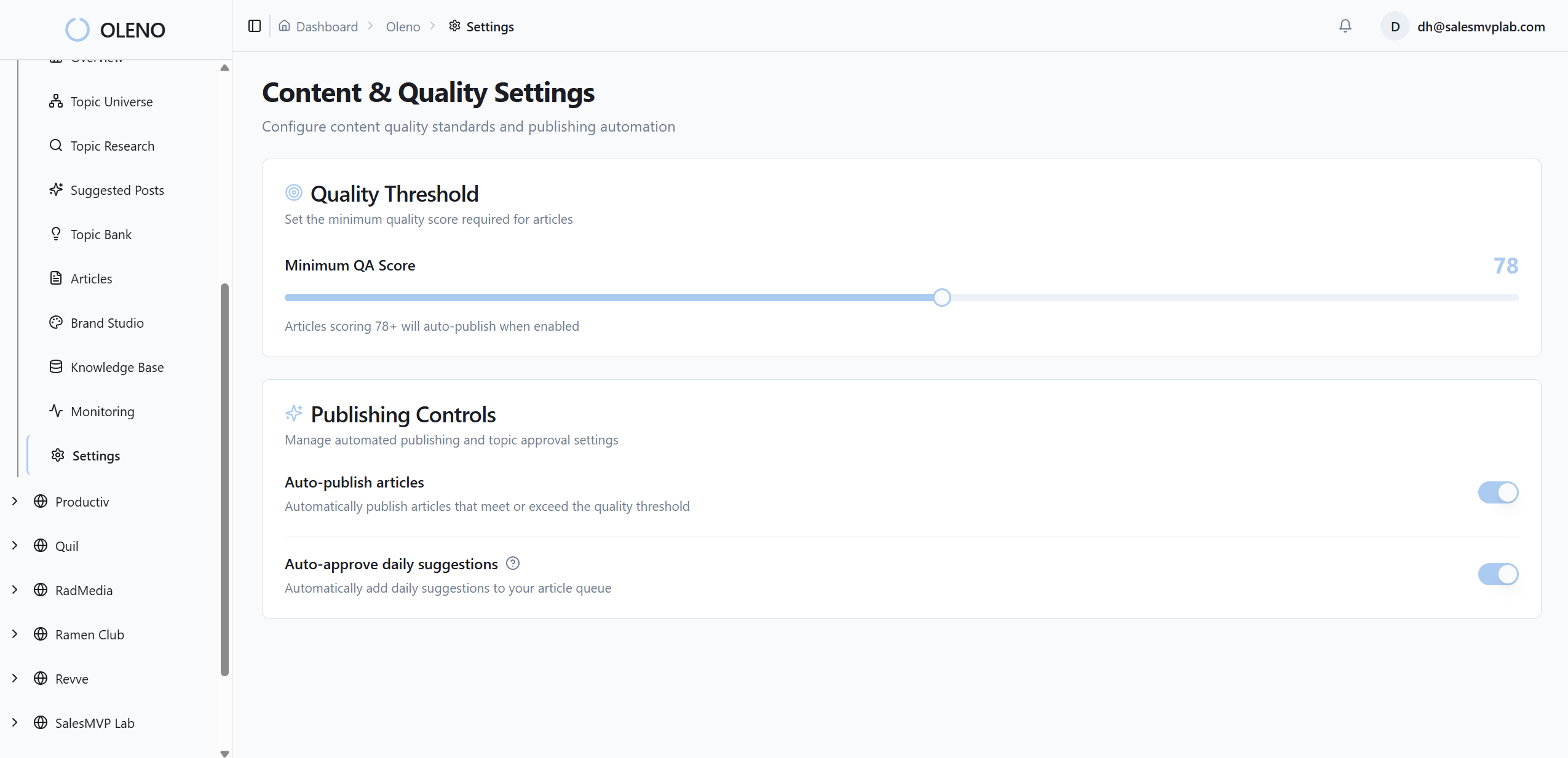
Fair enough. Budgets are real. But if you're a 150-person SaaS company with an expanding PMM and content motion, the relevant question isn't "can this work today?" It's "what breaks when we add two more contributors, double launch volume, and hand off more work?" That's the Scale Breakpoint Rule. If the process depends on tribal knowledge beyond 5 regular contributors, assume you'll hit a second migration later.
Nobody likes hearing that. Still true.
A Practical Framework For Deciding What Fits Your Team
By this point, most buyers don't need more features. They need a decision rule.
The Publishing-Layer Rule Helps Smaller Teams Decide Faster
Choose a plugin-heavy WordPress path if all or most of these are true:
- Your main issue is publishing mechanics, not upstream coordination
- Fewer than 4 regular contributors touch core content
- Product messaging changes infrequently
- PMM review stays light and centralized
- You can tolerate some manual checking without major business risk
That setup can be perfectly reasonable. Not glamorous. Reasonable.
The System-First Rule Fits Teams Feeling Coordination Drag
Choose a system-first approach if most of these are true:
- PMM, content, demand gen, and SEO all contribute to the same asset pool
- Launches create repeated accuracy and consistency problems
- Contributors regularly ask for old docs, message clarifications, or approval history
- Rework happens after drafts are "done"
- You need one place to generate, verify, and publish from the same operating context
That's usually the point where a CMS stops being enough on its own. The team hasn't outgrown publishing. It's outgrown disconnected preparation.
A Weighted Scorecard Keeps The Decision Honest
Use a weighted scorecard before procurement gets involved. Keep it simple.
| Decision Factor | Weight For PMM-Led Teams | Plugin-Heavy WordPress Stack | System-First Stack |
|---|---|---|---|
| Publishing Flexibility | 15% | Usually strong | Often strong enough |
| Messaging Control | 25% | Varies by setup | Usually stronger |
| Cross-Team Coordination | 20% | Often manual | Usually more structured |
| Review Efficiency | 15% | Depends on process discipline | Often better if context is centralized |
| Onboarding New Contributors | 10% | Can be uneven | Often faster with shared context |
| Change Management | 15% | More tool hopping | More controlled updates |
You don't need fake precision here. You need honest weighting. A PMM team should probably weight control and coordination higher than plugin variety. A solo content operator might do the opposite. That's a real trade-off, not a moral one.
How Oleno Fits When The CMS Is No Longer The Whole System
Oleno fits this decision when your team needs the content operating layer before the CMS, not just more things attached to the CMS.
The useful distinction is that Oleno is built around planning, shared context, production flow, and publishing support, instead of assuming the CMS should carry all that weight. For teams dealing with narrative drift, launch-content headaches, and too many cooks in the kitchen, that can change the evaluation. You're not replacing the idea of publishing. You're tightening the system that feeds publishing.
That matters most for PMMs and marketing leaders who need content to stay accurate across use cases, personas, product detail, and buyer stages. Oleno can support teams that need to generate content from consistent inputs, verify it against the strategy and product context they actually care about, and move work toward publishing without recreating the brief every time. That's a different model from stacking CMS plugins and hoping process discipline covers the gaps.
There's still a fair caveat. If your needs are lightweight, or your team mainly wants a better WordPress editing experience, Oleno may be more system than you need right now. But if your content process is already straining under rework and cross-functional complexity, that's the moment to test a different operating model. If you want to see that with your own workflow, you can book a demo.
About Daniel Hebert
I'm the founder of Oleno, SalesMVP Lab, and yourLumira. Been working in B2B SaaS in both sales and marketing leadership for 13+ years. I specialize in building revenue engines from the ground up. Over the years, I've codified writing frameworks, which are now powering Oleno.
Frequently Asked Questions