What to Look for in an SEO Agency or Programmatic SEO Platform

SEO agency or programmatic SEO platform is a real fork in the road for agencies. You can keep selling strategy, briefs, and outsourced production. Or you can start recommending systems that let clients publish at scale without turning every month into a deadline fire drill.
That choice matters more now because clients don't just want rankings. They want repeatable output, tighter brand control, cleaner handoffs, and some proof that the content engine won't break the second volume goes up. Pick wrong, and you create frustrating rework, margin pressure, and a client relationship built on excuses.
I've seen this pattern a lot. An agency gets a client good early wins with smart strategy and tight execution. Then the client wants more pages, more speed, more channels, more consistency. Same retainer. Same team. That's usually where the cracks show.
Key Takeaways:
- A traditional SEO agency works well when the client mainly needs strategy, research, and expert oversight rather than ongoing scaled production.
- A programmatic SEO platform makes more sense when the client needs to generate, optimize, publish, and measure large volumes of pages within weeks, not quarters.
- Most agency recommendations go wrong when they focus on deliverables instead of operating model, because the real question is who will own execution after month one.
- If a client expects 100 to 1,000 new pages in the next 90 days, workflow design and quality control matter as much as keyword targeting.
- Agencies usually protect margin better when they recommend the option that reduces manual account work, even if that means a smaller services scope up front.
Why This Choice Becomes Painful So Fast
The problem isn't whether agencies are good at SEO. Most are pretty good. The problem is that clients often buy one thing and need another six months later, once content volume, approval cycles, and publishing demands start piling up.

A lot of agencies still recommend based on what they sell most easily. That's understandable. But if your client needs 20 high-intent pages a quarter, an agency-led model can work fine. If they need 500 templated pages tied to product data, location data, integrations, use cases, or competitor terms, the same model starts to strain.
Back in my old content days, we saw traffic spikes at page count thresholds. 500 pages. 1000 pages. 2500 pages. Then bigger jumps later. That didn't happen because every page was a masterpiece. It happened because depth plus breadth created search surface area. Agencies understand this intellectually. Clients feel it operationally.
The Real Cost Usually Shows Up In Delivery, Not Strategy
Strategy rarely breaks first. Delivery does. The keyword map looks solid, the opportunity size looks exciting, and everyone nods along in the kickoff. Then the team has to actually generate pages, review them, fix quality issues, match brand voice, push into the CMS, and report on progress.
That's where cost starts leaking out.
Let's pretend a client wants 300 pages over 3 months. If each page takes even 45 minutes of coordination across strategist, writer, editor, account lead, and client reviewer, you're looking at 225 hours of work before you even argue about revisions. That math catches people off guard.
Clients Often Ask For Scale While Buying Craft
That mismatch is common. Clients say they want scale, but the buying process still rewards polished custom work. Agencies respond by staffing for craftsmanship, not throughput. Then everybody gets stuck in a weird middle ground where volume is promised, but the process was built for boutique execution.
You may have seen this already.
One client wants every page to feel hand-written. Another wants 1,000 city pages in 60 days. Those are not the same delivery model, and pretending they are is where the mistake starts. Want to pressure test that choice with a real use case? You can request a demo.
What Actually Matters When You Recommend One Path Or The Other
The decision should come down to operating fit. Not trend chasing. Not what sounds more advanced in a sales call. Operating fit.
A client choosing between an SEO agency or programmatic setup usually needs clarity on four things: how much content they need, how repeatable the page structure is, how strict brand requirements are, and who will run the machine after launch. Miss one of those, and the recommendation gets shaky fast.
Content Volume Changes The Economics First
Low volume gives you room for manual work. High volume punishes it. That's why this decision often comes down to page count and production rhythm before anything else.
A good agency can absolutely handle 10, 20, even 50 strategic pages a month if those pages require judgment, interviews, nuanced positioning, and custom structure. But if the client roadmap points toward hundreds of similar landing pages, manual production starts eating margin on both sides.
Three signals usually matter most here:
- The client has a large keyword universe with repeatable page patterns.
- The client wants to launch fast enough that manual drafting becomes a bottleneck.
- The client expects updates across many pages when products, offers, or positioning changes.
That last one gets missed a lot.
Repeatability Is Usually The Hidden Divider
Programmatic work lives or dies on repeatability. If the page pattern is stable, the category tends to fit. If every page needs fresh thinking from scratch, agency craft has more value.
This isn't about quality being lower. It's about the source of quality. In agency-led work, quality often comes from experienced humans making judgment calls page by page. In a programmatic model, quality has to come from the system, the inputs, the rules, and the review layer.
That's a different kind of discipline.
Brand Risk Matters More Than Agencies Admit
Some clients can tolerate variation. Others can't. If you're supporting a B2B SaaS company with nuanced positioning, multiple buyer personas, and a founder who notices every off-tone phrase, brand control becomes a serious evaluation factor.
Agencies usually solve that with training, review, and senior editorial oversight. That can work. But it gets expensive as account count rises. A platform approach starts to make more sense when the client needs isolated rules, distinct voice standards, and less dependence on a handful of people remembering the brief.
Ownership After Launch Decides Whether The Recommendation Sticks
This is a big one. Maybe the biggest.
If the client will rely on your agency long term for strategy, approvals, publishing, optimization, and reporting, then recommending agency services can be fully rational. If the client wants to build internal muscle and reduce outside coordination over time, a platform recommendation may fit better.
Agencies get in trouble when they ignore this. They sell a dependency model to a client who really wants an operating system.
How To Evaluate The Right Recommendation With A Client for Seo agency or programmatic
You can evaluate this cleanly if you force the conversation away from preference and into workflow. That's what buyers usually need anyway. Not more opinions. A better frame.
Start with what the client is actually trying to produce, then work backward into the right model. If you skip that and jump straight to vendor shortlists or service scopes, you'll miss the operational risk, especially when evaluating seo agency or programmatic.
Start With The Content Pattern, Not The Tool Category
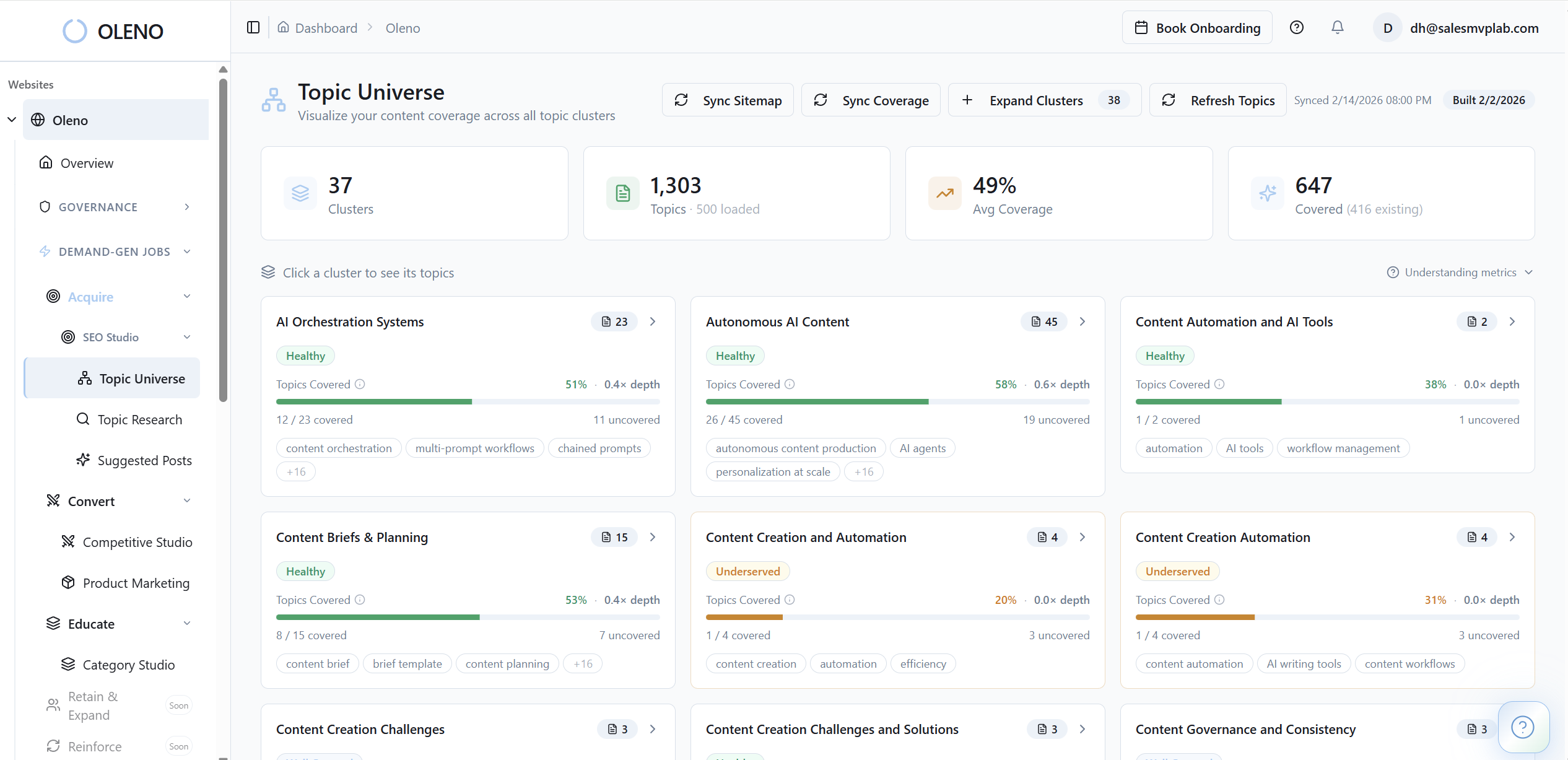
First, map the kinds of pages the client wants over the next 6 to 12 months. Are they pillar articles, comparison pages, integration pages, location pages, industry pages, use case pages, or all of the above?
Then ask four practical questions:
- How many net new pages are planned in the next 90 days?
- How much of each page follows a repeatable structure?
- How often will those pages need updates?
- Who owns approvals, publishing, and QA after the first batch?
If the answers point toward high volume and repeatable structure, a platform should at least be on the table. If the answers point toward lower volume and heavy editorial nuance, agency work may still be the cleaner fit.
Audit The Human Handoffs Before You Recommend Anything
Most content systems don't break because the tool is wrong. They break because there are too many people touching the work. Strategy hands to writer. Writer hands to editor. Editor hands to account lead. Account lead hands to client. Client sends revisions. Then somebody has to publish and somebody else has to measure.
That's a lot of drag.
When I look at agency operations, I usually want to know how many human handoffs exist per asset. Because once that number gets high, scale gets expensive fast. And if a client is worried about cost or speed, this is usually where the problem really is.
Test The Recommendation Against A 90-Day Scenario
Don't evaluate in the abstract. Use a real scenario.
Let's pretend your client is a B2B software company entering 15 new verticals and launching 8 use case pages for each. That's 120 pages. Add refresh cycles, metadata, internal review, publishing, and measurement. Now ask whether your recommendation still makes sense at that pace.
That thought exercise clears up a lot.
If you want to see what that kind of execution model looks like in practice, you can request a demo. Not because every client should choose a platform, but because seeing the workflow usually makes the trade-offs more obvious.
Common Mistakes Agencies Make In This Recommendation
The biggest mistake is framing the decision as expertise versus software. That's too shallow. Clients aren't choosing between smart people and technology. They're choosing how content gets produced, controlled, and scaled over time.
Once you see it that way, the usual mistakes become pretty obvious.
Agencies Often Recommend Based On Revenue Protection
Fair point, agencies need to protect revenue. I'm not pretending otherwise. But when the recommendation is shaped mainly by scope retention, clients feel it eventually.
An agency might keep more monthly billings by steering the client toward done-for-you services. Short term, that can look sensible. Longer term, it can create tension if the client realizes they bought an expensive process instead of a repeatable system.
That's where trust starts to wobble.
Buyers Overweight Strategy And Underweight Operations
This happens on the client side too. They get excited about opportunity size, keyword maps, and market white space. All valid. But they don't spend enough time on the ugly questions around production rules, QA, publishing workflow, and update logic.
Those details sound boring right up until they become the bottleneck.
A recommendation is weak if it can't survive the boring parts.
Programmatic Gets Recommended Without Enough Editorial Discipline
This goes the other way as well. Some agencies hear "programmatic" and think volume solves everything. It doesn't. If the inputs are messy, the page templates are weak, and the review standards are loose, you just create low-trust pages faster, especially when evaluating seo agency or programmatic.
More output isn't always progress.
A client with a strong product story, opinionated brand, and complex buyer journey may still need a tighter editorial layer than a pure platform-first pitch suggests. That's why I wouldn't treat this as a binary decision.
Nobody Defines What Success Looks Like Early Enough
Success has to be operational, not just traffic-based. Publish rate. Revision rate. Time to launch. Cost per page. Update speed. Share of pages indexed after 30 or 60 days. Without that, agencies and clients end up arguing from vibes.
And vibes are expensive.
A Simple Framework Agencies Can Use With Clients
You don't need a giant consulting workshop to guide this decision. You need a short framework that turns a fuzzy debate into a practical recommendation.
Use this with clients before you lock scope.
| Evaluation Factor | SEO Agency Is Usually A Better Fit When... | Programmatic SEO Platform Is Usually A Better Fit When... |
|---|---|---|
| Page Volume | The client needs dozens of high-judgment assets | The client needs hundreds of repeatable pages |
| Page Structure | Each page requires custom narrative and research | Large parts of the page follow a stable pattern |
| Brand Sensitivity | Senior editorial review is needed on nearly every page | Brand rules can be documented and applied consistently |
| Internal Team Readiness | The client wants outside execution for the long haul | The client wants to own more of the workflow internally |
| Update Frequency | Pages change infrequently | Many pages need recurring updates |
| Margin Pressure | The agency can price custom work profitably | Manual production would create delivery strain |
A Hybrid Recommendation Is Often The Smartest Move
You don't always have to pick one. In plenty of cases, the better answer is a split model. Agency for strategy, page design, positioning, and initial templates. Platform for scaled execution, publishing flow, and ongoing throughput.
Honestly, that's often the most credible recommendation because it acknowledges reality. Clients may need strategic thinking and a better production engine at the same time.
A simple decision path can help:
- Use agency-led execution if page count is low and strategic nuance is high.
- Use a platform-led model if page count is high and structure is repeatable.
- Use a hybrid model if the client needs both strategic direction and scaled production.
- Revisit the recommendation every quarter, because client needs change faster than scopes do.
Small shift. Big difference.
The Best Recommendation Usually Preserves Optionality
You want the client to have room to evolve. That's the lens I prefer. Not just "what closes now," but "what still works when this program is 3x bigger."
If your recommendation creates a system that falls apart as soon as the client adds product lines, markets, or publishing targets, it wasn't really the right recommendation. It was a short-term patch.
For agencies advising clients that need scale without adding endless coordination, Oleno is one option worth evaluating. It gives teams a way to run narrative-driven demand gen with more structure around execution, which can matter a lot when volume rises and brand drift becomes a real risk. If that sounds close to what your clients are running into, you can book a demo and pressure test the fit against this framework.
About Daniel Hebert
I'm the founder of Oleno, SalesMVP Lab, and yourLumira. Been working in B2B SaaS in both sales and marketing leadership for 13+ years. I specialize in building revenue engines from the ground up. Over the years, I've codified writing frameworks, which are now powering Oleno.
Frequently Asked Questions