What to Look for in Manual Point-Tool Integrations

Manual point tools look cheaper until your agency is juggling 6 clients, 4 writers, 3 reviewers, and a dozen fragile handoffs. If you've spent this week fixing brand drift, chasing approvals, or explaining to a client why the draft "doesn't sound like us," you're already paying the real cost.
Agencies usually don't lose margin because writers are slow. They lose it in the gaps between tools, people, and client context. That's the part buyers tend to underestimate when comparing Oleno vs manual point-tool setups.
You can absolutely stitch together a stack of briefs, docs, AI writers, spreadsheets, and CMS plugins. A lot of agencies do. And to be fair, that can work for a while when volume is low, the founder still reviews everything, and client voice lives in one smart person's head. The issue starts when you want repeatability, not heroics.
Key Takeaways:
- Manual point-tool integrations tend to break once an agency is managing more than 5 active content clients or more than 20 content assets per month.
- The real evaluation criteria isn't "can this create content," it's "can this preserve client context across every handoff with fewer than two review rounds."
- If your editors are spending more than 30 minutes rewriting voice and positioning per draft, your stack is creating an editing tax, not saving time.
- Agencies should evaluate systems based on client isolation, review latency, and how fast a new writer can produce publishable work in the first 14 days.
- If you want to pressure-test whether a more unified setup fits your agency, you can request a demo.
Why Agencies Outgrow Manual Point-Tool Setups
Manual point-tool integrations usually fail at the context layer first. The tools may each do their job, but the agency still has to carry voice, positioning, product truth, and approval logic from one step to the next. That's what creates rework.

A typical agency workflow looks fine on a slide. Brief in one doc. Research in another. Draft in an AI writer. Edits in Google Docs. Approval in email or Slack. Publish through the CMS. At low volume, that seems manageable. At higher volume, every extra handoff becomes another place where a client nuance gets dropped.
Picture an account manager at 4:30 p.m. on a Thursday, hopping between a brief, a client Slack thread, an old approved blog post, and a half-finished draft. The writer used the wrong category language. The editor fixed tone but missed a product claim. The client spots it instantly. Now the team does another review round, nobody bills for half the time, and margin quietly leaks out of the account. Sound familiar?
The Cheap Stack Gets Expensive Through Rework
Most agencies don't feel the cost in software first. They feel it in labor. Let's pretend your agency produces 60 pieces a month, and each one needs an extra 25 minutes of rewriting because client context didn't carry through. That's 25 hours a month gone. At a blended internal cost of $60 an hour, that's $1,500 every month, and that doesn't include account management cleanup or client frustration.
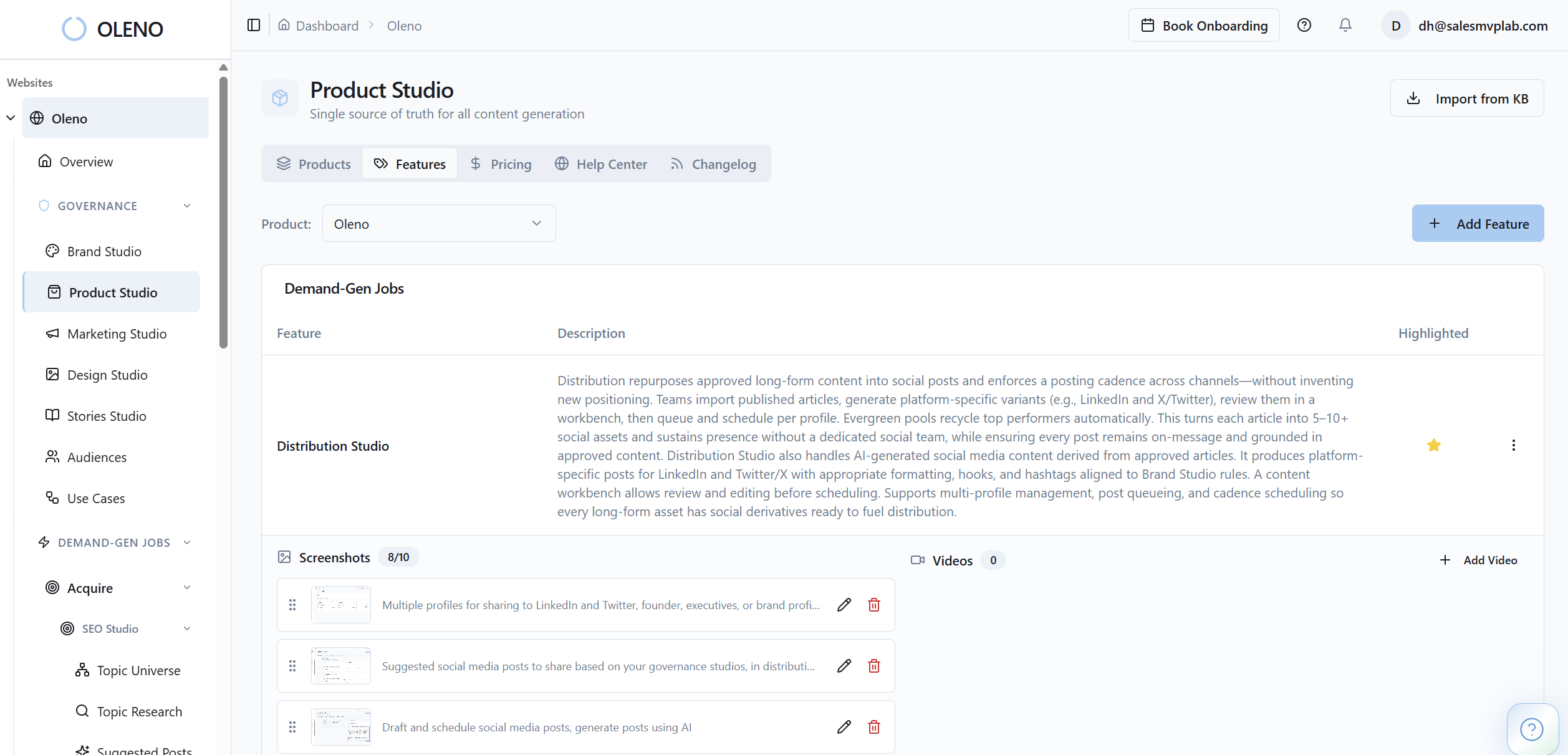
The status quo does have one advantage: it's flexible. You can swap tools in and out quickly. That's valid, especially if you're still figuring out your delivery model. But flexibility stops being helpful when every client account becomes its own custom machine that only two people know how to operate.
Brand Voice Breaks Before Output Breaks
Agencies often think the first sign of trouble is missed deadlines. I'd argue it's brand inconsistency. Deadlines are visible. Voice drift is quieter, but it hits trust faster.
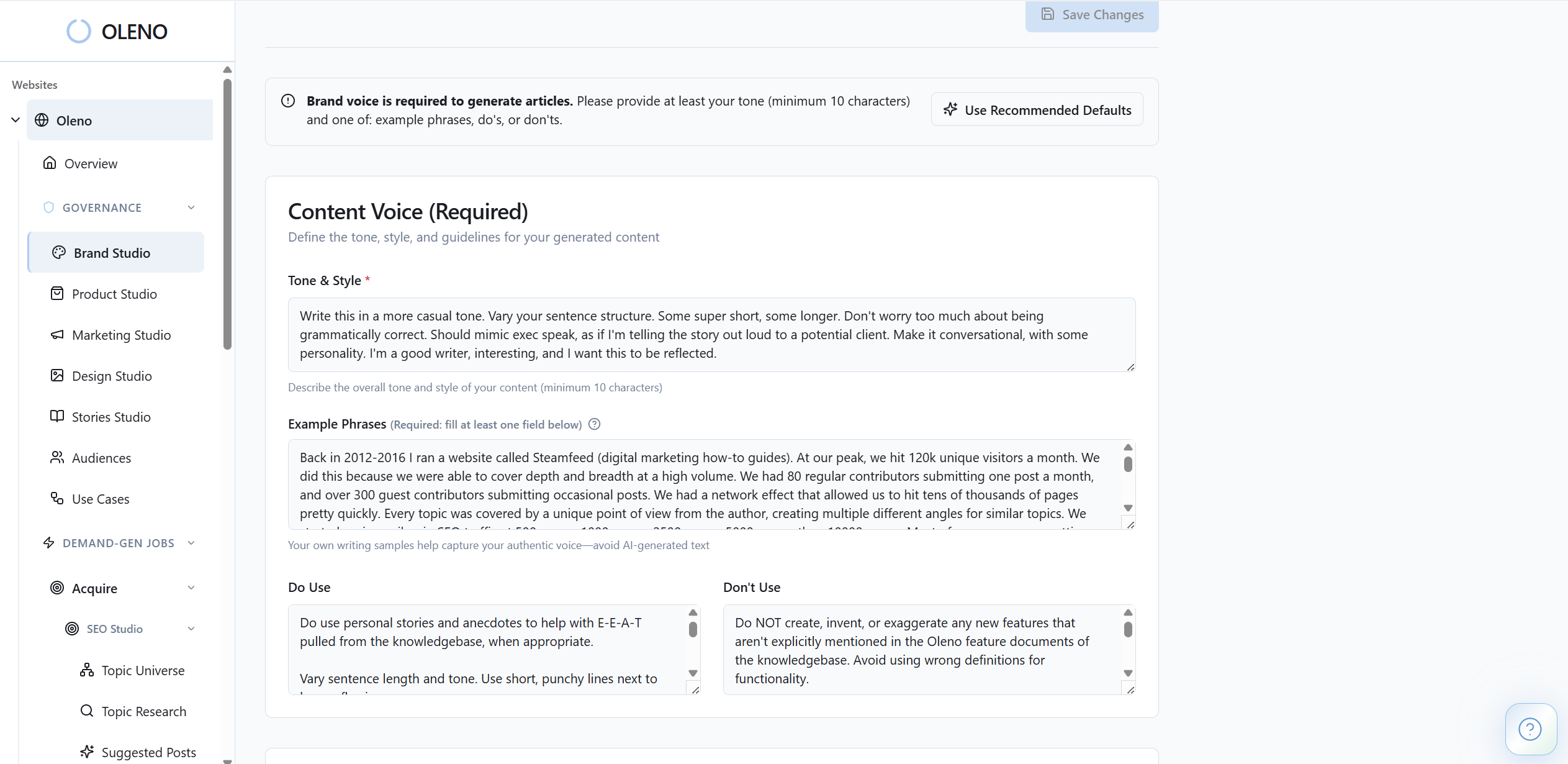
When you're handling multiple B2B clients, the hard part isn't generating words. It's keeping one fintech client sharp and risk-aware, another SaaS client practical and buyer-focused, and another services client more consultative, all without blending them into one generic agency voice. That's where manual stacks start to slip.
The Real Bottleneck Is Review Capacity
Buyers often assume they need faster drafting. Usually they need fewer corrections. If a piece touches strategist, writer, editor, account lead, and client before it can publish, your throughput is capped by reviewer time, not writer output.
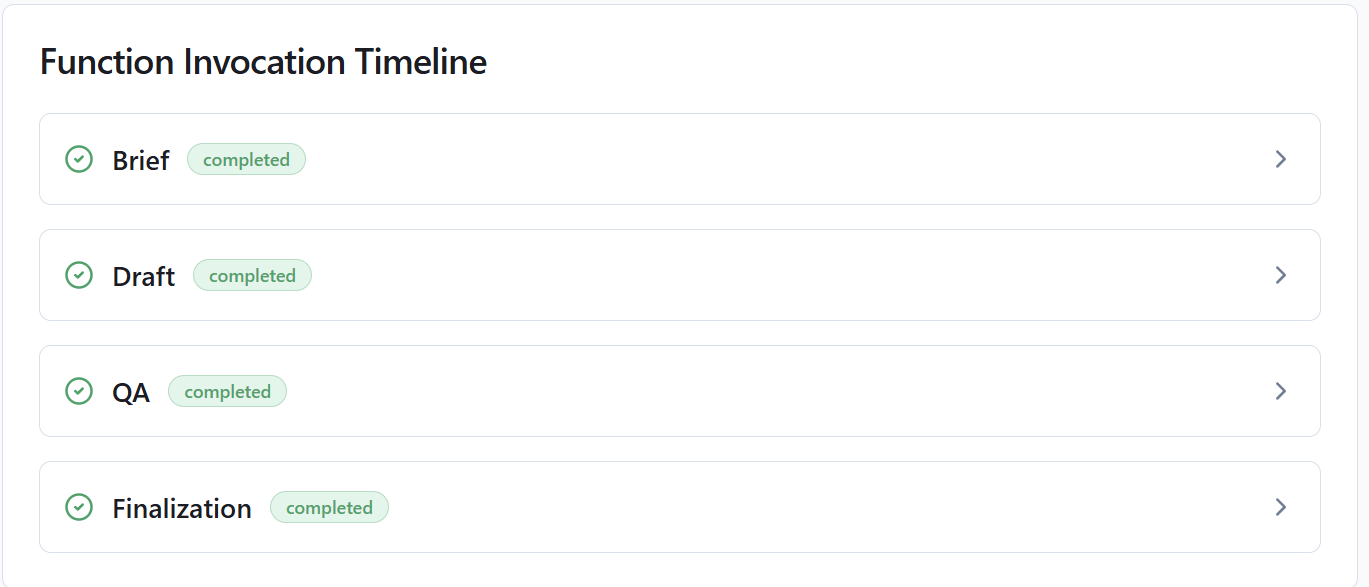
I've seen versions of this before in content teams. One strong operator can hold the whole thing together for a while because they carry the context in their head. Then volume grows. More people touch the work. Quality drops. Suddenly the agency isn't scaling a process, it's scaling translation loss.
That matters because the rest of this decision comes down to one question: are you buying more production capacity, or are you buying a tighter system for preserving context?
What Actually Matters In This Buying Decision
The right criteria in this category are operational, not cosmetic. Pretty dashboards don't save an agency account that's bleeding time in revisions. What matters is whether the system reduces context loss, protects client separation, and makes quality more repeatable across accounts.
A useful way to evaluate this is to score every option against the moments where agencies usually lose money. Not features in isolation. Failure points in delivery.
Client Isolation Matters More Than Raw Content Speed
If your team serves multiple clients, client isolation should be near the top of the list. You need clear separation between brand voice, positioning, product truth, competitor references, and approval rules. Without that, the risk isn't just a weaker draft. It's using the wrong message for the wrong client.
One practical test: ask how long it takes a new writer to become safe on a client account. If the answer is "they need to read a bunch of docs and shadow someone for two weeks," your current setup depends too much on tribal knowledge. If the system can reduce that ramp time to a few days because the right context is already structured, that's meaningful.
Review Reduction Is A Better Metric Than Draft Volume
A lot of buyers compare tools based on how quickly they can generate a first draft. That's not useless, but it misses the agency economics. First-draft speed matters less than how many review cycles the work needs before a client signs off.
Use this decision rule: if your average piece needs more than 2 internal review rounds before client delivery, optimize the system before you optimize volume. More output on top of messy review logic just creates more messy output.
Worth noting, manual review isn't bad by default. Some client work should stay high-touch. Enterprise messaging, launch content, and sensitive buyer enablement pieces usually deserve it. The issue is making everything high-touch, even routine work that should already be operating from known client standards.
Multi-Client Knowledge Control Usually Decides The Winner
What separates a stitched stack from a more unified system is usually knowledge control. Can you encode what each client stands for, what they sell, who they sell to, what claims are safe, and what language they avoid? And can the team actually use that context without digging through scattered docs?
This is also where a lot of agency AI projects get weird. The writing part looks fast in a demo. Then real client nuance shows up. Product caveats. audience differences. Competitive landmines. Legal sensitivities. Suddenly the "fast" workflow creates more headaches than the old one did.
If you want to see what a more centralized setup looks like in practice for agency delivery, you can request a demo.
How To Evaluate The Options Without Getting Distracted
A good evaluation process should reveal operational risk in under two weeks. You don't need a massive buying committee to get signal. You need a controlled test that surfaces where quality breaks, where time leaks, and whether your team can actually use the system under deadline pressure.
Run A 14-Day Pilot Across Three Different Client Profiles
Don't test on your easiest client. That's a mistake. Pick three live accounts with different voice and complexity levels: one straightforward SEO account, one product marketing-heavy account, and one client with strict review expectations.
Then track five numbers:
- Time to produce first draft
- Internal review rounds per asset
- Client revision requests per asset
- Time spent searching for source context
- Time from approved brief to publish-ready draft
One sentence matters here.
If a new system improves draft speed but doesn't reduce review rounds or context-search time, the gain is probably superficial.
Force A New Team Member Through The Process
This is one of the best diagnostic tests and almost nobody uses it. Have someone who doesn't know the client well produce work through the system. Their confusion will tell you more than your senior strategist's confidence.
Why? Because senior people compensate for weak systems. They know where the docs are buried. They know which client says one thing publicly and another thing in sales calls. They know which phrase will trigger revisions. A buyer should evaluate for transferability, not just for top-performer output.
Score The System On Operational Friction, Not Vendor Claims
Use a simple scoring model. Rate each option from 1 to 5 on:
- client context separation
- review round reduction
- writer ramp speed
- publishing handoff clarity
- ability to verify claims before content goes out
- account-level consistency across multiple content types
You don't need a fancy procurement framework. You need honesty. If your score is below 18 out of 30, the setup probably won't hold once volume increases.
For broader context on why more teams are shifting away from disconnected content stacks, this piece on why content now requires autonomous systems lays out the structural issue pretty well.
Common Buying Mistakes Agencies Make
Agencies usually don't buy the wrong thing because they asked bad questions. They buy the wrong thing because they evaluate in the wrong order. They focus on visible features before testing whether the system actually reduces their most expensive delivery problems.
They Optimize For Drafting Instead Of Margin
This is probably the biggest mistake. Fast drafts feel productive. Margin tells the truth.
Let's pretend a platform cuts first-draft time from 90 minutes to 25. Sounds great. But if your editors still spend 35 minutes fixing brand drift and your account lead spends 15 minutes checking product truth, you didn't really remove labor. You just moved it downstream.
They Let Their Best Operator Hide System Weakness
Every agency has this person. The one who can rescue any account, rewrite anything, and remember every client nuance. Great operator. Dangerous buying lens.
Because if your evaluation depends on that person, you're not testing the system. You're testing their experience. A better question is this: what happens when they go on vacation, or leave, or simply can't review 40 pieces this month?
They Underestimate Publishing And Approval Handoffs
Content doesn't end at the draft. It still has to get approved, formatted, and published. This is where point tools often create more coordination than buyers expect.
Manual publishing can be fine at low volume. I'm not against it in every case. But if your agency is pushing 50, 80, or 100 assets a month across clients, each handoff becomes a risk surface. Metadata gets missed. Links get lost. Final edits don't make it into the CMS. Nobody notices until the client does.
For a deeper look at why disconnected writing tools often don't solve the real system problem, Google's own documentation on creating helpful, reliable, people-first content is a useful reminder that output quality depends on process and source quality, not just drafting speed.
A Practical Decision Framework For Agency Buyers
The best framework is simple enough to use in a real buying meeting. If it takes 40 minutes to explain, nobody will use it. You want a structure that helps you decide whether to keep your current stack, improve it, or move to a more unified system.
Use A Three-Bucket Assessment Before You Buy Anything
Start by putting your agency in one of these buckets:
| Agency Situation | Likely Fit | Why |
|---|---|---|
| Fewer than 3 active content clients, founder reviews most work | Manual point tools may still be fine | Context is still concentrated in one or two people |
| 4 to 8 active clients, multiple writers and editors, recurring review headaches | Hybrid or unified system deserves evaluation | Coordination cost is starting to exceed tool savings |
| 9+ active clients or 50+ monthly assets with strict brand separation needs | Unified system usually becomes easier to justify | Review capacity and client isolation become hard constraints |
That table won't decide the deal on its own. But it gives you a decent starting point.
Ask These Five Questions In Order
Use these questions as a decision sequence, not a random checklist:
- Where do we lose the most non-billable time today?
- Is the loss coming from drafting, context lookup, review, or publishing?
- Can our current stack realistically cut that loss within 30 days?
- If not, are we willing to keep hiring around the problem?
- Which option makes client-specific quality easier to repeat across people, not just across tools?
If you answer those honestly, the right direction usually gets clearer. Maybe you stay with manual tools a bit longer. Maybe you tighten process first. Maybe you move to a platform that centralizes planning, client knowledge, quality control, and publishing flow.
Where Oleno Fits For Agencies Needing More Control
Oleno tends to make the most sense when the agency problem is no longer "how do we generate content" and becomes "how do we keep strategy, client context, and quality intact as more people and assets move through the system."
That matters for agencies because the hard part isn't isolated writing. It's managing content operations across clients without letting one account's language, positioning, or workflow leak into another. Oleno is built around planning, client-specific controls, content jobs, and publishing flow, which is why it can be worth evaluating when your current setup is creating frustrating rework.
If that's the stage you're in, the most useful next step is probably to book a demo and run your own agency workflow through it. Not a polished sample. Your actual accounts, your review process, your edge cases.
The Next Step For Agencies Comparing Their Options
The buying decision isn't really "Oleno vs manual point tools" in the abstract. It's whether your current system can keep client context intact as volume grows, or whether it's quietly turning every new account into more overhead.
Some agencies should stick with their current stack for now. That's fair. If volume is modest and one senior person still has strong control over quality, you may not need to change yet. But once review cycles pile up, writers need constant translation, and client voice starts drifting, the math changes fast.
At that point, you're not choosing between simple and advanced. You're choosing between continued patchwork and a system that's more deliberate about how work gets planned, checked, and pushed through.
About Daniel Hebert
I'm the founder of Oleno, SalesMVP Lab, and yourLumira. Been working in B2B SaaS in both sales and marketing leadership for 13+ years. I specialize in building revenue engines from the ground up. Over the years, I've codified writing frameworks, which are now powering Oleno.
Frequently Asked Questions