What to Look for in SaaS Legal Risk Content Automation

Growth-stage SaaS teams don't usually get in legal trouble because they publish too little. They get in trouble because 1 rushed claim, 1 stale comparison page, or 1 off-brand draft slips through when the team is already stretched thin.
If you've had to reread a page three times this week wondering whether a product statement is still true, you already know the headache. Legal risk in content usually shows up as messy execution risk first, then turns into compliance risk later. And when your team is 1 to 3 marketers deep, that risk compounds fast.
You can reduce a lot of that risk without turning marketing into a six-week approval maze. The trick is to evaluate whether your content process creates fewer judgment calls, fewer rewrites, and fewer chances for bad claims to get published in the first place. If that's what you're trying to sort out, this should help.
Key Takeaways:
- Legal risk in growth-stage SaaS content usually starts as process drift, not malicious intent.
- If a claim can't be verified against a current source of truth in under 2 minutes, it probably shouldn't ship yet.
- The highest-risk content types are usually product pages, comparison pages, buyer enablement assets, and launch content because they mix persuasion with factual claims.
- A useful vendor evaluation should test review load, source control, and approval rules, not just content output speed.
- Most teams can spot risk faster by running a 30-day content audit before they change tools or workflows.
If you want to pressure-test your current process, you can request a demo.
Why Legal Risk Creeps Into Growth-Stage SaaS Content
Legal risk creeps into growth-stage SaaS content because the team ships faster than its review system matures. The issue usually isn't bad intent. It's that claims, product details, proof points, and competitive language move faster than the process meant to verify them.

I've seen this pattern in small marketing teams over and over. You start with founder-led messaging, a few landing pages, maybe a solid product deck, and everyone still has the context in their head. Then the company grows. New features ship. Positioning changes. A freelancer writes one page, an internal marketer rewrites another, sales asks for a battlecard, product wants a launch email, and suddenly nobody is fully sure which statement is current.
That is where this starts to break. Not in some dramatic legal showdown. In little moments of uncertainty.
The Real Risk Is Usually Translation Loss
A lot of teams think legal risk is mostly a review problem. I don't fully buy that. Review matters, sure. But the root issue is usually translation loss: strategy gets defined in one place, product truth lives somewhere else, and the final content gets written by someone several steps removed from both.
Let's make it concrete. A Head of Marketing pulls positioning from an old sales deck, a contractor uses last quarter's competitor notes, and a product marketer edits for tone at 6:30 PM before launch. Nobody lied. But now the page says "automated" where the product is really "partially automated," or implies an integration is native when it's actually a workflow involving other systems. Small wording change. Real risk.
I think this is why legal review alone often feels frustrating. Legal is being asked to catch downstream wording issues that were baked upstream into the process.
The Editing Tax Is Also A Risk Tax
The Editing Tax isn't just a productivity problem. It's a legal exposure multiplier. Every extra rewrite introduces new wording, new interpretation, and new opportunities for factual drift.
When a draft goes through four or five review passes, people stop reviewing from first principles. They scan. They react. They tweak lines. That is human. But it also means weak claims can survive because each reviewer assumes someone else validated the substance.
A simple benchmark I like: if high-stakes content regularly needs more than 3 approval rounds, your system is probably creating risk rather than removing it. That's not a law of nature. Some enterprise teams need more. But for growth-stage SaaS, 3 rounds is usually the line where process discipline starts turning into review fog.
The Highest-Risk Pages Aren't Always The Ones You Expect
Blog posts get blamed a lot. Fair enough. Some are sloppy. But the bigger legal risk often sits in pages closer to revenue.
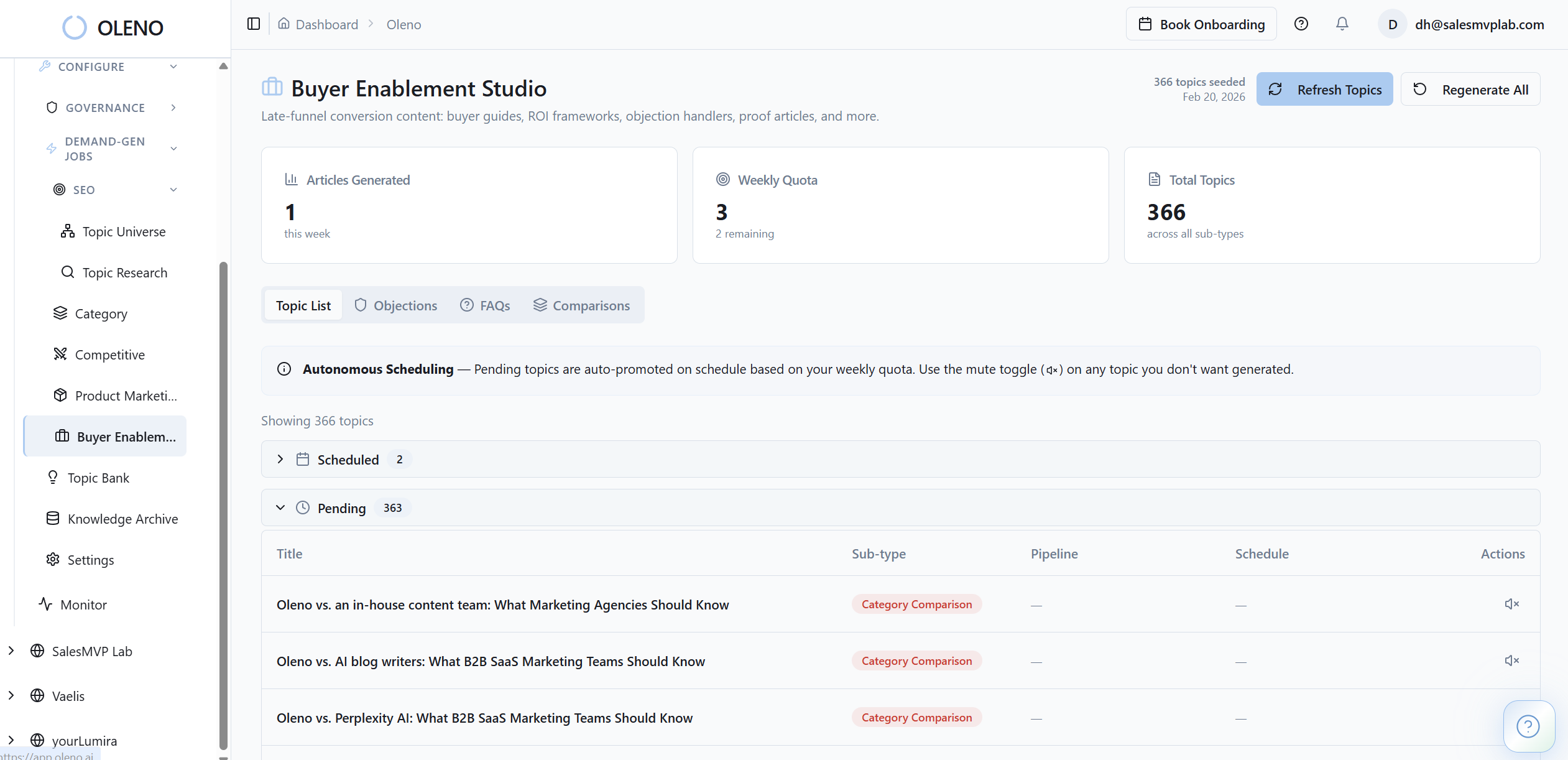
Think about these four buckets:
- Product pages with feature claims that changed after release
- Comparison pages that overstate differences or use weak sourcing
- Buyer enablement assets that lean too hard on unverified ROI language
- Launch content written under deadline pressure
One thing worth watching: if a page combines product claims, competitive framing, and conversion intent, treat it as a higher-risk asset by default. I call this the Triple-Claim Rule. If a page has all 3, it needs tighter inputs and tighter review than a standard thought piece.
So the real buyer question isn't "does this tool create content fast?" It's "does this workflow reduce the number of risky judgment calls my team has to make?"
What Actually Matters When You Evaluate A Safer Content System
A safer content system reduces claim drift, narrows who can improvise on sensitive language, and makes verification faster than guessing. Speed still matters. But if speed comes from skipping source control, you'll just publish mistakes faster.
This is where a lot of evaluations go sideways. Buyers compare vendors on draft quality alone. Draft quality matters, obviously. But legal risk sits in the layer underneath the draft: where statements come from, how they're constrained, and who can verify them before publish.
Source-Of-Truth Discipline Cuts Risk More Than Fancy Review Workflows
The first thing that matters is source-of-truth discipline. Put simply, can your team tell where a claim came from, whether it's current, and whether it should still be used?
I'd use a 2-Minute Verification Test here. Hand a marketer any sentence from a product page or comparison page. If they can't verify it against current internal materials in under 2 minutes, your system is too loose for high-stakes publishing. That doesn't mean every sentence needs a lawyer attached to it. It means the business truth behind the sentence can't live in five places.
This is also where smaller teams feel the pain hardest. In a big org, somebody owns compliance language. In a growth-stage SaaS company, ownership is usually split across product, marketing, founders, and sales. Which means nobody fully owns the final wording unless the system forces clarity.
Permission Design Matters More Than People Admit
Who gets to change what? That's a boring question. It matters a lot.
A safer setup gives different content types different levels of flexibility. A thought leadership article can tolerate more voice variation. A comparison page can't. A feature launch brief can use some editorial freedom. A pricing or claims-heavy page needs stricter rules.
I think of this as the Guardrail Ladder:
- Low-risk content gets broad editing freedom
- Medium-risk content gets constrained claim inputs
- High-risk content gets locked source references and explicit approvals
Pretty simple. But most teams don't formalize it. They use the same loose workflow for every asset, then wonder why the risk profile feels random.
And random is the problem.
Auditability Beats Memory
When buyers evaluate content systems, they often ask whether the workflow is easy to use. Fair point. If the system is annoying, people route around it. But for legal risk, another question matters more: can you reconstruct why something was published the way it was?
Not forever. Just enough to know the inputs, approvers, and version logic behind the asset.
You don't need a courtroom-grade chain of custody for every blog post. That would be overkill for many teams. But for pages that influence pipeline and carry factual claims, you do want some record of what source material was used and who approved the final direction. Memory doesn't scale. People leave. Slack threads disappear into the void. That's why auditability matters.
Category Fit Is A Buyer Issue, Not Just A Product Issue
A lot of teams buy AI writing tools when they really need a controlled content system. That's not a knock on writing tools. Some are useful. But if your real problem is legal risk from content drift, a generic drafting tool won't fix the root cause.
This is the category-fit question: are you buying a writing assistant, or are you buying a system that reduces variance across strategy, drafting, QA, and publishing?
I wouldn't overstate this. Plenty of teams can patch together a safer process with docs, reviewers, and discipline. But once your team is publishing across product marketing, demand gen, and buyer enablement at the same time, patched systems usually start leaking. That's when the buying criteria need to change.
If you're comparing that category-fit question in a real buying cycle, you can request a demo.
How To Evaluate Legal-Risk Reduction Before You Buy
You can evaluate legal-risk reduction by testing workflow behavior, not by trusting surface-level claims. Ask the vendor to show how factual inputs are controlled, how review is structured, and how high-risk pages are handled under deadline pressure.
I'd run this like a live operating test, not a polished demo. Because polished demos hide the messy parts, and the messy parts are where legal risk lives.
Start With A 30-Day Content Risk Audit
Before you even compare tools, audit the last 30 days of shipped content. Not all of it. Just the pieces with the highest claim density.
Use this simple checklist:
- Which assets made factual product or competitor claims?
- Which of those claims came from a clearly current source?
- How many review rounds did each asset take?
- Where did rewrites happen most often?
- Which final claims would be hard to defend if challenged?
That gives you a baseline. Without it, you'll evaluate software emotionally. And legal-risk buying decisions made emotionally tend to get expensive.
One more thing. Don't just count errors. Count uncertainty. Uncertainty is usually the earlier signal.
Run The Three-Asset Test In The Demo
A good evaluation uses three very different assets, not one polished sample. I like this mix:
- A product or feature page
- A comparison or competitor page
- A buyer enablement piece for a skeptical buyer
Why these 3? Because they stress different parts of the system. Product pages test accuracy. Comparison pages test claim restraint. Buyer enablement pieces test whether the system can stay persuasive without drifting into risky overstatement.
If a vendor looks good on a generic blog draft but gets shaky on the other two, that tells you something. It tells you the tool might be fine for content volume, but not for reducing legal exposure.
Ask Questions That Expose Process Maturity
Most evaluations stay too shallow. Buyers ask what integrations exist, how fast drafts are generated, or whether a workflow can be customized. Useful questions, sure. Not the ones I'd lead with.
I'd ask:
- How are approved product claims stored and reused?
- What prevents an outdated claim from reappearing next month?
- How do high-risk assets differ from low-risk assets in workflow?
- What exactly gets reviewed before publish?
- What happens when product positioning changes mid-quarter?
Those questions expose whether the system is built around content control or just content speed.
And yes, speed still matters. If the system is so rigid your team avoids it, that creates a different problem. Critics of tighter controls aren't entirely wrong. Too much process can choke output. But loose systems usually hide their cost until something risky is already live. I'd rather deal with a bit of friction than repeated firefighting.
Use A Threshold For Approval Complexity
A lot of teams don't measure approval complexity. They just feel it.
Try this threshold: if a standard high-stakes page requires input from more than 4 people before publish, you probably don't have an approval system. You have a negotiation system. Different thing.
Negotiation systems create vague ownership. Vague ownership creates soft edits. Soft edits create wording drift. That's the mechanism. Not glamorous. Very real.
Let's pretend a product comparison page takes 6 people, 12 comments, and 9 days to publish. Even if no one makes a legal mistake, you're now paying a hidden cost in delays, rework, and internal hesitation. Multiply that by a few launches a quarter and the process starts to become its own risk.
Common Mistakes Buyers Make When They Try To Reduce Legal Risk
Buyers usually make mistakes in one of two directions. They either underreact and keep a messy system because "we'll just review harder," or they overreact and add so much process that marketing slows to a crawl.
Neither one is great.
More Reviewers Usually Doesn't Mean Less Risk
This is probably the most common mistake. A team gets worried about risky wording, so they add more approvers.
I get the instinct. Status quo has merits here. More eyes can catch real issues. But after a point, additional reviewers create diffusion, not clarity. Everyone reviews style. Fewer people review substance. And the asset gets rewritten into something nobody fully owns.
A practical rule: for high-stakes pages, keep the decision group to 3 roles if possible, content owner, product truth owner, and final approver. If legal needs to review, that's fine. But if five adjacent stakeholders are editing live copy, you're increasing surface area.
Buyers Confuse Policy With System Design
A lot of companies respond to risk with policy documents. New disclaimers. New approval rules. New language guidelines. Some of that is necessary. But policy without system design doesn't travel.
A marketer under pressure won't remember page 14 of a compliance doc while revising launch copy at the end of the quarter. They'll use what's in front of them. That's why embedded controls matter more than standalone rules. The system has to make the right move easier than the risky move.
I've learned this the hard way in content operations. Strategy in docs feels good. Execution in workflows is what actually sticks.
They Evaluate The Homepage Demo Instead Of The Operating Model
Vendors are going to show polished examples. That's expected. The mistake is assuming polished output equals safe output.
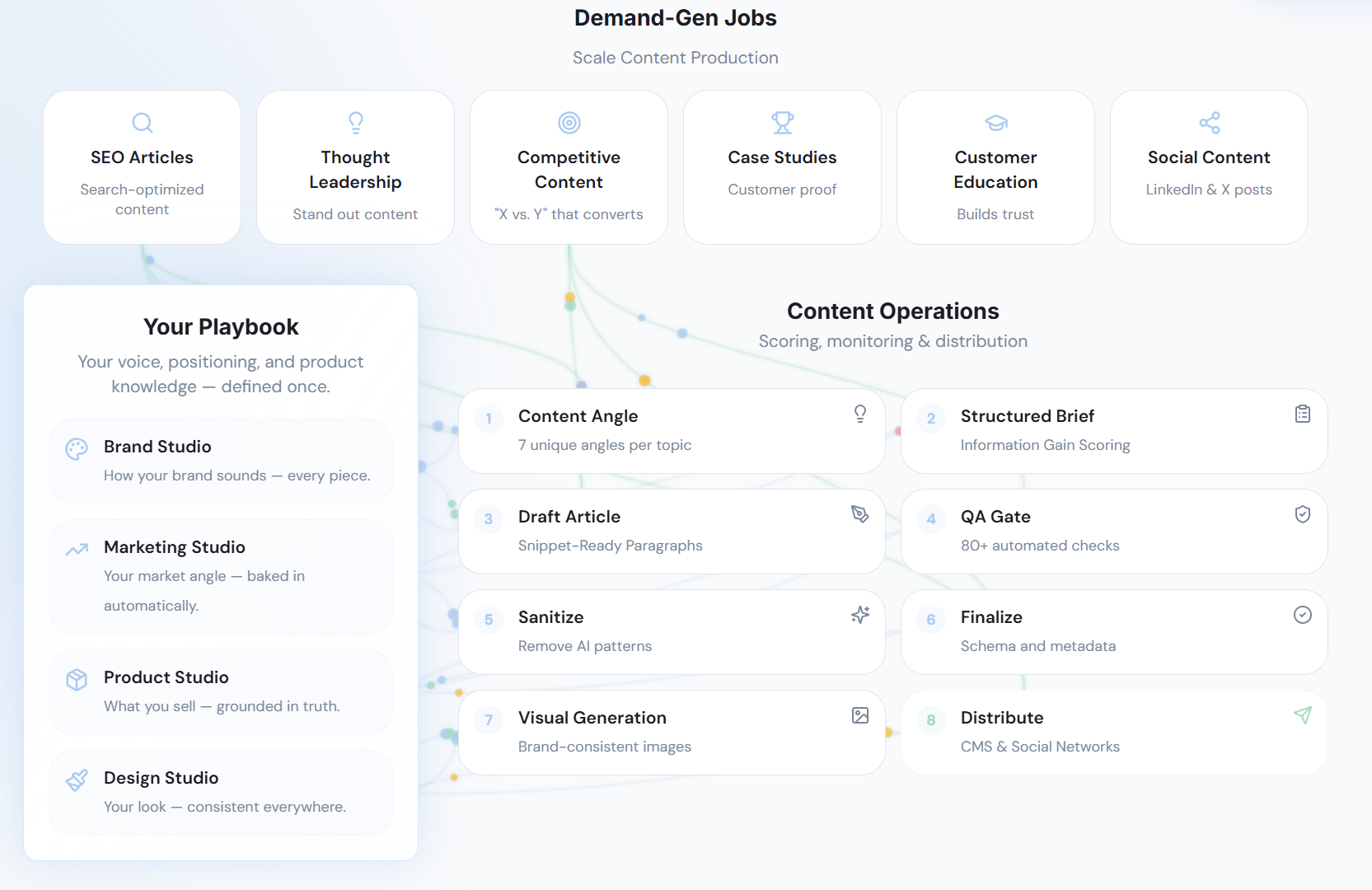
Safe output comes from an operating model. Inputs. constraints. verification. approvals. publishing rules.
When buyers skip that layer, they tend to buy for the front-end impression and discover the back-end mess later. That's where the legal headache comes back, just wrapped in better UI.
They Ignore The Cost Of Stale Content
Freshly reviewed content can still become risky later. That's another mistake. Teams focus on creation risk and ignore stale-content risk.
If your category changes fast, or your product is shipping often, stale claims are a real problem. Comparison pages are notorious for this. So are help pages, launch pages, and buyer enablement assets.
I'd use the 90-Day Staleness Rule for high-claim pages. If a page includes product specifics, competitor comparisons, or ROI language, review it at least every 90 days. In slower categories, maybe that's too aggressive. Fair. But if you haven't looked at a comparison page in 6 months, I'd assume drift until proven otherwise.
A Decision Framework For Choosing The Right Approach
The right approach depends less on whether you use AI and more on whether your content system reduces variance. That's the core decision. Not "manual versus automated." Variance versus control.
So here's a practical framework buyers can use.
The CVR Score Gives You A Quick Read
I like a simple model here: CVR, which stands for Claim Control, Verification Speed, and Review Clarity. Score each category from 1 to 5.
| Dimension | What To Ask | 1-2 Score | 3 Score | 4-5 Score |
|---|---|---|---|---|
| Claim Control | Are approved claims constrained by current source material? | Claims live across docs and memory | Some central references exist | Claims are structured and reused consistently |
| Verification Speed | Can a marketer verify a sensitive claim quickly? | Verification takes over 5 minutes or depends on Slack | Some claims are easy to check | Most high-risk claims can be checked in under 2 minutes |
| Review Clarity | Is it obvious who approves what and why? | Too many reviewers and vague ownership | Ownership exists but varies by asset | Approval rules are clear by content type |
A total CVR score under 9 usually means the risk is structural. Not incidental. A score from 9 to 11 means you probably have partial control but still too much drift. A score of 12 or higher suggests your process is becoming reliable enough to scale without constant rework.
Is that framework scientific? No. It's a decision aid. But honestly, that's often what buyers need most.
Use The Three-Bucket Decision Rule
After you score CVR, put yourself into one of three buckets:
-
Bucket 1: Patch the process If your team publishes low volume, has stable messaging, and mostly struggles with occasional review confusion, process cleanup may be enough.
-
Bucket 2: Add controlled automation If your team is producing across multiple formats and the same claim drift keeps coming back, automation with tighter controls usually makes more sense.
-
Bucket 3: Rebuild the operating model If content, product truth, and approvals are all fragmented, buying a point tool won't solve much. You need a system change, not a writing upgrade.
This is where some nuance matters. Not every growth-stage SaaS team needs a full platform right away. Some can get meaningful risk reduction from better rules, better source materials, and tighter ownership. But once content becomes a repeatable GTM motion, manual coordination tends to become the bottleneck and the risk vector.
Where Oleno Usually Fits
Oleno usually fits in Bucket 2 or Bucket 3 situations, where the problem isn't just writing speed. It's that strategy, product truth, and published content keep drifting apart.
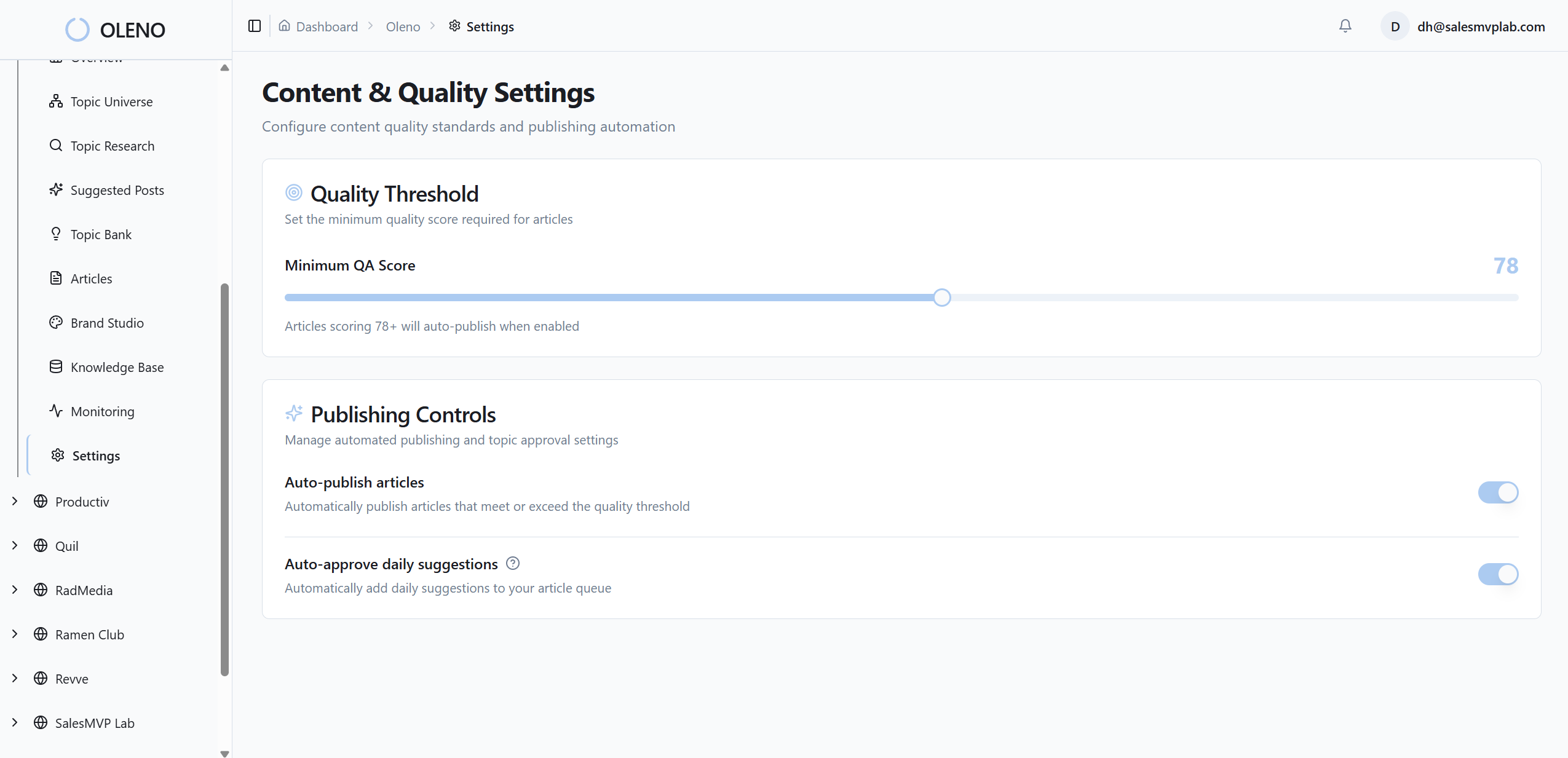
At a high level, the fit tends to make sense when a team wants one system to generate content from approved inputs, keep quality checks closer to the workflow, and reduce the amount of manual interpretation required from draft to publish. That matters for legal risk because fewer interpretation gaps usually means fewer risky claims slipping through.
The practical buyer question is less "can this produce content?" and more "can this reduce the burden on humans to remember, translate, and manually police every critical claim?" That's the buying lens I'd use.
Apply The Framework To Oleno And Your Current Workflow
You should apply the framework to both your current process and any vendor you're considering. Side by side. Same content types. Same criteria. Same pressure conditions.
That way you're not buying on vibes.
Compare Present State Against A Controlled Workflow
Start by scoring your current setup on CVR. Then score Oleno against the same model during a live evaluation. Use your own assets if you can. Product page. Comparison page. Buyer enablement page. Real materials surface real issues.
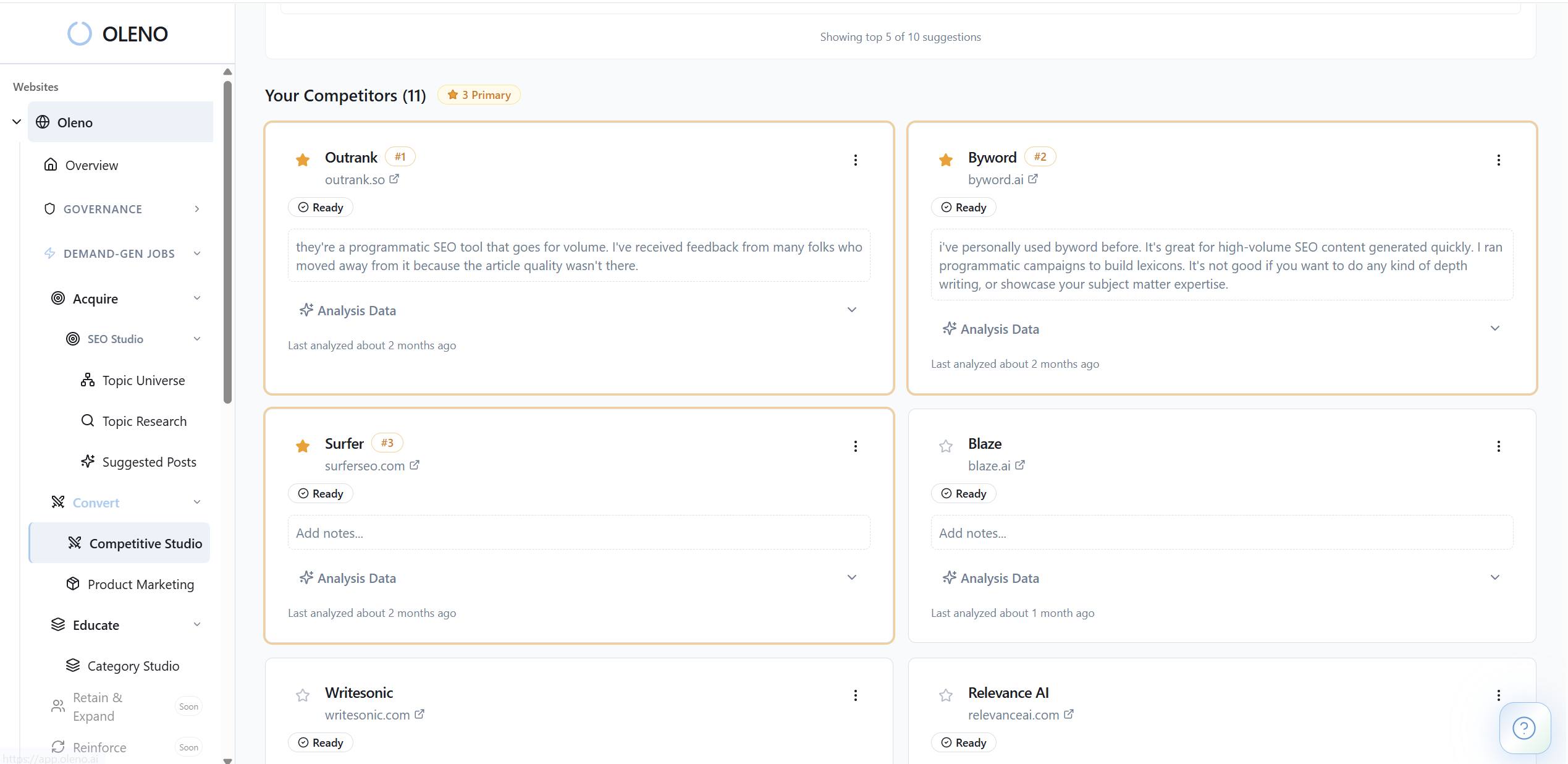
What you're looking for is not perfection. It's reduction in risky ambiguity.
In practical terms, Oleno is generally worth a closer look if your team needs to centralize content inputs, tighten repeatability across content types, and cut down the review burden that comes from strategy-execution drift. That's especially true if legal risk is showing up as frustrating rework, stale claims, or too many approval loops.
What A Good Next Step Looks Like
A good next step is small and concrete. Pick 3 recent assets with the highest claim density. Score them. Identify where uncertainty entered the process. Then test whether Oleno gives your team a more controlled path from approved inputs to publish-ready output.
You don't need to boil the ocean. You need to see whether the system reduces the number of risky choices your team makes under pressure.
If you want to run that side-by-side with a real workflow, book a demo.
About Daniel Hebert
I'm the founder of Oleno, SalesMVP Lab, and yourLumira. Been working in B2B SaaS in both sales and marketing leadership for 13+ years. I specialize in building revenue engines from the ground up. Over the years, I've codified writing frameworks, which are now powering Oleno.
Frequently Asked Questions