When to Stop Prompting: Decision Framework for Orchestration

Most teams try to outrun the pain with faster prompts. You shave minutes off a draft and still wait days for edits, fact checks, images, and a stubborn CMS. That disconnect is the real problem. Not your writing speed.
I’ve been on both sides. The solo marketer moving fast, and the leader drowning in coordination. When your calendar fills with approvals and rework, you don’t need a bigger prompt library. You need a system that prevents the mess before it starts.
Key Takeaways:
- Treat content creation as a governed system, not a drafting task
- Quantify handoffs, rework, and publish failures to build urgency
- Start orchestration with four essentials: KB, locked brief, QA gate, idempotent publishing
- Run a time-boxed pilot with pass/fail criteria before scaling
- Use deterministic steps so reliability becomes your scaling lever
Why Prompt-Only Workflows Stall At Scale
Prompt-only workflows stall because they speed up one step and leave the rest to chance. Coordination, quality, and publishing still need decisions, handoffs, and retries. Teams see “faster drafts,” then lose the savings on edits, factual drift, and last‑mile CMS issues.
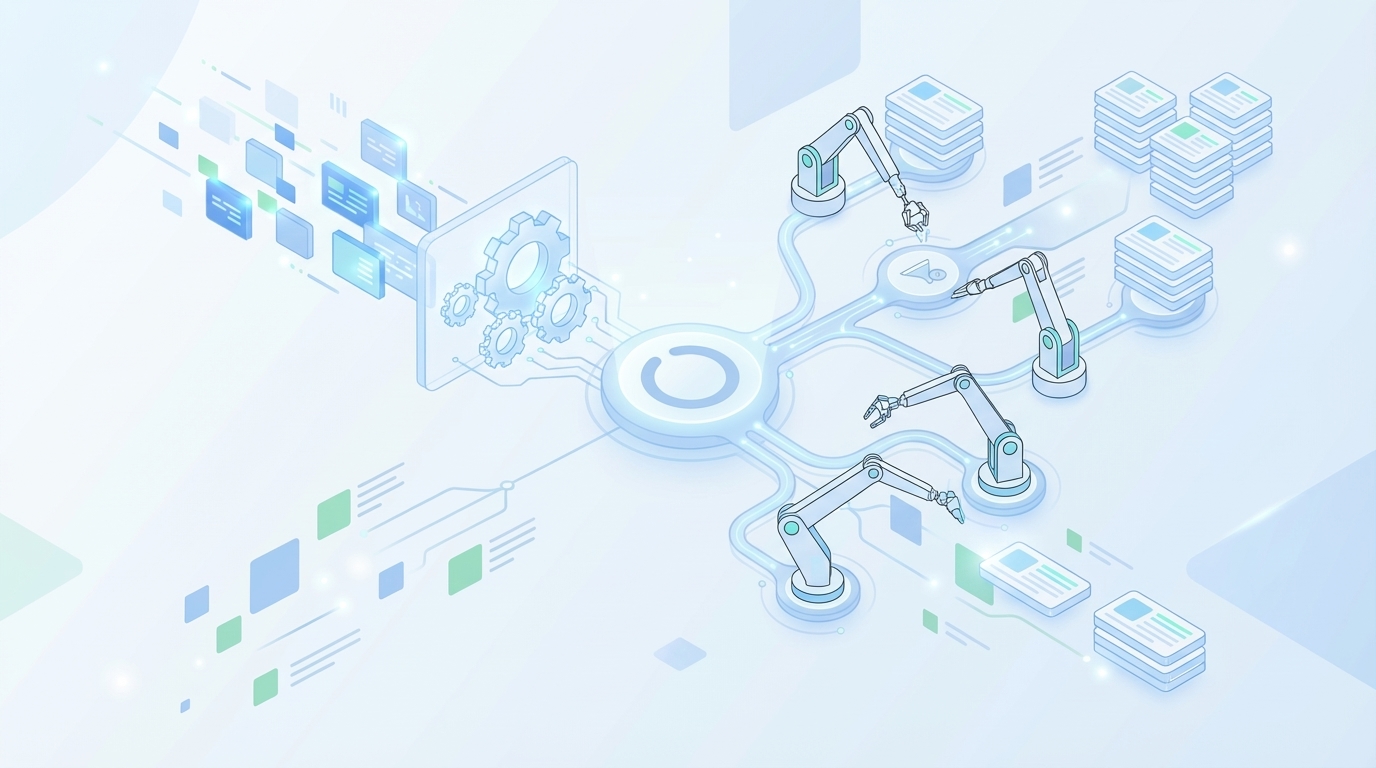
How do you know you are stuck in prompt-only mode?
You can spot it quickly. Tone drifts across posts. Two similar prompts produce different structures. Every draft needs manual cleanup, and editors spend afternoons copy‑pasting between tools. Publishing breaks on slugs, metadata, or images. If those show up weekly, your constraint isn’t writing. It’s the missing system around it.
I’ve watched good teams normalize this. “That’s just the process.” It isn’t. It’s a lack of persistent voice rules, a locked brief, and a pass‑fail gate before the CMS. You don’t need heroics from editors. You need a pipeline that catches problems upstream so they never hit people downstream.
Why faster prompts do not remove coordination work
Speeding up drafts doesn’t kill the queue. Topic selection still happens in meetings. Angles get invented on the fly. Structure varies post to post. Quality is subjective. Publishing requires a half-dozen manual checks. So yes, the draft arrives earlier, but the line to publish is just as long.
Operations research has a boring truth worth hearing: improving one station rarely increases system throughput if upstream and downstream steps remain variable. The wait time simply moves. You don’t want faster stations, you want a governed line that behaves predictably. That’s the unlock.
[Early CTA] If you already know you need a governed line, not faster prompts, you can skip ahead and Try Generating 3 Free Test Articles Now.
The Constraint You Can Actually Fix Is The System
The real constraint is reliability across the pipeline, not author velocity. Reliability shows up when voice rules persist, structure is enforced, knowledge is applied consistently, and publishing is idempotent. You fix this with deterministic steps and gates, not more editing capacity.
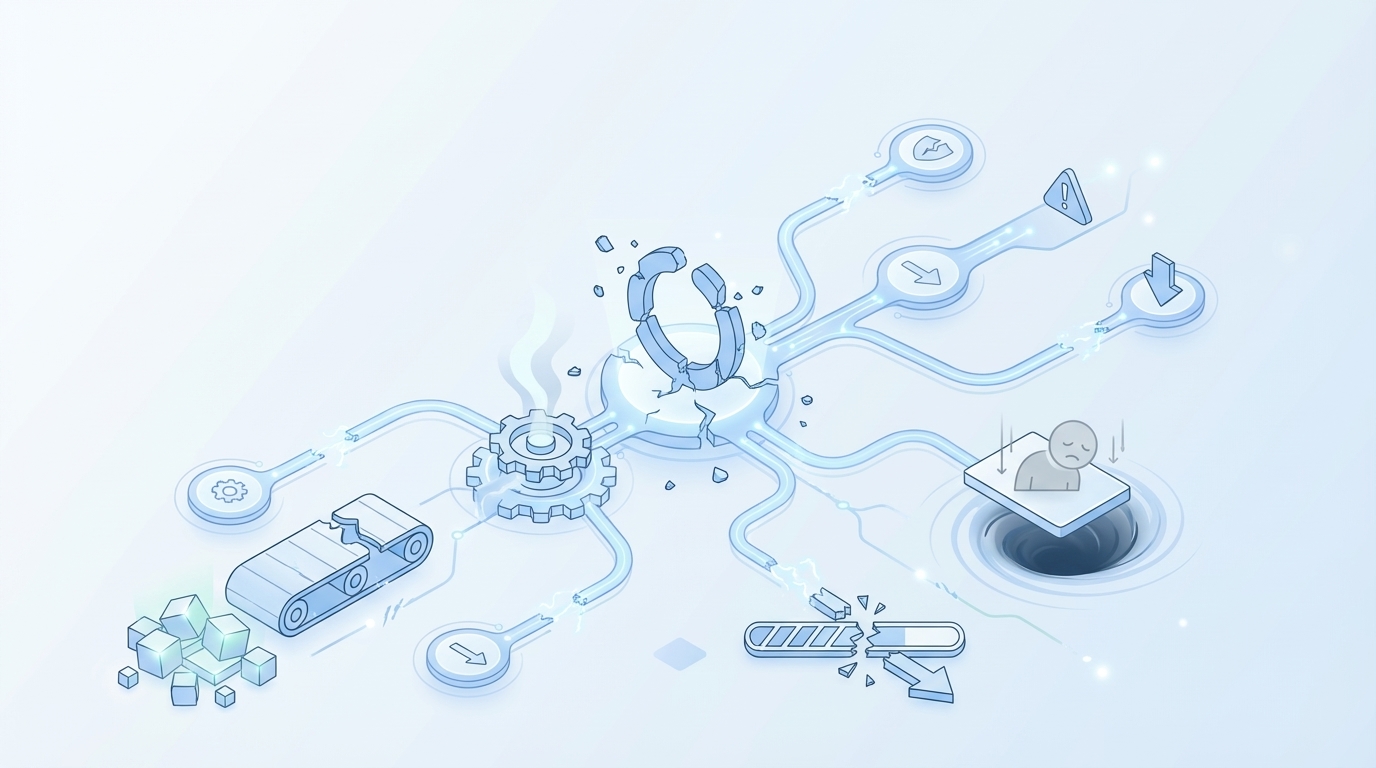
What traditional approaches miss about reliability
Most teams attack the visible bottleneck: editing hours. Reasonable, but incomplete. Reliability breaks earlier when there’s no persistent brand memory, no locked structure, and no knowledge base check baked into drafting. Without those, even great writers produce drift that editors must fix by hand.
Here’s the pattern. You add editors. Quality rises a bit, but cycle time barely moves because the system still allows variability in. Reliability isn’t a feeling; it’s the result of the same steps happening the same way, every time. That means code-level rules, not “try to remember the style guide.”
The hidden complexity your CMS introduces
Your CMS is not a folder you drop content into. It’s a rules engine. Slugs collide. Schema needs to be right. Images require alt text and names. Duplicates must be prevented. Without idempotent publishing and safe retries, the last mile steals more time than drafting ever did.
I’ve seen trust erode here. One duplicate publish and leadership starts second‑guessing volume plans. You don’t fix this with more careful uploads. You fix it by treating the CMS as a system endpoint that demands deterministic inputs, strict validations, and conflict‑safe operations.
The Hidden Costs You Can Quantify Today
You can put numbers to the pain: hours lost to handoffs, error rates that double time‑to‑publish, and rework that compounds. Measure what happens after the draft. That’s where most of the waste hides.
Engineering and editorial hours lost to handoffs
Let’s pretend you ship 20 posts a month. Drafting takes 1 hour per post. Editing is 1.5 hours. Fact checks are 0.5 hours. Publishing prep is 0.5 hours. That’s 70 total hours, with 50 of them after drafting. If you cut draft time in half, you save 10 hours. If you kill rework and fragile publishing, you save 50.
I’ve been in that math. At PostBeyond, I could write 3–4 posts a week solo because the structure lived in my head. As the team grew, context spread thin, edits ballooned, and the queue slowed. We weren’t bad at writing. We were paying a tax for missing rules and gates.
Error rates and publish failures that compound
Here’s another place to look. If 40 percent of drafts fail a first QA for voice or structure, and 20 percent fail the first publish due to metadata or image issues, you’re doubling cycle time in rework and retries. Editors feel that as “frustrating rework.” Engineering feels it as “fragile integrations.”
A pass‑fail gate upstream changes the curve. Enforce structure and voice before anything touches the CMS. Validate images and schema automatically. Reduce first‑pass failures, and total time‑to‑live drops without adding people. That’s reliability paying dividends.
[Mid CTA] If those numbers look familiar, it might be time to change your approach. You can Try Using An Autonomous Content Engine For Always‑On Publishing and see where the hours go.
When Rework Becomes Culture, Morale Tanks
Rework isn’t just a line item. It chips away at focus, trust, and energy. Teams start avoiding risks, publishing slows, and stakeholders lose confidence. You don’t need more pep talks. You need fewer avoidable misses.
The 3 pm edit spiral that derails your day
You block two hours for strategy. Then Slack lights up. Another draft drifted from voice. Facts don’t match your knowledge base. An image is missing alt text. Your “quick review” eats the afternoon. One day is fine. Five weeks becomes culture. People feel behind, annoyed, and increasingly checked out.
I’ve lived the founder‑led content pattern too. At LevelJump, we recorded videos to get ideas out faster. Smart move for speed, but we constantly paid the price on structure and search intent. Great thoughts, wrong format. The fix wasn’t working harder. It was changing the system.
When a failed publish breaks trust with stakeholders
Leaders remember misses. A broken schema or duplicate live post undermines confidence in the entire program. From there, updates slow, reports get thinner, and experiments get shelved. Reliability is how you buy room to move. Not later. Now.
You don’t need perfection. You need a track record that says, “This process protects us from obvious mistakes.” That’s what deterministic gates do. They turn anxiety into predictable outcomes.
A Practical Decision Framework To Know When To Stop Prompting
Use a simple scoring model to decide when orchestration pays off. Score volume volatility, quality variance, governance needs, and cost per published article. If your total crosses a threshold, it’s probably time to shift. You’re not chasing a perfect number. You’re creating a shared, defensible decision.
Decision matrix, prompt-based vs orchestrated
Start lightweight. Score each dimension from 1 to 5:
- Volume volatility: how much weekly output swings
- Quality variance: percent of drafts failing first QA
- Governance needs: compliance and voice strictness
- Cost per published article: fully loaded time, including rework
If your total hits 12 or higher, orchestration likely earns its keep. Below 8? Tighten prompts, briefs, and reviews first.
Interjection. Pick thresholds you can explain on one slide.
Scoring model you can reproduce
Write down your scales. For volatility, define a 1 as “steady cadence” and a 5 as “spiky with frequent misses.” For quality variance, define a 1 as “<10% first‑pass failures” and a 5 as “>50%.” Do the same for governance and cost per article. Recalculate monthly. Keep a shared sheet so ops and leadership see the same numbers.
The point isn’t precision. It’s alignment. When everyone agrees on the measures, decisions stop being opinions and start being math. That’s how you escape endless debate about “just write faster.”
Minimum viable orchestration blueprint
Don’t boil the ocean. Prove the core loop behaves. Four must‑haves:
- A knowledge base that grounds claims during drafting
- A locked brief that defines structure and links before writing
- An automated QA gate with pass thresholds
- CMS connectors with idempotent publishing and safe retries
Add visuals later. Add social later. If the loop publishes reliably with consistent voice and structure, you’ve earned the right to expand.
How Oleno Runs The Pipeline So You Can Stop Prompting
Oleno operates as an autonomous content system that decides topics, enforces structure, writes in your voice, validates quality, and publishes safely. It uses deterministic steps, internal logs, and gates to reduce variance. The outcome isn’t “a draft.” It’s a publish‑ready article, on a cadence you can live with.
Topic discovery and brief generation remove ideation drag
Oleno analyzes your sitemap and uploaded knowledge base to determine safe, differentiated topics automatically. Each topic is enriched with a clear angle and a locked H2/H3 outline before a single sentence is written. That prevents duplicate coverage and eliminates “what should we write?” meetings entirely.
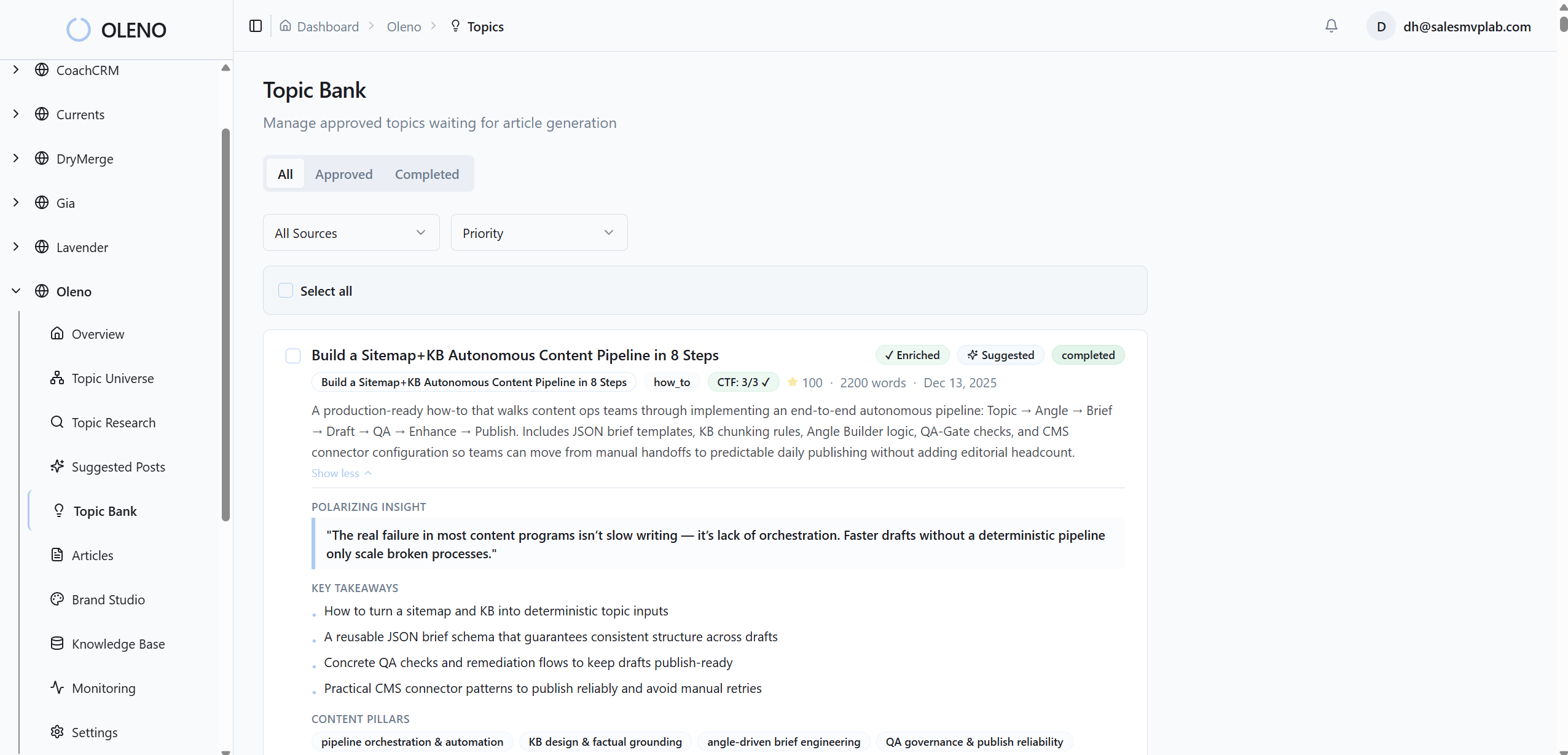
In practice, this means you stop debating structure on every piece. The outline exists. The narrative is aligned to intent. Writers aren’t improvising; they’re executing against a brief that already respects your voice, terminology, and priorities. Consistency moves upstream, where it belongs.
KB grounding and QA-Gate reduce error rates
Oleno drafts in your defined voice and grounds claims in your knowledge base. Before publishing, a QA gate checks structure, voice alignment, clarity, KB accuracy, and LLM readability. If a piece misses the bar, Oleno auto‑revises and re‑tests until it passes. Publishing is blocked until quality clears the gate.
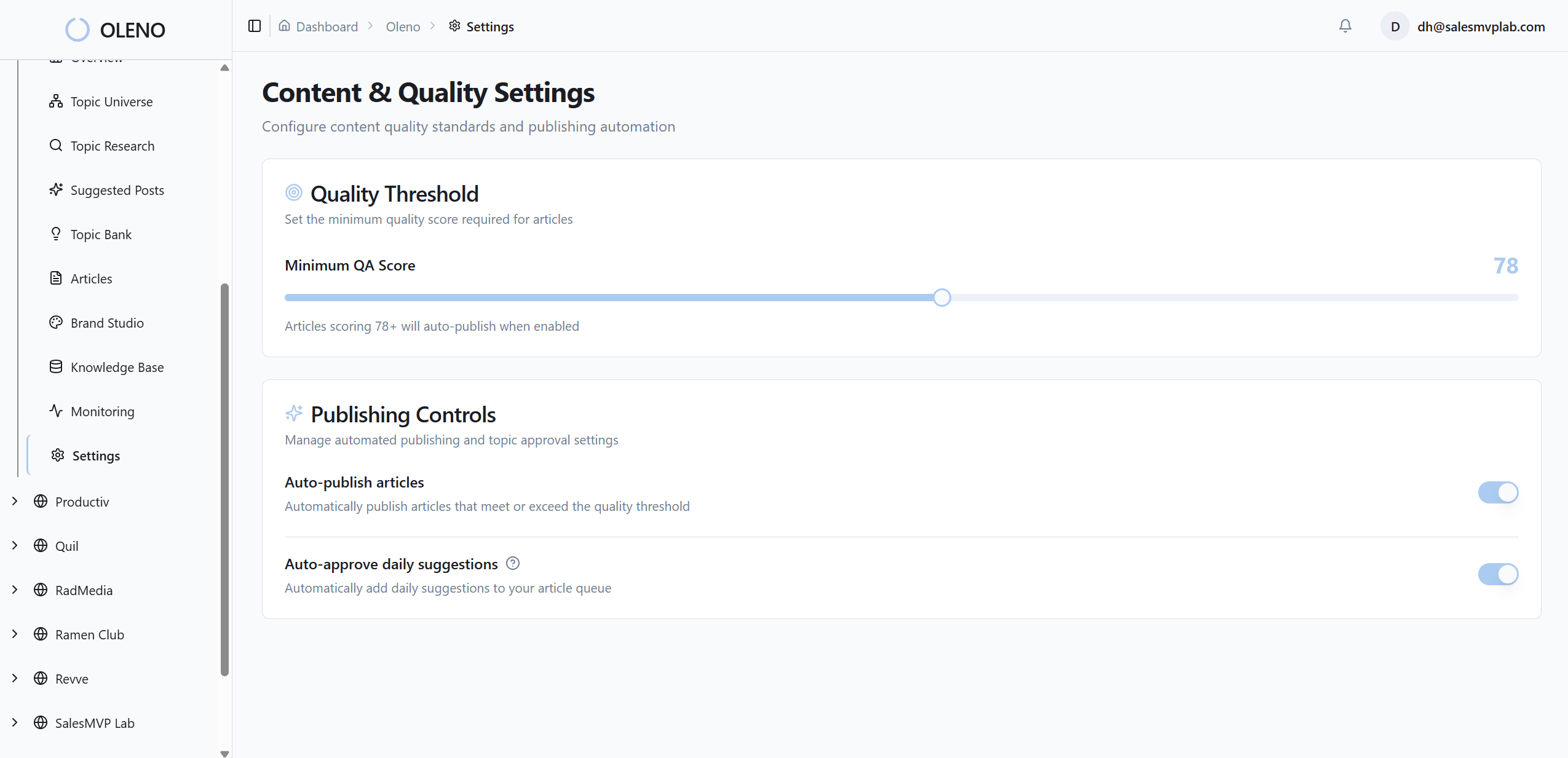
This doesn’t remove judgment. It removes avoidable drift. Editors stop doing repetitive fixes and start reviewing narrative decisions. The downstream effect ties directly back to the cost math: fewer first‑pass failures, fewer retries, and less frustrating rework.
CMS connectors and idempotent publishing improve reliability
Oleno publishes directly to your CMS in draft or live modes, sets metadata, attaches visuals, and follows your cadence. Publishing operations are idempotent, so retries won’t spawn duplicates. If a publish attempt fails, Oleno can re‑attempt safely with version history and conflict checks.
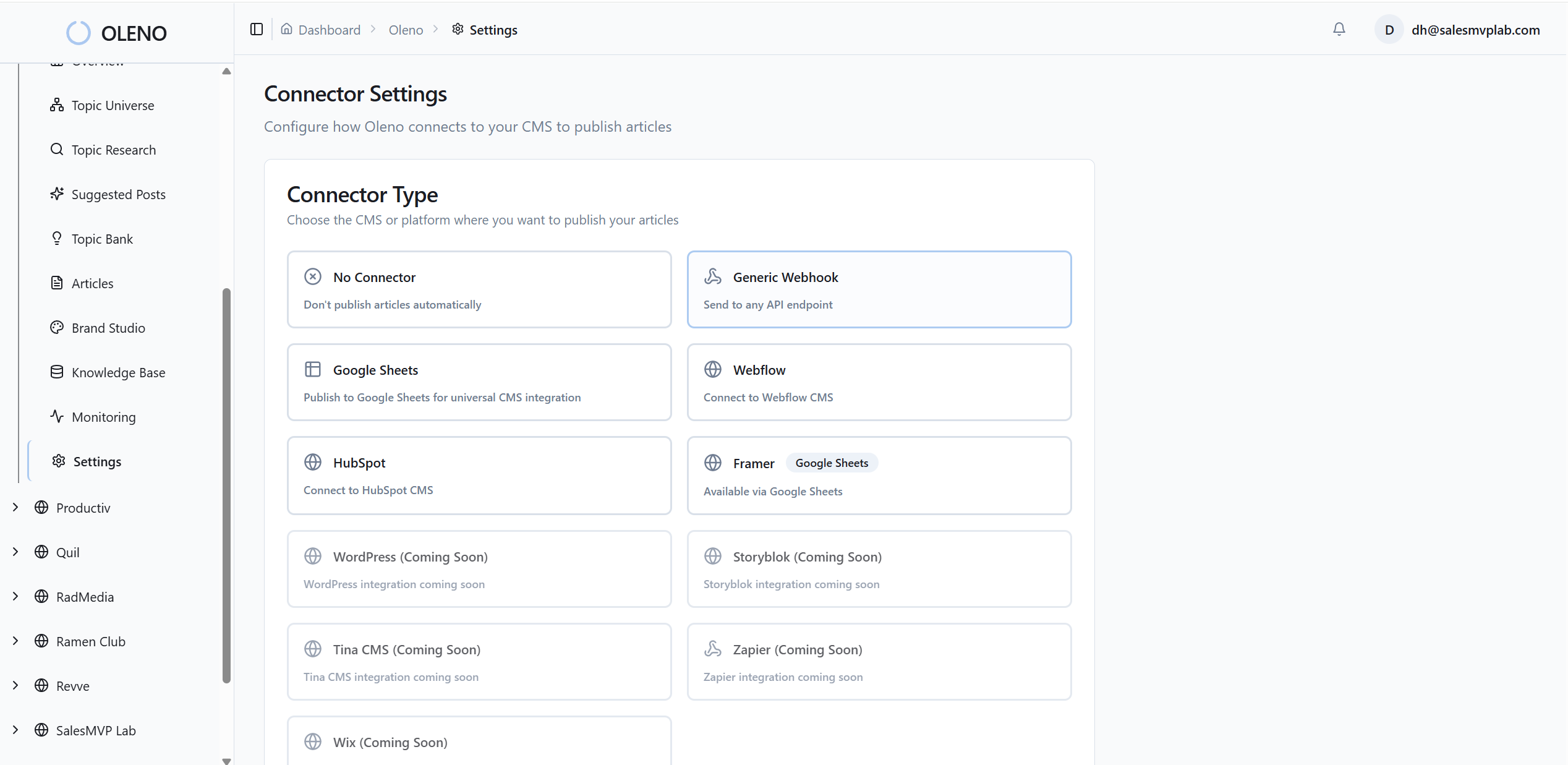
This is where reliability protects trust. The last mile stops being a headache. Your team spends time on strategy and story, not on slug collisions, missing alt text, or schema mishaps. That’s the practical value of a governed pipeline.
[Late CTA] Want to see the governed loop in action? You can Try Oleno For Free and run a small pilot before you commit.
Conclusion
If you’re still trying to fix content with faster prompts, you’re solving the wrong problem. Draft speed helps, but the real gains come from a system that decides, structures, validates, and publishes the same way every time. Start small. Measure what happens after the draft. Then make orchestration the default. When reliability becomes culture, volume isn’t scary. It’s routine.
About Daniel Hebert
I'm the founder of Oleno, SalesMVP Lab, and yourLumira. Been working in B2B SaaS in both sales and marketing leadership for 13+ years. I specialize in building revenue engines from the ground up. Over the years, I've codified writing frameworks, which are now powering Oleno.
Frequently Asked Questions